Thu 4 Sep

Australia Institute Live: Parliament wraps. Record Robodebt settlement, Aged Care deal, the real cost of the Nauru plan revealed and Daniel Andrews' trip to Beijing. As it happened.

Glenn Connley

This blog is now closed.

Start the conversation

Australia Institute Live: Parliament wraps. Record Robodebt settlement, Aged Care deal, the real cost of the Nauru plan revealed and Daniel Andrews' trip to Beijing. As it happened.

Key Posts

The Day's News

That’s it for a big final day

It’s been a privilege sitting in for Amy today. Thanks for tuning in.

Amy will be back in the first week of October when Parliament resumes, with just the House sitting and Senators busy with Estimates, which is always great fun.

Like everything involving Parliament this year, it’s a reduced fixture of Estimates and a three-day sitting week, because of the public holiday in some states and territories.

Don’t forget to keep your eye on The Australia Institute website for all our research, opinions, podcasts, events and much, much more.

Something very special is coming soon!!!!!

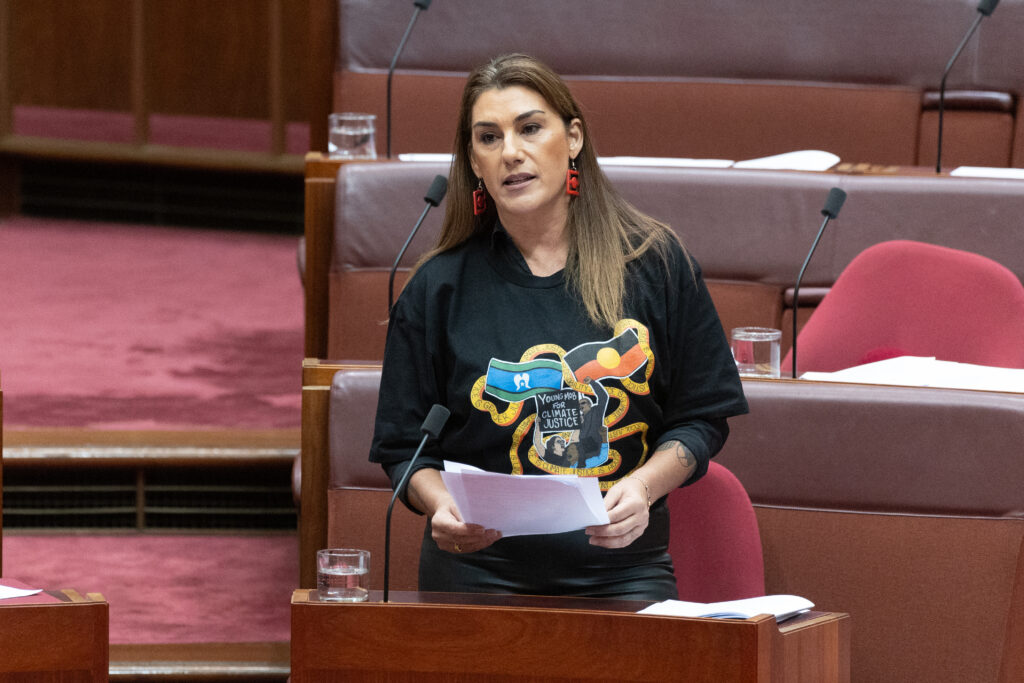
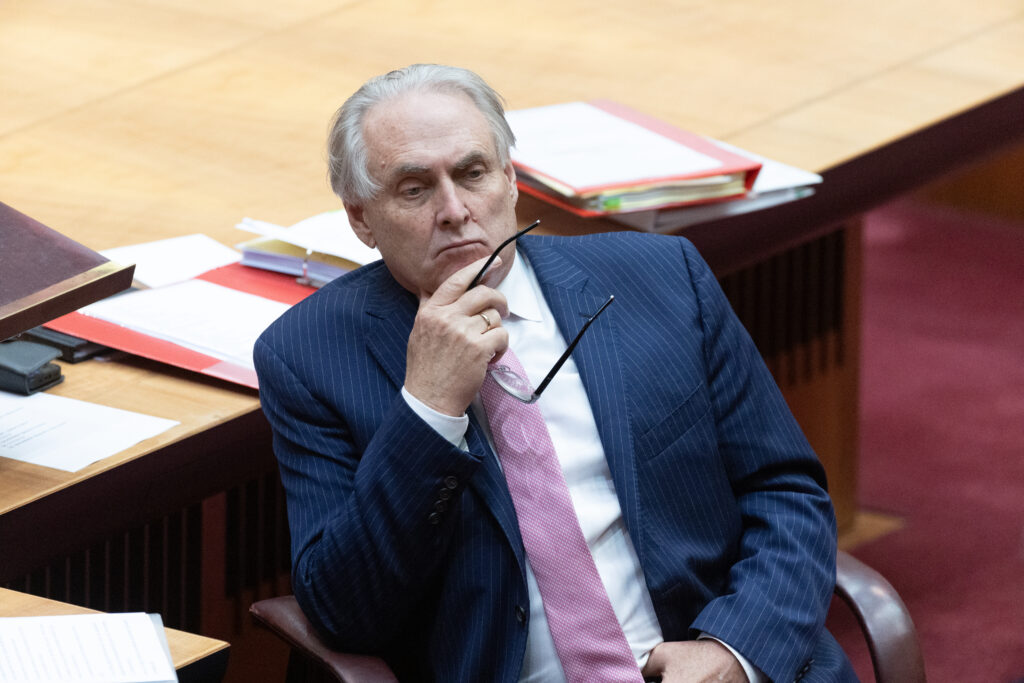
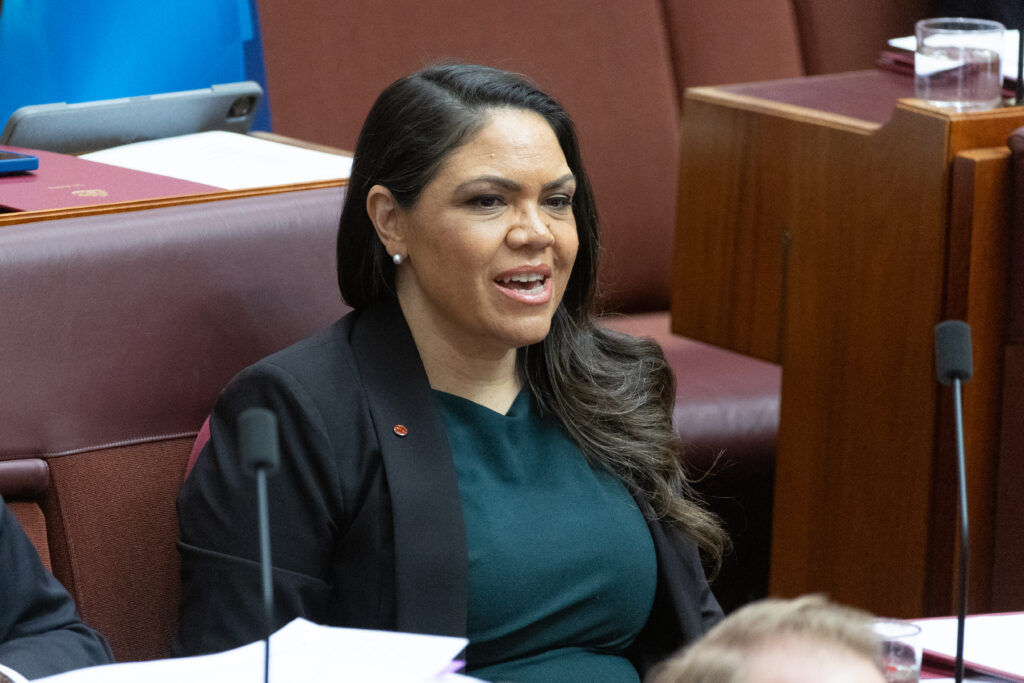
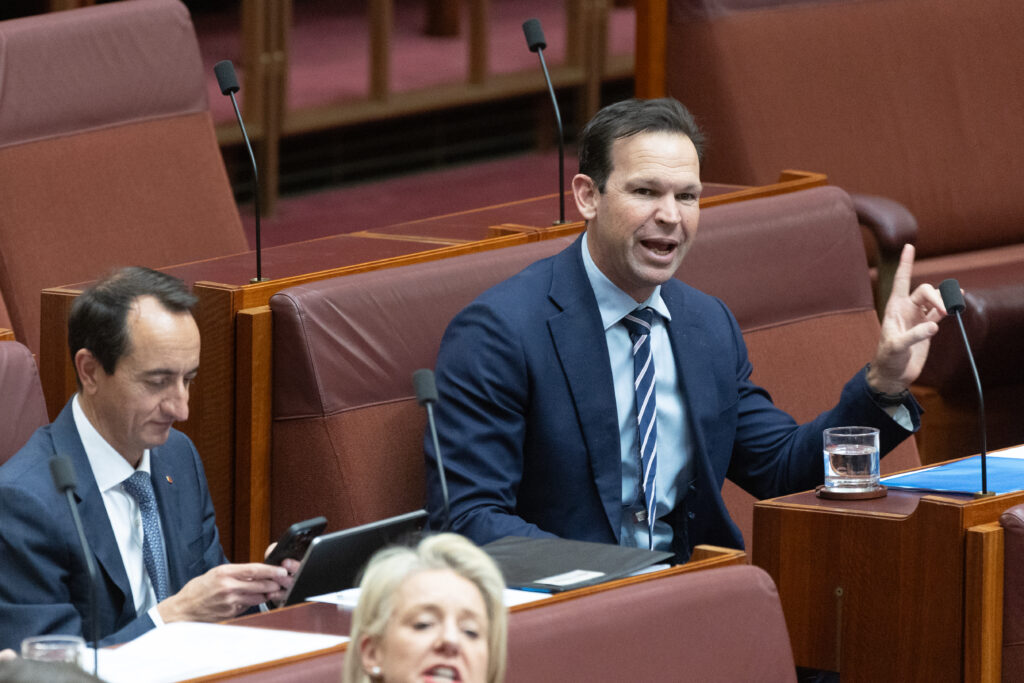
Here’s how Mike Bowers saw Question Time in the “other place”, where Senator Lidia Thorpe was asked to cover a tee shirt with an “offensive” image.

Independent Senator Lidia Thorpe before Question Time in the Senate. Photo: Mike Bowers.
Acting Senate leader Don Farrell during Question Time. Photo: Mike Bowers.
Liberal Senator Jacinta Nampijinpa Price. Photo: Mike Bowers.
Nationals Senator Matt Canavan. Photo: Mike Bowers.

A parade in a teacup?

Dr Frank Yuan
Postdoctoral Research Fellow

The ABC quoted this post Trump made on his social media platform Truth Social, which it said was a “barbed response”: “Please give my warmest regards to Vladimir Putin, and Kim Jong Un, as you conspire against the United States of America.” But it’s nothing new that China, Russia, and North Korea are friendly with each other, and Trump knows that.

Is it perhaps possible that, here, Trump was just being sarcastic? Of course there is geopolitical tension in the air, but not everything contributes to it all the time. Elsewhere, Trump had this to say of China’s military parade: “I thought it was very, very impressive, but I understood the reason they were doing it, and they were hoping I was watching—and I was watching.” And he immediately followed up saying “My relationship with all of them is very good.”

Trump was the first US President to meet with a leader of North Korea since the nation was created with the end of the Korean War, and it’s been less than a month since he rolled out the red carpet for Putin’s visit to Alaska. The spectacle of heads of states meeting together is just one part of international politics; a lot of it happens in the background, including the gradual shifts in countries’ economic and military strengths. So we would be better off to keep these spectacles in perspective as well.

And the PM calls it … now we can all focus on what really matters

The footy.

The final siren has sounded.

Question time – and this parliamentary fortnight – is over.

Prime Minister Anthony Albanese:

Mr Speaker, having had questions from this side about cost of living, wages, economic growth, AUKUS, social cohesion, Robodebt, social security and Medicare, I ask that further questions be placed on the notice paper and I suggest to those opposite that they go touch grass during the break and get in touch, get in touch with what Australians are concerned about.

Net zero, battery rebates, Barnaby’s language … what?

Dai Le asks about the cost of net zero and battery rebates.

Prime Minister isn’t it true that your government’s approach to net zero is leaving almost zero dollars in the pockets of families and small businesses and how exactly will the household battery rebate help them?

Chris Bowen takes it.

The Member for Fowler has said in a previous life the cheaper home batteries policy is of little use in her electorate.

People in the outer suburbs understand cheaper home batteries is one way they can reduce their bills permanently.

Kate Chaney rises on a point of order, claiming Barnaby Joyce has used language she’d prefer not to repeat in front of children in the gallery. He’s warned (that he might get a warning!)

Back to the debate.

OH, LORD. PLEASE CAN WE END THIS?

Chris Bowen puts us out of our misery.

We will continue to act on cost of living full-time with full energy not part-time.

The Attorney-General is on her feet again, taking a dixer on Robodebt:

Today the Albanese government reached an historic agreement to settle knocks and the Commonwealth, an appeal from the original Robodebt class action settlement in 2020. Today’s settlement demonstrates this government’s to addressing the harms caused to so many Australians by the former Liberal government through their disastrous and illegal Robodebt scheme.

None of us should forget former minister Tudge saying to former Australians, ‘We’ll find you, we’ll track you down. You will have to repaper those debts and you may end up in prison.’

The Robodebt scheme has cost taxpayers over $1 billion. Yet the most significant cost of Robodebt cannot be measured in dollars and cents. It can only be measured in human terms because the Robodebt scheme destroyed lives. The Albanese government has been left to clean up this shameful mess left by those opposite and that’s exactly what we’re doing.

While the objective of those opposite was to attack innocent Australians, this government’s objective in settling this matter is clear, to get a fair outcome for the victims of Robodebt.

Kate Chaney asks about AI nude fakes:

Front-line police are being overwhelmed by the increasing scale and depravity of child sexual abuse driven by AI tools. Next week is National Child Protection Week and the theme is shifting conversation to action. The government has a crackdown nude apps which is a part. We need action. Will the government implement that announcement and go support my bill to criminalise the use of AI tools designed to create this horrific material?

Attorney-General Michelle Rowland:

Thank you. I thank the member for her question and the very constructive engagement we have had on this matter. Of course, it is absolutely of great concern to not only the government but to all of civil society that some of the applications we have seen and some of the technology that we have seen developed is so harmful not only to people generally in our society but particularly to young people. Of course, we know that the member has a bill that she has presented, which will, of course, be given due consideration by the government. I will make three key points. This is precisely the reason why this government, in the last term, brought forward the statutory review of the Online Safety Act by a year. We have now had the release of that report brought forward by the member for communications in terms of the government’s response and as has been made very clear, which is my second point, has been made very clear by this government we are considering not only those issues very closely but also we have announced that we will take steps in relation to these apps which have no place.

The LNP’s Phillip Thompson attempts another clumsy question about Daniel Andrews. He gets there eventually. Not really worth transcribing.

The Prime Minister swats it away.

Everyone should comply with the law. It’s as simple as that. Everyone should comply with the law. Simple as that. That’s my job. This is a rather bizarre question.

Robodebt was a moral crime, and it’s increasingly a financial fiasco

Alice Grundy
Research Manager

In 2015 when the Abbott Liberal government introduced Robodebt, the slated net savings were $1.5 billion over four years. His successors as PM, Malcolm Turnbull and Scott Morrison were in charge as this policy ran its devastating course.

These projected savings have now been entirely outshone by the resulting legal fallout. Today the Federal Government agreed to pay a $548.3 million settlement, taking the total payout to $2.4 billion. This does not factor in all the government’s legal costs, nor the uncounted hours of public service time spent in the fallout and resulting inquiries.

Robodebt was only uncovered through institutions that safeguard accountability, notably the Commonwealth Ombudsman and Senate committees. Unfortunately, the government is actively trying to weaken our transparency laws through amendments to Freedom of Information (FOI) laws, according to the ABC:

[The changes] would also “clarify” the rules about when documents could be deemed confidential because they related to cabinet processes, an avenue the Robodebt royal commission found was routinely abused by public servants as an excuse to refuse FOI requests.

The details of this “clarification” are not yet known, but the ABC understands the change may lead to more documents being labelled as cabinet confidential, not fewer.

Calling out yesterday’s attack on Indian migrants

Anne Aly takes a dixer to defend Indian migrants after Jacinta Nampijinpa Price’s grandstanding yesterday.

I want to say to Indian Australians, this is our message. You do not have to justify your belonging in this country. We know you. We value you. We thank you for everything you have contributed to Australia to communities, to charities, to business, to politics, to our medical profession, to our economy. We stand with you as we always have. When the immigration of Lebanese Australians was described as a mistake, that was wrong. When the African Australian community were unfairly stereotyped, that was wrong. When the Chinese Australian community were accused of being spies, that was wrong. And the scapegoating of Indian communities, designed to undermine their sense of safety and belonging, is wrong. Every member of this Labor government stands by the communities that they represent, and we will always call out attempts to divide us because it is by calling them out that we will strengthen our social cohesion.

Climate action or coal profits?

The second crossbench question goes to the Independent Member for Bradfield, Nicolette Boele.

My question is to the Minister for Climate Change and Energy. We need an emissions reduction goal go high, says the science, that’s your role. Will the government have ambition, take a 75 per cent position or side with the sellers of coal?

Minister for Climate Change and Energy, Chris Bowen:

The Climate Change Act requires the government to receive the advice of the Climate Change Authority before setting a target. It’s a matter of law. The law also requires the Climate Change Authority to have regard to the best available scientific knowledge and the global temperature goals under article 2 of the Paris Agreement , which is two degrees and 1.5 degrees and under the Act I must take account of that advice in setting the targets. And I am also able to take into account other factors such as the economic impact and the social impact of the target we set. The election makes it clear, this process makes it clear what we must consider when setting the target and that is exactly what we will do.

How would fixed, four-year terms interact with the “staggered” Senate?

Bill Browne
Director, Democracy & Accountability Program

With the news yesterday that the Albanese Government is looking at fixed, four-year terms (and then the news today that they’re not looking at them very hard), we’ve had a question:

How do fixed, four-year terms interact with the Australian Constitution’s quirks like the “staggered” Senate and double dissolution elections?

The short answer is that it would depend on how the constitutional amendment is drafted, but we know what earlier governments have proposed.

“Staggered” Senate terms

Each of Australia’s six states is represented by 12 senators, but you only elect 6 of them at an ordinary election. We have elections every three years (roughly) and each senator serves for six years, so at any given time only half the senators are facing re-election.

What happens if you go from three-year terms to four-year terms?

There’s two options:

Option 1. Get rid of staggered terms. Elect all 12 senators for a state at the same time, for the same four-year term.

Option 2. Keep staggered terms. Elect every senator for an eight-year term, but still only elect 6 at a time.  

Option 1 would mean the Senate becomes more proportional to the vote. Instead of needing about one-in-six votes to get elected, a senator would only need about one-in-twelve.

This is what already happens at a double dissolution election, like the 2016 election where a record number of minor party senators were elected.

Nothing wrong with that, but it’s not what most people think about when they hear “four-year terms”.

Option 2 would mean senators serve for a long time. Australia in 2025 is very different to Australia in 2017, but your vote up to eight years earlier would decide who represented you.

When Bob Hawke had a referendum to introduce four-year terms in 1988, he went with Option 1.

If the House of Representatives and Senate fall out of sync, how do they get back in sync?

It used to be common that House of Representatives elections were held at a different time to Senate elections. That can happen because of how our Constitution is written.

For one thing, the Constitution is strict about senators serving roughly six-year terms, but allows the House of Representatives to go to an early election instead of seeing out the full three years.

For another, the way the Constitution says Senate terms must be backdated after a double dissolution election can mess things up.

The Prime Minister can sync up the two houses of Parliament by going to an early election. Bob Hawke had to do that in 1984, going to an election almost two years early to catch up to the Senate. But if terms are fixed, that’s not an option.

In practice, you could resolve this by amending the Constitution to say that senators serve for exactly two House of Representatives’ terms, however long or short they may be. 

Three earlier referendums tried to achieve this change; they failed each time. Bob Hawke’s referendum in 1988 instead would have set senators’ terms at exactly one House of Representatives’ term, again avoiding the problem.

It’s tractor time … again

Member for Mallee, Anne Webster:

My question is to the Prime Minister. The Prime Minister told the bush summit last Friday and I quote, ‘I won’t BS people.’ But yesterday in the House he claimed he was the first Prime Minister in 40 years to visit Horsham in my electorate. Given former Prime Minister Tony Abbott visited Horsham to announce $1 million to open an oncology unit in 2015, wasn’t your answer just more BS? Prime Minister, isn’t your BS the real reason you were chased out of Ballarat by a convoy of tractors?

Prime Minister, Anthony Albanese:

They’re on the big picture today. Indeed, Tony Abbott was elected in 2013, but he didn’t make it to a 2-year anniversary. Depends when in 2015 ’cause he didn’t make it. I’m asked about the renewables issue. In that part of Victoria, and the bush summit. I can quote from someone’s first speech. ‘Mallee is perfectly positioned for renewables but the capacity of our existing grid infrastructure is making some promising options unviable. I look forward to working further to improve connectivity to the grid in Mallee.

Dr Webster welcomed announcements, she said, would benefit the Mallee electorate. These included to quote, ‘Up to $250 million to accelerate major transmission projects including VNI west, which will benefit Mallee in order to deliver reliable energy.’ Well, Mr Speaker, I’ll tell you what. The member used a term. I’ll tell you what the term is. The term for someone who, in their first speech in this Parliament, speaks about these projects and champions them, two backs it in, in 2020. Who went money is put in the budget, $250 million, puts out media releases saying, ‘Whoa, this is gonna be of great benefit.’ And then pretends somehow that they’re against the very project that was given the tick by the coalition government, funded by the coalition government, and then tells people, ‘Yeah, national parks no worries, get out there, bring along a noose to a public meeting’, as if that’s appropriate.

Super top ups

Varsha Yajman
Anne Kantor Fellow

Wow, the Libs really do care about women?

Liberal senator, Jane Hume, has proposed to address “the motherhood penalty” with a new bill , which would mean the partner with the larger superannuation can top up their spouse’s savings.  

The gap between men’s and women’s super can be as large as 25% in large part due to women taking time off from the workforce to raise children. 

Currently, superannuation rules allow one partner to top up their partner’s fund. However, due to a low awareness of the rule, The Guardian reports that, in 2021-22, only 1.1% made any such top-up. 

Hume says this bill will address structural reform, ensuring the top up process is voluntary and accessible.

“Financial security in retirement should reflect a lifetime of shared contributions, not just paid employment. That is what this bill aims to fix.”

Take two (2):

Deputy Manager of Opposition Business, Kevin Hogan:

My question is to the Prime Minister. Prime Minister, the New South Wales police have publicly confirmed they are working with the Commonwealth on the return of ISIS brides to Australia. Prime Minister, are you calling the New South Wales police Deputy Commissioner David Hudson a liar?

Prime Minister, Anthony Albanese:

That is an outrageous suggestion. I have respect for our police officers. The questions that were asked yesterday went to whether the Australian government was giving support to this cohort. I confirmed that the Australian government is not providing assistance to this cohort. Syria is an increasingly unstable region.

But the Australian government is not providing assistance to this cohort. The report yesterday was wrong. I declared it to be wrong. And long may the Opposition continue to get their questions from Sky after dark.

Moving on (or back) to “Isis brides”

Sussan Ley turns the debate (back) to Isis brides. In doing so, she quotes Sky News, which sends the house into uproarious laughter.

Opposition Leader Sussan Ley:

My question is to the Prime Minister. I refer to his answer yesterday, where he rejected reports that ISIS brides were coming to Australia. Last night Sharri Markson revealed on Sky News that Deputy Commissioner Dave Hudson had confirmed New South Wales police were, ‘Working through that issue with the Commonwealth’. And that New South Wales police will meet with the AFP next week in relation to this matter. Can the Prime Minister explain this contradiction?

Prime Minister, Anthony Albanese:

Thank you. There is no contradiction between my answer yesterday was absolutely correct.

First crossbench question goes to Andrew Wilkie:

Attorney-General, last week Australian Tax Officer whistleblower Richard Boyle was sentenced after facing a lengthy prosecution for blowing the whistle on wrongdoing in the ATO. His case was, of course, yet another demonstration that our whistleblower protections are deeply inadequate. Minister, exactly when will the government table the necessary amendments to the Public Interest Disclosure Act and the Corporations Act so the whistleblowers aren’t the ones being punished?

Attorney-General, Michelle Rowland:

I thank the member for Clark for his question and I acknowledge his ongoing advocacy over many decades in this important area. Last week the district court of South Australia sentenced Mr Boyle, in relation to four charges, under the Commonwealth Taxation Administration Act 1953, and the South Australian Listening and Surveillance Devices Act 1972. I understand the court did not record a conviction and imposed a 12 month good behaviour bond. I will not otherwise comment on the specifics of Mr Boyle’s case. The decision to prosecute Mr Boyle is a matter for the independent Commonwealth Director of Public Prosecutions. But what I can say to the honourable member is that the Albanese government is committed to delivering strong, effective and accessible protections for public sector whistleblowers through reform of the Public Interest Disclosure Act 2013. That’s why yesterday we announced a public consultation process on exposure draft legislation will commence next week on a second stage of reforms to the Public Interest Disclosure Act. We want meaningful engagement only this. We want to bring forward a package of reforms that will improve the accessibility, operation and Administration of the Public Interest Disclosure Act. The government’s reforms will be designed to clarity and — clarify and strengthen protections for whistleblowers, simplify public interest disclosures and strengthen the oversight of the system. In addition, the government proposes to establish a new whistleblower Ombudsman within the Office of the Commonwealth Ombudsman, which would be the most significant addition to the Federal integrity landscape since the establishment of the National Anti-Corruption Commission. 

Take two:

Opposition Leader Sussan Ley:

This month the Prime Minister expelled the Iranian Ambassador, an action the coalition has strongly supported but what message does it send when the Prime Minister of this country doesn’t have the spine to condemn his former flatmate, Daniel Andrews for posing in photos with the Iranian President, a leader whose regime has actively orchestrated attacks on Australian soil?

Prime Minister Anthony Albanese:

I am not responsible for what every Australian citizen does. What I’m responsible for is … what our government does, and the former government was responsible for sending Minister Ronaldson to the previous event. Mr Speaker, we stand unequivocally in condemning the Iranian regime and what international affairs requires, requires, is for governments of purpose, with that sense of purpose, to engage diplomatically with our friends, and we had yesterday people such as President Prabowo Subianto and a whole range of people attending there. My position is very, very clear, which is we did not send any government representative because it would not have been appropriate. None of my people would have sat in that position, as simple as that.

Sussan Ley, kicking into the wind, picks up where she left off yesterday, asking about Daniel Andrews‘ trip to China.

Anthony Albanese, defending a huge three-quarter time lead, turns from yesterday’s “last time, you sent a Minister” to:

I haven’t, and never will, meet Vladimir Putin. I haven’t and never will meet the leader of North Korea as well, and we will give every support to people fighting for democracy right around the world. That’s my government’s approach.

Question time has begun …

Last one for this sitting fortnight …

Bullies and bribes – the national shame of offshore detention

For so long, the major parties’ immigration policies have been a race to the bottom.

It’s easy to forget that there are still people in our Parliament willing to call out the utter madness of every aspect of this national shame … from moral to legal, financial to transparency.

Senator David Shoebridge, Greens Spokesperson for Immigration, says:

There are no depths Labor won’t explore to outflank the Coalition on the right on immigration. The cornerstone of our entire legal system, natural justice, has just been smashed by the Albanese Government.

Mandatory detention, offshore detention, preventing people who sought asylum by sea from resettling, a Trump-style travel ban and now laws that can deny natural justice, this is Labor’s legacy. It’s a legacy that deliberately undermines multiculturalism and fairness.

When Labor makes laws that say some people who were not born here are denied basic legal rights, that feeds the far-right extremism we saw at anti-immigration rallies over the last weekend.

Australia should be treating our neighbours with respect, not bribing them to become a 21st century penal colony. The Pacific can see how Australia bullies and bribes its neighbours.

Failing to treat our neighbours as friends and equals comes at a cost, and is a long-term threat
to Australia’s political and moral leadership in the Pacific.

Trainspotters unite

Federal Transport Minister Catherine King has missed a golden opportunity.

Her team have just shared her speech to the Australasian Railway Association this morning.

Now, I’m hoping she adlibbed a bit her because I couldn’t find a single train pun. Not one.

No “tunnel vision” or “staying on the tracks”, no “tooting our own horn” or “sticking to the timetable”. Nothing.

If you can’t sleep tonight, have a go at this: https://minister.infrastructure.gov.au/c-king/speech/address-australasian-railway-association

You’re going to need a bigger (Parliament) House

We might have the answer to Australia’s politician problem: more of them 

Skye Predavec
Anne Kantor Fellow

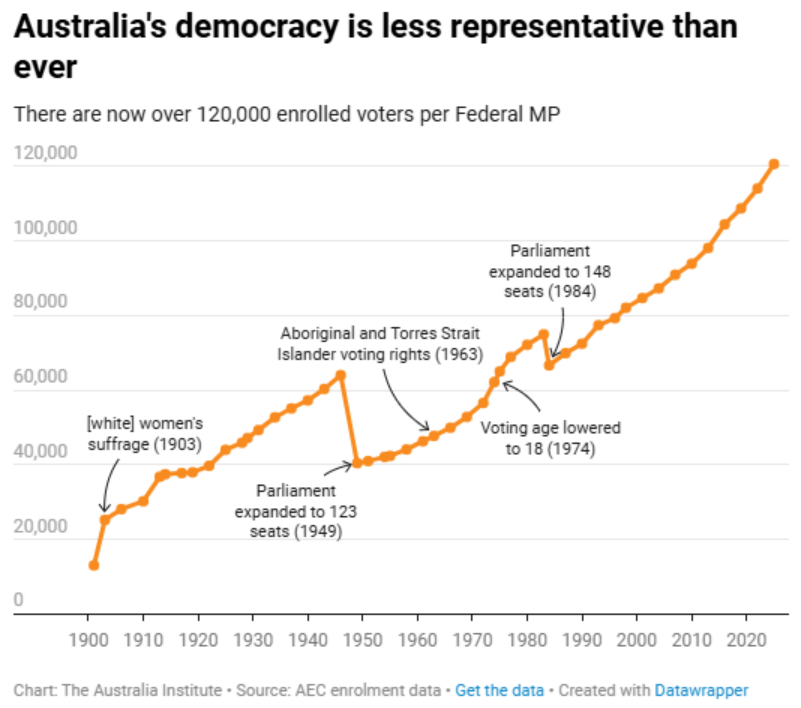
Yesterday, we learned that the Joint Standing Committee on Electoral Matters (JSCEM) will consider the number of MPs relative to the growth of Australia’s population as part of its inquiry into the 2025 federal election. 

It’s been 40 years since Australia last expanded the parliament, when Hawke government increased the number of seats from 125 to 148. Since then, the population has grown by 11 million, without Australians getting any more MPs to represent them. 

As the number of voters per MP grows, the access any individual voter can have to their member necessarily decreases – Australia Institute polling research in 2022 found that only 15% of Australians had ever spoken to their local MP (and only 36% knew their name). 

Australia is a lot bigger and more complicated than it was fifty or a hundred years ago. In Australia’s first government, the Barton Ministry, there were 10 ministers while Albanese’s first Ministry had 30 (plus 12 assistant ministers). That leaves fewer backbenchers to do important committee work and means a smaller talent pool from which to choose government ministers. 

Expanding the lower house by 50% – to 225 seats – would bring Australia’s representation more in line with comparable democracies, as well as the states and territories. It would grow the talent pool for appointing ministers to crucial government jobs. And most importantly, it would make politicians more accountable to the communities that elect them, giving more Australians a chance to meaningfully engage with their local member. 

It’s time for our representative democracy to get a bit more representative

Time to talk about sport

I’ve been looking for an excuse to talk about sport all day and the unofficial captain of the press gallery snappers for twenty seasons running, Mike Bowers, has given me my chance.

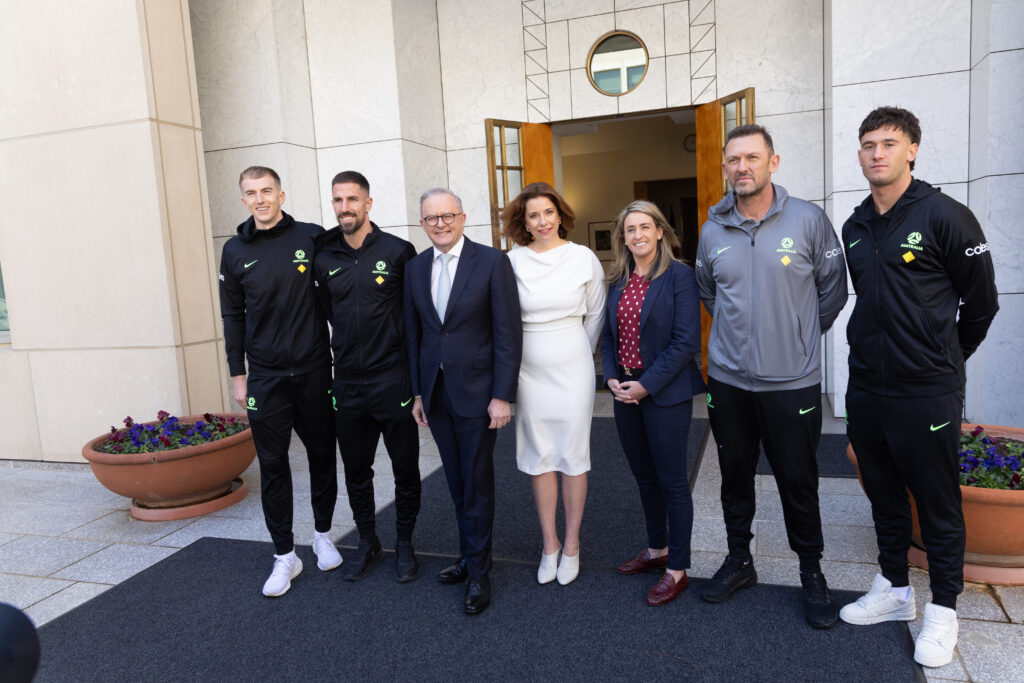
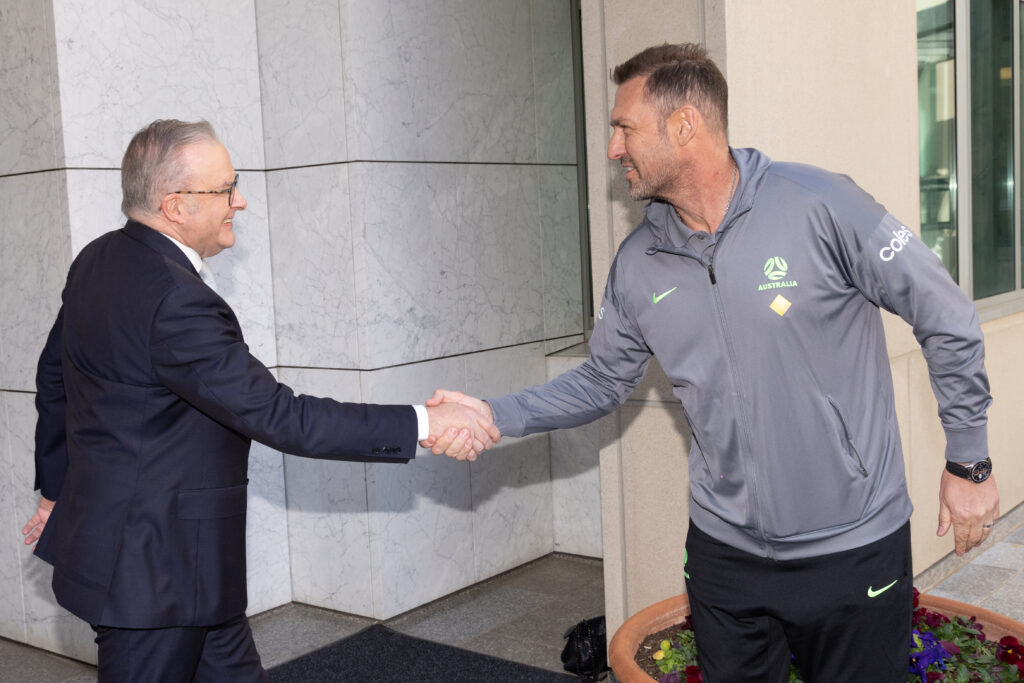
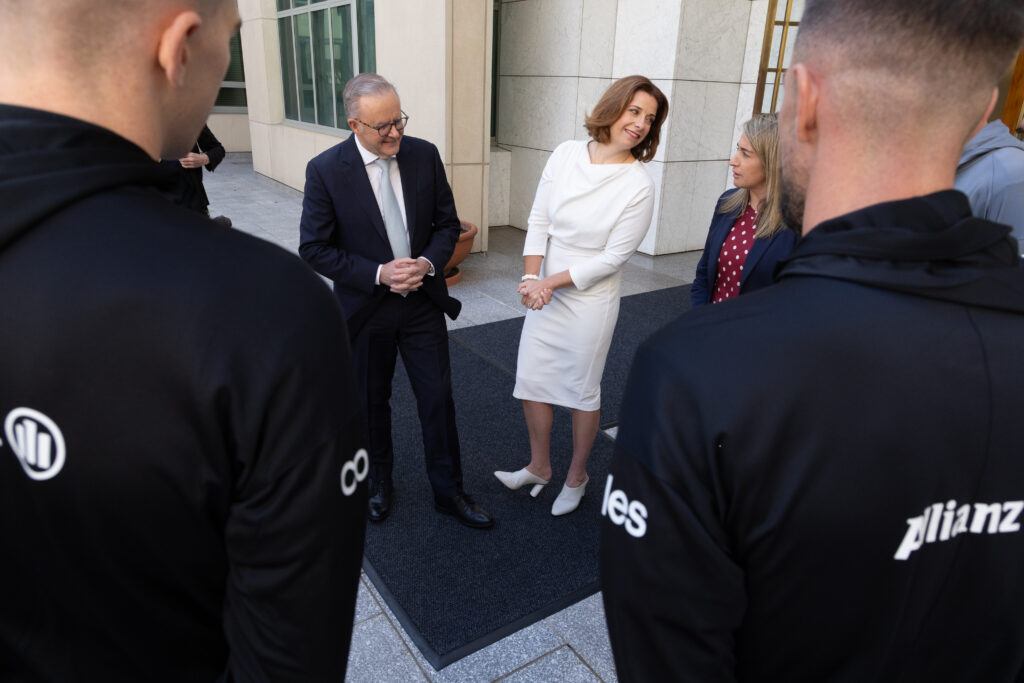
Prime Minister Anthony Albanese and Sports Minister (the only political job I’d ever want) Anika Wells have met representatives of the Socceroos in the PM’s courtyard, ahead of the friendly against New Zealand in Canberra tomorrow night.

The Prime Minister Anthony Albanese and Minister for Sport Anika Wells meet Socceroos coach Tony Popovic and players Milos Degenek, Alessandro Circati and Joe Gauci, as well as Interim Football Australia CEO Heather Garriock. Photo: Mike Bowers.
The Prime Minister Anthony Albanese meets Socceroos coach Tony Popovic. Photo: Mike Bowers.
Photo: Mike Bowers.
Photo: Mike Bowers.
Photo: by Mike Bowers.

It’s not a bad time to be a sports fan in the capital. The Raiders have just clinched the minor premiership in the NRL and the Canberra Giants (who occasionally play home games in Western Sydney) are in the AFL finals.

It all kicks off tonight in Adelaide, where Collingwood is preparing a smash and grab against AFL minor Premiers, the Crows. (Shout out to Greg Jericho).

I remember my team playing in the first week of the finals at the Adelaide Oval a few years ago. Our captain won the toss and kicked against a strong wind. It was over by quarter time.

Property developers’ greed takes the “affordable” out of “affordable housing”

Matt Grudnoff
Senior Economist

Social housing, affordable housing, and public housing. They all seem similar but there are important differences as some housing tenants in Melbourne are unfortunately finding out.

A year after moving into a new public-private affordable housing complex in Melbourne, a couple has been slugged with a 17% rent increase.

The Flemington development saw the Victorian government hand over a 40-year lease to a consortium that included a non-profit social housing provider and a property developer. The lease was for public housing towers that were planned for demolition and redevelopment.

The consortium then rebuilds the site with a mix of social, affordable, and market rate rentals.

But as the tenants have discovered the affordable housing is still linked to inner Melbourne rental prices. The rents were set at a maximum of 75% of the market rent. But since market rents in inner Melbourne increased by 17%, so did their rent.

This is the important difference between social and affordable housing and the much better public housing. Public housing is fully owned by the government and exists to help people with a roof over their heads. There is no commercial imperative.

Rather than trying to insert the private sector, the government could have simply redeveloped the sites and built more public housing. It’s both simpler and better for the tenants.

For more on this story, see the article on the ABC.

Setting aside the fluff for a moment …

Popular British actor Hugh Bonneville appeared on the red carpet in Leicester Square last night at the premiere of yet another Downton Abbey film.

Or, as my 9-year-old would call him, the dad from the Paddington films.

Hugh is also a human who, like so many around the world, feels helpless watching the events unfolding in Gaza.

So, he took his opportunity:

Remember that aged care fails because we rely on the private sector for public services

Jack Thrower
Senior Economist

Probably the biggest parliamentary story of the week has been Labor giving in to pressure from the Coalition, Greens and independents to immediately fund 20,000 more home care packages to support older Australians living at home.

This is good news, and recipients of these packages will definitely benefit.

But while we’re focused on “how much” we spend on aged care, we sometimes miss a key reason why the sector keeps failing: we rely on the private sector to deliver public services.

Last year, David Richardson, Richard Denniss and I wrote a submission to the Productivity Commission outlining how decades of scandals and failures in sectors ranging from aged care to electricity were entirely predictable. This is because these sectors do not meet the Economics 101 requirements for a well-functioning market.

Instead of endless Royal Commissions and other inquiries, the government needs to recognise that there are some things only the public sector can do well and take proper responsibility for sectors like aged care.

Transparency Warrior Rex Patrick breaks down the government’s “assault on transparency”

Bill Browne
Director, Democracy & Accountability Program

There is no one in Australia who uses freedom of information law as effectively and frequently as former senator Rex Patrick.

His reputation precedes him — FOI officers are known to give him more information than a regular member of the public would receive, because they know that he knows his rights. 

It’s a sad indictment of our FOI system that ordinary citizens are treated worse because they don’t have the expertise or resources to press the issue. Good on Patrick for calling it out. 

In a forensic piece for Michael West Media, Rex Patrick goes through how the Albanese Government is trying to further restrict freedom of information laws:

  • Further limiting your access to ministerial briefs and documents prepared “for” Cabinet
  • Allowing FOI decision makers to not even search for documents if they would “clearly” be exempt (even though FOI decision makers often get this wrong)
  • Not naming FOI decision makers – so they cannot be held to account
  • Charging you for putting in an FOI request, and charging you again if you ask for it to be reviewed
  • Extending the amount of time before the government has to respond to your FOI

Check out the full article for more details and examples drawn from Patrick’s experience.

US:Google cops hefty fine for invading users’ privacy

AAP

A federal jury determined on Wednesday that Alphabet’s Google must pay $US425 million ($A675 million) for invading users’ privacy by continuing to collect data for millions of users who had switched off a tracking feature in their Google account.

The verdict comes after a trial in the federal court in San Francisco over allegations that Google over an eight-year period accessed users’ mobile devices to collect, save, and use their data, violating privacy assurances under its Web & App Activity setting.

The users had been seeking more than $US31 billion in damages.

The jury found Google liable on two of the three claims of privacy violations brought by the plaintiffs. The jury found that Google had not acted with malice, meaning it was not entitled to any punitive damages.

An unceremonious end to one of Australia’s cultural institutions

Alice Grundy
Research Manager

Breaking news reported in CrikeyMeanjin, one of Australia’s oldest and most prestigious literary journals is winding up: its staff made have been made redundant; its last issue is coming out in December.

Chair of Melbourne University Press, which oversaw the operation said, “The decision was made on purely financial grounds, the board having found it no longer viable to produce the magazine ongoing.”

Aside from the spectacular example of weaselly managerial syntax in that sentence, this is why it doesn’t make sense to reach decisions on culture purely from examining the accounts. A literary journal is a cultural project, not an economic one. As Australia Institute research shows, there’s plenty of money in universities for consultants, travel and marketing but not enough for staff, students or critical cultural infrastructure like Meanjin.

It’s only a matter of time before we see what the next casualty is.

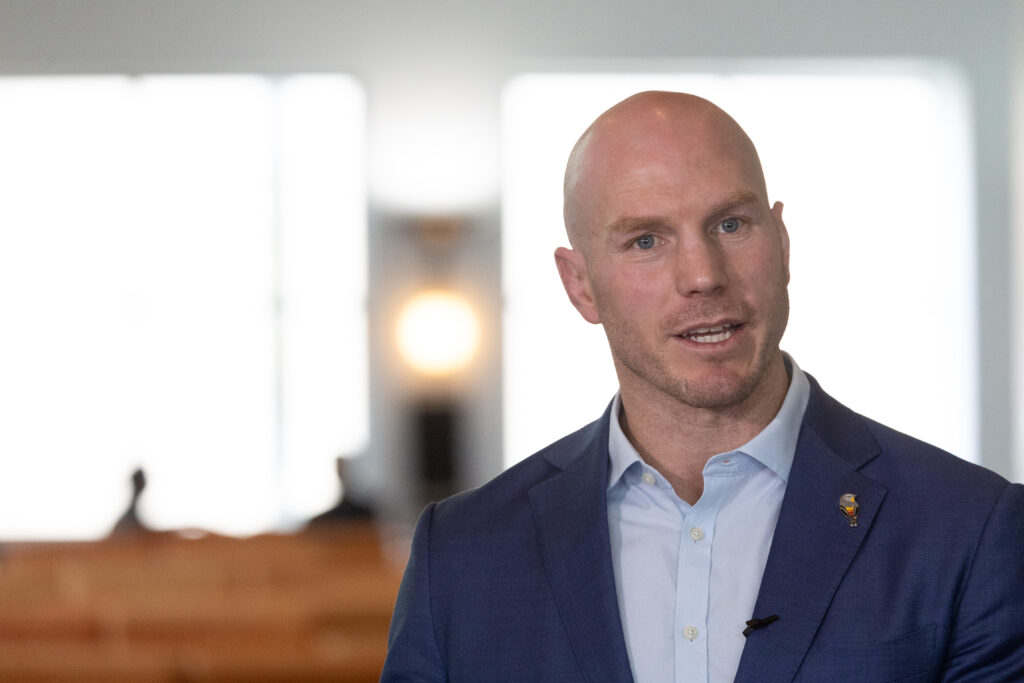
David Pocock wants more transparency around lobbying at Parliament House

Independent ACT Senator David Pocock wants voters to know who is lobbying Members of Parliament at Parliament House.

He’s set up a voluntary pass register and spoke about it at a press conference today.

Independent Senator David Pocock talks to the media about a lobbyist register in the Mural Hall of Parliament House, Canberra. Photograph by Mike Bowers. Wednesday 3rd September 2025.

The Reserve Bank and conflicts of interest

David Richardson
Senior Research Fellow


There is a story today in the Financial Review that the Reserve Bank’s chief economist, Sarah Hunter, accepted a gift from disgraced consulting/accounting firm, EY. The gift was an invitation to be a guest of EY at the Parliament House Midwinter Ball at a 10-seat table which would have cost EY $22,000!

You have to ask what EY was buying.

This may seem a minor conflict of interest – but a conflict of interest it is. It is part of a long history of RBA collaboration with business to restrict demand so as to reduce workers’ power. Who can remember a monetary policy statement that did not refer to potential wages break out and the need to ensure that does not happen? And of course that wage break out never happened.

Meantime, RBA management has been busy lining up juicy retirement jobs in the finance sector.  Ex-staff have joined banks, while past governors can be found on the boards of various banks and sometimes even as the chair of the boards. Former governor, Glenn Stevens, is chair of Macquarie Bank, which is being hauled over the coals for booking fictitious trades in the US and UK and misreporting Australian trades, among other matters.

And we recall the RBA advising then Treasurer, Wayne Swan, to make board appointments from among business leaders rather than appoint others such as ACTU representatives who, it was suggested, might have “sectional interests”. The RBA apparently never saw business as a sectional interest.

For more on this see our Reserve Bank Review Submission.

Robodebt victims win record class action settlement

Victims of the illegal Robodebt scheme have won a record payout, with the government opting not to defend a second legal claim, following the original settlement, which refunded their payments with interest.

Lawyers told the federal court this morning the case had been settled.

In a statement, Gordon Legal revealed details of the $548.5 million settlement, which still needs to be approved by the court.

It also provided written reaction from two applicants.

Nathan Knox, Applicant:

I am very pleased that our legal challenge has been so successful and that group members can finally
begin to put this terrible chapter behind them. Everyday Australians should now know that they can stand
up and demand respect and fairness, especially from their government.

Felicity Button, Applicant:

Today I feel as though myself and all the other victims of Robodebt have been heard and finally have our
voice back. When nobody else would listen to us and we were treated as second class citizens Gordon
Legal took on our fight.

John Howard buys into Palestine recognition issue, branding it a “betrayal of international law”

Former Prime Minister John Howard has put out a statement with former Foreign Minister Alexander Downer on the government’s decision to recognise Palestine.

As long-standing friends and supporters of Israel who worked in government to advance a genuine two-state solution, we are appalled by the Albanese government’s recent behaviour.

No mention of genocide or starving children, or how you achieve a two-state solution when you only recognise one state, but it goes on:

Both the Prime Minister and the Minister for Home Affairs, Tony Burke, have undermined a relationship of enduring trust between Australia and Israel.

NZ: We’ll take your former Foreign Minister and former state Premier and raise you two PM’s!

While the coalition and Murdoch media collectively wet the bed over Daniel Andrews and Bob Carr’s visits to China, NZ can go one better.

Not one but two former Kiwi Prime Ministers – John Key and Helen Clark – were also among 70 “special guests” of Xi Jinping at yesterday’s military parade in Beijing.

And while Dan got a handshake, John Key went one better.

Ley refuses to condemn Price’s crazy claim about Indian migrants

Opposition Leader Sussan Ley has refused to condemn Jacinta Nampijinpa Price over her ridiculous claim that the government was picking and choosing which migrants it allowed into the country on the basis that they’d vote for the Labor Party.

Yesterday, Price claimed “Labor like to be able to ensure that they’re going to allow those in that would ultimately support their policies, their views, and vote for them as well” in a discussion about Indian migrants … This is Labor. Basically, it’s power at any cost. And we see that occur all over the place in terms of the way they conduct themselves.

Ley did the rounds on morning TV and, on Sky, was asked about the claims by Senator Price.

Question: Jacinta Price … claimed in an interview that migrants were being brought in from India to boost the Labor vote. She ended up walking that back later on in the day, but has the damage been done here? Could she have isolated an Indian vote the Coalition might have sought?

Sussan Ley:

Look, she’s corrected those comments, Pete, and our migration policy, longstanding, bipartisan, is non-discriminatory. But I want to make this point that we do vote every three years, but every day that I’m Opposition Leader, I’m fighting for every single Australian, no matter where you came from. And our Australian Indian community is amazing, you contribute as Australian Indians so much to our country. We know how hard you work, your family values, and the contribution you make across this country. And as Opposition Leader, I value that incredibly.

Question: Do you expect Labor to use that at the next election as a scare tactic now though, that clip?

Sussan Ley:

Labor will carry on in the way that they do and I will leave that to them. What we’re here for is to fight every single day for every Australian, and as I said, Pete, it doesn’t matter how you vote, we’re here for everyone because we know that the values of the Liberal Party; aspiration, hard work, reward for effort and building this community in this country are something that will resonate in a serious, credible, compelling agenda.

In the Senate, it’s never one group controlling the agenda

Bill Browne
Director, Democracy & Accountability Program

As you would have read in an earlier blog entry, the Opposition and Greens teamed up to push the government to fund another 20,000 home care packages immediately.

Senator David Pocock says the Labor Government is keen to give the Opposition the credit because they see the independents (and presumably Greens) as a greater threat.

That’s a funny reversal of the usual trend in the Senate. Normally, when the government loses a vote independent and minor party crossbenchers are blamed or celebrated – even though the Opposition is just as important to making that happen.

In Representative, stillour paper about the Australian Senate, Ben Oquist and I quoted Fred Chaney on this topic. Chaney is a former Liberal minister, senator and MP (yes, he served in both houses of Parliament):

No single senator has any power to affect the outcome of the legislative program unless he or she is taking a position that is in common with enough of the rest of the Senate to make a majority. Senators Brian Harradine and Mal Colston have a critical role only when the ALP, Greens and Democrats are united in their opposition to a government measure. The united opposition group in such circumstances represents a democratically elected majority against the government measure. …

The thing to remember is that any single Liberal, National or Labor senator could be pivotal in the case of a close vote. In the 1970s, when senators on the conservative side were less bound by party discipline, they often used their power across the floor to achieve the same apparent dominance in the decision making process as Colston and Harradine. There seems to me nothing undemocratic or indeed undesirable in that circumstance.

Chaney’s full article is well worth the read.

Today we might substitute “the Greens” for “Brian Colston and Mal Harradine”, two independent senators of decades gone by. 

But the point stands: whenever there appears to be a single “kingmaker” in the Senate, they only became kingmaker because of the 38 other senators already lined up behind them.

AI business ‘wake-up call’: teach workers or miss out

AAP

Many workers do not have the skills necessary to tap into artificial intelligence technology, a study has found, with just one in 10 managers confident their workforce is up to the task. 

But while the skills gap could hold some businesses back over the next two years, some employees remain resistant to adopting AI in their roles. 

Employment firm Skillsoft released the findings from a large-scale survey on Thursday, which one executive said should serve as a wake-up call for businesses banking on generative AI technology. 

Stocks image of person in front of computer
Some employees are proving resistant to adopting AI in their roles. (Dan Peled/AAP PHOTOS)

The research comes days after the Australian Bureau of Statistics revealed AI had become the fastest-growing field for research and development investments, and after Treasurer Jim Chalmers named the technology as a national priority. 

Skillsoft’s 2025 Global Skills Intelligence Survey questioned 1000 human resources and learning and development professionals in Australia, the US, UK and Germany. 

Just 10 per cent of the participants said they were confident the workforce had the training and skills needed to achieve business goals in the next two years, with the biggest gaps in AI, technology and leadership. 

Almost one in four (24 per cent) expressed concern generative AI technology was advancing faster than training available to master it, and and a similar number (28 per cent) said the lack of skills could prevent businesses pursuing opportunities. 

The Australian Bureau of Statistics recently found Australian businesses had more than doubled their investment in AI, with a $668.3 million injection in the 2024 financial year, compared to $276 million in 2022. 

The federal government has yet to release rules to govern high-risk uses of the technology, and has committed to a legal analysis before proposing laws.

Four-year terms not needed for reform ambition – just heart and courage

Bill Browne
Director, Democracy & Accountability Program

Special Minister of State Don Farrell has tasked the Joint Standing Committee on Electoral Matters with looking at, among other things, adopting a four-year parliamentary term.

The argument is sometimes made that three-year terms make serious reform hard because there is little time to implement it.

But governments that are serious about reform don’t even need the full three years. Gough Whitlam’s first term was only about 18 months, and Bob Hawke’s first term was just a little longer. They are remembered as great reformers because they had the heart and courage to make reform happen in the time available. 

A three-year term has at least two benefits over a four-year term: it means parliamentarians face the people they represent more often, and it keeps Senate terms at six years instead of a more unwieldy eight years.

In addition, moving to a four-year term would require a constitutional amendment, and by extension a referendum.

By contrast, politicians could commit to seeing out the full three-year term without any constitutional change. 

In all states and territories bar Tasmania, elections happen on scheduled days known as soon as the previous election has been held. This allows for forward planning and removes the political advantage for a government to surprise the opposition by going to an early election.

Back in 2016, senior journalist Michelle Grattan identified “fixed” three-year terms as a good compromise between our current three-year terms (which often ended up as two-and-a-half-year terms due to early elections) and four-year terms.

Labor’s first term went by with the government failing to deliver truth in political advertising laws, the second tranche of whistleblower law reform or increasing the number of senators for the territories. Why spend its second term discussing something the Prime Minister has already said won’t happen, when it hasn’t gotten through the to-do list from last term?

Should Dan have gone to China?

ABC Canberra has conducted an unscientific poll into whether former Victorian Premier Daniel Andrews should have gone to China and met Xi Jinping at yesterday’s big military parade in Beijing.

53% said he shouldn’t have gone. 47% didn’t seem to mind.

My guess is he just did it to wind up the Murdoch media in Melbourne.

If he did, my God, it worked!

Mind you, readers of the Herald Sun had to wade through a couple of hundred pages of Collingwood propaganda before they got to the bedwetting over Dan’s travels.

It’s prompted plenty of commentary on social media.

Will AI kill traditional media?

Angus Blackman
Podcast Producer

With large language models threatening to swamp Australia’s traditional media, a little bit of government funding could go a long way to protect public interest journalism.

On this episode of Follow the Money, Clive Marshall, former CEO of the Press Association (UK), and Emma Cowdroy, Acting CEO of Australian Associated Press, join Australia Institute Executive Director Richard Denniss to discuss artificial intelligence and the news.

Pocock’s home truths for the government and opposition

David Pocock has delivered a couple of tough home truths for the government in a morning radio interview.

Despite a commanding majority in the lower house, we saw yesterday that the Senate can still make or break Labor’s legislative agenda.

It was an interesting example of how the new Parliament can work.

After playing a major part in changing the timeline for releasing more home care packages for elderly Australians, the Independent ACT Senator had this message for both major parties:

I think we see the power of actually having people in here who are there to represent people, not vested interests or just toe the party line. And then on the flip side, the last 24 hours has been such a fascinating insight into the Labor Party, where they’re at in terms of their strategy over the next few years. You know, they have a whopping majority in the lower house, but the second lowest primary vote on record, a lower primary vote than (former PM’s) Rudd, Keating, Hawke. And I think they clearly see independents as a bigger threat than the coalition, and that’s why they’ve tied themselves in knots to try and say, well actually, through the crossbench, this was about a deal with the opposition, because I don’t think they see the opposition as a big threat in the next election.

Whack!

Opposition leader claims migration policy is failing, but insists migrants are essential to economy

Sussan Ley continues to have a bet each way on the nation’s migration levels and policies.

While claiming the current policies are failing – without offering much in the way of context or detail – she says the government needs to offer more context and detail in relation to its migration policy.

Speaking on ABC TV this morning, the opposition leader said:

I do value the contribution that skilled workers make to Australia, and that is part of our overall migration discussion, which the government has got badly wrong. They released the permanent migration numbers just this week. It should have been months ago, and they’re not explaining how we can balance those numbers with the pressures that ordinary Australians are facing with respect to infrastructure, services, jobs, housing.

Aged Care Minister claims yesterday’s home care package deal was a natural conclusion to negotiations

Aged Care Minister Sam Rae claims yesterday’s sudden change to the government’s timeline for rolling out more home care packages to keep elderly Australians in their homes was not the result of this week’s political pressure.

After the crossbench, Greens and coalition teamed up in the Senate yesterday, the government announced it would immediately fund 20,000 more home care packages – rather than wait until broader reforms were introduced in November.

The minister’s been grilled on RN this morning, but insists yesterday’s deal is the result of weeks of negotiation in a long-running aim to make reforms to the sector bipartisan – rather than a cave-in.

These decisions are decisions of government, and so the Senate certainly had a position which they could and, as I said, over the last weeks, we’ve been engaging in ongoing discussions, because bipartisanship is the most important way that we can ensure that these reforms are enduring and meaningful.

So why did it take so long?

We needed to reach a bipartisan agreement about how this was going to be done. That was a key principle that we have pursued all the way through. As of yesterday, we have reached a bipartisan agreement about how that that roll-out occurs.

“Promising step” in the long battle for better whistleblower protection in Australia

Independent ACT Senator David Pocock has welcomed a proposal to appoint a national Whistleblower Ombudsman.

Following last week’s inquiry report into a xbench bill for a Whistleblower Protection Authority, it’s good to see the Govt propose an ombudsman to support whistleblowers.I’ll keep advocating for a dedicated Authority & reforms to protect whistleblowers.www.canberratimes.com.au/story/905684…

David Pocock (@davidpocock.bsky.social) 2025-09-03T21:13:00.915Z

AAP

People looking to blow the whistle on wrongdoing but who fear repercussions could get more protection under a watchdog.

Attorney-General Michelle Rowland has proposed a whistleblower ombudsman that has oversight of the Public Interest Disclosure Act, under which whistleblowers are supposed to be protected.

However, human rights groups have been critical of its operation in practice due to a lack of success in courts using the protections afforded by the laws.

Groups like the Human Rights Law Centre, alongside independent parliamentarians, have championed a whistleblower protection authority as a standalone, independent body that could assist people who come forward.

Ms Rowland said the ombudsman would have oversight of the disclosure laws to ensure cases are correctly responded to, and would employ dispute resolution functions and investigate reprisals.

Economic growth may spell the end for rate cuts

AAP

Australia’s stronger-than-expected economic growth could dash hopes for further interest rate cuts.

Reserve Bank of Australia governor Michele Bullock insisted she does not know “at this stage” what the uplift in economic growth revealed on Wednesday could mean for interest rates.

“But it does mean that it’s possible that if it keeps going, then there may not be many interest rate declines left to come,” she said.

Ms Bullock delivered the 60th Shann Memorial Lecture at the University of Western Australia on Wednesday, when she was asked about lowering interest rates.

“There’s always one,” she said, as the room full of seasoned and aspiring economists laughed heartily.

Her speech focused on technological change, including the bank’s increasing use of text analytics models providing a “third lens” to monitoring shifting business conditions.

“But we also overlay our own judgement on top of those things.

“I personally don’t see a world where we place all our faith in a model,” she said.

Traders pared back their rate cut expectations after the Australian Bureau of Statistics on Wednesday revealed the surprise jump in the nation’s economic growth rate.

Gross domestic product surged from 1.4 to 1.8 per cent on an annual basis in June, above the Reserve Bank’s forecast of 1.6 per cent.

CommSec chief economist Ryan Felsman does not expect the hotter-than-expected figures to turn the RBA away from its gradual easing cycle.

Markets were still pricing in another 25-basis point reduction to the cash rate in November, but the total amount of easing priced in dropped from 50 to 44 basis points, signalling investors think there is now a risk of less than two more cuts.

In welcome news, productivity as measured by GDP per hour worked climbed 0.3 per cent over the quarter to be 0.2 per cent higher over the year.

But that is still well below Australia’s historical average, limiting the nation’s maximum growth potential.

“The key to that question is really, how do we lift the speed limit on our economy,” Dr Chalmers said.

“We only do that by making it more productive, by making sure that we can get faster growth with low inflation, and that’s really one of the motivating forces behind all of the work that we’ve been doing this term.”

The RBA in August downgraded its assumption for medium-term productivity growth to 0.7 per cent, which caused it to mechanically lower its assumption for Australia’s GDP growth potential to two per cent per year.

Without an increase in productivity growth to about 1.5 per cent, inflation will struggle to stay in the RBA’s two to three per cent target band over time, Mr Felsman said.

“In our view, more business investment and slower unit labour cost growth is required to drive a sustainable improvement in productivity metrics,” he said.

Business investment fell 0.4 per cent over the quarter, although that was partly explained by the completion of some large mining and renewable energy construction projects, said Treasurer Jim Chalmers. 

Investment in intellectual property surged 1.9 per cent.

Australia-Japan 2×2

Foreign Minister Penny Wong and Defence Minister Richard Marles are flying to Japan tomorrow to attend the annual Australia-Japan 2×2 talks.

They’ll meet the Japanese Minister for Foreign Affairs, H.E Iwaya Takeshi and Minister of Defense, H.E. Nakatani Gen.

Minister Marles says the talks will focus on shared geostrategic priorities like economic ties, cyber security, regional security, and multilateral affairs. 

Penny Wong said:

Australia and Japan are strategic partners and close friends, with a relationship built on trust, aligned values, and mutual interests. Together, we support a free and open Indo-Pacific that is inclusive and resilient. Our relationship with Japan is going from strength to strength, underpinned by increasing alignment and a shared commitment to upholding a peaceful, stable and prosperous region.

Richard Marles said:

Japan is an indispensable partner for Australia. Our defence and security ties are underpinned by a growing strategic alignment and deep trust. This year has been a milestone year of defence cooperation, which included the largest ever Japanese participation in Exercise Talisman Sabre 2025, and I look to furthering our discussions while in Tokyo.

The ghosts of Pacific Solutions past

Howard era Immigration Minister Philip Ruddock has been speaking on RN about the latest iteration of the so-called “Pacific Solution” for former immigration detainees.

He has delivered a detailed apology for the “children overboard” scandal, in which several ministers – including the former PM – repeatedly claimed asylum seekers threw their children into the sea.

I do not excuse what happened. You need to recall that children were being held by a person as if they were to be thrown overboard. There were people overboard, and this report was made by Navy, respected Naval Staff, to the officials in Canberra who were monitoring what was happening, and that advice was given to me. I’m sorry that it was incorrect, but it was an error, an error made because children were being held above the deck, and the people assumed that they had been thrown into the sea.

Sounds familiar …

AAP

Netanyahu calls Belgium PM ‘weak’ after recognition vow

Israeli Prime Minister Benjamin Netanyahu has criticised his Belgium counterpart, calling him “a weak leader who seeks to appease Islamic terrorism by sacrificing Israel” a day after officials in Brussels announced they would recognise a Palestinian state.

Netanyahu’s government has been angered by pledges from the governments of France, the United Kingdom, Canada, Australia and now Belgium, to formally recognise a Palestinian state when world leaders gather this month at the United Nations headquarters in New York.

Belgium Prime Minister Bart De Wever “wants to feed the terrorist crocodile before it devours Belgium,” the office of the Israeli prime minister wrote on its official X account.

Israel would continue to defend itself, it said.

Netanyahu similarly hit out at Australian Prime Minister Anthony Albanese last month, also labelling him as “weak” after Australia announced it would recognise a Palestinian state and then barred an ultranationalist Israeli MP from the country.

Netanyahu has said recognising a Palestinian state would serve as a reward for Hamas’ October 7, 2023 attack on Israel, which triggered the Gaza Strip war. 

Israel has faced mounting international pressure over the toll its military offensive has taken on the civilian population in the shattered Palestinian enclave.

The militant Hamas group reiterated on Wednesday that it was ready for a comprehensive Gaza Strip deal through which all Israeli hostages are released in exchange for the release of an agreed upon number of Palestinian prisoners.

with DPA

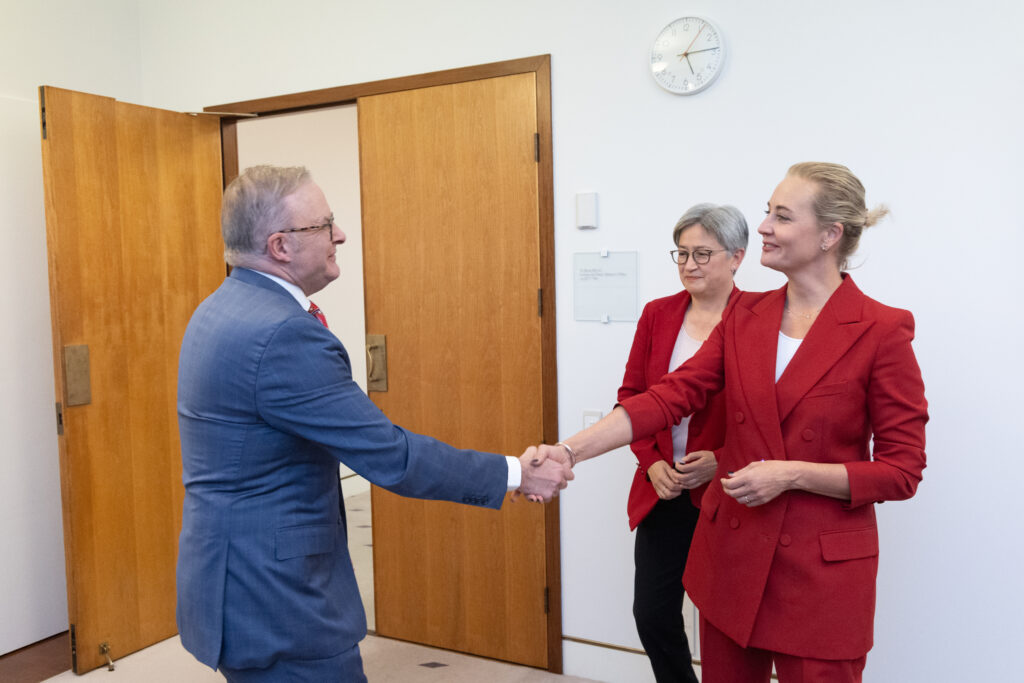
Before we dive too deeply into today’s news, some poignant pictures from the great Mike Bowers from last night.

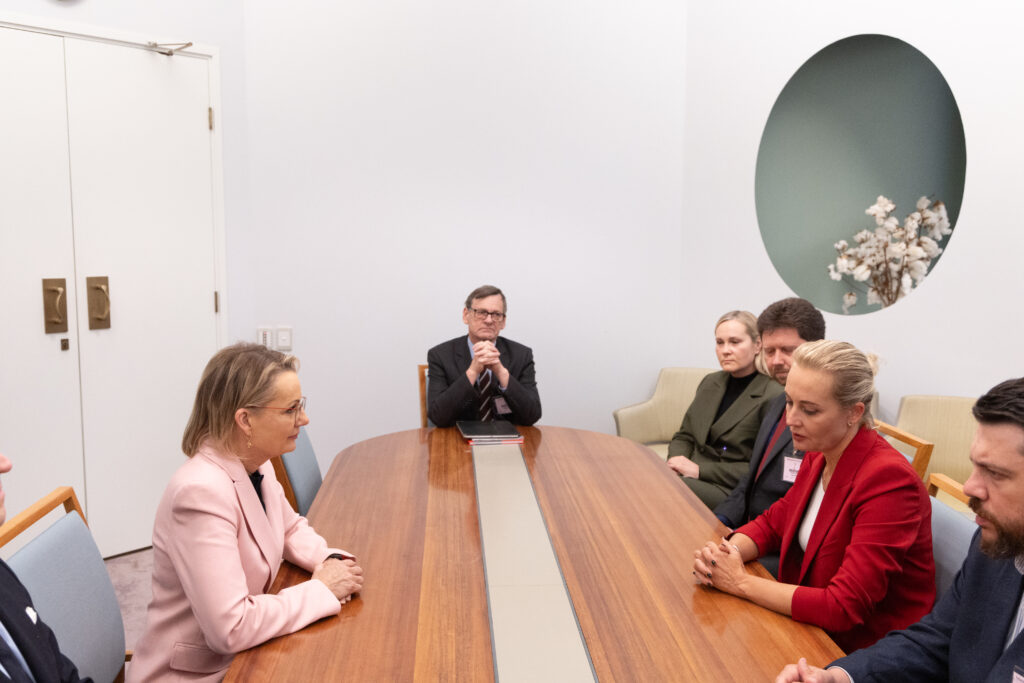
The PM, Foreign Minister and Opposition Leader met with Yulia Navalnaya, the widow of Alexei Navalny, the Russian opposition leader who died last year after being sent to a prison in Siberia.

“We honour Ms Navalnaya’s courage and reflect on Mr Navalny’s sacrifice and enduring legacy in the fight for freedom and justice,” Penny Wong said in a statement.

Opposition Leader Sussan Ley at a meeting with Yulia Navalnaya. Photograph by Mike Bowers. Wednesday 3rd September 2025.

Ed Husic urges government to send ‘clear statement surrounding the risks of Australians serving in the IDF in Gaza’, and to look at reforming laws.

Ed Husic took to the floor of parliament to deliver a statement during the adjournment debate last night, in light of Israel’s call up of reserve forces in its assault on Gaza. We have included it in its entirety so he can not be misinterpreted.

Let me state clearly, unambiguously at the start of this contribution:

Hamas is a terrorist organisation, what it did on October 7, 2023 is an abomination

Hamas should be held to account for its actions

All Israelis taken hostage by Hamas must be released immediately

I also want to state clearly and unambiguously:

Innocent Palestinians should be protected.

They should not being targeted by actions in Gaza

I made comments like this in this House back in October 2023 and I have expressed similarly, repeatedly, since the horrific events of October 7. And since then, I’ve stressed we should be conscious of the humanity of others.

My stance has been utterly consistent and steadfast.

But it’s gotten stronger when I’ve witnessed the suffering of the innocent, the starvation of kids.

Starvation should not be used as a weapon against civilians.Civilians, aid workers and journalists should be off limits

It’s just wrong and we can’t turn away from that. And this has remained the case even as the supporters of a foreign government – here and abroad – have consistently sought to deny, deflect or outright misrepresent my position and those who share my views about preserving and protecting innocent life.

They do that because it’s easier than confronting the morally challenging reality that: 63,000 Palestinians have been killed as a result of the

Netanyahu governments actions since October 2023

Nearly 70% of those killed are women and children

There are more child amputees and orphans in Gaza per capita than anywhere else in the world.

I think it’s important for the Parliament to note:

The ICJ believes its plausible that that the acts of the Netanyahu government could amount to genocide. The Convention on the Prevention and Punishment of the Crime of Genocide requires countries – including ours – to take steps to prevent genocide, not just punish it, the Netanyahu government is planning to seize control entirely of Gaza City.

It is also mobilising recruits to join the IDF and that there is resistance to this from within Israel itself.

In these circumstances it’s not unrealistic to expect that dual nationals from our country may be called to serve in the IDF.

We should be sending a clear message: please don’t join.

Some dual nationals have already left Australia to join the IDF, prompting concerns in civil society.

For example, three months ago, the Australian Centre for IInternational Justice wrote to the Ministers for Foreign Affairs and Home Affairs, plus the AFP, asking that we send unambiguous public warnings about the legal implications of joining IDF actions in Gaza.

The ACIJ emphasised it was troubled by statements from Netanyahu government officials highlighting an intent to pursue the “systemic and widespread transfer” and deportation of Gazans from territory in which they lawfully live.

Why’s that an issue?

Because it’s a crime against humanity, Specifically the deportation or forcible transfer of population, as defined in the Rome Statute of the International Criminal Court (ICC) and is an offence under our own Criminal Code Act.

We don’t need Australians placed in a position where they witness, abet or participate in what will likely be deemed a genocide.

I’m also be concerned about the impact of trauma on those returning after witnessing what they would have in Gaza.

I note in the Australian today ANU Professor Donald Rothwell stated: “Because it’s such a high-level political crime, I would find it most unlikely… individual soldiers who are members of the IDF could rarely be held responsible individually for genocide.”

However, a counter-weight to this position is the ACIJ view that any Australian participating in action in Gaza, risks being held liable via what they state are “a number of modes of liability, including as direct perpetrators, as well as aiding and abetting through the provision of logistical, material or operational support.

They also highlight that the International Criminal Tribunal for the Former Yugoslavia previously considered “even lower ranking individual soldiers can potentially be held responsible for the crime against humanity of forcible transfer, notwithstanding any attempt at utilising a ‘superior orders’ defence.

I’d urge our government to send a clear statement surrounding the risks of participating in IDF actions in Gaza.

It’s a prudent act to guide Australians out of harms way.

I’d also urge our government to consider reforming our laws to prevent dual nationals joining a foreign force, in cases where a body with the weight of the ICJ believes plausible genocide could be occurring in a part of the world where that foreign force is operating.

Both of these steps are actions we can take or begin to take right now.

They’re sensible, measured steps that would be welcomed by fair minded people, who believe we should do what we can to end the tragedy we’ve witnessed for far too long.

T

Australia to send $1m in response to Afghanistan earthquake

Penny Wong has announced the government will send $1m in support to Afghanistan, after a devastating earthquake in the remote Nangarhar Province which has killed at least 2,000 people and left thousands injured.

A humanitarian crisis already exists in Afghanistan and the country’s health system has been overwhelmed.

Wong:

Our thoughts are with the victims of this tragic earthquake, their families and loved ones, and the Afghanistan community in Australia.

Australia’s assistance will be directed through the Afghanistan Humanitarian Fund (AHF), led by the UN Office for the Coordination of Humanitarian Affairs (OCHA).

Australia works with established partners such as UN OCHA to ensure our support helps those in need, and not the Taliban regime.

Australia welcomes the release of US$5 million from the UN Central Emergency Response Fund (CERF) to support this response. Australia is a longstanding donor to the CERF, contributing $11 million each year.

The Government remains firmly committed to supporting the Afghan people. Australia has provided over $260 million to the ongoing crisis in Afghanistan since 2021, with a particular focus on women and girls.

Good morning!

Hello and welcome to the final sitting day before estimates next month! You made it! Congratulations!

A snap senate inquiry was held into the Nauru resettlement deal last night and senators like David Pocock heard the deal could actually cost $2.5bn over the next 30 years. Home affairs officials told the inquiry that a $20m payment would be made as soon as the first person in the NZYQ resettlement plan lands in Nauru, $388m will be placed in a trust account which both governments will manage and then an additional $70m annual payment is to be made for the next 30 years.

The SMH covers the deal, here.

So expect more on that today.

Also expect the government to come out earlish this morning with what was being called a ‘big’ announcement last night. No one would confirm, but it seems to be on climate. There are hints the climate risk assessment report is due ‘imminently’ as is the 2035 target, which may not be as straight up and down as people are expecting.

Glenn Connley is going to take you through the day as Amy Remeikis (waves) has a commitment to attend. I will miss you, but know you’ll be in great hands! Have fun, get what you need to get through QT and I’ll be thinking of you!!

Ready? Take it away Glenn!

************

Thanks Amy. Safe travels.

The day already has “big announcement” feels. As you suggest, more likely bad news than good.

After all, spring has sprung. It’s the final sitting day of a fortnight where the most contentious debate has been run and (kind of) won.

The AFL finals start tonight. There are 32 pages of footy wrapped around the Adelaide Advertiser before you can find any actual news.

Speaking of sport, the Demon is out of the US Open in pretty heartbreaking fashion.

So, let’s get ready to rumble. Whatever you do, steer clear of the lifts and corridors leading to the Senate and House exits at Parliament House.

My early prediction is that the PM will suggest future questions be placed on the notice paper at about 3:09pm this afternoon … then the race is on to Canberra Airport.

Like rats up a drainpipe …


Read the previous day's news (Wed 3 Sep)

Comments

Start the conversation

The biggest stories and the best analysis from the team at The Point, delivered to your inbox.

Past Coverage