See you tomorrow?
There is going to be a lot more of this mess tomorrow – and we will be here to cover it. It’s going to be a loooooong day.
Thanks for making today bearable. In the meantime, take care of you. Ax

This blog is now closed


There is going to be a lot more of this mess tomorrow – and we will be here to cover it. It’s going to be a loooooong day.
Thanks for making today bearable. In the meantime, take care of you. Ax
There will be more on the leadership challenge tomorrow – but Angus Taylor never confirmed he was challenging.
Fantastic etc.
Does Taylor take any responsibility for Sussan Ley’s leadership woes?
Taylor:
I think we’ve all got to do better. The party has to do better. We have let Australians down whenever we’re out in the community. This is all my colleagues. I hear the same thing when we’re out in the community talking to whether it’s our branch members, our supporters, just Australians getting on with their lives.
We hear time and time again that the Liberal Party needs to do better.
I fully understand that and that is why I think the current situation is unsustainable, and it’s why I’ve made the very difficult – just hear me out – that’s why I’ve made the very difficult decision that I have tonight. But I tell you what, I am absolutely committed to restoring confidence in the Liberal Party to ensure that Australians regain confidence in the Liberal Party and steering the Liberal Party back to where it needs to be. If we are to have the strong Australia that I so much believe in.
Taylor:
So the focus will be on restoring our standard of living and protecting our way of life. That’s what Australians want to see. And you’ll hear, you’ll hear, you’ll hear more from me and others, I’m sure in the coming days about that.
Why has it taken so long for him to walk down that hallway?
Angus Taylor:
It was important that the Herzog meeting happened without interruption. I think out of respect to that very important meeting and that very important visit. I think that that has been important. But look, the process here more generally for all of us has been to talk about the future of our party as Liberals. We want to see a strong Liberal Party and we know that means we need strong leadership. We need clear direction, and we need to focus relentlessly on our values. And that that has been the focus of discussions I’ve been having in recent times with my colleagues.
When is the spill happening? It is unclear.
Well, as I said, what we need right now is strong leadership, clear direction and a courageous focus on our values. And the first two priorities should be protecting our way of life and restoring our standard of living. I think Australians have seen failures on that under this Labor government. They clearly have and they want better.
And we see that in our communities. We see that wherever we go that will be the focus.
Taylor has addressed the media after resigning from the front bench:
I’ve tendered my resignation as a member of the Shadow Cabinet since the election in May last year. I’ve sought to be a constructive member of the leadership team, supported Susan Ley’s leadership in a difficult time when we needed a rebuild of the party.
But we can’t mince with words. The Liberal Party is at the worst position. It has been since 1944, when the party was formed. That is a confronting reality and we cannot ignore it. We have failed to hold a bad Labor government to account.
We’ve seen a collapse in Australian standard of living. We’ve seen a failure to protect Australians way of life. Australians want better from the Liberal Party.
Our supporters, those that have voted for us and those who might have voted for us at the last election, as well as Australians more generally. I think Australians generally understand that a strong Australia means a strong Liberal Party.
We must have a strong Liberal Party if we’re going to have a strong democracy in this country and we’re going to hold this bad Labor government to account. The situation right now is devastating for Australians and for that reason we need to urgently restore confidence in the Liberal Party.
That means we need strong leadership, clear direction and a relentless and courageous focus on our values as a first priority. We need to protect Australians way of life. We need to focus on restoring their standard of living.
I don’t believe Sussan Ley is in a position to be able to lead the party, as it needs to be led from here. I have just a few moments ago attended my resignation. I will continue to serve the Liberal Party and to work towards getting to it to where it needs to be. If it is to have the strength to make a contribution to this great nation.
The assumption is he will resign.
Which means – it is on.
The party room meeting to decide the leadership is expected to be held on Friday we are told.
Just a reminder here – everyone is just waiting to see if Angus Taylor will quit the front bench. There is no party room meeting after this. That will all happen tomorrow (or even Friday)
This is literally just a – will he push over that first domino.
At the moment, the art of reporting on nothing is reaching new heights, with the press gallery reporting on who is bringing them snacks, as everyone waits to see if Angus Taylor will resign.
This is mostly for an audience inside the building, so we will spare you the sideshow.
The meeting between the opposition and Isaac Herzog has ended, and now half the press gallery is camped out in the opposition courtyard waiting to see if Angus Taylor comes out and resigns as a shadow minister.
That will be the first domino in it being officially ‘on’.

Journalists are camped out in the opposition MPs hallway, where Angus Taylor and Sussan Ley’s offices can be found.
Ley and a select few Israel supporting Coalition MPs will have a special audience with Isaac Herzog, who has been credibly accused of inciting the commission of genocide (if they are not yet in the room with him now, they will be soon).
And then, all eyes are on what Angus Taylor will do. LNP MP Phil Thompson has been running around parliament with a giant smile on his face all day and he is one of Taylor’s biggest champions, so him being in a good mood probably means they are go.
Who knows though.
With a leading role in this year’s United Nations climate conference, the Australian government has an opportunity to show genuine solidarity with its Pacific neighbours and climate-vulnerable communities at home.
On this episode of Follow the Money, Kumi Naidoo, South African human rights and climate advocate, joins Ebony Bennett to discuss the need for a fossil fuel non-proliferation treaty, why it’s past time for the Australia government to stop coal and gas expansion, and his new Vantage Point essay, What We Owe the Water.
The Albanese government is celebrating the largest quarterly increase in bulk billing rates in 20 years, which have hit 81.4% nationwide.
While this might seem like a great achievement, the reality is that Australians still pay an average of $51 out-of-pocket to see a GP.
The Australian Government measures the share of services that are bulk billed by a registered clinic, not how many people walk out of a doctor’s visit without paying. It’s a big difference.
For example, a five-minute visit for a repeat prescription might be bulk billed (i.e., free to the patient), but a longer appointment for a complex health problem incurs out-of-pocket costs.
According to the AMA and RACGP, Medicare rebates have not kept pace with the cost of running a general practice. Rents are higher. Staff wages are higher. Insurance, utilities, and medical supplies have all increased since last year’s rebates. This means the Australian government pays slightly more per Medicare claim than it did a year ago. But that increase is barely enough to offset the increased cost of providing medical care.
This is why some clinics will bulk bill quick, simple services that don’t cost them a lot to provide, but charge a gap fee for everything else.
It’s also how we’ve ended up in a situation where bulk billing rates are at record highs, but out-of-pocket costs are still rising.
The Albanese government wants nine out of ten doctor’s visits to be free by 2030. But to achieve this target, Medicare rebates have to cover the real cost of providing healthcare to Australians.
The increase in bulk billing rates might look good on paper, but what Australians really want is to see a doctor without worrying about out-of-pocket costs.
Senator Jane Hume is concerned that removing the CGT discount will make the tax system more complicated.
Senator Hume is arguing that the CGT discount was a tax simplification measure and so reversing it will make the tax more complicated.
Recently the Parliamentary Budget Office found that 59% of the benefit of the CGT discount goes to the top 1%. Apparently, she is concerned that those super-rich beneficiaries might not understand how a different CGT system might work.
If Senator Hume wants a much less complicated tax system, she could support getting rid of the CGT discount all together. Then capital gains would be treated the same as all other forms of income. Nice and simple.
Back in estimates.
Senator Jane Hume is asking about the new Superannuation tax arrangements. She is concerned that when very rich people die, they might have to pay more tax.
This is referring to new legislation that government has put to parliament today where people with super balances above $3 million will get a smaller tax concession on their super (that is they will have to pay 30% tax on earnings, rather than 15%).
Her questions are about the fact that when someone who has more than $3 million in super (the top 0.5% of super accounts) dies, they would still be liable to pay tax on that enormous super balance.
Senator Hume seems to think this is contentious. Which it probably true for the very wealthy. But most people probably don’t mind that people with more than $3 million in super have to pay a bit more tax. She also seems to think this is a death tax.
The Coalition loves talking about death taxes. But this is actually a tax on capital gains that occur when assets are sold in the super fund after a person dies. The sale of assets often occurs after someone dies as their estate is sorted out.
So, not really a death tax.
Anthony Albanese and Isaac Herzog, the Israeli president who has been credibly accused of inciting the commission of genocide, have held a public meeting in the full sun of the prime minister’s courtyard.
Albanese:
It’s also been an opportunity for us to engage on issues and I look forward to a further discussion about the Middle East, about we in Australia want to see – peace in the Middle East, we want to see Israelis and Palestinians living side by side, in peace and security as we go forward.
Herzog ends his statement with a direct reference to ‘the next phase in Gaza’ which from what has been released shows Israelis and Americans building beach resorts over buried Palestinians:
This visit has been very emotional. You know when one Jew is hurt anywhere around the world we in Israel ache and our heart misses a beat.
That is why it was so important to visit the community and express heart felt condolences and strengthen the community. It is also an opportunity to bring the relations between our nations on a new beginning and a better future.
I think the relations between us do not depend only on the issue of Israel and the Palestinians and the conflict but has a much broader base, and we should, together, make sure that it’s uplifted to new directions, and I will conclude by wishing President Trump and Prime Minister Netanyahu, who are meeting today at the White House, to discuss a very important international regional and Israeli matter, which means the Iranian-American negotiations to wish them success in bringing peace and undermining that empire of evil emanating from Tehran, and also discussing the next phase in Gaza which is important to all of us, which I hope will bring a better future for all of us.
As the Productivity Commission’s (PC) important staff gear up to front up to estimates at the ungodly hour of 7.00pm tonight, keen readers may be interested to see if the senators ask the PC staff about their rubbery estimates of the economic impacts of AI.
According to the head of the PC, Daniell Wood, in a recent article in The Saturday Paper “artificial intelligence will be the biggest project.” But a quick look at what the PC has published on the economic benefits of AI, reveals quite a different story.
In December 2025, the PC published a 204-page report that examined various aspects of the AI craze, but only half a page was devoted to assessing the economic impacts of AI. Not exactly serious economic number crunching.
In comparison, at the same time, the PC hired two economic modelling teams that produced a combined output of 209 pages to assess the economic ‘benefits’ of cutting company taxes.
But back to AI. The PC’s quick guess was that the economic impacts of AI would increase economic output, or Gross Domestic Product (GDP), by between $116 billion and $2.6 billion over 10 years. Or, somewhere between just $11.6 billion and $2.6 billion a year.
While a billion dollars is a lot of money in anyone’s bank account, in an economy that produces $2,600 billion a year in GDP the impacts of AI are either small, or less than a rounding error. The $11.6 billion a year estimate is about the same amount of money that Australian households, in total, spend in just three days. While $2.6 billion is less than what households spend in just 17 hours.
It seems the PC have fallen for the hype of AI just like many others.
The Coalition still have no direction. They have tried falling back on old favourites – the CFMEU and energy, but the questions are so uninspired, the government has no issue in batting them away.
The biggest amount of pressure placed on the government came once again from the crossbench, where Zali Steggall demanded accountability for aid worker Zomi Frankcom on behalf of her family.
And so, now everyone waits to see whether or not Angus Taylor declares his hand. Not that it matters. This story has already been written – he will eventually get the leadership (the timing is up in the air) and then lose the election and Andrew Hastie will scoop up what is left. The when doesn’t really matter.
Milton Dick just had to explain that the Liberals and the Nationals are back together and the leaders are now part of the shadow executive again, which means they are the opposition (together) which is all very awkward, but he is made to do it to address a standing order issue, and it turns out no one in the Coalition actually announced it to the chamber.
So Dick has to do it. Which is like having your grandpa announce to the family dinner that mum and dad are back together. Again.
Jim Chalmers gets the final word in with a kick to Angus Taylor:
That’s why those opposite are baulking at him now, because in every portfolio that he’s held he’s failed badly and he’s failed upwards, Mr Speaker. The worse he performs the more entitled he feels to a promotion.
No matter what happens. At every stage of his life he wants everything handed to him on a silver matter, Mr Speaker, and he reminds me of a famous saying. The member for Hume was with a silver foot in his mouth, Mr Speaker. Just when we thought that they couldn’t go any lower on the economic credibility, the member for Hume says “Hold my chardonnay”.
He is a living, breathing reminder that the Liberal Party has become the party of higher income taxes, higher deficits and higher debt.
He goes months without asking questions in this place but those opposite should ask themselves, do they really want him to do to their party this term what he did to their economic credibility last term?
Sussan Ley and Tim Wilson tried very hard to get some media to bite on taking a heckle from small business minister Anne Aly out of context and claim that she was against small businesses. When that didn’t work (despite the work of Ley’s team in the special press gallery chat – again, hire clowns, get a circus) they started a social media campaign. That has been bubbling along in certain bot-farmed parts of the internet, so Aly gets a dixer today to speak on small business and says:
Australians have started over 800,000 new small businesses since we came into office, a clear sign of resilience and belief in the future. As someone who has owned and operated small businesses, I foe how rewarding it can be but I also know how difficult it can be. I just want to take a moment just to thank the hundreds of small businesses who have taken their time to meet with me and with me and share their experiences with me and I want to ensure them that their insights have been invaluable to shaping what we do as a government.
Today I announced an extension of the new access for small business owners program and the small business debt help line, delivering small businesses the help that they need when they need them. Just one of the ways that our government is helping to ease pressure on small businesses, in line with our national small business strategy, the very first strategy of its kind.
That strategy outlines how we will work with states and territories to drive a coordinated and collaborative approach to helping small businesses.
We are easing pressure on small businesses by extending the instant asset write-off and we have given tax cuts that have benefited 1.5 million soul traders. We are levelling the playing field by extending unfair trading practice protections to small businesses and ensuring large businesses pay them on time. While those opposite continue to focus on themselves, we continue to focus on backing Australian small businesses, giving them the certainty that they need to thrive.
Jim Chalmers gets a few lines in here, which is on the back of his success yesterday in getting the line ‘50% of the party support Angus Taylor and the other half have met him’ across all media outlets yesterday and this morning. He is also imagining a world where he gets to ignore Ted O’Brien again and that seems to make him a little sentimental.
Super Ted:
According to the Australian Financial Review the Treasurer’s medium term Budget forecasts have blown out by around $57 billion since the election. The Treasurer has been unable to explain why. The independent Parliamentary Budget Office has been unable to explain why and today, the secretary to the Treasury was unable to explain why. Nobody seems to know. Why won’t the Treasurer come clean about his $57 billion Budget black hole?
Chalmers:
I wanted to begin my answer by putting him at ease. He shouldn’t read anything into the fact that the member for Goldstein got all the earlier questions today or the member for Hume has a haircut. He shouldn’t read anything into any of those things.(
(Wilson is angling for Super Ted’s job as shadow treasurer in an Angus Taylor front bench)
Milton Dick tells him to get back to the question.
A couple of important elements to the answer to his question. The first one is – and he may not be aware but in the last few minutes, as I understand it in estimates, the fiscal group were there and they did talk about the change that you’re referring to.
They answered a number of questions about it. It may be that you’ve not yet caught up with that but that is understandable because you have been in here with us.
That is the first point. The second point is that, as I said on the day of the release of the midyear Budget update in the middle of December, a big driver of the medium term change has been the provision that we made for the hospitals deal that has subsequently been struck by the Health Minister and the Prime Minister.
A big part of the change over that 10-year medium term period, as I said on day of the MYEFO’s release, is the provision that we made for hospitals. The third point is, if you look at the last year of the medium term in the middle of the 2030s, the last – in last year the biggest driver of the change is a change in receipts, lowering receipts.
I made that point in response to a question from a journalist in recent – in the last couple of weeks, two or three weeks.
(There is a point of order that is not a point of order)
Chalmers continues:
I’ve answered his question comprehensively in at least three different ways. I refer him to the estimates transcript.
I am trying to be respectful in case he doesn’t have many more Question Times as the Shadow Treasurer and I am asking him to refer to that.
The number that the Treasury has provided is 54 they provided that – you really should know that, they have done that publicly.
The Budget papers don’t provide that number but that number has been provided in estimates. The two main drivers of that number are lower receipts and a provision for the hospitals deal. I finish on this point.
If those opposite think we shouldn’t be investing that money in our hospitals, then they should tell the Australian people how much they will cut from hospitals.
That, on the spending side that is the major driver of the difference, is hospitals. What this tells us is that they haven’t changed a bit since the last time they were in office went after Medicare and health funding.
They will go after hospitals if they get into office. The second point, he asked about the Parliamentary Budget Office, the PBO says their medium term, their 10-year period would be $142 billion weaker than ours.
The deterioration in the Budget, if they had won the election, three times bigger than the deterioration that the Shadow Treasurer is asking me about. I conclude by saying no wonder he is unlikely to last the week.
The Nationals MP for Lyne, Alison Penfold, gets to ask a question, which is a rare occurrence.
It’s on……an election promise from 2022 and for which there has been a whole arse other election in between and it didn’t come up, but the NATIONALS ARE HOLDING FIRM.
This is what happens when you cleave out all the talent.
Anyways, Penfold asks the only question the Nationals have been able to craft since the most recent break up and Chris Bowen seems almost bored in swatting this away and after a few digs and points of orders, says:
I say to the members of the National Party, if you are going to ask the government about climate and energy policy, be honest with the people that you represent, that climate change is real and people in rural and regional Australia will pay the price for that climate crisis and policies that will delay action and see people in rural and regional Australia, farmers who have seen productivity fall because of climate change pay the prize and future generations in regional Australia pay the price. People in rural and regional Australia have a lot to benefit from well calibrated policies.
The Morrison/Joyce government told the Australian people that net zero was good for people in regional Australia and since then they have walked away from those people and are betraying them by their actions.
Kristy McBain has taken a dixer on rural and regional health care and bulkbilling, mostly so she can lead to this bit:
Just recently I joined my local health care professionals at the launch of the Bega Valley urgent care clinic, someone of 123 clinics that have opened, with 40 being in regional, rural and remote areas. If you have a nasty spill on your bike or in a party room, you can just pop over to your local urgent care clinics. They will patch you up, they might pat you on the head, they will say “Fantastic, great move, well done”* insert name here.
Not only are we investing in Medicare, we are investing in more places for doctors to train in rural and regional communities, making it easier for people to see a bulk billing doctor. This year, 2100 junior doctors are starting their training as GP or rural generalist. That is 500 more than the under those opposite. While we are focused on health care and the access that we have in our those opposite are still focused on themselves.
*This is from the tweet Angus Taylor (or his office or family, depending on who you ask) sent in response to a social media post Taylor posted, which was obviously meant to be from an alt-account, but was posted in his name. So it was Angus congratulating Angus. He’s a Rhodes’ scholar don’t you know!
Sussan Ley is back and asking about….the CFMEU.
Anthony Albanese decides to take this one.

Ley:
Treasury has advised the government that its target to build 1.2 million new homes could not be met and that it is more than 80,000 homes behind. But instead of cleaning up union thuggery on construction sites to make it cheaper to build houses, the Prime Minister’s hand-picked CFMEU administrator suppressed entire sections of a union corruption probe. Prime Minister, why are home buyers paying the price for Labor’s failure to stand up to union corruption?
Albanese:
I do thank the Leader of the Opposition for the question which draws some very long bows there. Some very long bows indeed.
Those opposite sat on this side of the chamber for nine years. John Setka during that period increased his influence over the CFMEU.
They did absolutely nothing.
I tell you what I did, after I became leader of the Labor Party, was I expelled John Setka within weeks.
That is what leaders can do when they lead their party with authority.
When they actually have people behind them as part of their party who are working for them not undermining them.
That is what we did on this side of the house, which is why we were able to, when we came to government, take strong action and we took strong action to intervene, to insert the administrators which has seen people leave that union and that industry.
When it comes to our target, construction cost inflation has fallen from a half-century high under the Coalition, housing construction costs were rising at 17% when we came into office, now it’s 1.8%. There are more first home buyers under Labor than there were under the Coalition.
We’ve directly helped over 220,000 Australians into home ownership sooner. New home starts are up. New dwelling commencements were up 11.6% compared to a year ago.
We are doing something that those opposite never did, which is to actually build social housing, to actually – we on this side don’t look down our nose at people, we understand that social housing is an important part of what we want to achieve. Master Builders CEO has said “The 1.2 is achievable.
For the first time we have seen a Federal Government actually recognise that they’ve got a leadership role in resolving this problem”.
Up until the Albanese government “We have seen Federal Governments say no it is the problem of the states or local government”.
That is the CEO of the master builders of Australia. We are getting on with the job of building homes for Australians. Those opposite are just trying to tear down their own house.
Tim Wilson asks another question on the CFMEU. I know this is core Liberal business, but honestly – find me a normal person who cares about this.
Then we have the Nationals just sticking to their 2022 question pack, which apparently was all they could find in the files after the most recent split with the Liberals, asking about the $275 reduction in energy prices.
Chris Bowen says he is unsure of what the actual question is, which is fair, because the middle aged white man asking this question (they all look the same) forgets to put in the bit with the question mark.
Either way, we all lost some more precious minutes in this one life we have.
Earlier today the Treasurer Jim Chalmers introduced the bill to reduce the tax breaks for those with big super balances.
The bill makes the following changes:
From the 2026-27 income year onwards, the headline concessional tax rates applying to superannuation earnings are:
This was a watering down of the changes that were taken to the 2025 election.
The govt has removed the tax on earnings above $3m being on unrealised capital gains, and it also decided to index that $3m threshold.
The Greens would like the threshold to be lower ($2m).
It is clear there needed to be changes to the super tax discounts. These were introduced to help encourage people to save and not be reliant on the pension, but someone with a $3m super balance was NEVER going to be eligible for the pension, so the govt was just giving them a tax break for no reason at all.
These tax breaks cost $60bn a year in lost revenue, and bit over a third goes to the richest 10%:
Essentially the richest 10% are getting $22bn a year in tax breaks to help them not be on the pension. Meanwhile those actually on the pension live in poverty.
The first dixer is on bulk billing – which is what the government want attention on today.
Zali Steggall then has the first crossbench question, asking about what the government is doing to get accountability for Zomi Frankcom, an Australian aid worker who was killed by an Israeli strike, along with six other colleagues, despite travelling in a clearly marked World Kitchen convoy.
Steggall:
The grieving family of Australian aid worker Zomi Frankcom still seeks answers. The conflict in Gaza has been among the deadliest on for journalists and aid workers with over 200 journalists killed and 400 aid workers. Her brother raised his concerns directly with the Prime Minister about no-one facing accountability.
Will the government now push for an independent war crimes investigation into her death, the targeting of aid workers journalists? What accountability will the Prime Minister request of President Herzog?
Anthony Albanese:
I note that if President Herzog wasn’t here I wouldn’t have been able to raise the issue of Zomi Frankcom with him which is what I did this morning along with a range of other government concerns. (Is there no phones? No internet access? This is a weak justification for the visit)
That is one of the reasons why you have dialogue in a respectful way, to get outcomes and advance Australia’s national interests. (Sorry, what?)
One of the issues that I have raised is Zomi and her six World Central Kitchen colleagues. These deaths were a tragedy and an outrage. We said that at the time. We have made it clear that remains the Australian Government’s position and we’ve also made clear our expectation that there be transparency about Israel’s ongoing investigation into the incident.
We continue to press for full accountability, including any appropriate criminal charges. Last year at the United Nations, Australia and our partners launched a decoration for the protection of humanitarian personnel. That was led by our Foreign Minister Penny Wong, who engaged with her colleagues right around the world to issue that statement, to which more than 100 nations signed on. (Why do we now have to protect humanitarian workers? Why do we need the declaration?!)
Attempting to get a global position, so that the figures that the member referred to, every one of them a tragedy, every one of them an outrage, whether it be journalists or aid workers losing their life going about doing their job, whether that be reporting on what is occurring in Gaza and the Middle East or whether it be that critical work providing humanitarian support to Gaza which is under the middle of a humanitarian catastrophe, something that Australia has increased our aid for and we will continue to do. (Who is killing journalists and aid workers in Gaza?)
We have spoken about humanitarian aid as well with the Israeli government and with the Israeli President. I must say the Israeli President has said he will engage and come back to the Australian Government about the issues that we have raised. (Israeli is holding back aid and medical attention from Gazans, despite the ‘ceasefire’ and the best we have is ‘they’ll get back to our polite request to not kill civilians’)
The issue of the protection decoration is about honouring the courage and kindness of Zomi Frankcom and her fellow aid workers. This is someone who didn’t just provide aid in that area of the world but along with other World Central Kitchen colleagues, the head of whom is based in New York and is known to President Herzog has done extraordinary work in war zones and under extreme difficulty, taking risks to help their fellow humanity. (Again, who was responsible for their deaths?!)
We honour Zomi and we say to her family that our sincere condolences on what is a tragic loss and we will continue to work each and every day to do our best to ensure there is transparency and there is appropriate action.
Sussan Ley kicks off question time with the issue on the minds of EVERY Australian – the CFMEU.
Today, Australians learned sections of a report into CFMEU corruption were removed by the Prime Minister’s hand-picked administrator. The sections included government inaction on the CFMEU and the cost of inaction to the taxpayer. The probe’s chief investigator said “I did not suggest the changes, I was directed to make the changes”. Prime Minister, did any individual in the Albanese Government have any involvement in the removal of these two sections?
Amanda Rishworth as the minister, takes this one:
The CFMEU administrator commissioned Geoffrey Watson to provide a report into the Victorian branch of the CFMEU to help him with his important work. Let me be very clear – this is a report to the administrator, not a report to government. The handling, distribution and publication of reports commissioned by independent administrator is a matter for him. To be abundantly clear, my office received this report on 9 February and at no stage have we requested any changes to the report or made any request for amendments to the contents of the report.
Any suggestion is misleading the parliament. Let me be very clear. Mr Irving has been clear and transparent about why parts of the report had been removed and it is because he was not satisfied that they were well-founded or properly tested. In terms of the transparency, the Watson report has been tabled by the administrator and he and – he has responded publicly.
We retain full confidence in the administrator, respected KC Mark Irving. Not a single bad actor referred in this Watson report still works for the CFMEU and all have been removed by the administrator. Those opposite have irresponsibly called for his sacking, of an administrator that has achieved more progress in cleaning up the union in 18 months than they achieved in their whole time in government. Over 50% of the organisers in the Victorian branch have been removed. 90% in New South Wales and in Queensland, 50%.
Let’s remember how many those opposite removed – a big fat zero. Considering that the Leader of the Opposition has referenced Geoffrey Watson, and he has provided evidence to say today “If anything I’ve said here today would suggest there is an outcome about removing the they should think again. They would be mad to get rid of Mark Irving”. So those opposite might want to distract from their chaos and disruption, nothing will do that. We have been very, very clear about this – they can say there is smoke and mirrors but we have been clear…(INTERJECTIONS)We have been very clear and they need to think again.
Dugald Dick is in the House, and he is giving a statement to the house (without indulgence) which is just a way of saying Isaac Herzog is in the building and protests in the chamber will not be tolerated.
This week has been a particularly combative week in the chamber and this behaviour does not reflect on the house. I shouldn’t have to say this, seeing as I already made a statement but further incidents have occurred, it leaves me with no other choice. The standing orders been changed. I want all members to understand that I won’t hesitate and using the naming powers I have.
Of course, in parliamentary debates members will have differing opinions and even in Question Time, that is to be expected. But the house has to find ways of engaging in debate that maintains respectful behaviours.
We have a shared responsibility display exemplary leadership. Regardless of the challenges inside this chamber or challenges outside the chamber, we must exercise shared responsibility to ensure people are always treated with the highest standards of respect. We all know that everyone is looking to the parliament and looking to us, they have expectations of how we speak and how we behave towards each other. In recent reforms for behaviour codes and standards of parliament are truly to be meaningful, we must act with intent to set the standard for an inclusive, respectful and professional workplace in Parliament House and across Australia.
I am asking all members to rise to this challenge.
Allegra Spender then stands and says:
I am regularly told from members of the public that the behaviour in this chamber is out of step with what modern Australia expects. People often tell me that if they behaved like we do in their workplaces, their schools and their community centres, they would be thrown out or suspended. I know we are all genuinely concerned about social cohesion. As a country we disagree passionately about many issues and as politicians, we keep on asking everyone to have a robust debate but with respect.
People are sick of politicians saying “Do as I say but not as I do”. If as a parliament we expect this from our country, we must start by leading by example and start by doing it here.
Good news for the culture – QUT has announced it will be the new custodian of Meanjin, which brings it back to Brisbane 80 years after it was moved to Melbourne.
QUT Vice-Chancellor Professor Margaret Sheil said:
QUT is delighted to bring Meanjin home to Meanjin / Magandjin – the lands of the Turrbal and Yugara peoples – where the journal was founded and where our Gardens Point campus now stands.
Since its foundation by Clem Christesen in Brisbane in 1940, Meanjin has been instrumental in shaping Australian literary and intellectual culture,” she said. “It has provided a vital platform for critical discussion, a showcase of emerging writers and a valuable training ground for leading Australian publishers and editors. We are honoured to be entrusted with the legacy of this cultural icon.”
Under the terms of the transfer, QUT will appoint an editorial board to ensure Meanjin’s independence, values and standards are maintained and recruit an editor through a national competitive search.
Meanjin’s publication was abruptly stopped by MUP last year.

Independent MP Sophie Scamps has told the SMH she will be boycotting question time in protest of Isaac Herzog, and Greens MP Elizabeth Watson-Brown will also boycott QT:
A head of a state currently committing a genocide should never have been invited to our shores.This moment is about who we are as a country on the global stage. The world is watching. Either you’re opposed to genocide or you’re not.
Labor is not opposing genocide. Instead, Labor are welcoming a head of state found by the UN commission of inquiry to have incited a genocide to Parliament House. This is a horrifying normalisation, and one we shouldn’t accept.
Today the Commonwealth Bank announced its half-yearly profit for the 6 months ending 31 December 2025. Their pretax profit was $7,765 million for those 6 months. That profit is the equivalent of paying average weekly earnings for almost 300,000 workers for those 6 months.
But what about homebuyers?
The Commonwealth Bank was quick to announce higher home loan interest rates on the same day (Tuesday 3 February) as the Reserve Bank decided to increase official rates to 3.85%.
Figures released by the Australian Prudential Regulation Authority show that, on average, 68.7 % of the Commonwealth Bank’s lending went on housing loans, and so, on a pro rata basis, we can say profits on housing loans were most likely around $5,338 million. Annualised that means the Commonwealth Bank makes profit of around 1.73% of its outstanding housing loans. That may not sound a lot but ABS figures show the average loan for owner occupier dwellings in Australia in September 2025 was $694,000. 1.73% of that is $12,000 and a bit, or $1,000 a month.
So the poor homebuyers of Australia are paying, on average, a thousand dollars a month as profit to the Commonwealth Bank.
This hasn’t received a lot of attention, but Queensland police are scrapping it’s specialised domestic violence unit which was put in place a couple of years ago to support victims of violence in response to reports of mishandling of victims and domestic violence reports, within the QPS.
Apparently supporting victims of domestic and family violence is no longer “core business”. Instead the police are to be re-deployed onto the ‘front lines’ which is just political speak for ‘we are not focusing on this any longer’.
The LNP has put in place a lot of “core business” mandates to Queensland departments and services, which means that if a service or policy doesn’t meet the government’s set priorities, then it is to be scraped.
Now this has received a little bit of attention from the state media, but not more widely. Domestic violence advocates are worried what losing the specialised unit will do – but when raised in the state parliament this week by Labor’s Shannon Fentiman, the LNP’s Police Minister responded by accusing Fentiman of ‘fake news’ (Fentiman was referring to media reports on the scraping of the unit and Purdie is now accusing her of ‘taking matters out of context’)
Anyways – just Queensland things
Isaac Herzog speaks again of the Australians who “fought to “liberated our land in 1917 which led to the creation of our state later on” with no mention of the fact that Israel has just destroyed the graves of Australian soldiers who died defending freedoms in World War II (or that the land was Palestine and that Palestinians have spent the decades since the war honouring Australian and other allied soldiers by tending their graves)
Governor-general (Australia’s head of state) says a photo of Herzog’s father visiting Australia 40 years ago where he met with students has been found. She welcomes the president to Australia and Government House.


In estimates Senator Nick McKim is grilling Treasury on price gouging.
You might remember that at the last election, Labor promised to make price gouging by supermarkets illegal.
Senator McKim is asking why this being limited to only the supermarket sector. The finance minister Katy Gallagher responds that this is because households are being hit hardest by increasing grocery prices.
Senator McKim rightly points out that households are being hit by price rises in lots of areas including around insurance.
This is correct. The Australian economy is full of markets with little competition. Markets with a couple of large businesses that dominate and have lots of power to set prices. Economists call these kinds of market oligopolies.
Examples of this are supermarkets, insurance, airlines, hardware, electricity retailers, and the list goes on.
The problem is only getting worse.
The Australia Institute was first in Australia to point out that businesses were using the cover of the world wide increase in inflation in 2022 to put up prices more than they needed to and were earning excessive profits.
It is great that the government is moving to outlaw price gouging by supermarkets, but the problem is so much larger and should be extended economy wide.
As Senator McKim said it would also be good to get the Labor Party over the line on divestment powers.
The biggest winners from competition are consumers. The government needs to work harder to make the Australian economy more competitive.
Ukraine’s Ambassador to Australia, His Excellency Vasyl Myroshnychenko, has delivered a chilling warning that a desperate Russia could be emboldened by the collapse of the rules based order, under Donald Trump, to use nuclear weapons in the war with Ukraine.
These are the agreements (arms treaties) which gave middle powers confidence that, whatever else may happen, nuclear war will not be our destiny. With the imminent expiry of the loss of the nuclear arms control treaties and no sense of an extension or replacement agreement, the rational rules-based rule order we have known since the 1950s and 1970s is fast fading. Russia will be free to threaten nuclear war to get what it wants. I note here that Ukraine gave up its post-Soviet nuclear weapons in exchange for territorial and security guarantees, which Russia signed. But that seems an idealistic move in retrospect. It poses the question: should small or middle powers now embark on their own nuclear weapons programs in the face of predatory major powers?
Last year when the government introduced its 5% deposit guarantee we here at The Australia Institute (including Amy) said it would increase house prices and make housing affordability worse.
Well guess what?
It did.
Alas we (and everyone else with the most basic knowledge of economics) were right.
In the latest housing lending figures out this morning, the average home loan for a first-home buyer hit a new record of $607,545
Worse however its that in the December quarter – the first quarter of the policy, the average value of first-home buyer home loans rose 8.2% – the biggest one quarter jump on record.
Congratulations to the Albanese government, you made housing less affordable n a shorter time than anyone has before.
Ukraine’s Ambassador to Australia, His Excellency Vasyl Myroshnychenko, is addressing the National Press Club, ahead of the fourth anniversary of Russia’s invasion of his homeland, on February 24.
The theme of his address is: “Why Russia’s war against Ukraine matters far beyond Europe”.
It will examine the question: “Is modern Russia more myth than superpower?”
He opens with an explanation of why a war, so far away, matters to Australia:
Australians are far more attached to the ideal of a resolution to this invasion on Ukraine’s terms. And they want to hear more, not less. I have no doubt that some institutions want to wish away the war, and there is analytical and strategic variance about how and when the war will end. But that is precisely the fertile ground for the Russian false narratives about the war. Collectively resist the temptation to reduce the efforts of predatory major powers. There is no easy life in this world. If we do not resist brutalist predatory major powers, then we volunteer ourselves to be bullied. Australia, as a significant middle power, has a global role to play.
At Senate estimates on Tuesday, it was confirmed that public servants have looked at the impact a ban on gambling ads might have on commercial TV networks. The mandarins in the hotseat wouldn’t, however, give the details. The ban is one of the central recommendations of the 2023 Murphy review into the harms caused by online gambling. The Albanese government has not moved to implement the findings of the Murphy review, despite their comfortable majority in the House, and despite the high levels of support for gambling reform from both backbench MPs and the crossbench.
Opponents of an advertising ban have argued that it would be a fatal blow to Australia’s ailing free-to-air networks, who apparently wouldn’t be able to survive without the money gambling companies bring in. The public service might be keeping mum about the potential impact, but Australia Institute research shows that there’s a simpler solution: a small levy on the many billions of dollars gambling companies extract from Australians could compensate the media for any lost revenue – with enough left over to increase funding for the ABC. A 2% levy would cost the gambling industry less than a quarter of a billion dollars a year, which is a tiny fraction of the $25 billion Australians lose on wagering.
Australia Institute research polling has shown that there are high levels of public support for a ban on gambling advertising, so a ban would surely be popular. Maybe people just want to watch the footy with the kids in peace?
So what is going on this morning?
The Israeli president, Isaac Herzog, who has been credibly accused of inciting the commission of genocide, has been welcomed at Government House as an honoured guest
There are worries the Coalition may invite Herzog to attend question time, which would put the government in the position of sanctioning it or not (and then the consequences of either decision)
The government wants to talk about bulk billing (the rates have gone up) but the main event is Herzog
The Coalition is still just talking about itself and whether or not Angus Taylor will challenge for the leadership.
Don’t be surprised if Taylor does not challenge just yet – but truly, no one really knows.
No one serious is talking about this publicly which is how you know there is a lot happening behind the scenes. Much like toddlers, when they get quiet, something is up.
Over in the federation chamber (which is the spill over chamber for the House) independent MP Zali Steggall has spoken on the recent report which showed the influence of Japanese gas lobbyists in Australia.
Steggall:
Australians do not have a gas shortage problem; we have a government that refuses to put Australians first. New reporting has revealed just how deeply corporate Japan is embedded in Australia’s gas export machine. Ministers have met with Japanese LNG executives more than 20 times in a single term while households here are left paying the price. This is what selling out Australians looks like—Australian resources, higher emissions and Australian families carrying the costs while profits are booked offshore. Every week I hear from families choosing which costs to delay from small businesses trying to absorb yet more cost rises. They can’t win in a market that has been deliberately distorted by exports.
Australians are told to be patient and to accept rebates and bandaids. Yet Australian gas continues to be shipped out under long-term deals that don’t prioritise Australians, and this government keeps waving it through. InfluenceMap has found that Japanese companies hold more than $70 billion in equity across Australian LNG developments—projects linked to around 290 million tonnes of CO2 per year, roughly two-thirds of Australia’s annual climate pollution. While we’re told that this is all about Japan’s energy security, the reality is quite the opposite. A significant share of Australian LNG bought by Japanese firms is on sold to third countries, reportedly generating more than US$1 billion in profit in 2024. Australians pay higher bills. Multinationals cash in, and the tax system barely touches them. Australians paid more than four times more in tax through HECS-HELP repayments than gas companies paid through the PRRT. Low-income households are hit hardest, spending around five times more of their income on energy than high-income earners.
I say to all the members of government: look to what you are doing with the gas exports. If the government is serious, it must stop acting as a concierge for the gas industry and start acting in the national interest. Lock in genuine domestic gas reservation and transparent contracting. Enforce rigorous methane measurements and regulation—no more voluntary rules. Deliver a credible, managed phase-down of gas, consistent with keeping climate change in check and commitments to net zero. Australians deserve an energy system that is affordable, accountable and aligned with climate science, not one designed to boost foreign profits. Let’s be clear. Gas is not green, and it is not in the best interests of Australians to keep prioritising Japanese exports.
At Senate estimates on Tuesday, it was confirmed that public servants have looked at the impact a ban on gambling ads might have on commercial TV networks. The mandarins in the hotseat wouldn’t, however, give the details.
The ban is one of the central recommendations of the 2023 Murphy review into the harms caused by online gambling. The Albanese government has not moved to implement the findings of the Murphy review, despite their comfortable majority in the House, and despite the high levels of support for gambling reform from both backbench MPs and the crossbench.
Opponents of an advertising ban have argued that it would be a fatal blow to Australia’s ailing free-to-air networks, who apparently wouldn’t be able to survive without the money gambling companies bring in. The public service might be keeping mum about the potential impact, but Australia Institute research shows that there’s a simpler solution: a small levy on the many billions of dollars gambling companies extract from Australians could compensate the media for any lost revenue – with enough left over to increase funding for the ABC. A 2% levy would cost the gambling industry less than a quarter of a billion dollars a year, which is a tiny fraction of the $25 billion Australians lose on wagering.
Australia Institute research polling has shown that there are high levels of public support for a ban on gambling advertising, so a ban would surely be popular. Maybe people just want to watch the footy with the kids in peace?
The December quarter housing finance figures are out, and unsurprisingly there has been a big jump in the number of first-home buyer loans off the back of the government 5% deposit guarantee.
In the December quarter last year the number of home loans going to first-home buyers rose 6.8% compared to 3.6% for non-first home buyers
It was not an absurd jump, but it still sizeable enough that it led to an overall increase in the annual growth of housing loans. The annual growth in the total value of housing loans in the December quarter of 2025 was 23.5% up from 13.3% in the September quarter. That matters because when the value of housing loans rises, house prices follow. So expect house prices to keep rising for the next while, even as interest rates have risen.
Issac Herzog, the head of a state credibly accused of genocide, been invited to inspect the guard at Government House, which is an honour given to head of states, and means the military lines up and he gets to walk past nodding at them.
It’s now ceremonial, but once was a way of showing an honoured guest that their host was going all out in providing security and safety for them.
He apparently has also planted a ‘peace’ tree on this trip.


James Paterson is back for a final go.
He wants to know about public and private demand.
The Treasury gives a figures relating to “new” public demand. Paterson wants to know why they are talking about “new”.
Treasury points out this is taking away the impact of buying/selling new assets from the private sector. This has been long, long, long standing practice.
I once forgot to do this in a Guardian column and the then LNP Treasurer’s office (I can’t remember if it was Morrison or Frydenberg) quickly got in touch with me to point out my error (they were right).
Paterson seems to think this is some scandal and keeps going on about why talk about “new” and not total.
He doesn’t seem to realise it is mostly about counting. The demand is there, it is just whether it gets counted as new private investment or new public investment, the actual “activity” in the economy is not changed.
As Grogs pointed out on Monday, this was Mark Latham in 2004’s slogan. So the Liberals in 2026 are taking inspiration from 2004 failed Labor leadership candidate, Mark Latham. Let that sink in.
Sussan Ley has arrived at Government House for an audience with the Israeli president, Issac Herzog (who has been credibly accused of incitement of the commission of genocide by the UN).

It will not surprise you to know that security is very tight.


Yesterday, Transparency International released the Corruption Perceptions Index for 2025. The Index measures how public sector corruption is perceived around the world.
After a small improvement last year to 77/100, Australia has slipped to 76/100 – well shy of the high of 85/100 that Australia achieved in 2012 under the Gillard Labor Government.
Transparency International Australia CEO Clancy Moore says:
“This year’s dip reflects the ongoing corruption risks of big money in politics and weaknesses in holding the corrupt to account.”
Last year, then Attorney-General Mark Dreyfus launched the Corruption Perceptions Index, a few months before he was demoted. He said:
“Australia’s position in the top 10 on the Corruption Perceptions Index is a testament to the power of collective action – and the commitment of the Albanese Government to tackle corruption.”
This year, Australia has fallen back out of the top 10.
Senator Nick McKim is back and wants to ask if the CGT 50% discount causing higher house prices.
Jenny Wilkinson notes they have talked about this in the past and says, yeah there a lot of things going on but that she thinks the “price impact is relatively modest”
I present to you the modest price impact
The protest against the visit from Israeli president, Isaac Herzog, who has been credibly accused of inciting the commission of genocide, is building outside parliament.
There are also some concerns about a possible diplomatic situation inside the parliament, over whether or not Herzog is invited as an honoured guest, either in the guest gallery, or the floor of the chamber.
There are rumours the opposition will invite him to question time, which is not exactly diplomatic protocol, which then puts the government in the position of either having to sanction it, or deny it (and you know which way they will go) which then means Herzog would receive an official welcome from the Speaker.
If that occurs, you can probably expect a couple of MPs to leave the chamber in protest.
All of this is just rumours, but shows how comprehensively this visit has also sucked up all the oxygen in the political space.
Senator Jane Hume arrives and asks if Treasury has been asked to do any modelling on changes to the Capital Gains Tax.
Jenny Wilkinson says, well Jim Chalmers said on Insiders that they are looking into reforming the tax system for the budget, but we ain’t telling you what specifically we have looked at because we don’t need to tell you about what might happen in the Budget (which they don’t).
And at this point for no real reason Senator Gallagher pipes up. It’s all a bit time wasting (which is the point).
With Liberal leadership speculation dragging on for another week, it seems a good time for a reminder that Sussan Ley is the second-most senior of the six Liberal opposition leaders in the country.
Yes, Ms Ley has been in the job less than a year — but such is the churn in the state Liberal party rooms that she still takes the silver.
If, like me, you are getting sick of the speculation over the increasingly irrelevant role of Opposition Leader, take a look at who else can make for a strong Parliament (spoiler: you’re on the list) or my article from last year on what the point of the Opposition is.
Skye Predavec
Researcher
The “put up or shut up” strategy adopted by Sussan Ley’s allies in their bid to preserve her leadership of the Liberal Party has been used countless times by leaders rocked by whispers of a challenge. So how did it go for them?
In 2018, then-PM Malcolm Turnbull used similar tactics – requiring the supporters of leadership aspirant Peter Dutton to put their names to a petition if they wished to spill the leadership. Within a day, a petition with 43 signatures (a majority of the party room) was presented to Turnbull – Sussan Ley had been the third to sign – and his leadership was over.
Turnbull had been dogged by internal instability after replacing a more conservative leader of his party, culminating in the challenge after declining poll numbers indicated he would lose the next election.
There are clear similarities with Ley’s current plight, but also to that of the “put up or shut up” strategy’s originator: former British Prime Minister John Major.
Major replaced the hard-right Margaret Thatcher as leader of the UK Conservative Party, but rivals for the leadership had been plotting to replace him since he won a reduced majority in the 1992 election.
Tensions boiled over in 1995, reaching a point where two of his rivals began installing extra telephone lines to their offices in anticipation of leadership bids. Major, rather than letting circumstances get ahead of him, resigned as party leader, telling prospective opponents it was “time to put up or shut up”. He calculated that this would scare off his high-profile opponents, leaving him with a weaker challenger who he could easily defeat.
It worked. Major’s leadership would survive until the general election two years later, when his party was defeated in a landslide.
Current British Prime Minister Keir Starmer is attempting something similar, with his leadership on the brink after revelations of his ally Peter Mandelson’s close links with Jeffrey Epstein.
Starmer’s days seem numbered. But will “put up or shut up” work for Ley? Will Angus Taylor be intimidated out of a challenge? With Taylor’s backers apparently mulling a mass resignation, we may find out soon enough.
Professor Stiglitz points out that the resources of Australia belong to Australians, not to the gas companies, and Australia should get the maximum value for these resources. He discusses how companies are very good at minimising the amount they pay through effective lawyers. Stiglitz argues there should be a very high tax on the super profits of gas companies, which are profits that are abnormally high and arise in the mining sector.
For context, Australia has a tax (the Petroleum Resource Rent Tax or PRRT) that is meant to tax these super profits but is currently failing to raise much revenue amidst booming gas industry profits. Meanwhile multinational gas export companies paid zero royalties on over half the gas they exported overseas and have continued to pay relatively limited corporate tax.
Over in DEWR estimates (employment and workplace relations) Liberal senator Maria Kovacic seems a little distracted (guess there is a bit going on for the Liberals) asking “what question do we need to ask to get an answer”.
This came just after Greens senator Barbara Pocock had just prosecuted questions over why Natalie James was let go. So it was kinda jarring.
Cos you know – it is the senator’s job to ask the questions.
Senator Paterson is back and wants to know about the change in the median term estimates.
I just wasn’t to reiterate: this is completely irrelevant.
We are talking about the projected increase in the deficit in 2029-30 and beyond.
The current budget only has detailed forecasts out to 2028-29.
Even those forecasts are going to absolutely not come true. No one really gives a damn about forecast 3-4 years away, let alone up to 10 years away.
Paterson is trying to suggest that these increases in deficits are bad because it means in 2029-30 the government will be stimulating the economy! This is fantasy novel stuff.
By December 2029 no one, absolutely NO ONE will care what the forecast made in December 2025 were for then. They are just projections. They’re not even true estimates. The budget papers used to even not bother with them.
Joe Hockey when he was Treasury he started throwing in 10 years forecasts to talk up how he would bring the budget to surplus.
They are marketing. No one who matters cares about them.
Senator McKim asks Ms Wilkinson why the Treasury Department did not make a submission to the Senate inquiry to Capital Gains Discount when the NSW Treasury did.
As an aside Matt Grudnoff and I put in a submission. You can read it here
Here’s a quick summary:
“Killing the Australian Dream: The failure of the capital gains tax discount”
The 50% CGT discount has introduced a distortion to the tax system that favours the wealthy and increases inequality. It acts as an incentive for housing investors that allows them to outbid prospective owner-occupiers and placed home ownership outside the reach of many.
There is now a growing body of evidence that shows that investor demand for housing that has pushed up prices and forced many families into a lifetime of renting. But this evidence points to the solution. As has been seen in Victoria in recent years, and in changes to macroprudential rules a decade ago, when policies that discourage investors are put in place, house price growth slows, and housing becomes more affordable.
The biggest single incentive for investors is the CGT discount. By scrapping it, the federal government will advantage first home buyers, helping more Australians into a home of their own.
Building more houses will expand housing supply and make housing more affordable. Federal, state, and local governments have made changes designed to encourage more supply and we recommend that should continue. But building more houses will require extensive resources and considerable time. Increasing supply is the slowest, most expensive way to make housing more affordable.
The CGT discount has also distorted bank lending. Since its introduction banks now lend much more to mortgages at the expense of businesses. This has consequences for business investment and productivity.
The CGT discount is causing real harm to Australians and the Australian economy. For this reason, we recommend that it be scrapped.
He notes that that there has been a big jump in the amount of the Capital Gains Tax discount going to the richest 10%. It is now up to 59%, whereas before it was in the 30s.
Wilkinson says if you are talking about the Tax Expenditure Statement (which he is) that he should ask the “revenue group” of Treasury because they do that.
McKim says, fine, but you are the Secretary surely you are happy to tells us about capital gains tax.
Wilkinson says she is not happy to talk about it because she doesn’t not have the numbers and doesn’t want to mislead about why the discount has become more beneficial to the richest 10% because she doesn’t know.
All a bit weird, tbh, surely she could talk about shifts in capital gains?
Another Treasury official says, things are lumpy so we don’t know.
Senator Gallagher is rather dismissive, and makes a weird snipe about how the Greens hooked up with the Libs to inquire about Capital Gains Tax. This is weird because the govt is currently looking at changing it, so why is she being so defensive of the tax discount? A true progressive government would be happy to talk about how bad the CGT discount is and make the case for fixing it.
Anyway, here is the current breakdown
Professor Stiglitz discusses how good the financial and corporate sectors are at finding loopholes in the tax system. This means that if the tax system taxes different types of income at different rates, these sectors will find ways of manipulating their income to pay less tax.
For context, this happens in Australia right now. Australia’s capital gains discount means that money made from buying and selling assets for profit is taxed at a lower rate. This costs billions and makes inequality worse. According to a recent Oxfam report nearly 50% of this tax break went to just 24,000 people who earned over $1 million in 2022–23.
Protesters have begun arriving on the parliament house lawns in anticipation of Isaac Herzog’s visit. Police have cordoned off an area, and are starting their patrols (there are more than usual)
Herzog, who has been credibly accused of incitement of the commission of genocide, is expected to meet with MPs (I haven’t been briefed by PMO on what is happening so you get no exact details from me) and leaders.
Nobel Prize-Winning Economist Professor Joseph Stiglitz is talking with Australia Institute Co-CEO Richard Denniss and Deputy Director Ebony Bennett about corporate tax, corporate power, and democracy. You can still register and tune in here.
The questions begin with the ALP chair, Senator Lisa Darmanin asking about productivity.
Ms Wilkinson points out “it is hard to measure productivity on a short-term basis”
That is quite the truth, and rather ignored. We know GDP already has problems, but we mostly ignore them when wee get all fixated on productivity which is GDP per hours worked.
Wilkinson says “when I think about Australia’s productivity outcomes” she notes there are cyclical and structural factors. The cyclical factor is the strong employment of late. If productivity is GDP per hours worked, then when hours worked grows fast, it takes a while for the investment to catch up and that means weak productivity just in a mathematical sense, but not in reality.
She also acknowledged the long-term factors – the structural shift to the “non-market sector” – eg more aged care, child care. These are usually labour intensive and so less “productive” (but I will just note, still absolutely vital, so productivity ain’t everything).
She then goes onto AI and admits, who the frick knows what is going on. Is it more productive? Probably “going forward” but “it is hard to predict” when that will show up in the statistics.
What could govts do? Remove barries to investment and dynamism and research, and also we should try to link up with other nations as much as we can to make use of new technologies. But also govt needs to make sure the labour force remains highly skilled and educated.
So that’s the easy questions out of the way, I suspect Senator Jane Hume will be less “tell us some general stuff”
Jenny Wilkinson begins with an opening statement.
She points out China and USA are doing better than expected. Chinese exports are doing well – Trumps tariffs just shifted their exports to other places.
The USA economy is doing well on the back of household spending plus IT investment, but she notes jobs growth is slowing and the expectation is for lower interest rates to get things going.
Gold is going mad as investors are looking for safe places to put their money.
On Australia she notes private demand has made a stronger contribution to growth over the past year than the public sector. (Expect this to be the focus of all the LNP questions)
She also notes a lot of the big investment is for datacentres which involves a lot of imports and as a result hasn’t really done much to increase GDP growth.
She thinks there are some sings of stronger spending on non-essential items, and this may (she emphasises) means households are getting past the cost-of-living difficulties.
She believes employment should continue to grow around the current rate.
On Inflation she notes the increase in CPI which she notes is mostly due to the expiry of state-based electricity rebates.
She notes the underlying inflation is a bit higher than expected and is due to some temporary factors – including businesses increasing their margins (ie they raised their prices), holidays spending and the ongoing issues are with food and some market based services.
And now we get onto the questions!
Medical specialists could soon be required to disclose their fees on a national database, as bulk-billing figures show the number of Australians getting free doctor appointments is on the rise.
Legislation expected to go before parliament this week would force all specialists to sign up to the Medical Costs Finder website – imposing new levels of transparency on doctors and allowing patients to compare costs.
The database was originally set up by the Liberal Morrison government on an opt-in basis, meaning the vast majority of specialist doctors have chosen not to publicly share their fees.
The bill will also outlaw “phoenixing” – a practice in private health insurance where a provider shuts down an existing policy plan, only to create a very similar one that costs more.
Health Minister Mark Butler described specialist fees as the “barbecue stopper” in Australian healthcare, but conceded it would be difficult to achieve results.
“What we do see among specialists is a huge variability in the out-of-pocket costs that people are being charged,” he told ABC TV on Wednesday.
“We wanted them voluntarily to publish those fees, and they just refuse to do so. So I’m going to do it for them,” Mr Butler said.
The policy pledge comes after the release of data showing bulk-billing rates increasing across the nation, on the back of new federal government incentives.
More than 3400 GP practices are now offering bulk-billed appointments, with nearly 1300 of those previously classed as mixed-billing.
The bulk-billing rate across Australia has jumped to 81.4 per cent – the biggest quarterly increase in two decades, outside of the COVID-19 pandemic.
Mr Butler said more must be done, but the figures showed access to healthcare “heading in the right direction”.
Since November 2025, GPs receive financial incentives for every patient they bulk-bill, along with extra payments for being fully bulk-billing.
“It’s early days. This is something we think will take a few years to get to the target we want to see it at, but really promising signs in just the first three months,” Mr Butler said.
NSW Greens MPs will hold a press conference later today calling for charges to be laid against NSW police officers who assaulted protesters in Sydney on Monday evening.
That comes following calls for an independent investigation into the planned police operation and the actions of officers deployed to the protest.
Crikey has done a forensic look at the directions police were giving protesters, showing how people were being funnelled into exits that were then blocked by police (it’s a practice known as kettling and has been used to push protesters into smaller spaces – which often leads to chaos).
Chris Minns has continued to back NSW police, including for the way they violently broke up Muslim men delivering their evening prayers. Members of the Muslim community have called for a public apology for the action.
The Israeli president will be in Canberra today and additional police have been placed at parliament house and surrounds in anticipation of planned protests.
Anthony Albanese yesterday pleaded for politicians and the public to “take the temperature down” around the visit and on ABC News Breakfast today, Mark Butler stuck to the government line of defending the invitation.
This is the equivalent of our governor-general, someone who is above politics, a position designed to provide statesmanship and leadership in that country.”
Herzog has been credibly accused of inciting the commission of genocide in a UN report, and his statements, including that there are no innocent civilians and the entire nation of Palestine was responsible for October 7 have been echoed by Israeli soldiers in carrying out operations which have killed civilians. Israel’s assault on Gaza and the West Bank continues. Israel has been credibly accused of genocide and members of its senior government leadership have warrants out for their arrest.
It is worth taking note of the line from the Sussan Ley supporting Liberals that taking down Ley would be a bad/misogynistic look given that is the framing Labor have been creating around it.
It was no accident that Anthony Albanese defended Ley against a misogynistic headline and op-ed in parliament last week. He was contrasting Labor with the Coalition and signalling that if the Liberals replace their first woman leader just over a year into the job, then Labor will attack them for it.
Which is interesting for a few reasons – one, the Liberals are obviously sensitive to those sort of signals and have absorbed what Labor has been laying out over the last few months. And also, that Labor would prefer Ley to remain there until the Liberals are completely driven into the ground.
Angus Taylor’s pitch to the party room is that he will take the party back to its John Howard economic basics and would centre the Liberal party entirely around economics and the budget. While he is not a great communicator (and to be fair, neither is Albanese) and would be unlikely to win back too many voters already listening to Barnson, he would also have a better chance of having a showing with those voters than Ley, who can’t hold any of them.
Albanese is invested in making things as difficult as possible for Ley and the Liberals, and that includes the leadership mess she is in. Labor want to drag this out and so far, the Liberals are happy to be dragged along.
Don’t be surprised if Taylor doesn’t challenge this week.
Andrew Bragg walked out of the ABC studios and into a doorstop where he repeated what he said yesterday and also five minutes ago – Sussan Ley has had no clean air, it would be a bad look to tear down the first woman leader, and there is a policy reply statement coming.
And Angus Taylor needs to declare or not.

Australia’s largest bank has lifted its interim net profit on the back of lending and deposit growth after the national economy strengthened during the half.
Commonwealth Bank handed down its results for the six months to December 31 on Wednesday, in an announcement that has implications for the health of the banking sector and national economy.
CBA posted a first-half bottom net profit of $5.37 billion, up five per cent on the previous corresponding period, after revenue rose six per cent to $15 billion.
Its preferred cash net profit measure was a bit higher than $5.45 billion and above the market consensus of around $5.20 billion.
“Economic growth strengthened during the half, driven by increases in consumer demand and rising investment in AI (artificial intelligence) and energy infrastructure,” CEO Matt Comyn said in a statement.
However, constraints on the supply side means the economy is struggling to meet that demand, with CBA expecting inflation to remain above the Reserve Bank of Australia’s target band of two-three per cent “for some time”.
That increases the prospect of further interest rate rises by the central bank.
But overall, Mr Comyn said: “We are optimistic about the prospects for the economy and will pay our part in building a brighter future for all.”
The consensus estimate was for revenue to grow 5.1 per cent year-on-year to $14.81 billion.
CBA’s net interest margin was down four basis points to 2.04 per cent on an underlying basis compared to the same period last year.
The net interest margin is used to gauge the profitability of banks and measures the difference between the income generated from loans and the interest expenses paid to depositors.
CBA said the slightly lower outcome was due to competition in the home lending and lower income from its Treasury and Markets arm.
After CBA posted its full-year results for 2024/25 on August 13, its shares fell 5.4 per cent to $169.12, from $178.80.
The stock has since remained under that level, changing hands on Tuesday afternoon at $159.17, down 0.45 per cent from Monday and down 10.9 per cent for the past six months.
IG analyst Tony Sycamore said the August 2025 sell-off came even as the bank posted solid numbers, including growing its full-year profit by four per cent to $10.25 billion and holding its net interest margin steady at 2.08 per cent.
CBA shares had hit a record high of $192 in June after changing hands around the $100 level from mid-2021 until late 2024.
But even after the fall in CBA’s share price, it was still expensive, Morningstar market strategist Lochlan Halloway said.
CBA traded on Tuesday at a price-to-earnings ratio of 26.7, making it the most expensive bank in the developed world according to market capitalisation.
Its Australian peers trade at a PE ratio in the teens, as does US banking giants such as Morgan Stanley and Bank of America.
“As the only big-four bank reporting in this cycle, CBA is the bellwether,” Mr Sycamore said.

Yes Bragg is very cranky today. Asked if he wants the Liberal MPs pushing for a spill to put up or shut up with a petition (which would include names) Bragg says:
We’re not paid to play games, tiddly-winks. We’re paid to work hard for the Australian people. If people want to do something, they should put their name to it.
But could this linger until March?
Bragg:
I think it would be reasonable that Sussan is given an opportunity to do her job.
Andrew Bragg is on ABC TV News Breakfast saying that the Liberal party’s job is to hold the government to account and it is just time to get on with that.
We had a party room meeting this week, yesterday. There were no leadership issues raised there in that meeting. That is, of any substance. I think it is best we move on. We will be marked down if we fail to do our job. We have two jobs – hold the Government to account and develop our own policies. That is what we will do over the next few months.
(The election was more than a year ago and NOW the Liberals are talking about developing policies? Jane Hume made the point I and others have been making, which is it would be a folly to think that the election will be in 2028, if Anthony Albanese feels he can capitalise on the Liberal’s fall. Which means that it could be as early as 18 months away. If you’re only just now thinking of developing policies, that doesn’t give you are a lot of time to actually convince the public of them)
Bragg claims Ley has the numbers (which haven’t really shifted since May when she elected by just over 50% of the vote) and repeated what he said yesterday about Ley having “been dealt a bad hand”.
We had the cataclysmic election loss and two bust-ups with the Nats, and haven’t had a chance to put out many policies and when we do things like that on red tape reduction and housing and things to do with small business you will see improvements., so she hasn’t had a fair run and we know it
Bragg is also a bit cranky today saying the job was “to hold this bad government to account wrecking the economy and housing system and develop our own solutions to take to the people”
That is the job. The job isn’t to have secret meetings and to skulk in the background.
(That’s a dig at the Liberals who attended meetings in Angus Taylor’s office yesterday)
The government’s big story today is health with the bulk billing numbers coming out and showing that there has been a rebound in the number of people receiving bulk billed appointments. The new figures show the bulk billing rate has increased to 81.4% nationwide (compared to 77.6% in July-September last year).
That’s a win for the government’s bulk billing policy that it took to the election and it’s given Mark Butler something to crow about today:
We promised cheaper medicines – we’ve delivered that. We promised more Urgent Care clinics and 123 of them are open. We promised to turn around bulk-billing, which was in free-fall when we [were elected] and [in some areas sit] comfortably above 92% – again, because of investments we made a couple of years ago.
But I am really focused on those people don’t have the benefits concession card going to the GP [being able to go when they need to] rather than when they feel they can afford to. So it’s early days – this is something we think will take a few years to get to the target want to see it at – but these are really promising signs
Survivors of sexual violence in the Australian military are urging the Albanese government not to block women who have served in the army from joining a landmark class action.
More than 2300 women have joined legal action against the Commonwealth alleging systemic sexual abuse and harassment in the Australian Defence Force.
Joshua Aylward, the lawyer leading the class action, said the Commonwealth was trying to limit the number of women from obtaining compensation by removing all claims made by those who served in the army.
This is because the class action’s four applicants are from the air force and navy.
The Commonwealth is also trying to remove claims alleged to have occurred overseas, arguing the Sex Discrimination Act does not apply abroad.
Mr Aylward said if the government and military top brass were serious about women seeking justice, they had no option but to drop the two points.
“In reality, they are trying to cut them off at the knees,” he said.
“If they want to continue being two-faced and say one thing at the highest levels of government, but then turn up in court and say something completely different, that’s their prerogative.”
A standalone inquiry into military sexual violence is expected to get underway mid-2026, after the Royal Commission into Defence and Veteran Suicide found the issue “systemic”.
Speaking on condition of anonymity, an army veteran said the class action was where she intended to share her experience of sexual assault in the military.
“The sexual violence class action must hear from all services,” she said.
“It’s shameful that the government would try to exclude anyone from a class action that seeks the justice that was never afforded to those impacted who have served or continue to serve our country.”
The Department of Finance is managing the legal action on behalf of the Commonwealth.
“It is standard practice for parties to raise preliminary issues with the court to clarify and confirm aspects of the claim,” a spokesperson said.
Asked why the government is seeking to exclude current and former army members from the class action, the spokesperson said it would be “inappropriate to comment on detailed particulars of the claim”.
Donna Manton is a survivor of military sexual violence who chairs the Athena Project, a group supporting and advocating for victim-survivors.
She said it was “galling” that as Veterans’ Affairs Minister Matt Keogh addressed the National Press Club last year to announce the sexual violence inquiry, the government was in court trying to limit who can join the class action.
“Trying to exclude probably the largest group of victims of sexual violence in defence, just by sheer numbers with the army, just says that they’re still not taking this seriously, and they’re still not worried really about victims,” the army veteran said.
“It makes the victims again feel unheard, unsupported and unwanted.”
Defence respected the rights of its personnel to take part in the legal action, Defence force chief Admiral David Johnston told Senate estimates in December.
Greens defence spokesperson David Shoebridge slammed the government for its “grubby” tactic.
“Excluding people in the army from joining this class action is so unimaginably mean and insensitive,” he said.
“After the horrors uncovered in the royal commission and the devastating testimony heard, the government should be looking at ways to fix the broken culture, not cover it up.”
The case returns to the Federal Court in Sydney on Monday.
1800 RESPECT (1800 737 732)
National Sexual Abuse and Redress Support Service 1800 211 028
Lifeline 13 11 14
Fullstop Australia 1800 385 578
Open Arms 1800 011 046
The Commonwealth Bank is expected to announce billions of earnings in its half year results (which will be helped along by the latest interest rate raise) but the Financial Sector Union says that is happening while its workers suffer increased job insecurity.
A new survey of Commonwealth bank employees conducted by the union has found 72% are “worried about their ongoing job security, with offshoring and the rapid expansion of artificial intelligence cited as the primary drivers of uncertainty”.
More than half – 52 per cent – said they had considered leaving the bank in the past 12 months because of the pressure and insecurity.
Workloads are also intensifying, with 74 per cent of workers reporting their workload had increased over the past year.
An overwhelming 84 per cent believed CBA needed to do more to maintain and provide genuine job security. A staggering 85 per cent said CBA was a worse employer than it was 12 months ago.
CBA CEO Matt Comyn received a total pay packet of $7 million last year, a 14 per cent increase on the year before. The union is about to start EBA negotiations and the issues raised in the survey will be central to the talks.
Finance Sector Union National Secretary Julia Angrisano said:
While CBA is announcing another massive profit, workers inside the bank are telling us a very different story. Too many workers are worried about what the future holds for their jobs.When 72 per cent of workers fear for their job security and more than half have considered leaving, that’s not a healthy workplace.
Record profits should not coincide with rising workloads and growing anxiety about offshoring and automation. With billions in profit and executives’ pay increasing, CBA can absolutely afford to invest in its workforce.
These profits are delivered by the people who work there. They deserve job security, manageable workloads and genuine consultation about the future of their work.
We will be campaigning to ensure workers receive the respect, security and conditions they deserve. Profits are up – now it is the time for CBA to show that its workforce matters too.”
Hello and welcome to another parliament sitting day, where the Liberal party is once again the main event.
Angus Taylor’s supporters are running around telling whoever will listen that he is expected to resign from the shadow front bench ahead of an official leadership challenge. Sussan Ley’s supporters want her to pre-emptively force his hand, by way of a petition showing how many MPs actually want the spill (which was Malcolm Turnbull’s move that didn’t end so well before Scott Morrison came up the middle and won the Liberal leadership). The end result is the same. Taylor, and his supporters on the shadow front bench are expected to resign from the shadow ministry, which will start the spill ball rolling.
Is this going to change anything for the Liberal party. Unlikely. As Redbridge Group director Kos Samaras told The New Daily:
They are not only declining in support in regional Australia to One Nation – they’ve historically been losing ground to the Labor Party and to independents,” he said.
Outside of Queensland, they only hold five urban seats among a cluster of voters to the tune of 14.5 million. So they’ve got a lot of problems.”
Sky News latest poll has One Nation on a primary vote of 28, two behind Labor. Now no one follows Sky News polls – except the Liberals, who in this poll sit at 19. So it will push them on to the latest leadership bandaid.
We’ll be covering that, as well as everything else which happens, including the estimates hearings.
Coffee number three is not far away. Grab what you need and we’ll jump into it. Ax
Comments (47)
-
Sam
Wed, 11.02.26
19.47 AEDT
Angus Taylor has quit the front bench – but not said if he is challenging for the leadership Taylor has addressed the media after resigning from the front bench: I've tendered my resignation as a member of the Shadow Cabinet since the election in May... The Point Live
-
Andrew Faith
Wed, 11.02.26
19.32 AEDT
Taylor priorities – ‘protecting our way of life and restoring standard of living’ When is the spill happening? It is unclear. Well, as I said, what we need right now is strong leadership, clear direction and a courageous focus on our values.... The Point Live
-
Fiona
Wed, 11.02.26
19.08 AEDT
Why are we here? Just a reminder here - everyone is just waiting to see if Angus Taylor will quit the front bench. There is no party room meeting... The Point Live
-
Amy Remeikis
Wed, 11.02.26
19.16 AEDT
-
Julius
Wed, 11.02.26
18.33 AEDT
Peanuts… At the moment, the art of reporting on nothing is reaching new heights, with the press gallery reporting on who is bringing them snacks, as... The Point Live
-
Michael Cowan
Wed, 11.02.26
16.39 AEDT
Estimates: taxing super-sized super balances Matt GrudnoffSenior Economist Back in estimates. Senator Jane Hume is asking about the new Superannuation tax arrangements. She is concerned that when very rich people... The Point Live
-
Sam
Wed, 11.02.26
17.09 AEDT
-
Sam
Wed, 11.02.26
16.25 AEDT
Estimates: taxing super-sized super balances Matt GrudnoffSenior Economist Back in estimates. Senator Jane Hume is asking about the new Superannuation tax arrangements. She is concerned that when very rich people... The Point Live
-
AB
Wed, 11.02.26
14.46 AEDT
Justice for Zomi Frankcom finally raised The first dixer is on bulk billing - which is what the government want attention on today. Zali Steggall then has the first crossbench question,... The Point Live
-
Richard
Wed, 11.02.26
16.31 AEDT
-
Sam
Wed, 11.02.26
14.40 AEDT
Superannuation changes a-coming Greg Jericho Earlier today the Treasurer Jim Chalmers introduced the bill to reduce the tax breaks for those with big super balances. The bill makes the following... The Point Live
-
Sam
Wed, 11.02.26
14.33 AEDT
The big issue is finally addressed (sarcasm) Sussan Ley kicks off question time with the issue on the minds of EVERY Australian - the CFMEU. Today, Australians learned sections of a report into CFMEU... The Point Live
-
Claire Bettington
Wed, 11.02.26
14.23 AEDT
Question time begins – with a warning from the Speaker Dugald Dick is in the House, and he is giving a statement to the house (without indulgence) which is just a way of saying Isaac... The Point Live
-
Amy Remeikis
Wed, 11.02.26
14.28 AEDT
-
Claire Bettington
Wed, 11.02.26
14.57 AEDT
-
ghostgen
Wed, 11.02.26
14.12 AEDT
Question time begins – with a warning from the Speaker Dugald Dick is in the House, and he is giving a statement to the house (without indulgence) which is just a way of saying Isaac... The Point Live
-
Gregory Shearman
Wed, 11.02.26
13.52 AEDT
-
Dale
Wed, 11.02.26
16.54 AEDT
-
Mrsg
Wed, 11.02.26
12.09 AEDT
-
Michael Cowan
Wed, 11.02.26
16.02 AEDT
-
ghostgen
Wed, 11.02.26
13.18 AEDT
-
Gina Boyanton
Wed, 11.02.26
12.46 AEDT
-
Eira
Wed, 11.02.26
12.00 AEDT
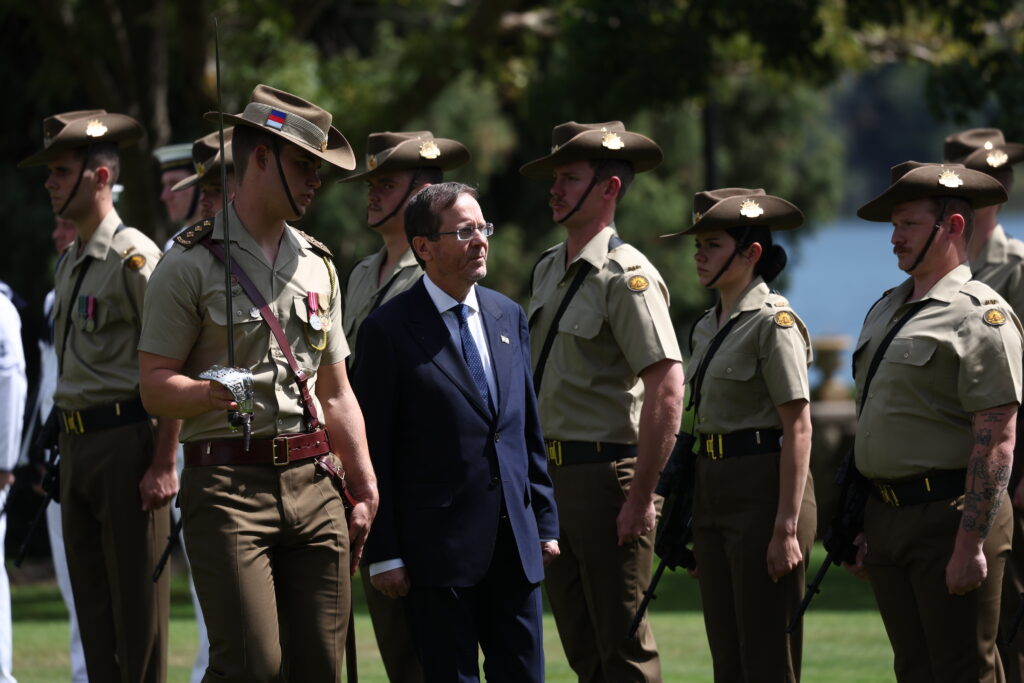
Israeli president, credibly accused of inciting the commission to genocide, inspects honour guard at Government House Issac Herzog, the head of a state credibly accused of genocide, been invited to inspect the guard at Government House, which is an honour given... The Point Live
-
Sam
Wed, 11.02.26
11.23 AEDT
Estimates: What’s the impact of CGT? Greg Jericho Senator Nick McKim is back and wants to ask if the CGT 50% discount causing higher house prices. Jenny Wilkinson notes they have... The Point Live
-
Jack
Wed, 11.02.26
11.20 AEDT
Sussan Ley is the Liberals’ second-most senior Opposition Leader Bill BrowneDirector, Democracy & Accountability Program With Liberal leadership speculation dragging on for another week, it seems a good time for a reminder that Sussan Ley is... The Point Live
-
Amy Remeikis
Wed, 11.02.26
13.02 AEDT
-
Teresa
Wed, 11.02.26
10.46 AEDT
-
Richard
Wed, 11.02.26
12.30 AEDT
-
Andrew S
Wed, 11.02.26
09.32 AEDT
-
Sam
Wed, 11.02.26
10.54 AEDT
-
Amy Remeikis
Wed, 11.02.26
10.55 AEDT
-
Sam
Wed, 11.02.26
12.22 AEDT
-
Gina Boyanton
Wed, 11.02.26
12.05 AEDT
-
Sam
Wed, 11.02.26
09.16 AEDT
-
Fiona
Wed, 11.02.26
09.11 AEDT
The government's big story today is health with the bulk billing numbers coming out and showing that there has been a rebound in the number... The Point Live
-
Sam
Wed, 11.02.26
09.19 AEDT
-
Fiona
Wed, 11.02.26
19.10 AEDT
-
Andrew Faith
Wed, 11.02.26
08.29 AEDT
The government's big story today is health with the bulk billing numbers coming out and showing that there has been a rebound in the number... The Point Live
-
Sam
Wed, 11.02.26
09.08 AEDT
-
Amy Remeikis
Wed, 11.02.26
08.31 AEDT
-
Fiona
Wed, 11.02.26
09.12 AEDT
-
Fiona
Wed, 11.02.26
09.09 AEDT
-
Richard Llewellyn
Wed, 11.02.26
07.34 AEDT
-
Andrew Faith
Wed, 11.02.26
07.27 AEDT
-
Gregory Shearman
Wed, 11.02.26
07.52 AEDT
-
Andrew Faith
Wed, 11.02.26
08.26 AEDT
-
Amy Remeikis
Wed, 11.02.26
08.32 AEDT
Join the conversation
*blergh* Whenever a politician talks about preserving "our way of life", it always means , "Let's unleash more racism again." I say this as a half Chinese Australian that was in high school when One Nation came on the scene. There is no amount of assimilation or "way of life" conformity that will ever satisfy White Supremacists.
So, back to the 1950s then Angus?
GO HOME AMY
I wish
But I like the sideshow lol
An easy way to avoid the proposed tax on your super balance being above $3m - spend the money and reduce your balance!
Even with the changes, it's still more tax favourable to have it in super.
https://live.thepoint.com.au/2026/02/the-point-live-angus-taylor-supporters-expected-to-make-moves-on-liberal-leadership/?post=1e4f656f69
Jane Hume wanted women to raid their super to escape family violence but she's now worried that the most wealthy Australians might pay a bit more tax?
https://www.abc.net.au/news/2021-03-22/government-dumps-domestic-violence-victims-superannuation-plan/13268294?utm_source=abc_news_app&utm_medium=content_shared&utm_campaign=abc_news_app&utm_content=other
https://live.thepoint.com.au/2026/02/the-point-live-angus-taylor-supporters-expected-to-make-moves-on-liberal-leadership/?post=3079d3c36a
Outstanding additional commentary Amy - the passive voice in this reply from Albanese really was something else.
Absolutely agree that Amy's explanatory commentary is exemplary reporting when we see the morally truncated stuff being dished up by the MSM - and The Guardian, once my trusted source, is not immune from criticism there. Laura Tingle is the sole ABC reporter with the spine to state balanced truth.
And even Amy is letting the 'Herzog Situation' off relatively lightly - a deep dive at this time would raise the issue of our Governor-General - the representative of the King of a nation that issued a warrant for the arrest on charges of War Crime of Herzog's accompanying General Doron Almog - welcomed Herzog.
The obfuscation that Albanese has employed over Israel's genocidal actions in the matter of Herzog's visit will not fail to be noted in history. The Point blog may well, and deservedly, become a yardstick for decency about this whole despicable matter.
https://live.thepoint.com.au/2026/02/the-point-live-angus-taylor-supporters-expected-to-make-moves-on-liberal-leadership/?post=55528a438c
As if any of those people were ever going to be on the pension in the first place, so billions of dollars forgone to prevent something that was never actually going to happen in the first place.
https://live.thepoint.com.au/2026/02/the-point-live-angus-taylor-supporters-expected-to-make-moves-on-liberal-leadership/?post=f0be3f09db
Whenever I think the Liberals might , just might, start saying something sensible, they insist on pulling stunts like this.
Surely you mean "Milton Dick" or am I missing some political "in-joke"?
Milton's first name is actually Dugald (he goes by his middle name and has since he was a child) but when he gets cranky, the joke is his alter-ego Dugald comes out (because Milton is usually known for his affability)
Thanks for that, I didn't know. 😃😂
"I know we are all genuinely concerned about social cohesion."
Throwing so much shade it darkened here in QLD
You said:
"Maybe people just want to watch the footy with the kids in peace?"
I buy a season ticket to watch my beloved Rugby League team at our home ground McDonaldJones Stadium. The gambling advertising at the game is on another level... all over the footballer's jerseys and by extension, on the jerseys of the fans. What disgusted me was a little kid wearing a jersey with a gambling corporation emblazoned on it. Around the ground is a rotating video banner with "Bet 365" on it. At least they're generous to give us a leap day every four years with no gambling.
I've written to the stadium, The Knights, The NRL, my local politician and the minister for sport... what do I get in return? Utter contemptuous silence. I'd stop buying my season ticket but what would that achieve? I'd lose out by missing home games and management couldn't care less. Even fans don't seem to care, even as their children recite the odds of their team winning.
You should give the Newcastle jets a go there is no gambling ads from what I see on TV in the A-League. Support a sport that’s trying to do the right thing, also the Jets are top of the table
I often wonder what all this protesting achieves,it seems that not a day goes by that some group is not marching or holding a rally about some grievance. IMO all the protesting about the atrocities in Gaza being carried out by the current Israeli govt against innocent people has achieved nothing except people getting hurt and arrested and given the MSM something to report on and to ramp up the hate.
"Evil triumphs when good people do nothing!"
Consider protesting a way of revealing an injustice. Righting a societal wrong can take decades. The First Nations' Tent Embassy at PH has been there since 1972. The fight continues.
The fact that you have considered the efficacy of the issue is an example that it has cut through into public consciousness.
I agree- the protests themselves are prone to fatigue. But sometimes its is the only voice available
I'm sorry you feel like that. Some of us feel it is the only thing we can do to show the powers that be that they do not act in all our names.
https://live.thepoint.com.au/?post=5d35b6689d
Planting a 'peace tree'- is that an olive to replace the ones bulldozed from Palestinian farms in GAZA? I can't believe the hypocracy of this whole shebang.
https://live.thepoint.com.au/2026/02/the-point-live-angus-taylor-supporters-expected-to-make-moves-on-liberal-leadership/?post=2b27804b4d
Who are these people that lose all aspiration if they cannot get a tax discount?
Sorry, I feel very dumb here - senior in what capacity? Party seniority? Experience? Who is number 1?
In length of time - Basil Zempilas in WA is the longest serving Liberal opposition leader.
Tony Abbott approves of Chris Minns. That's the reference nobody needs. In a democracy.
Hey, let's cut Minns and Lanyon some slack. They are just in the wrong place at the wrong time.
Pinochet's Chile would have been way more appropriate.
What am I missing here? Where are all the free speech warriors in the National Party and One Neuron and there Sky News pals? Trying to shut down Grace Tame. So what was the split about Bridget Mackenzie?
Free speech warriors have always meant free speech for them and no one else
From the river to the beach, in Australia you'll have no free speech
Lol. I'm glad I had finished my coffee before I read that.
Amy that is gold
Albanese has spent his life learning how to lay traps for his opponents. As Amy R has pointed out before, it's one thing he is very skilled at. I'm sure he is well prepared for the Liberals to roll Ley and resuscitate Howard-era policies. I'm also sure the current lot of Liberals will walk straight into it.
How many are at urgent care clinics or other mega clinics where you don't get a regular gp to build a relationship with which is necessary for good outcomes for chronic illness of any kind
I was bulk billed at my regular GP. I think it's rare but there are a few "family" practices that bulk bill some appointments. Where I go isn't a bulk billing practice but my GP sometimes bulk bills me , but i have no idea why.
Yeah if they bulk billl EVERYONE they get an extra payment too but not if they don't bb everyone
Shame I have to still pay $160 to visit my GP and get less than half back. I'd love to know where all these bulk billing GPs are.
I was bulk billed last Friday. A pleasant surprise.
I paid $200 recently for a skin check, with $44 back from Medicare. I feel you.
Which sucks in this sunburnt country.
I pay $80 as a pensioner (level b consult regular fee is $100 for non concession) for my regular gp visit with the $44 rebate. I need to go at least every two months for the meds I'm on which is doable with scheduling it for pension day so I can front up the cash
Unscheduled GP visits are a budgeting nightmare.
Angus Taylor resigning and challenging? - going a bit far there, Angus.
Just resign and give yourself a Good One Angus. That would cheer people up a lot. Especially if you take Henderson, Cash, and, um, lots of others with you.
Good morning, Amy.
Is there popcorn? Do we need popcorn? Has anyone got any popcorn? 🍿
Do the Liberals give even one s@@@ about the country or is it just about them?*
*Retorical question - it's ALWAYS about them.
Popcorn is so yesterday. How about a salted watermelon?
I could go really old school and suggest Lolly Gobble Bliss Bombs!
*Shudders in childhood trauma of breaking a tooth on these things*