Wed 26 Nov

The Point Live: Government pushes for mining friendly environment law pass, Coalition wants tax cuts. As it happened

Amy Remeikis – Chief Political Analyst and Political Blogger

This blog is now closed

Start the conversation

The Point Live: Government pushes for mining friendly environment law pass, Coalition wants tax cuts. As it happened

Key Posts

The Day's News

See you tomorrow?

We have two more days of this to get through, with an announcement that a deal has been made on the environment laws expected tomorrow morning. No one is saying anything concrete, but the Greens have been back in the driving seat because Sussan Ley does not have the authority to get anything contentious through her party room. We hear there is no climate trigger although there might be a couple of other surprises (we swore we wouldn’t report it as it’s not done yet) but this isn’t a bill about climate – so don’t think it is going to have anything in there about improving Australia’s climate position – Labor doesn’t want that. So if this deal gets done, it is not going to do anything for climate and it will be the bare minimum for the environment.

Just remember there has been a lot of PASS THIS from the mining industry and business council which tells you everything you need to know about these laws.

But it could be worse – the Coalition could have come to the table (although listening to Murray Watt talk about those negotiations, it seems the Coalition brought along a cast of thousands which is no way to run a negotiation.

Which makes sense because the Coalition is currently trying to get Chris Bowen to swear in parliament that he will be attending every single sitting of parliament next year, so it can be ‘mandated’ because they are maybe the stupidest opposition to ever stupid.

This will get the SAD crowd excited but does nothing except make them a joke. A bad one. Circuses don’t work when there are too many clowns.

So until tomorrow – take care of you. We are all going to need a very big Bex and a lie down after this.

Greens win inquiry into CSIRO job cuts as government announces funding fix

Michelle Rowland quietly announced in QT that the government would be bringing forward funding for the CSIRO but the Greens have won an inquiry into the proposed job cuts and funding issues more broadly.

Peter Whish-Wilson said:

The Albanese government has dealt the CSIRO some of the most savage job cuts in the science agency’s entire history.

It is reprehensible that the Albanese government has failed to address concerns that the job cuts disproportionately impact public good science – with the Environment Research Unit set to bear the brunt of proposed cuts.

The government is either disregarding the biodiversity and climate crisis facing our nation, or it doesn’t care. 

Science is one of the best defences we have in tackling Australia’s biggest future challenges – from climate change, food security, and health emergencies. 

The short-sightedness of the Albanese government’s job cuts to the CSIRO is negligent. Everybody needs science, and we need to defend it from attack. 

Scientists deserve better and they deserve answers, indeed all Australians do. It is critical the Senate examines how the CSIRO ended up in this position, who knew about the dire state of the agency and for how long, and why senior executives took bonuses while funding cliffs were obviously approaching.”

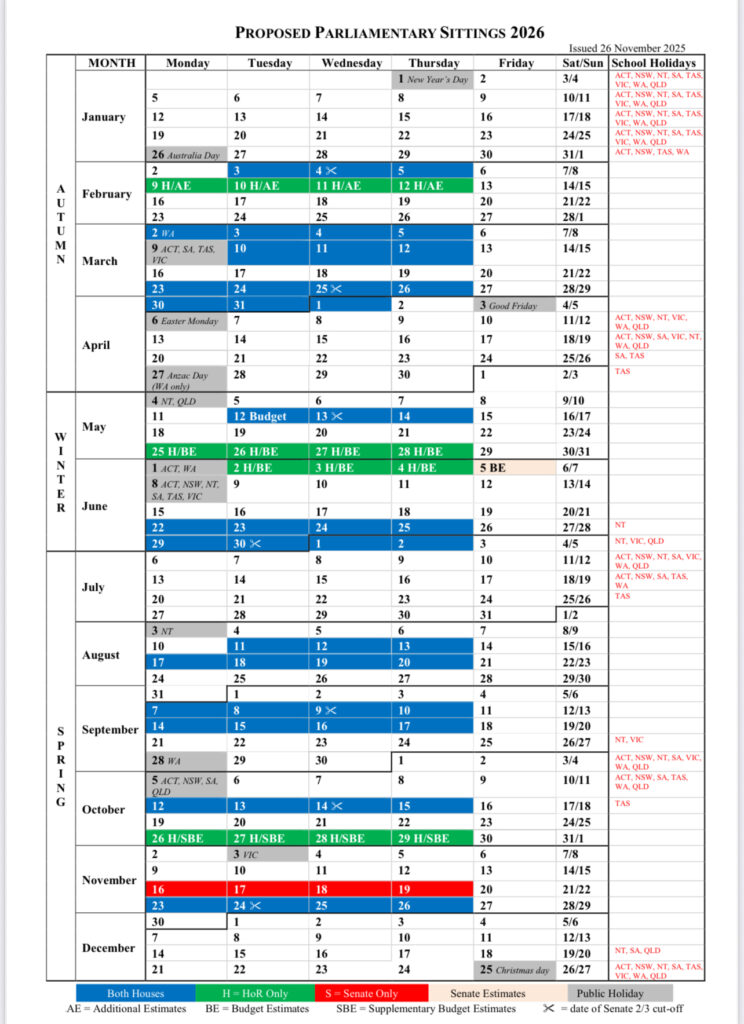
2026 proposed parliament calendar released

Here are the proposed dates for the next sitting year – we are coming back in the first week of Feb, which is going to be annoying

Question time ends

Well, we learned, thanks to the member for Mayo, that there is a funding announcement coming for the CSIRO. Michelle Rowland said:

There has been a decision taken by the government through the MYEFO process to provide additional funding for the CSIRO dollar, details of which will be communicated to the public at the appropriate time.

But not much else.

The opposition have no idea how to proceed. It defies logic that they keep hitting Bowen on being a ‘part time minister’ because – a) it doesn’t make sense b) most people don’t know what COP is c) most people think politicians don’t do much work anyway and d) Bowen is very capable of swatting the Coalition away.

You would think a smart tactics team would hit them on energy costs, but in ways that make sense. Over the stalls in the mining-friendly environment laws. The lack of gambling ad regulation, The CSIRO, any topic the crossbench picks up – because that is where their success has been – when it has managed to unite the parliament against the Labor party.

But guess that is hard when you are captured by the same interests

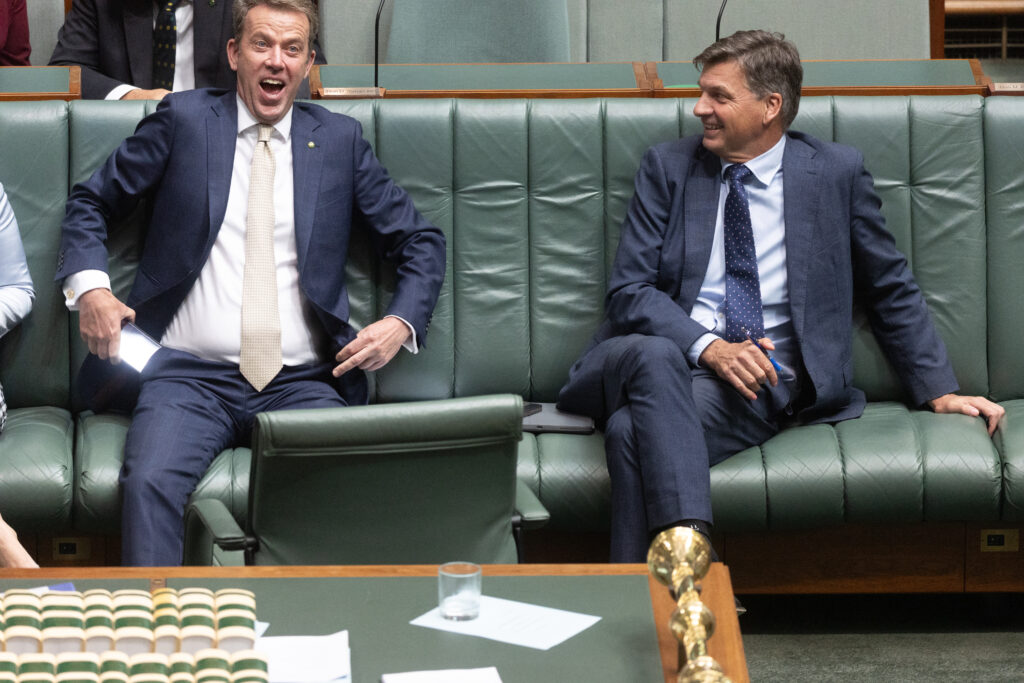
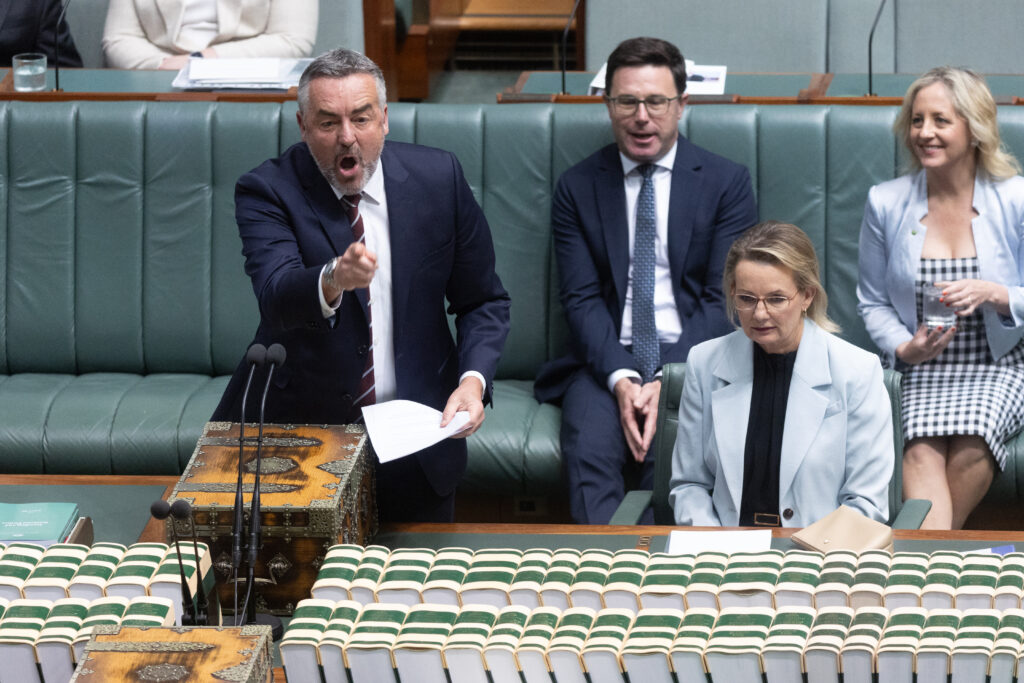
The faces of the opposition

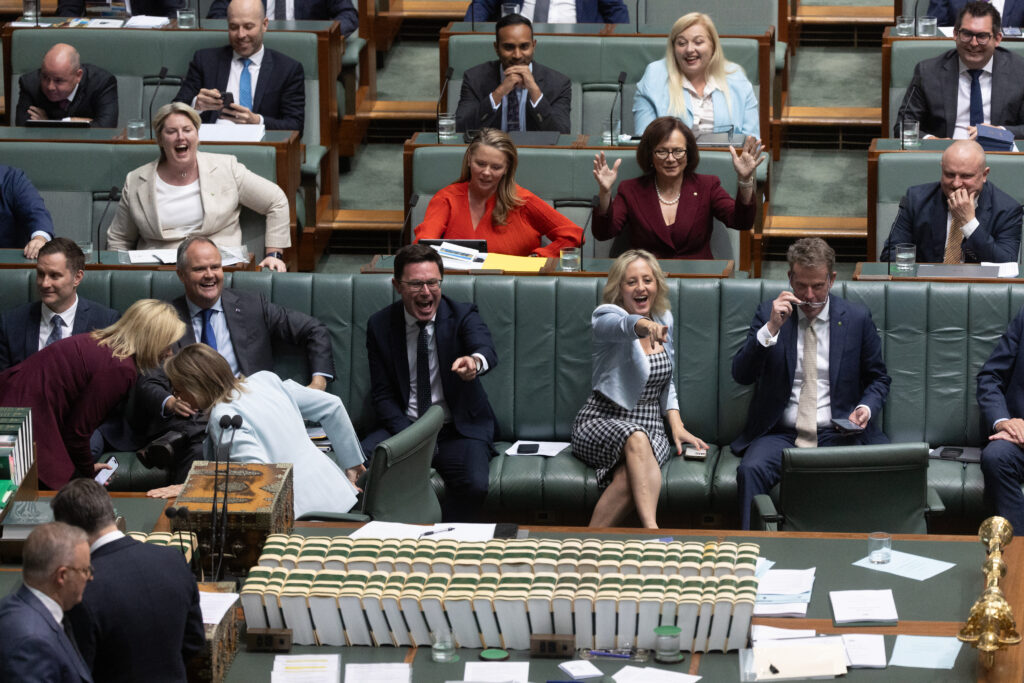
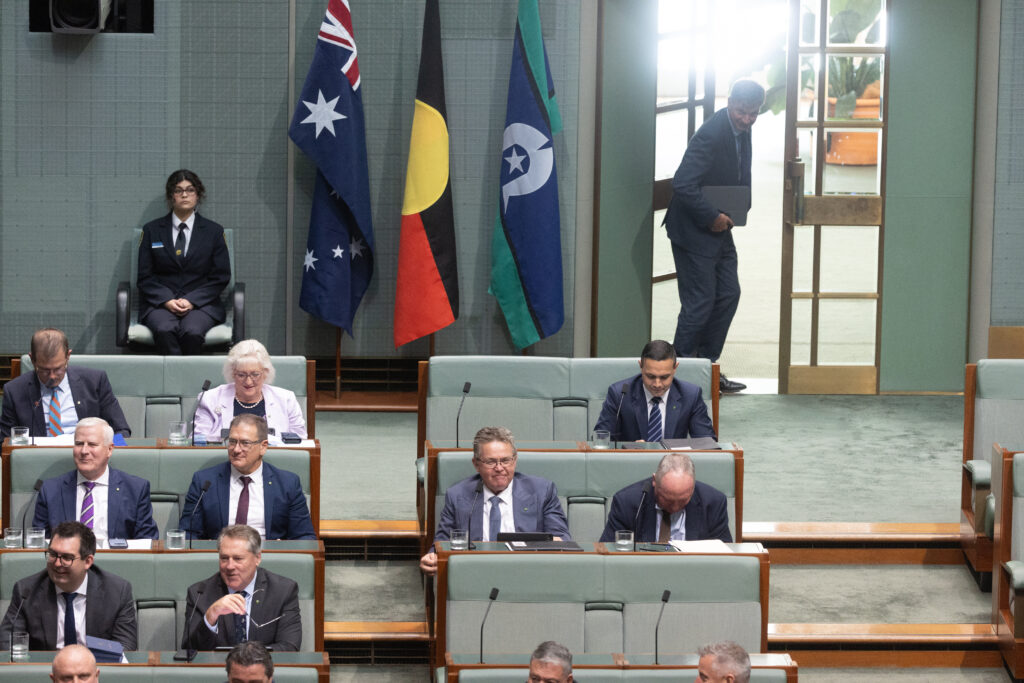
Mike Bowers has also caught the opposition MPs doing what they do best – clowning

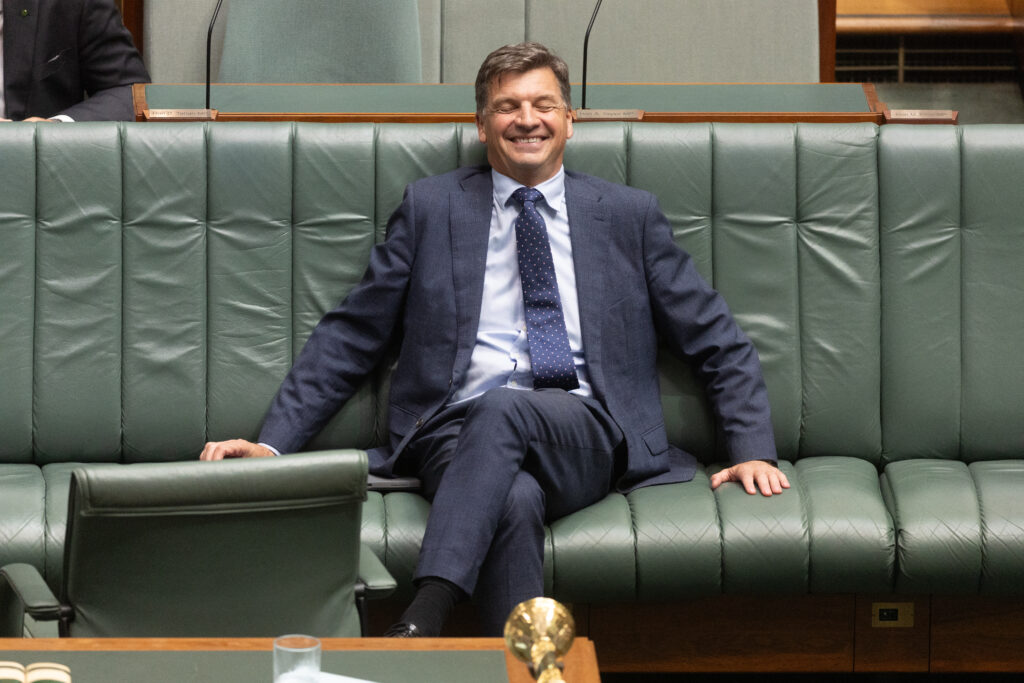
The Shadow Treasurer Angus Taylor with the shadow minister for Energy and Emmissions reduction Dan Tehan during question time in the House of representatives chamber of Parliament House, Canberra this afternoon. Wednesday 26th November 2025. Photograph by Mike Bowers
The Shadow minister for Veterans Affairs Darren Chester yells at the Treasurer Jim Chalmers before question time in the House of representatives chamber of Parliament House, Canberra this afternoon. Wednesday 26th November 2025. Photograph by Mike Bowers
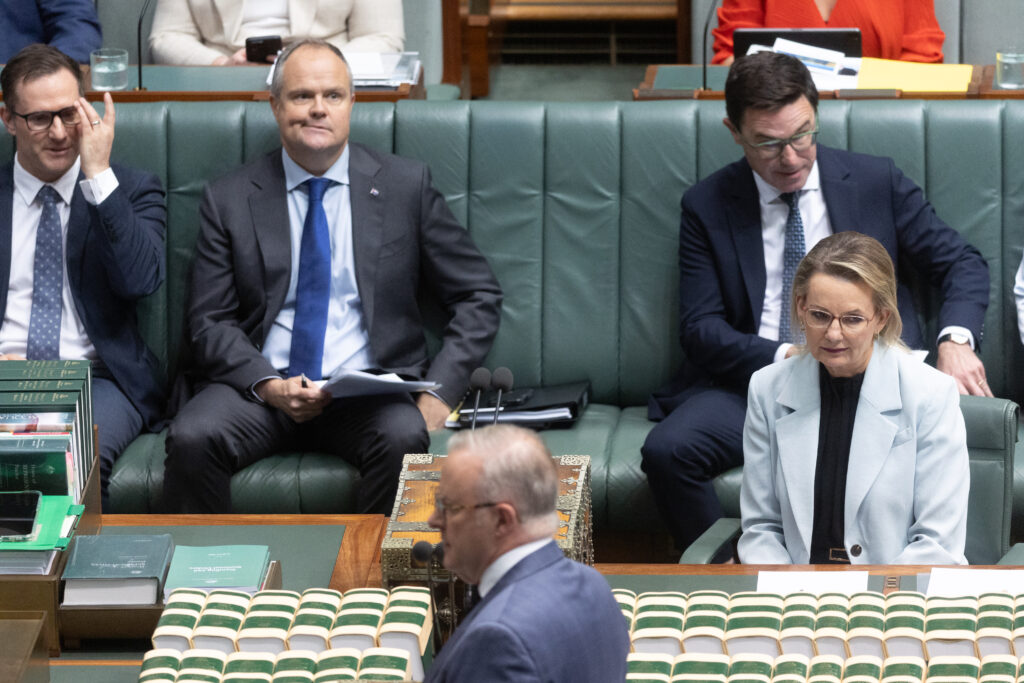
Opposition Leader Sussan Ley during question time in the House of representatives chamber of Parliament House, Canberra this afternoon. Wednesday 26th November 2025. Photograph by Mike Bowers
The Shadow Treasurer Angus Taylor during question time in the House of representatives chamber of Parliament House, Canberra this afternoon. Wednesday 26th November 2025. Photograph by Mike Bowers

The view from Mike Bowers

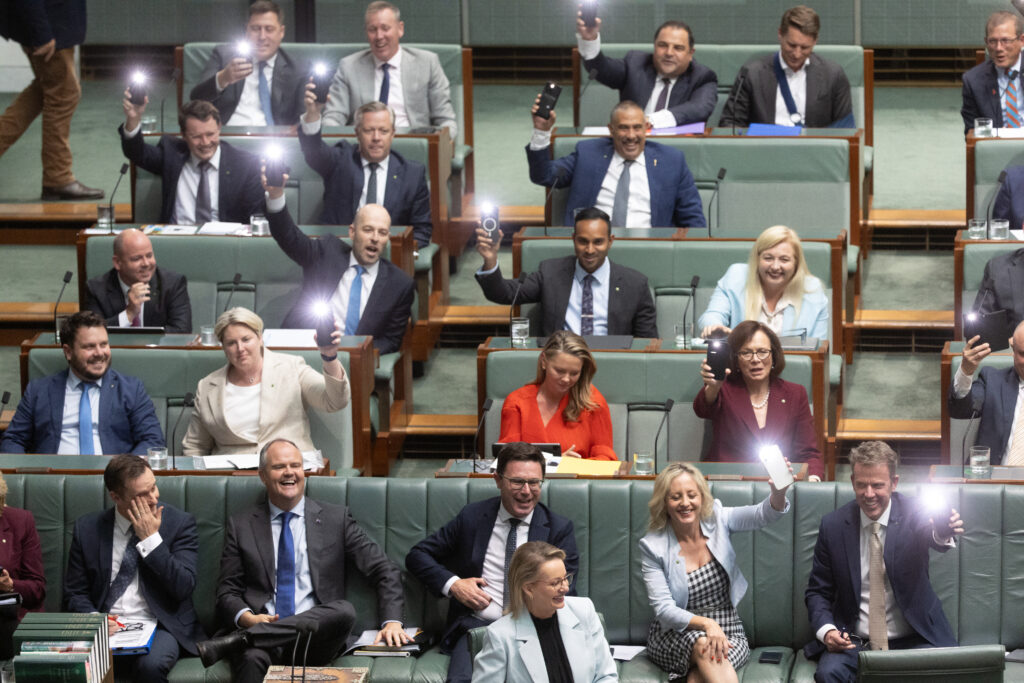
Bowers caught the moment the lights went out in parliament and the Opposition lost its mind:

The Opposition erupts after about half the lights went out during question time in the House of representatives chamber of Parliament House, Canberra this afternoon. Wednesday 26th November 2025. Photograph by Mike Bowers
Bright sparks
Angus Taylor gets the boot

When will the government act on gambling ads?

Independent MP Helen Haines brings some sense back to proceedings and asks:

Prime Minister, 16 Days of Activism is a powerful and unified campaign to eliminate gender-based violence. Family violence is three times more likely to occur in families where there is problem gambling. In 2024, the Government’s rapid review of evidence-based approaches to prevent gender-based violence backed up the Murphy Report, with a recommendation to restrict gambling advertising leading to a total ban. Prime Minister, when will the government act and ban gambling advertising?

Anthony Albanese

I thank the member for Indi for her question and for the way that she engages constructively with the government in representing her electorate and her political viewpoint.

I do want to take the opportunity – because the question provides it for me – to mark what is Day 2 into that 16 days of activism to end gender-based violence. Whilst this is a campaign for 16 days, we know that – I hope everyone in this House can agree, we need to campaign on this for 365 days a year. Because every death or every act of violence against a woman is one too many. As leaders in this place, we must renew our unwavering commitment to ending violence. Because any death of a woman is unacceptable and, as Australians, we mourn every one of the lives that have been lost this year. We know that, for every life that we lose, there are many more women and children whose lives are marred by violence, abuse or assault every day. And we must look to where we’re falling short, and find new ways of doing better. Yesterday, Minister Plibersek announced an almost 40% funding boost for 1800RESPECT so that, when people reach out for help, it’s there to help them. We have a $4 billion national plan to end violence against women and children, agreed with the states and territories, with the special meeting of the National Cabinet that I convened.

That’s why we boosted and secured funding for front-line services and delivered more financial and housing support for women and children escaping domestic violence. Because women shouldn’t have to choose between poverty and violence. Too often, when women remain in violent relationships and are asked, “Why didn’t you leave?” it’s because they didn’t have anywhere to go. That’s why we created a special stream under the Housing Australia Future Fund as well.

(Haines interjects to ask about the actual question – the link between gambling stress and domestic violence)

Albanese still does not answer the question:

I am responding, very directly, to the question. There is no question, as well, that the cause of violence can never be excused but, in many cases, that is one of the issues – along with alcohol abuse, along with so many issues that cause violence for people to put up their hand and say, “That is why.” The truth is, it can never be excused. That’s the truth. And the truth is that all of us – particularly men – have a particular responsibility.

Because we must all know – we must all know people, when you look at the statistics, who are our friends, or our neighbours, who the gauge in this sort of activity. I’ll continue to engage constructively. One of the reasons why we are doing measures, just to name one of the measures that we’re putting in place, that we have put in place to deal with problem gambling that’s related to people being in a cycle where they feel like they can’t get out is BetStop, the National Self-exclusion Register. That has seen 51,000 total registrations, of whom 38% of people – people who feel like they can’t possibly control it – have chosen a lifetime ban. That’s one of the reasons why we did that. That’s part of the motivation. But I’ll continually work constructively with the member for Indi on all of these issues. I thank her for the question.

The view from Grogs

Greg Jericho
Chief Economist

The opposition, for reasons beyond logic, think they can make great hay by continually suggesting Chris Bowne in a part-time Minister and full-time President of the COP.

Aside from probably around 99% of people not knowing what the “COP” is, the reality is politicians often do multiple roles.

Famously, Bob Hawke, when he entered parliament was still President of the ALP. When criticised for holding two roles he famously replied “If you can’t ride two horses at once, you shouldn’t be in the bloody circus.”

Given the clowns on the oppositions benches, the circus is very much in full swing.

Marles on Ukraine

Richard Marles takes a dixer on Ukraine:

Last night, on behalf of the Prime Minister, I attended a virtual meeting of the coalition of the willing in support of Ukraine, a group of 35 countries – largely NATO, but including both New Zealand and Australia. Present was President Zelensky, as was the US Secretary of State Rubio – both of whom briefed the meeting about the recent peace talks in Geneva over the course of the weekend. All of us want to see peace, and we are deeply grateful to the efforts of the Trump administration in seeking to bring about peace.

This is obviously really difficult work. Any peace must respect the sovereignty of Ukraine. They are the innocent part – the victim of Russian aggression. And central to this is the security guarantees which will deter future Russian aggression, which has been at the heart of much of the discussion of the coalition of the willing.

And from the very outset, our Prime Minister has made clear that wherever this lands, Australia will play its part. Because the Albanese government’s support for Ukraine has been steadfast and it has been consistent.

And fundamental to that has been supporting the coalition of the willing, which is about ensuring the long-term security of Ukraine. For us, this has been a matter of principle. It can never be about politics. In the meantime, in the last 48 hours, we have seen a deadly and a despicable Russian attack on civilian apartments and infrastructure in Ukraine.

And last night’s meeting condemned that attack, but it is a reminder that, in the prosecution of this war right now, we must stay the course with Ukraine. In the coming weeks, the final tranche of the 49 Australian-gifted Abrams tanks will arrive in Ukraine. During the course of this year, more than 200 Australian personnel have been involved in the deployment of our Wedgetails with the Ukrainian Armed Forces.

Since the beginning of this conflict, we have provided $1.5 billion of support to Ukraine, and I can announce that very shortly we will be announcing our next package of support for Ukraine. Because what is at stake here is the global rules-based order.

It is as relevant to us here in the Indo-Pacific as it is to those who are in Eastern Europe. Over the course of the last four years, the people of Ukraine have been absolutely inspirational. And the Albanese Labor government and the Australian people will stand by their side for as long as it takes.

Kevin Hogan is told he won’t get the call until he gets off his phone, which I think is something Milton Dick enjoyed saying.

His question is stupid though, so we could have all been spared.

Hogan:

My question is to the Minister for Climate Change and Energy: The Energy Minister who, in his part-time role, just confirmed he signed up to an agreement which compels Australia to phase out 3 of our top 10 exports, including gas, coal, and crude petroleum, with a combined value of $163 billion in trade. When asked yesterday about this action by the full-time COP president, the Minister for Trade said, “I don’t tell him how to run his portfolio – he certainly doesn’t tell me how to run mine.” Whilst working as a part-time minister, did the full-time COP president consult the Minister for Trade before signing this executive order?

Angus Taylor gets booted out under 94A.

Bowen is not bothered by any of this. And that is understandable because most Australians – Ted’s Matt and Jenny included – would never have heard of COP. So this is just ridiculous. This is what happens when you have the third rate advisors no one else wanted leading your tactics.

Bowen:

He asks me about the transition away from fossil fuels which, as I said, the leaders of the Pacific – Australia, New Zealand, and Pacific nations – agreed on 10 November 2023. He was then reflected in the COP decision language later that year in Dubai, and that is something that was reflected in that COP decision.

Yes, Australia did join with other countries in the declaration on the transition away from fossil fuels. I can understand, while this is offensive to those opposite, because it says, “We reaffirm that the best available science must guide the implementation of the transition.”

That’s what Australia agreed with those countries. I know the word “science” triggers those opposite, because they find that offensive.

Other countries that called for a roadmap for a transition away from fossil fuel at the COP last week in Belen include: Denmark, France, Germany, the Netherlands, Norway, the Republic of Korea – which I note also announced they are closing all coal-fired power stations in 2040 – those terrible woke warriors in the Republic of Korea who are closing all their coal-fired power stations earlier than Australia… ..and the United Kingdom, amongst about 80 countries. Around 80 countries called for a roadmap for transition away from fossil fuels.

So the Shadow Treasurer Ted O’Brien keeps banging on about profligate spending causing inflation to rise.

Greg Jericho
Chief Economist

It’s his standard line despite O’Brien remaining a fan of nuclear power, which would require the mother of all government spending campaign.

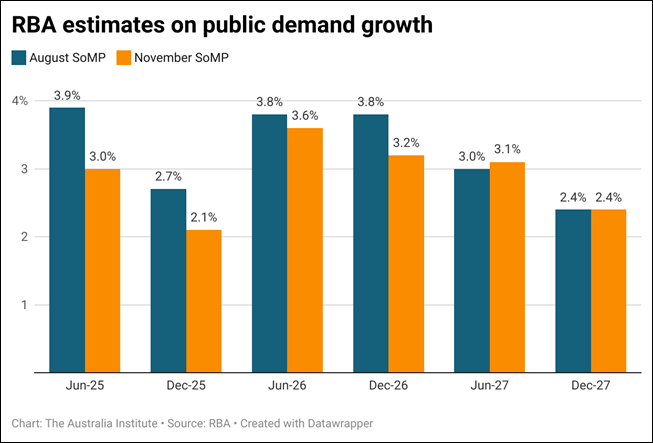
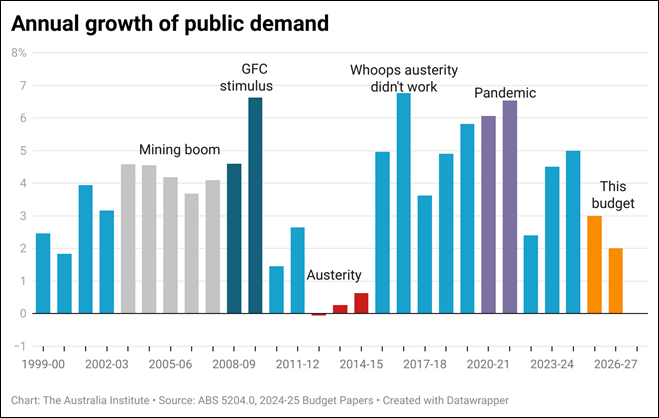
But still. As I have noted previously, the RBA in its November statement on monetary policy revised down the impact of public spending on the economy.

And the reality is that the current growth of public demand is pretty low historically speaking, and much less than the LNP spent once they worked out austerity was a dud.

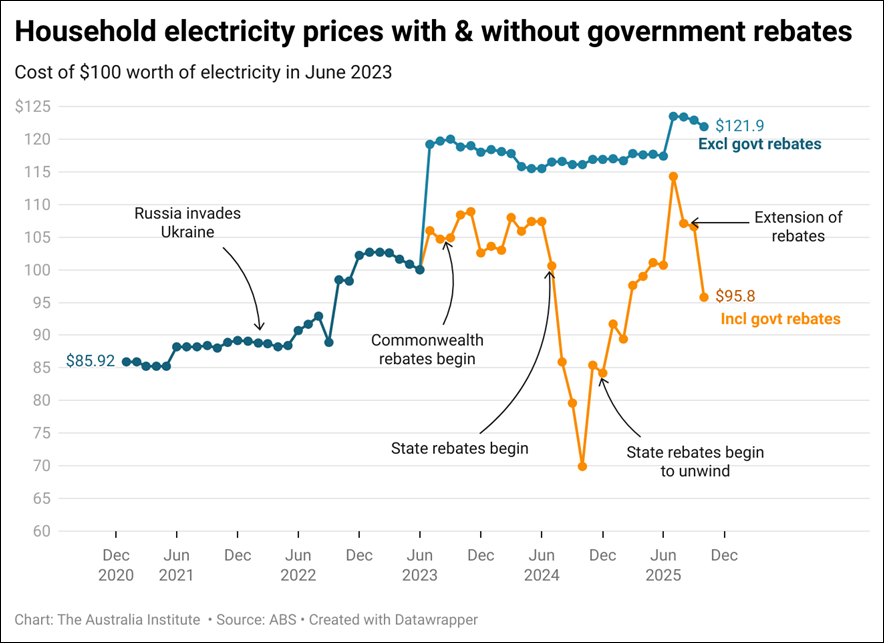
As for inflation, the real driver of inflation was electricity was purely because October last year was the peak of the state and federal energy rebates, so in comparison to then things look a lot more expensive.

15% of all the increase in inflation over the past year is from electricity, and over half came from just 8 items.

Bowen goes Barnaby Beetroot

Sussan Ley is back which is never a good sign. Ley asks:

My question is to the Minister for Climate Change and Energy: I refer to reports that, in his capacity as full-time COP president, and an Energy Minister working part-time, he has signed Australia up to a statement which would phase out the import, export, and usage of gas. Is this government policy, or is this just the first of many examples where what the minister says when he works part-time on Australia’s energy grid is in direct contradiction with what he decides as full-time COP president?

Bowen goes a lovely shade of Barnaby beetroot in answering this:

The Leader of the Opposition asked it in two parts, and I’ll answer in two parts. Firstly, she referred to the declaration on transition away from fossil fuels. She asked if that is government policy. Yes, it is. And it has been since 10 November 2023, when Australia agreed with the Pacific on that exact language at the Pacific Island leaders’ forum that, actually, what would be a good thing for the world – and for our country – is for more and cheaper renewable energy to increasingly replace fossil fuels, which is more expensive and less reliable. That is not a revelation.

The declaration says we’re for a just, orderly, and equitable transition away from fossil fuels. Are you against the “just” part, “the equitable” part, or the “transition” part? The Leader of the Opposition went on to repeat her false allegation, which she’s done now on multiple occasions, that somehow the office of president of the COP negotiations is full-time. Mr Speaker, let me put it in the clearest possible way. The Leader of the Opposition is either deliberately or not deliberately misleading the House.

Because it is not true and has never been true.

…The Leader of the Opposition asked me about full-time and part-time. I’m more than happy to deal with that. The position of COP president, for the last 10 COPs, has been held by a Cabinet member, continuing in that role. That’s the way the position is designed. Last year, Minister Babayev, the Minister for the Environment of Azerbaijan. The year before that, the Minister for Industry. Before that, the Minister for Foreign Affairs of Egypt. Before that, Minister Schmidt, the Minister for the Environment of Chile. Before that, Minister Kirchner, the Minister for climate change of Poland. Before that, Frank Bainimarama, while he was Prime Minister. Before that, Minister Fabius of France, the Foreign Affairs Minister of France.

All Cabinet ministers who were COP presidents. What cultural cringe that somehow they can all do it but Australia can’t…! What we want is more influence for our country. They want less. They want less influence for Australia. How unpatriotic can you be?! Why don’t you want your country to have a bigger role in the world? Why are you so anti-Australian? Why can’t you be proud that your country can’t you be proud that your country can play a leading role in international negotiations? This is a Leader of the Opposition who is so enthralled with Sky After Dark that she can’t even know an international role when she sees one.

Then the lights flickered, so you know.

Lights go out in parliament

Canberra is having some sort of blackout – the lights just flickered in the Point office and in the chamber, causing the whole parliament to lose their minds.

None of these people can ever visit a haunted house with me. Honestly. Spines like jelly.

And yes, I know it is a joke about keeping the lights on, but they acted like pre schoolers when they heard a teacher say ‘bum’.

Facsimile Morrison

Jim Chalmers took a dixer just so he could say this about Ted O’Brien:

As I understand it, the Shadow Treasurer gave a little speech about some of these issues a moment ago. We’ve heard these kinds of speeches before. The speech that the member for Fairfax gave sounded exactly like the speeches the member for Hume used to give. But whatever speeches they give down the road, they can’t obscure the fact that, when they were in office, they delivered nothing but deficits.

They doubled the debt even before COVID. They had spending as a share of the economy up around a third of the economy, and we’ve spent a great deal of time and effort cleaning up the mess that we inherited in the budget.

A couple of surpluses. A smaller deficit. $200 billion less Liberal debt. Saving on interest costs. $100 billion in savings.

The member for Fairfax [Ted O’Brien] might look like Scott Morrison… He might be undermining his leader like Scott Morrison did… ..but, more and more, he sounds like the member for Hume [Angus Taylor] And it didn’t work out real well for the member for Hume.

Ted O’Brien making things up. Again

Super Ted (wearing his best suit) asks:

Q: My question goes to the Prime Minister, today’s ABS data Prime Minister, today’s ABS data shows inflation continues to accelerate under this government. Meanwhile, the Treasurer’s spending spree continues, forcing the RBA to keep mortgage rates on hold indefinitely. 29 days before Christmas, what does the Prime Minister have to say to struggling mortgage-holders facing no rate relief in sight?

Ted O’Brien is really trying to push this line, but it is not true. It is not the ‘treasurer’s’ spending which is pushing inflation – Grogs will have more on this for you very soon – I can hear him muttering across the office.

Albanese:

In 2025, there have, indeed, been three interest rate cuts. And that has provided real relief for people and, of course, two of those are after the budget that was handed down on 25 March. We know that those opposite have spoken about the culture of dependency when it comes to providing assistance for Australians. In the coalition’s opinion, if you’re an Australian who is getting cost-of-living help, we know that you’re opposed to that. Working in the public sector – well, we know that you’re opposed to them continuing to work in the public sector.

Or if you’re working in essential services, you’re an economic burden, and you’re bad for our national character. They think that Australians’ wages, Australians’ jobs, and support for Australians, deserves to be cut. That’s truly what they’re saying in their subliminal message – or not-so-subliminal, when they speak about the culture of dependency. Remember Joe Hockey, when he here, had similar language. Similar language, when he came to office.

For those opposite, they think everyone but them is a leaner. They think that. Well, we don’t think that. But who are the Australians they’re attacking? Pensioners and people caring for relatively young kids. People getting study allowance at uni or Rent Assistance. It’s the nurses, teachers, doctors, public servants all getting support. The ADF personnel…When you’re talking about spending – which is what the question went to – and the Coalition say that there’s too much spending, they’ve got to say what it is that they’ll cut.

What it is that is wasteful. The leader here – has actually said what she thinks is wasteful when she spoke about the culture of dependency. So all those people, for all those people…

We’ve heard it all before. They wanted to sack 46,000 public servants at the last election. They wanted people to stop working from home. We, on this side, want people to earn more, and we want people to keep more of what they earn.

There were a bunch of back and forths with interjections but it is Wednesday and we are very tired and it was not entertaining, which is the very least it could be

Question time begins

Let’s go girls.

First up:

Sussan Ley: My question is to the Prime Minister: Inflation has once again risen under Labor, and economists are now warning that interest rates may be forced up again, devastating news for families already cutting back this Christmas. The Prime Minister promised the Australian people that we had turned the corner on inflation. And his Treasurer assured them the government had inflation “under control”f today’s numbers show that Australians were misled. Prime Minister, why do Australians have to pay the price for Labor’s economic failure?

Anthony Albanese:

The latest figures confirm that Australian households are still facing cost-of-living pressures. We know that that is the case. When it comes to inflation, we also know that the work is never done, which is why my government is very focused on cost-of-living measures and on putting that downward pressure on inflation. When you have the withdrawal of state energy subsidies, you are always going to get…You are always going to get a lift.

But if those opposite are deeply concerned about inflation with a “3” in front of it, they must have been devastated when it had a “6” in front of it, which is what it had when they were in office. When it had a “6” in front of it, we had the most profligate budget handed down, in 2022, when it was at “6” and rising and they poured fuel on that fire.

We, on this side, have ensured, from Day 1, that we’ve been focused on delivering cost-of-living relief, while bringing inflation down and getting the budget in better nick.

That’s why we’ve produced one budget surplus and then a second budget surplus, and then a reduced budget deficit. And in May of this year, the coalition managed to come up with the extraordinary formula of commitment to increase everyone’s taxes but, at the same time, increase the deficit. Quite an achievement from those opposite.

On this side, what we have done, of course, is now eight consecutive quarters of higher wages, and we know that people’s living standards is about income in as well as payments out. We have lowered taxes for every taxpayer – not just some, as those opposite wanted.

And remember, the Leader of the Opposition’s claims that she would roll it back and she was against all of it when we made that announcement – that she would absolutely pose that. And of course, we then saw, when we announced on 25 March, another two income tax lowerings.

We saw them oppose that as well. And go to an election saying that they would increase – increase – everyone’s income tax for every single Australian taxpayer. We, on this side, will continue to do cost-of-living measures, because we understand that we wasn’t to give people assistance.

We are in the downhill slide to question time and I can tell this because I have just consumed my body weight in Milko chews, which is no small feat (I am not a small human)

Do what you need to get yourself through

Jim Chalmers has responded to the inflation figures:

New figures from the Australian Bureau of Statistics showed prices were steady in October but ticked up in annual terms.

Today’s annual result is higher than we would like but still much lower than what we inherited from our predecessors.

The flat monthly result in October was driven by falls in electricity and fuel prices, and a moderation in housing costs. 

The tick up in annual terms in part reflects temporary factors such as the timing of state energy rebates and volatile items such as travel prices. 

We know that households are still under pressure and that’s why our responsible cost of living relief is so important. 

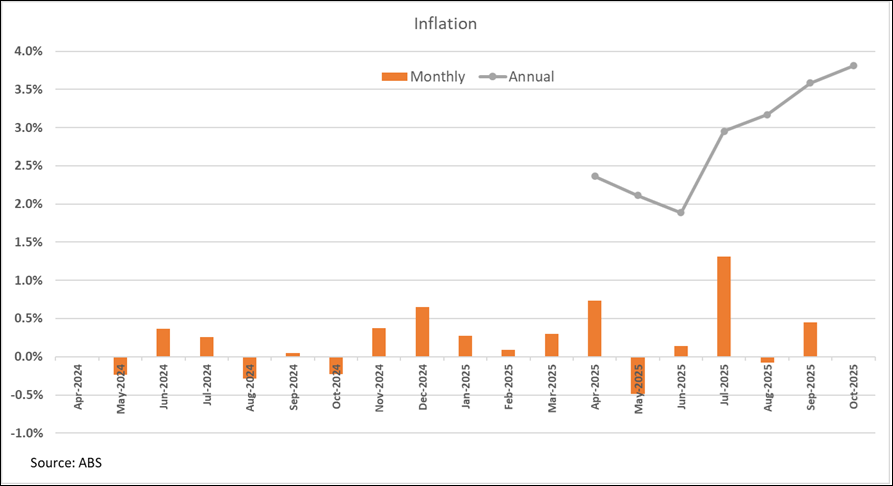
Headline inflation was 0.0 per cent in the month of October but up 3.8 per cent in through the year terms. 

Underlying inflation was 3.3 per cent in the 12 months to October. 

When we came to office, headline inflation was 6.1 per cent and climbing – but it has now moderated substantially, which has given the RBA confidence to cut interest rates three times this year. 

Underlying inflation was hovering around five per cent but is now much lower.

Today marks the first time the ABS has released complete monthly CPI figures.

It’s an important change that will help inform decision-making into the future.

Inflation remains persistent in many advanced economies, and there have been recent increases in inflation in the United States, New Zealand and Japan. 

The global economy remains uncertain and people are still doing it tough, but Australia is well placed and well prepared to confront the challenges coming at us.

‘Fiscal rules’ are completely made up

Greg Jericho
Chief Economist

Ted O’Brien at the National Press Club has made a big play about government spending and the need for fiscal rules.

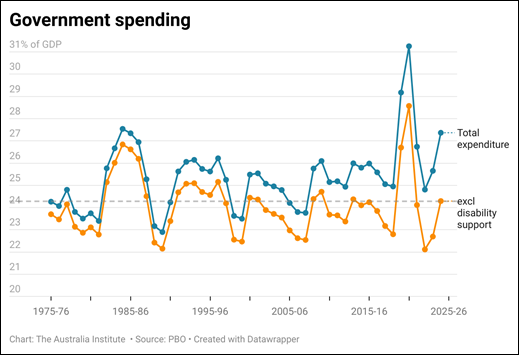
He suggested that government spending growth in the past year was not driven by the NDIS. And while he might be correct on the previous year, to ignore the NDIS on overall government spending is to ignore the main issue for why total government spending is larger now than in the past:

Government spending excluding disability support in 2024-25 was the same as it was in 2014-15 and 2015-16.

Also O’Brien also mentioned that the ALP has dropped the “fiscal rules” relating to tax and spending.

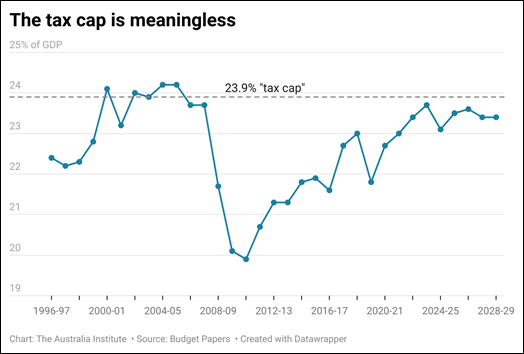
Let’s be clear – those rules were completely made up. Scott Morrison for example as treasurer suggested a tax cap of 23.9% of GDP. And he boasted that they remained under it. Well big whoops. The only ones who didn’t stay under it was Peter Costello in the midst of the mining boom

Fiscal rules are bullshit devised by conservatives to pretend we need to limit how much tax the government should raise or how much it should spend.

‘Law change must be reversed’

Antipoverty Centre spokesperson and Disability Support Pension recipient Kristin O’Connell said in response to the law change:

Labor have chosen to adopt a Turnbull policy they previously renounced in 2022 that entangles policing and the welfare system, undermining the rule of law and separation of powers. It is a policy that fuels prejudice towards welfare recipients in the precise way that Robodebt Royal Commissioner Catherine Holmes warned politicians against.

These extreme new laws, which involve police and government ministers in individual social security decisions, are an attack on the presumption of innocence, which we are all entitled to – regardless of our income level.

If the government believed it was doing the right thing, it would not do it like this. It would invite feedback from and listen to experts concerned about risks and disproportionate harms that will be felt by First Nations people, disabled people and people in violent homes and relationships.

Instead, Minister Tanya Plibersek chose to accuse these people and organisations of not taking rape and child abuse seriously, as they tried to raise the alarm about unintended consequences of this egregious attack on the rule of law. She should be ashamed of her conduct and, and so should every person who voted for this.

Welfare recipients have a right to be treated equally under the law, and should not be subject to punishment before having access to legal advice for any reason, ever. This heinous new law must be reversed.

Government rushes police welfare powers change

The crossbench and Greens attempted to delay it or have it struck out, but Labor and the Coalition have voted to give police powers to recommend welfare payments be cancelled – before anyone is convicted of a crime. You might not even know about the arrest warrant they use to justify the cancellation.

Seriously – can we find any new ideas?

So now you have met Phil and Jenny, here is Jess:

I’m actually here today to talk about Jess. Jess is 38 years of age. She’s married to Matt, and together, they’re raising their two little children. One in primary school and one in kindy. And they’re doing it pretty tough right now. They rent a little 2-bedroom town house in the outer suburbs. Their girls are sharing a bedroom. And their lounge room is really more of a play room with the toys piled up all over the place. They dream of one day buying a place of their own. But every time Jess checks the online mortgage calculator, the numbers just do not add up. This is not how Jess thought life would be, and she’s angry, because if the Australian dream of homeownership is out of reach for her, well, her children will have Buckley’s chance of even having the dream in the first place. In recent years, their rent has gone up by 20%. Electricity bills – 40%. And their weekly grocery shop is now nearly $300. Jess is working her tail off and looking after the kids at the same time. But it feels futile. Mat does long hours as a bricky and does odd jobs on the side to treat the kids here and there. And if worry about the kids weren’t enough – Jess’s dad has Alzheimer’s. And her mum is struggling right now to care for him at home. This is the Australian story of 2025. We’re talking about economic policy, it’s easy to get caught up in a whole bunch of big numbers and economic detail. But strong economic management is really all about Jess.

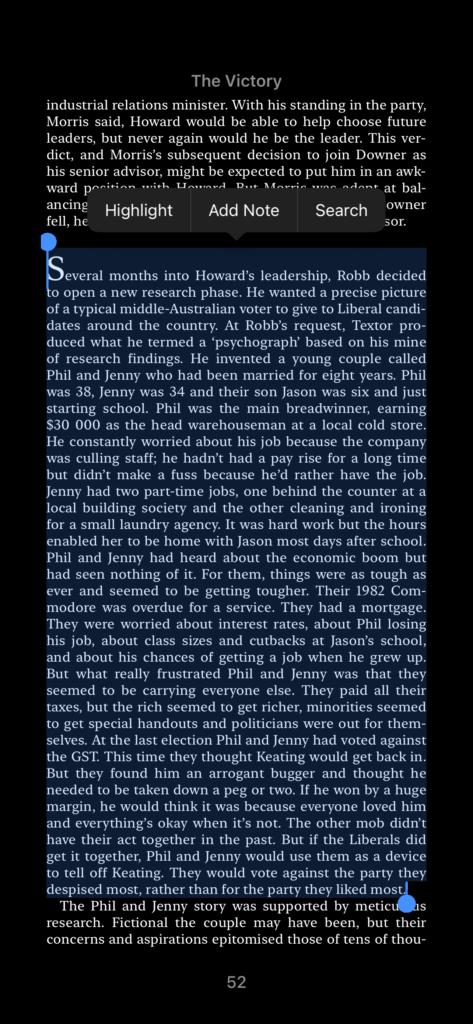
Jenny is now Jess – O’Brien goes back 40 years

Listening to Ted O’Brien go on and one about ‘Jess’ his Millennial catch all who he believes will win back young people to the Liberal party. This construct of a “Jess’ is not new – as Pamela Williams wrote in her book The Victory, Lynton Crosby first came up with ‘Phil and Jenny’ for the 1996 Howard election campaign. Every single policy had to be run through Phil and Jenny – you can read some of that below.

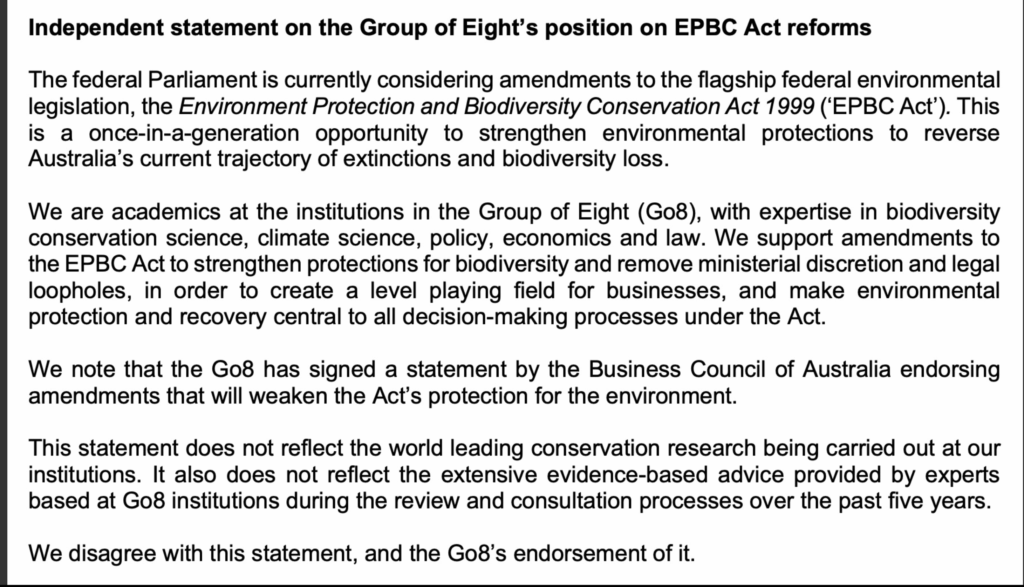
Academics push back against Group of Eight backing Business Council on EPBC reforms. Cos you know, SCIENCE

At least 90 academics have signed a statement condemning the Group of Eight (top universities) for backing the Business Council statement on the environment laws, given that the laws do not protect the environment and make it easier for mining projects to pass.

We have no answers from our institutions as to why Go8 universities endorsed BCA's regressive EPBC recommendationsBut 90 of us have signed an 'Independent statement on the Group of Eight’s position on EPBC Act reforms'🙏 Prof Justine Bell-James for writing & coordinating the independent statement

Yung En Chee (@yungenchee.bsky.social) 2025-11-25T21:32:41.283Z

https://www.linkedin.com/feed/update/urn:li:activity:7399188564158128128

Crossbench still pushing for gambling ad reform

The crossbench are not letting go of the need for gambling reform

Super Ted takes the stage

It is Ted O’Brien time – are you ready for it?

We will be dipping in and out of the speech and then doing the Q&A so bare with us. Things will be getting INCENSED

Greens firming as driver of environmental law negotiations

So it is firming up that Murray Watt has seen some sense and is now focusing his attentions on getting the Greens to pass his (mining friendly – at least for now) environmental laws.
It is not a bad thing that the Coalition is dealt out of this, given that his proposition for them was a lot more friendly for business and the mining industry.

But Labor have already said they will only bend so far – which defies both the science and sense.

So the question now is – how far will the ALP go to help the environment, give that it now looks like the Greens are the only serious players at the negotiating table.

Trusts reminds us of how the rich don’t pay their fair share

David Richardson
Senior Research Fellow

Today’s media referred to our 2017 study that showed people with taxable incomes of more than half a million dollars are just 0.43% of the population but receive 51% of trust distributions.

The annual tax expenditure statement (TES) provides a list of all the tax credits or loopholes in the tax arrangements. These can be considered warps in the tax system that benefit particular types of people or business activities. Interestingly the TES takes the trust arrangements as just part of the furniture and does not treat them as a warp in the tax system, even though they are deliberately used as a device to avoid paying tax.

But the TES does give us updated figures on who uses trusts.  We know that the 24 per cent of individuals who reported trust income were in the top 10% of incomes and accounted for 63 per cent of all trust income. Reflecting the use of trusts by working age people, those 35 to 59 years old accounted for 58% of all trust income. The stereotypical trust user is a professional or tradie whose income goes into a trust and so part of that income is attributed to other trust members. By splitting income in that way  the taxpayer avoids paying as much tax as would an individual tax payer. 

Tax office data are also interesting. The tax statistics from the tax office show that the net business income of all trusts in 2022-23 was $483.5 billion and there were 6.3% of trusts with business income of half a million dollars or more and which received 48% of all trust income worth $236.6 billion. These are big chunks of national income, 18% of GDP for all trusts and 9% for the big ones.

Apart from tax avoidance we do not think there is much of reason to go to the expense of running your business through trusts. So we have to suspect that the 18% of Australia’s national income going through trusts is designed to avoid tax and around half of that means avoiding some tax on half-a-million-dollar incomes or more.

Australian income and especially wealth are very badly distributed towards the rich. Trusts explain a lot of the maldistribution of the after-tax income in Australia. 

Headline: Senator Pocock defends your right to your face, voice and likeness

Hamdi Jama
Postdoctoral Research Fellow

Deepfakes are no longer niche; they’re harming everyday Australians and warping the political process, with documented cases of the technology being used in election interference worldwide.

This week, Senator David Pocock introduced a bill to protect Australians’ right to their own face and voice. Which in 2025 is apparently something we need to debate. As he put it, people “shouldn’t be able to deepfake someone without their consent”.

Right now, there are no guardrails on the use of deepfakes. Anyone can create an AI-generated deepfake of you and post it online with zero consent, zero warning and almost zero recourse. And with the explosion of realistic AI tools like OpenAI’s Sora, deepfakes are becoming increasingly difficult to detect.

The Online Safety and Other Legislation Amendment (My Face, My Rights) Bill 2025 would finally protect our voices, faces and likeness from being hijacked.

He hopes the bill will “set the avenue for civil redress” and give the eSafety Commissioner the power to act when someone’s identity is weaponised or used without consent.

And with big tech companies like OpenAI preparing to spend $770 billion to make Australia “the most important AI playground”, Australians deserve protection that isn’t shaped by industry spin.

Victorian Electoral Commission misses 40-year-old South Australian laws in claim “truth in political advertising laws” don’t exist

Bill Browne
Director, Democracy & Accountability Program

Victorian Electoral Commission (VEC) head Sven Bluemmel told The Australian today that the threat of election interference and disinformation is “very, very real” – but that “All we care about at the VEC is misinformation and disinformation about the electoral process” because “We don’t have truth in political advertising in Victoria (or anywhere else in the country”.

The Victorian Electoral Commissioner is badly mistaken.

Both South Australia and the Australian Capital Territory have truth in political advertising laws. South Australia has had them for forty years, where they “have undoubtedly changed the face of electoral campaigning”, so there is no excuse for not knowing about them. In both jurisdictions, electoral commissions are responsible for administering truth in political advertising laws.

It was surprising to read in The Australian, of all places, that truth in political advertising laws do not exist, as the paper endorsed such laws in 2016 after Labor’s “Mediscare” campaign.

It is perfectly legal to lie in a political ad in Victoria, but that is not true everywhere in Australia and it does not have to be true in Victoria. The South Australian model is constitutionally sound, respected by both sides of politics, proven to work and effective at nipping lies in the bud.

There is also, at least in principle, bipartisan support for truth in political advertising laws in Victoria. The VEC may soon be required to care about all kinds of political misinformation and disinformation, not just that relating to the electoral process. They would do well to brush up on how South Australia has done so well with its laws over four decades.

Inflation up but it all seems temporary

Matt Grudnoff
Senior Economist

The October monthly CPI has just come out and it shows inflation for the last 12 months has increased to 3.8%, up from 3.6% last month.

Does that mean the inflation dragon is back and ready to burn us all?

No. Here is why.

Monthly data is lumpy and less reliable. This was the first month that the ABS had a full monthly reading (in previous monthly data they didn’t measure all price of all the stuff in the basket), but that doesn’t take away from the fact that monthly data is still less reliable than quarterly data.

This means the figures are more likely to jump about. So, while annual inflation increased, inflation for the just the month of October was flat. On average prices in October didn’t increase at all.

The drivers of the increase in inflation continue to be temporary factors, mainly state governments ending electricity price relief. This pushed electricity prices up 37.1% for the year. But this is just a one off and won’t have an ongoing effect.

This means inflation might spike up because of electricity prices, but it coming months it will drop back down.

Other inflation drivers are food (3.2% for the year) and recreation and culture (3.2% for the year). The main cause of the later was domestic holiday travel and accommodation which increased 7.1% for the year.

Given how cautious the Reserve Bank has been, this probably means that interest rates cuts are off the table until next year. They are likely to wait and see.

More on inflation

Grogs and Matt Grudnoff are busy working out the data, so here is the key statistics for you:

  • The Consumer Price Index (CPI) rose 3.8% in the 12 months to October 2025, up from 3.6% in the 12 months to September 2025.
  • The largest contributors to annual inflation were Housing (+5.9%), Food and non-alcoholic beverages (+3.2%), and Recreation and culture (+3.2%).
  • In the month of October, the CPI was flat (0.0%) in original terms and rose 0.3% in seasonally adjusted terms.
  • Trimmed mean inflation was 3.3% in the 12 months to October 2025, up from 3.2% in the 12 months to September 2025.

No such thing as a safe seat as fewer voters than ever stick with the “Major Parties”

Greg Jericho
Chief Economist

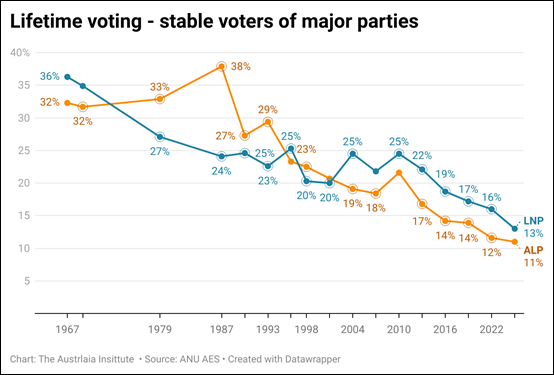
The ANU Australian Election Study has revealed just how greatly Australians have changed how they vote.

Back in the late 1960s the ALP and the LNP were in effect able to sit back and know that around a third of voters would always vote for them – their votes were locked in an in effect able to be ignored.

But over the decades voters have drifted away from the hold of the parties. They were willing to switch their votes – either to the other party or to minor ones.

In the May election just 11% of those who voted for the ALP had always voted for them, while 13% of the LNP voters likewise has always stood firm with the party:

When you can no longer rely on two thirds of voters to always vote the same way, that mean no only is it unsurprising that the ALP and LNP primary votes are also falling, it very much means there is no such thing as a safe seat. It means voters anywhere can put pressure on a major party to deliver. It makes for a better democracy and should be a reminder to government not to take its voters for granted.

Greens want Optus 000 licence reviewed

Sarah Hanson-Young is calling for Optus to have its Triple-0 licence reviewed after another outage left about 14,000 people in Melbourne’s southeast unable to call the emergency number.

Optus has failed the Australian people again.

There must be an urgent review of Optus’ licence. They are clearly not capable of providing this essential service and keeping Australians safe.

Big telcos continue to put profit over their obligation to safely deliver the Triple 0 service and Australians are sick of it.

A key outstanding recommendation of the Bean Review is that it be mandated that customers can be transferred to another carrier for emergency calls when their network is down. This needs urgent action.

The minister needs to take control of this. The regulator is failing to uphold the interests of the community. ACMA can not be trusted to carry out investigations on this on their own.

They are asleep at the wheel and have clearly demonstrated they are not up to the job of regulating the big telcos.

Privatisation of this essential service has failed. Families are still grieving the loss of their loved ones because of Optus’ negligence.”

Inflation 3.8 for the year to October

Everyone is struggling to read this new ABS report showing the monthly inflation data – that is because it is a different release marking a change to having the monthly inflation have as much data as the quarterly.

But it is also headline inflation, which is a bit all over the place, so trying to see how that marries up with the trimmed mean is…difficult.

But headline inflation was 3.6% in September and it is 3.8% now.

More to come!

Arche Energy clarifies the use of its reports

Arche Energy has released a statement in response to how some of its modelling work has been used by people to back their claims (cough, cough, the Nationals).

They want to make a few things clear:
Key points

  • Our work referenced by the Page Research Centre’s recent paper was completed in 2024.
  • Our work for Coal Australia was a separate engagement completed in 2025.
  • Our payments for the work we delivered to the Page Research Centre and Coal Australia were
    not contingent on the outcomes of the assignments.
  • Arche Energy’s declarations of limitation and disclaimer are key instruments in our practice of
    corporate transparency.
  • Our modelling assumed a 91% availability based on Aurecon’s report paid for by AEMO, 2023
    Costs and Technical Parameters Review.
  • Our cost of coal was based upon consumption of raw coal, which is significantly lower cost than
    seaborne coal.
  • Our forecast does not dictate that under the “no net zero” scenario, new coal plants must be
    constructed, only that new generation plant must contribute to average, long-term energy
    prices being less than new entrant coal prices.

The scenarios were:

  • “No net zero”
  • Technology-neutral “Low-carbon baseload”
  • Current path: coal retirement replaced with renewables and firming
  • Accelerated path: 100% renewables, no natural gas firming.

Our findings — the nuance

Under the “no net zero” scenario, the most competitive technology was new coal-fired power
stations fed by raw coal from adjacent, low-strip-ratio mines, known as a mine-mouth power stations.
Our modelling for “no net zero” also forecast that competitive renewables projects, particularly
rooftop solar, would also proceed.
Our forecast does not dictate that under the “no net zero” scenario, new coal plants must be
constructed, only that new generation plant must contribute to average, long-term energy prices
being less than new entrant coal prices; otherwise, they will not be competitive against the threat of new entrant coal.

In the other three scenarios, different mixes of technologies were most competitive. For example,
under the “Current Path” scenario, we forecast that long-term average prices would trend towards
the average cost of a mix of solar and wind, firmed with gas.
Why our coal cost estimates are different from others’
While most of Arche’s cost estimates were similar to those estimated by other parties, our estimate
for the cost of coal generation was substantially lower.

Here’s why:

  • We used international benchmarks for capital costs from recent projects in India and China,
    which we adjusted for Australian conditions and Australian costs.
  • We used a lower land and development cost.
  • We used a cost of coal based upon low-strip-ratio raw coal that is otherwise stranded from the
    international market (e.g. a Surat Basin location without access to port).
  • We otherwise used methods and assumptions similar to those used by other parties.
    Other context
  • We did this work in 2024. It does not account for any price changes since then.
  • Particularly relevant are the costs of battery energy storage system (BESS) and gas turbine equipment.
  • We were not consulted in relation to the Page Research Centre’s November 2025 paper, Delivering
    a High Energy Australia, nor were we approached by the National Party prior to their recent
    announcements

Rumored environment law deal close to finalisation

I am being told by my secret squirrels that the government may have come to a deal with the Greens for the environment laws. Which is not set in stone but I am told it is “close”.

Which is either a ploy to completely deal the Coalition out, which will mean business and industry get a bit frosty, or one to panic them into accepting something.

LET’S SEE

Student journalists take on PM

Here is some of the student press conference from earlier on the social media ban. This was filmed for the ABC’s BTN (Behind the News) program and will be shown very soon

Go on Albo, take a punt on gambling reform

Morgan Harrington
Research Manager

A growing chorus is calling on the Albanese Government to implement the recommendations of the Murphy Review into online gambling. Just yesterday, the PM was asked twice during question time if he’d allow Labor members a conscious vote on legislation that would see a ban on gambling advertising phased in over three years. This came quick on the heels of a comment by Labor MP Mike Freelander that a vote on the issue would pass parliament, if Labor members were allowed a conscious vote.

Australia Institute polling shows that three in four Australians (76%) support a total ban on gambling ads, phased in over three years. Even more (81%) support banning gambling ads on social media and online. Australians lose more to gambling than any other country in the world, and almost one-in-three 12-17 year old Australians gamble – before they are old enough to do so legally. But yesterday the PM told Kate Chaney – who was a member of the Murphy Review committee – that he couldn’t “wave a wand and fix things immediately with one piece of legislation.” But with Labor members showing an appetite for reform, cross-party support, and widespread public approval for this policy why not give it a shot?

A new Multinational Business Council is a threat to Australia

David Richardson
Senior Research Fellow

It is reported today that a new business group is being established called the Abundium Multinational Business Council (AMBC) which includes the local heads of companies such as pharmaceutical company Bayer, logistics group DHL, building firm Heidelberg Materials, Lego, electronics manufacturer Lenovo, PepsiCo, recruiter Randstad and Royal Bank of Canada.

Rich Hirst, described as co-chair and founder, suggested why this group was formed when he was quoted as saying the investment environment had become less enticing over the past five years under successive governments. He suggested that Australia has been highly regarded as a safe place to invest but “that stability isn’t enough in an international marketplace that’s becoming increasingly competitive and where Australia is getting a bit of a reputation for its productivity and its competitiveness is slipping.”

We are naturally very suspicious. This is starting to sound like a plot to cut wages and cut company taxes. As long as we can remember Australian industry has been dominated by foreign interests.

In May 1965 the Vernon Report likened foreign investment to riding on to the tiger’s back. The longer Australia stayed on the tiger’s back, the harder it would be to get off. Policy under successive post-war governments was to buy back the farm, but that withered away during the neoliberal era of the 1980s and beyond, with the exception of being tough on investments from China and Keating’s dividend imputation scheme which favoured domestically owned companies.

But now in AMBC we have an interest group seeking special treatment for foreign investment which can only be at the expense of Australian sovereignty and Australian taxpayers.

AMBC describe themselves as “australia’s only cross-industy [sic] network for CEOs & leaders of companies headquartered internationally, to accelerate their growth, performance, learning & well-being”. Interesting to suggest public policy should single out and support multinational’s “well-being”.

“The Burqa and the Berserka” – a political match made in the gutter

Tony Windsor has given his take on the sandwich press wagyu dinner.

How’s this for a decent old whack?

The Public Service is not bloated and cut will hurt Australians

Greg Jericho
Chief Economist

The talk around Canberra at the moment is about the reports of the government asking departments to find 5% cuts or a “re-prioritisation” to use Finance Minister Katy Gallagher’s words.

The word usage is quite pertinent given the CSIRO’s announcement of its cuts last week contained the line that the cuts were a “sharpened focus” which “means other research activities will need to be deprioritised”

That deprioritisation has ended up meaning the following job cuts by research area:

  • Environment: approximately 130-150 FTE 
  • Health and Biosecurity: approximately 100-110 FTE  
  • Agriculture and Food: approximately 45-55 FTE  
  • Mineral Resources: approximately 25-35 FTE. 

It is perhaps telling that the week the govt is trying to push through a weakened EBPC Act with the support of climate change denying members of the LNP that it is also announcing the biggest cuts in the CSIRO are on environmental research. Governing is about choices and right now the Albanese government is making some rather bizarre ones about the environment.  

But just how “bloated” is the APS? Does it need to be cut?

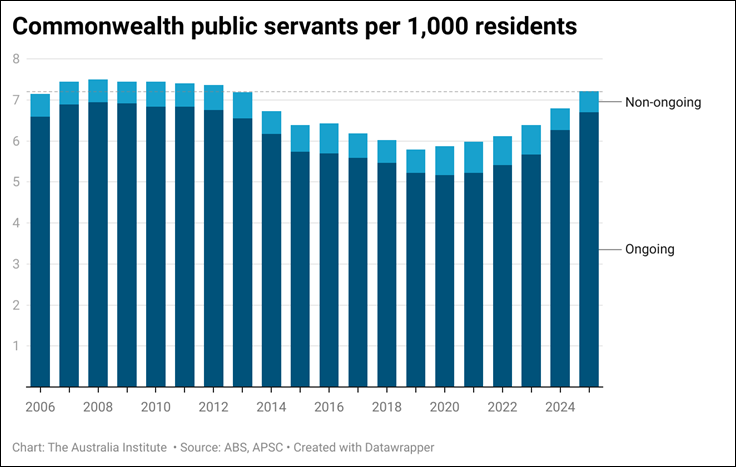
According to the APS Commission, in June this year there were 184,442 ongoing employees and 14,087 non-ongoing employees in the APS. That total of 198,529 was a nearly 25% increase on June 2022.

So bloated?

Nope.

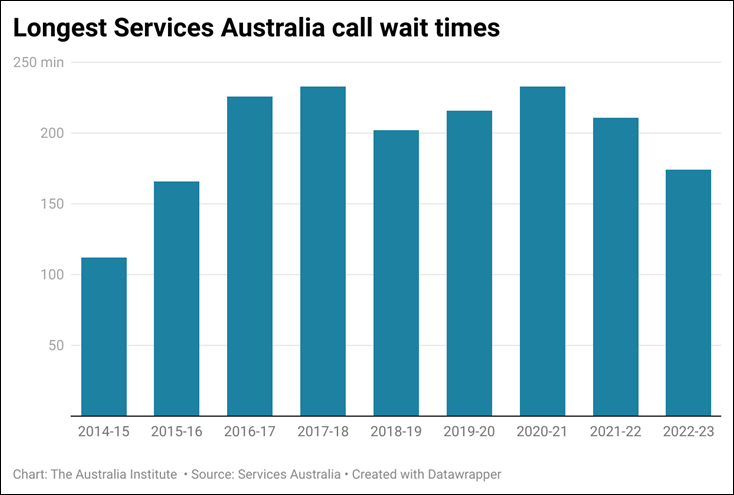
What should not be forgotten is that the Abbot-Turnbull-Morrison governments gutted the APS and as a result service delivery – such as call wait times and processing times for health claims rose.

And while the total number of public servants is now much higher than in the past, Australia’s population has also grown.

As a result, the number of APS per 1,000 residents is currently lower than it was in the final years of the Howard government:

In June 2007 there were 7.45 APS employees per 1,000 residents; in June this year, there were 7.21.

We need to not only have some context about the size of the public service, but we also need to realise that these cuts are not without cost – whether it be to service delivery, or, in the case of the CSIRO, to vital research on matter than directly affect all Australians.

One Nation’s surprise new climate policy

In her latest stunt to avoid having to, you know, like, work while focusing on the really important issues like, you know, getting attention … Pauline Hanson has revealed something remarkable: she has a policy.

While answering a question from SBS reporter Naveen Razik about the need to wheel out her old stunts like wearing a burqa in the Senate, she delivered this gem:

It is very important to the Australian people, especially with our policy of getting rid of climate change.

Getting rid of climate change? Why didn’t we think of that?

For all her grandstanding and ill-informed nonsense, the saddest aspect to the whole Hanson circus is that Queenslanders deserve an intelligent, hard-working Senator who will actually work for them.

The tragic cost of climate change in Vietnam

The New York Times has a heartbreaking report today about the impact of climate change in Asia.

The paper has a reporter and photographer on the ground in Vietnam, which has been hit by 14 typhoons this year. It used to get about 5 per year.

The NYT says “more than 90 people in the nation have been killed in the past week from flooding and landslides, and around a dozen more are missing”.

Shock new YouGov poll

How often are we told to take polls with a grain of salt these days, especially so far out from an election?

Well, here’s one poll we absolutely had to bring to your attention.

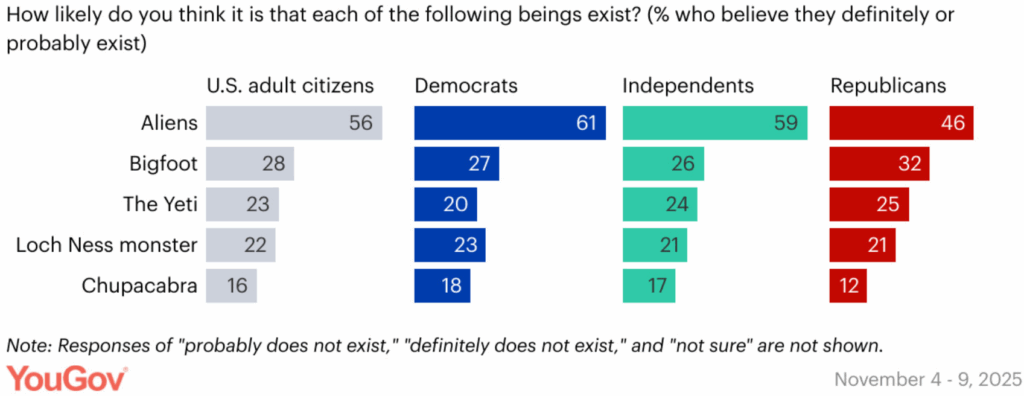
It’s a poll by YouGov USA of 1114 Americans on whether they believe aliens exist … or not.

When the mainstream Australian media inevitably pick up this story, the headline will be that more than half of America believes aliens do, in fact, exist.

But my big takeaway is that more than one in five believe in the Loch Ness Monster.

If you read the full poll, you’ll also discover that 47 percent believe aliens “definitely or probably have” visited earth.

Sadly, Americans were not polled on what colour they think aliens are.

My money would be on orange having taken over from green in the past 12 months.

Australia’s biggest companies exaggerate their generosity

Bill Browne
Director, Democracy & Accountability Program

If you convinced someone else to donate to charity, would you count their money as part of your contribution to the community?

Do you boast about how many thousands of dollars’ worth of unwanted old clothes you drop in charity bins?

Do you call the freebies you give your customers a “community contribution”?

You might not, but some of Australia’s largest and most profitable companies are happy to do so – to the extent that at least half of their $1.8 billion in claimed “contributions” are of dubious charitable purpose.

New research from The Australia Institute looks at the financial and sustainability reporting of Australia’s 20 largest publicly-listed companies, and finds at least 12 make dubious claims of community contributions.

These include:

  • Taking credit for employee or customer contributions to charity (Macquarie Group, Wesfarmers, Woolworths)
  • Claiming the value of unsellable produce that was given to food charities (Woolworths)
  • Free benefits provided to customers (ANZ, Westpac, NAB, Commonwealth Bank, Telstra, CSL)
  • Including the value of corporate sponsorships (Westpac)
  • Mandatory payments for the use of land and resources (Santos, Woodside).

These payments far exceed the actual charitable contributions made by companies, whether in the form of cash, employee time or in-kind donations.  

When dubious and uncategorised contributions are excluded, Australia’s largest 20 companies gave away perhaps 0.5% of their profits.

There is no consistency in how these billion-dollar companies report their community contributions, or even how they describe them. 

Consistent rules from the ASX (the Australian stock exchange) would ensure that companies can only take credit for genuine charitable donations, and allow shareholders and members of the community to assess their real community contribution.

Manufacturers warning on net zero: “Why Australia cannot afford to turn back now”

Peak manufacturing body Weld Australia has released a comprehensive response to the federal Liberals’ decision to abandon Australia’s commitment to net zero, saying it “should concern every Australian”:

What Net Zero Actually Means

Net zero is not a slogan. It is not a vague vision for “going green”. And it certainly does not
mean eliminating every last tonne of carbon emissions.

Net zero simply means balancing the amount of greenhouse gas we emit with the amount we
remove from the atmosphere. If Australia emits 450 million tonnes of carbon dioxide equivalent
today, we must remove 450 million tonnes to be net zero.

Of course, the goal is to shrink that 450-million-tonne figure as far as technologically possible
(down to perhaps 100 million tonnes) without destroying the industries that underpin our
economy. But whatever emissions remain must be counterbalanced through sequestration:
soils, forests, technological capture, or other verified removal methods.

Net zero is a pragmatic target grounded in physics, not ideology. Nations across the world have
recognised that failing to achieve it will be vastly more expensive than the transition required to
get there.


The Myths That Are Derailing Australia

Myth 1: We need more gas to keep the lights on

This is perhaps the most persistent, and the most misleading, claim in Australian energy politics.
Gas-fired generators supply just 17% of Australia’s electricity, less than half the contribution of
rooftop solar, which now delivers around 34% on some networks.

Despite endless claims from lobbyists, only one new gas-fired power station has been
commissioned in the past five years. Why? Because the economics simply do not stack up. Gas is
too expensive to serve as a transition fuel. Its role in firming the grid is shrinking, not
expanding.

And crucially, as The Australia Institute has shown, 83% of all gas extracted in Australia is not
used by Australians at all. It is exported.


Myth 2: Australia is running out of gas

The idea of a domestic gas shortage is pure fiction. In just five years, Australia has exported 22
years’ worth of domestic gas demand. The LNG export industry uses:

9 times more gas than our electricity sector

13 times more than manufacturing

30 times more than Australian households


There is no shortage. There is only an export industry that has been allowed to cannibalise
Australia’s energy security.


Myth 3: High energy prices are unavoidable

Domestic gas prices are high because they are tied to the international spot market; a market
designed to maximise exporter profits, not protect Australian industry. Australians now pay four
to seven times more for gas than consumers in the US, Russia, Qatar or Canada.

Wholesale gas prices in Australia are closer to those of major importers like Japan and China
than to fellow exporters. That is an absurd situation for a nation that is the world’s secondlargest exporter of LNG.

Worse still, high gas prices translate directly into higher electricity prices, even though gas
supplies only a sliver of our power. This system is irrational, economically damaging, and
entirely fixable.


The Real Consequences: Industry Decline and Sovereign Risk

Manufacturing is already under extreme pressure. High gas and electricity prices inflate the
costs of essential goods from steel to water heaters. This is a huge burden on industry and a
substantial additional impost on Australian families.

We risk losing sovereign capability in industries vital to national security (like shipbuilding,
defence, manufacturing, and fabrication) because of energy policies that favour foreign-owned
fossil fuel companies over Australian businesses and households.

This is not abstract. It is happening now.

The Path to Net Zero: Clear, Achievable, Economically Sensible

  1. Decouple domestic gas prices from the international spot market. There is no reason
    Australians should be paying importer-level prices for Australian gas. Gas reservation, domestic
    pricing mechanisms and export controls are implemented by every major resource-exporting
    nation except us.
  2. Decouple electricity prices from gas. Allowing 13% of generation (gas) to set the price for
    100% of electricity is indefensible. Technology-neutral reform and strategic investment in
    storage will break this distortion.
  3. Accelerate renewables and firming, fast. Wind, large-scale solar, rooftop solar and batteries
    are booming despite policy uncertainty. With bipartisan support, Australia could not only
    decarbonise rapidly but become a global renewable energy superpower.
  4. Establish a bipartisan National Energy Strategy. Since the mid-1990s, Australia has lurched between policies, reversals and ideological battles. Energy markets need certainty. Investors need clarity. Industry needs predictability. A bipartisan strategy is the only path to that stability.
  5. Ensure Australians benefit from Australian resources. Qatar earns around $50 billion per
    year in taxes and royalties on gas exports. Australia earns around $1.6 billion on roughly the
    same exported volume.

‘Progress’ in public service morale

Patrick Gorman, the assistant minister to the PM and sledge lord has a serious report out this morning – the annual public service survey is in. Here is his spin on it:

The State of the Service Report 2024-25, tabled in Parliament today, shows clear progress across the Australian Public Service, with stronger service delivery, higher workforce capability and improved integrity. 

The Albanese Government’s investment in capability is rebuilding the Australian Public Service. This year’s State of the Service Report shows engagement, wellbeing, innovation and integrity in the Australian Public Service are at an all-time high. The latest APS Census shows 93 percent of staff understand how their role benefits the Australian public. Ninety-one percent of staff said they are willing to go the extra mile when required.

Trust in Australian public services increased to 62 per cent in 2025, a four-percentage-point increase from 2024, with trust in specific services reaching 73 per cent.

Census index scores improved across communication, engagement, innovation, perceptions of senior leadership, and wellbeing support. Reports of bullying and harassment fell to 9.5 percent, the lowest on record.

The Albanese Government is advancing efforts to build a culturally inclusive, multicultural service that better reflects the diversity of modern Australia. 26.8 percent of APS employees reported their first language was not exclusively English. 

First Nations leadership in the Australian Public Service has more than doubled, rising to 111 Senior Executive Service (SES) leaders, up from 54 in 2023. 

Culturally and Linguistically Diverse representation in the SES is 11.8 percent, moving towards the 24 percent benchmark, aligning with the one percent annual increase target. This is showing the need for continued focus to improve representation.

In December 2024, the public service achieved its lowest recorded gender pay gap of 4.4 percent, based on annualised salaries.

Chalmers expects inflation to spike following the end of the energy relief package

Jacob Shteyman and Tess Ikonomou
AAP
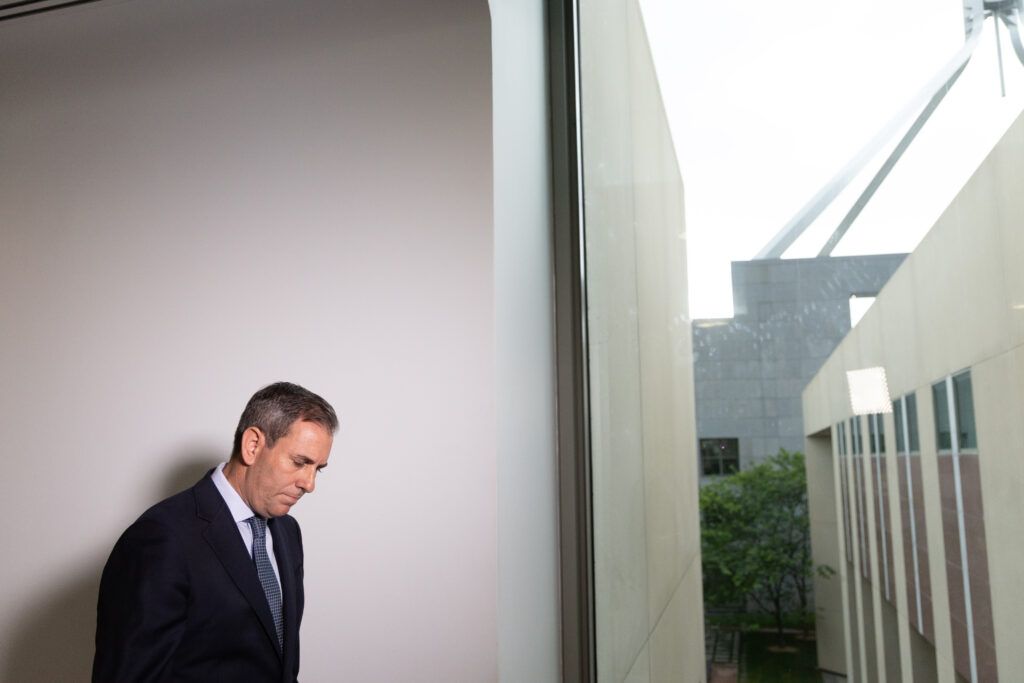
Treasurer Jim Chalmers talks to the media in the press gallery of Parliament House, Canberra this morning. Wednesday 26th November 2025. Photograph by Mike Bowers

Treasurer Jim Chalmers has tempered expectations on inflation figures expected to spike to the highest level in 16 months, as energy bill relief comes to an end.

While the consensus of forecasters is for the annual headline inflation rate to hold steady at 3.5 per cent, some economists and the Albanese government are bracing for a rise when the data is released on Wednesday.

Dr Chalmers rejected government spending had played a part in inflation figures, pointing to a lack of evidence, in addition to previous surpluses delivered.

“Most economists expect the headline number to tick up a little bit … but a big reason for that will be the removal of some of the state energy rebates,” he told Sky News on Wednesday.

The government’s energy rebate for households and small businesses were extended until the end of 2025.

Asked about reports government departments had been directed to cut their staff or budgets by five per cent, Dr Chalmers said this wasn’t the case.

“What we’re doing in the lead up to this budget is what we’ve done in the lead up to every budget, which is asking departments and agencies and ministers to identify lower priority spending that we could consider redirecting to higher priority areas,” he told reporters in Canberra.

Opposition Leader Sussan Ley said Labor had “let Canberrans down” after promising there wouldn’t be any cuts.

“Are they backing away from the promise, or have things got so bad since the election that they actually have to address savings as a matter of urgency, cuts as a matter of urgency,” she told ABC News Breakfast.

“Either they lied to you at the election or they really, really have mismanaged the budget.”

Economists at Westpac have forecast the index to rise 0.1 per cent for the month of October. But because of a 0.3 per cent drop in October 2024 falling out of the series, that would result in the annual figure shooting up to 3.9 per cent – the highest level since June 2024.

Compared to the same time a year prior, they predicted a smaller fall in electricity, a stronger gain in dwellings, a smaller decline in rents and a jump in holiday travel and accommodation.

Commonwealth Bank senior economist Trent Saunders predicted a gentler increase to 3.6 per cent.

“Softer electricity and fuel prices are the main drivers of the decline in the month. Market services inflation is also expected to slow a little, while rents and new dwelling price inflation are likely to remain firm,” he said.

That will be of particular interest to the Reserve Bank of Australia.

After leaving the cash rate on hold at 3.6 per cent on Melbourne Cup day, RBA governor Michele Bullock said the bank thought a spike in inflation in the September quarter was largely down to temporary factors.

But she noted there was some “signal” in the data from housing and services inflation that could indicate inflation was more entrenched.

Mr Saunders expected housing inflation to fall by 0.4 per cent over the quarter, driven by an increase in electricity subsidy payments in NSW, ACT and Western Australia in the month

Other economists have predicted inflation to fall.

ANZ’s Adelaide Timbrell expects a headline figure of 3.3 per cent, but noted the bank’s forecasts were less precise as it will be the first time the ABS publishes a full monthly CPI release, so forecasters are unable to compare some of the items with previous months.

ABS chief statistician David Gruen said the release was a “major milestone for Australia”.

The prime minister will hold a special press conference with school students ahead of next week’s social media ban. The press gallery can watch, but it’s for a special episode of the ABC show, Behind the News (BTN) so it is seen and not be heard.

Which is an added bonus really.

New inflation data coming today

Today we will get inflation data – but this is a little different from the usual ABS releases – today marks the official transition from quarterly to monthly headline inflation.

Headline is the stuff that bounces around a lot – underlying inflation (the trimmed mean) is the metric that the RBA and economic watchers say gives us a better idea of where inflation actually is (the pulse, as it were)

Coalition position on net zero ‘economic insanity’

The Coalition is claiming Labor’s figures on keeping coal fired power stations running – the business as usual approach the opposition seems to think is the way of the future (I mean sure, if you want to just pretend there is no better way and surrender to a burning planet without a fight) are bupkis.

Treasurer Jim Chalmers talks to the media in the press gallery of Parliament House, Canberra this morning. Wednesday 26th November 2025. Photograph by Mike Bowers

To this Jim Chalmers says:

Well, one of the reasons that the Coalition’s approach to the net zero energy transformation is insane in economic terms is because it would cost the budget billions of dollars to extend the life of the least reliable parts of the energy system.

So what they’re proposing would swing a wrecking ball through the budget, through the economy, and push power prices up, not down. That’s because it would require billions and billions of dollars of subsidies to extend the life of these coal-fired power stations, which have been slated for some time to come out of the system.

Any reasonable, rational person who cares about responsible economic management knows that these power assets are coming out of the system. And so the onus is on governments to work out the best way to replace that energy which is coming out of the system.

The rational economists and experts and analysts in the energy system know that the best way to do that is with cleaner and cheaper renewable, more reliable energy. That’s why it makes no sense in economic terms what the coalition is proposing.

They’ve got this harebrained position on net zero which is driven more by the internal politics of their coalition party rooms than it is by the national economic interest.

But to the question, Chalmers says:

What we’ve done here is taken what it’s cost to extend power plants in the past, and we’ve applied it from 2028 to the power assets which are slated to close. I think, as your viewers would understand, for a long time now and a long run-up, some of these power assets – coal-fired power assets – are going to come out of the system. And so, in order to extend them, it requires very substantial billions of dollars in government subsidies that the coalition has told us how they intend to go about that or how much that will cost. So we’ve done a calculation for them which recognises that, if they want to extend the life of these power assets, it will smash the budget and will also smash the economy, and it will push power prices up, not down. And that’s why what they’re proposing to do on net zero and the energy transformation is an act of economic insanity.

Public service savings ‘business as usual’ says Treasurer

On the public service cuts, treasurer Jim Chalmers has appeared on ABC News Breakfast to say it is business as usual:

First of all, you’re right to say it’s not an efficiency dividend. And it’s also very different to what our opponents were proposing in the lead-up to the last election, which is to slash tens of thousands of jobs. As I said to you a moment ago, we’re not asking every department to cut their staff by 5%. We’re not asking them all to cut their budgets by 5%. We’re doing what responsible governments do, which is – in the lead-up to budgets, we say, “Where is your spending lower priority, and do we need to redirect that to higher-priority areas?” We’ve been doing that now for four budgets, and it will be part of our efforts in the fifth, because there are very substantial pressures on the budget. We are cutting taxes, providing cost-of-living relief, strengthening Medicare, and doing all of the things that we said we would do. And in order to do that, you need to make room in budgets. We’ve been doing that for 3.5 years now, and people should expect that to continue.

Lols

Ted O’Brien isn’t giving his press club speech until midday, but Jim Chalmers already thinks he knows what Super Ted will be saying:

Ted O’Brien went to the last election promising higher taxes for every taxpayer and he’ll go to the next election with a plan for higher power prices for every household.

The Coalition are making billions of dollars’ worth of uncosted commitments, but can’t tell us how they’ll pay for them and that means savage cuts to essential services which they should come clean about.

What the Coalition is proposing is a recipe for higher taxes, higher power prices, bigger deficits and more debt.

They’re hopelessly divided, they have no credibility on the economy and Ted O’Brien will prove that again today.”

Ley all over the place on public service cuts

Sussan Ley thinks the reports departmental heads have been told to find 5% in savings in their public service departments is a broken promise by Labor and also might mean cuts in services, and she supports the public service, but also doesn’t think the cuts go far enough. So bit all over the place it seems.

Ley tells ABC News Breakfast:

In making the commitments that they made, they have let Canberrans down. I’ve said – and I said in an earlier speech – that we do need to live within our means, and we want an efficient Public Service that delivers for all Australians and recognises the responsible role of the Public Service.

I’ve been a public servant in this city and outside it, and I support our Public Service. So it’s not about that. But what on earth is going on in the Labor Party if they are writing to department heads asking for savings – perhaps, I think, it was 5%. By the way, how is that going to solve the over $1 trillion debt that this country is facing? And when we talk about living responsibly within our means, we do it because, when we do live responsibly within our means, we can look after Australia’s most vulnerable. This is because every dollar that you spent on interest on the debt – right now, it’s $50,000 a minute on interest on the debt – is a dollar that you can’t spend on looking after people who are vulnerable, employing doctors and nurses in the public health system, and so on.

More on the steak in a sandwich press malarky

What does Sussan Ley think of Barnaby Joyce and Pauline Hanson having sandwich press steak in Hanson’s office earlier this week?

Ley tells ABC News Breakfast:

The great Wagyu producers in my electorate would be a bit worried about the steak on the sandwich press. Putting that aside, Barnaby’s a friend. I’ve known him for many years as a colleague in the parliament. What he does is entirely to him, and I would leave it there!

Q: Would you be sad if he jumped ship from the coalition? Obviously there are some people in the National Party who have voted for the Nationals purely for him?

Ley:

These are questions for the National Party, James. I’m the Leader of the Opposition, yes, but my party room is united behind a serious, compelling policy agenda that we want to take to the Australian people that we are developing, and that involves living within our means, managing the budget responsibly, lower personal income tax cuts – a substantial package that I will take to the next election – addressing issues of migration that Australians are concerned about, because infrastructure is failing.

And, of course, addressing something that’s very close to the heart of small business, which is – how do we manage industrial relations in a setting that actually works for both employers and employees and generates productivity? Because – remember that productivity summit? Was it more than 100 days ago now? Absolutely nothing has come out of it.

I am sure this all seemed very clever in the tactics meeting with Ley’s team about how she would answer these questions.

Public service told to find 5% cuts in all departments

The AFR reported this yesterday and today (and managed to almost contain the WE WERE RIGHT smugness in the article – public service spending is a particular bugbear of this incarnation of the Fin) and Clare O’Neil has been asked about it on the Seven network – where are departments going to find these cuts?

O’Neil:

This is a really important and practical part of government. Taxpayer dollars are really precious. This is not our money and for everyone whose watching at home, they hard for their salaries and contribute to the tax system in good faith that their dollars will be looked after and invested on critical things like supporting our aging population, supporting child care, supporting our Medicare system, the National Disability Insurance Scheme and other services that many Australian families rely on is absolutely appropriate that every year we take an absolutely strong look at the budget and make sure when we’re making these big improvements to services as our government is doing on Medicare on bulk billing on cheaper medicines and energy bill price relief we’re thinking about where we can rationalise on the budget.

What about that $96m on the BoM website (which was started in 2019 under the Morrison government)

O’Neil:

That’s an historic spend. The minister said he’s unhappy about that. There’s absolutely areas in the public service where we do need to think about making sure that we’re spending taxpayers money wisely and for everyone who is watching at home I really want them to understand we see that your struggling the cost of living, you’re struggling with energy prices and other matters we want to do everything the government can do to help you in those areas. It means having a strong look at the budget and make sure every dollar is spent wisely

‘You’ve lost that loving feeling’ a hit at Nationals Christmas party (no really)

Matt Canavan isn’t above creating headlines himself – he attended Melissa McIntosh’s rival Christmas drink event for Coalition colleagues, which was held at the same time Sussan Ley was hosting drinks for the media (so she couldn’t attend). About 40 Coalition MPs visited McIntosh’s shindig, including Canavan who says it was all very festive.

The Nationals have also held their stand alone Christmas party, which had an 80s theme, which fits really, because that was maybe the highpoint of the Nationals popularity.

Canavan told the Nine network there was a “strict” no photos rule, but he dressed as Maverick from Top Gun (because of course he did)

There were a few gooses, actually, last night with the 80s team. And and you’ve lost that loving feeling was was was was a really, really good. We hit we hit the high notes.

We told you so

One of Jim Chalmers’ goals has been to reverse the (on the data, wrong) idea that the Coalition are better economic managers, so you can imagine that the annual electoral survey would have been some cause for a quiet fist pump (he strikes me as the private fist pump kinda guy).

The other affirming part of that survey was that it found Peter Dutton was the most unpopular Labor leader for 40 years which – ummm, yes? Told you so?

Sussan Ley could take that mantle though, so there is always further to fall

Voters prefer Labor over coalition on key policy front

Grace Crivellaro and Zac de Silva
AAP

The coalition has lost its 40-year streak of being preferred over Labor when it comes to managing the economy.

The Australian Election Study, led by Australian National University and Griffith University, shows voters now trust Labor’s approach to economic issues, with the coalition losing its long-held advantage.

The Liberals suffered their lowest rating in the 2025 study, dropping to an average score of 4.2 on a zero to 10 scale of how much people like the party.

Voters signalled a clear preference for Anthony Albanese as prime minister, with former opposition leader Peter Dutton’s lack of popularity at May’s federal election breaking several records in the study.

“Dutton was the least popular major party leader the study has ever polled,” co-author Ian McAllister said.

“According to voters, the leadership qualities he most lacked were ‘inspiration’, closely followed by ‘compassion’.”

The Australian Election Study has been held after every federal poll since 1987.

The full report on the 2025 election will be released at Parliament House on Wednesday.

The federal election saw the coalition sink to its worst election result, winning just 43 seats in the House of Representatives.

The study’s results show voter volatility continues to rise, with 25 per cent of participants reporting they don’t feel close to any political party.

Co-author Sarah Cameron said the wide gender gap that emerged over the past decade had remained.

“The coalition attracted the lowest share of votes from women on record, with nine per cent fewer women than men voting for the coalition,” Dr Cameron said.

“Conversely, Labor attracts more votes from women than men.

“The gender gap in voting for Labor, at five per cent, is about half the size of the coalition’s.”

There has also been a dramatic drop in confidence in Australia’s relationship with the United States, with 55 per cent of voters saying they trust in the US to come to Australia’s defence, down from 73 per cent in 2022.

The dire results come as the coalition’s primary vote also failed to lift beyond record low levels in the latest Newspoll data, which revealed most voters support Andrew Hastie as preferred opposition leader.

Labor continues to lead the two-party preferred vote by 58-42 per cent.

Opposition treasury spokesman Ted O’Brien will use a keynote address on Wednesday to outline some of the principles of the coalition’s economic policy.

Mr O’Brien will describe a new focus on intergenerational equity and criticise backsliding levels of productivity.

“Today, we are living off the productivity gains of the generations before us,” he will say.

“The generation before you builds your foundation; then you build on it for the next generation. That is the intergenerational compact.

“But that intergenerational compact is breaking.”

He will also use the speech to reiterate the coalition’s promises to cut income taxes and restore a Howard-era measure limiting government spending.

Has the horse bolted when it comes to Barnaby? (Not an image anyone who has seen him play football on the parliament oval needs)

Matt Canavan:

Well, that may very well may be the case. I don’t know, you can only ask Barnaby that, but I’ll do my best to keep him part of the team.

Q: And if he’s not?

Canavan: Well, he’s he’s a political opponent. So on the football field. Got to make the tackles.

‘Won’t be so rosy if [Barnaby] goes to One Nation says key ally

Over on the Nine network, LNP senator Matt Canavan is making a public appeal for his mentor and ally Barnaby Joyce to stay with the Nationals (there is a whole thing about how Pauline Hanson cooked the steak for Joyce on a sandwich press – it was Wagyu so everyone is losing their minds)

But on Joyce moving to One Nation, Canavan says:

I want Barnaby to stay in the team. I think it’s much more effective to be in our team. We’ve seen this week what a circus act One Nation is. And it might entertain, but it doesn’t change anything. Ultimately, One Nation are much more about the outrage and much less about the outcome. And that’s what I’m here for. To make real change, make a real difference. I think Barnaby has done that in his career as part of the Nationals party. I’m not so sure it’ll be so rosy if he goes over to One Nation.

Worst bushfire risk in years prompts calls for caution

Tom Wark
AAP

Forecasts of soaring temperatures and damaging wind gusts have prompted authorities to raise bushfire alerts to their highest levels in more than two years.

More than 20 public schools across central NSW will close on Wednesday after the state’s Rural Fire Service issued a warning for catastrophic fire danger.

The Lower Central West Plains – including the regional hubs of Dubbo, Parkes and Forbes – is bracing for the highest level of bushfire conditions, meaning people there should consider leaving fire risk areas and stay out of paddocks and bushland.

No region of NSW has had a catastrophic fire danger forecast since September 2023.

Extreme danger warnings and total fire bans have also been declared for millions of residents, including those in metropolitan Sydney, as wind gusts of more than 90km/h are expected on Wednesday in southern NSW and Victoria.

“(Winds are) combining with warm to hot temperatures and really dry air and that is elevating fire dangers across the region,” the Bureau of Meteorology’s Sarah Scully said.

Temperatures up to 37 degrees are forecast for Dubbo on Wednesday after maximums of 38 degrees took their toll on Tuesday.

Total fire bans are in place for a further 10 regions of NSW, including greater Sydney, Illawarra and the Hunter.

An elevated fire danger is also forecast in the southern interior of Queensland.

The warnings of increased bushfire danger come as the country is still reeling from a deadly start to bushfire season.

Country Fire Service member and 30-year firefighter Peter Curtis died on Sunday while battling a scrub fire on the Eyre Peninsula in South Australia.

Another bushfire in northeast Tasmania has burned since Saturday, with authorities advising people in the Curries River Reservoir area to monitor conditions.

Big business overstating charitable contributions: report

Glenn Connley

Australia Institute research into 20 of Australia’s largest corporations has found that over half the value of their reported contributions to the community were dubious, leading to overinflated claims of generosity in the private sector.

A corporation’s social licence to operate depends partly on its contribution to the community, however information on philanthropic donations by big business is limited and confusing.

While companies claim they give tens or hundreds of millions of dollars to the community each year, only a fraction comes in the form of charitable donations.

The Australia Institute analysed the philanthropic donations of Australia’s 20 largest publicly listed companies:

  • Twelve counted dubious contributions towards their overall community contribution.
  • Combined expenditure amounted to $1.8 billion, however $1.1 billion were identified as dubious claims ($905 million) or had too little information to categorise ($204 million).
  • Examples of dubious claims include counting sponsorship deals, employee support and donations from customers as part of the company’s contributions to the community.
  • The report recommends that the ASX should require the largest publicly listed companies in Australia to follow a standard method of disclosing philanthropic expenditure to shareholders and the public.

Examples:

  • Banks claim the fees they waive to some customers as part of their corporate giving. The Commonwealth Bank listed $274 million in forgone revenue (like fees waived for benefit recipients and not for profit organisations) as “community investment”.
  • Westpac provides just a tiny fraction of the funding for the beach rescue helicopter which carries its name and logo, but counts sponsorships against its overall “community investment” figures. 
  • Of the $143 million Woolworths calls “direct community contributions”, just $15 million is identified as financial support from the company. $81 million is donated surplus food. However, it’s unlikely it could sell that food and the company may actually save on disposal costs by giving it away. 
  • Wesfarmers appears to claim money paid by customers at charity sausage sizzles outside their Bunnings stores as part of its own charitable contribution. This is neither Bunnings’ money nor Bunnings’ fundraising.  

Good morning!

Hello and welcome back to The Point Live. I am hoping that the technical issues that have plagued my computer all week are over (please Dolly, let them be over) and we can continue descending into the abyss together.

Ted O’Brien is at the press club today – who is that? Good question – he’s an answer no one has ever asked for. O’Brien has some very big feelings about himself and his ability, which has seen him become deputy leader of the least popular Liberal party in decades.

He also thinks he knows a lot about how to win back voters, which is very funny to me as someone from Queensland who has seen him try and interact with humans at events. His big pitch is tax cuts, which is what he will make at the press club today, which is going back to the bracket creep argument that the Coalition was making some time ago.

But tax cuts won’t matter on a burning planet and the Coalition still haven’t worked out that young people care about having an actual future. So that seems like a fun time.

Murray Watt is still the busiest person in parliament as he tries to make a deal to pass the mining friendly environment laws which are more about providing investment certainty for resource companies, than anything else. That is why there is the big rush – they want those laws locked in so they can start providing certainty for critical mineral exploration etc (it’s not about the environment). They are terrible laws and we have to remember that Tanya Plibersek did get a deal to pass better laws, that Anthony Albanese scraped in the last parliament, so everytime you hear about this ‘five year delay’ -well, Labor had a deal, it’s just not the one the prime minister wanted.

The crossbench is getting increasingly frustrated with the government’s refusal to act on gambling ad regulation and so is the Labor caucus (not that they’ll say anything too loudly in public – and currently it is just furrowed brows and ‘we really should be doing something on this’ in private. As political commentator Sean Kelly said last night at his essay launch in Canberra, people really should be talking about how quiet this caucus is more). We are coming to the end of another parliamentary year with no action on the Peta Murphy report into gambling regulation, because the government won’t get out of its own way.

So that’s the day so far. Mike Bowers is back with us (huzzah!) and I have coffee number two on, with coffee number three to follow closely behind it. We are together until the end of the week now, with Labor wanting the Friday for the environment legislation, so make sure you are pacing yourself, and not adding the liquor cabinet to the mix just yet (or you do you – I try not to judge)

Ready? Let’s get into it.


Read the previous day's news (Tue 25 Nov)

Comments

Start the conversation

The biggest stories and the best analysis from the team at The Point, delivered to your inbox.

Past Coverage