Wed 5 Nov

The Point Live: Coalition net zero saga drags on. As it happened.

Amy Remeikis – Chief Political Analyst and Chief Blogger

This blog is now closed.

Start the conversation

The Point Live: Coalition net zero saga drags on. As it happened.

Key Posts

The Day's News

See you tomorrow?

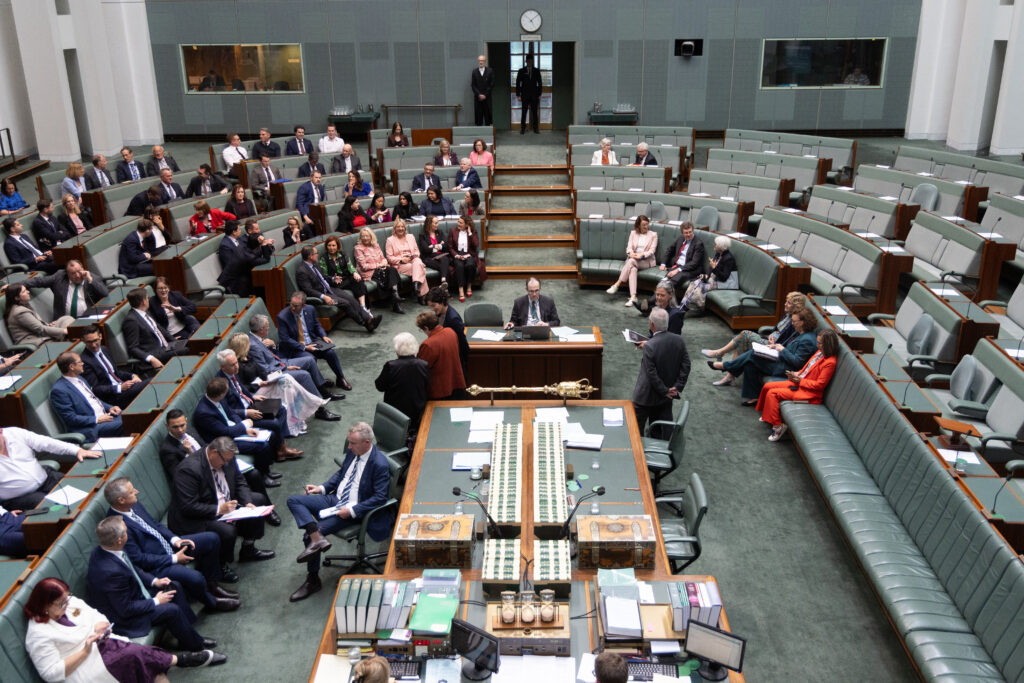
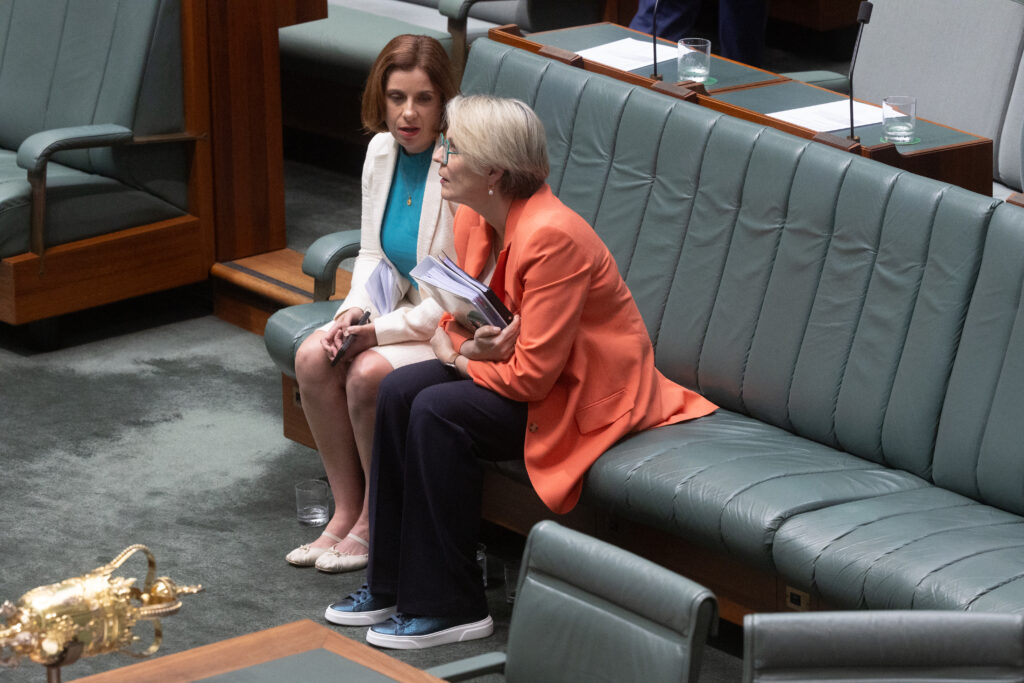
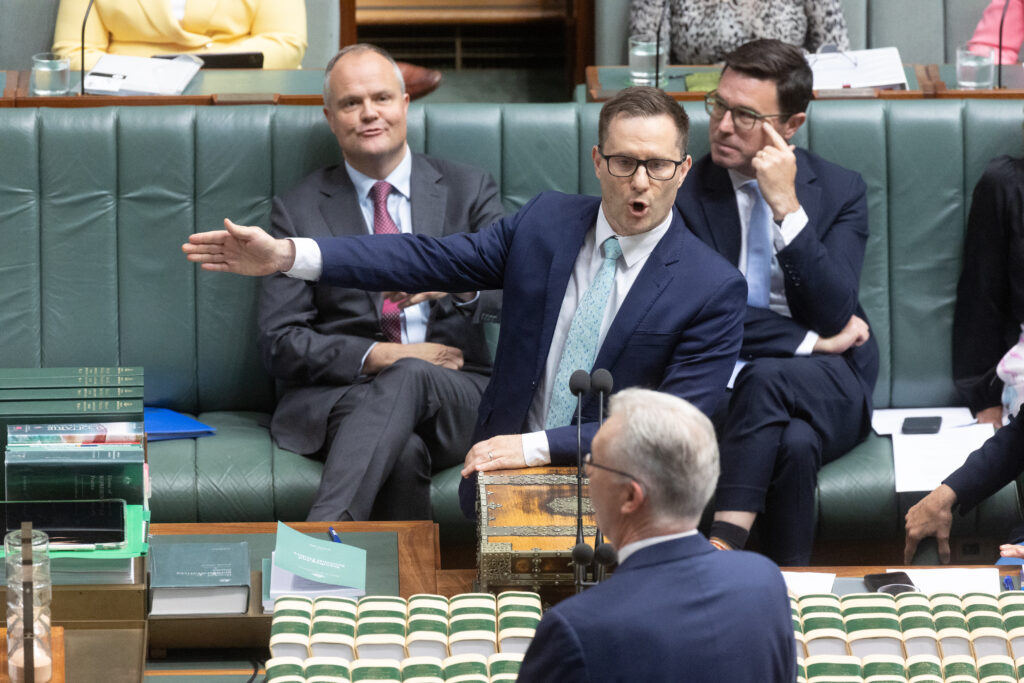
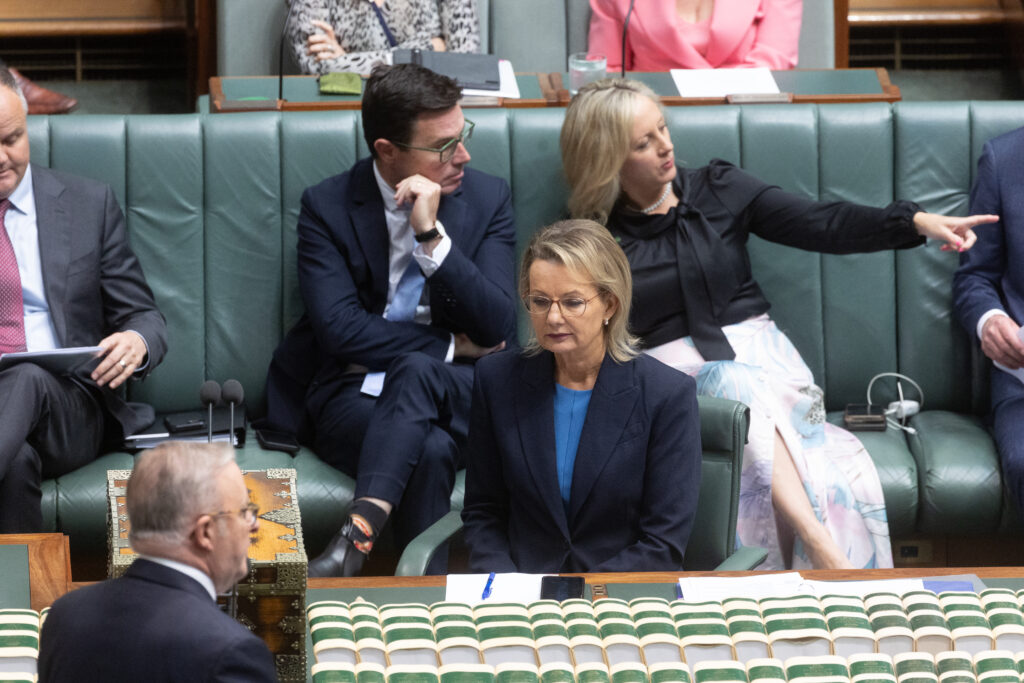
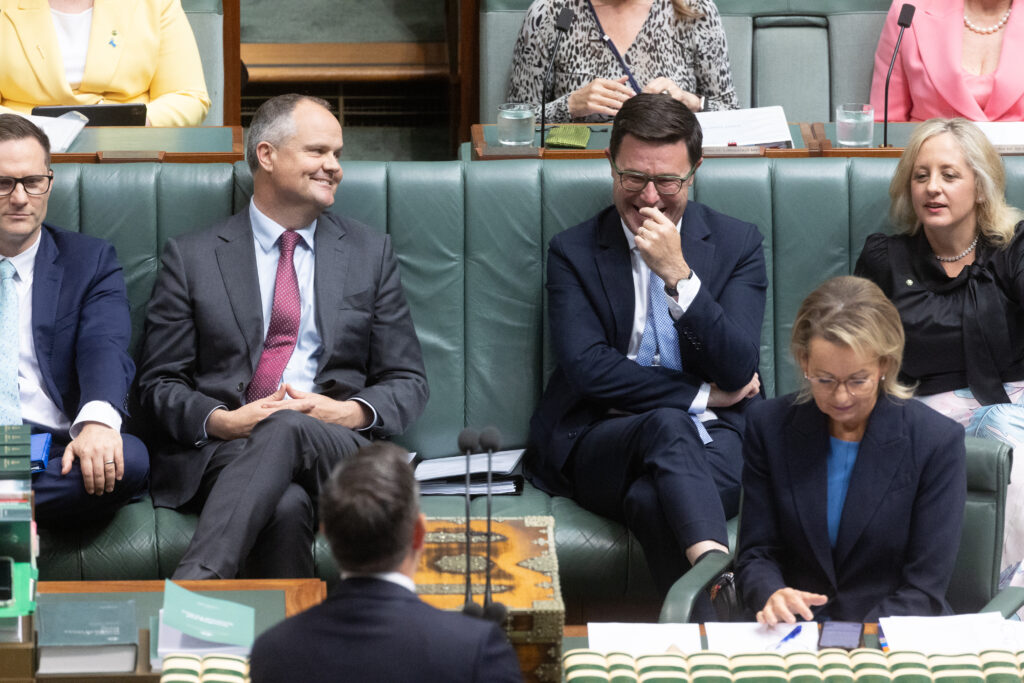
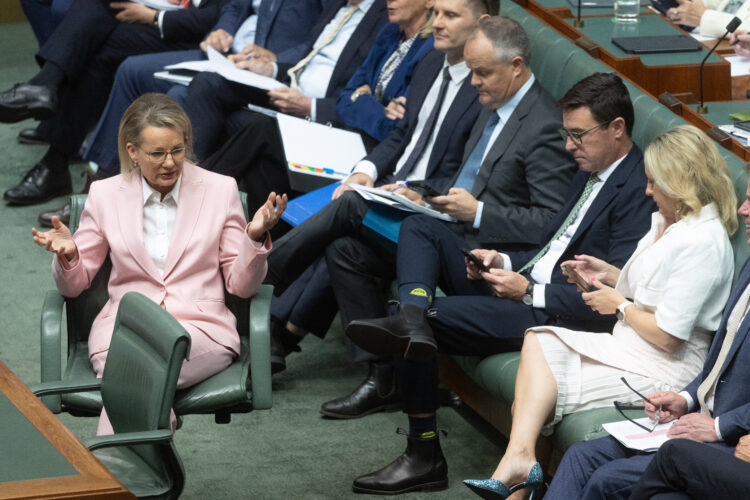
The Teals, Independents and cross bench sit on the opposition frontbench during a division. Photo: Mike Bowers

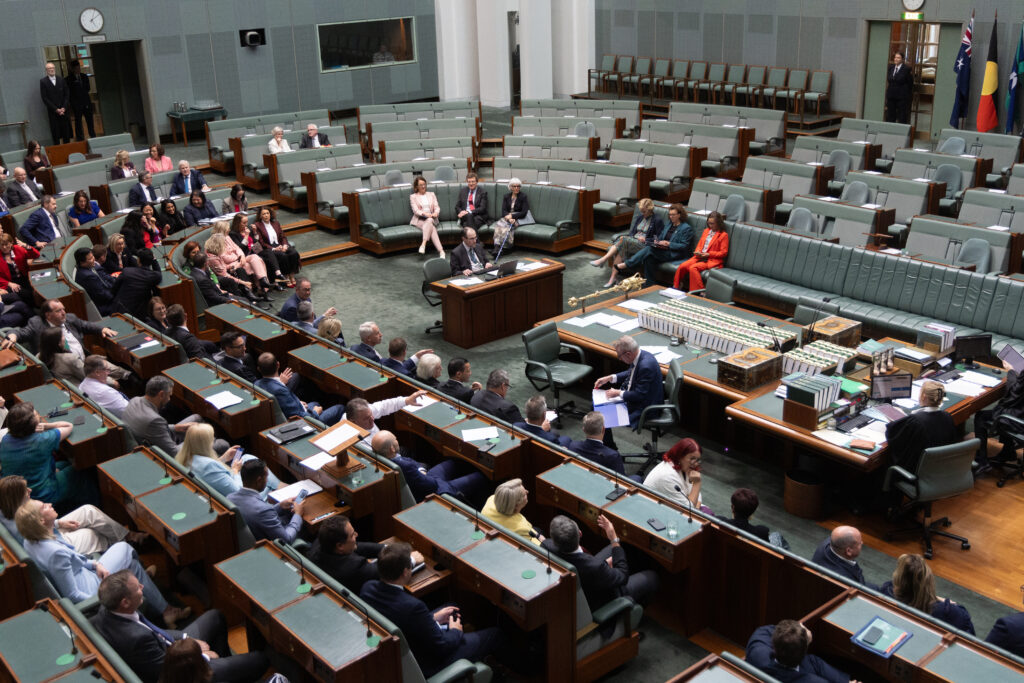
The divisions in the house for the environmental protection laws are ongoing and having popped into the chamber to see what is what, the crossbench have been sitting in the opposition front bench for some of the divisions, which is very telling. They are pretty much acting as the opposition at the moment when it comes to policy, and that’s the message they are sending to the government – they’ll fill the place of the opposition when necessary to make sure the government doesn’t get away with all of what it’s trying without some attention.

The Teals, Independents and cross bench vote together against the government and opposition in the House of Representatives chamber of Parliament House

It is desperately needed.

The Coalition are on the media train at the moment, answering questions about how Sussan Ley’s leadership is totally fine, which is absolutely what happens when someone’s leadership is totally fine. There is a line of questioning emerging about whether this is because Ley is a woman and this is one of those rare moments in politics when you can say that gender is not the main reason this is happening (I am sure there is an undercurrent). The Liberal party being a mess and Ley having no authority is not a gender issue – it’s one of personal ambitions over sense (which I write about in The New Daily tomorrow)

We will be back to cover the last day of this sitting early tomorrow morning – thank you to everyone who joined along today – it truly is incredible to see so many people here with us. I don’t take your support lightly. None of us do.

So get a big rest tonight – you are going to need it. Until tomorrow morning – take care of you. Ax

Government silly buggers over FOI bill continues.

In the federation chamber where the government sent the FOI bill – Michelle Rowland and most of the crossbench are in there at the moment.

Helen Haines is trying to get the measure that will have the fee increase scraped – Rowland declined to answer why the fee was so high and Haines is also trying to get rid of the cabinet in confidence exemption. The government is against this too.

The government looks like they are just trying to wedge the crossbench – this bill debate is running at the same time as the environmental one, which means that the independents are having to split their time between the two, in order to get their concerns on the Hansard record.

Tuning into the Federation chamber though and Haines is more than a match for them on this – she just shouldn’t have to be.

This ain’t it.

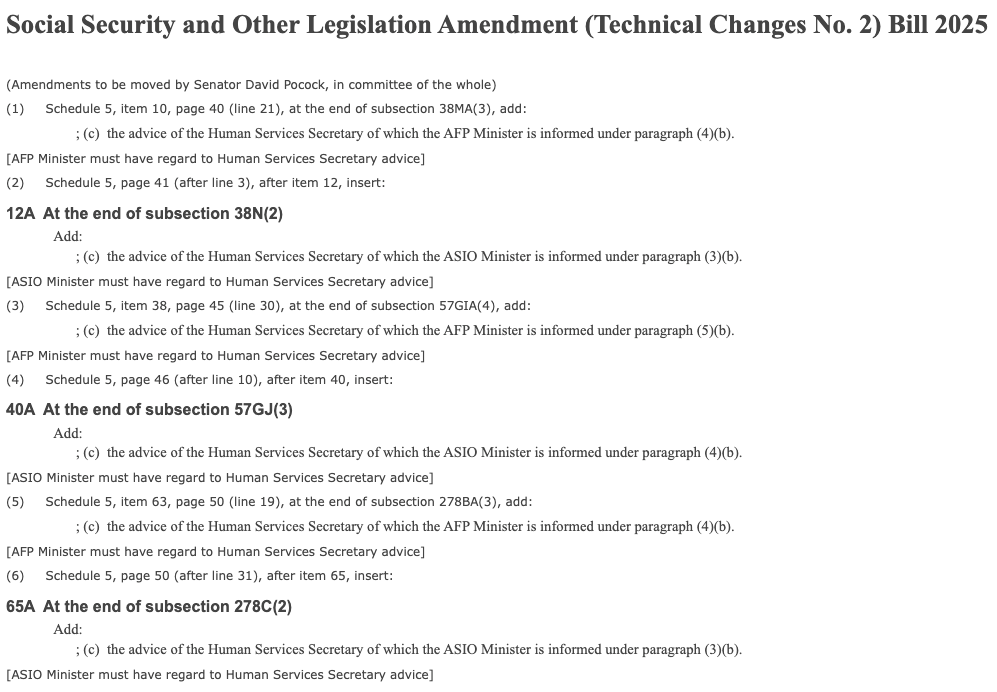
In the senate David Pocock is moving an amendment on the bill that will give police powers over welfare and well…it’s still not great.

This just makes it the social services minister who has to approve the recommendation. That’s still not addressing the very real legal concerns groups like the Law Council of Australia have raised because of the core issue here – it is something police can do BEFORE A CONVICTION.

Just a reminder – politicians who are charged with the most heinous of crimes are still paid until and if they are found guilty. That’s how the presumption of innocence works.

The view from Mike Bowers

Lots of different moods and stories going on in question time, as Mike Bowers caught:

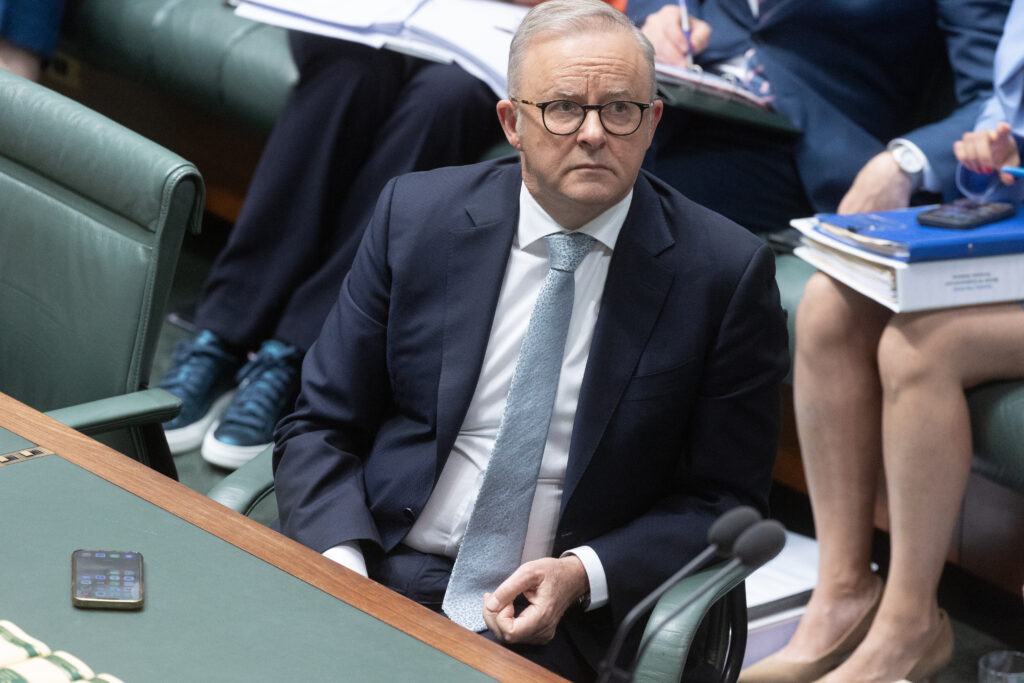
The Prime Minister Anthony Albanese during question time in the House of Representatives chamber of Parliament House, Canberra this afternoon. Wednesday 5th November 2025.Photograph by Mike Bowers
The Minister for Communications and Sport Anika Wells and the Minister for Social Services Tanya Plibersek after question time. Photograph by Mike Bowers
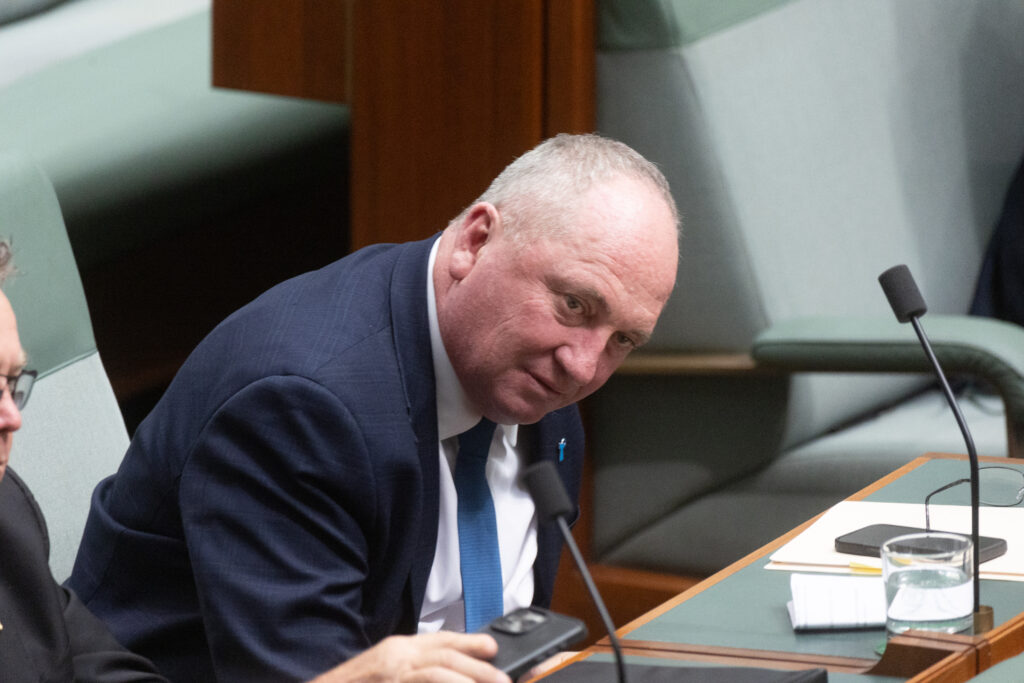
The member for New England Barnaby Joyce. Photograph by Mike Bowers
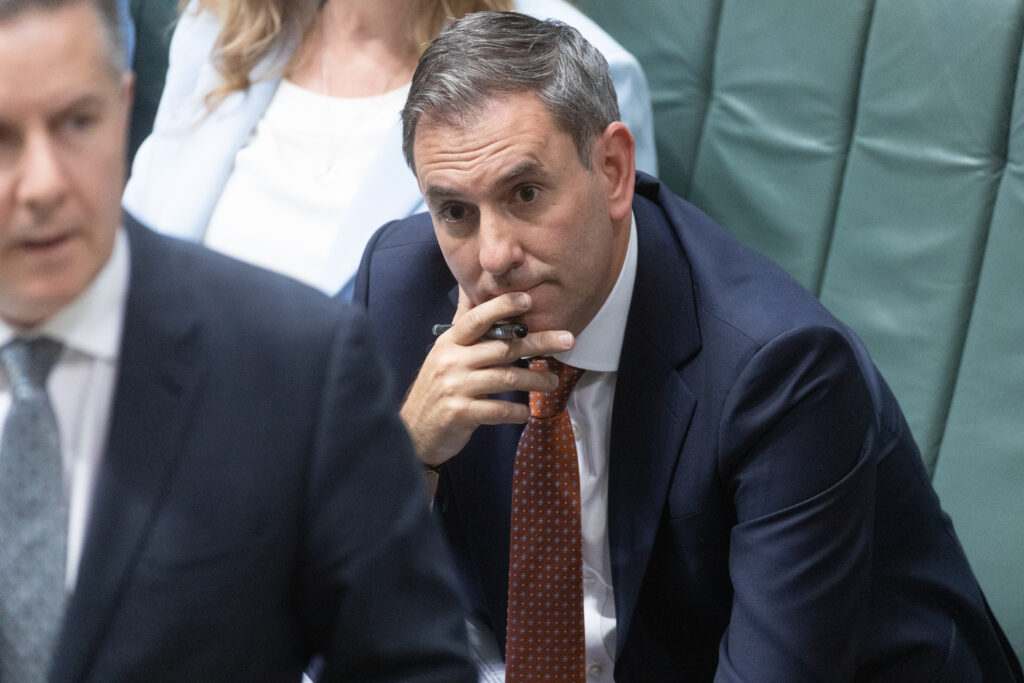
Treasurer Jim Chalmers. Photograph by Mike Bowers
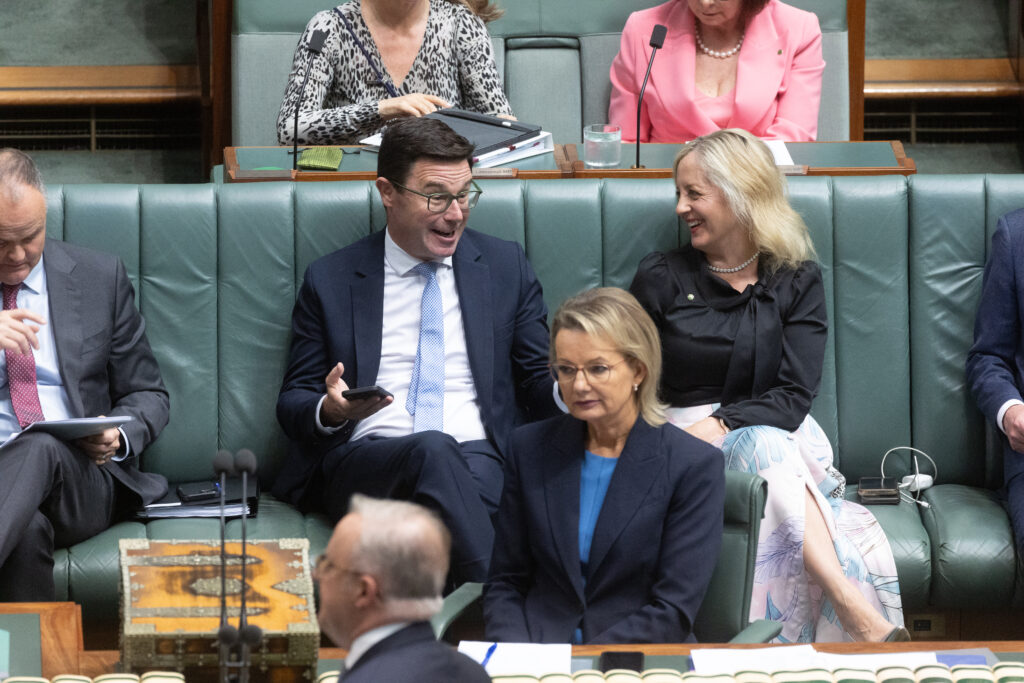
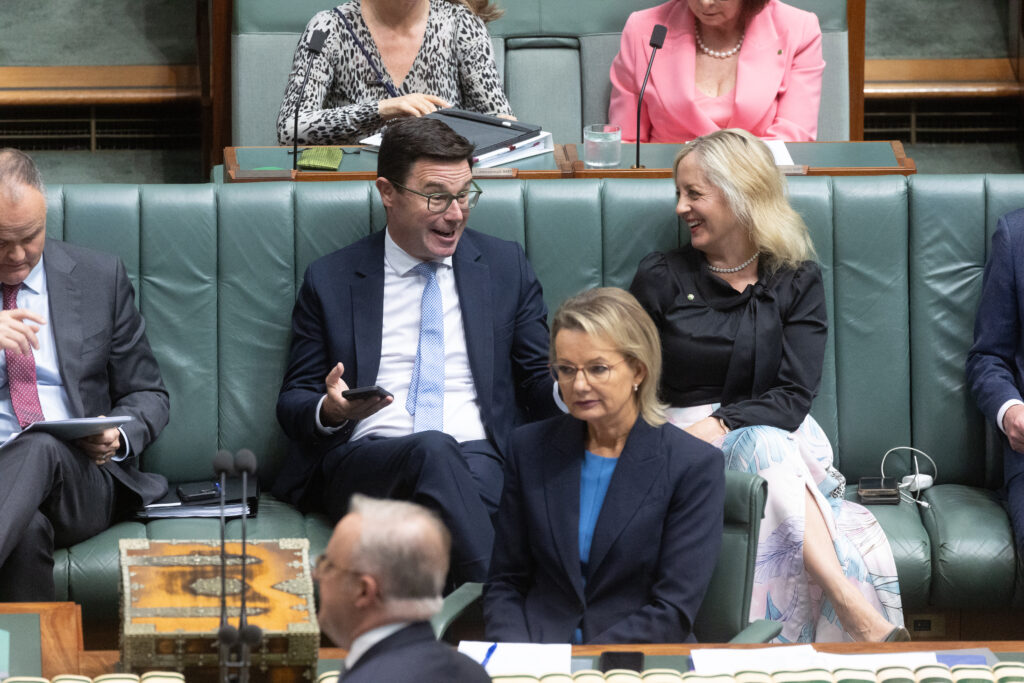
Opposition Leader Sussan Ley, Nationals Leader David Littleproud and the Shadow Minister for Communications and Western Sydney Melissa McIntosh during question time. Photograph by Mike Bowers

Question time ends

There is just one more left in this week (thank Dolly) so what did we learn?

Again, nothing that we didn’t already know

The Coalition are not across their brief enough to be asking gotcha questions that bite. That’s part of the point – they only want the half of the story they are telling to get attention, but when it is so obvious and easy to shut down, it defeats the purpose.

There has also been an attempt to minimise Sussan Ley during QT and to try and share some of the issues around. Part of this is to try and minimise how open she is to Labor attacks about her leadership position, but the tactics team need not bother – Labor doesn’t care enough about Ley to hasten her departure. They are being deliberately gentle.

That has to bite.

Government applauds Rex Airline decision

Catherine King is taking a dixer on this announcement from yesterday:

The Government will restructure Rex’s existing debt to the Australian Government. Approximately $90 million of existing debt will be carried forward and a new commercial loan of $60 million will be provided to Rex.

This will supplement the $50 million being contributed by Air T towards the recapitalisation of the business.

In exchange for this financing and to ensure value for taxpayer money, Air T has agreed to a range of commitments aimed at preserving essential regional aviation connectivity and improving governance arrangements.

This will include returning more aircraft to service and increasing the frequency of profitable flights across the Rex network.

To safeguard this public investment, the Government will retain its security over all Rex’s aircraft and simulator. This will ensure Rex’s Saab fleet cannot be sold without the Government’s permission and will continue to service communities across regional and remote Australia.

For which she gets a public pat on the back from the prime minister and then Sussan Ley thanks the pilots and staff.

Fact check: Power bill prices

Greg Jericho
Chief Economist

The LNP are all energised because the member for Solomon, Luke Gosling, told Sky News Kieren Gilbert that power bills will fall by about 20% over the next decade due to renewables.

The Prime Minister has now twice been asked to respond and whether or not he agrees.

The Prime Minister has pointed out that Gosling was referencing a report by the Climate Change Authority (your can read it here).

The report says the following (Albanese handily referenced the page 8):

“Expert analysis by the Australian Energy Market Commission projects residential electricity prices will fall by 13% (about 5c/kWh) and average household energy costs will fall by about 20% (around $1,000/year) over the next decade under a coordinated renewables rollout. Households that fully electrify (by transitioning to electric transportation, appliances, heating, and integrating solar and battery storage) could potentially cut energy costs by as much as 70% (AEMC, 2024). As well as saving money, the decarbonisation and growth of electricity production is a necessary pre-condition for the decarbonisation of other sectors.”

Back to question time and the opposition is having another go at a gotcha over something the member for Solomon said on Sky in relation to power prices coming down because of the solar sharer program.

Anne Webster asks:

Q:My question is to the Prime Minister. Does the Prime Minister agree with the Member for Solomon, there will be a 20% decrease in power bills over the next decade?

Anthony Albanese:

‘Expert analysis by the Australian energy market commission rejects residential electrician prices will fall by 13% about 5 cents per kilowatt. Our average household energy costs will fall by about 20% around thousand dollars per year over the next decade under a coordinated renewables rollout’. That is the direct quote, that is the direct quote.

That is the direct quote. That is an entire misrepresentation to pretend that the Member for Solomon that that is his view, he is quoting, he is quoting the advice which is something that – something that the member I am sure knows.

The ANU continues to claim financial stress, its books tell a different story

Jack Thrower
Senior Economist

According to an ABC story: The Australian National University’s interim vice-chancellor says after years of operating deficits it’s tracking towards balancing its budget by the end of 2026.

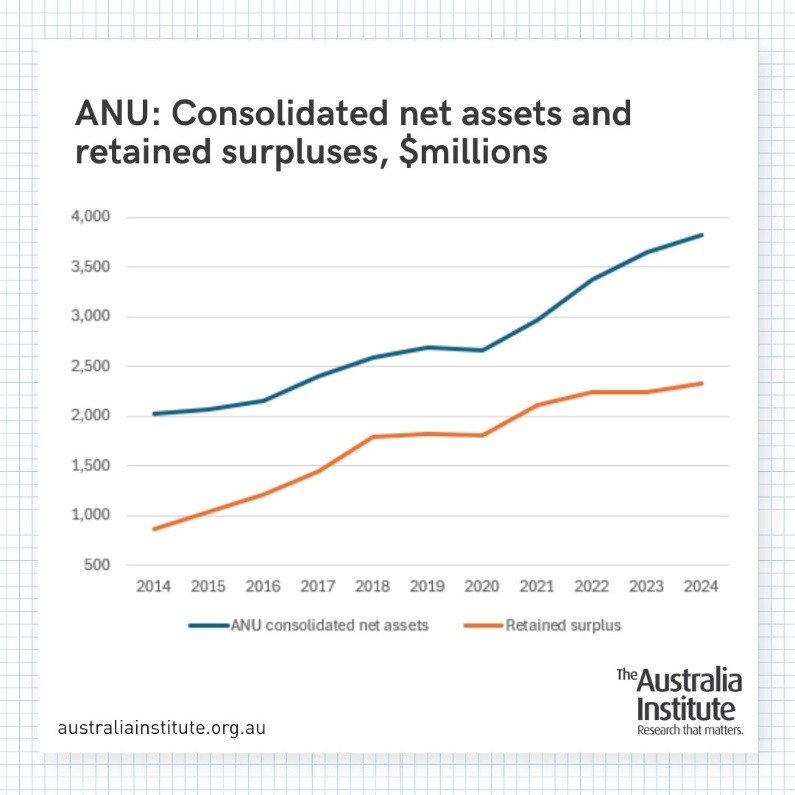
However, despite the ABC referring to the ANU’s financial situation as “dire”, the ANU actually already delivered a surplus in 2024 and did so in 2023 as well!

The ANU has continued to prosper over the longer term too, growing its net assets (assets minus liabilities) by over $1.7 billion over the last decade, including growth of $1.1 billion just since 2020.

So, what’s going on?

Essentially, there are two sets of figures floating about:

  1. The figures in the university’s independently audited financial statements, which show surpluses for 2023 ($135.3 million) and 2024 ($89.9 million), and continued growth in net assets and retained surpluses.
  2. The university’s own ‘adjusted’ figures. These do not appear in the university’s audited financial statements. Australia Institute research has found that the adjustments to these figures cannot be justified.

Unfortunately, most reporting on the ANU continues to ignore the audited financial statements and simply repeat the ANU’s claims of financial distress.

The Greens will also vote against the environmental laws in the House

The Teals are a no in the house and now so are the Greens, when it comes to the environmental laws. That won’t change the outcome in the house, where the government holds a massive majority and it doesn’t mean the Greens won’t negotiate when it comes to the senate, but it does point to the government having a pretty big PR battle on its hands (as it should, the laws are terrible)

Sarah Hanson-Young has said:

In its current form we cannot support this package and will be voting against it in the House of Representatives. It has been written for the mining and forestry lobby and does nothing to guarantee protection for our environment.

These laws have been criticised by every major environment and climate group, but welcomed by the likes of BHP, Chevron and the BCA. This shows exactly who the laws are written for.

It is now up to the Prime Minister to decide if he wants to again let mining and logging lobbyists and their political representatives like Roger Cook run the show, or if he wants to protect nature, forests and our climate.”

And a thank you…

Also – thank you to Glenn for taking us through the last hour and the first bit of question time. Sometimes your chief blogger just can’t balance all those balls.

It does mean that Glenn doesn’t have to sit through this Bob Katter question though, so that is probably thanks enough.

The view from Mike Bowers

The next question is pretty much the same as we have been hearing (just Chris Bowen and Anthony Albanese having fun with the sacrificial Coalition backbenchers) so let’s see what Bowers has been up to:

Still spilling tea
Alex Hawke loves this job
Melissa McIntosh sure is chipper considering the man she sits next to is helping to bring down her leader
Everything is going very well

Sigh

It’s pretty clear that this QT has lost the plot, so enter Michael McCormack to just really drive that point home:

I refer to Labor’s disastrous solar sharer program. Senior energy analyst Michael Wu has slammed Labor thought bubble is another fully thought through market intervention and warned the widow of electricity during the day would have to be offset by higher prices at other times to cover the fixed costs. By how much would other electricity users have to pay to subsidise this folly?

I mean, yes let’s all be shocked that the energy industry that loves high profits isn’t happy with having to give some people free power (this is a plan that is already offered by some retailers by the way) and that someone who works at the CIS is also shocked by this.

Chris Bowen:

I think I do need to advise the honorable member, my friend that he could have found a better expert than that individual…not sure he is the sort of person I would be quoting. Maybe you could have quoted the Chief Executive of the climate of energy finance and who said ‘this is excellent’.

It doesn’t take much to trigger them, does it, Mr Speaker? Imagine clean energy and away they go. Yesterday we mentioned the Business Council of Australia and that set them off. You cannot win.

Bran Black, the chief executive of the business council of Australia…is not credible, and now I quote the chief executive of climate energy finance who said ‘this is excellent, this means many more consumers will benefit from free power at zero cost to the market and that will massively incentivise demand while shifting to the middle of the day’.

Or Stephanie Basheer from Nexa Advisory, an advisory company who said that ‘this policy will incentivise consumers to be the energy consumption at the cheaper times of the day and that is good for their bills and good for the network, crucially it will force the energy to innovate’

He goes on listing people who agree with him.

Fact checking “lies”

Greg Jericho
Chief Economist

Things got heated in Question Time with Treasurer Jim Chalmers accusing Sussan Ley of an “egregious lie that was being pushed around the gallery this morning by media by the Leader of the Opposition and the Leader of the Opposition said completely untruthfully, dishonestly, that the Reserve Bank yesterday called out the government’s spending when it came to the decision that they took independently at the board level.”

He was referencing a quote Ley made on ABC Breakfast this morning where she said “I’ve talked already about how we would manage the budget responsibly, take a clear eyed look at industrial relations which is a massive drag on productivity and how we would describe how we care about a fairer future for Gen Zs and millennials who right now, and this was backed in by the RBA yesterday are finding it even harder to buy a home of their own.”

The problem, as Chalmers was quick to point out, is the RBA did not do anything of the sort.

The RBA’s Statement on Monetary Policy noted:

“The boost to growth from the easing in financial conditions is expected to offset the diminishing boost to growth from the earlier rise in real incomes and the expected moderation in public demand growth.” (ie govt spending is falling, not rising).

The RBA did reference productivity but said nothing about industrial relations.

This is why Chalmers told parliament that “If they were honest, Mr Speaker, they would say that the Reserve Bank Governor drew no link whatsoever between the government budget position and the decision that they took yesterday”, and to be honest he is spot on.

Pants on fire

It’s blowing up big time, with practically everyone calling everyone else a liar.

Treasurer Jim Chalmers and the Manager of Opposition Business Alex Hawke have both withdrawn their accusations.

Speaker Milton Dick pointed out that Chalmers was referring to a lie being peddled in the press gallery generally, while Hawke was on his feet, pointing fingers, shouting “you are a liar”.

Hawke is lucky to still be in the chamber.

Sit down, pal!

It’s all gone to pot just two questions in …

Shadow Treasurer Ted O’Brien has been warned after putting a question to Treasurer Jim Chalmers then interjecting before he’d even started answering.

To which the Treasurer responded “Sit down, pal”.

For the record, here’s the question and answer.

Ted O’Brien:

Given the RBA’s decision to keep rates on hold, millions of Australian mortgage holders will start wondering if interest rates are as low as they will ever go under this government. The Treasurer spending spree is at the heart of the problem. Government spending is running four times faster than the economy. Given that repeatedly, the Treasurer refuses to take responsibility for this. Prime Minister, will you take responsibility?

The speaker gives the call to Treasurer, Jim Chalmers:

Thank you Mr Speaker and I’m pleased that the member for Fairfax has taken a brief break from undermining his own leader. To ask me a question about the budget and about yesterday’s decision by the Reserve Bank to keep interest rates on hold. Partly because it gives me a welcome opportunity to point out and egregious lie that was being pushed around the gallery this morning by media by the Leader of the Opposition and the Leader of the Opposition said completely untruthfully, dishonestly, that the Reserve Bank yesterday called out the government’s spending when it came to the decision that they took independently at the board level. That never happened, Mr Speaker. In fact, government spending was not mentioned by the Reserve Bank Governor yesterday, it was not mentioned in the board statement. And the only mention, the only mention and the detailed forecast which were released which were downgraded their assumptions about government spending going forward. From time to time, reluctantly, it is on us to point out the egregious lies being told by those opposite about our economy. If they were honest, Mr Speaker, they would say that the Reserve Bank Governor drew no link whatsoever between the government budget position and the decision that they took yesterday, Mr Speaker. The governor has said on earlier occasions has made this point about the government ‘s budget. We have got relatively low debt compared to the other countries, relatively low debt to GDP ratio is, our deficits as well have had a couple of surpluses and the most recent deficit in fact as quite small as well.

Question Time begins

Embattled Opposition Leader Sussan Ley starts QT with a question for the PM about the number of Australians experiencing food insecurity.

Sussan Ley:

Are you taking responsibly the fact that under your watch, millions of Australians cannot afford food?

Anthony Albanese:

Our economy is continuing to grow. Inflation is half of what we inherited. Real wages have increased. Interest rates have started to fall but we understand that the work of good government and the work of addressing cost-of-living pressures is never done. That is why we continue to act on cost-of-living measures. We understand that people are under pressure. They would have been under more pressure had they are not got an income tax cut that was opposed by those opposite except for of course, at the higher end. They would have been under more pressure if inflation still had a six in front of it which is what we inherited. They would have been under more pressure if the more than 1 million jobs that have been created on our watch had not have occurred. Women in particular would have been under more pressure if the gender pay gap was not the lowest it has ever been. Workers in aged care would have been under more pressure had they are not got the substantial pay increases that were funded by the government. Workers in child care would have been under more pressure had they are not got the pay increases that childcare workers have now got in order to be sustained. Workers would have been under more pressure had the four increases in the minimum wage not been advocated by this government and the Fair Work Commission had not listened to this government. The easy task is to identify a problem. The difficult task is delivering a solution. My government is committed to delivering solutions.

Cancel culture in universities, again?

Frank Yuan
Postdoctoral Fellow

In a recent meeting reported in The Australian, the ANU’s Vice-Chancellor Rebekah Brown said students were finding it “really hard to challenge ideas without fear of judgment;” because of “cancel culture.”

But, Western Sydney University Vice Chancellor George Williams observes that “culture wars have long been a hallmark of education systems around the world.” He gives a thoughtful assessment of this, and the other challenges facing Australia’s universities,  in his new essay ‘Aiming Higher’.

Williams affirms that “Universities should be places of disagreement and challenge at the vanguard of societal battles over freedom of speech, while ensuring zero tolerance for anti-Semitic and Islamophobic hate speech”.

This echoes Prof. Brown’s assessment that “while respectful contestation should be a great strength of our academic institution, it’s actually one of the greatest challenges that we need to be thinking about”.

In other words, rigorous debate over ideas should be welcome in universities. An idea that doesn’t stand up to scrutiny should be discredited. If, for instance, somebody claims that colonialism in Australia was a benign project, but fails to account for the well-documented massacres by the colonists, that claim should be countered with the evidence. That’s the point of university learning.

Mamdani wins

The New York Times is reporting that with 85% of votes counted, Democratic candidate Zohran Mamdani has won the New York Mayoral Election, with 50.5% of the vote.

Former New York Governor Andrew Cuomo, who resigned in disgrace after multiple (multiple!) sexual harassment claims were made against him (which he denies), got 41.4% of the vote and the Republican Curtis Sliwa picked up a mere 7.3%.

It’s a thumping win for Mamdani, the self-proclaimed socialist who has absolutely shaken up the party establishment. He also becomes the first Muslim to hold the office.

He is promising a big shakeup – free transport and very much targeting wealth. He for example has criticised subsidies given to big companies like Tesla.

Donald Trump has said he said he would cut of federal funding to NYC is Mamdani won. This oddly did not make him less popular in a very Democratic state. Trump came out in support of Cuomo in the last days of the campaign, while Cuomo was running some utterly racist AI created videos.

So it’s a very good win to celebrate.

The charitable sector makes its presence known at Parliament House

Bill Browne
Director, Democracy & Accountability Program

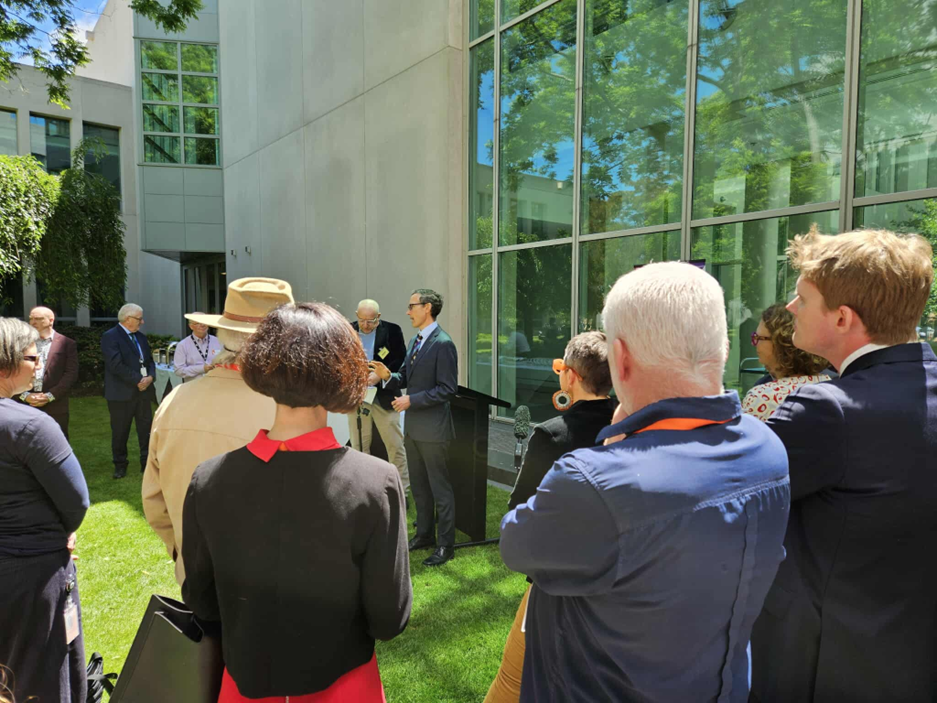
I’ve just returned from the Stronger Charities Alliance barbeque at Parliament House.

The Stronger Charities Alliance was founded as Hands Off Our Charities back when the Morrison Government was undermining charity rights. The renaming reflects optimism that the charities sector can grow and thrive, not just fight off threats. The Alliance unites over 170 charities, many of whom were there today.

Historically, charities and not-for-profits have been quiet relative to their size and economic importance. The charity sector is about as large as the entire Australian retail sector or the education and training sector – but you wouldn’t know it from how fiercely the retailers, university VCs and private schools lobby for their interests. Charities speak out often, but for the benefit of the voiceless rather than the ongoing health of the sector.

That’s why the Stronger Charities Alliance and today’s engagement with politicians are so important. The sector is flexing its muscles.

Assistant Minister Andrew Leigh spoke, reminding those attending that the Albanese Government has not undermined charities as previous Coalition Governments had, and that there have been some reforms. But he couldn’t provide an update on the Stronger Charities Alliance’s three big reform requests, which are backed by the government’s own panel of independent experts:

  1. recognise that advocacy benefits the public,
  2. prohibit government officers from restricting the voices of charities when they are receiving government funding, and
  3. require the merit-based and transparent appointment of the Commissioner of the Australian Charities and Not-for-profits Commission

Dr Leigh made special mention of the work of Saffron Zomer and Stronger Charities Alliance in training representatives of charities in how to advocate to politicians – ensuring that beyond the lobbyists for powerful corporations, Parliament House also hears from “voices speaking out for the voiceless”.

After all, the not-for-profit sector is a large employer, provides vital services and support and enjoys tremendous goodwill from Australians. Service providers hear directly from those affected by government decisions and economic priorities. Why should charities receive less care and attention than noisy for-profit industries that employ far fewer Australians?

Too much opportunity for ministerial meddling in proposed environmental laws – Steggall

Teal Independent Zali Steggall says the federal government has failed to strike the right balance between protecting nature and business certainty in its rewrite of the nation’s environmental laws.

“I can’t in good faith say to the people of Warringah or Australia that this is the right legislation,” she’s just told Sky.

“We’ve got a biodiversity crisis. It’s the biggest reform in 25 years. It’s really important to do it well and right.

Her biggest concern? Too much opportunity of ministerial meddling.

“There is Ministerial discretion peppered all through it. So there is actually no certainty because every time you put a national environmental standard or give power to an Environmental Protection Agency but you have ministerial discretion overriding over the top, that creates uncertainty.”

Public Health Association welcomes ACDC legislation

The Public Health Association of Australia has expressed its delight at today’s passing of legislation to create an Australian Centre for Disease Control.

The PHAA has described the ACDC as “the most important piece of public health infrastructure in generations”.

It say says the public health community is positively “thunderstruck” at the passing of the ACDC bill. Very nice.

“Thanks to the many people who’ve put in hard work and long nights, showing it’s a long way to the top to get a Centre for Disease Control,” said Adj Prof Terry Slevin, CEO, Public Health Association of Australia.

“This is a moment for the public health history books, and is testament to the tenacity of countless people who’ve toiled for decades to achieve this.

“This centre will save lives, not just here but also overseas as it will increase our links with our neighbours.”

Embattled SA Libs pledge stamp duty phase out

With South Australians heading to the polls next March, it’s widely anticipated the nation’s most popular Premier, Peter Malinauskas, will increase his government’s already healthy majority.

A recent poll had Labor leading 66-34 on two-party-preferred terms, hinting at a near-wipeout for the embattled Liberals.

Opposition Leader Vincent Tarzia has today announced that if he were to pull off a political miracle and win in just under five months, his government would phase out stamp duty, describing it as outdated and inefficient.

Stamp duty is an inefficient tax that inhibits the housing sector’s ability to reorganise itself and stops young people getting into the housing market and older people from downsizing. Yet Labor is steadfastly opposed to any reform, because it is addicted to the windfall it receives from stamp duty to underwrite state debt, budget blowouts and the hydrogen fantasy project. A Liberal Government would instead put the power back in the hands of homeowners and aspiring homeowners.

If the polls are right, a 66-34 2PP Labor victory would be the second biggest in Australian history, behind Mark McGowan‘s 69.7–30.3 victory in the post-COVID 2021 WA landslide.

Regulations around innovation need to be clear says ASIC chief

Checking in at the press club, ASIC boss Joe Longo is asked about regulations around innovation and says:

It’s more nuanced – we all want innovation. Who’s against innovation? The issue is that the legal and regulatory framework needs to provide a good foundation for people to do that confidently. And so, that really is about the details. About what’s in the legislation. How do you apply for that licence? What do you need to establish the licence that you want to get and what are the risks that your innovation might raise?

The other thing is, from a regulatory perspective, some of the reforms around data and transparency that we’re asking for in connection with private credit – if we get that, then that gives everybody more confidence about growing that sector and being innovative there.

Because if you know what’s going on in a space that’s otherwise opaque, then you can be more confident, can’t you, about risk taking!

And you won’t be surprised by emerging issues because you know what’s going on. So to me, there is role for the public sector and regulation being adjusted and developed in a way that makes innovation welcome, that makes people think – well, if I’ve got this idea, I know what to do, I’m not going to be breaking the law.

And if I’m almost certainly going to need a licence, but I’m pretty clear as to what I’m going to have to need or establish to get that licence.

Law Council of Australia urges inquiry of police welfare powers

The Law Council of Australia has released this statement – it too is concerned with the amendment which would give police the power to recommend welfare cancellations, before a conviction:

The Law Council of Australia has today called for the recently inserted Schedule 5 of the Social Security and Other Legislation Amendment (Technical Changes No. 2) Bill 2025 (the Bill) to be separated from the rest of the Bill to allow for appropriate scrutiny of the proposed measure.

“Schedule 5 has very serious implications,” Law Council of Australia Executive Member, Elizabeth Shearer said.

“This measure gives government officials power to strip benefits received through the social security and family payments system from a person subject to an arrest warrant, even though that person has not been convicted of any offence.

“We are concerned that this denies those people the fundamental right to the presumption of innocence and procedural fairness.

“No one, even those charged with serious offences, should be subject to punitive action by the state unless they have first been found guilty of an offence by an independent, impartial and competent tribunal. It is unclear whether any Constitutional implications arising under the Bill have been considered.

“People who have not yet had their day in court will have their basic livelihoods and their ability to access justice impacted.

“This reform will create even further inequity and unintended consequences within our justice system, including for First Nations persons. Homelessness may result and family and community safety may be compromised.

“The Law Council is particularly concerned that Schedule 5 was only added to the Bill after the legislation had already been subject to a parliamentary committee review process.

“This means stakeholders have been provided no opportunity to review or provide feedback on the proposal.

“Adding Schedule 5 after a parliamentary scrutiny process vastly undermines the democratic rule of law principles which underpin Australian lawmaking, as set out in our recent Best Practice Legislative Development Checklist.“

The Law Council urges the Senate not to pass the Bill with Schedule 5 included. Instead, Schedule 5 should be separated from the rest of the Bill and referred to a parliamentary committee for proper and careful public scrutiny.”

ASIC chair at press club

ASIC chair, Joe Longo is at the national press club today:

Like almost all of half Australians, I am the child of immigrants. My parents came to Australia from Italy after the Second World War. They met in Sydney and shortly after marrying, decided to move back to Italy. But when they got to Perth, they ran out of money. So they set up shop there instead. And I mean – literally, set up shop. I spent much of my childhood in the back of my parent’s green grocer shop. My mother, who was missing Italy terribly, wanted to move back. But my father was adamant that the children’s future was in Australia. Why? Because Australia was, and is, the land of opportunity. That’s the Australian promise. Opportunity and a better life for the next generation. And it’s a promise for a long time, Australia has delivered on. But I’m here today with a warning – Australia must innovate or stagnate. Seize the opportunity or be left behind. Right now, Australia faces a choice about the future of our markets. The world is changing and our markets need to change with it. We shouldn’t be passive recipients of these changes. We should be ambitious and seize opportunities we should put the foundations in place today to ensure we will have the future that we want.

We will check back in when he gets to the Q and A.

Factcheck: the Reserve Bank still thinks the labour market is tight! What evidence does it need?

Dave Richardson

Yesterday the Reserve Bank of Australia announced no change in official interest rates. Among other reasons it said “measures of labour underutilisation remain at low rates, job vacancies are still at a high level and business surveys and liaison continue to suggest that a significant share of firms are experiencing difficulty sourcing labour.”

The RBA said that despite knowing that unemployment has increased from 3.5% in June 2023 to 4.5% in September 2025, or 684,000 people on the latest figure we have.

The official unemployment rate only includes those who say they want to work, and they have looked for work in the last week and are ready to work in the next week. So the official unemployment rate ignores discouraged workers and those who took up short training/education courses, or those who would need to find new child care or care for other relatives/friends. It is hard for many people to rearrange their affairs so they are free to work pretty well immediately.

So those not officially unemployed but wanting a job shouldn’t be much more than the 684,000 people you might think. Well the ABS estimates there are 1.2 million of them with 1.1 million available to either start immediately or within 4 weeks.

The ABS said the main reason women were unavailable to start within 4 weeks was “Caring for children”.

How can the labour market be considered tight when so many are not even recorded as unemployed.

The other reason we know the official rate of unemployment is a bad measure of labour market tightness is by examining where people go when they leave employment and where they come from when they get a job.

You would think that most would go into and out of the official measure of unemployment if it truly measured what it purports to measure. But no, other ABS figures show that for those who left employment in September, 29,300 went into the measured unemployment and 34,000 left the labour force entirely. And for those who entered employment 39,300 came from the ranks of the unemployed and 60,700 from outside the labour force. So official levels of unemployment are only a fraction of the total flows from employment and into employment.

All this indicates that for every measured unemployed person there are many more who are not recorded but appear nevertheless to take new job offers if they arise.

We may well ask why the RBA ignores its legislated responsibility for full employment. 

Explainer: interest rates cuts have reduced the cost of living for employee households

Greg Jericho

After last week’s inflation figures the government got some good news from today’s Cost of Living figures.

Inflation figures are done by trying to work out the average spending by all Australian households; the cost of living figures however split up the households into groups. They do this because obviously a household with people working are going to have different spending habits that retirees, or those on government benefits.

Also importantly the cost of living measures count the cost of repaying a mortgage, whereas the CPI figures do not. And because this year there have been interest rates cut, that has meant the cost of living for those with a mortgage has gone up by less than overall inflation. The impact is biggest for “Employee Households” because they are the ones most likely to be paying off a mortgage, whereas those who are on the age pension or other government benefits are much less likely to have a home loan.

While inflation in the year to September grew 3.2%, the cost of living for employee households rose just 2.6%.

The news was not so good for those who neither have a mortgage or who spend more of their income on necessities. As we noted last week, the big driver of inflation was electricity prices, rents, and other necessities. As a result, those who do not get the benefit of the falling interest rates saw their cost of living rise by more than inflation.

Explainer: Most Australians think university should be much cheaper than it actually is

Jack Thrower
Senior Economist

According to Australia Institute polling released today, nearly three in five (58%) Australians think university should cost less than $5,000 per year, and half of these (29% overall) people believe that degrees should be free. In reality, university is much more expensive than this.

Only a small subset of degrees costs less than $5,000 per year

Next year, the cheapest undergraduate degrees will cost just under $5,000 per year. However, this only applies to a small number of fields, including nursing, teaching, and agriculture. The second-cheapest category of degrees will cost nearly double: over $9,500 per year. This rate applies to most STEM fields, such as sciences, information technology and engineering.

Many degrees cost well over $10,000 per year

Three in four (77%) of Australians think that students should pay $10,000 or less per year for a standard degree. However, degrees like medicine and dentistry cost about $13,600 per year, and widely popular arts, commerce, and law degrees cost over $17,000 per year.

How did we get to a place where university fees are so out of step with community expectations?

A bit of history

Rising student fees are a long-term problem that accelerated under the Morrison Government.

Under the original 1989 HECS system, student contributions were modest, only $1,800 per year, whatever the subject. These contributions increased annually in line with the university’s rising costs.

Since 1989, various government reforms to this system have meant that most student fees have grown much quicker than general inflation. This started under the Howard Government in 1996, when fees were partially deregulated, meaning different courses were priced differently.

Prices were based on a mix of:

  • the cost of teaching — for example, teaching dentistry is more expensive than teaching history, and
  • the graduate’s expected earnings — for example, law graduates tend to earn more than creative arts graduates.

Morrison supercharges degree fees

In 2021, the Morrison government dramatically changed student fees through the Job-Ready Graduates Package. This lowered student contributions for some courses, such as nursing, education, and agriculture. Popular subjects such as social science, law, and commerce became much more expensive.

The cost of most social sciences and humanities subjects more than doubled. This runs directly contrary to the Howard era justifications for differential fees. Arts degrees are both cheaper to teach and have lower expected graduate earnings, yet they now have the most expensive fees.

The Government claimed the reform would encourage young people to study priority subjects. This didn’t happen. One analysis found that less than one in fifty (1.5%) students swapped their field of study because of the change.

Subjects the Morrison Government deemed national priorities, such as agriculture and nursing, now cost less than $5,000 per year. This is both in line with what the public thinks university degrees should cost and roughly what degrees would now cost if fees had only grown with general inflation since 1989.

High fees create huge debts

As university fees have become more expensive, average student debts have grown significantly. From 2006 to 2025, average student debts for people in their 20s more than doubled, from $12,600 to $31,700. If these debts had only grown with general inflation, today they would only be about $20,700, fully $10,000 smaller.

The time it takes to repay these growing debts keeps rising. Official statistics show the time it takes to fully repay a debt has increased from 7.3 years in 2006 to 10.2 years in 2025.

The problem is likely much worse than this. Official figures only include fully repaid debts; they do not estimate how long students will take to repay outstanding debts. This means they will not reflect the impact of the Job-ready Graduates Scheme until — and, indeed, if — graduates finally repay their debts. What’s more, the figures are calculated against all debts ever repaid. As a result, figures are skewed downwards by historical debts that took less time to repay.

Next steps

Though Labor opposed Job-ready Graduates in 2021, it remains in place under a Labor Government, now in its second term. The Albanese Government has made several positive changes, changing how debts are indexed and repaid, and reducing existing debts by 20%. However, as long as fees remain high, student debts will continue to mount. If the Government were committed to reversing the long-term rise in student debts, then scrapping Job-ready Graduates and realigning university fees with public expectations would be a priority.

View from Mike Bowers

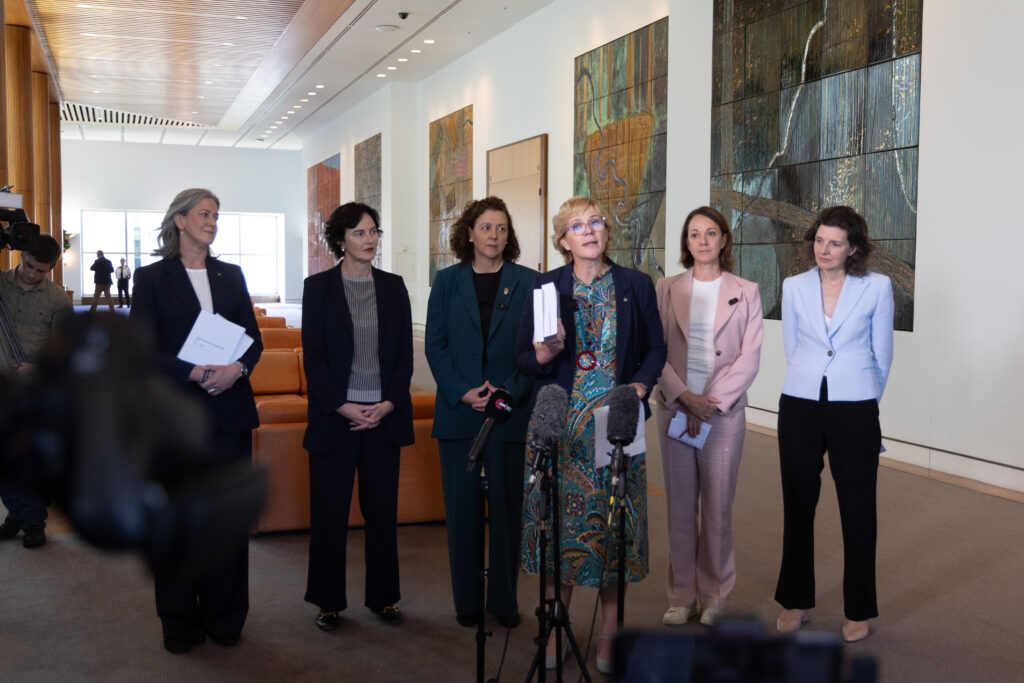
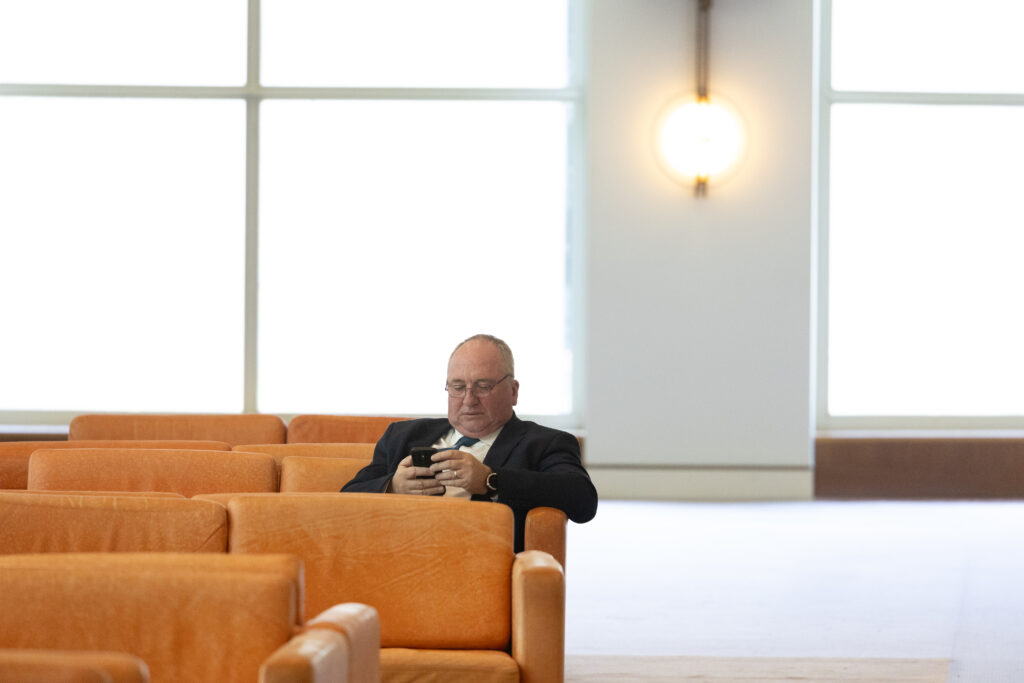
While the teal independent MPs were holding their press conference explaining why they could not support the environmental laws, Mike Bowers caught an unrelated Barnaby Joyce having a little quiet time in the back

Zali Steggall with other Independent and Teal MP’s at a press conference on the Environment Protection Reform Bill in the Mural Hall of Parliament House, Canberra this morning. Wednesday 5th November 2025.Photograph by Mike Bowers
Barnaby Joyce works the phone in the Mural Hall of Parliament House
Yes, much to think about

Teals stand against Labor’s environment legislation

Here is the statement from the Teals on why they can not support the government’s environmental law changes:

Reform of the Environmental Protection and Biodiversity Conservation Act is critically important to protecting nature and driving productivity.

But Independent MPs have raised serious concerns about the Albanese government’s proposed amendments.

The MPs have identified a range of deficiencies in the Bill:

  • lack of climate safeguards
  • too much power in the hands of the environment minister
  • ill-defined national interest powers
  • a gaping loophole on deforestation
  • flawed offset scheme

The Independent MPs are engaging in discussion with the government, opposition and senate colleagues to support a range of amendments that ensure genuine environmental protection – with clear standards, transparency and accountability.

We need to get this law right.

Zali Steggall, Independent MP for Warringah

“If we want credible environment laws, companies should have to disclose climate risks associated with their business activities, just as they do under existing financial regulation.

“The laws must also be strengthened to recognise the cumulative impact of multiple projects, ensuring decisions made under the Act reflect the full, long-term pressure on ecosystems.”

Allegra Spender, Independent MP for Wentworth

“The EPBC reform is essential to protect Australia’s beautiful environment, and critical for future productivity and the climate transition.

“We know the old laws aren’t working for nature or the economy. We need to get this broken system fixed, but significant changes are needed to ensure the protections are robust.”

Nicolette Boele, Independent MP for Bradfield

“Climate change is one of the top three causes of our extinction crisis. And yet, climate is not addressed under the Government’s proposed amendments to our nature protection laws.

“Without adequate measures to shield wildlife, forests and reefs from further and permanent harm, we are letting down more than our koalas – we are failing our children and grandchildren.”

Sophie Scamps Independent MP for Mackellar

“For 25 years our weak environment laws have failed to protect our nature. Due to blanket exemptions for native forest logging and land clearing, Australia now sits alongside Brazil and Bolivia as a global deforestation hotspot – the only developed nation to be on that list.

“Under the Government’s proposed reforms, this devastating habit loss will likely continue apace because the exemptions are retained. Additionally, the reformed bill is so riddled with ministerial discretion that there is no guarantee our nature will be better protected, and in some cases, protections may even be weakened.”

Monique Ryan, Independent MP for Kooyong

“Australia’s nature laws are the most powerful protection we have against environmental destruction and species extinction. They hold unique significance to all Australians; these reforms must be considered extremely carefully. Australia’s nature laws are broken. Unfortunately, so is the Bill designed to fix them.

“The massive loopholes in this Bill render it unacceptable in its current form. Granting the Minister permission to destroy nature for any reason they determine to be in the national interest is giving them too much discretion to expedite fossil fuel projects or mining developments – irrespective of their environmental harm. Nothing is more in Australia’s national interest than preserving our nature. We have to strengthen these laws and close these loopholes.”

Independent Member for Curtin Kate Chaney MP:

“Previous offset funds have allowed projects to ‘pay to destroy’ without delivering any meaningful restoration of the environment.  

“Without limits on when the offsets fund can be used and accurate pricing, developers will take easy option – handing over cash to ditch their responsibility to the environment and future generations.  

“I urge the Government to engage collaboratively and in good faith to fix the loopholes in the offsets scheme to deliver for nature and for business.”

Peace in the senate (for now)

The government has given a concession to independent David Pocock and the Coalition over its failure to release the Briggs review into public service jobs for mates which was handed to the government two years ago, in order to end the senate procedural stand-off that has dominated much of the last sitting days.

In exchange for ending the tit-for-tat senate procedural changes, including the ones that have extended question time, the government has allowed for a private, in-camera briefing of the report to the finance and public affairs committee. Pocock is a member of the committee and so will be able to be part of the briefing.

But if the government doesn’t release the report eventually, or fails to give a proper briefing on the report to the committee, all bets will be off.

Explainer: Illegal smoking police raids are being done to raise tax

Greg Jericho
Chief Economist

There is news today of police raiding illegal tobacco shops in Sydney. This is an interesting story where the issue is not so much about crime as tax.

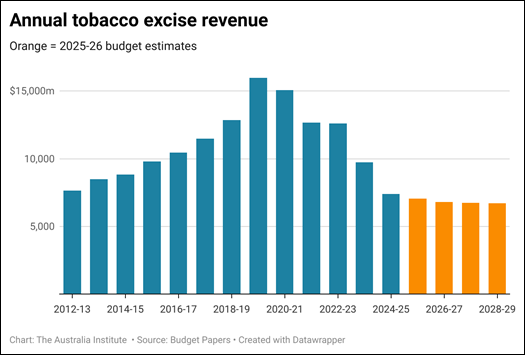
In the May budget, the government allocated $4.5 million over two years for prosecution activities relating to illicit tobacco compliance and enforcement. This is not something that ever really needed to be done, but it is now because the amount of tax being raised from tobacco excise has dropped dramatically:

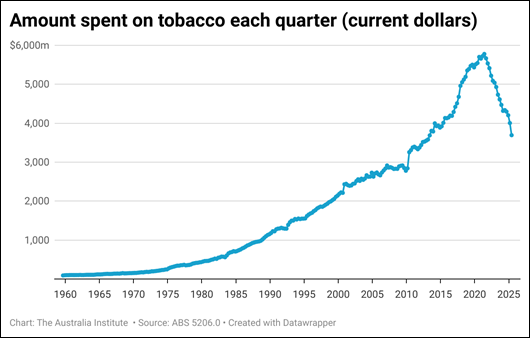
This is because the amount that Australians are spending on tobacco has declined at an absolutely astonishing rate:

So does that mean those few Australians still smoking have quit in record numbers? Alas no.

What has happened is that the ABS only counts legal sales of tobacco. So legal sales have fallen off a cliff, but total sales have not.

As the ATO explains:

“The tobacco market includes both legal and illicit tobacco for sale. We estimate that 1,741 tonnes of illicit tobacco was consumed in the 2023-24 year. This represents $3.2 billion of combined customs and excise duty theoretically payable that has been evaded.”

If you add that $3.2bn to the total tobacco excise you get back to a level similar to what was raised in 2022-23.

The problem is not that there has been a drop in excise leading to less tax, but that it has kept going up at a rate that is now getting rather absurd and deterring people from buying legal tobacco.

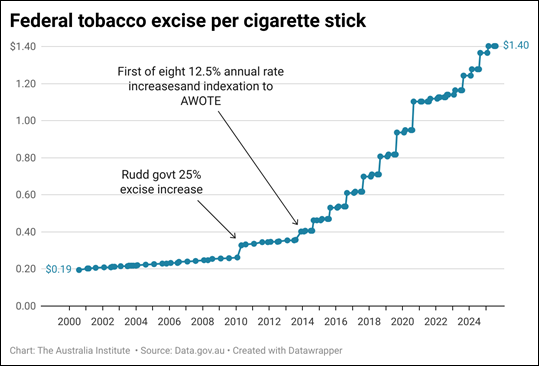
In 2000, the excise on tobacco was $0.19 a cigarette stick. In today’s dollars that is around $0.40. Now smokes are taxed at $1.40 a stick – a 250% increase in real terms:

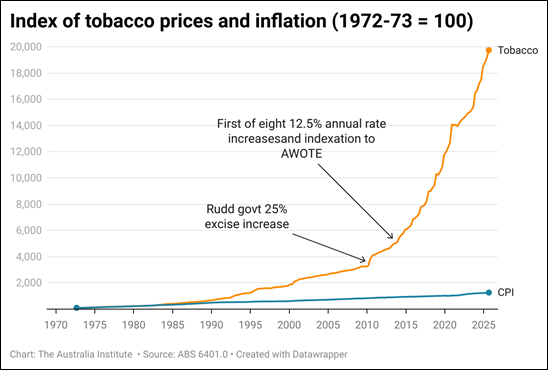
That is due to firstly the Rudd government increasing tobacco excise by 25% in 2010 and then instituting a series of 12.5% increases from 2013 onwards. This has sent the price of tobacco soaring above inflation:

Back in the early 1980s on the TV show Yes Prime Minister the Minister for Health in the program suggested raising the excise on tobacco “until a packet of twenty costs about the same as a bottle of whisky.” In Australia we have reached that point. A pack of what used to be Winfield Reds costs about the same as a 700ml bottle of Johnnie Walker Red Label.

So has this worked?

Yes – clearly excise increases have reduced smoking.

Is it still working?

That is a trickier question.

Smoking is a habit that society would be better if it was totally killed off (I say as an addict now 20 years quit), but the purpose of taxation of tobacco and other activities you wish to deter is to tax to the point that the cost is not so great that avoiding the tax becomes a more attractive activity.

Clearly, we have gone past that point. Yes, there are people who have quit due to the continual increase in excise over the past 4 years, but the marginal impact of tax increases reduces the higher it goes. Essentially, the number of people who will quit due to the price of cigarettes going from $20 a pack to $25 is much more than the number who will quit from it going from $45 to $50.

But also, the price has risen so high that those who continue to be addicted are now seeking other sources. This is not new, but the numbers doing it are.

Back when I smoked, I always knew someone who has able to get “chop-chop” or who got Indonesian cigarettes on the cheap, or who had a mate who was a pilot who was always ready to buy them duty free for you. But most people, like me, just got them legally from a shop. Now you have retires thinking of nothing about getting them from under the counter, as it were.

Tobacco excise clearly has an impact on tobacco use, but if it is driving people to buy illegal smokes, then taxation policy is not doing what it should.

The problem is so great that the ABS is now explaining that it is probably best to use household spending figures that exclude tobacco because of “the rise of illicit tobacco sales over the past few years

The problem is tobacco companies are using this to campaign for a decline in excise, and let’s be honest tobacco companies are not anyone you should listen to. The data would suggest that reducing the excise back to 2020 levels might undo the loss of revenue and in effect undercut the illegal tobacco sales – but the problem is will it just introduce a price war between legal and illegal smokes? And that brings us back to whatever happens, now that the illegal cigarette genie is fully out of the bottle we need police to launch raids in ways they never had to before. .

That does not mean giving up on reducing smoking.

The UK for example last year followed a policy of New Zealand of banning smoking for anyone born after 2009. This in essence bans anyone under 16 from ever being able to legally take up the habit. Combined with the high cost, that would seem to be an effective way to go about it – but here it requires the states doing the banning.

But the use of ever increasing excises to cut smoking appears to have reached its limit. And it is also worth noting that those who smokes are much more likely to be on low incomes – thus the tax hurts the poorest the most.

View from Mike Bowers

Anika Wells was given the Blue Room (the second most fancy press conference location) to announce Reddit and Kick had met the criteria to be included in the social media ban.

Here is how Mike Bowers saw it:

The Minister for Communications and Sport Anika Wells with the e-safety commissioner Julie Inman Grant at a press conference in the Blue room of Parliament House, Canberra this morning. Wednesday 5th November 2025.Photograph by Mike Bowers

Free electricity: AGL and the other retailers will fight to keep their outrageous markups on electricity

Dave Richardson

Solar power is producing more electricity than needed in the middle of the day when the sun is strongest. In turn that has reduced prices to zero in the middle of the day.

Consumers cannot take advantage of that at the moment so Chris Bowen, the Climate Change and Energy Minister, has announced “a new retail energy offer that unlocks free solar for homes during the day”. This will take the form of “a new regulated electricity offer, Solar Sharer, will be introduced next year through the Default Market Offer, requiring retailers to offer free electricity to households for at least three hours in the middle of the day when solar generation is at its peak.”

The retailers do not like this according to the Financial Review and they threaten to pass on “higher prices for electricity for those customers at other times of the day, limiting the benefit.” This means a big fight with the government is coming up because the government expects big savings to consumers from this initiative whereas the industry has made it clear it will recover its losses from those consumers.

The retailers are effectively admitting that the retail prices bear almost no relation to wholesale prices.

From AGL’s annual report we know it is

  • getting 35.91₵ a unit, plus GST, from consumer customers and
  • charging its wholesale customers 9.43₵ a unit and
  • spending just 4.19₵ a unit on fuel costs and generation running costs to make electricity.

(The unit here is a kilowatt hour, KWh, which is the unit used by retailers when they bill you.)

That is why they do not want to see their customers getting free electricity when wholesale prices drop to zero. AGL and the other retailers may get their wholesale electricity for free but the wholesale cost is just a fraction of what they charge consumers and we can bet AGL and the others will be keen to keep their outrageous markups. 

Environmental law debate in the house

The parliament sitting is underway and the house is about to pass the environment legislation.

It will head off to the senate where the Greens and the Coalition have already voted to send it to committee for review, which will not come back until March.

Climate war continues – cost the new battleground

If you weren’t yet convinced that cost is the new battleground in the push to extend the life of fossil fuel use in developed nations, Australia included, here is the latest line of attack from Nationals leader David Littleproud – he doesn’t want the UN climate conference being hosted in Australia because of the ‘cost’

This is pure insanity and nothing more than a vanity project for Prime Minister Anthony Albanese and Climate Change and Energy Minister Chris Bowen,” Mr Littleproud said.
Right now there are Australians struggling to put dinner on the table but Labor would prefer to flit away more than $1 billion on a Conference of the Parties (COP) Summit, just so Labor can grandstand and the Prime Minister can mix with other world leaders.
This should not be at the taxpayers’ expense and as far as I am concerned, if Turkey still wants to host the Summit, they can have it.”

Summits usually receive sponsorships and costs are offset by the investments and yadda yadda.

But the point is that Littleproud doesn’t care about any of that, or even giving facts – he just cares about throwing as much mud into the water as possible. Just as he is trying to do with pushing the bullshit about the energy transition costing $7-9 trillion a year – that was based on a flawed report looking at INVESTMENT does not take into account the returns on investment, was based on modelling that assumed the same level of fossil fuel reliance and doesn’t mention that the cost of business as usual, or doing nothing, is JUST AS HIGH.

It’s the new battleground in the fight to delay the transition and keep reliance on fossil fuels going for as long as possible.

Let teachers have a say

Correna Haythorpe, the president of the Australian Education Union held a press conference a little earlier calling on governments to listen to teachers and give them a bigger say in how money is spent in the education system:

Australia has an incredibly dedicated teaching profession but they’re absolutely buckling under the strain after a decade of a lack of resources. Our latest State of our Schools survey, which has been taken across 12,000 members, tells a very sorry tale; 95% of principles report that student complexity has increased. We’ve got students with very diverse needs, mental health and wellbeing issues, and that’s having an impact on teaching and learning programs in schools.

Over 55% of teachers report burnout from unsustainable workloads and the complexity that they’re facing every single day. The Albanese government has announced an unprecedented investment not of over $20bn across the next decade and we’re here to say that teachers have to be at the heart of any decisions that governments make about where that money is spent in schools. Our members know what counts on the ground. They are calling for full-service schools with wraparound supports in terms of mental health and occupational health, any medical health that students might need in schools, to help those kids who have more complex needs. They’re calling for more time teaching, more administrative support staff, smaller class sizes and they’re calling for their unsustainable workloads to be addressed.

Everything is uncertain”: Trump-Xi meeting leaves the world on edge

Angus Blackman
Executive Producer

Trump and Xi may have come to a “deal”, but their meeting was a wasted opportunity. Plus: what do Australians think about our relationship with the US?

On this episode of After America, Dr Emma Shortis joins Angus Blackman to discuss new Australia Institute polling, which shows that Australians are less than convinced that we “share values” with Trump’s America. Emma is then joined by Dr Frank Yuan and Allan Behm to discuss Trump’s meeting with Xi and the chaos whirling around the US president.

Listen now, wherever you get your podcasts.

James Paterson confident Liberals will win back city seats

Liberal senator James Paterson spoke to ABC News Breakfast this morning and said he believes the Liberal party can win back seats in the cities, because Tim Wilson did it:

It’s self-evidently true that in the most urbanised democracy in the Western world, the Liberal Party must compete in our suburbs and in our cities. And we demonstrated, even in a disappointing election result last time, that we can do that. Tim Wilson won the inner-city seat of Goldstein back from the Teals. And I’m confident we can win more seats like that, as well as our traditional strongholds, for example, in Melbourne, like Menzies and, Aston and, Chisholm and Deakin. And it will require a policy which gets the balance right. I think it will be important for the Liberal Party to demonstrate we are committed to emissions reduction, that Australia will do our fair share, but that we also won’t ask Australians to do more than the rest of the world or go ahead of the rest of the world at the expense of our own economy or their electricity bills

And does he believe the Coalition should stay together at any cost?

I mean, it’s self-evidently a true statement that if the Liberal Party and National Party views are completely irreconcilable, then we couldn’t be in Coalition. But it is my very, very strong preference that we remain in Coalition because we cannot form government without being in Coalition with the National Party. And history shows what happens when Liberal and National Parties do not run in Coalition. The 1987 election is not widely remembered as a great success for either the Liberal or National Parties. And we should all be determined to ensure that doesn’t happen again

Reading through the Hansard and yesterday Katy Gallagher was able to get a little kick in at Andrew Bragg during senate question time after he interjected on an answer she was giving on housing:

I heard Senator Bragg before. He’s concerned about demand-side policies. Well, I was concerned to read the transcript yesterday of your interview with Patricia Karvelas, when you just dumped super for housing and everything that you’ve stood for. And all your colleagues say, ‘We’re not going to do that anymore. We’ll just let that go.’ That was at 3.35 yesterday, on a day when more than 30 members of the opposition were racing to get interview spot in the press gallery. You couldn’t get a spot in the press gallery yesterday. It was like a stampede. But Senator Bragg just managed to nick that little 15-minute interview, where he was able to dump super for housing.

Wells stands by government social media ban on under-16s

Anika Wells is speaking on the government’s decision to add more sites to the social media ban, which will now include Reddit and Kick. (The Sizzle’s and Crikey’s Cam Wilson has been very good on this ban from the start, if you are looking for someone to follow on this sort of reporting).

Asked about kids already talking about how they will get around it, Wells says:

I’ve got lots to say about this. Kids will be kids. There will be kids today that manage to procure themselves alcohol, despite the fact that it is against the law to buy alcohol if you’re under 18 in Australia.

That doesn’t mean we shouldn’t have a law preventing under-18s from buying alcohol in Australia. This is about a cultural change and moving people away from having every single interaction they have as a 13-year-old, 12-year-old, 8-year-old, being online and being in real life, trying to give them 36 months back to develop those relationships and develop that resilience themselves before giving them the opportunity of having a social media platform.

I think – I don’t know if you want to speak to the ins and outs about how people will get around it – but I’ve been enjoying some of the social media content talking about how they are under 16 and don’t like the laws and how they’re going to get around it, therefore identifying themselves as someone who is under 16 and their accounts will need to be deactivated.

When TikTok went offline for 24 hours in the States, people tried all kinds of methods to get around that, VPNs, etc, and were in the vast majority, unsuccessful.

No one held accountable for robodebt

On that previous post, here is a statement from Greens senator Penny Allman-Payne on the lack of action over robodebt:

Jenny Miller and Kath Madgwick, the mothers of Rhys Cauzzo and Jarrad Madgwick, who each took their own lives after receiving an illegal and inaccurate Robodebt notice, are in Canberra today to again call for accountability for Robodebt and an end to the targeting of welfare recipients by government.

To date, not a single Minister or public official has been held accountable for the scheme described as one of the worst failures of public administration in memory.

Madgwick and Miller are in Parliament today to see their change.org petition with over 15,000 signatures tabled by the Greens spokesperson for Social Services, Senator Penny Allman-Payne, and will stand alongside Greens Senators to call for accountability and justice for Robodebt.

Targets of Robodebt and their families who had put their faith in the Robodebt Royal Commission, the NACC, and the government, have become frustrated by a lack of accountability for Robodebt and the continuation of unlawful punishment of welfare recipients.

In their call for accountability, Madgwick and Miller have called for NACC Commissioner Brereton to be dismissed from his position, for the sealed chapter of the Royal Commission to be released, and for the Robodebt Royal Commission to be fully implemented.

Labor have failed to implement key recommendations despite having previously agreed ‘in principle’ to all of the recommendations, including crucially:

  • Reinstating the 6 year limit of recovery of debts
  • Establishing a duty of care for the Department of Social Services that prioritises the needs of social security recipients while administering the law,
  • Restricting the kinds of decisions which can be made or automated without human oversight
  • Better protections for people experiencing hardship from receiving compliance notices.

During Senate Estimates earlier this year, Services Australia were revealed to still be chasing billions of dollars in decades-old welfare debts, dating as far back as 1979, and contrary to the Royal Commission.

A Private Members Bill to implement the outstanding recommendations has been introduced by Senator Allman-Payne in the Senate and crossbench MPs Andrew Wilkie and Helen Haines in the House.

In echoes of Robodebt, the Government continues with its punishing ‘mutual obligations’ regime, under which privatised job agencies have issued over 2 million payment suspensions to JobSeekers in the past year, despite damning advice the Targeted Compliance Framework which underpins the system may not be lawful. 

An estimated 310,000 Centrelink recipients had their payments unlawfully cancelled under the mutual obligations system. In recent Estimates, neither the Minister nor public servants could defend the lawfulness of the system under which payment suspensions continue to this day with little oversight.

Government seeks to make automated debt recovery, lawful

That bill that the government has tacked the police powers over welfare also includes a new amendment which allows for….automated debt recovery. You know – the thing that has been found to have caused so much harm in the past?

The government wants to make the unlawful, lawful, despite the fact that it causes harm. The bill that the ridiculous amendment is attached to, is also a mess. Shocking, I know.

Teals oppose government environment laws (because they do not protect the environment)

It’s official – the teal independents are against the government’s environmental ‘protections’ reforms. Which as we noted yesterday isn’t a big deal on the numbers (because the government controls the numbers in the House where most sit) but is for public perception of the bill.

The government can not pretend that its bill is good for the environment when the independents elected on climate action do not agree that it is good for the environment. And they are right – because the bill makes it easier to approve coal and gas mines.

How can you make it easier to approve coal and gas and then claim you are protecting the environment? You can’t.

Zali Steggall, Allegra Spender, Monique Ryan and Nicolette Boele and others are holding a press conference on that very issue a bit later this morning.

Households to get free electricity because of renewable generation

Matt Grudnoff
Senior Economist

Renewables are the cheapest form of electricity generation, and this is being highlighted by the fact that soon electricity will be free for 3 hours a day.

The Climate Change and Energy Minister Chris Bowen has announced that he will change the default market offer to force power companies to offer 3 hours of free electricity in the middle of the day from next July.

This will initially be for NSW, southeast Queensland, and South Australia. It will be available to all households who have smart meters.

Solar power is producing an abundance of electricity in the middle of the day, pushing down electricity prices.

Households wanting to take advantage of this could schedule to run their dishwashers, washing machines, dryers and hot water systems when free electricity is available. The government estimates this could save up to $800 a year.

Making electricity free in the middle of the day will encourage households to shift their demand for electricity to when there is this glut of supply, and away from times of peak demand, usually in the late afternoon and evening.

This is called load shifting and it will not only save people money because they are “buying” electricity when it is free, but also because it will reduce peak demand in the afternoons and evenings, meaning less generating capacity needs to be built.

Importantly, this will mean the benefit of solar power will be extended to people who aren’t able to instal solar panels, perhaps because they live in an apartment, or they rent.

But the government could go further and save people even more money. You can read all about how in the The Point.

House price merry-go-round

Late yesterday in the senate, the Greens got the Coalition across the line to support an inquiry into the capital gains tax discount (in exchange for the Greens support for an inquiry into productivity – no, the Coalition have not decided they are against the CGT discount) which is going to mean one of the biggest issues in housing affordability will be looked at for the first time in ages.

But both major parties are in lockstep in wanting to see house prices continue to rise, because now we are in a cycle where the moment you are in the housing market, you can not afford for house prices to drop, or you will be in massive financial trouble. HUZZAH. (There are ways around this by the way, but they all need government intervention)

Clare O’Neil was asked about the government’s 5% deposit scheme which has further increased house prices and said:

House prices are rising too fast in our country and this has been an issue for our nation for 40 years.

Now there is no question that over that 40‑year period it’s gotten much harder for our younger generation to get into home ownership, and I talk to lots of people who are, you know, in a couple, delaying having children because of their issues with housing; I talk to people who are in their 40s who would absolutely have owned their own home a generation ago who are now today not able to get that opportunity.

Now the housing crisis is a complicated thing. What I want people at home to know is you’ve got the most ambitious Australian Government on housing that our country has had since the post‑war period. We’re building more homes, we’re helping renters, and yes, we are getting more Australians into home ownership.

Now we do not shy away from that. Our 5 per cent deposit program has over the course of our government, over more than three and a half years, gotten 197,000 young people into their first home where they otherwise wouldn’t have that opportunity; they’re paying off their own mortgage rather than someone else’s, they’ve got safety and security.

Now it’s just one piece of what our government is doing, but I want people at home to know that we understand the pain that housing is causing families, and that’s why we are so busy and active on that issue.

‘Completely unremarkable’ Ley says about challengers meeting to discuss her future

Paul Sakkal at the SMH had a story about Andrew Hastie, Angus Taylor and other conservatives meeting at a Canberra restaurant on Monday night, where Ley’s future was on the menu.

Sakkal reports it is not settled yet when the challenge will occur (which is also what I am hearing – mostly because it is not in the interests of Taylor to launch a challenge when there is still so much left undecided and so much weight being thrown around) and Ley is asked if she is worred:

Ley:

Not at all. It’s totally unremarkable for colleagues to get together and have meals. And I speak to those colleagues and indeed all of my colleagues almost every single day that I’m here in Parliament. People can make what amusing asides they want on photos that are, as I said, completely unremarkable.

‘Tis but a flesh wound’ claims Sussan Ley

Sussan Ley has obviously decided that the best defence is a good offence and has done as much media as possible this morning, including with the Seven Network, which also opened on whether she was ditching net zero to save her leadership:

The Liberal party room will meet sooner rather than later, certainly before parliament resumes after this week and we will come to a Liberal Party position, Nat. So I appreciate that you’ve repeated some speculation and some commentary, but I want to make it very clear that the Liberal Party will come to its own decision in our own party room, exactly as I said we would on day one of my leadership where I said I wouldn’t be making any captain’s calls, I would be listening to my colleagues, to every single member of my team. I’m proud of the contribution that every single one of them is making in the Liberal Party, where as people would expect, there are a range of views. That’s a good thing.

And on being dragged further to the right and into election obscurity by the Nationals Barnaby Joyce (who has been doing a very public victory lap openly saying that, just to rub it all in) Ley says:

As I said before, when I became Leader, the Nationals would make their own decisions, and they have. I don’t determine their timeline, they don’t determine ours. I had a conversation with David Littleproud on Sunday. It was a friendly conversation, as per usual, and we said we’d come together after our respective party rooms had worked through this and come to a Coalition position. What we believe Nat, is that the Liberal and National parties are stronger together as a Coalition, because we both equally want to fight this awful Labor government.

‘Stop giving licence to racism’

The race discrimination commissioner, Giridharan Sivaraman is carrying out an inquiry on racism in Australian workplaces.

He tells ABC News Breakfast that it is “very widespread and systemic” and includes migrants being made to sit an English test (no matter their proficiency) change their names to something more ‘English sounding’, not being safe in the workplace and not seeing advancement in their careers.

I think we need to create a culture where people are safe to raise issues. For example, generally the highest area of complaints under the race discrimination act is in employment, yet that would be a fraction of what actually occurs at in the world. That is because most people don’t speak up. The other thing is, if you don’t change the system, the institution, what you just described, whether covert or overt, it continues to happen. If everyone in leadership looks like you, you might feel that the environment enables you to use racial size or covert racism. You need to change the system and institution to stop giving license racism.

Sussan Ley: ‘I’m completely confident’

Q: We are nearing the end of the parliamentary year. For many years, that final week has been dubbed The Killing Season. How confident are you that you will be the leader when Parliament rises?

Ley:

I’m completely confident, and I have a smile on my face as I answer this, because I know that the media and commentary does get a little bit excited from time to time. But Sabra I said, when I became leader, that I would work incredibly hard for the things that matter, the national interest, the Australian people, the people who take risks, who believe in the future of this country, who work hard every day, and who deserve a better government in Canberra than what we’re seeing right here, right now and yesterday, with no rate cut before Christmas and with just the prospect of expenses rising and rising over time, we can do so much better, and we will fight this fight every day

Sussan Ley avoids direct condemnation of Andrew Hastie

Q: Backbencher and leadership aspirant Andrew Hastie, last week intervened in a debate about extending parental leave to those who had had stillborn babies, and he questioned whether it would apply to late term abortions. This was interpreted as sort of positing that women would deliberately terminate a baby to collect government money. How surprised were you by that intervention?

Ley:

We supported Baby Priya’s bill. It’s a really important bill. We should be supporting women through tragic events where a baby is lost. Losing a baby is one of the most difficult things that can ever happen to a mother and to a family and as a mother and a grandmother, this is very personal. So any commentary about this bill applying in other contexts is insensitive.

Q: He is leadership material. Does he deserve to be a leader when he says these sorts of things publicly?

Ley:

I’m once more, not talking about individuals in my party room or individual comments. I’m making a point about the importance of this bill and the real struggle that mothers face in the circumstances where they do lose a baby, and it’s a very difficult thing for a lot of women to talk about. And the last thing I’m going to do is issue judgments on mothers and certainly I am very supportive of the bill, as is my team.

Sussan Ley avoids any of the major issues facing her leadership

Sussan Ley spent the interview trying to turn it to her talking points. But she wouldn’t address how her party has ended up here, how it is going to win with a policy that doesn’t have a net zero goal, or whether she personally believes net zero is possible.

We did have a very poor result at the last election, and I’ve been very upfront about acknowledging that, and shortly, we’ll have the review that I asked Pru Goward and Nick Minchin to complete, and I also said I’d make that public, and that will talk about the detailed reasons for the result. And it’s important that we do that, and it’s important that we consider that carefully, and it’s also important that we listen to Australians, and I’ve been listening to them on energy policy. I’ve been listening to them on their struggles to meet the cost of living crisis…

Sussan Ley says she will survive ‘killing season’

The killing season in politics, is the end of year break after some bad polls where a leader’s position becomes untenable.

Ley has spoken to Sabra Lane on ABC radio AM and said that she will make it through the season. But she also wouldn’t address whether she has been treated fairly or treated with respect.

It’s an enormous privilege to lead the Liberal Party, and I’m very proud of my team. And I said as leader, when I became leader, there wouldn’t be any captain’s calls. We’d take the time to work through policy. We would also articulate clear differences between ourselves and labor, and I’ve done that with two important economic speeches, we’ll have a plan for personal income taxes, tax cuts at the next election, and also talking about how we would manage the economy responsibly.”

Ley would not address Barnaby Joyce’s bragging that he has dragged the Liberals and the Nats to his position on something, something he was doing a victory lap on Sky on yesterday.

You’re asking me to comment on commentary and with respect, as leader I said, there wouldn’t be any captain’s calls and I’d listen to my team and that’s exactly what I’m doing

Explainer: Private job agencies capturing welfare payment

Frank Yuan
Postdoctoral Fellow

New data shows that only one-in-nine jobseekers (11.7%) found long term employment via a job agency in the financial year ending in June 2025. This is despite an increase in public funding through Workforce Australia, a Commonwealth Government service which pays private job agencies to help people who are unemployed find jobs.

The involvement of private agencies in the unemployment benefit system began in 1998, when the Howard Government replaced the government-run Commonwealth Employment Service. It instead contracted private or community-run job agencies to help people find jobs.

This was combined with the “mutual obligation” requirement for those receiving the benefit. This became known as the “Work for the Dole” program. Those receiving payments are required to do “work like” activities for a certain number of hours and/or to demonstrate an effort to find employment. Jobseekers sign up with private job agencies as a way of showing they are looking for a job. An agency claims “outcome payments” from the government when a client has completed 4, 12, or 26 weeks of work (the latter being considered long-term).

In short, instead of helping some of its most vulnerable citizens directly, the Commonwealth Government makes them jump through hoops to receive Jobseeker payments, and private companies who capture handsome profits in the process.

Over one-in-four of Jobseeker payment recipients have disability or health conditions which affect their capacity for work, as recognised by the Albanese Government’s employment whitepaper from September 2023.

The system is doing little to meet the  whitepaper’s objective of “delivering sustained and inclusive full employment.”

The abysmal employment outcome for jobseekers is well below the government’s target of 15% of the jobseekers finding long-term employment; it is also a deterioration from the 13.2% from FY2023-24. The figures are published in the annual report of the Commonwealth’s Department of Employment and Workplace Relations.

At a time when unemployment has been trending up, the system is not doing enough to alleviate the growing economic pain many are feeling.

The Australia Institute has pointed out that Australia could substantially lift its unemployment payments without any meaningful disincentives for working. In fact, among all 33 OECD countries, Australia has the lowest unemployment payment relative to average wages. Other OECD countries take much better care of their citizens who are unemployed. As one of the richest nations in the world, why shouldn’t Australia do the same?

Reddit to be added to government’s social media ban

Reddit, along with live streaming platform Kick have been added to the government’s social media ban for under-16s after the eSafety Commission said they met the criteria for the age verification scheme.

It’s coming into law on December 10 and will mean that under-16s will not be able to access the messaging board Reddit, Kick or YouTube, Facebook, Instagram, Threads, Snapchat, TikTok or X

Major parties still won’t allow a review into Aukus

Also late yesterday, Labor and the Coalition voted down a Greens attempt to have an inquiry into Aukus. Australia is the only partner now which has not reviewed the agreement, despite paying $375bn, with no guarantee of submarines at the end.

The UK has reviewed it and so has the US. Australia’s government refuses to allow a review.

Greens senator David Shoebridge said the Greens wanted to allow a Senate committee to take for public submissions on all aspects of the AUKUS deal, including environmental impacts, defence impacts, costs, and independence:

The fact that the Albanese Government have voted for secrecy in this multi-decade, multi-hundred-billion-dollar gamble shows contempt for transparency and the very real concerns of the Australian public.

The Albanese Government has already begun handing over the first $10 billion to the US and UK as part of AUKUS, without any binding agreement to either get submarines or a refund when it all unravels. 

The US is producing barely half the number of submarines needed to make AUKUS viable, and the UK’s nuclear program is in meltdown. 

Ignoring these critical supply failures in our AUKUS partners is not a credible defence strategy. But instead of a hard-headed review the Albanese Government’s response is to close its eyes and wait for the next photo op.

Polling from the Australia Institute shows that Australians want a more independent foreign policy, not to align ourselves closely with US President Trump. 

Only 8% of people strongly agree with Defence Minister Richard Marles when he talks of our “shared values” with the United States.

AUKUS is a limitless drain on our public funds that makes Australia less safe and even more dependent on Washington.

Today’s vote shows how out of touch the Canberra national security bubble is from ordinary Australians who don’t like Donald Trump, don’t want war with China and want their Parliament to fund Medicare and public schools before nuclear submarines.”

Read the full inquiry terms of reference here.

Greens to review local content legislation

After dragging it out for years, there is finally a bill with local content quotas being for streaming services in front of the parliament. A group of actors and creatives came to parliament last week for a final push, warning that the Australian industry wouldn’t survive without intervention. Anika Wells announced there would be a bill coming which will mandate that services with one than one million Australian subscribers will need to invest at least 10 per cent of their total expenditure for Australia – or 7.5% of their revenue on new local drama, children’s, documentary, arts and educational programs.

Sarah Hanson-Young said the Greens will look at the bill before making a decision on whether to pass it or not:

The Greens have long campaigned for local content quotas on streaming platforms to support Australian stories on our screen. Big tech companies like Netflix and Amazon who make massive profits from Australians should be required to have Australian content and give something back to the Australian economy.

A country that invests in its community and democracy, invests in its own cultural assets and story tellers.

We will look carefully at the detail of the bill and reserve our position until we know it is strong enough to ensure a strong future for our screen industry, including children’s content.

Australians deserve to see themselves and their communities reflected on their screens. Telling our own stories helps us makes sense of who we are here at home and around the world.  

Generations of Australians grew up on a diet of Australian shows like Playschool, Round the Twist, and Bluey. The next generation of Aussie kids deserve better than American junk.”

Former independent MP turns attention to food insecurity

Tom Wark
AAP

While some Australians go hungry, enough food to fill the MCG nine times over is thrown away by farmers and growers each year. 

A bold idea proposed by Australia’s top hunger relief charity could solve this, with tax relief touted as a potential solution to get food earmarked for the tip into people’s pantries.

Foodbank Australia is recommending a national food donation tax incentive in its annual hunger report, release on Wednesday, with the issue proving stubborn despite cost-of-living measures being put in place. 

“We do know that the tax incentive works, it works in the USA, it works in Germany,” chief executive and former independent MP Kylea Tink told AAP.

“We want this government to seriously consider it in this term. We don’t understand why they’re not moving on it.”

Foodbank concedes the incentive will not completely cover the increased cost for growers to transport excess produce but argues a tax break to reduce the burden will give more kind-hearted businesses a reason to help tackle food insecurity.

Hunger issues are particularly acute among renters and households containing someone with a disability, indicating the government’s cost-of-living relief measures are not doing enough to ease food security pressures.

Even households earning more than $91,000 are feeling the pinch of food prices, with one-in-five reporting they have worries about putting food on the table.

“We grow and produce enough food in Australia to feed our entire population three times over,” Ms Tink said.

“We just need to fix the system of getting it into people’s hands.”

The proposal to give farmers financial incentives for donations is nothing new, with Liberal senator Dean Smith introducing a private member’s bill with crossbench support to create the scheme in 2024.

Reducing the food in landfill by getting it into hungry mouths is not just a social good, it also has environmental upside.

“Food waste is a significant contributor to carbon emissions in this country,” Ms Tink said.

“We should be incentivising growers and manufacturers to take advantage of this opportunity to reduce our carbon emissions.”

Tasmanian government steps in with short term fix for Bell Bay Aluminium

AAP

The immediate future of the Southern Hemisphere’s first aluminium smelter is more secure, after the signing of a power agreement. 

Tasmania’s Bell Bay Aluminium, which is owned by Rio Tinto, was under a cloud amid stalled discussions for a new deal with state-owned electricity provider Hydro Tasmania. 

The smelter in the state’s north employs more than 500 people – its decade-long deal with Hydro was set to expire on December 31.

The state government on Wednesday said a 12-month agreement had been reached allowing time for work to continue on a long-term plan for the smelter. 

“The smelter is a cornerstone of Tasmania’s economy,” Premier Jeremy Rockliff said in a statement. 

“We are doing all we can to make sure the business continues to have a strong future in the state.

“It is important all governments continue to work together with Rio Tinto to secure the future of Bell Bay Aluminium, one of Australia’s greenest smelters.”

Mr Rockliff said his government would continue to lobby Canberra for money, after recent lifelines were provided for several major industrials. 

The Australian and Queensland governments in October unveiled $600 million in support for the Mt Isa copper smelter and Townsville copper refinery over three years.

Federal government support was necessary to provide Bell Bay Aluminium with a sustainable operating trajectory, Tasmania’s Energy and Renewables Minister Nick Duigan said.

“It would be a perverse outcome for the federal funding arrangements to exclude the nation’s principal green aluminium smelter,” he said. 

Mr Duigan said he expected Hydro Tasmania to provide a competitive, commercial energy price consistent with its obligations to put Tasmanian jobs and the economy first.

The smelter began operating in 1955 and exports more than 90 per cent of its output, primarily to southeast Asia, east Asia and India. 

Three nations on notice after assassination revelations

Kat Wong
AAP

The country’s top spy has put three nations on notice after sensationally revealing there was a “realistic possibility” a foreign government would attempt an assassination on Australian soil.

The trio were not directly named by Australian Security Intelligence Organisation director-general Mike Burgess in the 2025 Lowy Lecture on Tuesday night.

But identifying them may not have been necessary.

“The countries that I didn’t mention by name know who I’m talking about,” he said in conversation with Lowy Institute executive director Michael Fullilove.

“We know who they are.

“By mentioning them publicly I’m also putting them on notice that we know some of you are prepared to do this and we will do our damnedest to stop it before it happens.”

During his speech, Mr Burgess said the degrading trajectory of Australia’s security environment alongside regimes’ growing willingness to do harm had formed the foundation of ASIO’s assessment.

“There is a realistic possibility a foreign government will attempt to assassinate a perceived dissident in Australia,” he said.

“We believe there are at least three nations willing and capable of conducting lethal targeting here.

“This threat is real.”

Some could try to hide their involvement by hiring criminal cut-outs, Mr Burgess said, pointing to a similar tactic used by Iran when it ordered the 2024 firebombings at Melbourne’s Addas Synagogue and Sydney’s Lewis Continental Kitchen.

He also mentioned recently uncovered links between between pro-Russia influencers in Australia and an offshore media organisation that “almost certainly” receives orders from Russian intelligence.

Another incident included a foreign intelligence service attempting to recruit Australians to gather information on the economy, critical minerals and the country’s nuclear submarine agreement with the US and UK.

Though Mr Burgess’s address did not name China, the spy chief was asked about the country’s absence.

“I did not mention China in my remarks today,” he said.

“But how do you know I wasn’t talking about things China did, in my remarks today?”

He chose not to name China primarily because his address was about factors that fray Australia’s social fabric.

“At the extreme end of that, that isn’t China,” he said.

“Although we do have some concerns there too.”

The internet’s ability to incubate disaffection, international conflicts like the war in the Gaza Strip, and extremist groups such as the National Socialist Network were all said to have played a role in the country’s deteriorating social cohesion.

Australians believe universities are too expensive and not doing their job: polling

Glenn Connley

New Australia Institute polling research shows most Australians, regardless of who they vote for, think most university degrees are too expensive.

Polling also found only 3% of Australians think making a profit should be a primary purpose of universities – however more than half believe that it currently is a primary purpose.

Meanwhile, fewer than half of Australians believe educating students is currently a primary purpose of universities, despite 80% thinking it should be.

Key findings: 

  • Three out of four Australians (77%) think university degrees should cost $10,000 or less per year.
  • About three in five Australians (58%) think university degrees should cost $5,000 or less per year. 
  • Less than one in 20 (3%) of Australians think that making a profit should be a primary purpose of universities, yet more than half (54%) believe that it currently is a primary purpose.
  • Four in five (80%) Australians think that educating students should be a primary purpose of universities, yet 44% believe it is currently a primary purpose of universities.

“University fees are totally out of step with community expectations. Despite about three in five Australians believing degrees should cost $5,000 or less a year, most university degrees are more expensive than this. Highly popular degrees such as arts, commerce, and law now cost about $17,000 per year,” said Jack Thrower, Senior Economist at The Australia Institute

“High university fees are leading to mounting student debts, which are taking ever longer to pay off.

“The university sector’s rolling scandals and ongoing governance crisis are causing it to lose the trust of the general public. Over half of Australians think that making a profit is a primary purpose for universities.

“To regain public trust, the sector needs to fix its governance, such as by making sure universities are overseen by those with the most at stake in their future: students and staff.”

Good morning

How is it only Wednesday?

How are we still here?

How has it we have a lived three lifetimes and it is only Wednesday?

All of that is to say, hello and good morning and welcome back to The Point Live.

We start today where we have started every day – talking about Sussan Ley’s leadership. I have read all the thought pieces and the columns and I just wonder why anyone is surprised. Ley has stood for nothing. She has no principles to point to that she can say ‘well, you knew this was important to me’. She has flipped and flopped and now she’s floundering. So here we are. If it’s not now (and honestly, given how much of a mess the party is, who would want the responsibility of owning that) it will be as soon as the party has a direction. Tim Wilson is being floated as a potential ‘moderate’ deputy for Angus Taylor. And down and around it goes.

ASIO chief Mike Burgess has given a Lowy lecture where he says much the same things he always say and each media outlet picks out the narrative that suits their particular line the most.

He has said three nations have a “realistic possibility’ of attempting an assassination in Australia, but did not name them.

The countries that I didn’t mention by name know who I’m talking about.

We know who they are.

By mentioning them publicly I’m also putting them on notice that we know some of you are prepared to do this and we will do our damnedest to stop it before it happens.”

The amendment that would give police powers over welfare is still floating around – the unrelated bill it has been tacked on to seems a bit of a mess, so there might be some further action in addressing the whole thing today, but maybe don’t hold your breathe. There seems to be a lot of people worried about ‘perceptions’ rather than what is actually at stake. These slides into further authoritarian powers are usually because all of these incremental fights were seen as too difficult or not worth the discomfort. So it is always a death of a thousand cuts, rather than one big swoop, but you only need look at the protest laws to see how these things creep up over you. It doesn’t stop.

We’ll cover it all off as the day goes by. It’s a solid three coffee morning. Hope you have yours.

Ready? Let’s get into it.


Read the previous day's news (Tue 4 Nov)

Comments

Start the conversation

The biggest stories and the best analysis from the team at The Point, delivered to your inbox.

Past Coverage