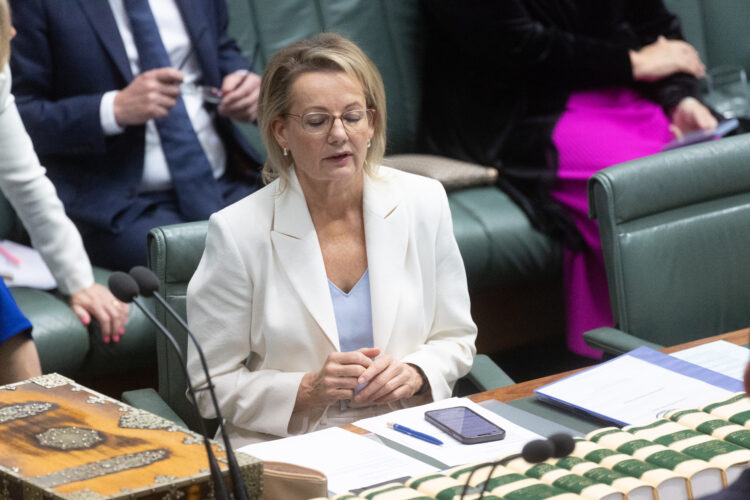
Liberal senator Maria Kovacic (who can not be enjoying the party at the moment) was asked what the Liberals wanted the environment laws to do on Sky News – it’s the usual, even less regulation and more benefits for industry:
We have those concerns that are outlined, as an example we have concerns in relation to the proposed EPA and what its powers and accountability look like. This is a new authority, so there is, you know, nothing to sort of suggest what it’s actually going to do. And I think it’s not unreasonable for us to want to have an understanding of that. In particular, given that it appears that there is no Ministerial oversight and there probably should be. You know, there are issues with definitions of particular terms like net gains and unacceptable impacts. Again, not an issue with those as they stand. But what do they actually mean? This is a 1,500-page piece of legislation. There is a lot of detail in this and it’s right for us to ask questions about it. And in what is pretty much a trademark of this government, they are looking to ram that through in the final sitting week of the year.
National party membership almost halved over the last decade
Skye Predavec
On 1 November, National Party members met in Canberra for their national conference, toppling the first in a series of dominoes when they decided to abandon their commitment to achieving net zero emissions.
The National Party caucus dropped net zero the following day, placing pressure on their senior coalition partner to follow. Finally, the Liberals formally abandoned their own commitment to net zero less than two weeks later, completing the Coalition’s abdication of climate responsibilities.
All of this prompts the question: who are the National Party members with such an outsized influence on Australia’s climate policy?
The answer: a very small slice of Australia. Less than one in every 2,000 voters in NSW is a financial member of the National Party, and their membership has close to halved over the past decade (from 4,500 to 2,500).
NSW is the only state or territory that requires parties to declare how many members they have, though only those with paid memberships (meaning that there may be some Nationals with free memberships not included in these figures).
Members of the National Party are not only few in number, but also unrepresentative. A “former high-profile member” of the Nationals told the Sydney Morning Herald in 2020 that they had “the oldest demographic of the main parties”. In that member’s electorate, “just four out of 80 members were born after 1950, with the most common decades of birth being the 1920s and 30s.”
The NSW branch of the Nationals is one of the largest and most prominent, having supplied nine of the party’s eleven leaders over the past 50 years. Trends in the NSW National Party are likely mirrored in other states, which would mean the party’s membership is dwindling nationally.
But it was those few Australians, just one in 2,000, who ultimately decided the Coalition’s policy on climate last week.
The NSW Nationals’ decline is the starkest, but it is not the only party in the state with slumping membership.
Government investment in social housing stabilises rents for the first time in four years
Oh what do you know – the government investing in social housing works to lower housing prices?! Well smack me down and call me avocado – who knew that the thing everyone says would work, is actually working?! There is a long way to go and much, much more needed, but this is a start:
Via AAP:
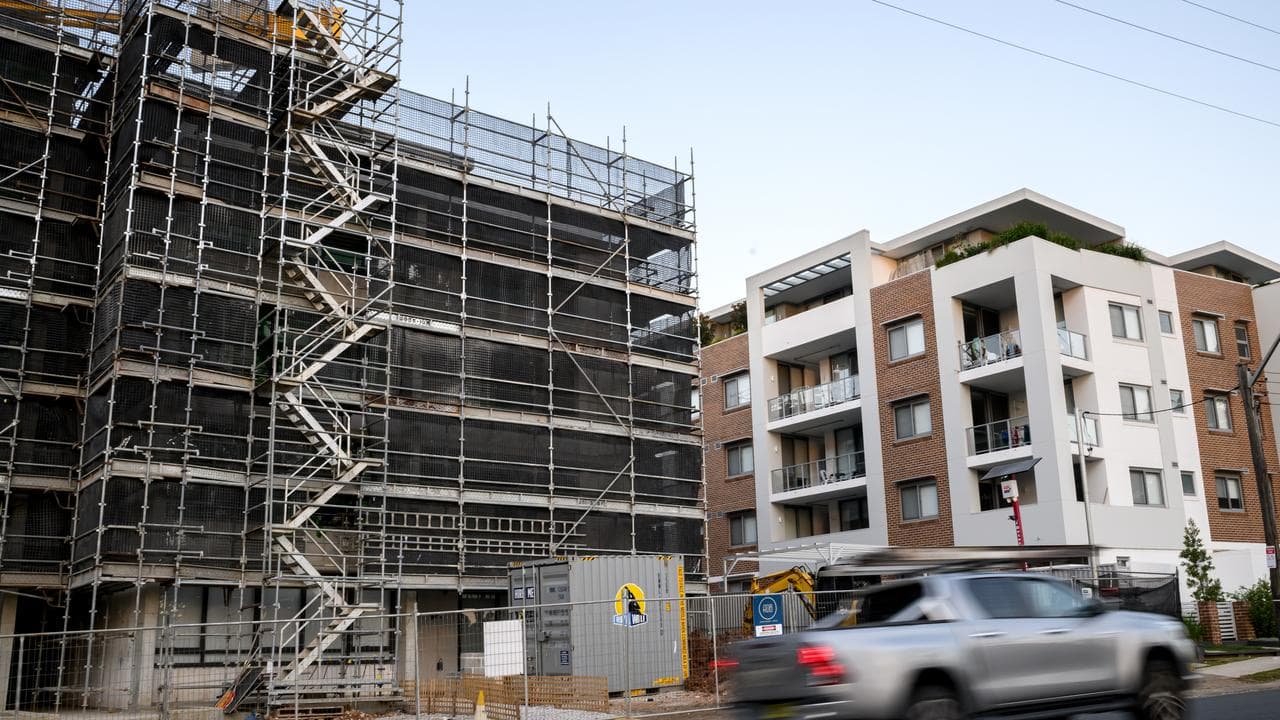
Renters are set to benefit from the federal government’s efforts to fund social housing after years of worsening affordability.
Pressures on low-income earners remain acute but rental affordability has stabilised, according to a report published by consultancy firm SGS Economics and Planning and affordable housing peak body National Shelter on Monday.
The rental affordability index, which compares rent prices with incomes, was steady in the past year after rapid declines to record-low levels since 2021.
While rentals remained unaffordable in many parts of Australia, including Sydney and Perth where the average household was spending at least 30 per cent of its income on rent, green shoots were emerging, National Shelter chair John Engeler said.
The Housing Australia Future Fund is helping to boost affordable social and affordable housing. (Bianca De Marchi/AAP PHOTOS)
For the first time in years, social and affordable housing stock appears to be increasing.
“The federal government has made vital steps towards turning this situation around, including delivering the Housing Australia Future Fund and committing to a Better Deal for Renters at national cabinet,” Mr Engeler said.
“We’re already seeing the delivery of hundreds of homes under the HAFF, with thousands in the pipeline which will take pressure off the private rental market.
“We must now build on this momentum, including by expanding the construction of build-to-rent housing, to further improve affordability for renters.”
Federal government initiatives, such as the Housing Australia Future Fund and Social Housing Accelerator, deliver 11,000 homes a year.
But the independent national housing agency, Housing Australia, estimated in 2021 that to plug the shortfall, 44,500 social and affordable homes would need to be delivered annually over a 20-year period.
The report makes the case that not only is building more social and affordable homes better for struggling renters, it’s also better for the economy.
As the federal government attempts to lift productivity growth from 60-year lows, that task was being hampered by unaffordable rents because it made it harder for employers to attract workers.
“From cafes and hotels to hospitals and childcare centres, businesses across Australia are struggling to find staff because there’s nowhere affordable for them to live nearby,” said Housing All Australians executive director Robert Pradolin.
Unaffordable rents hurt the economy by making it harder for employers to attract workers. (Flavio Brancaleone/AAP PHOTOS)
“Housing that people can afford is absolutely critical economic infrastructure and without it our national prosperity and productivity are being held back.”
The report recommends innovative ways to partner with the private sector to deliver new affordable housing, given the limited funds available to the government.
Housing Minister Clare O’Neil pointed to Swift Walk in Kensington, Victoria as an example of a project being delivered with HAFF and private sector financing, that would result in 272 social and affordable homes.
“Our government is building homes – for key workers, for families, for Australians who need extra help and support,” she said.
Barnaby Joyce blames climate change for BoM website
I am not joking.
There is a back and forth with Tanya Plibersek who is sacrificed as tribute to ‘debate’ Joyce on the Seven Network every Monday. Plibersek isn’t in a studio which puts her at a disadvantage – she is just hearing Joyce’s rants on delay.
“…And saying oh well, it’s climate change, well everything seems to be climate change these days. I lose at the races, it’s climate change. I have a argument with my wife, it’s climate change. Everything is climate change. CLIMATE CHANGE!”
Plibersek says the project was approved in 2019 under the previous CEO and Joyce says sarcastically “oh I know, it’s our fault”.
Barnaby Joyce, who is apparently still waiting for an official dinner invitation from Pauline Hanson to ‘discuss his future’ and will miss the Nationals party room meeting (he and David Littleproud can’t stand each other and despite dragging the Coalition into ditching net zero, still isn’t happy) also has issues with the $96m price tag for the BoM website.
The project was first approved in 2019 but the final price didn’t come to light until last week.
Joyce says farmers (and tbf most people) just want the old site back.
It infuriated so many farmers and the people who worked [with it] because we really liked the old site. It was one of the most visited sites, or the most visited site, I think, on site yet now we’ve got this fiasco, and we find out it’s cost us $96 million to stuff something up completely,
Women in transport want sanitary standards overhaul
AAP
Women in the transport industry are being forced to carry used period products in their pockets and jeopardise their health and dignity due to inadequate access to clean and safe bathrooms.
A union report released on Monday found that 82 per cent of transport workers believe limited access to sanitary toilet facilities undermines their dignity and respect as workers.
It also revealed women are turning to dangerous coping strategies at work, deliberately dehydrating themselves, delaying bathroom breaks, or using inappropriate locations.
The Rail, Tram and Bus Union national vice president Leanne Holmes said the report exposed appalling standards experienced by workers across the country.
“Women across the transport industry are being denied the most basic workplace rights: safe, clean toilets and the ability to use them when they need to,” Ms Holmes said.
“Not only is it unacceptable, it’s dangerous.”
The report includes first-hand accounts from women forced to justify toilet breaks over public radio, as well as workers who bled through their clothes or wet themselves at work due to lack of toilet access.
Workers also reported carrying their used period products in their pockets during their shifts, with some taking contraception to skip their periods during to a lack of facilities.
At least 73 per cent of women have experienced health problems, including urinary tract infections, dehydration, or stress, due to filthy bathroom facilities.
“We’ve had members hospitalised with kidney infections and recurring UTIs simply because they can’t access a clean toilet,” Ms Holmes said.
“This is more than just a workplace issue, it’s a national health and safety crisis.”
Union members are now calling for a complete overhaul of standards to guarantee women’s dignity and health in the transport sector.
This includes guaranteed access to dedicated women’s toilet facilities and proper sanitary disposal units serviced regularly by contractors.
Albanese Government set to use social media ban as cover to water down gambling reforms yet again
Jack Thrower
Senior Economist
According to the Financial Review, the Albanese Government is considering using their planned ban on social media for under-16s as an excuse to drop already watered-down reforms to online gambling advertising.
This is fundamentally misguided. While people under 16 years old might not see social media ads for gambling – assuming the social media ban works at all – they will still see ads on other platforms, such as television.
This will also totally miss the key demographic of adult teenagers, as shown by Australia Institute research. Gambling rates skyrocket when children reach young adulthood: almost half of 18 to 19-year-old Australians gamble (46%). To make matters worse, gambling participation tends to remain stable or increase from ages 19 to 24, indicating that young adults establish persistent gambling behaviours rather than just exploring curiosity about gambling.
But it is pretty much a done deal. The new CEO’s job is not to do it again.
Murray Watt:
Well, I think one thing I would say, is that the initial figure that the in the range of $4 million was for one aspect of the website development. It’s a matter for them why they chose to provide that figure rather than a broader figure. But there’s no doubt that there have been increases in the cost of this website as it’s been developed. One of the things that I’ve asked the new CEO of the BoM to get on top of is – what happened here? And if there are lessons around future procurements that are needed, then we need to know what they are. As I say, I don’t think anyone could be in any doubt about my view of this, having had that meeting as soon as the issues broke, and I’ve got a lot of confidence in the new CEO of the BoM to get on top of this and drive some change.
For reasons lost to anyone sense, the recent BOM website overhaul cost $96m and has managed to do something almost impossible – unite Australia in agreement. It sucks.
Murray Watt is asked about the price tag and says:
I’m not happy about this. You will recall that, when the issues first surfaced with the changes to the BoM website recently, I called in the acting CEO of the BoM for an explanation and clear that it wasn’t meeting the public’s expectations. And we’ve now learned that the cost increase has been higher than what was originally known. We have had a new CEO of the BoM start only a fortnight ago. I met with him on his very first day to outline my concerns and my request for him to get on top of this. I’ve met with him again – twice in his first two weeks. I was actually really heartened by the interview he provided with one of the media outlets on the weekend, where he acknowledged that there does need to be more transparency from the BoM. So I’m looking forward to a bit of a change in the culture and the approach of the BoM. And I want to make very clear that it’s an institution and has staff that I very much support. They perform a really important role Australian public. high-quality BoM delivering can manage its budgets properly. I’m expecting the new CEO to be able to take charge of that.
Who is Murray Watt closer to doing a deal with on the mining friendly enviro laws?
He tells ABC News Breakfast that it is hard to say (it’s the Coalition) and adds:
There’s no doubt we’ve been able to get closer with both the Coalition and the Greens. I met with their representatives again over the weekend. We’ve continued talking. That will continue today as well. It won’t surprise you to hear that the kind of requests that are coming from the Coalition and the Greens are quite different. The Coalition want more changes support business. The Greens want more changes made to support the environment. You will remember what I’ve always said through this process is that we need to have a balanced package that delivers wins for both the environment and for business. It’s not one or the other. We need to get both. We believe that the package that we introduced and have now passed through the House Representatives does provide that balanced package so, in the end, I suspect that we’ll end up going with whichever of those two parties is more prepared to come closer to the package that we’ve already passed through the House of Representatives.