Tue 15 Apr

Australia Institute Live: Day 18 of the 2025 election campaign. As it happened.

Amy Remeikis – Chief Political Analyst

This blog is now closed.

Start the conversation

Australia Institute Live: Day 18 of the 2025 election campaign. As it happened.

Key Posts

The Day's News

See you tomorrow?

Well. That was A day.

Now that I have my day’s straight again, I can tell you that tomorrow is WEDNESDAY and that is the second leaders’ debate (I would have sworn on my favourite Dolly t-shirt that today was Wednesday if you asked me at 5am this morning) and then everyone starts to live their lives away from the campaign.

Of course you’ll still be seeing bits on social media, but it’s not going to be the insanity we have seen for the past two and a half weeks.

So thank you to everyone who joined us today – we hope to see you back here for more fact checks, explainers and a bit of snark, along with the election campaign news. You are a wonderful audience and we are very grateful to you.

Until then – take care of you. Ax

Spare us.

Peter Dutton then continues to say that the government needs to say whether they knew about it ahead of it becoming public (Richard Marles said that they did), without challenge.

Dutton:

There’s public reports in relation to the claim that’s been made. There’s been a lot of activity between Russia and China and Indonesia, et cetera. That’s a matter of public record. So, I think the government, if they claim they’ve got a good relationship with Indonesia and countries in the region, that should be two way and there should be an engagement.

The Prime Minister should be standing town say this issue has been raised with us, we appreciate the Indonesians raising it with us, we expressed our concerns.

But it hasn’t happened. I think the Prime Minister and the foreign minister, if they’re being honest, would say this came as a surprise to them, which by their own standard, would be a catastrophic failure. Similar to what they accused the previous foreign minister of. And the double standard that operates here is I think on display for all to see.

There was a meeting in February between Indonesia and Russia about increasing their defence and security relationship. The relationship between Indonesia and Russia is not new. There were Russian planes and ships at Indonesian bases in 2017. Richard Marles has said the government was aware of the request before it was public.

It is plainly obvious this is a distraction grenade, but is it too much to ask that politicians going off about ‘catastrophic failures’ actually be challenged with some facts?

Peter Dutton appears to make up Indonesian comment and confirmation of Russian request story

Q: But it hasn’t been made public by the Indonesian government yet.

Penny Wong:

Let’s hear from Penny Wong as to what she knew and when. Penny Wong is someone who has criticised others and her predecessors. If the negotiations are taking place, then surely Australia would have been consulted. If that’s not the case, there’s a catastrophic failure according to Penny Wong’s standards.

Q: Have I missed that, has the Indonesian president announced this? That’s not my understanding.

Dutton:

There’s commentary I have seen reported from the Indonesian spokesperson. That’s obviously come from the administration. There are reports of negotiations or discussions that have taken place between Russia and Indonesia. And, if the government has the functioning relationship they claim they have, then they should have engaged surely with Indonesia, or if Indonesia had that view, then they would have expressed, you know, some words of comfort to the Australian public or to the Australian minister. It just hasn’t happened. Let’s have a look at Penny Wong’s track record.

Q: I cannot wait to get her on the show and ask her, and you know I will. Where have you seen the Indonesian president confirm this? Aren’t you verballing him? He hasn’t talked publicly about it.

Dutton:

There’s comment that’s come out of the administration, out of the Prabowo administration. The Prime Minister knew nothing about it, neither did Penny Wong. But Penny Wong has set a standard here she hasn’t met herself. I hope she’s able to explain exactly what’s taken place.

Q: If it’s confirmed, we’re in the infancy of what this may be, if it is, what do you expect the Australian government to do in return? How should we respond?

Dutton:

Well, we should make it very clear we don’t think it’s in our security interests to have Russian assets based not too far from our border. We don’t think it’s in the interests of stability within the region to have those assets based in Indonesia.

Q: Now, Indonesia is a sovereign nation, they make decisions for themselves. But, should they be giving us a heads-up? If you say they’re a sovereign nation, what is their responsibility to us?

Dutton:

Well, there would be engagement if that was the case. If it was being considered. If they had a relationship with the Albanese government. Again, Penny Wong made great claims about how well connected she’s in South-East Asia.

The government has said there was engagement before this story was public. I have not seen any comment from the Indonesian administration about this.

Q: So, just to be clear – what are you criticising? The Prime Minister is seeking information about what is going on. We still don’t know the full details. Shouldn’t we wait before we criticise?

Dutton:

If it there was a functioning relationship with Indonesia, as there must be, because Indonesia is an important ally and friend, there we’ve been contact at a departmental or ministerial level.

Penny Wong has set the standard very high in terms of what the engagement needs to be. And the expectation that she’s put upon others is that if there’s a decision that is taken without engagement, without some, some foreshadowing with the Australian government, that’s a catastrophic failure. I think by her own standards Penny Wong has failed here.

Of course we don’t want Russian planes or other military assets in our region, based here, it’s not in our country’s best interests.

It’s not in the best interests of South-East Asia and Russia has demonstrated its capacities, and president Putin’s standards in relation to the conflict with Ukraine. Not someone we would welcome being permanently based here in our region.

Q: You said the Indonesian president announced this. When did he announce it?

Dutton:

Well, the Indonesian government, there’s detail they need to provide to the Australian government, surely the relationship is so good under Penny Wong that the relationship would have demanded that we be given notice before this was made public.

Indonesia has not announced this. There was a US media report this request had been made.

Richard Marles has said:

We have a very close relationship with Indonesia. We have a growing defence relationship with Indonesia. We have already been engaged with Indonesia on this request.

I’d note at this point, Indonesia has not responded to this request [from Russia]. We will keep engaging with Indonesia in a way which befits a very close friend and a very close friendship between our two countries.

We have been very focused on developing our bilateral relationship with Indonesia, including our bilateral defence relationship with Indonesia. Last year, we signed a defence cooperation agreement with Indonesia which really is the deepest-level defence agreement we’ve ever had with Indonesia. And we are seeing increasing cooperation between Australia and Indonesia at a defence level. And I expect all of that to continue.

In respect of this particular issue, we are already engaging with Indonesia at a senior level, and will continue to do so about the request.

Peter Dutton is now speaking to Afternoon Briefing.

Q: Peter Dutton, the Prime Minister has voiced concern about reports that Russia requested access to Indonesian air force base. He has said we obviously do not want to see Russian influence in our region. Very clearly. Do you agree with the Prime Minister?

Dutton:

Well, of course, but I think the question here is whether or not the government had any forewarning. This would be a catastrophic error in the government’s systems if DFAT, under Penny Wong, didn’t know anything about it. If the Prime Minister hadn’t spoken with the president, obviously the government was very critical of the former government in relation to engagements in South-East Asia. So, by the government’s own test, by the government’s own standard, if the government knew nothing about this, then I would be very surprised and I presume the Prime Minister will answer those questions.

Richard Marles has said there was prior warning – he said that there had been previous discussions on this.

Penny Wong was asked about the Russian request to Indonesia to park some planes and said:

I might just take the hypothetical out, but I would say to you, we know Russia is a disruptive power, and we know that President Putin seeks to play that role, which is why some of the comments we’ve seen over the years from the Coalition, including from one of their senators belittling President Zelenskyy, are so contrary to Australia’s national interests.

Scott Morrison’s former advisor, turned gas industry shill Andrew Carswell is speaking to Afternoon Briefing about he doesn’t believe that voters, or ‘soft voters’ align Peter Dutton with wealth.

I don’t think voters are fully aware of Peter Dutton’s wealth, and frankly, Anthony Albanese’s wealth as well. I don’t think it cuts through. I’m sure it does in media land and those that are engaged in politics day to day. Soft voters wouldn’t align Peter Dutton with someone who is significantly wealthy.

So it might come as a surprise for Carswell to learn that this has come up in focus groups – people do understand it, even if they don’t have the numbers.

Scott Morrison is advising on this campaign, which might be why you are also seeing a lot more of Dutton’s family – Morrison was a true believer in bringing family in to his work to present himself a certain way – and suddenly, you are seeing Dutton the Dad everywhere. That’s entirely by design.

And May’s final point is on supply. And how it is not being targeted properly:

The problem we have in Australia is that we’re not building things that people can afford to buy. We’ve actually built a million new homes over the past ten years. And the problem with that, we’ve never actually had more homes per person than we have now. It’s not making housing more affordable because we don’t have the government in there building things and working with the private sector to build things that are actually affordable.

When you look around the world, at the countries that are doing this well, the countries that have either avoided their housing crisis altogether or managed to turn it around, they are countries where the government is actually not just leaving it to the private sector.

They are providing quite a bit of housing themselves. So we need to see proposals that go beyond just subsidising people to, to buy homes.

Just providing some incentives for the private sector to build and actually building things that are affordable, mandating them to be affordable, making sure there are things that people can afford to rent and to buy.

May Azize continued:

Our campaign calls for limits to rent increases, not freezes per se. You know, we’ve got this working. We don’t need to look to overseas. We’ve got this working in Australia here in the ACT, in the ACT, there are limits on how much further than CPI landlords can increase the rent by. And we think that’s a pretty good model.

It’s actually pretty modest by international standards. In most other countries it’s really not possible for landlords to raise rents further than about 2% of CPI in Australia in just about every other part of the country outside of the ACT, landlords can hand down an unlimited rent increase.

So, you know, it’s really not surprising that we’re seeing annual rent increases every single year in the order of 5 to 10%. Young people are much more likely to be renters.

There’s a generation of people who are locked out of home ownership, and these proposals are not going to do anything for them. So I’d be really surprised and disappointed if we didn’t see something for the hundreds of thousands of people who rent.

But most importantly, the 640,000 people who are in really, really extreme rental stress with absolutely nothing that they can afford to rent, hanging on to unaffordable rentals with, with, you know, bloody fingernails.

So we need to see proposals that go beyond just providing some incentives to the private market. We’ve seen from the Labor announcement over the weekend, a proposal to build 100,000 or to give some zero interest loans to states and territories to incentivise them to work with private sector, to bring new homes online.

That’s all very indirect.

The very smart and incredible May Azize, the spokesperson for Everybody’s Home, has spoken to the ABC about the lack of policy, and thought, for renters in this campaign:

More and more Australians are going to be renting for life, and 640,000 renters across the country are in really, really extreme rental stress.

There’s just nothing put on the table for them at this election, which is really disappointing to see. So what we’re seeing from major parties is proposals that might seem, on the surface, like they’re going to put a bit of extra money in the pockets of people when they go out and compete for housing.

But the problem is, when you put a couple of extra thousand dollars, a couple of extra tens of thousands of dollars in people’s pockets when they go out to auction and bid for homes, is that everybody else has that money as well.

And what it does is push up the cost of housing. It’s not really helping anybody get ahead. So it’s not just not helping renters. It’s not helping people get into home ownership necessarily either. It’s just pushing up the cost of housing for everybody.

In Crikey for PM, journalists get a direct taste of Australia’s electoral system

Bill Browne
Director, Democracy & Accountability Program.

In Australia, we’re a little too comfortable with media companies playing politics behind the scenes – but not putting forward their own candidates for election!

So it was a surprise to see independent online news site Crikey announce the “Crikey for PM” campaign, complete with registered candidate: K Black, who is running to become one of Victoria’s 12 senators.

Does this mean Crikey is manoeuvring to get a Manchurian candidate into Parliament – or even the Lodge?

No, they’re not. K Black is Crikey’s editor-in-chief’s mother, and she’s not running to get elected – but rather to give Crikey journalists (and readers) an inside look at how Australian elections work.

Already, they are experiencing how the deck is stacked against new entrants.

K Black needed 100 signatures from Victorians in order to run. That requirement is waived for political parties and sitting MPs.

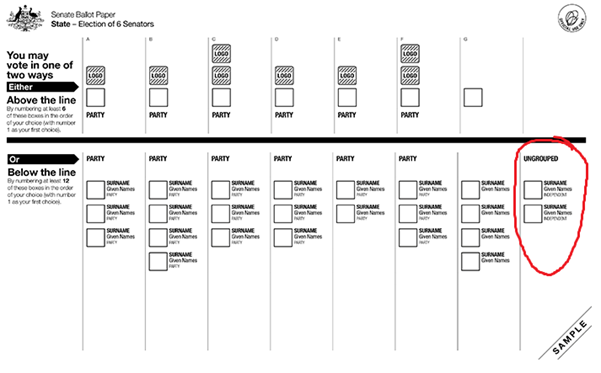
Those 100 signatures just give K Black a spot on the ballot – in the “ungrouped” section alongside other independents she has no affiliation with. Victorians can only vote for her if they vote below the line, and specifically seek her out. Political parties appear above the line, with their logos.

It is this limitation that forced independent David Pocock to register a political party, “David Pocock”, to feasibly run for election in the ACT Senate. But that requires 1,500 members – easy enough for a nation-wide party, but difficult for many more local groups and campaigns.

K Black will be buried in the “Ungrouped” section below the line.

Crikey also had to stump up a $2,000 deposit – which they won’t get back unless K Black wins 4% or more of the Victorian vote. While a deposit makes sense to deter unserious candidates, the 4% threshold is “all or nothing”: at 4.01% of the vote, K Black would get her deposit back plus become eligible for hundreds of thousands of dollars in public funding. At 3.99% of the vote, nothing.

It will be interesting to see what Crikey and K Black make of the other roadblocks for new entrants – not least of which is that they are running against sitting MPs who have benefited from three years of taxpayer funded travel, communications budgets and staffing. The Australia Institute puts the advantages of incumbency at $3 million, not including tens of millions of dollars in public funding for the major parties, which rather puts the $2,000 deposit into perspective.

Finally, don’t expect to see too much unsolicited promotional material for K Black. As Crikey notes, political parties are exempt from key provisions of the Spam Act and the Privacy Act – a luxury not generally extended to independent candidates (with some exceptions, like sitting MPs).

I’m looking forward to following Crikey’s hands-on experience of the electoral system, and you can too.  

Everything old is new again, including Russian planes on Indonesian military bases (even if the planes are ancient)

Just a reminder that it always pays to look back on history when the red-alert war alarm starts flashing – Russian ‘military’ planes have previously landed on Indonesian military bases – including as recently as 2017.

Two Turpolev Tu-95 planes (62-year-old young!) landed on Biak

That would be when the Coalition was in government. At that time, “Russian Navy ships from the Pacific Fleet have made port visits to Indonesia in both 2016 and 2017, while also taking part in international maritime reviews in Singapore and Thailand earlier this year.”

This is what they call in the biz, a distraction grenade. It’s a geo-political issue (Russia is very clearly attempting to cause some mischief in our domestic election) rather than a geo-strategic one (Indonesia does not want to make any sort of statement in this right now, given – everything.

So, short version – calm farms, people. It’s going to be OK.

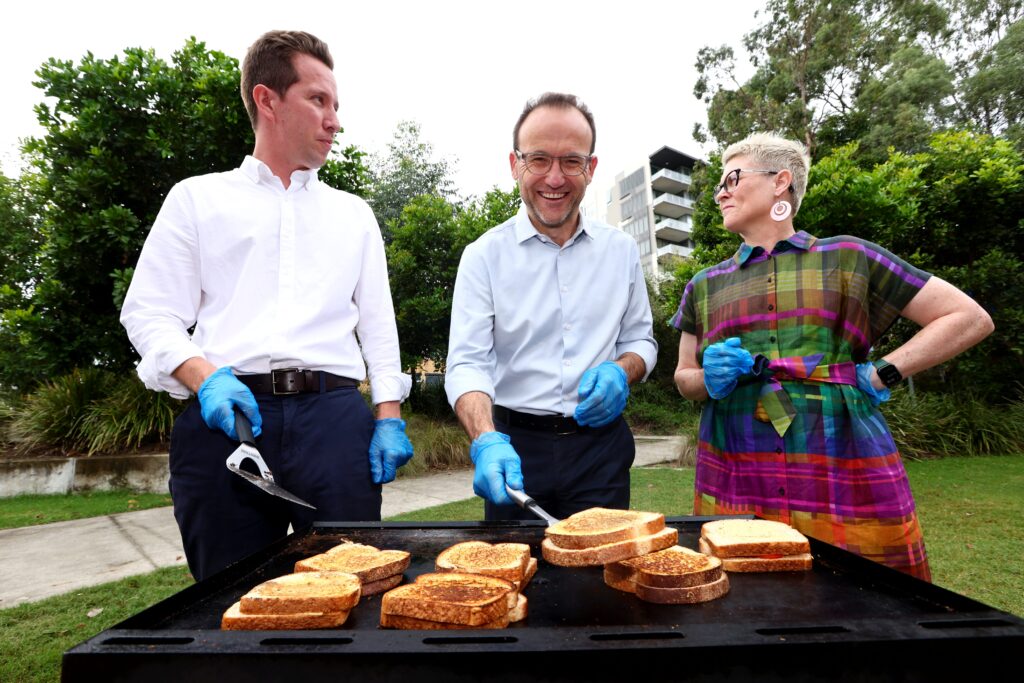
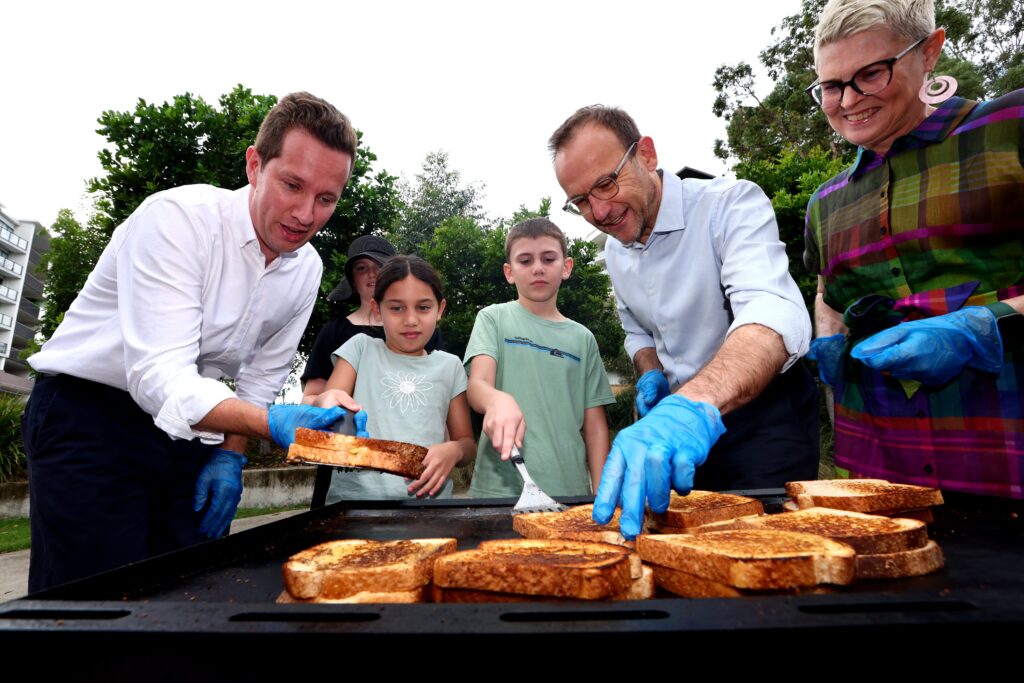
The Greens have launched their policy for free school meals – paid for by taxing corporations, which is another way of saying eat the rich, if you really think about it:

Greens member for Griffith Max Chandler-Mather (L) , Leader of the Australian Greens Adam Bandt (C) and Senator Penny Allman-Payne during a policy announcement on Free Breakfasts for Primary Students (AAP)
Greens member for Griffith Max Chandler-Mather (L), Leader of the Australian Greens Adam Bandt (C) and Senator Penny Allman-Payne with kids Amelija Treloar and Yuri Yiakoumi (AAP)

Indonesian incident shakes up the campaign, but the relationship has been on a big journey in recent decades

Joshua Black
Postdoctoral Research Fellow

Foreign policy was the dominant issue at the leaders’ press conferences this afternoon. Reports that Russia wants to position aircraft at an Indonesian base in Papua have sent a shockwave through an otherwise dreary day of campaigning.

The Defence Minister is at pains to assure voters that Australia enjoys “a very close relationship with Indonesia”. In carefully coded language, Richard Marles said that Australia had “already been engaged with Indonesia on this request”, and the PM said Australia was “seeking further clarification”.

Within seconds, the issue had taken on a partisan hue. The opposition leader says that if the government did not have forewarning it would amount to “a catastrophic failure” from Albanese and foreign minister Penny Wong. Albanese says the relationship is “never better than it is right now”.

The truth is that Australians do not think often enough, or clearly enough, about Indonesia anymore. But we used to, only a few decades ago.

In the 1990s, Indonesia was absolutely central to Australian foreign policy. The Keating Government worked through 1994 to achieve a security agreement with Indonesia, which was ultimately signed the following year.

The relationship was more complicated in the Howard era, thanks to a series of crises including the Asian Financial Crisis (which threw Indonesia into a deep recession) and the conflict over Timor-Leste’s independence.

Things grew harder in the 2000s and 2010s. Indonesia became a variable in Australia’s difficult asylum seeker policy debate. Indonesia also affronted many Australians with the execution of Australian detainees Andrew Chan and Myuran Sukumaran.

Since then, Indonesia has not loomed quite so large in Australia’s public conversation. That’s clearly to our detriment.

There’s no substitute for clear-eyes strategy in this region, as Russia has sharply reminded us.

So let’s take a look at what is being said, amongst what isn’t being said.

Here is Richard Marles, the defence minister had to say about it all:

We have a very close relationship with Indonesia. We have a growing defence relationship with Indonesia. We have already been engaged with Indonesia on this request.

I’d note at this point, Indonesia has not responded to this request [from Russia]. We will keep engaging with Indonesia in a way which befits a very close friend and a very close friendship between our two countries.

We have been very focused on developing our bilateral relationship with Indonesia, including our bilateral defence relationship with Indonesia. Last year, we signed a defence cooperation agreement with Indonesia which really is the deepest-level defence agreement we’ve ever had with Indonesia. And we are seeing increasing cooperation between Australia and Indonesia at a defence level. And I expect all of that to continue.

In respect of this particular issue, we are already engaging with Indonesia at a senior level, and will continue to do so about the request.

Now I am obviously not a diplomat, or an expert on foreign affairs. But I do know diplomacy speak.

This says, ‘we have been talking to Indonesia about this, and Indonesia haven’t responded to Russia, and someone (probably Russia) has not made this public to cause trouble, but no one has agreed to anything and we are apart of the conversations saying ‘do not do this we think this is very bad’ and we think Indonesia agrees with that assessment.’

Also in that very quick press conference:

Q: Prime Minister, we’re here in the middle of a construction site. Peter Dutton said today he’d help his children with a deposit.

Albanese:

I don’t talk about families and I don’t go into my own personal details.

Q: You’ve had a few foreign affairs issues in this campaign. Will the government be sending Richard Marles…

Albanese:

We are in a campaign at the moment.

Q: You keep saying you’re seeking information about this incident from Indonesia. But it sounds like you haven’t heard back from Indonesia…

Albanese:

We are seeking further information from Indonesia. As you’re aware, I’ve been traveling from Hobart to here with you, or on a different plane, but at the same time.

Q: Prime Minister, what is the Australian government’s position on a station…

Albanese:

Obviously… We are seeking further information. We obviously do not want to see Russian influence in our region. Very clearly.

…We have a position, which is we stand with Ukraine, we regard Vladimir Putin as an authoritarian leader who has broken international law, who’s attacking the sovereignty of the nation of Ukraine.

Ok, so let’s go back to what Anthony Albanese has to say about that:

Our friends in Indonesia – the relationship has never been better than it is right now.

Did he know about the request before it was made public?

Albanese:

We are seeking further public information from Indonesia about it. I’ve answered the question. I can’t answer it any different way.

Q: Prime Minister, have we been too concerned about the influence of China in our region and not focused on Russia?

Albanese:

No – we have been right to have been engaged in our region, and we have an extremely positive relationship with our friends in Indonesia.

Q: With the relations with Indonesia never having been better, would a Russian airplane stationed in Indonesia harm that relationship?

Albanese:

What we’re seeking is proper clarification. That’s the way you deal with international relations. Making sure that you’re not flying from the hip – what we didn’t do when the United States made its decision on tariffs was question our defence relationship with the United States. It took John Howard to intervene, to point out to Peter Dutton that that wasn’t appropriate. We’ll respond in an appropriate way with our friends in Indonesia.

Peter Dutton also comments on the story that Russia has asked Indonesia to store some military aircraft on one of its island military bases, which obviously has alarm bells ringing with Australia.

Australia has “engaged” with Indonesia over the issue, Richard Marles said a little while ago.

Dutton says:

This would be a catastrophic failure of diplomatic relations if Penny Wong and didn’t have forewarning about this before it was made public. This is a very, very troubling development and suggestion that somehow Russia would have some of their assets based in Indonesia only a short distance from, obviously, the north of our country.

We need to make sure that the government explains exactly what has happened here. Did the Prime Minister know about this before it was publicly announced by the president of Indonesia? And what is the government’s response to it? The Prime Minister and the Foreign Affairs Minister should have the depth of relationship with Indonesia to have had forewarning of this. And if they haven’t, I think they need to explain to the Australian people what has gone wrong here.

Because this would be a very, very significant development and a negative one that’s obvious to all of us.

Peter Dutton is also in Melbourne – he is in the seat of McEwen, which Labor could lose to the Liberals.

He is also talking about small business and has a family who own a small business behind him as he says:

This is what the Liberal Party’s is about – making sure that we can give people choice and opportunity. Unfortunately, about 30,000 small businesses have closed under this government’s watch over the course of the last three years. And behind every one of those stories is a family. A family who’s lost their home. A family who’s lost their life savings, their dream, their job. And I want to make sure that we can run an economy and grow an economy that can give hope to future generations as businesses grow and as they pass down to generation after generation.

So I want to say thank you very much to our wonderful hosts here today.

Anthony Albanese second press conference

As promised in the forward sizzle, Albanese and Labor are in Melbourne, where they are taking housing.

Here is the main message:

Under Labor, there will be more homes and smaller deposits. Under Peter Dutton, there’ll be fewer homes and higher prices. I want to help first-home buyers into home ownership, and particularly young Australians into home ownership. But I’m also a big supporter of social housing. And one of the things we did was to have a $2 billion social housing accelerator. The coalition pretend that houses aren’t being built. You’re here. This was one home. It’s been converted into three 1-bedroom dwellings with energy efficiency that will be as cheap to run as is possible, using everything from renewable energy to water-saving devices to proper insulation, making sure that these places, as well, are adaptable housing so that people can age in place in housing that is so important and fit for purpose.

This is a really important initiative that we have – just part of our $43 billion Homes for Australia plan. It’s one I’m proud of. It’s one we’ll continue to roll out over coming years. We want more people into social housing.

We want more people into private rentals through our build-to-rent scheme. We want more people to be able to own their own home through Help to Buy and through the initiatives that we announced on Sunday. This will make an enormous difference. It’s already making an enormous difference.

Not just here in Victoria, but I’ve been in homes right throughout the country that have been built through the social housing accelerator. In many cases, homes that were left without people living in them, getting them renovated, getting homes fit for purpose – there’s similar programs like this. I’ve been to Riverwood in New South Wales, I’ve been to South Brisbane in Queensland, I’ve been to Adelaide as well, in homes just like this, making a difference to building up supply, which of course is the key.

And the key difference here between the policies announced on Sunday is that we have a plan for supply as well as a supply for demand. The coalition just have a demand-side issue, which will do nothing to address supply, which we know is a precondition for moving forward in the direction that Australians want, allowing more people to get a roof over their head because that gives them security in life.

One of the reasons Labor wanted to push the election out is it was hoping that along with inflation coming down, an interest rate cut occurring (with more on the horizon) and the heat coming off the anger at the government over the cost of living – it was also hoping that the reality of Trump’s populist policies would start to become clear and turn people off.

And that gamble appears to have paid off. Dutton has overestimated voters anger at the Albanese government – which is what they based the campaign around – and now that voters are proving not as angry as first thought – and more worried about the populist policies Dutton aligned himself with, the Coalition is at sea.

But that’s still bad for Australia. This isn’t a contest of ideas, or even for the vision of what you want Australia to be. It’s small targets and small safe policies, when we actually need bravery.

Peter Dutton still trying to avoid Trump comparisons – but it’s too late.

Peter Dutton is also backpedaling faster than me that time I almost ran over a red-belly black snake while cycling, when it comes to his previous attempts to link himself to Donald Trump.

As the SMH’s David Crowe has reported today, there are reasons for it. Polling reasons, but also just the vibe.

This is why the Temu Trump label has taken off and why it is causing Dutton damage – he tried to link himself with a populist leader but ended up carrying the stink of it instead.

Given that the campaigns are being quite quiet at the moment, it might be worth re-upping this from last night:

Tight as a fish’s ar$e

Peter Dutton has begrudgingly answered the question he wouldn’t touch with a barge pole yesterday.

Yes, the multi-millionaire property developer Opposition Leader will help his kids buy a house.

After wheeling son Harry out to explain how hard it is to save a house deposit, Daddy Dutts looked like an epic tight arse when he refused to say if he’d help him break into the housing market.

Today, he was backed into a corner when asked – for the umpteenth time – if he’d dip into his millions to help Harry and his siblings.

We’ll help them with a deposit at some stage.

The Prime Minister and I might be able to help our kids, but it’s not about us. It’s about how we can help millions of Australians across generations realise the dream of home ownership like we did, like our parents and grandparents did.

It’s a different proposition today for young Australians.

Get around this cracking poddy!

Golfing while Rome burns

However well the 47th president hit ‘em in Florida, he cannot find a green with his tariffs.

On this episode of After America, Daniel James, award-winning journalist, and host of the 7am podcast, joins Dr Emma Shortis to discuss the potential blowback against Trump’s tariffs at the midterms and whether the next federal government might introduce a little more transparency into Australia’s foreign and defence policy-making processes.

Dutton’s Canberra fuel snub

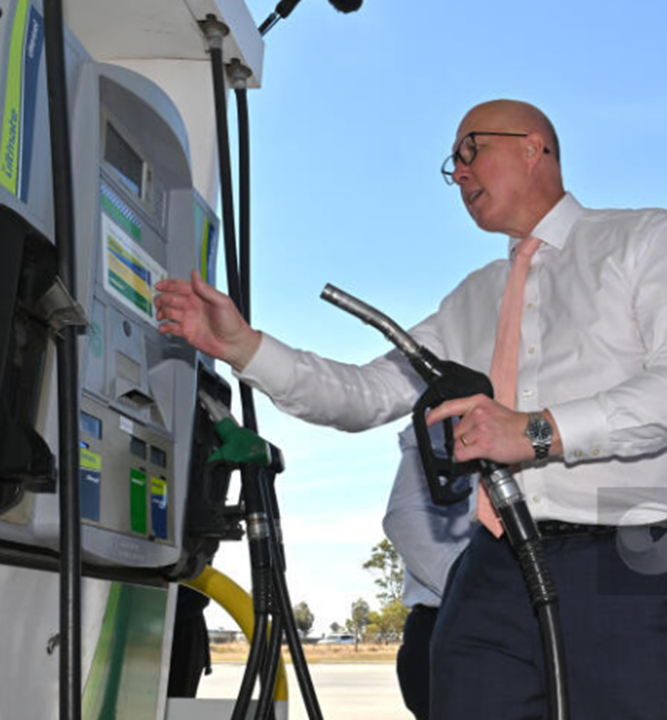
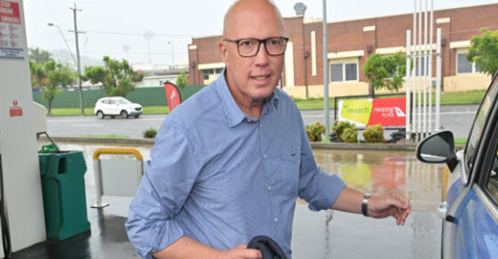
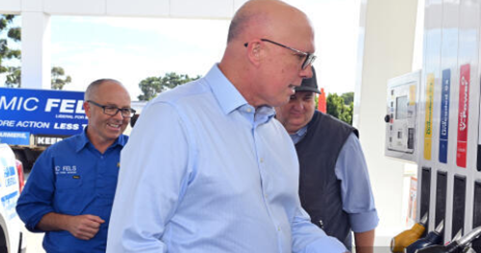
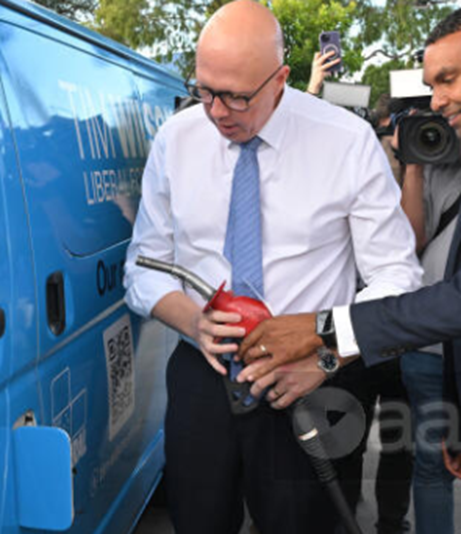
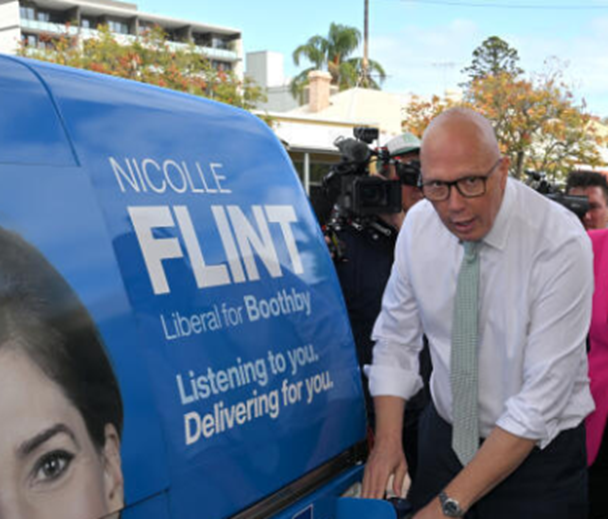
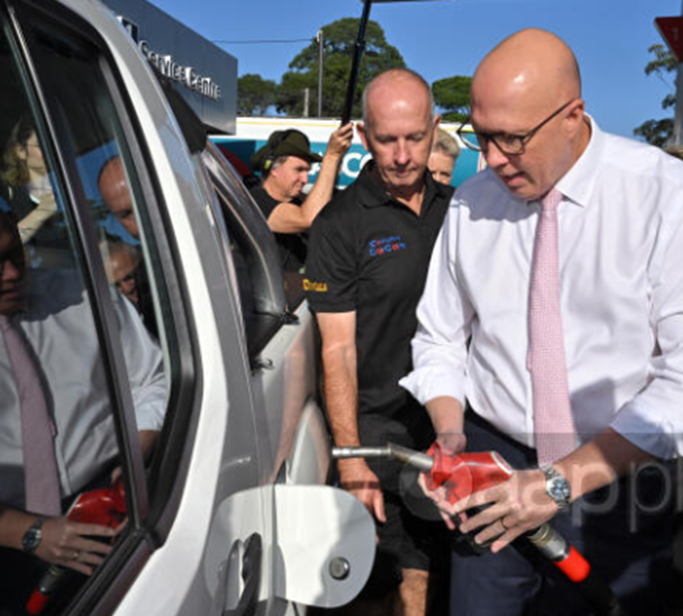
Peter Dutton has now bought fuel at ten petrol stations in every state and one territory.

Today’s visit to a BP in Rockbank, on the Western Highway between Melbourne and Ballarat, took him into double figures, making it 10 in 12 days.

The super snappers at AAP have captured every glorious, petrol pumping moment.

Today – Rockbank, Vic

Yesterday – Albion, Qld

Saturday – Redcliffe, WA

Thursday – Caulfield, Vic

Tuesday – Hoxton Park, NSW

Monday – Adelaide, SA

Sunday – Carrick, Tas

Saturday – Palmerston, NT

Friday – Carlingford, NSW

So, the only place the Opposition Leader hasn’t been photographed at the bowser, is the ACT.

If I was a servo owner in Fyshwick, I’d be very nervous about now.

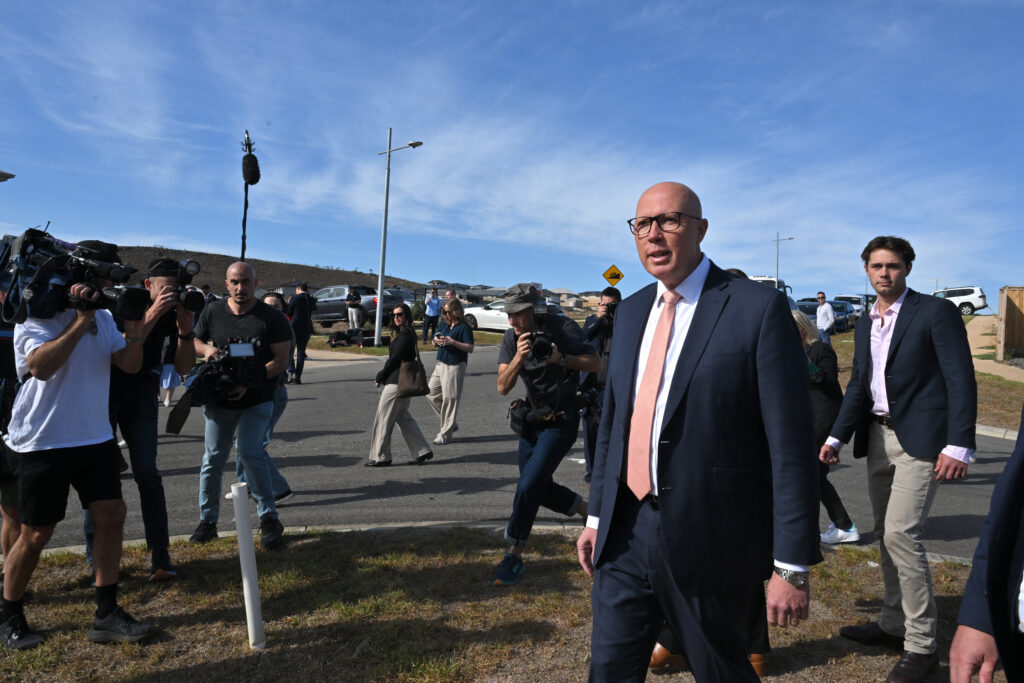
Peter Dutton was in Melbourne, where he was still campaigning with his son, Harry.

(He is now at a petrol station – his tenth of this campaign. The power of Phil Coorey, huh?!)

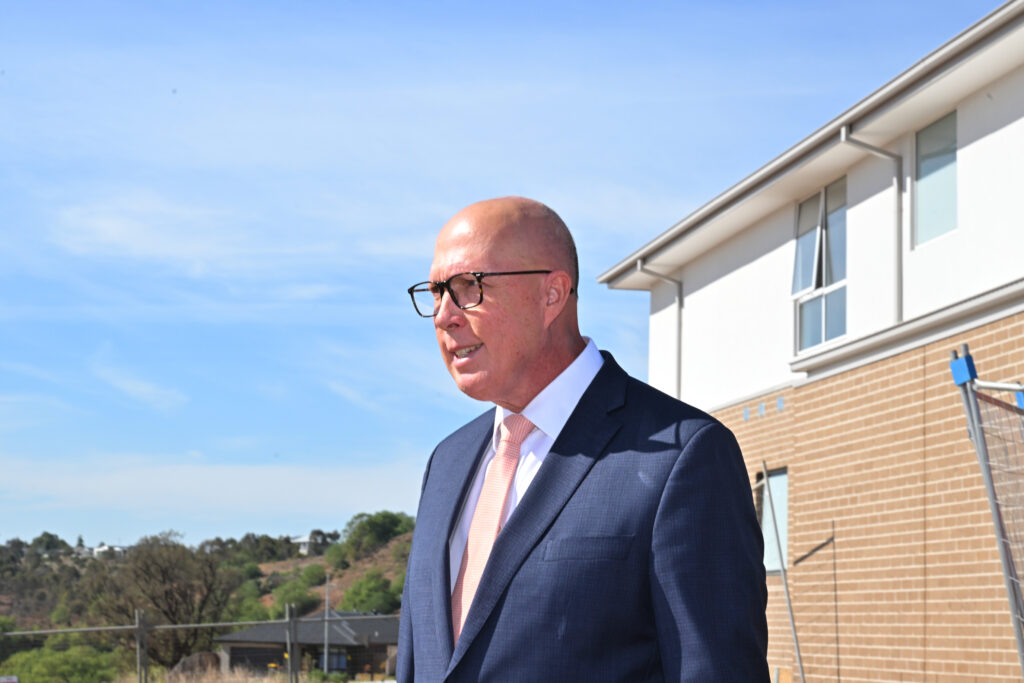
Leader of the Opposition Peter Dutton at a new housing estate in Bacchus Marsh (AAP)
Less laughs (AAP)

How have the campaigns looked today?

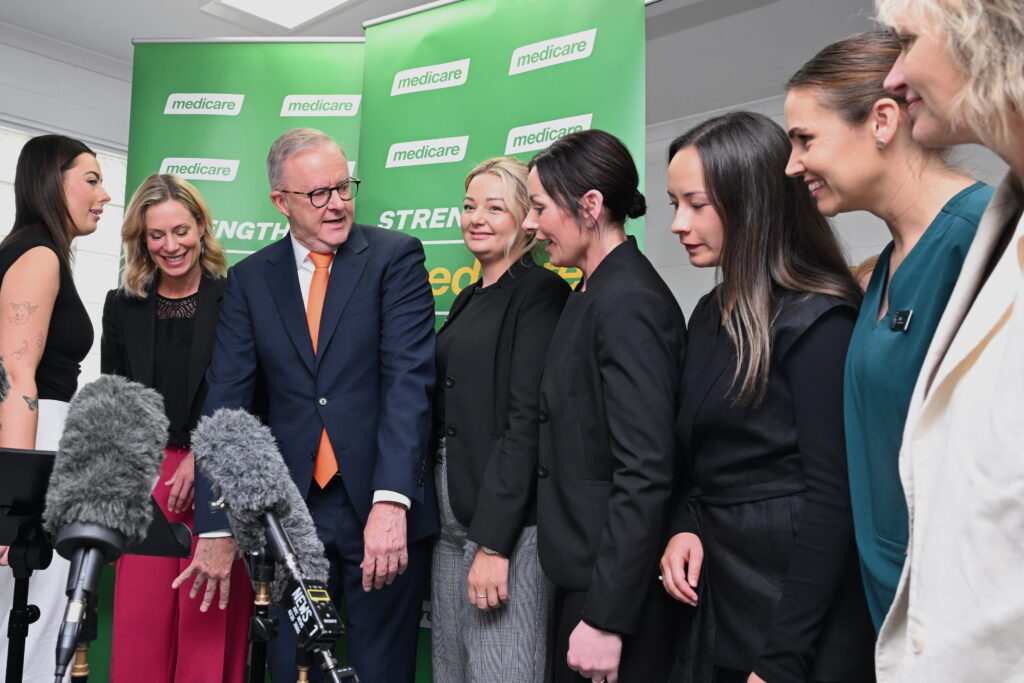
Let’s check in with AAP. Labor was in Tasmania (and about to head to Melbourne) and Anthony Albanese is obviously feeling good.

Australian Prime Minister Anthony Albanese poses for a photo with clinicians after speaking at a press conference during a visit to Bridgewater medicare urgent care clinic in the electorate of Lyons (AAP)
Laughs all round (AAP)

Peter Dutton’s tax breaks for first home buyers will only help people like his son – people who can already afford to get into the housing market and worsens inequality.

Going back over Dutton’s press conference, I just wanted to revisit this question and answer:

Q: You’ve got Harry out here today. Will you be helping the kids up with a home deposit, I know it’s been talked about in the last couple of days, hoping to get clarity.

Dutton:

Like every parent, I despair at the thought about kids not being able to get into housing because they want to replace and young families are putting off having kids was of older Australians parents and grandparents are staying in the workforce longer to provide for the kids with money.

I think your household is no different to many households where we want our kids to work hard, to save and will help them with a deposit at some stage but many families in a lot of families, most families across the country they have not got the luxury and the Prime Minister and I might be able to help our kids but it’s not about us, it’s about how we can help millions of Australians across generations realise the dream of home ownership like we did, like our parents and grandparents did so it’s a different proposition today for a young Australians who did not have to a generation ago pay five or $600,000 just for the house let alone for the land and I want to make sure Australians from any walk of life, any background, parents who are well off, parents who are not well off, they can achieve the dream of home ownership through the hard work and saving of deposit and that’s I think at the core of our policy.

We want to make sure they can get home ownership and this will help them with their application to the bank and also will help them with paying the monthly repayments because of the moment young families are going backwards under Anthony Albanese. People who are renting are playing close to 20% more for the rents under this government than they were middle age Australians, Australians, no Australian can afford three more years of this government.

What Dutton is neglecting to mention there is his own role in the housing market being what it is. Peter Dutton was involved in $30m of property transactions across 26 properties.

It is insane to think that someone would ever need to be involved in 26 property transactions across 30 years – unless they were taking advantage of the tax incentives for investors. He became wealthy because of it.

And now his policy is to help people make tax deductions on their homes for the first five years, which will just help people like his son – where the only people who will benefit are people who can afford a home. Like Harry Dutton.

So under his dad’s policy, for the first five years of his loan, Harry Dutton would receive taxpayer concessions for the loan his wealthy parents helped him receive. It doesn’t help people get a deposit. It doesn’t help bring down house prices (it will do the opposite). It doesn’t help with supply. It doesn’t help people on lower incomes save for a deposit.

It only helps people wealthy enough to get into the housing market already, get a tax break. It’s a tax break for the wealthy. That only worsens inequality.

Anthony Albanese said he’s pro-Vegemite. This sounds familiar…

Joshua Black
Postdoctoral Research Fellow

This morning, the Prime Minister proudly declared that he is “pro-Vegemite”. Not just pro-Vegemite, but also “anti-Marmite. That’s my position”. Vegemite is an Aussie icon, but it’s a local take on a British original. According to the National Museum of Australia, vegemite was slow to catch on but became a staple under wartime conditions in the 1940s.

Occasionally Vegemite has figured as a symbol in election campaigns. In 2007, for instance, Kevin Rudd proudly described himself as a “very simple Vegemite-on-toast man”. During the 2013 election, Rudd took a jar of vegemite to a school library and waved it in front of the cameras, warning that an Abbott Government would make vegemite more expensive. Even Rudd’s foreign minister, Bob Carr, thought it looked lame.

More recently, Scott Morrison and his British offsider Boris Johnson tried to make vegemite an icon of free trade. During negotiations with Australia, Johnson explained on social media: “I want a world in which we send you Marmite, you send us Vegemite”.

Politicians have joked that they are chasing the breakfast-eating vote with their vegemite references and stunts. It doesn’t disguise the fact that voters are not exactly happy little vegemites right now.

How is it that in Australia, one of the richest countries in the world, we feel poor? 

Australia Institute Executive Director Dr Richard Denniss was busting myths on the ABC’s Q&A program last night.

He dug into the election promises to explain how we can actually help people who are struggling in Australia.

He was on a panel which included Housing Minister Clare O’Neil and Shadow Housing Minister Michael Sukkar, but we have done the hard work so you can avoid the spin and get to the facts here:

Meanwhile, Peter Dutton visited a new housing estate in Bacchus Marsh, northwest of Melbourne, and was trying very hard to keep the focus on his housing policy during his press conference.

Leader of the Opposition Peter Dutton in the seat of Hawke. (AAP)

Where were our leaders today?

Anthony Albanese was in Tasmania today, in the electorate of Lyons, alongside candidate Rebecca White and Finance Minister Katy Gallagher.

Australian Prime Minister Anthony Albanese speaks to the media in the electorate of Lyons (AAP)

There was a second Treasurers debate last night. What, you didn’t know?

Matt Grudnoff
Senior Economist

Don’t worry you didn’t miss much.

On the upside it was markedly better than the previous Treasurer’s debate last week on Sky News. But that really isn’t saying much.

It started with a slanging match about why we have a deficit. Each side blaming the other. Neither side was willing to actually talk about why we really have a deficit. We’re one of the lowest tax countries in the developed world and Australians expect first class services from their government.

After a detour attacking each other’s tax policies they moved on to housing. This, more than almost any other issue, is what people are most concerned about. This was an opportunity for the Treasurer and shadow Treasurer to talk about their competing plans to help more people into their own home.

What we got instead was a debate that basically boiled down to, claims the Housing Australia Future Fund (HAFF)* has not finished building any houses since it was established 17 months ago.

Not a debate about how many houses it might build. Not how long it might take to build them.

The Labor Party’s success or failure on housing apparently comes down to completing new homes before an entirely arbitrary time of the 2025 election campaign.

Now I have concerns about how the HAFF works. I think it is needlessly complicated. We could have even discussed that. But instead, we get the gimmick of Angus Taylor claiming that no house has yet been finished, 17 months after the fund was established.

Both sides then avoided questions about how their housing policies will just push up prices because all they do is increase demand for housing.

Let me just pause here. Both sides talk about the despair they say they’re hearing about how people just can’t get into the housing market.

Both sides then put up policies that all the experts say will do nothing to fix the problem. In fact, they will make affordability worse.

Both sides can’t even say that more affordable housing means house prices have to stop rising faster than incomes.

Neither side is willing to take the relatively simple step of cracking down on capital gains tax and negative gearing loopholes, that will help push out investors and make room for first home buyers.

Is it just me or is that really weird?

The debate moved on to nuclear energy. And honestly, you’ve heard it all before. The one policy the opposition seems to have done some work on before the election campaign, and they now don’t want to talk about it. This is because the general public knows it will be more expensive and won’t get built (if ever) for decades to come.

It all wrapped up with some closing arguments.

If the chief Labor and Coalition strategists want to know why the major party vote keeps dropping, they need look no further than this debate. Both sides are more concerned about having policies they can announce, rather than having policies that will actually fix problems that Australian’s are concerned about.

*A $10 billion fund set up by Labor to earn returns on investments. Those investment returns will then be used to build social and affordable housing.

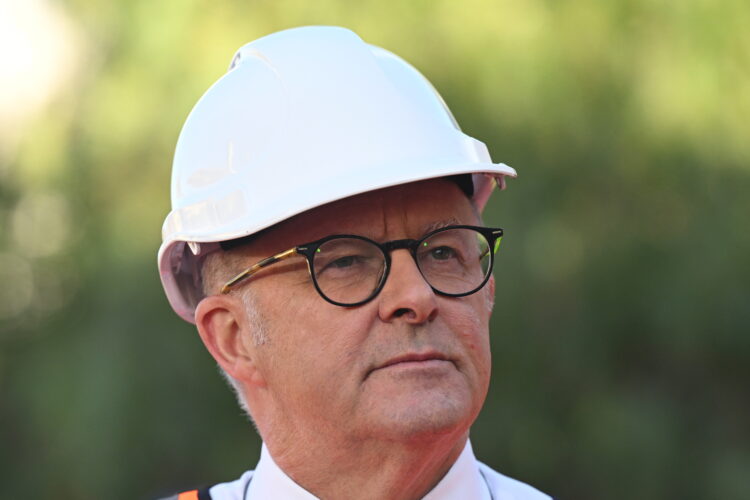
Should wages rise faster than house prices?

Greg Jericho
Chief Economist

Peter Dutton was asked if he agrees with his housing minister Michael Sukkar that wages should rise faster than housing prices.

This is the key aspect to improve housing affordability, and yet Dutton refuses to answer.

That rather says it about where we are with housing affordability.

No one wants to say out loud that they want house prices to go up slower than wages, because they are worried that will get headline saying they want property values to fall in real terms… and yet unless that happens then housing affordability will continue to fall.

Dutton sidesteps a couple of questions on Trump

Peter Dutton was pressed on previous comments he made about Donald Trump, and whether he stands by comments he made earlier this year calling him a ‘big thinker’.

Dutton has responded to all these questions by saying the Australian election is a contest between himself and Anthony Albanese (duh).

Most Australians don’t see Trump’s presidency as good for Australia, and our own polling as shown that more Australians consider Trump a greater threat to world peace than Vladimir Putin or Xi Jinping.

The four things (mostly) missing from the major parties housing platforms

Jack Thrower
Researcher

The housing crisis continues to grip Australia and it’s a central part of this election campaign. Unfortunately, while both major parties have made housing policies key parts of their election platforms their policies mostly tinker around the edges and fail in four key ways.

  1. They do not address Australia’s distortionary, expensive, and regressive tax concessions
  2. Almost all the policies they have announced would pump up demand, which will only increase house prices
  3. There’s some talk about public housing and developers, but not enough
  4. Migrants are not to blame for soaring house prices

You can read more about it here: https://australiainstitute.org.au/post/the-four-things-mostly-missing-from-the-major-parties-housing-platforms/

Q: Do you want to see wages rise faster than house prices?

Dutton: I want to make sure that we have a market accessible for young Australians. A generation ago prices were not as high as they are now and the disposable income required to service the loan to pay for the mortgage repayments is nowhere near where it is today. We have to accept the modern reality, and that means that we have to change the system, and that is exactly what we are doing.

We will have some analysis on what it is the opposition – and the government – are (are aren’t) doing on housing soon.

Q: Will defence spending head nuclear. 2.5% of GDP in the forward estimates or have you had to delay this aspiration until at least 2030 partly because of big spending election shortage heads?

Dutton:

What we have always said as we to additional funding a defence and you cannot live in the world we live in at the moment.
It is not surprising because it is what Labor did under the Rudd-Gillard government and it is what they always do because they tax and spend. We always will have a better bottom line in Labor but we will invest into defence and we will make announcements in that regard.

Dutton is using the same method here that Labor uses to say that the Coalition cut funding in health and education. Yes, it increased but not as much as it was forecast to increase. The same with defence and Labor – so yes it increased, but not as much as forecast, but Labor also diverted money to Aukus which makes Dutton’s line on Defence spending very hard to sell.

Peter Dutton press conference

Dutton is asked why he is avoiding nuclear – he is not talking about it, he is not visiting potential sites – you get the idea.

Dutton:

It is something we have done a lot of work on and we have spoken about it because the hydrogen dream will not eventuate. The Prime Minister pretends that you can just rely on solar and wind*, it does not happen.

…We need to have the latest technology in the system, we need to have gas as an interim, which we have said clearly to the Australian people that we can bring more gas exported at the moment into domestic use, and if we bring more supply we can lower the cost of energy and we lower the cost of wholesale gas by 23%, bearing in mind, never forget, that gas is a big ingredient in the creation of the generation of electricity.

That is what brings down the cost of steel, the biggest manufacturers of steel in our country are embracing of our policy because it brings the cost down. If there cost comes down the cost of the roof on this house comes down, the cost for the food manufacturer, the farmer, the IGA, although comes out, and nuclear is a key part of the policy.

We do not shy away from it. The government is out there talking about the cost, the cost of our plan is $263 billion left than the Labor Party plan.

We have a prime minister who does not want to talk about the past three years because his government has been a disaster for Australian families. We have been prepared to take tough decisions that are in our best interests are in relation to energy, housing, economic management, and we will cut the fuel tax by 25 cents a litre, give $1200 of money back to the people to help to the cost-of-living crisis and we will implement an energy system that will stand us in good stead for the next century.

*Labor is not relying on renewables only and unfortunately also says gas will be part of the plan until 2050 and beyond

Q: On Anzac Day, the Greens Party in WA will be holding a dance party fundraiser at a venue in Perth in Anzac Day. Is that an appropriate day, in your view, to mark that day?

Albanese:

Anzac Day is a day of respect for the men and women who’ve made the ultimate sacrifice – but also for us to respect the men and women who wear our uniform historically, but today as well. I think it’s not a day for normal business as usual and, on Anzac Day, I’ve said – I’ll be in Canberra at the National War Memorial, that’s something that I’ve done both as Opposition Leader and as Prime Minister. I must say, it’s an incredible honour and privilege on that day, and I know that Australians, in their millions, will pause on that day to say those three sacred words – “Lest we forget.”

Albanese on the bottom line talk (the never ending bottom line talk)

What we’re not doing – what we’re not doing is one-off sugar hits, which is the big difference between the tax policies. We have a policy of decreasing income tax making a difference, and then also reform so that people – 5.7 million, current numbers, but it’ll probably be up to 6 million because of the growth of the workforce – will receive that instant tax deduction.

That’s also an efficiency measure. It will allow the ATO to also concentrate on other areas, because it will remove the need for the bureaucracy to deal with all of small measures that they have to deal with with income tax returns for PAYE taxpayers.

So, look – we will continue to be responsible. You’ll see all of our bottom lines, and you’ll be able to make your assessments. But I make this point – we turned a $78 billion deficit under the Liberals into a $22 billion Labor surplus. We turned a deficit in excess of $50 billion into a $15 billion surplus under Labor. And, this year, we’ve almost halved the deficit.

Q: In terms of the Treasury advice on your 5% deposit scheme, will you be releasing that advice? What is the definition in dollar figures of “significant”?

Albanese:

We don’t release Cabinet papers.

Q: But what’s the definition of “significant”, for voters who want to know how much house prices could rise under that policy, what does “significant” mean?

Albanese:

I’m not saying that house prices will rise.

Q: But the Treasury advice says the price rise won’t be significant. We don’t release Treasury documentation. You have the figure.

Albanese:

The idea that they put a precise dollar on something is not You said a month ago, Prime right.

Election entrée: Parliaments changing the government

Frank Yuan

It is not just elections that decide who forms government.

In Australia’s Westminster system, governments depend on MPs for support – and MPs can be replaced part-way through the term or change their minds about who to support.

Since Federation, the governing party changed eight times due to non-electoral events, most recently in 1975 with the Dismissal of the Whitlam Government.

While in 1975 it was the Governor-General who forced a change, the other seven were caused by MPs changing their minds about who to support or governments failing to get their agenda passed through the parliament.

A government can also lose its parliamentary majority outside of a general election but hold on to power.

In 2018, when Malcolm Turnbull quit Parliament and independent Kerryn Phelps won his seat, the Morrison Government fell into minority. The government survived, although legislation to allow for medical evacuation of sick refugees and asylum seekers became law despite the government’s opposition.

At the state level, since 1992 there have been three times when crossbenchers have forced a change in premiers or ministers, without bringing down the rest of the government – most recently in Tasmania last year.

Crossbenchers can demand the old convention of ministerial responsibility is upheld without threatening the survival of the government as a whole.

Q: During the pandemic, you spoke a lot about heeding the advice of experts. You spoke a lot about people shouldn’t dismiss the advice of experts and so forth. On housing, why are people like – you’ve been relatively dismissive of people like Chris Richardson and Saul Eslake for their assessments of the housing program yesterday. How is it that they’re wrong and you’re right?

Albanese:

I’m not sure that I’ve they’ve looked at all of the detail, frankly. Because some of the things that they’ve spoken about don’t match what we’re actually doing. What we’re doing – we have $10 billion, for example, and of that, $2 billion is in grants to be matched by state and territory governments. $8 billion is for loan and equity. Some of that money will then come back to the Commonwealth.

On Parramatta Road and Pyrmont Bridge Road, what you’re going to see this afternoon, to give you a preview on where you’re headed – you’re going to Melbourne, and you’re going to see houses that have been built as a direct result of the social housing accelerator where I brought forward $2 billion in immediate payments to states and territories not because of the Greens or the coalition in the Senate – in spite of them.

Because they were blocking the Housing Australia Future Fund like they blocked the Help to Buy Scheme until December of last year. And then they go, having said – I mean, the hypocrisy of the Coalition…they say, “Oh, you haven’t built enough homes fast enough.” Well, there’s 28,000 under the Housing Australia Future Fund, under social housing, that are either under construction or in planning – awaiting approvals. That would have been a lot more, and things would have been completed a lot more, if they hadn’t have held it up for month after month after month. Actual passing motions in the Senate to say, “The Senate cannot consider this until” – some future date. And THEN, the Senate sitting again and doing the same thing again. So the coalition, or the no-alition, as I call it – Peter Dutton speaks a lot about the Greens. He’s happy to vote with them all the time to block supply. That is what they have done.

Albanese then explains his press conference style:

I do a gender thing….I’ve been doing it for three years. I go boy-girl, boy-girl.

Reporter: Do you really?!

Albanese:

Yeah. Have you just… ..everyone else has noticed it in the gallery. Because otherwise, what happens, you might have noticed, is it’s the blokes who yell out first. So, as a commitment to equity – something that has been noticed by many of your colleagues – I’ve done that for three years. And I’ll continue to do it.

This is the press conference of someone in cruise control.

Sigh

Q; Prime Minister, on the Greens – they’re spruiking their plan for school lunches today. Is that something that your government would support? And Forgive me for this one – an Australian cafe owner in Canada has had their Vegemite banned because apparently it doesn’t meet Canadian standards. What’s your message to Canada and this Aussie cafe owner?

Albanese:

I stand with the Aussie cafe owner…! (LAUGHTER) I can confirm here today that I am pro-Vegemite. And, indeed, I actually put a lot of Vegemite on my toast when I ate bread. (LAUGHTER) So, I love Vegemite. It’s a good thing. I did hear the report on that. It’s rather odd that they’re letting Marmite in – which is rubbish, frankly. (LAUGHTER) Let’s be clear here. Pro-Vegemite, anti-Marmite. That’s my position.

Q; And on the Greens – they’re also spruiking free lunch boxes is. That something you…

Albanese:

The Greens don’t have to add anything up, ever. We’re a serious party of government. And I put forward serious policies based upon everything adding up. Here.

Q: PM, around the country, there’s been a push to build more houses – a tendency to take away space from public golf courses and turn them into public land. Do you have a thought on that? And in Sydney, the Coalition have committed $1 million to retain Moore Park as an 18-hole golf course by building a new sporting facility there. Considering you stepped in that time to help save Marrickville Golf Course and keep that 18 holes, do you think that Moore Park Golf Course should remain 18 holes as well?

Albanese:

Well, Marrickville Golf Course will be there for as long as I’m the local member and as long as there’s a Labor-controlled local council. It is a multipurpose facility. Not only do people play golf – there’s… at the risk here of really going down a, ah, a cavoodle hole – Lewis the cavoodle holds his birthday party there Every Sunday, there is drinks on the first fairway.

I used to, when I was in Marrickville, walk Toto there. People engage. I What It’s a real hub for the community.

Well, I am responsible, as a local federal member. I’m very pleased that the redistribution has put Royal Marrickville back in my ‘hood, because it is an important part of the local community. As for others – well, that’s not in my electorate. As for other golf courses – that’s up to local considerations.

Will Tanya Plibersek remain in environment if he wins the election?

Albanese:

Well, you asked me that yesterday, and I gave the same answer yesterday that I’ll give today, which is – I expect Tanya Plibersek will be a senior cabinet minister. She’s an important member of my team. But I’m not getting ahead of myself and naming all 22 or all – actually, all 42 portfolios – on the frontbench. I’m not getting into that. She’ll be treated exactly as everyone else. But, Tanya Plibersek will play an important role in my government. She’ll be a senior cabinet minister, as she’s continued to be.

This is what leaders say when they are planning a re-shuffle, which is normal for all parties. If the Coalition won the election, the shadows wouldn’t all become ministers in the portfolios they are holding.

Q: One – who do you think will be Australia’s next female prime minister? And my second question is – beyond watching Star Wars on May 4, if you are re-elected, have you thought about which foreign leader you’ll be paying a visit to first?

Albanese:

I’m not getting ahead of myself. On the second question on the first one – I’m not getting ahead of the Australian people. I would say this – chances are, it will be a Labor MP, given our gender balance and that we’re majority female. And the coalition are going backwards. They’re replacing, at this election, seats like McPherson, Forrest – what were considered to be safe coalition seats – with men they have selected in those seats. In Leichhardt, they had an opportunity to select a woman. They selected a bloke. And across the board, I think that they’re not moving forward. I think my team is diverse, is representative of the Australian public, and that’s a good thing.

Anthony Albanese press conference

Early press conference from Anthony Albanese this morning.

He is asked if he will serve a full term if he is elected (there was a rumour floating around that he was planning on peacing out half way through a second term, not helped by buying a Central Coast beach house)

Albanese says:

If elected, I’ll serve a full term. I think that’s what the Australian people would expect of me. And that is the context of that answer. I’ll tell you what – I don’t take anything for granted on May 3 and I don’t know what I’ll be doing on May 4. As I’ve said – I think yesterday – I know, hopefully. I have a bit of a tradition of watching a Star Wars movie on May the 4th because I quite appreciate the, ah, sense of history there.

And I’m an old Star Wars guy, to get that out of the way – the first three movies are the best. That’s all I know about the evening of May the Fourth. But I’m trying to climb the mountain here. I’m trying to be the first prime minister (re-elected) since John Howard in 2004 – it’s been 21 years, we’ve had a revolving door. I don’t think, objectively, that’s in the interests of Australia.

You can tell the campaigns know no one is paying attention to at the moment because of all the breakfast radio and breakfast TV the leaders are doing.

Taylor talks tough on construction but skips over key political promise

Joshua Black
Postdoctoral Research Fellow

Last night during his debate with Jim Chalmers, shadow treasurer Angus Taylor said that fixing the construction sector was a key part of the Coalition’s strategy for solving Australia’s housing affordability crisis. That specifically means deregistering the CFMEU.

When the Coalition talks about construction there’s a giant elephant in the room: the Australian Building and Construction Commission, a political football now two decades old.

The Coalition’s policy offering includes a promise to “reintroduce a tougher Australian Building and Construction Commission”. In times past, that Commission has been set up conversative governments to tackle productivity and “law and order” in the construction sector. Set up in the mid-2000s under John Howard and abolished by Labor, the ABCC was resuscitated in 2016 before wearing out its welcome again in 2022.

Why doesn’t the Coalition want to talk about its plan to ride the ABCC merry-go-round again? I can think of a few reasons.

First, it would not do a thing to help productivity in construction, especially in the housing sector. The Australia Institute has previously shown that the ABCC is more likely a dampener on labour productivity in the building and construction industry, especially in heavy and civil construction sector where its oversight was most concentrated.

Second, the Coalition promised in 2016 that the revived ABCC (defunct between 2012 and 2016) would help make housing more affordable. Spoiler alert: it didn’t. This is not surprising because the ABCC was not concerned at all with residential building.

Third, Taylor and Dutton would have to defend the ABCC from the government’s criticism that it became a vehicle for outright political lawfare. For much of its second stint, the ABCC was more focused on banning Eureka flags and censoring workers’ political views than on promoting productivity on Commonwealth-funded construction sites.

Can the Coalition explain how the ABCC will help with affordable housing?

One of the things which has been underestimated in the battle for the Greens electorate of Griffith is that Max Chandler-Mather is a popular figure in his community, because of things like the free school meals programs he has created.

Since his election in 2022, MCM has served 40,000 free breakfasts across four local schools in the electorate. He has funded it from his own salary (which is one of the reasons he is still a renter – his partner has recently had a baby and they have been living on one salary, with MCM using the excess of his salary to fund community programs)

MCM has been in politics from the time he was a baby adult – first in the Labor party and then as part of the Greens campaign team (he and I butted heads a few times when I was covering Qldpol so believe me when I say that professionally, we go way back) and because of those experiences, he understands local politics in a way not many first term MPs do.

And so while Labor and the LNP are putting a huge amount of resources to winning back the three Queensland Greens seats, they might be underestimating the personal popularity of members like MCM. The major party campaigns are fairly focused on what the Greens have been doing nationally and what they think national voters (mostly their own) have been frustrated by, and not what local voters are seeing.

Today, the Greens are announcing a plan to take MCM’s free school meals’ program nationally:

The Greens have put forward a costed plan that would see every public school funded to provide a nutritious lunch  to every student. To achieve this aim, the PBO has estimated it would be a cost to the budget of $11.6b over the forward estimates which is less than the budget currently spends on fossil fuel subsidies. The Greens will also invest $85m annually to expand existing free breakfast programs in schools across the country.

This is on top of school policies previously announced, including an annual back-to-school payment of $800 made to families at the start of the school year for each child attending a public school; abolishing public school fees and charges to make public schools genuinely free; and fully-funding public schools to 100% Schooling Resource Standard in 2026.

This massive boost for families would be funded by making big corporations pay their fair share of tax. The previously announced Big Corporations Tax frees up $514 billion across the decade to help fund dental into Medicare, free and universal childcare and free school lunches

So the day starts with Labor in Hobart (Tasmania is a bit of a problem state for Labor. WONDER WHY) and the Liberals in Melbourne (which will probably end up being its best state this election and also the reason Labor will fall short of majority government)

Asked about economists criticising both Labor and the Coalition’s housing plans (the criticism is that they will just drive up house prices, which they will) Albanese told ABC this morning:

What we’re doing is dealing with supply as well as demand. The Coalition’s plan will push up prices. Our plan will ensure that more homes are built. And what we’ve seen under my Government is 28,000 of those social housing, through the Housing Australia Future Fund, are either under construction or under planning.

What we’ve seen now is housing approvals up, they were going down when we were elected. There were 26,000 in the latest monthly figures compared with what was occurring before. And we’re also seeing housing construction costs fall to just over one percent.

They were above 20 per cent, the increases when we were elected. So, we’re seeing a transformation.

We’re determined to make sure there’s more social housing built, more private rentals through our Build to Rent scheme and more homes built specifically for first home buyers, which will make a difference as well. And by stopping the competition between a first home buyer and an investor, what that will do is ensure that housing is more affordable for those young Australians who want to get into home ownership.

As Grogs and Matt Grudnoff said yesterday, making mortgage interest payments tax deductible (the Coalition’s plan) is a bad idea – because it will just juice demand. 5% deposits with the rest guaranteed by the government (Labor’s plan) is a bad idea – because it will juice demand. Building 100,000 homes (Labor’s plan) is a good idea, because it tackles supply.

The Treasurers’ debate on ABC’s 7.30 last night was a much more sane affair (not having to factcheck the moderator was a giant improvement) and we have Greg Jericho and Matt Grudnoff going over the claims for you to bring you any clangers.

One of the reasons it was better was because Jim Chalmers was actually able to answer some of the guff Angus Taylor was spilling out.

At the last debate (hosted by Sky) Taylor could just say ‘this is really important’ and then say whatever he wanted for the next three minutes without being pulled up. (it was never important) At least here, Chalmers was given equal time.

Taylor: The deficit has gone up substantially over the last 12 months. Labor inherited monthly surpluses after we came out of COVID, and the truth of the matter is that they’ve taken the budget off a cliff. Now we’ve opposed over $100 billion of Labor spending since Labor came to power, a whole range of initiatives that we think are not appropriate at this time and we will deliver a stronger budget bottom line than Labor’s.  
 
Q: Have you taken the budget off a cliff?  
 
Chalmers:

Of course not. I mean what Angus has just said then, respectfully, was rubbish.  
 
You can look in the Budget papers, you compare the pre-election outlook from the election in 2022 to the progress that we’ve made together as Australians ever since then, and the budget is substantially stronger.  
 
And the reason that’s so important is because this is an uncertain world, and our efforts to help people with the cost of living and strengthen incomes make our economy more resilient.  
 
That couldn’t be more important. There’s always a premium on responsible and stable economic management, but particularly now. The alternative is a coalition of cuts and chaos, which will make Australians worse off and make Australia more vulnerable at a time when there’s all this volatility in the global economy.  

Asked about the Donald Trump announcement that he will be putting a tariff on pharmaceutical drugs “in the not too distant future” because “we want to make a war on drugs” (when really, it just makes the black market stronger) Peter Dutton deflects and blames Anthony Albanese:

I’ve always said that we will stand up for our pharmaceutical sector and our beef sector and every other sector.

We’ll do what’s in our country’s best interest.

And then:

This election is about whether or not you want three more years of Anthony Albanese.

Anthony Albanese has, I think, done great damage to the economy.

Australians have really struggled.

We’ve been living through two years of a household recession in this country. Seven consecutive quarters. That hasn’t happened anywhere else in the world*.

So this election is about – can you afford three more years of a Labor government, particularly if it’s a Labor-Greens government**, which would be big-spending, it would drive up inflation which ultimately drives up interest rates***, and that’s a disaster for young families who have the mortgages that we were just talking about.

Where to begin.

*Grogs has already looked at this and as soon as he is in, I will get him to tell me it again.

**Putting aside whether it would be good or not, Labor has said a million times it won’t go into coalition with the Greens. Engaged people know this. Because Dutton keeps assuming he’s speaking to voters who emerge every day with a blank memory slate and he can spend every day filling their heads with nonsense and they won’t know any better. If you are going to make things up, maybe it should be on things that aren’t able to be fact checked instantly!

***Treasury, the RBA etc – everyone has said the budget Labor has handed down is basically neutral when it comes to being inflationary. As for the election promises, the Coalition has largely matched them or come up with programs which are equally as big. So is that also a disaster for young families?

Peter Dutton is pressed on his comment about wanting house prices to continue to rise. Does he mean in line with inflation?

Dutton:

We want sustainable growth. Bridget. If you’re buying a house today, if you can find one and if you can afford one under this government – you don’t want to wake up in two years’ time and find that the value of that house has gone down.

We don’t want that situation for Australians.

We want a home to be an asset where you can raise a family, where you can use it as security to the bank if you want to start a small business in a back bedroom or the garage.

We want it to be an asset that increases in value as you get toward retirement and ultimately, one day, you can leave to your children as an asset that will help them in their lives.

So, home ownership is absolutely integral to our culture and to who we are.

Putting aside that Dutton is not a relative political newcomer and has been in the parliament for the last 24 years and in government for about 15 of those 24 years, and therefore directly involved in policy and none of this situation was created in a bubble and it is not the creation of the last three years.

During the 1990s house prices only went up around 0.3% more than household income each year. Since 2000 (and the intro of the CGT discount) house prices have gone up on nearly 9% more each year than household income.

That is not sustainable.

A house in Melbourne costs 8 years of average wages. Twenty years ago, it was five years, and if we keep going at the same rate, a house in Melbourne will end up costing 13 years’ worth of average wages in twenty years’ time.

That is not sustainable.

If you were on average full time male earnings in Sydney at the end of 2014 and started saving 15% towards a deposit, you needed around $154,000 for a median priced house. Now 10 years later you would have saved $126,000 but guess what? You now need an extra $156,000 more to get a deposit. So after 10 years of saving you are $1,000 further away from your target.

That is not sustainable.

·

Asked about his comment yesterday (which he made twice) that he wants to see house prices continue to rise, Peter Dutton says:

If you’ve got a house that you’ve just bought and you’ve got a $500,000 mortgage and your house goes down by mortgage and your house goes down by $100,000 under Labor, and your mortgage is worth more than the mortgage is worth more than the house itself, then that’s not a good situation for you.

So, no, we don’t want house prices to plummet. Labor’s recession in the ’80s and 90s did exactly that. This is the biggest-spending government since biggest-spending government* since that bad Labor government.

What we need to do is to make sure that we’ve got enough supply coming in.

The question wasn’t about a recession, or whether he wanted to see house prices ‘plummet’ it was what did he want to see house prices do. And there is no suggestion that we are heading to a recession – except from him and Angus Taylor.

*The Coalition have matched Labor’s spending promises this election and come up with foregone revenue commitments (tax offset, fuel excise cut etc) but not released their costings so we can’t tell you how much they are spending (just for the purposes of Dutton’s complaints about Labor spending)

Peter Dutton is speaking to ABC News Breakfast this morning and among his first lines is a lie. There is enough to actually criticise Labor for, without claiming Anthony Albanese and the campaign are doing something they are not.

Asked about the polls, and the vibe, being against him, Dutton says:

We’re the underdog…the Prime Minister’s already talking about a third term. But what I want to talk about…

Albanese says ‘I’m not getting ahead of myself’ or ‘if we are lucky enough to get elected’ a few times a press conference, as does Dutton (after admitting on radio in the first week of the campaign he would prefer to live in Sydney as prime minister) so maybe don’t say anything that’s very simple to fact check?

Because people watching ABC in the morning are engaged and listening to the campaign, which means they would know when something said doesn’t feel right. So what is the point?

Good morning

Hello and welcome to another day on this never ending campaign.

We had the second treasurers’ debate last night, which we will go back and visit for you and tonight we have the second leaders’ debate, which we will also cover off tonight.(Edit: Gah! No we don’t that’s tomorrow! I am a day ahead of myself)

The vibe is with Labor, which you can see from Peter Dutton’s increasingly desperate campaigning. Dutton continues to falsely and irresponsibly claim Jim Chalmers thinks there will be a recession next year (very weird message from Dutton given he claims he’s ‘Team Australia’) and yesterday rolled out his 20-year-old son who said he was struggling to save for a house, like we didn’t know his family are multi-millionaires. And when asked the very obvious question – will you help your children when it comes to the housing market – Dutton just avoided it. And in the same press conference, said he wanted to see housing continue to increase. Twice.

That’s what happens when you suddenly find you have to campaign to the whole of Australia and address their issues, rather than just the safety of Sky and 2GB studios.

Meanwhile, Sky News continues to complain that the independent candidates aren’t campaigning in ways they like, this time with Allegra Spender holding a community event and not allowing media (them) in. But Sky News holds forums with candidates all the time (Paul Murray held one with Pauline Hanson and Bob Katter) which is just for them, and while it’s broadcast Sky still controls the show. Soooooo…….

Anyways, we will bring you all the day’s events, and more, as the day rolls out. You have Amy Remeikis with you for most of the day.

Ready? The third coffee is on the stove. And the bowl of mini easter eggs is being depleted as we speak.

Let’s get into it.


Read the previous day's news (Mon 14 Apr)

Comments

Start the conversation

The biggest stories and the best analysis from the team at The Point, delivered to your inbox.

Past Coverage