The person I feel for most of all as we wrap up the day is the speaker of the New Zealand parliament, Gerry Brownlee.
Poor old Gerry, a veteran of kiwi politics and speaker since 2023, was forced to sit through a thoroughly uninspiring question time as part of his visit to Australia’s House of Representatives today.
The poor bugger didn’t have a bench to stretch out on, a desk to hide behind or even somewhere he could have a sneaky peek at stuff.co.nz on his phone.
He was propped on a tiny chair, just a couple of metres from speaker Milton Dick’s throne.
Hopefully, Milton takes him out for a decent meal at one of Canberra’s finest establishments tonight.
And on that bombshell, it’s time to wrap up for the day.
Amy will be back on deck in the morning when, hopefully, we can forget the polls and the Nats’ net zero nonsense … and talk about something positive – like fixing the nation’s environmental laws.
Over and out.
16.25 AEDT
Fact Check: Will net zero cost $9 trillion?
Skye Predavec
Researcher
So, will net zero really cost $9 trillion to Australia?
Their 2023 study did say that achieving net zero required Australia to “attract and invest $7-9 trillion of capital to 2060 from international and domestic sources”. But it is nonsensical to use this number in the way Littleproud has, for three main reasons:
1. This is total capital investment, not government spending
The $7-9 trillion is the total of all the money invested my private companies building wind farms, homeowners installing rooftop solar, and someone switching to an electric vehicle when they’re due for an upgrade.
This money is also an investment, so Australia will get trillions of dollars worth of assets out the other end.
It’s pretty misleading to pretend this will cost government budgets $9 trillion, so net zero will not, as Littleproud claimed, “put things like Medicare at risk”.
2. Net cost not gross cost
The $7-9 trillion figure is only the “cost” of net zero if the alternative is zero spending on energy infrastructure, by anyone. That would mean no spending on energy generation, power lines, or even cars (including petrol) – not a realistic scenario.
Perhaps realising that their $7-9 trillion figure was easy to use in bad faith by those opposed to renewable energy, Net Zero Australia updated the figure in their 2025 report. Accounting for the capital costs of doing nothing, they now estimate that “$1.6 trillion capital investment must be unlocked to achieve net zero by 2050”. This is a fraction of the number Littleproud has been using.
According to the 2025 figure, Australia would only need an additional $64 billion in investment per year – an eminently achievable task in a country with a $1.8 trillion GDP and $735 billion government revenue annually.
3. It does not account for the costs of unmitigated climate change
Even this price tag does not take into account the costs of inaction, such as managing climate disasters. The National Climate Risk Assessment released earlier this year estimated that increased natural disasters alone would cost the Government $40 billion dollars annually.
Coalition should stay together but “not at any cost” – McKenzie
Nationals Senate Leader Bridget McKenzie says the Libs and Nats are always stronger in coalition, but insists they shouldn’t stay in a rocky relationship “at any cost”.
“I think I country is best served by strong coalition government and we have seen that for the entirety that Liberal Party has been in existence, obviously the National Party and Country Party have been around for over a century. It’s not at any cost,” Senator McKenzie has just told the ABC.
“We have been unequivocal in having a strong foundation to make this decision, we have not taken lightly. We believe we can do this a better way, low emissions without trashing our economy and environment. That’s a responsible decision to make. Again I don’t think it is helpful to the Liberal Party or the coalition ‘s longer term prospects for a senior leader in the National Party to be giving them gratuitous advice.”
When asked if this was the hill she was prepared to die on, she said, “these are the big questions when you are in these positions of leadership about making – are you going to make the self-interested call or are you going to do what you genuinely believe is in the best interest of the people.”
“We are not getting out of the Paris Agreement. We are getting out of net zero by 2050 because it is not in our national interest and if your viewers are interested in the data underpinning that, we are very happy to share the report if they contact my office.”
Share a report on climate policy by Matt Canavan and Ross Cadell?
No thanks. We’ll just stick to the science.
16.03 AEDT
Mike Bowers from the gallery
The great Mike Bowers kept an eye on the opposition leadership team during question time.
Who’s plotting? Who’s helping? And who’s practicing their signature for the coalition divorce papers?
15.58 AEDT
“The Nationals have done some really good work” – Pasin
Tony Pasin is hardly what you’d call a big hitter among the federal Liberals.
Fresh from his shameful foray into the Baby Priya’s Law debate last week, he’s not only backed the National Party’s net zero backflip – he’s celebrated it.
“The Nationals have done some really good work,” he’s just told Sky.
“Australians want us to do our fair share. They want emissions to be pushed down but they don’t want to lead the world.”
Spoken like a true 2025 Liberal. Why on earth would you want to lead, when you can lazily follow?
Even better, lazily follow the so-called junior coalition partner into a policy that drags the knuckle-draggers even further towards political oblivion.
Genius.
“I personally hope we can come to a position sooner rather than later. I think the National Party have led the way. We’ve embarked on our own process.”
“I think Friday’s meeting was constructive. It did exactly what I thought it would do, which is highlight to colleagues that there’s much more we have in common than we disagree on. And that I think there’s a real opportunity to come very close to the National Party position.”
15.37 AEDT
Nats net zero backflip would hurt Nats voters most – Climate Council
The Climate Council has delivered a scathing assessment of the National Party’s decision to backflip on net zero.
It says abandoning net zero would cost the nation up to $423 billion and hurt those in Nationals heartland most.
Amanda McKenzie, Climate Council CEO
Abandoning net zero means abandoning a safer future for Australians. It means worsening, climate-driven floods, fires and heatwaves. Communities will pay a high price, particularly in the regions.
This is about more than just chaos in the Coalition. In the real world, a net zero backflip aligns with more than 3°C of global heating that would cost farmers and regional towns billions of dollars in damage. The Nationals must explain how they’ll pay for the soaring insurance premiums, recovery bills and freight costs when escalating disasters strike regional communities.
The Climate Council says abandoning net zero would:
Reduce economic output by $135-423 billion by 2063, with workers hampered by extreme heat.
Increase Australian Government spending on disaster recovery up to 7 times by 2090
Make more than 1.3 million Australian homes (8.8%) likely uninsurable by 2100
Double freight costs for regional communities in WA, NT And Qld
Dent property values by more than half a trillion dollars by 2050
15.24 AEDT
Question Time ends – what did we learn?
The PM is probably thinking he could have stayed a few extra days in Gyeongju enjoying some fine Korean cuisine.
From net zero to Newspoll, the coalition is a rabble and its abject uselessness was brutally laid bare over the past 75 minutes.
Not a single opposition question forced Anthony Albanese away from his cost-of-living talking points.
When the Shadow Treasurer tapped in, he was quickly kicked out.
If ever there was an example of a government in cruise control with not even a hint of parliamentary scrutiny from the ‘opposition’, that was it.
The crossbench questioned the government on climate change, energy and arts policy, but it appeared to have offered the courtesy of advance notice, therefore received polite, yet flat-bat, responses.
Either way, the Teals, Greens and Independents are the nearest thing we’ve got MPs trying to hold the government to account.
In cricketing terms, we’re dreaming of the Ashes, but at the moment question time is more like Australia versus Scotland A.
15.08 AEDT
Why no trigger?
Andrew Wilkie, Member for Clark:
Recently the international court of justice found states have a binding international obligation to assess and limit emissions including scope 3 emissions to avert significant climate harm. Scope 3 includes captive carbon in exported coal and gas. If the government won’t include a climate trigger in environment laws or include scope 3 emissions in the what steps will you take to ensure Australia’s compliance with the ICJ ruling?
Chris Bowen, Minister for Climate Change and Energy:
The government supported the ICJ case commenced by Vanuatu. I also note that we considered the Climate Change Authority’s advice on our recent nationally determined distribution, the Climate Change Authority considered the ICJ decision in weighing up their advice to the government under our world’s best practice climate change target setting regime. Therefore their advice to us was to set the maximum possible level of ambition which is advice of course that the government accepted. What the honorable member is doing is then raising other issues around scope 3 international emissions in other countries which he’s entitled to do. But I’d like and make this point: that our obligation is to reduce our emissions and to work with other countries to help them reduce their emissions not to come at it in some other way. That’s why we embark on the policies we do but I do agree with the honorable member in this regard. That a massive opportunity we have if we seize the economic opportunities — opportunities of net zero is help other countries decarbonise through a Future Made in Australia. Whether it be through green metals, whether it through other ammonia and green hydrogen. Treasury has model this and found the emissions reduction, using Australian knowhow and Australian resources, is equivalent to 1.2 per cent of emissions which is a big number. This is a great opportunity for our country if we seize those opportunities. If we ignore them the opportunity to create jobs as we help the world decarbonise will be missed forever.
14.59 AEDT
“You have got to be kidding me”
Henry Pike, Member for Bowman:
Labor’s housing policies are failing. Under Labor’s $10 billion Housing Australia Future Fund just 567 of the promised 40,000 social or affordable homes have been completed. And now it is being audited by the national auditor. The chair of Housing Australia has resigned after bullying allegations and the government fell short of its construction target by 66,000 homes last year. Does the Prime Minister accept that his government is building fewer homes and has made housing affordability worse?
Anthony Albanese, Prime Minister:
Well, I thank the member for his question. But I’m not sure if member was here during the debacle that was the rolling door of governments in between 2013 and 2022. If he was he would know that there weren’t questions asked for most of that time of the Housing Minister. If he was here it wouldn’t have been possible for him to ask a question of the Housing Minister for most of that time because they didn’t even have one.
And the question that’s asked by the member speaking about the number of houses that have been completed under the HAFF – they held up the HAFF for month after month after month after month. And then they go, “Why aren’t the houses built?” You have got to be kidding me!
14.51 AEDT
Fossil fuel profits before people
Elizabeth Watson-Brown, Member for Ryan:
Prime Minister, your proposed EPBC (Environment Protection and Biodiversity Conservation) changes have received support from Chevron, BHP and the Minerals Council but have been widely criticised by environment NGOs like the Australian Conservation Foundation as failing to protect nature and the planet. Why has Labor prioritised the interests of big corporations over people and nature?
Anthony Albanese, Prime Minister:
The truth is our environment laws aren’t working. There’s a very broad consensus that that is the case and we are working to get it right. Because they’re not working for business and they’re not working for the environment. Approvals take too long, processes lack certainty and need to be streamlined. These are laws that were drafted in the Howard era for the Howard era, and are just not fit for purpose. We believe that the laws that are before the Parliament are balanced. They will help to grow the economy but they’ll also help to make sure that future generations of Australians get to enjoy to benefits of our unique environment. The author of the report that was commissioned by the former government, Graham Samuel, has come out very clearly, very clearly, and said that the laws that have been put forward are consistent with Graham Samuel’s review. I’m not quite sure that the member is being fair dinkum with the quote that is she says of the group that is are supporting this legislation to be honest. What we need to do is to not play these games which led to nothing being carried during the last term of a ‘noalition’, people saying they’re against it. They sat in the Parliament for a long period of time. And were up there in the Senate waiting for them to be carried.
14.46 AEDT
Way out west
We’re back on cost of living questions, so we all know how this will go.
Why are things so bad under you?
Why didn’t you support any of our cost of living measures?
Melissa McIntosh, Shadow Communications Minister:
The western Sydney suburbs of Campbelltown, Mt Druitt and Liverpool have two things in common: one, more than 90 per cent of mortgage holders are struggling to pay their mortgage; two, they’re represented by Labor MPs. Prime Minister, why do Australian households have to suffer because this government can’t control its reckless spending and inflation? Does the Prime Minister have any plan to address mortgage stress in these Western Sydney suburbs?
Anthony Albanese, Prime Minister:
Since we have come to office, inflation is half of what we inherited. Interest rates have gone down three times this year. They started to rise under those opposite. We went to an election promising much lower spending than those opposite which is why they had two higher deficits going forward.
What we have done is increased real wages, quarter after quarter after quarter after quarter. We have increased real wages opposed by those opposite. They opposed all of our industrial relations measures.
We have created 1.1 million jobs, three in five of them have been full-time. Under this government the gap between women’s wages and male wages is the lowest it’s ever been. We have record women’s workforce participation as well and we have produced tax cuts for every single taxpayer and there’s two more rounds to come. We want people to earn more and to keep more of what they earn.
We’ll continue to rollout cost of living support, and I’d ask the member for Lindsay to think about supporting some of it some time.
14.38 AEDT
Latest Data shows housing becoming less affordable
Matt Grudnoff
Senior Economist
Since the federal election, fought on who could make housing more affordable, housing has become less affordable.
You might think this would push the government to act, but they continue to rule out cracking down on generous tax concessions that are making housing more expensive affordable.
Latest data from Cotality shows house prices went up 1.1% for October and 6.1% for the year. When prices rise faster than incomes, housing is becoming less affordable.
So, incomes would need to rise by at least 6.1%. They didn’t. In the last year incomes rose only 3.4% as measured by the wage price index (WPI).
This is not surprising. There has been 3 interest rate cuts this year. Also adding fuel to the house price fire is the government’s scheme to allow first home buyers to get in with just a 5% deposit. Ironically, this has been sold as a policy to make housing more affordable.
Despite what we were told at the last election, we seem to be getting the opposite of what we were promised.
The federal government continues to claim that the only solution is to increase housing supply. Increasing supply will help make housing more affordable, but it is the slowest and most expensive way to do it.
Housing supply is also a state and local government issue. The only thing the federal government can really do to stimulate supply is to give money to state governments. When the federal government says supply is the only solution, they’re really saying it’s not our problem.
But not everywhere is doom and gloom when it comes to housing affordability. Melbourne continues to defy the trend, with prices increasing only 3.3% for the year. This means Melbourne has continued to become more affordable.
Five years ago, just before the pandemic, Melbourne’s median property prices were the second highest among capital cities, behind only Sydney. Today they are sixth, with only Hobart and Darwin being cheaper.
This is largely the work of good policy from the Victorian Government. They increased taxes on property investors. This made speculating on residential property less attractive in Victoria. The result is less investors showing up to auctions and more first home buyers getting into the market at a more affordable price.
The federal government could achieve this same result nationally. By scrapping the capital gains tax discount and limiting negative gearing they will reduce investor demand for housing. House price growth will slow, allowing more first home buyers into the market.
Negative gearing and the capital gains tax discount are costing the budget $13 billion per year. Cutting back on these tax loopholes will not only make housing more affordable but could also raise billions of dollars for more public housing.
Public anger at the housing crisis will only grow, particularly as things get worse. After promising affordable housing the Albanese Government is going to have to do something that meaningfully changes the situation.
Reform to the capital gains tax discount and negative gearing is something that they can do that will make a real difference.
14.33 AEDT
Will Australia drown its “Pacific family” to keep fossil fuel companies afloat?
Frank Yuan
Postdoctoral Fellow
The Coalition is embroiled in another battle of the never-ending climate wars, this time infighting over its commitment to the net zero emissions target. In Canberra, the political stakes might be high, but for Australia’s neighbours in the Pacific, climate change is literally an existential threat.
The Australia Institute documentary Save Tuvalu, Save the World, details the struggle against sea level rise in the world’s most vulnerable nation to the climate crisis. The human cost of climate change is already here, and already more severe than many may be aware. And if Australia doesn’t take seriously the concerns of its neighbours, why should they take Australia seriously when Canberra asks them refrain from signing a policing deal with from China?
Australia’s per capita greenhouse gas emissions are among the highest in the world, more than the petrostate of Russia. It is also responsible for exporting coal and gas that goes on to emit 1.15 billion tonnes ofCO2 (2023 figures). That’s over three times the emissions from Australia’s domestic consumption.
All of this exacerbates rising global temperature and sea levels. Countries like Tuvalu are already seeing their lands eroded away by the waves.
In other words, Australia has been allowing fossil fuel companies to rake in profits at the expense of its Pacific neighbours.
If a future Coalition government were to abandon “net zero”, it would signal the nation’s utter disregard for the survival of its “Pacific family”. This is something which must remain at the forefront of any debate (as if there’s more of it to be had) about the urgency of climate change action from Australia.
My colleague Morgan has just drawn attention to the problems the Pacific Australia Labour Mobility (PALM) Scheme poses for Australia’s relationship with other countries in the Pacific. The NSW Anti-slavery Commission and the UN Special Rapporteur on contemporary forms of slavery have both expressed concerns that the scheme, as Australia currently conducts it, puts people at risk of modern slavery.
If your neighbour is demonstrably willing to drown you for a few quick bucks, or put your people at risk of modern slavery, while insisting on calling himself your “family”, would you want them to be in the family?
14.30 AEDT
Another Ted Talk on inflation
Ted O’Brien, Shadow Treasurer:
While the Prime Minister was overseas, inflation hit its highest level in 2.5 years, flashing through the top of the RBA’s target band. Now the Prime Minister has returned home, will he again pull his Treasurer into line to stop his spending free? Taking pressure off mortgage holders paying $1,800 more every single month on interest than compared to when the coalition left office?
Anthony Albanese, Prime Miniser:
I’m pleased to get a question from someone, who of course, is now Shadow Treasurer, who was promoted into the position of Shadow Treasurer after going to an election with a $600 billion plan for nuclear power. He has a hide to come here and ask a question that speaks about spending sprees when he had a $600 billion plan. And the previous question … was about cost of living measures. Where we know that if you combine – if you listen between the lines there, to that question, what they’re saying is they would rip and cut everything that we are doing when it comes to cost of living measures to assist people. That is what we know that they would do because it is in their DNA.
Hopefully, Ted O’Brien is reading this, so he can see the full answer to his question. He was booted from the chamber half way through.
14.25 AEDT
A question of quotas for local creatives
The week’s first crossbench question comes from the Member for Warringah.
Zali Steggall:
There is a woman in the film industry with over 25 years experience. She wrote to me. ‘I have reached the point where working in my industry is unsustainable. The situation has taken a huge toll on me and my family.’ This is happening all over the country. We need local content quotas but we needed them five years ago. It was a promise that Labor took to the election. For many of us it’s almost too late. Will the government make good on its repeated promises to legislate content for local streamers and save their jobs?
Anthony Albanese, Prime Minister:
Just briefly before I hand to the Arts Minister, Mr Speaker, we very much support the local content in the Australian rafts sector right across the board. Whether it be people who are involved in drama and production in that area, whether it be music and Missy Higgin was good enough to come here to support Australian music today. Whether it be all of the creative sector. We are really proud of what our government has done and we’ll continue to engage so that Australian voices are heard.
Tony Burke, Arts Minister:
The policy of the government hasn’t changed. And the principle that we’re working towards is really simple if you pick up your remote control at home and you go to the ABC or SBS, you’re guaranteed Australian content. You go to the commercial TV stations there’s still some level of Australian content guaranteed. If you go to Foxtel there’s still Australian content. And yet sitting there with the same remote control flicking to any of the streaming services, there’s currently no guarantee of Australian content. This is something where people are aware of some of the different negotiations that the government’s been doing but effectively the objective is simple. No matter which remote control you’re holding, Australian content should be at your fingertips. And the methods that we have used previously for other forms of Australian content don’t match with the streaming service was. So for example what we do on free to air TV where you have particular times of day and guarantees don’t work when dealing with an on demand service. Similarly the guaranteed funding that happens to SBS or the ABC doesn’t work for a commercial streaming service. So the methods have to be different and that means we need to work through a series of different trade obligations but in doing so the government’s objective which we previously stated remains completely on foot and hope to continue to be able to report more to the house.
14.18 AEDT
Aaron Violi, opposition whip:
Research conducted by the St Vincent de Paul society shows Australian families are still confronting cost of living turmoil. 32 per cent have skipped meals or gone without food to cover essentials, 36 per cent of Australian families are concerned about going without food. 62 per cent said that cost of living pressures are making difficulty difficult to plan for Christmas this year. Is this what the Prime Minister meant when he said no Australian would be left behind?
Anthony Albanese, Prime Minister:
Cost of living pressures are real and that is why we are acting on them in a real way. We have, since 1 July, delivered a pay rise for all minimum and award wage workers. Taking the total increase under this government to over $9,000. Number of times that the coalition, in government or in Opposition, has made a submission or a fair work case supporting an increase in real wages, zero. Zero. Zero. Now, we know they don’t support net zero but we know also they are net zero when it comes to increases in real wages. Superannuation guarantee, increased to 12 per cent, paid parental leave extended to 24 weeks and super now being paid on paid parental leave. More energy bill relief opposed by those opposite each and every time. $10,000 bonus for housing apprentices on top of their wages, opposed by those opposite. The batteries program that has seep more than 100,000, I haven’t caught up with the latest figure but I’m sure you’ll hear it later in question time. I’m sure it’s coming, I’m confident of that. through those doors. Making an enormous difference. Urgent care clinics that we’re opening up as well, another 50. We have cut student debt by 20 per cent, something that we announced exactly one year ago, and remarkably, remarkably, was opposed by those opposite. By those opposite, and they took that to an election as a saving for them. What we did was do a saving for students and graduates of an average of $5,500 each time. Making a difference to all of these measures. The $20,000 instant asset write-off extended for another year, more choice, lower cost in high-quality care for Australian women as well and, of course, importantly, we have frozen draft beer excise for two years. Making a difference as well. We will continue to engage in all of these measures, including cheaper medicines, there’s one thing they have in common, though. Every single measure by the government, before the last election and since, has been opposed by those opposite.
14.12 AEDT
Household spending driven by health costs in the September quarter
Greg Jericho
Chief Economist
The first of the September quarter figures that will feed into the GDP figures were released today.
The monthly household spending data out today also included the quarterly volume figures. And the figures are not great.
After some good growth in the first 2 quarter of this year, in July, August and September, total household spending was just 0.2% more than it was in April, May and June. That is well down on the long-term pre-pandemic average of 0.55%.
But the total is being dragged down a fair bit by the collapse in spending on tobacco and alcohol, which was down 7% in the quarter alone (compared to a long-terms average of -0.5%). This reflects the large increases in tobacco excise and in realty the switch of people buying it legally and instead buying black market cigarettes. That means spending on tobacco might not actually not be down that much, it is just that legal spending is down. So I am focussing for the moment on total spending excluding tobacco and alcohol, because that gives us a better sense of what overall spending is really doing. That was up 0.5%, which is better. But even that is below the long-term average of 0.65%.
The main problem though is that spending is being driven by health care costs and food. These are “non-discretionary” items – things you can’t do without. The drop in spending on Dining out (restaurant and take away) and recreation and culture suggests household cutting back on spending.
It is not a terrible state of affairs given the recent solid growth, but in a world where unemployment is rising, this reflects why – households are cutting back spending on luxuries and instead devoting more of their weekly budgets to necessities.
14.08 AEDT
Question Time begins
Prime Minister Anthony Albanese is back in the hot seat after last week’s visit to Malaysia for the ASEAN leaders meeting and South Korea for APEC.
Before hostilities begin, the speaker of the New Zealand parliament Gerry Brownlee has been welcomed to the floor of the house, a rare honor apparently.
And the Prime Minister gets the first question, from Opposition Leader Sussan Ley.
Sussan Ley:
Under Labor we have rising inflation and rising unemployment. Prime Minister, households are stretched to the limit. When will prices come down for Australian families?
Anthony Albanese:
As everyone in this Parliament knows, Australians know as well, inflation had a six in front of it when we came to office. And it now has a three in front of it. Yes, there was a rise in the latest figures but that was after a number of falls and indeed with interest rates that the member referred to as well commencing to fall under us. They started to rise under the former government, as the member knows well. On unemployment, unemployment has a four in front of it as well. We have seen employment continue to grow, more than a million jobs being created on our watch. And indeed the average lowest unemployment of any government in five decades. We are very proud of our record when it comes to the economy, whether it be the fact that for the first time in decades this Treasurer produced two budget surpluses in a row. And have also produced, of course, lower deficits than what they went to the election on. At the election just held six months ago today, Mr Speaker, since the Australian people had their verdict on the choices that were before them.
13.52 AEDT
Reader question: how many more seats would the Coalition lose if an election were held today?
Skye Predavec
Researcher
A reader of the blog has asked: how many more seats would the Coalition lose if an election were held today (based on the latest Newspoll)?
On Sunday night, the latest Newspoll showed a new record low for the Liberal–National Coalition, but – if repeated in an election – how would that shape up in terms of seats? And is that even the right question?
The poll reported Labor has 36% of the primary vote, the Coalition 24%, Greens 11%, One Nation 15%, and other candidates (including independents) 14% collectively. On two-party preferred, Labor leads 57% to 43% (up just shy of two points from the election in May).
The traditional model for Australian elections is the Mackerras Pendulum, which places all seats on a list according to the margin they’re held by. If the pendulum swings in Labor’s direction, marginal Coalition seats fall, but if it swings the other way, Labor loses its marginal seats.
Assuming the swings in this poll apply to all seats:
· Labor would win 97 seats, up three from the election
· The Coalition would win 40 seats, down three
But this approach is limited, to say the least.
Australia Institute research has found that the Pendulum only correctly predicts the winner in a third of seats. The national vote total does not determine the results in individual seats, and that’s further complicated by the rise of non-major parties and independents.
To the right candidate, with the right campaign, no seat is safe – regardless of the national numbers.
Take the Greens in the last election, for example. Despite recording a swing of only 0.05% against them, the party lost three of its four seats to Labor because of drastic changes in where their vote came from. So, while the latest Newspoll poll implies the party would lose its remaining seat of Ryan to Labor, that’s far from certain.
Similarly, applying the Newspoll primary vote swing to One Nation to this year’s election results suggests they will pick up one seat – Wright – and independent Zoe Daniel would re-take Goldstein. But just as the Pendulum could not predict the independent surge in 2022, it cannot predict how voters will respond to candidates who have not yet decided to run, let alone announced their candidacy. Trying to project the outcome of an election in three years’ time from a single poll is a fraught exercise at best, especially when it misses the real story: Labor and the Coalition are together polling just 60% of the primary vote, a record low for the major parties and down 6 percentage points from the election.
13.49 AEDT
Westpac profits from the pain of regular Australians – but there is a solution
Westpac has today announced a full-year profit of $10 billion before tax for the financial year ending on 30 September, 2025.
Westpac is one of Australia’s “big four” banks, which together control 72% of all loans to Australian residents.
By market capitalisation, Westpac ranks as Australia’s fifth largest listed company and third largest bank. Westpac alone holds 19% of all loans and 21% of all housing loans in the country.
Australia Institute research shows the big four banks make $213,480 profit over the 30-year life of an average size mortgage for a first-home buyer.
“Australia Institute figures don’t even include the extra profit banks make on any other savings or credit card accounts, transaction fees, kickbacks on insurance they sell your or the ridiculous prices they charge to get a bank cheque,” said Richard Denniss, co-CEO of The Australia Institute.
“The lack of competition among the big banks has come at the cost of home owners, and their massive profits from home loans far exceeds the level of risk the banks undertake.
“The Albanese Government has huge majority in Parliament, and huge opportunity to help take the burden off the people who need help the most.
“A small super profits tax, raising just over $1.7 billion in 2024-25, was imposed by the Coalition Government back in 2017 – that has clearly done little to dent the profits, or the market share of the big bank.
“Increasing it to $5 billion – or more – would take an extra few billion of the banks and give it to the battlers.”
13.43 AEDT
Albanese’s government has a culture of secrecy, and the stats prove it
Skye Predavec
Researcher
As leader of the opposition, Anthony Albanesespoke in no uncertain terms about the shortcomings of then-Prime Minister Scott Morrison when it came to transparency.
Morrison, Albanese said, led a “shadow government that preferred to operate in darkness” with a motto of “nothing to see here”.
When it comes to Freedom of Information, Albanese risks replicating what he once criticised.
The share of FOI requests granted in full has almost halved since he took office, and sits at just a quarter of what it did in 2006-07 – the last year of the Howard government.
Every now and then, one family’s tragedy makes life slightly easier for families experiencing the same heartbreak.
In this case, an employer’s heartless decision to cancel the paid parental leave of a mother who lost her baby just 42 days after her birth, has led to a new law – a triumph for compassion.
Despite the disgraceful intervention of a handful of coalition dinosaurs last week – Andrew Hastie, Barnaby Joyce, Tony Pasin, and Henry Pike – “Baby Priya’s law” has just passed the Senate.
The Fair Work Amendment (Baby Priya’s) Bill provides that, unless employers and employees have expressly agreed otherwise, employer-funded paid parental leave must not be cancelled because a child is stillborn or dies.
13.25 AEDT
Four Corners, ‘critical’ minerals and China. Again.
Rod Campbell
Research Director
Tonight’s Four Corners is going to be on ‘critical’ minerals and “Australia’s geopolitical double game with the US and China.”
Haven’t we seen this movie before? Yep, in 2022, I had a bit-part in it.
Based on the 2022 show and tonight’s teasers, it will say something like: “Rare earth minerals are used in weapons. China and the US are making weapons. Australia has rare earth minerals, lets dig them all up.”
So, a few key points to bear in mind during the show…
Second, through the 2000s mining boom and the more recent gas boom, Australia has been played by multinational mining companies.
If there is to be a boom in ‘critical’ minerals, some basic policy principles need to be followed here:
We don’t have to dig everything up. It is not in Australia’s interest to put important agricultural or environmental places at risk for speculative minerals projects, for example in East Gippsland, Vic.
If we are digging something up, the Australian public must get paid. Giving away resources for free, as happens with gas and coal, has to stop. Put a basic royalty on everything.
The public must get windfall profits. Coal and gas companies trousered hundreds of billions in profit because of the Ukraine War energy price spike. The public got bugger all due to government bone-headed stupidity.
More processing and value-adding should take place in Australia, but transparency will be important. The best way to ensure transparency will be for governments to take equity stakes in projects they are subsidising.
13.08 AEDT
The view from Bowers
The PM was back in Parliament House in time for the launch of this year’s Christmas wishing tree.
Embattled opposition leader Sussan Ley was bounced by the media on the way out.
The only person who looked less happy to be there for the early festive fun was Anthony Albanese.
Mike Bowers was there, too.
As always, his pictures say it all …
13.04 AEDT
Missy Higgins performs at parliament
Mike Bowers tells us Australian singer Missy Higgins performed at parliament house for what I think is Australian music month.
This was apparently a break up song at some point for Penny Wong.
12.56 AEDT
COP stalemate
Prime Minister Anthony Albanese was asked if he’d jump on a plane to meet Turkish President Recep Tayyip Erdoğan to end the long-running impasse over who will host next year’s COP (conference of the parties) climate summit – Australia or Turkey.
This year’s summit in Belem, Brazil, is just a week away.
Fresh from a string of recent overseas assignments, the PM might be off at short notice again:
I’ve written to the President Erdoğan. I’m available, and we want to talk these issues through. The UN provisions, as I have said, unfortunately, it’s by consensus, so it’s not clear how it can be resolved other by negotiation. I’ve said I’m certainly prepared to travel, including to Belém, if that makes a difference. But if there’s not an agreement, then the default is that the COP will be held in Bonn. That’s the way the rules have been written.
Question:
Have you received any response yet from an inquiry to the Turkish Government?
Anthony Albanese:
No, but I wrote, again, just last week.
12.47 AEDT
Election campaign PTSD
This morning had some serious election campaign vibes.
The legacy media was obsessing over the latest polling.
The coalition was tearing itself apart.
And up pops the Prime Minister at a medical centre.
Anthony Albanese was in the northern suburbs of Canberra, standing alongside Health Minister Mark Butler and ACT Senator Katy Gallagher to celebrate a clinic taking up tripled government incentives to offer more patients bulk billed consultations.
The tripling of the bulk billing incentive means that practices will be better off if they bulk bill 100 per cent of their patients. So, building in better health care, but better outcomes as well. Making sure that incentive is there. Making sure that when someone visits their GP, all they need is their Medicare card – this little piece of plastic, this piece of green and gold in Australia’s national colours, says a lot about Australian values. It says that when you get sick, you’ll get the care that you need, not on the basis of the size of your wallet or your bank balance.
Are we in a time warp?
12.36 AEDT
Little wonder Tasmanians refuse to give either party a majority
The lower house of the Tasmanian parliament will begin debating the incredibly unpopular Macquarie Point AFL stadium tomorrow.
Of course, with both major parties supporting the billion-dollar project in spite of overwhelming public dissatisfaction, it will breeze through the Legislative Assembly.
But the big test will come next month, when upper house MPs vote on the stadium legislation.
In the 15 seat Legislative Council, 8 votes are required. The ruling Liberals have 3 members, Labor has 3, the Greens have 1 and there are 8 independents.
That means the major parties need the support of two independents.
Rumor has it, they have 1.
12.17 AEDT
Is Australia putting its “Pacific family” at risk of modern slavery?
About 30,000 people from countries in the region work in Australia under the scheme, but welfare concerns have become so serious that both the Office of the NSW Anti-slavery Commissioner and the UN Special Rapporteur on contemporary forms of slavery have expressed concerns that the PALM Scheme is putting people at risk of modern slavery.
People employed under the PALM scheme are bound to a single ‘approved employer’, who sponsors their visa. If a worker wants to leave, they have to convince their employer to find them another job and submit an application to the Commonwealth Government for a transfer. The same ‘approved employer’ is permitted to make deductions directly from an employee’s wages. This is supposed to cover the cost of things like flights to Australia, visa application fees and work gear, but the deductions can leave PALM workers with very little money to show for their hard work.
These problems have led an estimated 7000 people to walk away from the program and try their luck in Australia in violation of their visa conditions. This poses a much bigger potential problem. Either the Commonwealth addresses the issues with the PALM scheme now, or Australia will face the consequences – domestic and international – of allowing the risk of modern slavery to fester.
12.13 AEDT
Who cares about Newspoll?
Thanks Amy. Hi everyone.
I was in Parliament House this morning and there were two main talking points (well, three if you count the obsession with a tiny party’s decision to return to the dark ages on climate policy).
The conservatives and legacy media are obsessed with Newspoll.
The coalition has hit a record low. Can Sussan Ley survive? Will the looming coalition split make things worse?
WHO CARES?
Progressive MPs couldn’t care less about a poll two and a half years out from an election which still comes to a two-party-preferred conclusion, conveniently ignoring the fact that 4 in 10 Australians won’t be voting Labor, Liberal or that other mob.
Did someone say dark ages?
My colleagues and I were in the big house talking about how gas exports are forcing Australians to pay more … and the policies which see our gas given away to multi-nationals who send it overseas are casting a huge cloud over the nation’s overall energy security.
David Pocock, ACT Senator:
Australia doesn’t have a gas supply problem. We have a gas export problem. And more and more Australians are waking up to the scam that has been happening for the last two decades. We are one of the biggest gas producers in the world, and yet we’re told all the time that we have a shortage of gas. We’re seeing manufacturers going out of business because they are paying international prices for our own gas. We have seen a failure of the major parties when it comes to protecting Australians, protecting Australian businesses, protecting Australian manufacturers, against big multinationals that are exporting our gas. I call on the Australian government to introduce a East Coast reservation policy. And to start tomorrow by saying all uncontracted gas has to go to the Australian market. This will actually ensure that places that we see in the news who are going under will have cheaper Australian gas for Australian jobs.
Nicolette Boele, Independent MP for Bradfield:
Australia doesn’t have a shortage of gas, but if gas companies continue to export it the great that they are, we will have one. And on top of that, it’s absolutely crazy that people in living in Sapporo in Japan, are paying even smaller prices for Australian gas than people do living in Sydney. It’s our gas. It’s our security. It’s it’s our benefit. And it’s time that this equation works for Australians.
Sophie Scamps, Independent MP for Mackellar:
Australians are being massively ripped off. We are paying higher prices for our own gas than many of the countries that import our gas. We’ve got teachers paying more in tax than the international gas companies are paying in corporate tax or PRRT … a lot of these companies are paying no corporate tax. They’re paying very little in the petroleum resource tax, and we’re giving away over half of our gas with no royalties. How can this be fair for Australians? And … we have a cost of living crisis. Households are feeling the pinch when gas prices are going up, and it’s particularly critical for manufacturing within Australia, they’re paying high prices for our own gas, and this needs to change. And I want to look at going forward. We have a new critical minerals deal here in Australia. We need to make sure that the mistakes that we’ve made when it comes to gas are not repeated when it comes to the critical minerals deal, and we need to look closely at how Australians will benefit from the sale and use of our own resources, critical minerals, rare earth, gas, going forward into the future, because we see what’s happened in other countries. We’re the only one doing this. Qatar exports a similar amount of gas to Australia, yet they earn 20 times the tax revenue that we do. Norway has been taxing the gas at 78% for decades now. What has what has Australia been doing? Australians are being ripped off, and we need to change it.
11.53 AEDT
Say hello to Glenn
Glenn Connley is going to take you through the next couple of hours while I go and deal with a deadline which is ruining my life.
He has had two coffees he informs me and the third one is coming soon. This means he is ready to go. See you soon Ax
11.51 AEDT
Rising concern over police powers for welfare
In case you missed it, the government last week, tacked on an amendment to an unrelated bill that would give police the power to recommend the cancellation of social security payments, before a conviction. All you need is an outstanding arrest warrant and a police officer who decides it is a serious enough crime and the recommendation can be made.
That completely overturns the principle of innocent before guilty as well as sets up a double standards – politicians facing charges are paid until a court has delivered a verdict. It risks abuse on the most marginal people and then being used against protesters or anyone else police and the government decide is a ‘risk’.
It looks like there has been some action since the government slipped this all in – Lidia Thorpe plans on moving an amendment to the unrelated bill this amendment is tacked onto to remove it all together in the senate and it looks like some others like ACOSS and Economic Justice Australia are getting involved. Groups like the Antipoverty Centre and Nobody Deserves Poverty as well as advocates like Tom Studans were among the first to raise concerns over the amendment, which had been not been raised during the inquiry into the original bill.
11.37 AEDT
Sussan Ley is pretending everything is fine
Sussan Ley has just been bailed up at the launch of the K-Mart Christmas Giving Tree appeal at parliament. Here is what she had to say about the Nationals decision:
Well, I always said that the Nationals would come to their decision in their party room and the Liberals would similarly come to our decision in our party room. But our joint energy working group has done an incredibly sound job up until this point in time, it’s continuing, and we can look forward to a Liberal Party energy position and then a coming together as a Coalition.
Q: Is it disappointing they’ve gazumped that joint energy group that’s been working for so long on this?
Ley:
Not at all. They’re entitled – as their own party – to arrive at their own position. And David Littleproud made that clear yesterday. And we had a very convivial conversation about next steps in a process.
I’m looking forward to the work that will happen between now and the Liberal Party’s position becoming known, and then us sitting down together as two mature parties developing something that takes the fight up to the Labor Party. Because while a lot of your questions are about process and personnel, for me it is really about one thing and that is the train wreck energy policy of this government.
The fact that we’ve just seen the Kmart wishing tree – in my home state of New South Wales, half of all people are going to experience financial stress this Christmas. One of the reasons is because electricity prices have gone up 40 percent.
So we need a government that is backing in our people with affordable, reliable energy and that’s clearly not the case.
11.27 AEDT
Where are the Liberals at
Let’s take a review of what the Liberals response has been to the Nationals news they are abandoning the goal of net zero by 2050 (which, let’s be honest – is just about keeping the culture war going for as long as possible).
Andrew Bragg has told Sky he thinks there is still some wriggle room, because it’s about the second half of the century.
Dave Sharma has told the Australian splitting is still on the table
Dan Tehan thinks the Liberals just need to focus on policy
Sarah Henderson thinks they should follow the Nationals
So does Rick WIlson
The Fin reports that “Angus Taylor, Michaelia Cash and James Paterson were of the view net zero could be dumped while moderate Anne Ruston complained the Nationals had put a gun to the head of the Liberal Party.”
Good times
10.55 AEDT
Best bet on Melbourne Cup Day is no rate cut
Greg Jericho
Chief Economist
Right now, the Reserve Bank monetary policy board are meeting, and to be honest I suspect they are going to spend today and tomorrow mostly eating muffins and chatting about where they are going for Christmas, because I doubt there is going to be any real discussion about interest rates.
Two weeks ago, after the unemployment rate for September hit 4.5% it all looked like a rate cut was coming and another one by May next year.
Then last week the inflation figure was higher than expected and so now the market suspect we won’t get a rate cut at all until May next year
Currently the market predicts a mere 7% chance of a rate cut – that’s around a 13/1 bet for those into horse racing, which is almost as good as no chance given this RBA really dislikes cutting rates unless it has no choice.
10.41 AEDT
‘What on earth were you doing..?’ Optus execs face senate inquiry
Alex Mitchell and Zac de Silva
AAP
The CEO of Optus Stephen Rue before the Environment and Communications references committee 000 service outage investigation. Monday 3rd November 2025.Photograph by Mike Bowers
Under-fire Optus executives have copped a parliamentary bashing for their response to a triple-zero outage linked to the deaths of three people.
Chief executive Stephen Rue was in the firing line from coalition and crossbench senators for taking more than six hours to tell the communications minister and industry regulator about a massive increase in the scale of the September outage.
It prevented more than 600 triple-zero calls from connecting when Optus originally suggested the number involved was just a handful.
The telco announced on Monday that 300 people would be added to its Australian call centres with a focus on the emergency network, while safeguards surrounding triple-zero calls would be ramped up following the incident.
Liberal senator Sarah Henderson said the deaths were preventable after Mr Rue said the company regretted not moving sooner on reforms that would have detected the outage earlier and better protected customers.
“Optus never detected the outage, which I’m shocked about … for hours and hours and hours, Optus did not know what was going on,” she said.
Greens senator Sarah Hanson-Young questioned why senior Optus management were not told for hours that multiple deaths had been linked to the outage.
She also queried why there was a six-hour delay in notifying the Australian Communications and Media Authority or Communications Minister Anika Wells when Mr Rue was personally informed about the seriousness of the issues.
“What on earth were you doing between 8am and 2pm?” Senator Hanson-Young said.
“You were too busy putting your ducks in order, telling your board what was going on, contacting your executives … meanwhile, the federal government, the regulator and the minister, were left in the dark.”
Mr Rue defended the delay, arguing Optus was conducting welfare checks and wanted to provide government officials with accurate data.
“The judgement I made was it was best to get the information accurately together and then inform the regulator, the department and the minister’s office.”
Mr Rue, who has faced calls for his sacking after the outage, said the introduction of new executives could hamper the work Optus had done to increase triple-zero network protections.
Company chair John Arthur backed the chief executive to keep his job.
The triple-zero outage was caused by human error during a routine firewall upgrade, meaning triple-zero calls were not diverted to another network, officials said.
Representatives from the communications watchdog will face the inquiry later.
The probe was set up to better understand what caused the September outage, which stopped hundreds of Australians from making triple-zero calls.
It will also examine the effectiveness of emergency arrangements designed to shift customers to another network if their telco has an outage.
The communications watchdog and Optus are both running their own investigations into the outage.
Rules that took effect on Saturday require telcos to report outages to the communications watchdog and emergency services in real time.
10.33 AEDT
Barnaby Joyce ‘still has more questions’
This from AAP shows that its not about net zero, it’s about saving individual political skins. The Nationals announcement is still not enough for Barnaby Joyce, because Joyce is locked in a battle with Littleproud and nothing is stopping that death spiral:
A Nationals decision to ditch its net-zero emissions commitment hasn’t convinced Barnaby Joyce to stick with the party as the renegade MP declares he has more questions to ask.
Members of the junior coalition partner’s federal council voted over the weekend to cut the 2050 target from the party’s official platform, pleasing anti-renewables campaigners but setting up a potential clash with Liberal colleagues.
Mr Joyce, who has flagged his intention to quit the Nationals amid frustration over the net-zero objective, said he had more to go through with fellow MPs before making a decision on his future.
The former deputy prime minister wouldn’t confirm if the policy shift would affect his decision to stay with the regional party or potentially defect to One Nation.
“This is my decision to make and I will make it,” he told Seven’s Sunrise program on Monday.
“I have a lot more to ask and I will do my job and ask.”
The position on net-zero has put the Nationals out of step with the Business Council of Australia and Nationals Farmers’ Federation, but party leader David Litteproud said he wouldn’t be taking “gratuitous advice” from others.
The party has argued Australia is doing its fair share to reduce greenhouse gas emissions and the nation’s goals should be brought into line with an average among comparable nations.
“Big business can sign up to this because who pays? It’s you … when you go to the checkout,” Mr Littleproud told ABC radio.
Opposition energy spokesman Dan Tehan, who is leading the Liberal Party’s review of the policy, is under pressure to set out a position after the Nationals’ decision.
Many Liberal MPs have advocated for the party to stick with its existing support for the 2050 target, setting up a potential policy rift within the coalition.
Mr Tehan said balancing affordable energy and reducing emissions was the priority and that in a perfect world the policy would be finalised by Christmas.
“We’ve been doing it not only as a Liberal party but also jointly with the National party, very constructively,” he said.
Liberal frontbencher Melissa McIntosh said she saw no reason for the coalition to split after the Nationals voted to abolish the target.
10.03 AEDT
20 years worth of gas exported in past 5 years, while Australians threatened with shortages.
Glenn Connley
New Australia Institute analysis shows that over the past five years the Australian government has allowed the export of enough gas to supply Australia for more than 20 years.
The report, released today, comes at a time when Australians are paying record gas prices and constantly being told they face gas shortages.
These excessive gas exports continue to deplete Australia’s gas reserves, sending Australia’s low-cost gas overseas, leaving only more difficult to access, environmentally-damaging, high-cost gas for Australians.
Key points:
In the past 5 years, the Australian Government has allowed the export of gas volumes equivalent to 22 years of Australia’s total gas demand.
The gas industry uses more gas just processing gas for export than Australians use for gas power plants, manufacturing or households.Gas exports use:
9 times more gas than Australia uses for electricity each year.
13 times more gas than Australia’s entire manufacturing industry each year.
30 times more than all of the gas used by Australian households each year.
In 2023-24, 83% of all natural gas extracted in Australia was used by the LNG export industry.
Gas exports have caused east coast wholesale gas prices to triple.
Australians pay 4-7 times more for gas than other large gas producing nations including the USA, Russia, Quatar and Canada.
The Prime Minster’s claim that new gas projects are needed for firming renewables and the Resources Minister’s claims that gas exports support Japan’s energy security are untrue.
“The Australian government’s apparent prioritisation of the interests of oil and gas multinationals and foreign nations over Australia’s long term energy reserves is deeply concerning, said Air Vice-Marshall (Ret) John Backburn AO, Former Deputy Chief of the Royal Australian Air Force.
“Australia does not have a National Security Strategy, does not have a National Risk Assessment, and the last time we had a National Energy Security Assessment was 2011. How can rational decisions regarding the management of our energy resources possibly be made?
“Allowing the depletion of Australia’s gas reserves by decades of potential supply to feed exports, while Australians apparently face shortages, amounts to negligently undermining Australia’s energy security.”
“Manufacturing is essential for the prosperity and security of any nation. The virtual absence of industry policy by successive Australian governments over the last 30 years has brought us to a fork in the road where we could lose our manufacturing base,” said Geoff Crittenden, CEO of WELD Australia.
“The excessive gas price is not only a huge burden on industry, but its impact on the price of consumer goods like water heaters and the retail electricity price adds a substantial additional impost of Australian families.”
“The Australian government is undermining Australia’s energy security by allowing exports to rapidly deplete our reserves, while Australian manufacturers are left short and forced to pay sky-high prices, said Mark Ogge, Principal Adviser at The Australia Institute.
“While Australia’s Minister for Resources, Madeleine King, says we need new sources of gas for Australian manufacturing, since becoming minister she has allowed the export of as much gas as Australian manufacturing would use over 40 years.
“The Prime Minister’s argument for approving a 45-year extension of Woodside’ climate-destroying North West Shelf gas export terminal to supply gas to firm renewables is ludicrous. The North West Shelf project is almost entirely for export, and the gas industry uses more gas just processing gas for export than Australia uses for electricity.
10.02 AEDT
We need to talk about how we cover all this
Here is Maria Kovacic on Sky News this morning where she was asked about the polls:
I think they’re reflective of what Australians are feeling at the moment, and that was a clear message that we also got on election day, and we’re cognisant of that. That was, you know, a very brutal election result and it requires us to do a lot of work to rebuild trust with the Australian public. And that’s what we’re doing at the moment. We are working hard and working every day to do that, and it’s a long game. It’s not something that’s going to happen very quickly.
Q: So, are you expecting it to fall even further?
Kovacic:
I think what we’re doing is doing our job every day to demonstrate that we are working towards developing a suite of policies that the Australian public looks at. Yeah, that is important to us and they’re the things that will make a difference to us, to our children and to our future. And we want you to govern. That is our primary focus.
Now keep in mind that this is Sky and so the next question is part of an on-going political project to serve who it sees is its masters and its audience are mostly people who think the Coalition are not conservative enough. But the next question also reveals the danger in taking what Sky does, even before dark, seriously – because this sort of stuff seeps into other coverage and then becomes part of the norm across political reporting from the gallery. It’s not right, it’s not reflective of the average Australian and it only disconnects us further from our audiences, who are already pretty open to the politics of grievance. The Newspoll this is based on does have One Nation at 15%. It has others at 14%. That includes independent MPs. But the question isn’t asked about whether the Coalition needs to harden up its central principles, or return to a more small-L liberal position. Just as when the Greens get a boost, it is not asked of Labor if they need to harden up their progressive principles. But if its One Nation or the far right? Suddenly we all need to jump to the beat of angry (mostly) white, people and respond to that seriously.
Q: Does this drift to One Nation mean you have to harden up your conservative principles?
Kovacic:
I think what it does is it tells us that there are, there is a movement of views in the country, but effectively a week is a very long time in politics and two and a half years is an even longer time. So, there is a lot of work we need to do between now and then, particularly when it comes to policy formulation. And I don’t think you can rest on any particular part of a poll in the interim, because if you do, you lose sight of the bigger picture. We need to ensure that the policies that we are developing now, and we are working very hard to develop those, meet the needs and the aspirations of Australians.
09.44 AEDT
Labor MPs out there living their best lives
Labor’s Matt Thistlewaite was out on doors this morning (where a sacrificial MP is offered up to the media to deliver the lines of the day and kick the news cycle along to whatever set piece is coming up in the parliament day) and he was pretty happy to just deliver a lot of Labor policy updates as a compare and contrast with the Coalition:
The household solar battery scheme has been oversubscribed and is performing well. That was a promise that we made in the lead up to the last election. We’ve also promised that we ban social media for under-16s across Australia to ensure that kids can be kids, that they can live their lives and we’re delivering that commitment in December.
Our priority is delivering on the commitments that we took to the last election whilst the Liberals and the Coalition determine whether or not they believe in net zero and whether or not they provide that stability and certainty to Australian households and business so that we make a smooth transition to more renewable energy, reducing electricity costs, providing certainty to businesses so that we can make that transition and hand on a cleaner, safer environment for our kids”
09.37 AEDT
Dan Tehan is questioning all his life choices.
Asked about the Coalition’s polling numbers, Dan Tehan says that 12 months ago the polling numbers had the Coalition winning the last election “none of us thought from then, we would be hear where we are now”. Except that is not entirely the case. The polling numbers were close for the Coalition leading up to the election, but when you drilled down in the numbers, particularly when it got closer to the election, it was hard to see where the Coalition was going to win the 18 seats it needed (then) to claim the election (which is one of the questions I was asking at the time – where are the seats).
My view is what all of us need to do is just to be focussing on the Australian people and getting our policies right for the Australian people and then being able to coherently put them to the next election with plenty of time to spare and that is what I am focussed on doing in the energy and emissions reductions space”.
(You get the feeling that he has had to give a lecture on this very topic multiple times over the last few weeks the way those words came out)
So does Dan Tehan think that Sussan Ley is still the best person for the job?
Well, as I said, if you looked at the polls this time last year and you said that we would be now in the situation that you are, I think most people would say will focusing on polls and start focussing on getting your policy settings right. Do that very early in your term and then get out and sell, sell, sell because that’s the best way to be a political movement that actually gets back into government and changes the future of this nation.
09.21 AEDT
The people you elected want to hear what you thought of the 2025 federal election
Bill Browne
Director, Democracy & Accountability Program
A powerful and wide-reaching parliamentary committee wants to hear about the experiences of Australian voters at the 2025 federal election.
After each election, the Joint Standing Committee on Electoral Matters (JSCEM) conducts an inquiry into the conduct of the election itself, and the country’s electoral laws and systems more generally.
Next month, they are visiting Melbourne and Bendigo and want to get members of the public on the record with short verbal statements up to 5 minutes long.
Chair Jerome Laxale says:
‘You don’t need to have put in a submission to register your interest, you just need to tell us what you want to talk about and a bit about how you participated in the election. We might not be able to hear from everyone on the day, but we want to hear from as many people as we can.’
For those who don’t live in Melbourne or Bendigo, you can still make a written submission.
Please don’t be daunted. Writing a submission is as simple as typing up your thoughts and sending them to the email address listed on the inquiry’s webpage.
It is really that easy. There is no word limit.There is no template. Everyone can participate. Your thoughts and opinions are valid material for a submission.
The latest Newspoll, first published in the Australian, came a bit too late for Halloween, but it is still a horror story if you are in the Coalition.
It’s primary vote in the poll has hit a record low of 24%. Sussan Ley’s net approval rating is minus 33. Labor’s primary vote is at 36%. On the 2pp, Labor is at 57% compared to the Coalitions 43%. One Nation has been the main beneficiary of the Coalition’s fall, with the poll putting its primary vote at 15%. The Greens hold 11% and ‘other’ which includes independents and other minor parties, is at 14%.
Today’s news on net zero and all the rest of the mess is BOUND to make that all better.
09.04 AEDT
Can everyone take a moment to think of poor Tim Wilson, who has to work tomorrow
The assistant minister to the prime minister, Patrick Gorman, woke up with a little more pep in his step than usual today, because one of his first jobs got to be giving it to Liberal MP Tim Wilson.
It is unusual for one person to be so universally loathed by all sides of parliament – usually someone can claim some sort of weird affection from at least one group, but Wilson manages through a unique combination of being completely insufferable with the confidence of 900 Glenn Powells to annoy almost everyone. It’s a skill, truly.
So Gorman had to contain his glee as he told reporters this morning:
…If you want a classic example of a senior Liberal entirely focused on themselves and not focused on the Australian people, then you need to look no further than Tim Wilson’s Facebook page. Getting out there on Facebook, not to promote a policy, not to talk about anything other than to whinge that he has to come to Parliament when the Melbourne Cup is on.
Now, I am happy to come and do my job while there are sporting events happening in this country. Tim Wilson has said that parliamentary sitting days on the Melbourne Cup will, quote, ‘never happen under a Wilson Government.’
Now, I would have thought that if you stood for parliament – and this only happened six months ago, that he got re-elected – if you stood for parliament, you would be happy to come to Parliament and do your job. And you wouldn’t be running around on Facebook and the Financial Review complaining that you are not allowed to have a few glasses of champagne, when the parliament is here, debating important legislation like the EPBC reforms.
Now the National Party on the weekend, spent the week weekend debating whether climate change was real or not. Tim Wilson, senior shadow minister, spent the weekend complaining about having to work during the week when Parliament is scheduled to sit.
08.56 AEDT
Anthony Albanese press conference
Anthony Albanese has started the day at a medical clinic, with Mark Butler and Katy Gallagher, to talk about the additional bulk billing money which started on November 1.
Here is some of his press conference, thanks to the New Daily’s Mike Bowers:
08.55 AEDT
The circle of BS
Sometimes I think it must be nice to be someone like David Littleproud, who can say bullshit with so much confidence, it’s almost like he actually believes it. It must be nice to be so convinced of your own view of the world that it doesn’t matter what the facts say, it doesn’t matter what the data is – you, a bank manager turned Nationals MP know what’s actually going on, with everything. And you’ll very confidently say these things in rooms where people think you must have got to your position because you deserve it, so what you say must be true. And so the circle of bullshit continues.
Here is Littleproud on housing. What would he do? (As you read this, please keep in mind that while the population has increased by about 16% over the past 10 years, housing stock has increased by 19%. As Everybody’s Home’s Maiy Azize says ‘this isn’t a supply issue, it’s a distribution issue’.)
Littleproud:
\Well, it’s about supply. And the Government – all of the program that is they put in place have been about increasing demand, which is in your segment just before I came on, was showing significant increases in prices, because you’re fuelling demand. We’ve got to focus simply on supply. This is a supply issue. And first and foremost, when they brought in $1.2 million people in this country, I would have thought that you would have prioritised an immigration system that brought in the skills that we need like some plumbers, electricians, roofers and tilers. And in the long-term, pump up trades here in Australia. But we’ve got a crisis because we’ve got an immigration policy under control and hasn’t prioritised to make it work for Australians. We’ve given the greatest gift we can give to anybody in Australia – a ticket to Australia. So why wouldn’t we do what we need particularly with the housing crisis. The Government needs to focus on supply rather than fuelling demand, and that’s why young people don’t see any hope. And they’re looking for short-term political fixes and sugar hits, rather than actually facing up to the fundamental problem, which is
It’s not immigration. And the moment that farmers and miners can’t get their labour the Nationals will be among the first to start screaming to open the borders and to force people to work in the regions. It’s not immigration which has done this to our house prices, it’s because the property market is a safe investment bet for speculators who can buy up and use our tax system to make money. And they do.
08.41 AEDT
‘I think there will be a lot of similarities’ with the Liverals
David Littleproud is very much enjoying this moment in the sun.
Asked about the Liberals he says:
This is not about politics but good policy. This is a conversation about alternative ways to do our bit, but to have an affordable energy grid and an economy that can support and continue in the future emissions reductions. This isn’t about trying to do anything other than trying to put a policy platform.
And we’re calm and methodical about this and we’ll work with our Coalition partners when they get to their position. But we made it clear, as did the Liberal Party after the election, that we had processes – individual process that is our party would run through.
We got to ours on the weekend, the end of ours. And we’ll respect and wait for the Liberal Party, and do that in a respectful way. And then, I think, we’ll come together and look at where we get to. And I think there will be a lot of similarities. And so what I’m going to do is now create that environment for the Liberal Party to get to that position and make sure that we can have that conversation with Australia about how we can continue to reduce emissions but give them an affordable approach to their energy and to the security of their jobs.
08.30 AEDT
‘But we’re literally just a baby country’ – David Littleproud, basically
David Littleproud is also going to be using a whole heap of ‘boo hoo, we are just such a smol little baby country with smol little baby country emissions, why is everyone being so meannnnn’ in his explanation of this craven attempt at relevancy, because he knows that everyone loves to be told that it’s someone else’s fault.
He told ABC News Breakfast:
When we were only 1.1% of total global emissions – there’s only so much we can mitigate. But that’s why we think that we should pivot strongly. That’s why in terms of the adaptation, in protecting particularly regional Australian, in ensuring that they’re protected. And that’s even common-sense solutions like building more dams. If we’re going to have more extreme weather events – why wouldn’t we catch those extreme rain events and store them for when we have extreme droughts, to give us more protection. To look at protecting the environment with better biodiversity. This is about common-sense, about understanding what we can do and making sure that we continue to play our role. And I think we should continue to play our role. But make sure that we do it in an Australian way that we can afford. And keeps us strong. Because if our economy is not strong, we can’t actually continue to try to reduce emissions and that’s what is happening. We’re sending our country broke when there is an alternative way, living up to reducing emissions and making sure that we can finally give hope for affordable energy for homes and business.
Dams are not going to save us.
Climate Analytics reported in 2024:
Australia has a global carbon footprint that far exceeds its economic size and population – and is responsible for around 4.5% of global fossil carbon dioxide emissions, with 80% of those emissions coming from its fossil fuel exports, according to a new analysis released by Climate Analytics Australia today.
The report, “Australia’s global fossil fuel carbon footprint,” commissioned by the Australian Human Rights Institute, concludes that there is no sign of Australia “transitioning away” from fossil fuels – the country is amongst the largest fossil fuel exporters on the planet, and its fossil fuel exports will remain close to the present record levels all the way through to 2035.
By 2035 global fossil CO2 emissions should have reduced by 64% to keep the 1.5oC limit in reach.
The report calculates the cumulative fossil CO2 emissions from Australia’s fossil fuel exports 1961-2023 at 30 billion tonnes of CO2. But under current government policies this is set to increase by 50% over the next decade to 2035. Along with domestic CO2 emissions, this would consume 9% of the remaining global carbon budget to limit warming to 1.5°C.
08.25 AEDT
Nationals leader says decision to dump net zero underpinned by science. (yup)
David Littleproud is proudly crowing around any media outlet that will have him (which is most) about the Nationals net zero plan, wearing the same face as he did when he announced the Nationals would be standing against the voice referendum, even before the question had been announced.
The Nationals have spent the last 15 years dragging the Liberals to the right and even that has not been enough – now the party is intent on burning it all down so Littleproud can save his leadership and the party can maintain some sort of national relevancy. The Nationals attract about the same size vote as the Greens, but they don’t get treated like a minor party in the same way. It’s gone to their head.
Asked on ABC News Breakfast if the decision to abandon the net zero by 2050 goal was based in science, Littleproud said:
Yes, we believe that we’ve got to continue to reduce emissions. I believe that man has made a contribution to climate change. And we should continue to make that commitment, and that’s what this policy does – is continue to reduce emissions, but in a cheaper, better, fairer way, for Australians to match ourselves with what’s happening in the rest of the world. To have affordable energy for households, as well as for industry to actually hopefully continue to employ people. To also look at adaptation. We’ve looked very much at mitigation. I have looked at that. But trying to look at to peg ourselves with the rest of the world.
We’re ahead when the rest of world is pivoting on net zero. Net zero is not the only way to address climate change. We should do the practical things that we haven’t been doing in a stronger environment. Investment in a stronger environment. So this is about a common-sense solution, when the net zero policy that Anthony Albanese, is going to cost the Australian people $9 trillion*. That puts at risk things like Medicare, NDIS, if we don’t have an alternative way. So we believe in climate change. We believe in reducing emissions but we should pivot when the world pivots and bench mark ourselves against them. We’re about 1.1% of total global emissions so we shouldn’t get above that. We should peg ourselves, we shouldn’t be laggard, but we should protect Australian jobs and Australian families.
*This is a number which has started appearing A LOT in Australian right wing circles in the past few weeks, but it is misleading (because of course it is). The number was based on a report that was looking at investment globally and it caused a pretty big stir and was also almost immediately debunked by experts.
The real cost of the energy transition is less than $1 trillion, not $3.5 trillion Topline, the report puts the total cost of a net zero aligned global energy transition at $275 trillion over 30 years, $3.5 trillion more per year than we spend today. But deeper inside the report, we find that this is a misrepresentation. Business as usual would cost $250 trillion. So based on McKinsey’s analysis, the real incremental cost is less than $1 trillion per year in additional investments. And to be clear, this is before counting the rapidly rising costs of climate-related disasters (floods, fire, famine) and deaths.
Stay alert – they will use this number to try and confound people and not enough journalists know how to push back in the moment
08.12 AEDT
Sigh
Asked about the possibility of tax reform to address the housing affordability issue, Mark Butler said:
We don’t have a plan to make any changes to tax systems in relation to housing. We have got very significant supply programs in place. We are in the process of rolling out that 5% deposit scheme for young Australians also which means more of them are able to get into the housing market more quickly instead of having to wait 10 or 11 years to save a deposit to break into a housing market.
08.10 AEDT
Property prices jump (again) after home deposit scheme start
Jacob Shteyman
AAP
Property prices have recorded the sharpest growth in more than two years after the government’s deposit guarantee scheme ignited demand for entry-level homes.
The first-home buyer scheme, which was expanded at the start of October, appears to have turbocharged the growth in house prices that had already been occurring since the Reserve Bank started cutting interest rates in February.
In October, home prices grew by 1.1 per cent nationally – the fastest monthly growth rate since June 2023 – according to property analytics firm Cotality’s latest home value index, published on Monday.
While there was still a lack of data about uptake levels for the deposit guarantee scheme, Cotality research director Tim Lawless said it was likely the scheme was amplifying demand.
“It’s a pretty clear acceleration that we’ve been seeing since February, since the start of the rate cuts. But it’s fair to say, October does seem to be a bit of a stronger step upwards,” he told AAP.
“You’d have to think, without having any numbers from Housing Australia or anything like that, this is going to be adding some further demand to the marketplace at a time when supply levels are already quite scarce.”
Anecdotally, the middle to lower end of the market, where suburbs or properties are under price caps for the scheme, had experienced the strongest growth, Mr Lawless said.
The upper quartile of the market was exhibiting the slowest growth across almost every capital city.
The rush of buyers looking to take advantage of the five per cent deposit scheme has left just 47 per cent of suburbs nationwide with median house values below the eligibility threshold in October, down from 51 per cent two months prior.
“It’s going to be a program that’s probably first in, best dressed,” Mr Lawless said.
“The more desirable suburbs, where you still can find a home under the price caps, are going to become scarcer and scarcer.”
An underlying lack of housing supply remains the overwhelming driver of price growth. (Darren England/AAP PHOTOS)
Perth was the fastest growing capital city, up 1.9 per cent over the month, while Brisbane rose 1.8 per cent and Adelaide 1.4 per cent. Sydney and Melbourne grew 0.7 and 0.9 per cent respectively.
While increased demand was pushing up prices, an underlying lack of supply was still the overwhelming driver of price growth, Mr Lawless said, with listings tracking about 18 per cent below average.
“I wouldn’t say demand is shooting the lights out. It’s really a supply-driven upswing that doesn’t look like is going to be changing any time soon,” he said.
Recent planning and zoning reforms by state governments were unlikely to move the dial because builders were still facing severe profitability constraints, Mr Lawless said.
“If the government’s serious about getting more supply into the market, they might need to start providing some sort of incentive to the industry, or alleviation in development contributions or builder taxes that might fast-track some of the supply that isn’t relying on approvals.”
Mr Lawless noted that while the underlying supply shortfall would continue to push up values, falling rate cut expectations, affordability constraints and dampened consumer sentiment might cause price growth to peak earlier than previously anticipated.
08.06 AEDT
What was Mark Butler’s message to Sussan Ley on net zero?
Butler:
The ramifications for the Coalition are extraordinary. We have Liberal MPs in the paper today describing their Coalition partners as terrorists and parasites. That doesn’t bode well for a sober discussion about climate change policy and energy policy going forward this week, I wouldn’t have thought.
More importantly for the country, we need investment certainty. The business groups, particularly in sectors like energy, manufacturing and mining have said for years and years now we need business investment certainty.
The Business Council only in recent days reiterated their strong commitment to a net zero-based policy. They know it needs to guide the investment we need for the jobs that those sectors and many others depend upon. It is more chaos from a [former] government that led a decade of delay and inaction and has got us into a difficult investment position right now.
08.05 AEDT
Optus ‘should be held to account’ says Mark Butler
The Coalition and Greens came together to get a senate inquiry into the Triple 0 failure up and running and that will be taking some attention this week.
The committee wants communications minister Anika Wells to attend, but Wells says she has other commitments.
Mark Butler, who is doing media over the increase in bulk billing rates (complicated story, but it is not going to do a lot for many private GP practices) was asked whether Wells should front the committee on ABC News Breakfast this morning:
House of Representatives ministers are accountable in the house. She has been answering questions in Question Time in the house. That is the proper way this parliament works. We welcome the inquiry. We think it is another good opportunity for Optus to be held to account. People are angry about what happened with that triple oh outage. We lost a woman who died because of that outage in my community. People want Optus to be held to account and they want answers. We have our regulator conducting an inquiry. The Senate inquiry is app important opportunity for Optus to be held to account.
07.42 AEDT
Albanese still ‘hopeful’ of hosting COP
Australia is still trying to secure the UN climate conference, COP for next year, but Türkiye won’t drop its bid, so it’s a bit of a mess.
Anthony Albanese said he has written to Turkish president Recep Tayyip Erdogan to try and find an end to the impasse.
He told Sky yesterday:
The problem here is, there’s no real process for finalising the matter. I’ve written to President Erdogan of Türkiye, we’re continuing to engage. There’s – it’s supposed to occur by consensus. It’s hard when there’s no consensus, when you’ve got two bids. Our bid, of course, is in partnership with the Pacific as well.
But he remains hopeful:
Indeed, and we are engaging with the Pacific. We want to make sure that their interests are protected in this as well, because they’re particularly vulnerable to climate change. For them, countries like Tuvalu and Kiribati, this is an existential threat to their very existence, which is why this is such a strong issue in our region and why Australia will continue to act on climate change, because it is in our national interest.
07.34 AEDT
Liberals still in a mess about…everything
The Liberals will continue pretending a review into their own net zero position will actually achieve something, so that’s something that is happening.
In the mean time, shadow environment minister, Angie Bell says she is continuing to work through the government’s environmental protection legislation but she has a problem with how high the maximum fines are.
Environment minister Murray Watt explained the penalty system last week as:
The legislation that we’ll be introducing to the Parliament provides a range of options as to how that fine could be determined, and one of those options, as you say, is to strip a company of 10 per cent its profits if it’s a particularly egregious breach of environmental law or its conditions.
Of course, not every breach would end up being that kind of amount of money, but potentially that’s a very high amount of money, potentially even up to $825 million is the maximum there. But of course, more minor breaches would result in smaller fines, but this is a way of making sure that we are protecting the environment and sending that clear message.
…I mean, all of these kind of decisions would be made independently by a new national EPA, so, I certainly won’t be directing them about which companies they should fine and exactly what kind of fines they should be issuing. But they’ll be able to weigh up a range of factors, including intent, including previous offences, all of the types of things that you would expect a decision maker to take into account when determining what level of fine is appropriate for the particular case.
But this is not good enough for Bell, who thinks it could severely damage a company. Keep in mind this hypothetical company has just damaged the environment bad enough that an independent assessment has determined a 10 per cent of its profits fine is necessary and it makes enough money that the fine is capped at $825m.
Bell told Sky yesterday:
The highest penalty is $825 million, which if you’re running industry and jobs and mining and resources, that’s quite a big cut to the bottom line,” she said.
It (the legislation) doesn’t actually say whether it’s accidental (damage) or on purpose, that sort of thing. It’s open to obviously judgement as well as in the courts.
So, there are some problems around that. We’re working through that with industry and with stakeholders because, as I said, there’s 1500 pages in it.”
Uh huh.
07.12 AEDT
Good morning
Hello and welcome back to The Point Live, and the start of the second last sitting week of the year (for now, as the rumour of another week being added to the sitting calendar in the first week of December won’t go away, although that is becoming less likely now that the environment bill has been kicked to committee until at least March next year).
But today is all about how the Coalition can’t seem to help digging down. The Nationals have come up with a quasi-abandoment of a net zero goal by 2050, which has the clock ticking on how long the Coalition has, to be a coalition.
And yes. We know. This does not make sense if you think the goal is to win power, because you can’t win power without the cities, and you can’t win the cities by pretending that you can just do nothing on emissions. But this isn’t about winning power, it’s about winning an ideological battle. These people are at war with themselves and wider society – they are not particularly interested in governing, they just want to dominate the debate.
So here we are, Labor completely unchallenged and the Coalition the emptiest of vessels.
We’ll be on board to cover the fall out – and there will be fall out. Anthony Albanese was doing all he could to help yesterday, by making as many media appearances as humanly possible for the sole reason of providing contrast. See that mess? No mess here!
You have Amy Remeikis with you and it is at least a three coffee morning. Mike Bowers from the New Daily will be with us as well, which is always the loveliest of pleasures. You’ll also get some fact checks and explainers from people much smarter than me (my favourite kind), updates from the chambers, the question time mess and anything else that might be of interest as the day rolls on.
Ready? I hope so. We are getting closer to those history marker moments.

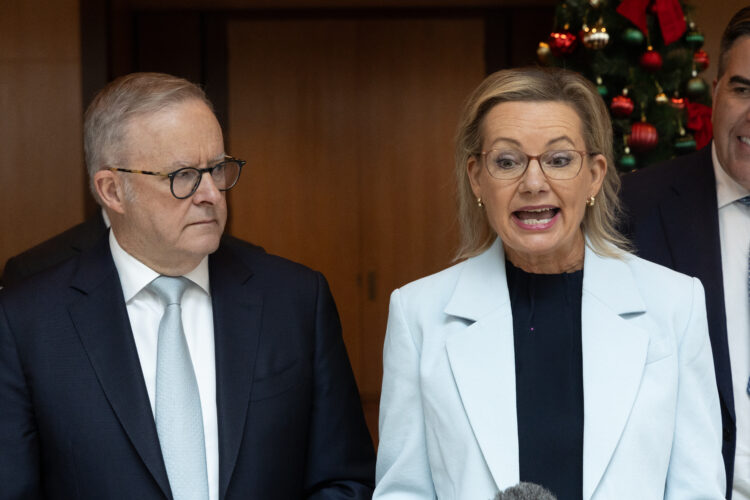
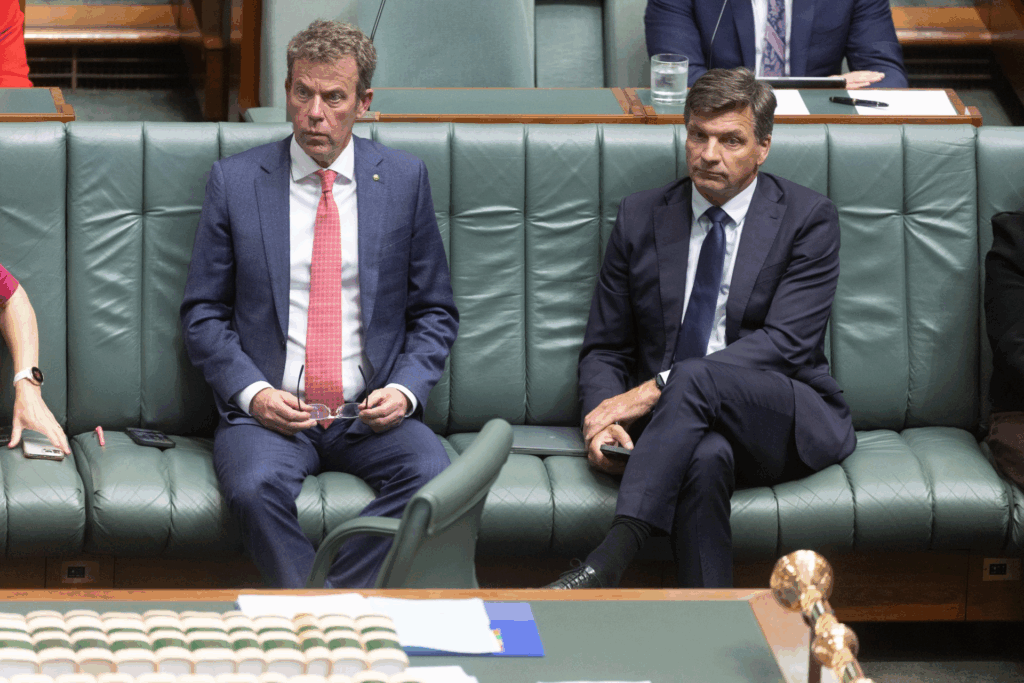
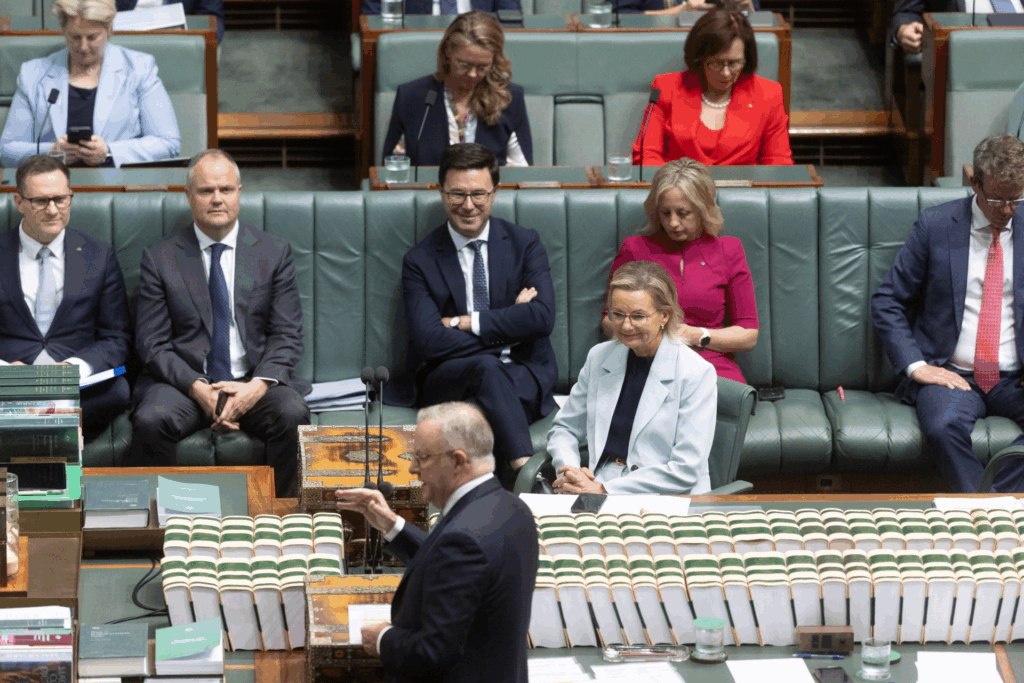
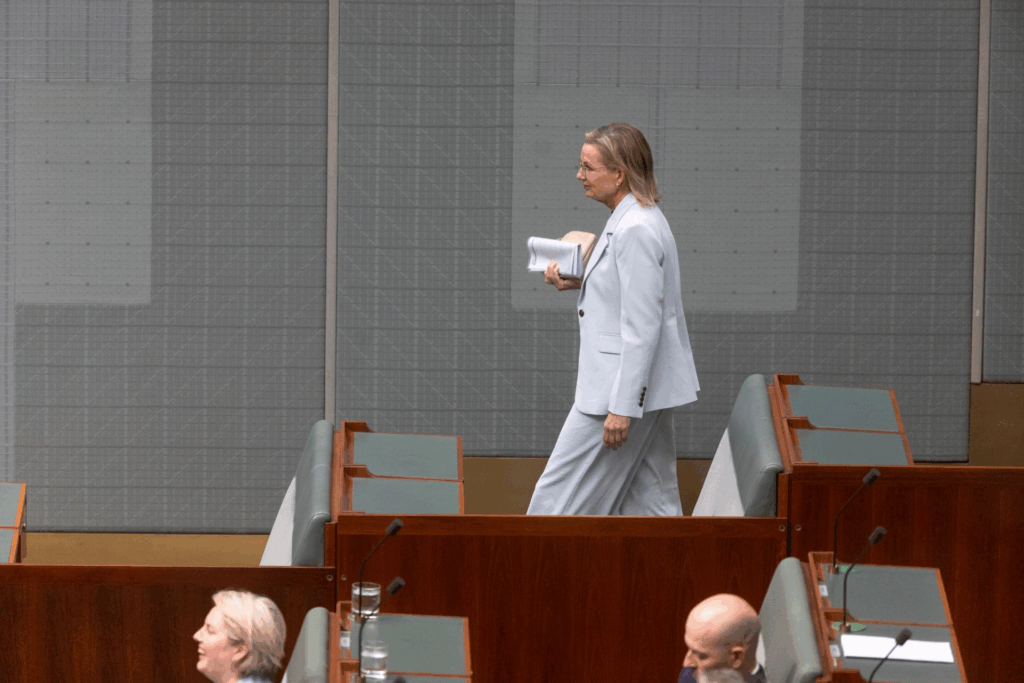
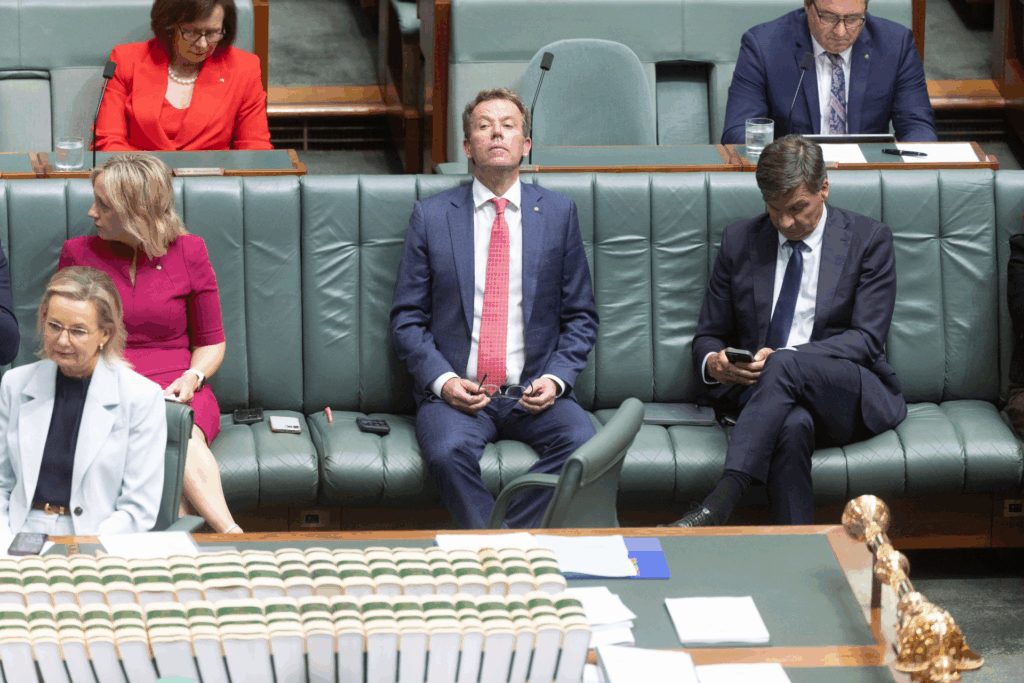
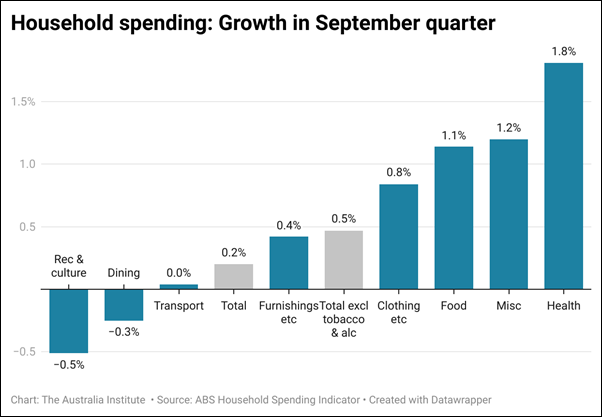
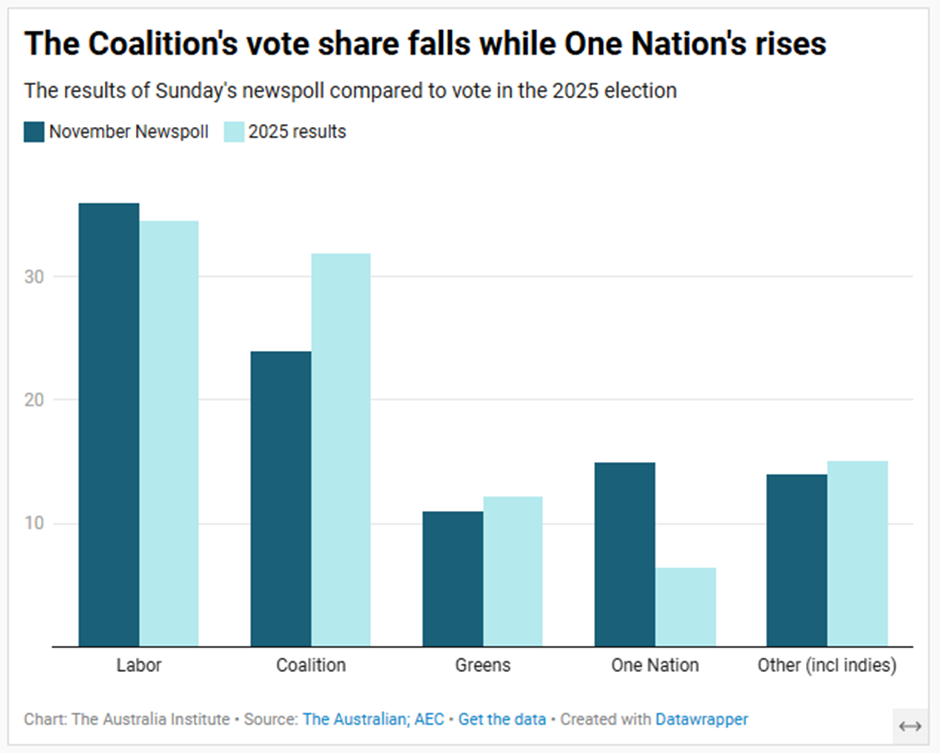
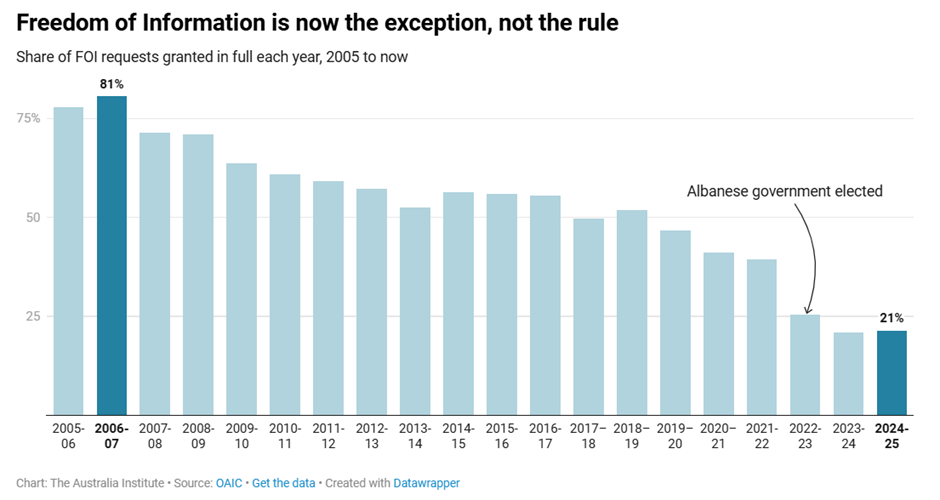
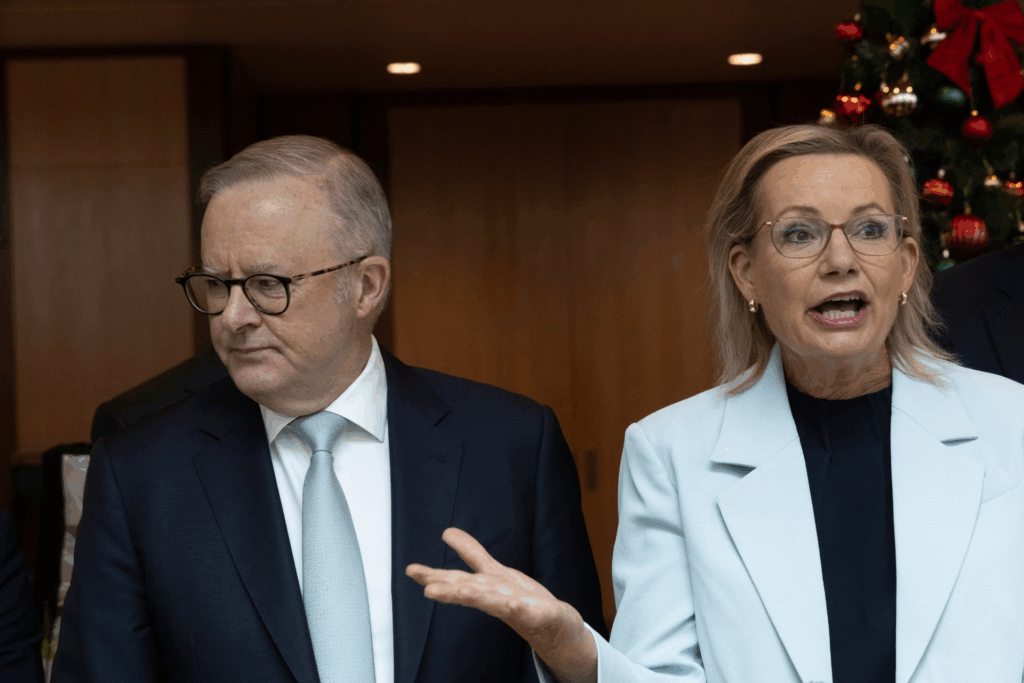
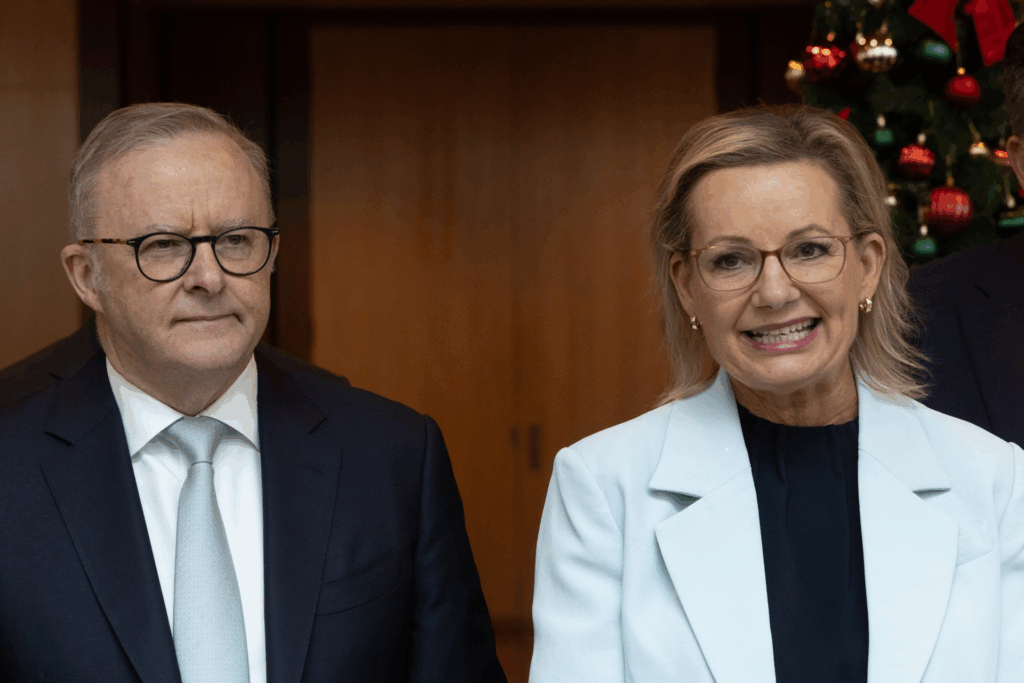


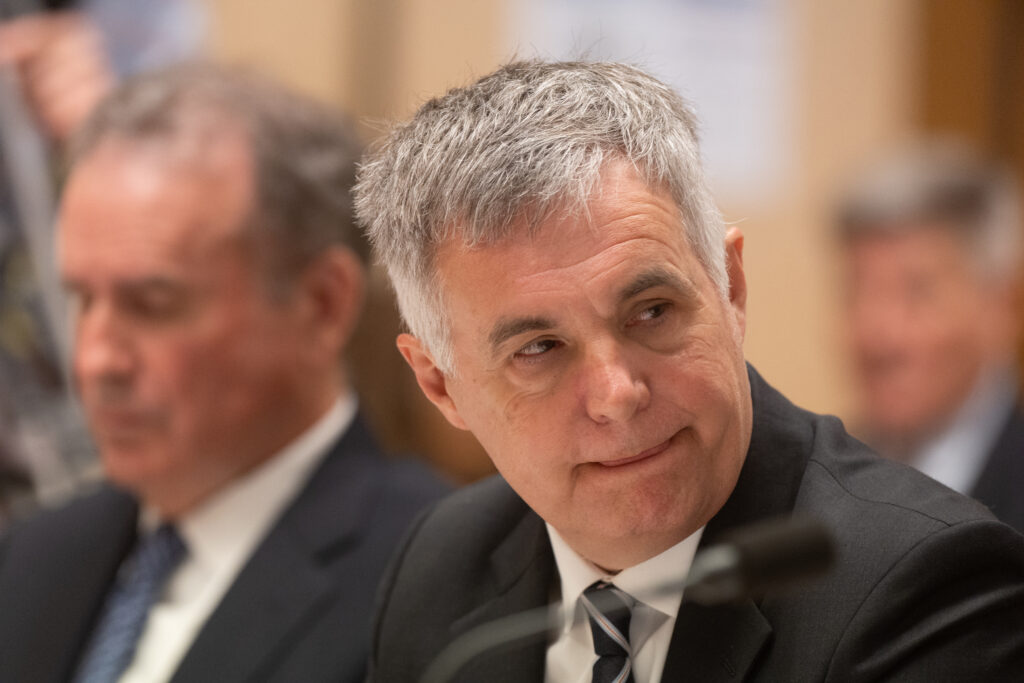
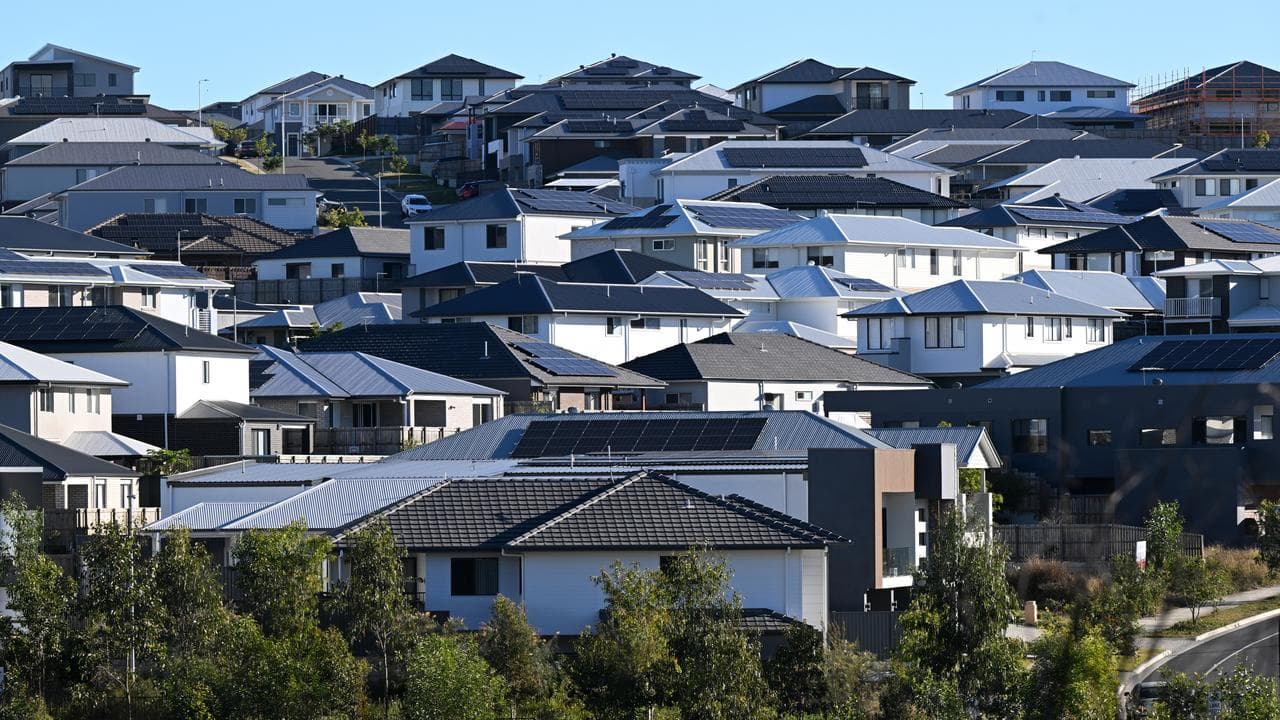
Comments
Start the conversation