Mon 28 Jul

Australia Institute Live: Parliament returns for its second week. As it happened

Amy Remeikis – Chief Political Analyst

This blog is now closed

Start the conversation

Australia Institute Live: Parliament returns for its second week. As it happened

Key Posts

The Day's News

See you tomorrow?

Look, we could continue on, but honestly, it is cold and raining here in Canberra and sometimes you just have to choose life.

But we will be back here tomorrow! And my goodness – thank you for coming back and visiting us so often! We know you have a lot of choice, and it really means the world that you are choosing to spend some time here with us. Mike Bowers is on assignment for the rest of the week, which means you just have me guiding the blog, but I will do my best in his absence.

Party room meetings are happening tomorrow and I am still waiting to hear whether the possibility of an AUKUS review is gathering more steam after the meetings with the UK defence peeps over the weekend. We live in hope.

Until tomorrow, remember that the English cricket team are the worst, and take care of you.


Ax

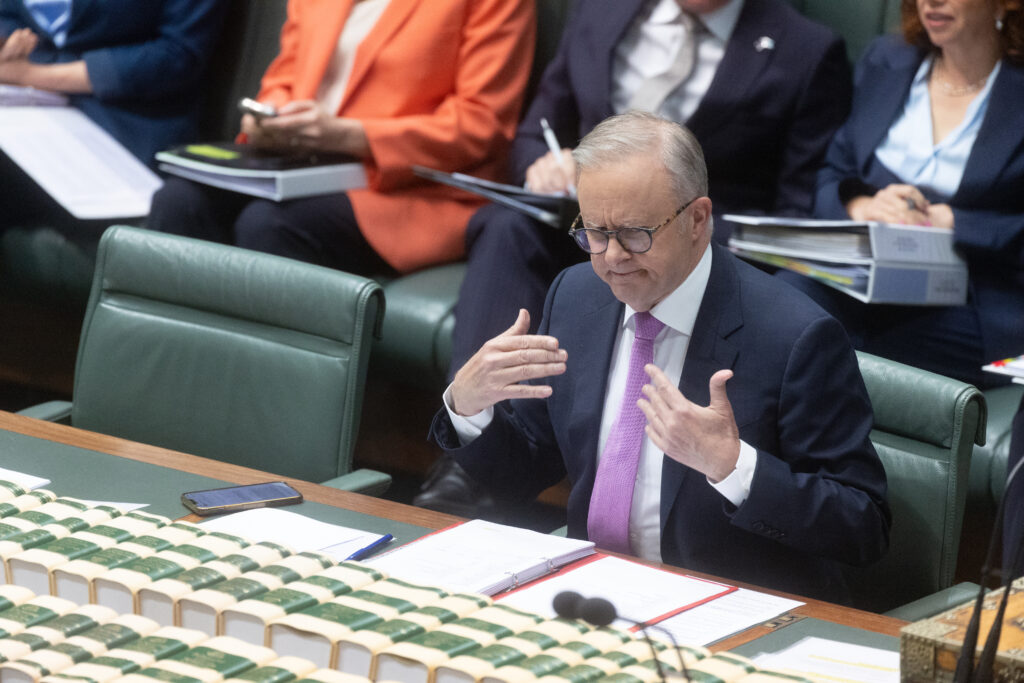
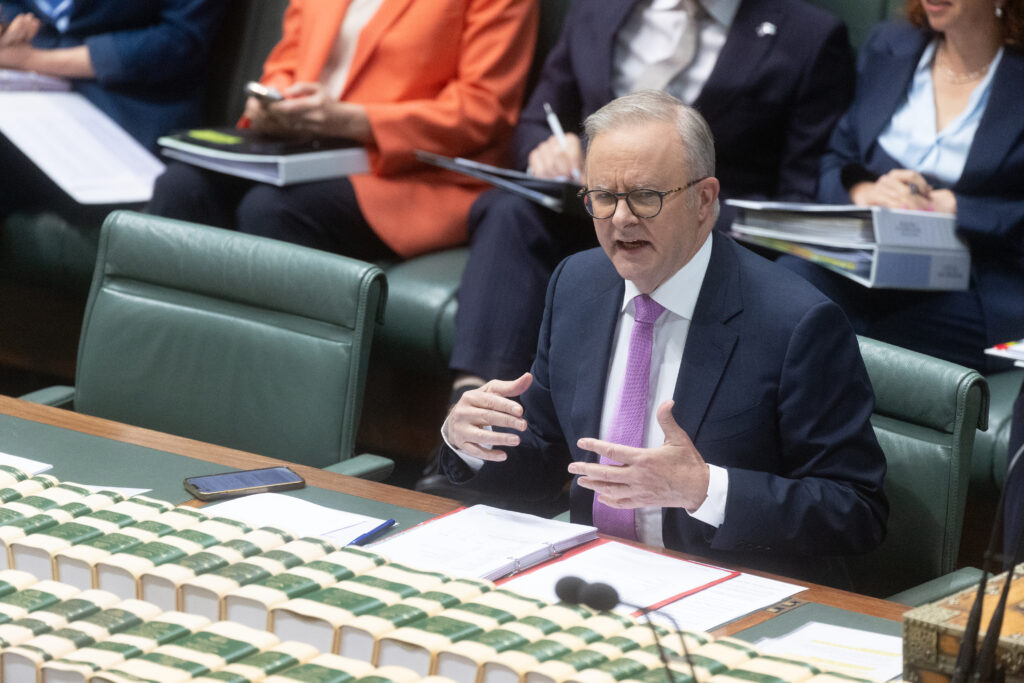
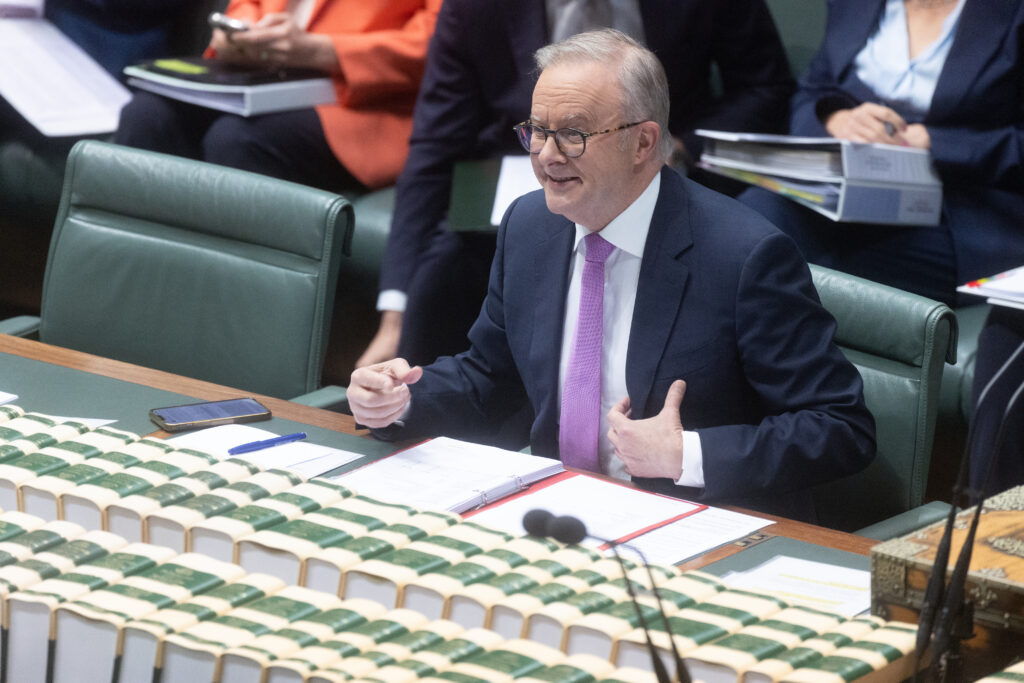
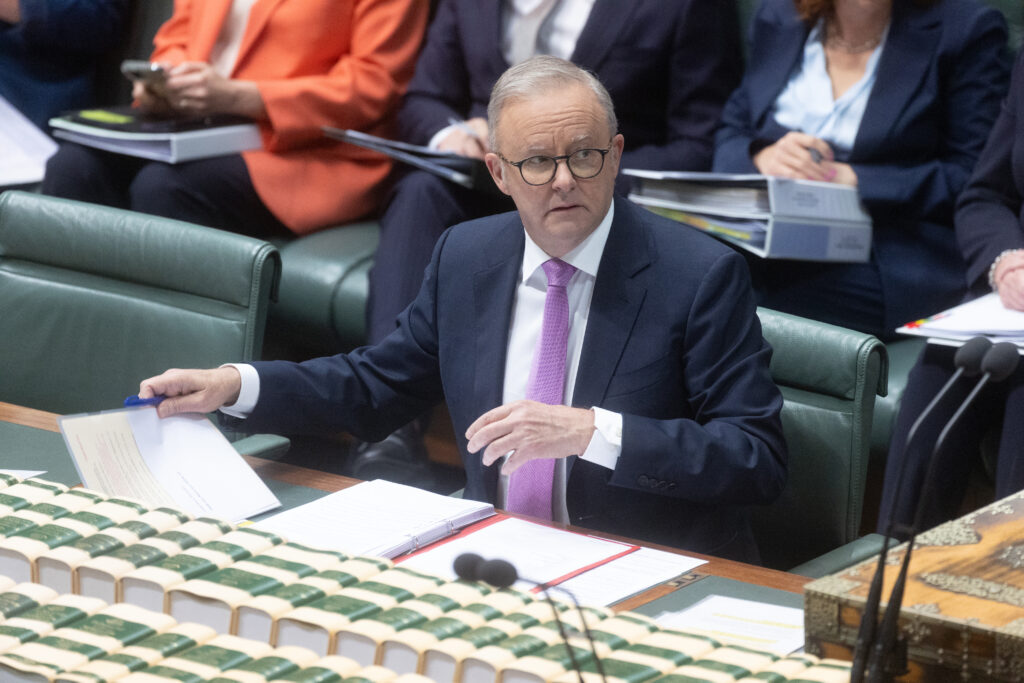
Anthony Albanese likes to speak with his hands. Sometimes so much so, it looks like he is doing the Monster Mash:

(All photos by Mike Bowers for The New Daily)

He did the Monster Mash
It was a graveyard smash
It caught on in a flash
He did the monster mash.

What did we learn in QT?

Well, we learnt that question time that the Coalition still have no idea what they are doing, and the independents are positioning themselves as more of an objective opposition asking questions on behalf of their constituencies.

Oh and that Tim Wilson still thinks this is 2019 style politics.

It makes sense that the Coalition are still lost – they have no policy positions, no cohesion, and no real landing point on what they think the Australian people want. And the independents have made it a point of difference to ask what they think their electorates want, and have a real policy discussion, rather than just political point score.

But it is even more stark in this parliament, where the Coalition are, for all intents and purposes, flailing.

Question time ends

Thank Dolly.

Rebekha Sharkie has a question for Tony Burke, who is representing the minister for environment, Murray Watt:

The great southern reef stretches from Western Australia across the southern state to New South Wales, it is more unique biodiversity than the Great Barrier Reef but receives just a fraction of the Federal funding. With the algal bloom cat in South Australia, will the government commit to properly funding monitoring of the great southern reef?

Burke:

I thank the member for Mayo for the question. And also for her whole time here in the Parliament has been an absolute champion of that coastline, including beautiful Kangaroo Island in her electorate. I think the member’s right to say that the great southern reef, people will know the Great Barrier Reef on the east coast, people will know Ningaloo Reef opt west coast but the great southern reef, you’re going from New South Wales, between Tasmania, around Tasmania, around Victoria, South Australia and WA, talking about 8,000km, the size of this reef and there’s been understandably a focus on it right now because of the algal bloom.

If you think of that distance, being a reef of some 8,000km, the algal bloom is 4,400km. So the size of what’s going on is extraordinary. As the member’s aware, and I’ll go to monitoring in a minute, but as the member’s aware, the environment minister has committed $14 million together with South Australia to make sure that we are helping South Australia in particular which has been so horrifically hit by this algal bloom.

You think of people walking along the beaches in South Australia. Like, the great joy, what would normally be the happiest part of their day has become the most depressing, seeing the death of marine life along those beaches. There is significant research and conservation projects which do touch on the great southern reef.

The projects that I’ll go through, they’re not limited to it but a whole lot of their work is within the great southern reef. For example, there’s $24.5 million which goes most of the sites for this on handfish, giant and shellfish, reef restoration projects, knots purely the great southern reef but most of the sites in the program are the great southern reef.

Similarly, there is $5.5 million through the national environmental science program and the Fisheries Research and Development Corporation for management effectiveness, knowledge gathering, across those marine parks, in particular in temperate reefs, and the bureau — Bureau of Meteorology together with the CSIRO is also looking at having a marine heatwave forecast tool. People would be aware that the challenge here has been three things that have come all at once. We had, from the Murray River, a nutrient run-off of extraordinary proportions, combined with the cold water [not coming] and also a marine heatwave. All of that has caused what we’ve been seeing, by the best of scientific research so far. But the commitment that I certainly can give as well is that that Albanese government will continue to support the South Australian government to address what is horrific.

Unfortunately, Tim Wilson is still being Tim Wilson:

My question is to the Prime Minister. Or this guy. The Albanese Labor government decided not to deregister…

Tony Burke is on his feet immediately, because who doesn’t like a bit of sport from time to time.

There are times when abuses of the standing orders are by people who know it’s an abuse and it’s completely deliberate and I put to you this was one of those times.

Dugald tells Wilson to stick to the proper names.

Wilson is back. With that grin. You know the one.

The Albanese Labor government decided to not deregister out-of-control CFMEU and appoint an administrator. The CFMEU boss has called on his union to break into the New South Wales residential building sector saying ‘The builders who are going to get the state government money are not our builders 6789 the challenge for us is we’ve got to get into that non-union sector.”

Will the CFMEU’s plan to unionise the New South Wales residential housing sector increase prices or decrease prices?

Albanese:

We on this side of the House are the only political party in here that actually took action against the CFMEU. Those opposite… Those opposite presided over 10 years of growth in the power of John Setka in the CFMEU construction branch. Three weeks after I became leader of the Labor Party, in 2019, I kicked John Setka out of the Labor Party. And during the last term… (

And during the last term, Mr Speaker, we took action to remove the power of people who had gone, someone like John Setka who had gone from controlling the Victorian branch to then controlling the South Australian branch de facto as well, had — well, had increased his power in the union. In the Labor movement, the construction branch of the…

The interjections grow and there is a point of order but Albanese decides he can’t be bothered and sits down (he concludes his answer)

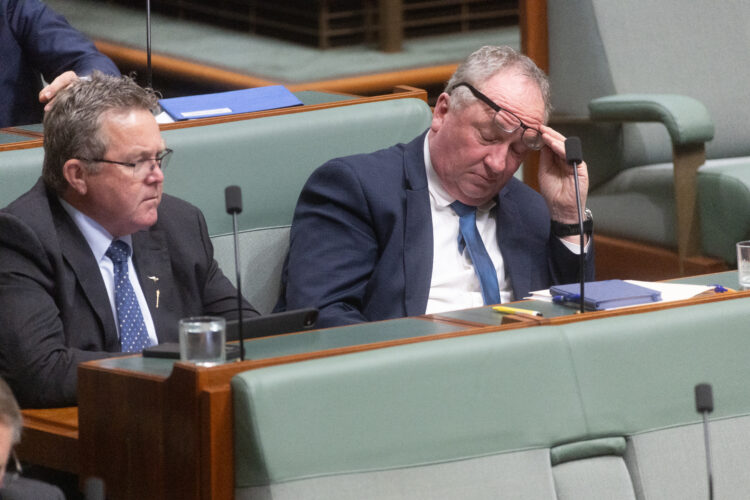
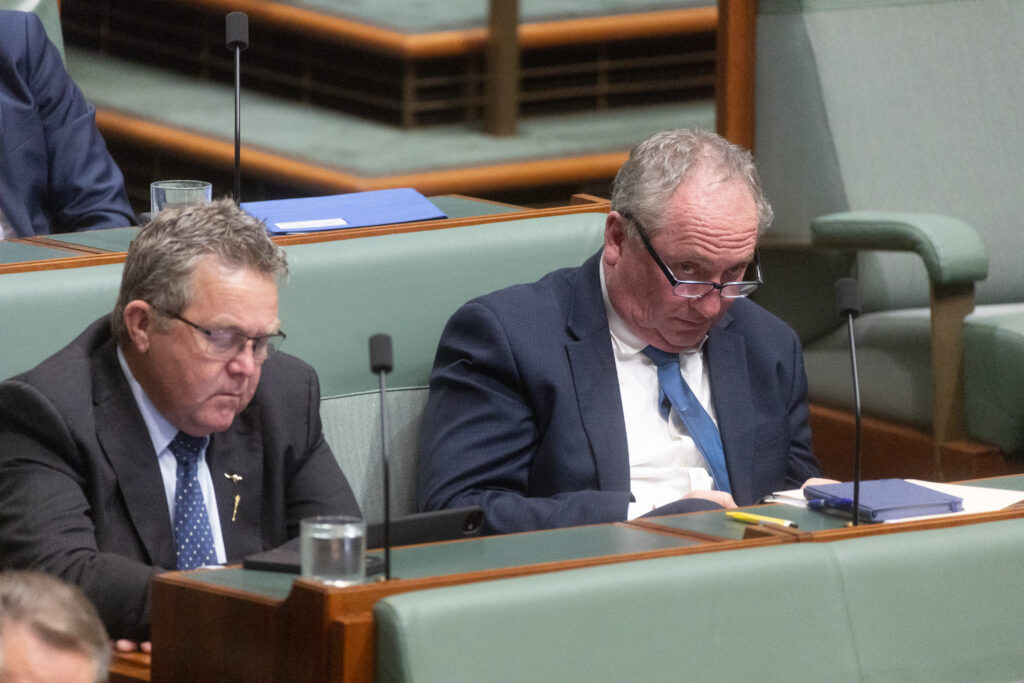
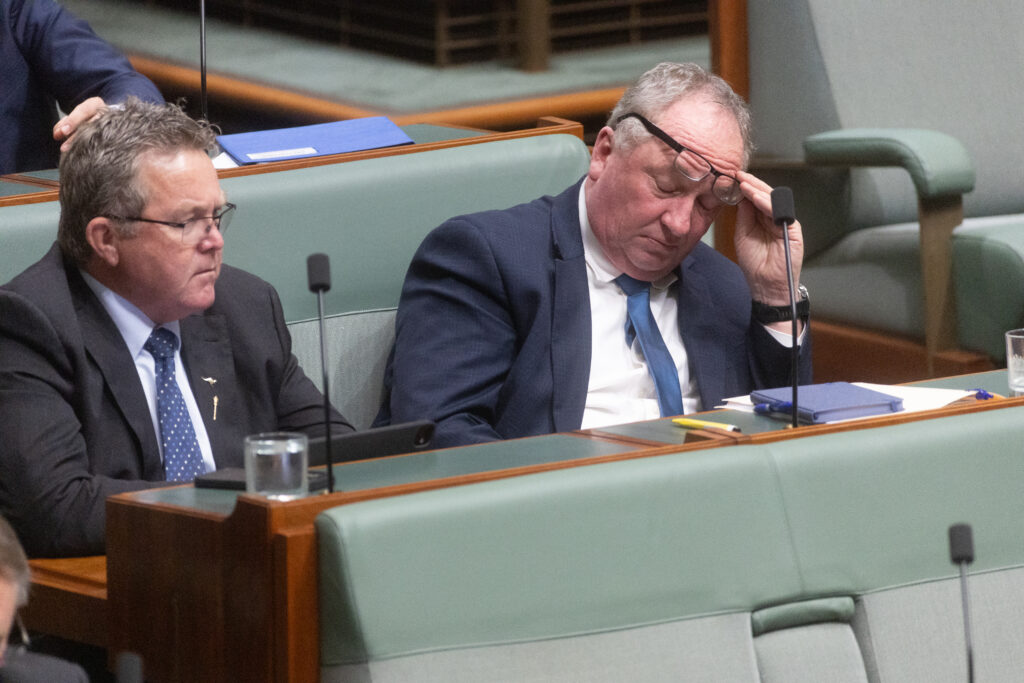
Things are going great for the Nats, as caught by Mike Bowers:

Barnaby Joyce during question time in the House of Representatives chamber of Parliament House, Canberra this afternoon.

The current leader of the Nationals
Barnaby Joyce during question time in the House of Representatives chamber of Parliament House, Canberra this afternoon.

Trump aggressively selling fossil fuel

Frank Yuan
Postdoctoral Research Fellow

The US and the EU have reached a trade deal a few hours ago, averting a trade war between allies (for now). A 15 percent tariff was as low as Trump is willing to go – Japan got a similarly “nice” treatment. In return for this leniency, the EU committed to buy more American weapons and another $US 750 billion worth of energy (or $1.14 trillion in Australian dollars).

We can be sure that the energy in reference would be overwhelmingly, if not entirely, fossil fuel. And $1.14 trillion is a lot – you could buy 11 billion barrels of crude oil at current price, or three-and-a-half years’ worth of import for the EU. Remember: this is additional purchase on top of the existing orders!

Trump is serious about his promise he would make America dominant in energy production and export. To do so, the Trump Administration is now trying to keep the rest of the world addicted to its fossil fuel. This would give the US leverage over its customers, and ensure handsome profits for American fossil fuel producers and investors – all at the expense of the rest of us, who will be left with the consequences of climate change.

This is a threat to our future. A collateral damage may well be Australia’s own fossil fuel industry, who will face greater competition from the unleashed American producers. A smart play for Australia, even if for purely self-interested reasons, would be to aggressively diversify towards renewables.

The United States is increasingly a disruptive, even (literally) toxic global actor. Australia should be quite wary of what Trump is selling.

Sophie Scamps asks Anthony Albanese:

I have been swamped by electorate people writing to me of their horror of the atrocities occurring in Gaza. I shares they distress and their calls forker Australia to use all diplomatic levers to end these atrocity the. France will soon join 147 nations in recognising Palestine as a state and a step towards As we witness the mass starvation and the killing of so many civilians and children in Gaza, when will Australia be prepared to recognise Palestine as a state?

Albanese:

I thank the member for Mackellar for her question, and I share the distress that people around the world would feel when they look at young Mohammed, a one-year-old. He is not a threat to the state of Israel nor is he someone who can be seen to be a fighter for Hamas. He’s a young child who deserves to be treated appropriately.

And the position of the Australian government is very clear. That every innocent life matters. Every Israeli and every Palestinian. This conflict has stolen far too many innocent lives, tens of thousands of civilians are dead, children are starving.

Gaza’s in the grip of a humanitarian catastrophe. And Israel’s denial of aid and the killing of civilian, including children seeking access to water and food, cannot be defended nor can it be ignored. We have called upon Israel to comply immediately with its obligations under international law.

We have also unequivocally condemned Hamas and said it can play no role whatsoever in the future state of Palestine and hostages must be released immediately. I make three points about recognition.

The first is that my government is committed to a two-state solution. Israel and Palestine. That has been a bipartisan position for a long period of time. Australia played a role in the creation of the state of Israel in 1948 and it’s something we should be proud of.

But what was envisaged was two states, not one.

The second point I’d make is that the foreign minister announced last year na recognition of a Palestinian state by Australia might occur before the finalisation of a peace process. The third point is that the timing of a decision to recognise the state of Palestine will be determined by whether that decision advances the realisation of that objective. It must be more than a gesture. It must be something that’s a part of a moving forward. Australia will make that decision as a sovereign state. We obviously are in discussions with other countries as well going forward. We do that because the reason why a two-state solution remains the goal of the international community is because a just and lasting peace depends upon it.

Prime Minister John Howard said that in 2006. That there can be no solution to the Middle East without solving the Palestinian question, and that means not just Israel’s right to live in peace and security and to defend itself. It also means that the realisation of the legitimate aspiration of the Palestinian people to live in their own state, with peace and security and the prospect of prosperity, as well.

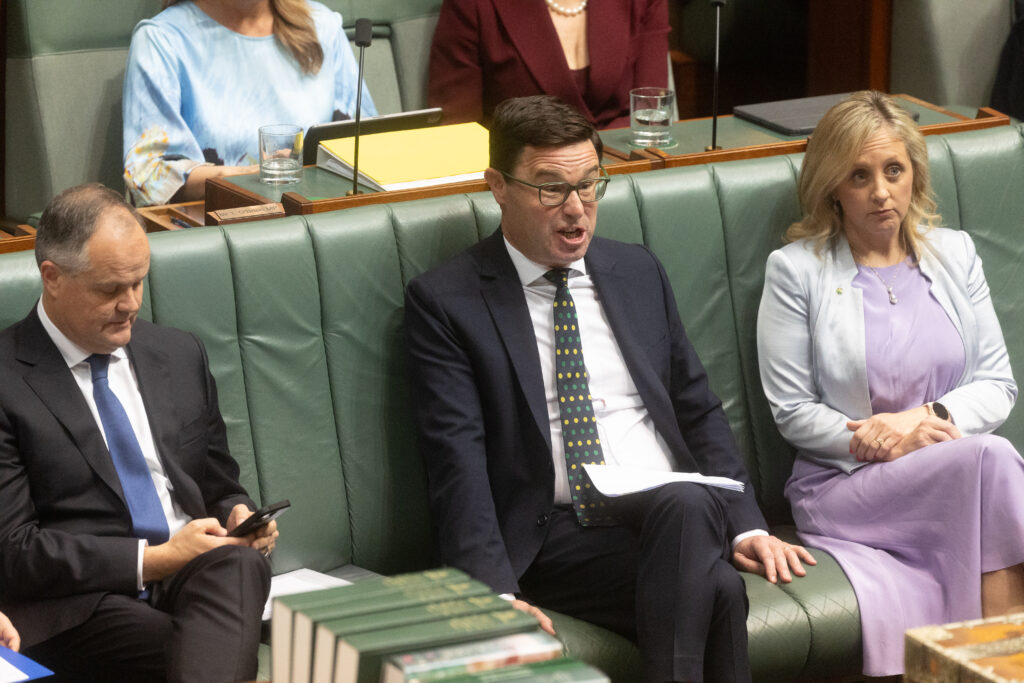
David Littleproud gets a chance to ask a question:

Can the Minister confirm if the Inspector-General of biosecurity’s recommendations that import risk assessments should include the oversight of a scientific advisory panel were implemented in the decision to overturn US beef import bans? If not, why not?

Julie Collins:

I thank the Leader of The Nationals for that question. As the member opposite knows, this was a risk based assessment done by the department on scientific evidence and the department officials have gone through the process and the report was popped up on the website last week, and as the member would know Australia benefits from a two-way trade system.

Australian beef going to the US is very significant indeed. What I would say to the member opposite is that he should not be undermining Australia’s biosecurity system.

We have not compromised on biosecurity at all in any way, shape or form, and the member opposite would know of course we have had to put around $2 billion additional into biosecurity since we came to office because of the way they left our biosecurity system.

The other thing I would say to the member opposite is, of course, he would be aware that that decision has been coming for some time. He would know all about the process that I have spoken about. He would know about the industry engagement that has occurred throughout this process.

The other thing that he would know is that the US and Australia traceability systems are equivalent and that the decision has been taken based on science around the US system and the Australian traceability system and, of course, all food imported into Australia must be safe and compliant with our food standards. This has been done on a scientific basis. The member opposite would know that the department’s security assessment is done in the usual manner as it is done for every other imports into this country.

For reasons known only to the Liberal tactics committee and we assume, the Very. Smart. People. that inhabit Ted O’Brien’s senior staff, Ted O’Brien gives Jim Chalmers a dixer:

My question goes to the Treasurer. Under Labor there has been 12 interest rate increases (inflation started rising under the Coalition), inflation remains too high (lol, it is at 2.4% – well within the RBA target band), A 5 per cent productivity collapse, a household recession and the fastest fall in living standards on record yet the Treasurer has boasted about to unemployment rate. What does the Treasurer tell the Australian people now that the unemployment rate has spiked to its highest level in almost three years? (omg – this is just a gift to Chalmers, considering what unemployment was under the Coalition)

Chalmers is on this question like tipsy me on a slippery slide:

I say to the Australian people that unemployment is average lower than any other government in the last 50 years. That’s what I say to the Australian people. If you compare every single government of the last half century, Mr Speaker, the government led by this guy has overseen the lowest average unemployment of any of those governments for half a century.

This is precisely why the people in front of the member for Fairfax are more excited about his promotion than the people behind him.

Because he bowls up these absolute Dixers. He’s doing his best to make the former Shadow Treasurer look good. Mr Speaker,

I’m asked about the progress that Australians have made in our economy. I invite the Shadow Treasurer, I invite the House, to cast their mind back to the day that we were elected in 2022. Interest rates were already going up. He forgot to mention that. Inflation was much higher and galloping. It had a six in front of it. It now has a two in front of it. We saw a substantial fall in living standards in the last quarter of those opposite. real wages had been going down, not by accident but as a deliberate design feature of their economic policy. We don’t pretend that every challenge in our economy has been solved but we do acknowledge that Australians together have made substantial and now sustained progress in our economy.

Inflation has ha two in front of it now. It has a six in front of it under those opposite.

Real wages have been growing for 18 consecutive months under this government. Again not by accident but a deliberate design feature of our economic policy. Living standards have turned around and are starting to grow again, recovering some of the losses that they made under those opposite. When we came to office, there were only deficits in the budget. We turned two of them into surpluses.

When we came to office there was a trillion dollars..

Ted O’Brien gets in trouble for interjecting 14 times in one answer (interjecting is truly is one of his only talents) and Dugald Dick makes an appearance in telling him to cool it.

Chalmers:

Because of the progress we have made on the budget, not pretending that the work is done, but we have made progress, a couple of surpluses, much smaller deficit this year, less debt than we would have inherited this year, saving on interest costs, all the progress the Australians have made room. We’ve been able to find room with the cost of living, make their medicines cheaper, cut their taxes three times, all of the other way that is we’re helping Australians with the cost of living. The Shadow Treasurer was asked on 14 July on 2GB what the main feedback was from the election. He said he’s been getting lots of feedback and he said his feedback was people liked their policies. That’s news to me. Their policy was for higher taxes and bigger deficits.

Monique Ryan has the first independent’s question and it is on when will the government get rid of the Jobs Ready Graduate program that the Morrison government put in place and create a more equal fee structure for university degrees.

Ryan:

My question is for go education minister. Minister, the legislation we are set to pass this week will cut HECS debts for 2.9 million Australians which is fantastic. However, the legislation does not help current students undertaking law and arts degrees whose fees were massively inflated by Scott Morrison’s job ready graduate scheme. I put an amendment to this bill which would scrap job ready graduate program.

Will the government accept my amendment so we can get rid of the scheme tomorrow?

Jason Clare:

Can I thank the member for Kooyong for her question. Probably the best member for Kooyong the Parliament has ever had. (There is some cheers from the public gallery)

Bit of support up there in the public gallery. Your focus on education and your focus on fairness and also thank you for your support for the legislation to cut student debt by 20 per cent.

20 per cent is a big cut. It’s not as big as 33 per cent, that’s how much the Australian people cut the number of Liberal MPs in the chamber at the election.

But 20 per cent is still a big cut. It’s gonna help a lot of Australians, 3 million Australians.

It will get their student debt cut when this legislation passes the Parliament. Mr Speaker, the truth is we’ve got a good education system but it can be a lot better and can be a lot fairer. That’s what this universities accord report is all about. It’s a blueprint for reforming our higher education system over the next decade and beyond. The job ready graduate scheme that you referred to in the question is the subject of recommendations in that report. We have already begun the task of implementing that report. I think we have bitten off a big chunk of it already, about 31 of the 47 recommendations in part or in full. Now that includes paid prac and the Australian tertiary education commission that began this month. It also includes measures in the bill that we’re debating this week in the Parliament to fix the repayment system for HECS, something that Bruce Chapman, the architect of HECS, described as the most important change to the system in 35 years. There’s more works to do. We’ll keep working through the recommendations in the university’s accord report and take advice from the tertiary education commission as well

That is code for ‘we are getting to it, but we are not in a rush’ which really, is the least the government can do.

Sussan Ley is back (along with her very sensible voice – a bemused Coalition MP was telling me that it is part of the ‘we are being very sensible’ decree from Ley, as well as the Liberals are hoping for some sort of juxtaposition between a very cool and calm Ley and a ‘raving’ Albanese. That’s pretty obvious, but doesn’t account for the fact that Albanese is not Morrison and doesn’t instinctively talk down to women.)

Ley:

My question is to the Prime Minister. Since coming to office, Labor has added $144 billion of debt and the most recent budget says Australia will be in deficit for at least the next 10 years. Treasury has now advised the government that the only way it can fix its broken budget is by raising taxes on hard working Australians. Last week the Prime Minister refused to rule this out. Will the Prime Minister now rule out raising taxes on hard-working Australians?

Jim Chalmers has a lot to yell about this, and Milton Dick tells him to shut it. No doubt there will be dixers for that.

Albanese:

We have just been through an election with two alternative propositions. One on this side of the House, giving tax cuts to every single Australian taxpayers and pair, all 14 million of them, building on the tax cuts that we introduced and from 1 July last — and implemented from 1 July last year, making a saving of around about $50 for people out there, average workers, making a difference, not just representing people who are members of Parliament, representing the people who are in our constituencies. When we made that announcement, those opposite, I well recall saying that they would roll it back absolutely, they would roll it back. I well remember that. (INTERJECTIONS)

So we thought when the Treasurer came to the budget in March of this year, with a proposition for not one but two tax cuts over the next term – this term now of government, we thought, ‘Well, they’ll just wave it through. They’ll wave it through. They won’t commit the same position that they did last time, which was to say they oppose odd it before they knew what it was.”

Then they said they’d roll it back and then they said we should have an early election on it. But sure enough, the as night follows day, we overestimated them because what they did was they said that they were opposed to it.

They then voted against it and then they said they would introduce legislation into this Parliament during this term to increase taxation for all 14 million Australians. (INTERJECTIONS) But it takes some credit given the question also asks about debt as well as taxation to actually not only have a plan to increase taxation, they had a plan to increase the deficit over two years (INTERJECTIONS) as well. Creative if nothing else are those opposite. (INTERJECTIONS) We have reduced the debt by $177 billion. We produced two budget surpluses and a reduced deficit in the current year and for the year’s…

Sussan Ley has a point of order that is not a point of order.

Albanese finishes with:

Less debt and lower taxes on this side of the House. More debt and higher taxes on that side of the House. They’ve got a private members’ bill to wipe out every bit of emissions policy going back to John Howard in the year 2000. Will they introduce a private members’ bill to increase the income tax for all 14 million Australians? I await for one of their backbenchers to do that.

Question time begins!

OK, after letting everyone know that we are all very sad about the Pope, we have moved on to questions.

Sussan Ley:

My question is to the Prime Minister. Australians rely on the government to confidently and competently advocate for our national interest. But yesterday the trade minister seemed to be hallucinating on national TV when he invented a conversation between the US President and the Prime Minister about beef. How can Labor be trusted to secure tariff exemptions when the trade minister confuses a public statement from the President with a leader to leader phone call that never happened?

Good times.

Albanese:

I’m asked about statements by the US President, and I recall on 5 May 2025 he said this. ‘Albanese, I’m very spendly with, he’s very good, he’s a friend of mine. I can only say that he’s been very, very nice to me, very respectful to me. And you know we’ve had a very good relationship. I have no idea who the other person is that fan and ran against him.”

Ahhh, yes – always good to remind people that the nonsense-in-chief knows who you are.

After a bunch of interjections, Albanese gets back to it:

During the campaign when it came to tariffs, the former Leader of the Opposition said that he would be able to fix it and that there would be no problem. The truth is that no country in the world has a lower tariff than Australia has right now of 10 per cent.

And the arrangements that have been put in place are all, at least that, but in most cases have, of course o been higher, 15 per cent, 25 per cent, some substantially higher. What we will do is to continue to engage in Australia’s national interests, to advocate, to get the best outcome possible with the United States. I have said very clearly that tariffs are an imposition of a higher cost by the country on itself that imposes them. That is what is happening. Americans are still importing goods from the global community.

They’re just paying more for them, which is why I argued that tariffs are an act of economic self-harm and which is why Australia hasn’t reciprocated with tariffs. Of course Australia has a free trade agreement with the United States. We impose zero tariffs on them. That is our ideal, but the President of the United States has made it very clear, with statements including that tariff is the most beautiful word in the English language, that that is not his position.

We’ll continue to argue our case. Those opposite will continue to argue against Australia’s interests.

And yes, that didn’t answer the question, but this is question time, not answer time.

Question time is delayed for a condolence motion for the former Pope, Pope Francis.

This is going to delay the questions for some time.

(A reminder we don’t actually have a national religion)

Righting wrongs

Alice Grundy
Research Manager

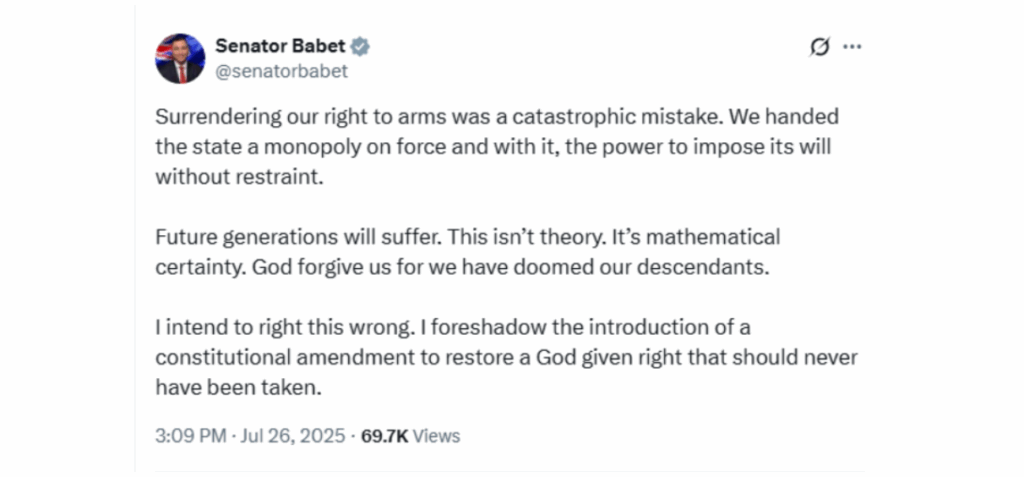
Surprising take on Australia’s gun laws from Senator Babet from Victoria on Saturday. He says there is “mathematical certainty” that future generations will suffer.

In this reality, Australians have benefitted from the reforms instituted by the Howard Government. Since the National Firearms Agreement was introduced and the government bought-back 600,000 firearms there has not been a single mass shooting in Australia. Firearms homicides and suicides have drastically decreased. There is still room for improvement though. Australia has a higher firearm homicide rate per capita than Spain, Germany, the UK, South Korea and Japan.

Rather than a constitutional amendment to give Australians the right to bear arms, Australia Institute polling shows that most Australians (64%) think our gun laws should be tougher.

There’s more to do on firearm reform and it doesn’t involve outlier positions such as trying to model our legislation after the United States where there were nearly 500 mass shootings last year.

It has Sky News all a-flutter, so naturally NSW Labor is also clutching its pearls over it, but the Greens have backed in the right to protest, by warning police against challenging the planned march across Sydney Harbour Bridge this weekend, in support of Palestine and calling for sanctions against Israel.

The NSW Greens have written to police minister Yasmin Catley and Police Commissioner Karen Webb to warn that similar court challenges against peaceful and lawful protest, have failed.

 NSW Greens MP and Justice Spokesperson Sue Higginson said,

As Greens MPs and as people with a conscience, we are all in full support of Palestine Action Group’s desire to hold a community march across Sydney Harbour Bridge at 1pm this Sunday. 

Labor Premier Chris Minns must support this community march too. Any other position will display a catastrophic lack of human compassion and understanding of the people’s need to take action and communicate their political expression”, 

It is impossible to overstate the gravity of Israel’s ongoing genocide in Gaza. Children’s organs are caving in on themselves due to malnutrition. Men are running away from aid sites with bags of flour soaked in blood. Israel’s Government is targeting innocent civilians and contradicting international law – and the F35 fighter jets that are slaughtering Palestinians operate because of parts made right here in NSW.

This is a Premier who accepted an award from Israel’s President months into a genocide, and who lit up Sydney’s Opera House in support of Israel the moment their illegal war on Gaza began. Chris Minns can be remembered as a man who spoke out in the face of genocide, or he can be remembered as a man who blocked the people of NSW from protesting as children starved.

The NSW Police must permit the people of NSW to peacefully protest. Any challenges to this protest by NSW Police will fail and will be a waste of public resources. It’s Police Minister Yasmin Catley’s responsibility to ensure no challenge occurs and that NSW Police work cooperatively with the community to facilitate this important protest action.

The people of Australia are completely aghast at our Government’s inaction, and marching across the Sydney Harbour Bridge will be a powerful symbol of solidarity between the nations of Australia and Palestine.

The Palestine Action Group’s protest is legal, it is moral, and it must go ahead.” 

We are into the downhill slide towards question time, and really, it can’t get much worse than it has been already today.

So go and enjoy some freedom.

AAP

The local share market has moved higher after the US and the European Union agreed on a preliminary trade deal over the weekend, apparently avoiding the threat of a global trade war.

At noon AEDT on Monday, the benchmark S&P/ASX200 index was up 26.8 points, or 0.31 per cent, to 8,693.7, while the broader All Ordinaries had gained 25.4 points, or 0.28 per cent, to 8,958.3.

During a meeting at Donald Trump’s Scottish golf course, the US president and his EU counterpart announced they had reached agreement on the framework for a trade deal, days before a US-imposed Friday deadline to strike a bargain.

The details remained vague and nebulous, however.

Traders were also watching for this week’s Federal Reserve meeting.

Despite Mr Trump’s threats, a rate cut is seen as unlikely, with the futures market giving it just three per cent implied odds.

ANZ’s research team said it would be looking at any tweaks to the language of the rate-setting Federal Open Market Committee statement, as well as comments from Fed chair Jerome Powell that might signal the September meeting is “live” for a rate cut.

Closer to home, the Australian Bureau of Statistics on Wednesday will release second-quarter inflation data that could determine whether the Reserve Bank cuts rates next month.

Eight of the ASX’s 11 sectors were higher at midday, with energy, materials and utilities lower.

In the energy sector, Boss Energy had plunged 41.5 per cent to a more than three-year low of $1.99 after the uranium producer flagged higher costs and other challenges at its Honeywell uranium mine in South Australia, which resumed production last year.

Other uranium companies were lower as well, with Deep Yellow dropping 7.1 per cent and Paladin retreating 3.9 per cent.

In the materials sector, BHP was down 0.9 per cent, Rio Tinto had lost 1.1 per cent and Fortescue had retreated 0.5 per cent.

All of the big four banks were higher, however, with CBA, ANZ and NAB all expanding 0.6 per cent and Westpac growing 0.3 per cent.

WiseTech Global was down 0.2 per cent as the logistics platform named a new chief executive.

The Australian dollar was buying 65.75 US cents, from 65.81 US cents at 5pm on Friday.

The Greens senator Peter Whish-Wilson says the biggest threat to farmers is actually Barnaby Joyce and his net zero scare campaign:

There’s never been a more important time in history for farming advocacy groups to form a united front, advocate for climate action, and rebuke attempts by The Nationals to undermine critical net zero targets. 

Few industries are more impacted by climatic disruption to ecosystems and biodiversity than farming.

Farmers and agricultural communities are on the frontline of our climate emergency, with droughts, heatwaves, pests, floods and fires expected to worsen with rising emissions and a warming planet. 

Climate change is costing the average Aussie farming family $30,000 a year – clearly, advocating for climate action is advocating for farmers.

Barnaby Joyce’s predictable attack on net zero – fueled this week by the Institute of Public Affairs – is out-of-touch, reckless and at odds with various agricultural bodies’ stated policy on achieving emissions reductions and net zero. 

My message to the National Farmers Federation and other peak agricultural groups is this: now is not the time to be silent on the real systemic climate action needed to reduce emissions and tackle the climate crisis. Now is the time to call out the political bullshit that puts farmers at risk”. 

The parliament sitting is kicking along very slowly today – which is by design.

The government wants attention on the chaos within the Coalition and all the rogue members who are starting to break ranks on all sorts of things (climate, gender etc) and to have that take up as much oxygen as possible. So don’t expect too much from the government if they can help it.

Matt Grudnoff
Senior economist

The opposition has been making a lot of elevated levels of business insolvencies in the last few years. They are saying that business has been abandoned by the government.

But the Reserve Bank looked into this issue and found it had more to do with the winding back of pandemic era support measures. During the pandemic insolvencies were exceptionally low. The recent increase in insolvencies on a cumulative basis remain slightly below the pre-pandemic trend.

Basically, policies during the pandemic supported businesses and meant that very few of them went insolvent. Far less than you would expect during a recession, but even much less than would be expected in normal economic times. Some of the businesses that were protected by these policies would have gone insolvent with or without the pandemic. The support measures only delayed the inevitable.

Now that the support measures have been wound back, we’re seeing a catch up in insolvencies.

Here is why Boele said she ran:

In recent history, the three key assumptions most of us accepted were that democracy could closely coexist with more or less unfettered capitalism, that it could be successfully navigated between technocracy and ideology, between cultural warriors and pragmatists, and that externalities like climate change and global conflicts could be ignored.

None of these assumptions are correct. And worse, they’re likely misleading. Distractions from the real challenges that we face. My three decades of working in finance energy and climate has shown me that capitalism needs well functioning democracies, ones where governments set clear rules, where independent institutions referee those rules, and where the rules are efficient and effective to protect the citizens and the consumers from bullies, scammers and corrupt actors.

Market players cannot effectively contribute to a strong economy amid uncertainty, when the direction of play is unclear, or when the rules of the game are changed, every time the red and the blue team change the captain’s chair, and with them, they take their ideologies and their special interests.

And what’s more, and I’ve heard this over and over again from the people of Bradfield, there’s a widespread conviction that political parties and therefore the parliament itself, are incapable of dealing with systemic, long standing issues.

We fail to properly regulate online media platforms. We fail to implement the reform agenda necessary to act on climate change, the existential crisis of our time we tinker around the edges of housing affordability, Australia’s gambling addiction, and making our taxation system fairer. And worse still, even if there is an inquiry or a commission that delivers a report, which is a thoroughly public and deliberative process, our parliament, the parties that comprise it and the special interests that they represent usually fail to deliver on the recommendations Gonski on education. Samuel on the environment, Henry on tax, Sackville on disability.

I could go on.

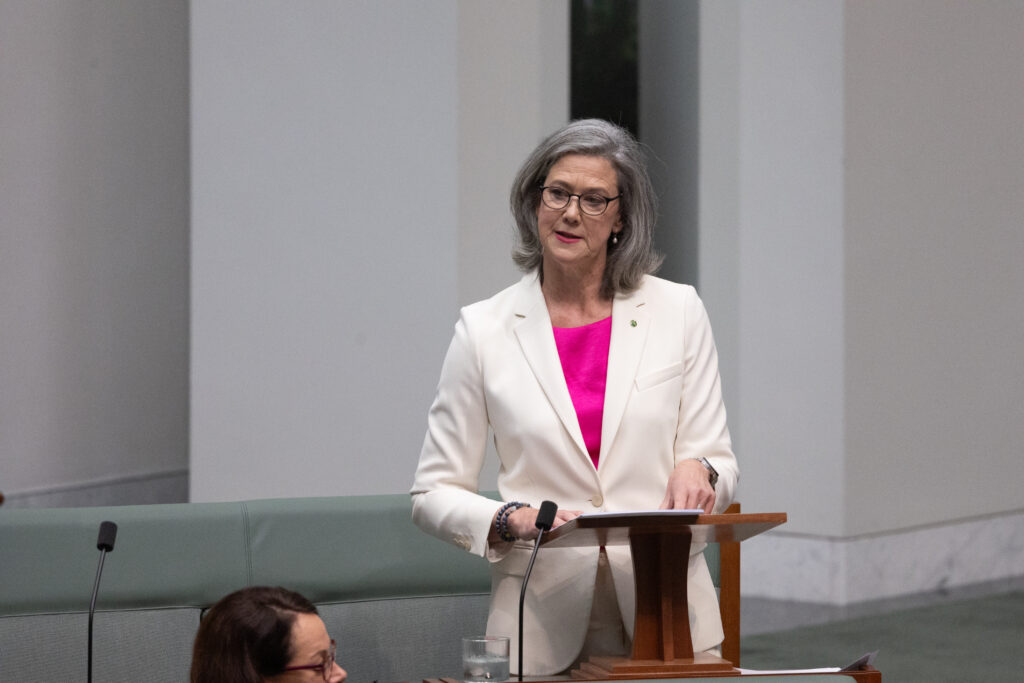
The new independent MP for Bradfield, Nicolette Boele has delivered her first speech in the House of Representatives.

Boele is still facing a last minute challenge by the un-successful Liberal candidate in the federal court over the seat (the Libs want the federal court to rule on ‘borderline’ ballots) but challenges do not stop Boele was being able to take her seat until the court says otherwise (if it does)

Mike Bowers was there:

The member for Bradfield Nicolette Boele delivers her first speech in the House of Representatives chamber of Parliament House, Canberra this morning. Photo by Mike Bowers for The New Daily

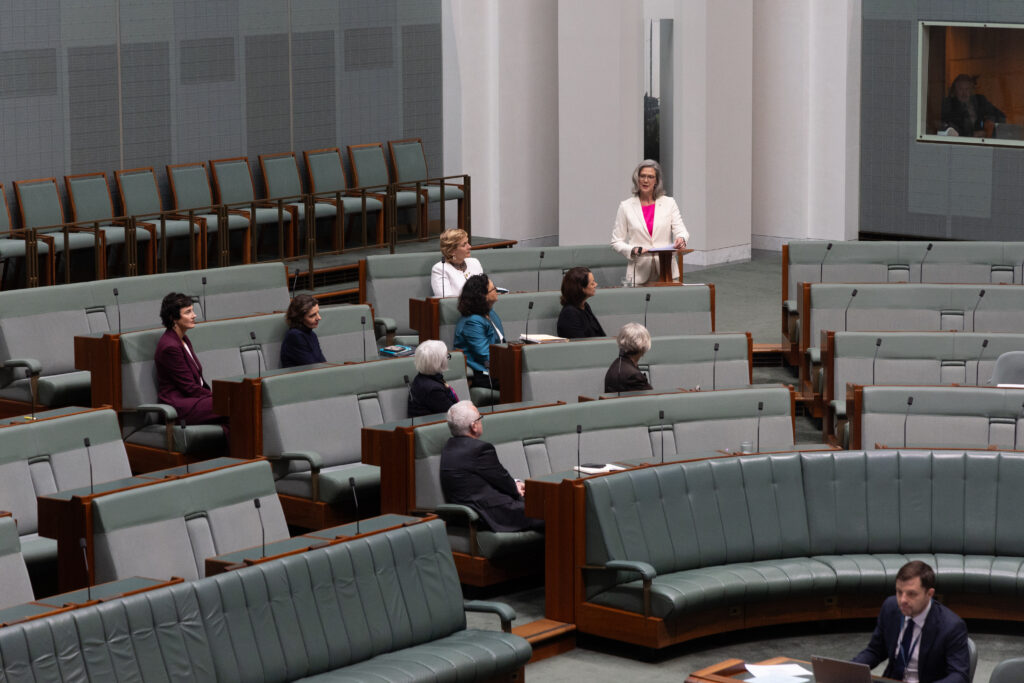
It wasn’t exactly a full house:

The member for Bradfield Nicolette Boele delivers her first speech in the House of Representatives chamber of Parliament House, Canberra this morning. Monday 28th July 2025.

Have the guts to apply international law to Israel: Wilkie

Independent MP Andrew Wilkie has spoken in the Federation chamber (the spill over chamber for the House of Representatives) where he has criticised the government’s hesitation is upholding international law when it comes to Israel:

We should be alarmed with the Federal Government mostly shrugging off breaches of international law in its reaction to Israel’s genocide in Palestine, and with it ignoring international law completely in its approval of the US bombing of Iran. The Federal Opposition’s mocking of the defenders of international law as misty-eyed nostalgics is no better,” Mr Wilkie will say.

It seems Australian governments believe that when it comes to our friends, might makes right; but that a rules-based order should apply to everyone else.

For instance the Government will rightly call for international law to apply to China in Tibet, the South China Sea and Taiwan, to Russia in Ukraine, and to Iran in their nuclear program; but it doesn’t have the guts most of the time to also apply it to Israel and the US. And of course Australia has been willing to break international law itself, for instance when we helped invade Iraq in 2003, and every time we turn around, lock up and send offshore the many asylum seekers desperate for our protection. Mind you it’s always open to us to start doing better, and I suggest immediately recognising the State of Palestine would be a solid start.

Now I’m clear-eyed about the issues with the international rules-based order, and the criticism it faces for things like an ineffective UN Security Council and problems with enforcement. However those are not reasons to abandon our support for international law, but rather to demonstrate consistency in the ethical standards we hold and to work harder together to improve its principles and its application.”

Greens senator David Shoebridge has been appointed to the Parliamentary Joint Committee on the National Anti-Corruption Committee. The senate has passed that message to the House.

The house is concerning itself with this motion debate from Tim Wilson (nature is healing etc)

That this House:

(1)acknowledges 2.5 million small businesses have been abandoned by the Government;

(2)notes the Government has:

(a)achieved a record number of small business insolvencies this financial year;

(b)done nothing to create an environment for small businesses to thrive; and

(c)made it more difficult than ever to do business in Australia; and

(3)calls on the Government to prioritise the problems facing small businesses by:

(a)removing excessive regulation it insists on applying to small business;

(b)scrapping its plans to impose a family savings tax on unrealised capital gains; and

(c)backing small business to make it easier to employ Australians.

.

Independent reminder that truth in political advertising is unfinished business  

Bill Browne
Director of the Democracy & Accountability Program.

Today independents Zali Steggall MP, Senator David Pocock and Kate Chaney MP introduced a bill to parliament that would, if it passes, give us truth in political advertising laws in federal elections. It’s called the Electoral Communications Bill.  

Truth in political advertising laws 

At this year’s federal election, it was perfectly legal to lie in a political ad.  

That’s not true in every Australian election, and it doesn’t have to be true federally either.  

South Australia has had truth in political advertising laws for 40 years now. The ACT adopted them five years ago with unanimous support: Labor, Liberal and Greens voted together.  

These laws allow members of the public to make complaints about misleading advertising, to be investigated by the electoral commission. If the complaint is substantiated, the ad should be withdrawn and retracted (in other words, stop publishing it and explain what was misleading.) 

Over 12,000 Australians have already signed the Australia Institute’s petition calling for these laws at the federal level.  

How would the bill work? 

The Electoral Communications Bill innovates on the South Australian model: but instead of placing responsibility for laws in the hands of the election commissioner, it would make this the responsibility of a panel headed by a former judge.  

Since electoral commissioners are historically reluctant to take responsibility for truth in political advertising laws, creating a separate role makes sense.  

While the panel can request a withdrawal or retraction, enforcement would only occur via the courts, which is appropriate given the separation of powers. 

The bill also covers AI-generated deepfakes, something that wasn’t an issue in 1985 when South Australia was drafting its laws!  

Haven’t we seen this bill before? 

The independents’ bill appears to be identical to a bill that the Albanese Labor Government introduced last year.  

It’s a reminder that we would already have truth in political advertising laws had Labor prioritised legislating them. Instead, Labor spent its time and effort doing a deal with the Liberals to increase taxpayer funding for political parties.  

Truth in political advertising laws are in the Labor Party platform. Labor’s chief strategist Paul Erikson says the party’s election ads would “sail through” any truth in politics framework. 

With a landslide Labor majority in the House and Labor–Greens control of the Senate, plus champions among the large independent crossbench, there are no barriers to getting them passed by the end of the year.  

In more ‘the Coalition isn’t pulling out of this as one party’ news, Family First is “warmly” welcoming SA Liberal senator Alex Antic’s latest push to restore the biological definition of woman to the Sex Discrimination Act.

There is no reason for this other than a culture war. Absolutely none. But there are Liberals who are more than happy to play into that, Antic being one of them.

The interview ended with:

Q: We’ve got listeners, we can see it on the text line – they want to hear you talk more about Gaza, cost of living, climate change, on top of the Australian music climate. It’s been like, over a year since you’ve been on our current affairs program, Hack. Can we ask you while you’re here, will you commit to coming back to chat with the journalist, versus two comedians, Dave Marchese, in the next month, to speak about, you know, those key issues?
 
Albanese:

Oh, sure. Always happy to have a chat. And I think I’m pretty accountable. In the last, in the last week, I did Insiders yesterday. I did 7.30 Report last Monday. I did ABC Afternoon Briefing last Wednesday. So, I certainly make myself available, and particularly to the ABC.

Anthony Albanese spoke to Triple J FM radio this morning, because what else would you expect from the prime minister who for awhile there was known as ‘DJ Albo’ the Monday after the Hottest 100?

Here is how that chat went:

PRIME MINISTER: It was fabulous. I was listening here in The Lodge in Canberra and I listened to the last, I guess about 35 songs. 35 down to one, because I had flown down from Sydney. But I was watching online as they popped up. I mean, some of them, sometimes they popped up, as you know, before they actually came on. And so –
 
LUKA MULLER, HOST: Called out by the PM, brutal.
 
CARISTO: Our socials team. No, it does happen, you know.
 
PRIME MINISTER: It was absolutely fabulous. And I’m old enough to know that the first Hottest 100 was won by Love Will Tear Us Apart. And it wasn’t the first, the top 100 of that year, it was of every year. So, people pitched in and Joy Division won the first time, and then gradually then it evolved into an annual, an annual event night. I still have about ten of the CDs going back – I don’t even know if the CDs are made these days of the Hottest 100, because it was always, you got about 30 of  the best tracks.
 
CARISTO: Wow, you with the stats there PM, on the Hottest 100. Doing our job. I mean, how did your votes go in the end? How many of your votes made the countdown?
 
PRIME MINISTER: I got five out of ten, which was, which was pretty good, I thought. I did have a whole lot. It was really hard. I liked the way the system worked, that you could have essentially a short list or, I had a short list of about 25 and I kept changing. It took me days to press the submit button because I kept changing my mind. One of the ones was Never Tear Us Apart and I ended up not, not making it. It was on there a couple of times and it was off and it was on again.
 
MULLER: Almost backed a winner, but not quite then. I’d love to hear you talk about, yeah, Never Tear Us Apart. So, you were 24 when the winning track, Never Tear Us Apart by INXS came out. Can you take us back to a young Albanese at that age? Were you a music lover? Were you going to gigs?
 
PRIME MINISTER: I certainly was. And I grew up in – I was very lucky to grow up in Sydney at a time where you could see in INXS, Cold Chisel, Midnight Oil, Spiderbait, The Le Hoodoo Gurus, as they were called originally. A whole bunch of these bands in, in local pubs, you know, The Annandale, The Lansdowne, The Hummingbirds, which I don’t think The Hummingbirds made it. They were on my list and off my list a few times. But there were so many great bands you could see for very little money, some of them for free. And it was a great time. And in ‘88 I did the Australian young person’s thing of backpacking around Europe, and at that time, INXS and Midnight Oil were huge. That was when they exploded internationally. And so –
 
MULLER: I’m happy to hear you say that.
 
PRIME MINISTER: If you’re out at clubs there, you could hear that song. So, it reminds me of being in Europe.
 

Australia is a low-taxing nation

Angus Blackman
Podcast Producer

Also: the country is not too reliant on income tax.

On this episode of Dollars & Sense, Greg Jericho and Elinor Johnston-Leek debunk some long-standing myths about the Australian economy, discuss cuts to HECS and examine the latest in Trump’s beef beef.

What does the PC mean?

Greg Jericho
Chief Economist

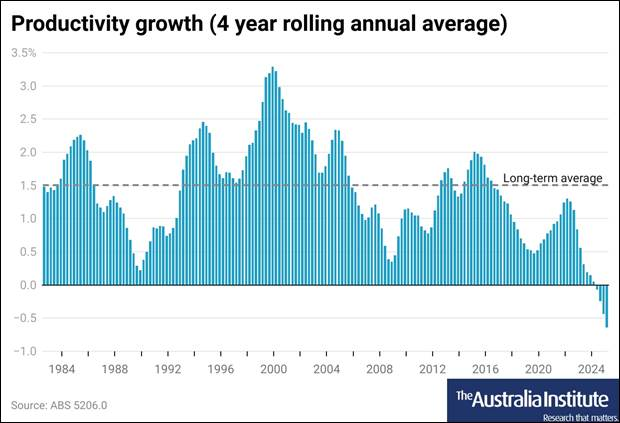
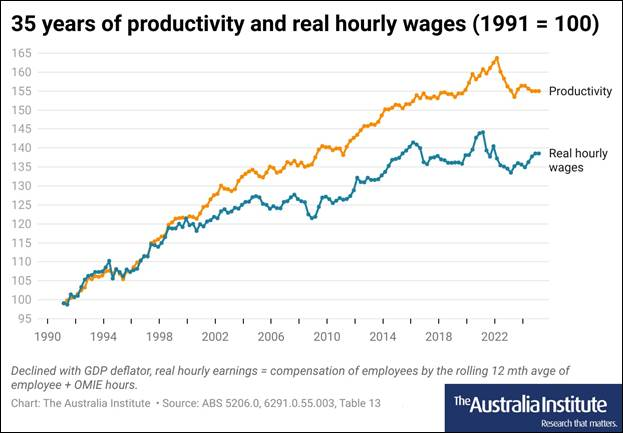
Last week there was a bit of a story that went around most media about the head of the Productivity Commission, Danielle Wood, saying that full-time workers would be at least $14,000 better off by 2035 if productivity growth could be boosted from its current low level to its historic average.

What do they mean by this?

Well, the best way to measure productivity (which is how much output is done in the economy (ie things made, services done) with our time and equipment)) is in a 4 yearly average growth (because the annual figures just around a lot) and as you can see we are currently well down on the historical average.

This is an issue because theoretically when we produce more with our time, that means out living standards should go up – because we should get a pay rise for making/doing more stuff in the same amount of time, and that can happen and not cause inflation because we are (just to say it again) making/doing more stuff with the same amount of time.

Now am as a rule very reticent to call bullshit on anything by the Productivity Commission (that’s a joke for those still yet to have their first coffee), but there are a couple problems with the whole $14,000 better off claim.

The first thing is it is based on wonderful modelling called CGE (Computable General Equilibrium). As Richard Denniss and Matt Saunders wrote in their paper on the topic in January the CGE modelling has more than a few assumptions that that render them pretty limited in their ability to suggest what will happen in the real world. And that is fine, so long as you know that. The problem is CGE modelling in Australia has jumped from universities to the public services (like the RBA and PC and Treasury) and are held up as virtual fact, rather than assumptions.

Saying that workers will be $14,000 better off due to better productivity growth assumes that the benefits automatically flow to workers.

The problem is this does not happen. In the real world, the benefits of productivity are fought over in wage negotiations.

As Jim Stanford (former director of the Centre for Future Work) writes in his paper on productivity out today, since 2000 that “productivity grew four times faster since 2000 than average wages adjusted for consumer prices… If workers had received wage increases since 2000 that matched productivity growth, wages would be as much as 18% higher than they are at present – worth $350 per week, or $18,000 per year.”

So sure, productivity should lead to better living standards, but you can’t just assume it will. As Jim writes: “The fruits of productivity growth have been disproportionately captured in the form of business profits, dividend payouts, and executive compensation. It is only through deliberate measures to ensure productivity growth is reflected in improved compensation and conditions for workers that Australian workers can have any confidence their contributions to improved productivity will pay off in better lives.”

Australia being ripped off by multinational drug companies

Dave Richardson

American drug companies are complaining to Trump that they pay get less than they would like from Australia’s drug purchasing and approval arrangements. Meantime they pay almost no tax on the profits they do make in Australia according to a report in today’s Financial Review.

Five foreign companies; Johnson & Johnson, Pfizer, AstraZeneca, Novo Nordisk and Eli Lilly, had revenue of $4,750 million but paid tax of only $99.7 million, just 2%.

We don’t have enough information to know exactly but we know these companies exploit things like payments for licensing Intellectual Property. These are payments to head office or more likely an Irish subsidiary.

Intellectual Property gives its owner a monopoly profit but these companies are effectively able to nominate which jurisdiction is to tax that monopoly profit. They arrange things so that licensing fees go to low tax jurisdictions. This is multinational tax avoidance 101.

Some years ago we put a proposal to the Senate that effectively said monopoly profit should be allocated among jurisdictions according to sales. Either that or the tax office just ignores such payments between 100% owned subsidiaries. See Corporate tax avoidance: Submission. Those changes would massively boost tax paid by these and other high-tech industries in Australia.  

https://www.afr.com/companies/healthcare-and-fitness/drug-giants-targeting-australia-s-pbs-are-paying-tiny-amounts-of-tax-20250723-p5mh4l

Colin Boyle moves on to how unfair it is that renewables receive government subsidies, while leaving out that so too do fossil fuels. He uses this example:

We also have three coal fired power stations in the electorate of Flint, Callide, Gladstone and Stanwell in Rockhampton. What becomes of that base load power when it gets put in a position where it cannot compete in the marketplace to sell energy because of the mandates and the RET subsidies that the renewable energy sector gets, and what we are doing are driving small business and individuals to the wall. We’ve got people living in cars and people living in tents because they cannot afford their electricity bill. And it’s time. This stopped. That’s dumped this net zero, it is economic madness, it is overseeing the demise of business, industry, and prosperity.

Callide and Stanwell (the Rocky one) are STATE owned coal fired power stations, so they already receive government subsidies. Renewable energy is cheaper, which is one of the reason the private market is pulling out of fossil fuels (coal at least) for power (gas is another story despite being a fossil fuel and contributing to our emissions and high power prices) and are not to blame for higher power bills. The aging coal fired power assets ARE contributing, but no one is arguing against base load power here.

This bill is based in a fantasy set in the 1950s. Much like the Nationals.

Barnaby Joyce finishes with:

Of course I can say it now because I’m not bound by Cabinet solidarity. I acknowledge that maybe it was cowardly of me in the past, I acknowledge that. Right, but I gotta do it now, and others are going to do it as well, and I commend this bill to the House

The political powerhouse that is Colin Boyce (LNP MP for Flynn) is seconding the motion.

Again, this is going nowhere. But Labor will let it run because of how Labor looks in comparison and the trouble it causes internally with the Coalition.

Barnaby Joyce is now posing the question:

“If it doesn’t change the weather, than who benefits?”

He answers that:

“Billionaires”.


Which of course, is very different from the billionaires which benefit from fossil fuels. VERY DIFFERENT

Barnaby Joyce introduces bill going nowhere

Barnaby Joyce is introducing the scrap net-zero bill, where he is blaming all the world’s ills, as well as the domestic issues, on net zero.

This bill will be going nowhere. Labor will let it run though because it provides cover for the bare minimum it is doing, and makes it looks so much better than what it is.

Joyce has moved on to ‘the defence of our nation’ as being under threat because of net zero.

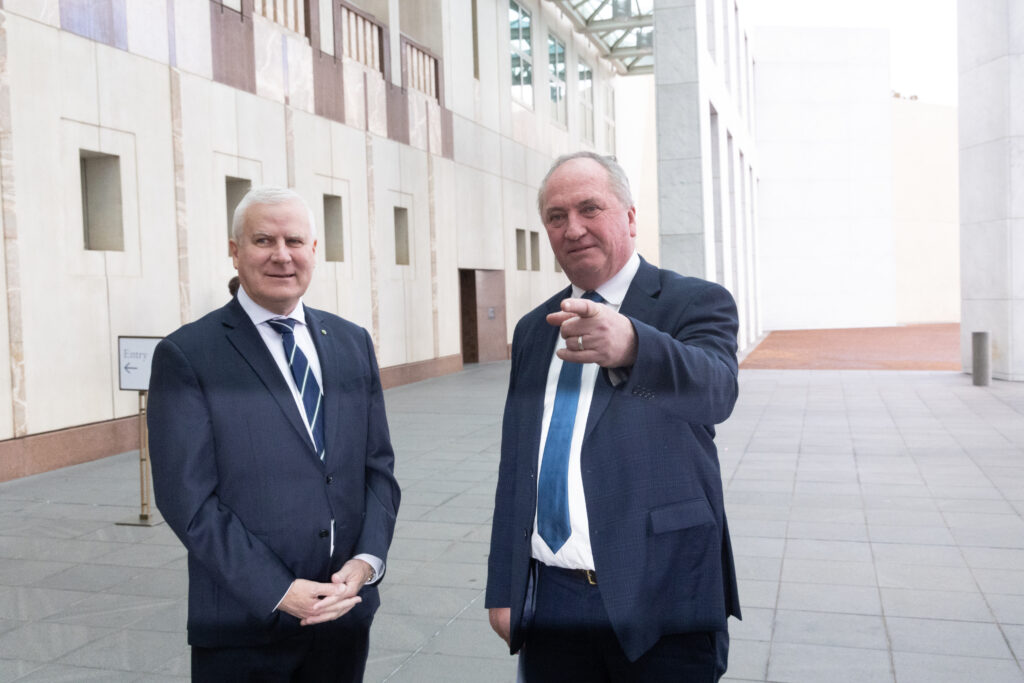
Barnaby Joyce and Michael McCormack on the forecourt of Parliament House, Canberra this morning for a press conference on Net Zero.. (Photo by Mike Bowers for The New Daily)

So excited is Barnaby, that he held a press conference outside parliament house.

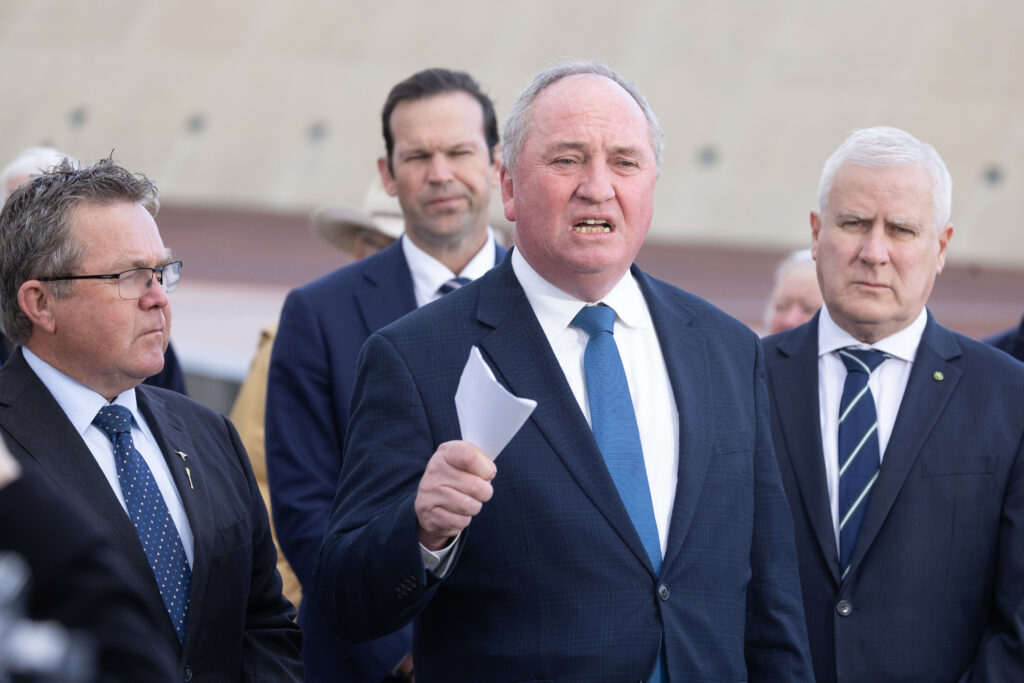
Barnaby Joyce, Michael McCormack, Matt Canavan and Colin Boyce on the forecourt of Parliament House, Canberra this morning for a press conference on Net Zero (Photo Mike Bowers for The New Daily)

Your anti-net zero warriors (so much diversity!)

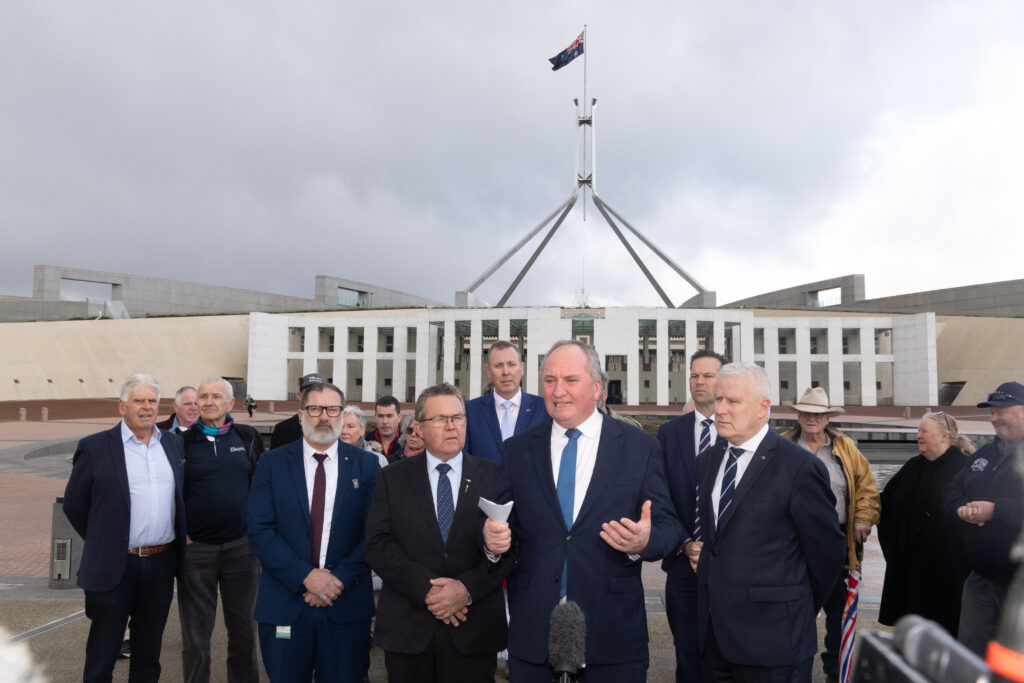
Barnaby Joyce, Michael McCormack, Matt Canavan, Garth Hamilton and Colin Boyce on the forecourt of Parliament House, Canberra this morning for a press conference on Net Zero. ((Photo Mike Bowers for The New Daily)

Being a Monday, (the second worst day of the week after Thursday) private members’ bills will be introduced.

Here is the list for today (you may notice that first one which will get a bit of attention!)

Private Members’ business

Notices

No. 1 —        Repeal Net Zero Bill 2025Mr Joyce (New England) to present a bill.  First reading.  Second reading to be moved. (Time allowed — 10 minutes.)

Debate to be adjourned.

No. 2 —        Criminal Code Amendment (Using Technology to Generate Child Abuse Material) Bill 2025Ms Chaney (Curtin) to present a bill.  First reading.  Second reading to be moved. (Time allowed — 10 minutes.)

Debate to be adjourned.

No. 3 —        Electoral Legislation Amendment (Electoral Communications) Bill 2025Ms Steggall (Warringah) to present a bill.  First reading.  Second reading to be moved. (Time allowed — 10 minutes.)

Debate to be adjourned.

No. 4 —        Student debtMs Mascarenhas (Swan) to move motion appearing on the Notice Paper in her name.

In case you missed it, a statue accusing Richard Marles of being ‘Australia’s Biggest Brown Noser’ was erected in Melbourne over the weekend (and taken down that same day)

You can find out more about that, here

Emma Shortis is in The Conversation today speaking about Trump and the Epstein files:

US President Donald Trump is perhaps the most successful conspiracy trafficker in modern American history.

Trump built his political career by trading on conspiracy. These have included a combination of racist birther conspiracies about former president Barack Obama, nebulous ideas about the “Deep State” that conspired against the interests of regular Americans, and nods to a more recent online universe centered on QAnon that alleged a Satanist ring of “elite” pedophiles involving Hillary Clinton was trafficking children.

The main point of this story in the AFR is that the Productivity Commission is recommending some changes to boost productivity, as John Keogh reports:

The Productivity Commission will recommend the federal government offer a more generous immediate tax deduction for new investment by companies as a way of boosting non-mining business spending, which has declined over the past 15 years.

To incentivise new business investment, the commission will this week advise Treasurer Jim Chalmers to move towards a corporate cash flow tax model, enabling companies to receive a larger upfront tax deduction for capital outlays, sources familiar with the commission’s thinking and who were not authorised to speak publicly told The Australian Financial Review

But it should also be noted that there is a lot of American style ‘sources who were not authorised to speak publicly’ creeping into Australian mastheads. It started with the ape-ing of the NYT style of ‘this masthead spoke to XX in the left faction and XX in the right faction’ or ‘after speaking to XX number of MPS’ which is something the NYT does to show how connected it is and some reporters in Australia have decided to start using in their own reporting.

AAP

Female academics are being encouraged into engineering roles as part of a bid to boost gender equity and representation in the sector.

The University of Sydney is running a campaign open to international and Australian candidates offering academic roles reserved for women in engineering.

The roles are in the schools of aerospace, mechanical and mechatronic engineering, civil engineering, computer science, and electrical and computer engineering.

About 12 to 17 per cent of continuing academic staff within these schools are women.

But a 2024 Diversity Council Australia report found just 11 per cent of female engineering students qualified and went on to work in an engineering role, while the percentage of those in senior roles was even lower.

Shuying Wu, a senior lecturer in aerospace, mechanical and mechatronic engineering at the University of Sydney, said she had been the only women in the room for many parts of her career.

“There is a lack of female mentors so there can be limited guidance and inspiration,” Dr Wu told AAP.

“But when we design engineering projects, if we have more diversity we can solve problems from different angles as diverse teams create more solutions and think about things from different perspectives.”

Women had historically been under-represented in Australia’s engineering sector, something culture and community associate dean Renae Ryan wants to change at the University of Sydney.

Other universities had run similar campaigns which had successfully improved diversity among academics, she said.

“Increasing diversity is not just about representation, it is also about institutions actively creating opportunities for talent to flourish, develop and grow,” Professor Ryan said.

“Having these kinds of identified rounds sends a strong signal that we are really serious about attracting talented women into our faculty and it also increases student interest because it highlights the pipeline for women engineers.”

As diversity, equity and inclusion programs are wound back in the United States, Prof Ryan expected American researchers and academics to be attracted to the roles.

“There’s a lot going on in research and funding in general in the US and there have been significant changes and a lot of people in the higher education sector are under pressure,” she said.

“It’s something we are conscious of and we would always reach out to the US anyway, but there may be people looking for a change in Australia.”

The parliament will sit at 10am today, which is why it feels like the morning is dragging on a little bit longer.

Monday’s are for senior meetings like cabinet and shadow cabinet (and other associated committees) and then Tuesday mornings are when the party rooms get their say.

The independent crossbench is still pushing for truth in political advertising. David Pocock, Zali Steggall and Kate Chaney are holding a press conference this morning ahead of the private members and private senator bills they plan on introducing to revive the issue in the new parliament.

You can find more information on some of the research behind their push, here.

https://australiainstitute.org.au/initiative/truth-in-political-advertising/

The government’s big move today is to introduce legislation to meet its election commitment of lowering the price of medicines on the PBS to no more than $25.

From the statement:

The Albanese Government is making cheaper medicines even cheaper – with legislation being introduced to Parliament this week that will mean a prescription on the Pharmaceutical Benefits Scheme (PBS) will cost Australians no more than $25 from 1 January next year.
 
The last time PBS medicines cost no more than $25 was 2004 – more than 20 years ago.
 
This is another key cost of living measure delivered by the Albanese Government.
 
Having already slashed the cost of medicines – with the largest cut to the cost of medicines in the history of the PBS in 2023 – we’re now going even further.
 
This is a more than 20 per cent cut in the maximum cost of PBS medicines, which will save Australians over $200 million each year.

Making medicines cheaper is a tangible way we’re helping with the cost of living.

Pensioners and concession cardholders will continue to benefit from the freeze to the cost of their PBS medicines, with the cost frozen at its current level of $7.70 until 2030.

Independent MP Kate Chaney says ‘time may well be right’ for Australia to sanction Israel

The ABC interview with independent MP Kate Chaney has moved on to Israel’s actions in Gaza and asked about Australia recognising a Palestinian state, Chaney says:

Look, I think the immediate priority is stopping children from starving and making sure they’re not being shot when people are trying to access food. So, my focus really is on how we get the humanitarian aid organisations in there, doing what they do best, and making sure that starvation is not being used as a tool of war. Recognition will happen in good time.

I think it’s appropriate for that to happen when it’s clear who will run a state of Palestine, and Hamas can have no role in that. So, I think that needs to follow part of the peace process. Right now, let’s focus on getting the food to the kids who need it.

Q: The Australian Government has made a number of statements in this area now. It’s joined with international partners in doing so. Does the international community need to take more action if Israel and the United States, other influential powers, don’t listen?

Chaney:

I think the time is now and I think, given it looks very likely that Israel is breaching international law, and it’s really important that Australia plays its part in upholding international law, and the time may well be right for sanctions at this point.

Does independent MP Kate Chaney think high property prices is impacting Australia’s productivity?

She tells the ABC:

…We have all this wealth tied up in the country in a non-productive asset, when that money could be going in to supporting businesses to innovate.

So, it’s definitely a factor in the productivity debate. And also just on intergenerational fairness. So, I would love to see a whole range of changes on housing, including changes to our tax system around negative gearing and capital gains tax, which are seen as being politically unpalatable. But I think there’s a much higher appetite for change in those areas in my community than government might expect

Pauline Hanson is trying to get ahead of the Nationals (and maintain cultural political relevancy) by entering a motion to scrap net zero in the senate today, which means absolutely nothing, because it will go nowhere and is just a desperate ploy for a bit of attention.

It’s so transparent that even LNP senator Matt Canavan can see it. He told the Seven network this morning:

We’re here to make laws, not make statements or do stunts. A motion in the Senate today is nothing but a stunt. It’s not going to do anything. If Barnaby’s law were to be passed, that makes a real difference*. Because since we’ve adopted net zero, electricity prices are up 31%, gas prices are up 40%. We’ve lost three major industries in nickel in plastics and urea, which is our most important fertiliser. This is not working. Net zero is just not working for the Australian people. And we’re meant to be here to deliver results for the Australian people. So I support Barnaby’s bill. I can’t do that from the Senate, but I plan to introduce something similar in the next few weeks. When he first told me about that he was doing this, my immediate reaction was why didn’t I think of that first? So good on him and I hope he’s successful.

*It won’t be passed and the type of difference it would make would not be the positive kind.

Here, they find some unity – Barnaby Joyce agrees:

I support greater controls on social media because of exactly what Tanya said. The damage that can be done especially to young girls and eating disorders. It really does happen. It really concerns so many parents, the fact you get bullying online.

I think Google could easily come forward and say they have the capacity to control that noxious stuff. They have AI. They’re incredibly capable. The question you have to ask why do they allow such content to go on their platform. The content to go on their platform. The content that’s not informative it’s completely toxic, completely dangerous. Such things as competitions to how skinny you can be and people saying outrageous things to one another. Why do they allow it to happen? Because they don’t… They still allow it to happen they sit back and say, you’re not the model person, model commercial person in this and therefore we have to try and control it somewhat.

(So there is political unity over the FM radio policy that plays well to parents, but looks questionable as to having any material impact when it comes to keeping kids safe, as well as putting the onus on parents to ensure the bans are upheld, and not the tech giants to ensure the spaces they have created are safe)

Will the government continue to push to include YouTube in the social media ban?

Tanya Plibersek:

We will do whatever we have to, to make sure Australian kids are kept safe. Like most parents I struggle to get the kids faces out of their devices sometimes. It’s frustrating for parents, but we know beyond just that conflict, in family homes, for a lot of kids they’re really genuinely harmed by what they’re being exposed to on social media. We node to make sure that, as a government, we back in parents’ efforts to protect their kids from some of the harmful stuff that’s online. We’re not going to be bullied out of taking action by any social media giant. We will do what’s in the best interests of Australian kids.

Tanya Plibersek endured her latest ‘debate’ with Barnaby Joyce on the Seven network this morning. Asked about Taiwan’s request to take part in Australia’s military training exercises, Plibersek said:

Australia really values our unofficial relationship with Taiwan. We have got a lot of exchange on trade and investment and on regional security and stability. We think the best way to maintain security and stability in region is for no unilateral changes for the status of relations wean China and Taiwan. We’re not currently considering involvement in Taiwan in Exercise Talisman Sabre. I mean, it’s a very important thing for Australia’s defence, we’ve got a lot of countries, about 19 nations involved at the moment in the north of Australia, with about 40,000 personnel. But, that exercise is really focused on making sure that we are operationally fit.

Joyce, as you would expect was OUTRAGED:

I think what Tanya said then was concerning and incorrect. 

You have have to understand the strategic ambiguity to be backed up with incredible strength. Talisman Sabre with 35,000 troops from 19 nations. They have one thing in common that’s what Emmanuel Macron said there’s not multiple rules- based orders in the world. There’s one. If a country wants to outside that, by just taking the South China Sea, by what we’ve seen with journalists in Hong Kong, just taken off the street with tennis players who disappear if they say the wrong thing. (I mean, he could also be talking about the US here as well)

We’ve had a massive build up of their armed capacity, including their nuclear capacity and no real explanation as to why and Minister Wong brought that to our attention.

…I think the military has and strategic people have, but the Australian people really haven’t grasped exactly what’s before us. We need to become as strong as possible as quickly as possible. We really are putting the future of your children and grandchildren at threat. China does not believe in a Democratic world order. (Well, neither does the Trump administration)

They believe in an alternate order that does not include democracy and ultimately, you know, where we lie in that if we don’t get this right is as a vassal state. (Oh come on)

You will be dominated by economically, socially, socially in your media by a totalitarian regime. We’re not as strong as we should be at the moment. We’re miles away where we should be at the moment. We need to work with these other countries. You could be caught in danger if you bring in Taiwan. You have to look like you are strong enough, if required, if the decision was ever made, and you hope like God it never has to be, without even declaring you make the decision, but you have to look like you are strong enough to back yourself in.

Yesterday in his ABC Insiders’ interview, Anthony Albanese reiterated Australia’s position that it continued to believe in a two-state solution for Israel and Palestine, but that it would be part of a process.

Which is shorthand for Australia won’t be following France and recognising a Palestinian state in the immediate future.

The ABC has spoken with Penny Wong, where she reiterates the same point – Wong changed Australia’s position ever so slightly a few months ago, where she said that recognising a Palestinian state needed to be PART of the peace process, rather than the end result, and she doesn’t shift from that in this latest interview:

[The prime minister] made the point — there are challenges associated with this,” she said.

We have to see Hamas demilitarised. We have to see the hostages released.

We need to see progress in terms of the Palestinian Authority and its moves to a more democratic and accountable governance, and it’s pleasing to see some of that happening.”

The New Daily reports Labor MP Josh Burns and his partner, Victorian Animal Justice MP Georgie Purcell have announced they are expecting a baby:

“Our little baby already has the most excited and loving big sister in Tia. And she’ll have a home full of animals, love, and fun,” Burns, the Member for Macnamara, revealed on social media on Sunday.

“Next year, my team and I will keep working hard for the community we love, but I also plan on being a present and involved dad every step of the way.

“I’m over the moon excited and can’t wait for this next chapter with my beautiful partner, Georgie, who I love with all my heart.”

The Guardian’s Caitlin Cassidy has reported on the open letter the Australian Historical Association has released, urging the Albanese government to abolish the jobs-ready graduate program and address the cost of arts and humanities degrees by implementing a more equitable system.

Cassidy interviewed Tim Winton about the delay in Labor addressing the Morrison government changes, which Labor have “under review”:

That any Australian government should seek to make getting a humanities degree more difficult is upsetting … but the idea that a Labor government would do nothing at all to right this wrong is utterly mystifying.

“If Labor won’t act to defend equity in education, what is the point of them – I mean, what do they really stand for?”

Good morning

Hello and welcome back to chilly Canberra, where the only thing more frosty than outside is the relationships in parliament house.

Anthony Albanese was on Insiders yesterday where he actually used the words “quite clearly it is a breach of international law to stop food being delivered, which was a decision that Israel made in March” as well as:

…I tell you what it’s a breach of – it’s a breach of decent humanity and of morality and everyone can see that. I’m a supporter of Israel and Israel’s right to defend itself, but that boy isn’t challenging Israel’s right to existence, and nor are the many who continue to suffer from the unavailability of food and water. The fact that people have lost their lives queuing to get food and water distributed, not by the UN, but distributed by the joint Israeli-American operation is a tragedy. And what I have said to the Israeli President, Isaac Herzog, is that what sometimes friends have to say to their other friends when they are losing support – Israel is, I think, when you look at internationally the statements that have been made by, including this week more than two dozen nations, combining to call out the lack of aid being allowed into Gaza, is that they need to recognise the need to operate within international law. As I go back to after October 7, the motion, the resolution that was carried by the Parliament on a bipartisan basis, I think, stands quite well.

The reporting around the prime minister’s comments will all point to it being ‘his strongest statement yet’ but Albanese wasn’t asked and the government hasn’t committed to any actual action – no sanctions against Israel’s leaders or trade was announced, and weapons parts are still leaving Australia and ultimately ending up in weapons Israel is using to kill Palestinian civilians.

In the parliament, the focus is on productivity and the Coalition attempting to hold itself together. The WA Liberals (state) have decided to support a motion to abandon net zero by 2050 (as well as to remove the Aboriginal and Torres Strait flags from appearing in leaders’ press conferences, and to ‘reduce’ Welcome to Country’ ceremonies) in a closed door meeting in Andrew Hastie’s electorate of Canning over the weekend.

If anyone doesn’t think Hastie is actively making a play for the Liberal leadership (or whatever party emerges from this mess, then you are not paying attention.

The WA Liberals are in the electoral wilderness when it comes to state politics and WA not only held for Labor at the last federal election, it also picked up Moore from the Liberals. But Hastie increased his margin in Canning after running a campaign that rarely featured Liberal branding (he mostly ran under his name, which even included a darker blue) and that has given him all sorts of ideas.

The Australian reports that Liberal senator Sarah Henderson wants to publicly canvass support for amendments to Labor’s HECS/HELP debt cut, which would index HELP loans to inflation. The amendment isn’t controversial, but Henderson moving to make one is – Sussan Ley has indicated the Coalition will wave this Labor bill through, but Henderson, dumped from the frontbench is making her views known.

We’ll cover all of the day mess and more, with Mike Bowers from the New Daily still in the parliament. You have Amy Remeikis with you for most of the day. It’s a three coffee morning.

Ready? Let’s do this.


Read the previous day's news (Thu 24 Jul)

Comments

Start the conversation

The biggest stories and the best analysis from the team at The Point, delivered to your inbox.

Past Coverage