Thu 28 Aug

Australia Institute Live: Albanese government condemns planned neo-Nazi march, ATO whistleblower Richard Boyle spared jail time. As it happened.

Amy Remeikis – Chief Political Analyst

This blog is now closed.

Start the conversation

Australia Institute Live: Albanese government condemns planned neo-Nazi march, ATO whistleblower Richard Boyle spared jail time. As it happened.

Key Posts

The Day's News

Go be free!

It is parliament Friday and the stampede for the airport is well and truly underway. We are taking that a as a sign to close the blog down a little earlier than usual, so that you too can be freed from the shackles of this place.

Thank you to everyone who joined us this week – we are constantly blown away by the support for this little project. Thank you. Go and switch off this weekend to help re-calibrate after another big week of news, most of it despairing and tragic. It is OK to turn off a little every now and then so you can build up your emotional scaffolding again. It’s also OK to care so much that you need to switch off for a bit.

We will be back on Monday for the second week of this sitting, which is the last joint sitting until late October (there is a week of estimates and house of rep sitting in the first week of October)

And all of that brings us one week closer to the end of the year.

So until Monday, please – take care of you. Ax

How not to impose a tariff

Angus Blackman
Podcast Producer

Postal services around the world have suspended services to the United States in response to the Trump administration’s chaotic tariff policies.

On this episode of Dollars & Sense, Matt Grudnoff and Elinor Johnston-Leek discuss why the latest inflation data isn’t anything to panic about, the case for economy-wide price gouging laws, and why Australia Post has stopped sending many packages to the United States.

Albanese government releases statement condemning planned neo-Nazi march on Sunday

Tony Burke and Anne Aly have released a statement on the so-called ‘March for Australia’ which has been planned for this weekend. It’s an event neo-Nazis have claimed credit for, while pretending it is about Australian nationalism (it is actually for white supremacy and is anti-immigration)

The statement says:

The Albanese Government stands against the events planned for the weekend.
All Australians, no matter their heritage, have the right to feel safe and welcome in
our community. There is no place for any type of hate in Australia.

Tony Burke:


There is no place in our country for people who seek to divide and undermine our
social cohesion. We stand with modern Australia against these rallies – nothing could be less
Australian.

Anne Aly, the minister for multiculturalism said:

Multiculturalism is an integral and valued part of our national identity.

We stand with all Australians, no matter where they were born, against those who
seek to divide us and who seek to intimidate migrant communities.

We will not be intimidated.

This brand of far-right activism grounded in racism and ethnocentrism has no place
in modern Australia.“

Mark Dreyfus continued:

[I pay tribute to] Zoe Daniel, the former member for Goldstein for the integrity with which she conducted her campaign.

She ran on ideas, on values and on service to her community.

Despite this, her campaign was at times, deeply personal and harrowing.

A respected journalist and parliamentarian, she faced a level of hostility no candidate should ever have to endure. She was subjected to vile abuse on the street, including misogynistic slurs. She had to report incidents of stalking and harassment to the police. Her car was identified online. She feared being followed home, and in the final week of the campaign, she needed the protection of the Australian Federal Police.

The hostility also extended to her volunteers and staff, who were intimidated at booths and endured a barrage of personal attacks online and in person through it all.

Ms Daniel refused to retaliate. She focused on policy and principle. Her campaign was a model of integrity and her resilience in the face of such adversity deserves recognition and respect from all sides of politics.

One reported incident also involved Mr. Wilson himself as a candidate for public office. He shouted at a member of Ms Daniels staff as she returned to her car, ‘enjoy your last week‘.

It was a comment intended to intimidate behavior unbecoming of anyone seeking to serve in our national parliament. I’m sure he would not accept such treatment if it were directed at him. And the behavior did not end with the campaign. It carried into the prolonged counting process where Mr. Wilson’s campaign scrutineers were encouraged to intimidate, distract and use stand over tactics against Ms Daniels, scrutineers, the behavior of liberal volunteers and Mr. Wilson at polling booths in Goldstein, including those shared with Isaacs shows how quickly abuse and intimidation can erode confidence in our democracy.

Mark Dreyfus calls out Tim Wilson over Goldstein campaign

Over in the Federation Chamber today, Mark Dreyfus, the former attorney-general, has taken aim at Tim Wilson (who, much like Cher, Madonna and Miss Piggy has become known with a single moniker on social media – ‘Timbecile’) for his campaign during the election.

Dreyfus defended the former independent member, Zoe Daniel, for how she handled herself during what he said was a brutal campaign in what is the spill over chamber for the house of representatives (where extra debates and speeches are held, so as not to overwhelm and delay house of rep business)

Dreyfus:

Goldstein was one of the most closely connected contested electorates in the nation. Following a recount, the Liberal candidate, now the member for Goldstein, Mr. Tim Wilson, was elected by a margin of just 175 votes.

Yet throughout the campaign, there were repeated incidents involving Mr. Wilson’s campaign volunteers that fell well short of the standard of behavior Australians expect.

These included verbal abuse of volunteers working for other candidates, threats of violence and even death threats against public fear.

Yes, this conduct was clearly intended to intimidate. One incident reported involving a Liberal campaigner of verbally abusing two young women, one just 17 years old, calling them ‘little scum’.

Another involved a threat of extreme violence, including a death threat directed at the Premier of Victoria and then member for Goldstein Zoe Daniels.

Mr. Wilson did not condemn these incidents. He made excuses instead of accepting responsibility and taking immediate action to remove and hold those responsible accountable. He even attempted to justify one of these incidents, absurdly suggesting his campaign volunteer had low blood sugar levels on Election Day.

Private security personnel needed to be engaged in the electorate of Goldstein to ensure the safety of volunteers and prevent vandalism by Mr. Wilson’s campaign team. The conduct of Mr. Wilson’s campaign has undermined both the fairness and the safety of the election process.

Independent MP Andrew Wilkie, who was one of the first people to champion ATO Whistleblowe Richard Boyle has responded to the court decision not to send him to prison:

How Mike Bowers saw QT

Mike managed to break out of the elevator he and AAP photographer Mick Ttsikas were trapped in ahead of question time.

Here is what he saw in the chamber:

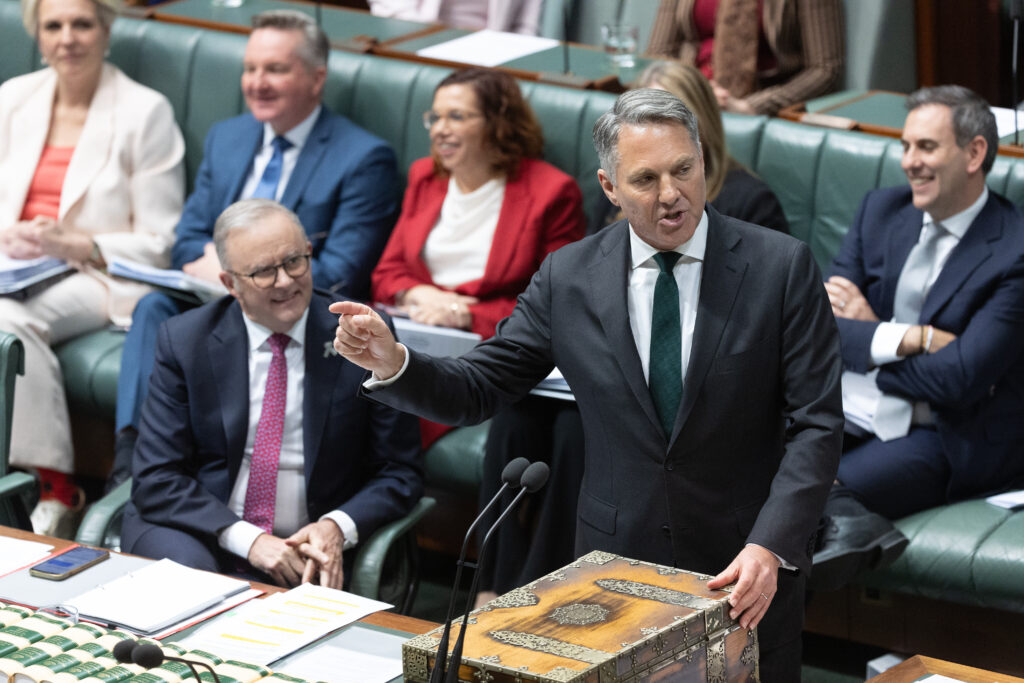
Cranky Richard Marles:

Deputy PM Richard Marles and Prime Minister Anthony Albanese during question time

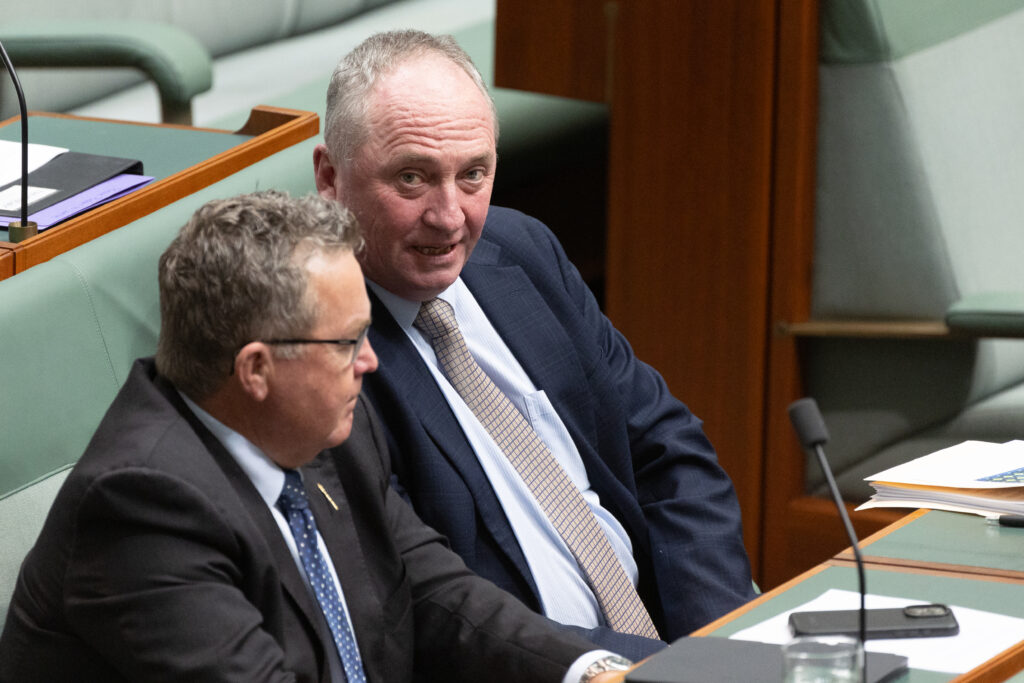
Barnaby is still there:

Barnaby Joyce during question time in the House of Representatives

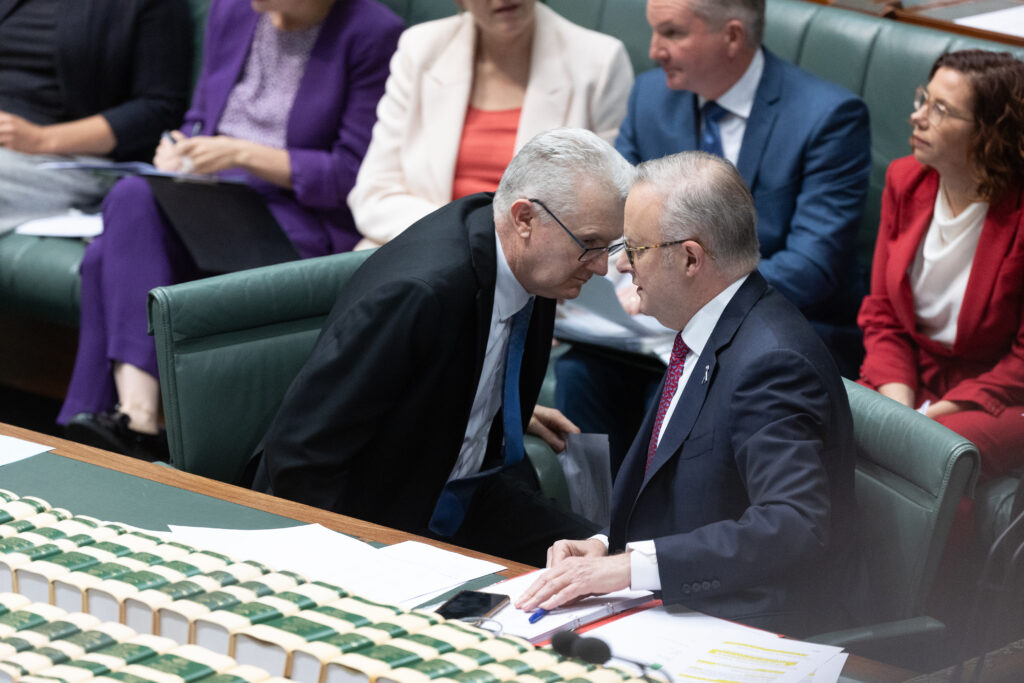
Mum and Dad have a discussion

The Prime Minister Anthony Albanese talks with the Leader of the House Tony Burke

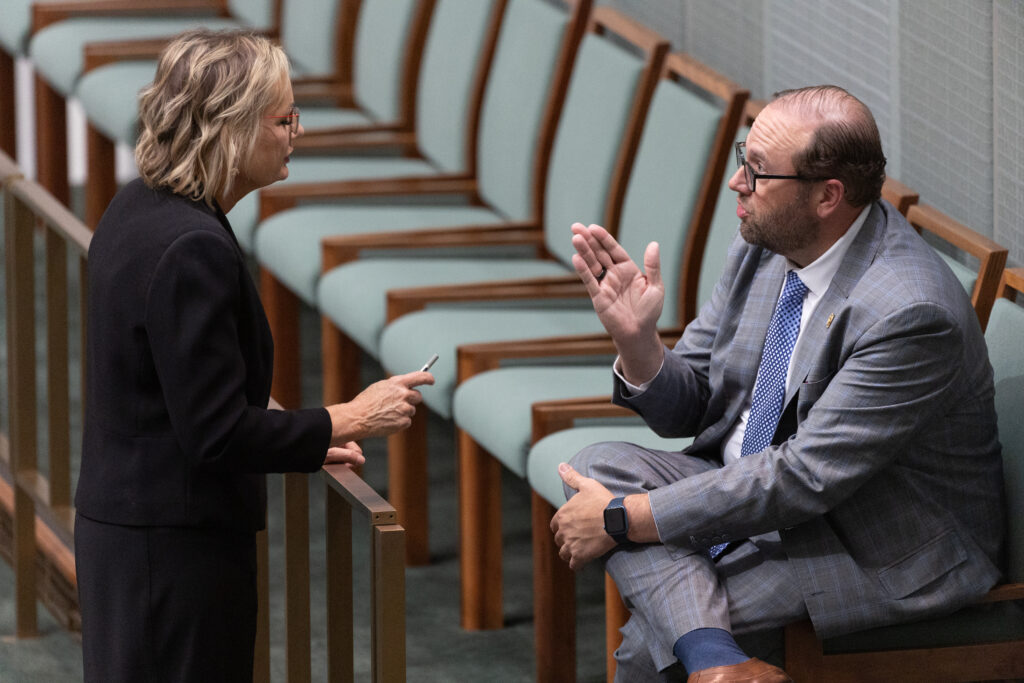
Sussan Ley speaks with Trump lackey, Congressman Jason Smith

Opposition Leader Sussan Ley talks with US Congressman Jason Smith during question time

Question time ends

And that is an early finish as a special little treat for all of us for getting through this week.

LNP MP Angie Bell gets to ask a question! It has been a while since Bell has asked one – looks like the LNP state conference reminded the leadership of her existence.

Bell:

How has the government managed to find so many millions of dollars of taxpayer money to fund inner-city cycleways and for bike lanes in Sydney and Grayndler but so much less to support South Australia’s response to be once in a generation ecological event is the devastating algal bloom? Why do countless communities and small businesses in South Australia, many here today, have to pay for the cost of Labor’s in action?

Albanese:

I met with all the councils earlier today and they think the government for the work that we are doing when it comes to South Australia’s algal blooms. This is an ecological event that is directly related directly related to the impacts we are seeing right across our continent of climate change. What we have seen here as floodwaters, floodwaters, come through the Murray-Darling Basin out through the Coorong, into the ocean at a time when nutrient extra nutrients have got into the water, and the water is 2 degrees hotter than it would normally be at this time of the year. At this time of the year.

This is not something that is the result of any single Government actions.

This is some thing that I have met with the South Australian Government on importantly we have provided a range of funding, indeed every piece of funding we have been asked for has been provided. But it is also, but it is also, including $20 million to support the South Australian Government, to not just combat the effects of the algal bloom but improve preparedness for future events.

Now, does anyone think that abolishing our commitment to net zero and action on climate change will make these events more likely, or less likely? To happen in the future. And at a time when those opposite are running a relentless campaign, from some of the National Party, it has even brought the Member relevance again.

There is a very boring point of order.

Albanese:

This issue is directly related to climate change. People that we met this morning, this morning, understand that it is directly related to climate change. The scientists who we met with last week, who are undertaking practical work, practical work, understand that this is directly related to climate change. In those opposite, those opposite are busy, we don’t know whether according to the take of the point of order has said they are having a nine – 12 month experience over whether they will take support for net zero will continue. But it is extraordinary that they are actually becoming more right wing on climate then Scott Morrison was.

But of course, Anthony Albanese does none of these things, because well a) sigh. We know why and b) because Orange Daddy has sent one of his acolytes to the parliament and everyone is trying to prove they are the favoured step-child.

Albanese:

I find it absolutely extraordinary the shadow minister for trade has asked a question about our deteriorating relationship with our most important partner, the United States, in the presence of a US congressperson. I refer to the comments of the Deputy Prime Minister who spoke very clearly…

We spoke very clearly about our parties of government in Australia and the way we deal with serious issues.

Today we have had Question Time begin with a question seeking essential information from our intelligence agencies.

And the answer I gave quoted the member for Canning, the former head of the committee, outlined why at that time and even since he would not give that information about why decisions are made an intelligence bases.

That is way it operates between adults.

When it comes to the follow-up, we had a question to the Deputy Prime Minister alleging somehow, like the fake moon landing or something, that meetings held by the Deputy Prime Minister with the Vice President of the United States…

There is a performative point of order that is less convincing than the time I got caught climbing back through my bedroom window as a teenager and pretended I thought there was a fire.

Albanese:

The relationship with the United States has been above partisan politics. When Leader of the Opposition, I received a phone call from then Prime Minister Scott Morrison, and 24 hours notice came to Canberra without knowing what the meeting was for, had a briefing from our Defence agencies and intelligence agencies about the proposals that became AUKUS. Kept that confidence about that briefing, convened a meeting of my shadow cabinet just one hour after the announcement and then had a full caucus meetings are back in the AUKUS arrangements.

That is how we dealt with the US relationship. We continue to be proud of the fact the relationship with the United States is our most important and it is extraordinary you would come in here and attempt to undermine it.

WTF is wrong with the Coalition pt 5793

That sound you heard was me screaming loud enough for Cairns to hear.

Kevin Hogan asks:

Given these challenging security arrangements at home and abroad, what steps has the Prime Minister taken to repair our deteriorating relationship with Israel and the United States?

I’m sorry – I didn’t think it was up to Australia to repair a relationship with a state plausibly accused of committing genocide, with documented law crimes, and the ongoing deliberate starvation of a civilian population. What, exactly, is there to be repaired?

And yes, we should jump to ‘repair’ our relationship with America, as it slides further into fascism, tries to dictate terms including SENDING US TO WAR IF IT WANTS while disappearing its own citizens, sending in armed guards against them and uses the world as its own personal Monopoly board.

All jokes aside, what is wrong with the Coalition? How is it in Australia’s interest to be so slavishly devoted to foreign powers?

OOOHHHHHHHH now we get Cranky Richard Marles, with this question, which is like watching an old Labrador get annoyed someone moved its food bowl.

Angus Taylor asks:

Deputy Prime Minister the Coalition is deeply committed to the Australia – US relations. Between Sunday and this morning the DPMs office has provided two conflicting statements about the nature and formality of this week’s meeting with the Defense Secretary. There have been three different explanations about the nature and extent of the meeting.

Was this a meeting with the Secretary or just a photo opportunity and was there any outcome beyond the photo?

Marles:

I genuinely do appreciate the question from the Member opposite and Congressman Smith, welcome to Question Time. You are in for a treat. The question we have just heard – question we just heard from the Shadow Minister, is just another example of how the Liberal Party, a party who actually has a proud history of governing this country, is today completely broken.

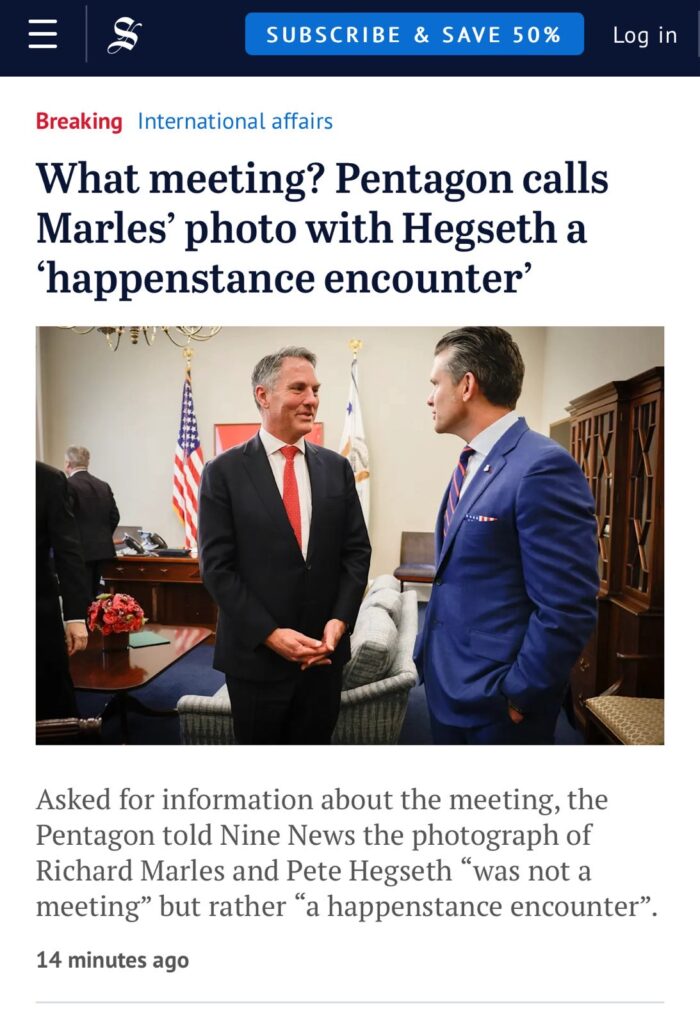
Now, the Pentagon itself has made clear – that there was a meeting between myself and Secretary Hegseth, the Pentagon itself has made it clear that that meeting was coordinated and advanced off what we have heard through the course of this week as those opposite firstly suggesting it was not going to be a meeting at all, then a little bit of a debate about whether it’s a meeting or whether it’s a happenstance, presumably those opposite think the photos have been published or magically generated by AI.

Those opposite are a joke. Mr Speaker the Shadow Minister in the question he just framed the alliance between Australia and the United States as a matter of bipartisan support. It has been the case that the parties of Government in this country, had actually irrespective of whether they are in opposition or in Government, have supported the nation and its relationship with the US.

Taylor tries to puff up his chest with a point of order, which is like watching one of the frilled neck lizard run around the desert with no thought of direction.

Milton Dick tells him to shush.

Marles and his brown shoes are very pleased:

The relationship between Australia and the United States should be above partisan politics. Partisans in this country, whether they have bending government or opposition, have come to this place wanting whoever is government to succeed in our relationship with the States. That is only the spirit we brought about when we were in opposition. Right now those opposite are desperately hoping the nation fails in its relationship with the United States and that is a disgrace. The fact of the matter areas those opposite should grow up and return to the place which has been occupied by the Liberal Party in the past and to support the alliance of the United States and do so in a bipartisan way.

More big names in fossil fuel subsidy reform push

Rod Campbell
Research Manager

We posted earlier about the push by Fortescue and the Australian Academy of Technological Sciences & Engineering to reform the Fuel Tax Credit Scheme, a major fossil fuel subsidy.

This is a big deal for climate and energy policy and tax revenue in Australia, and a topic dear to our hearts at Australia Institute.

Diving into the details of the report, it’s interesting to see some of the names on it and around it. (Page 32 if you’re playing at home)

First up, former CSIRO boss Larry Marshall is quoted in the press release and was on the Expert Review Group for the report. He’s now working at Fortescue, so maybe his involvement isn’t a surprise, but he led CSIRO through the Turnbull and Morrison governments and wasn’t always seen as a climate champion.  

Leading the report’s Expert Review Group was former Chief Scientist Alan Finkel. Finkel wasted his years as Chief Scientist spruiking hydrogen exports and other boondoggles…so good to see him finally pushing for decent climate policy.

Also on the review group was Wendy Craik. She was once the head of the National Farmers Federation, which opposes any change to diesel subsidies. More recently she was on the RBA board and the Climate Change Authority…an organisations that would always rather talk up dodgy carbon offsets than attack fossil fuel subsidies.

Another member of the review group was Snow Barlow. He approved shocking projects like the Santos Narrabri Gas Project and the Mangoola coal mine during his time on the NSW Independent Planning Commission.

Tim Buckley and Matt Pollard from Climate Energy Finance also reviewed the report. They also put out a great report of their own on Fuel Tax Credits just last week.

Tony Wood was on the Steering Committee for the report, the Grattan Institute’s long-time energy lead. This is interesting because while Grattan has a long history of calling for reform of diesel subsidies, Grattan Institute boss Danielle Wood seems to have forgotten all about that now that she is Important at the Productivity Commission. The PC recently called for reform subsidies for trucks, but mysteriously said nothing at all about diesel and the mining industry.

Looking more broadly, the Australian Academy of Technological Sciences & Engineering represents a lot of people who might usually shy away from attacking the fuel tax credit. These people didn’t contribute to this report and may not agree with it, but they’re fellows of the Academy:

Kate Chaney asks Anthony Albanese:

Today parliamentarians from across the House heard personal stories about gambling harm including from a Western Australian whose brother died by suicide after struggling with gambling addiction. The government has not yet even provided a response to the Murphy inquiry into online gambling. Let alone implemented any of our key recommendations. Is the delay due to successful lobbying by powerful interests and what you say to people experiencing gambling harm who are still being bombarded by gambling ads.

Albanese:

With respect I say it is not correct to say we have not responded.

We have done more as a Government in any Government in Australia’s history since Federation. As simple as that.

Pitstop the self exclusion register has been in operation for two years as of last week.

Making been an enormous difference we have launched the National Self-Exclusion Register at the end of July, it has recorded 46,000 369 total registrations, including 30,000 750 active exclusions. 39% of current registrants have chosen a lifetime ban. 39%.

The problem that we see with gambling is not someone having a punt on a Saturday, at the pub, it is ongoing addiction to gambling which can be incredibly harmful.

We have banned the use of credit cards for online wagering, we have established mandatory customer ID for online wagering, we have implemented monthly win and loss statement strengthened classification of videogames that contain gambling like content.

We will continue to work on these areas as we have said we want to break the connection between wagering and sports.

A lot of that has been done voluntarily as well by the sporting organisations who understand the damage that can be caused. While gambling is legal Australia, we respect people’s right to have a punt but we have a responsibility to make sure the industry act responsibly and that’s what we are doing.

Dan Tehan is up next. Hooray.

Under the Albanese Labor government, electricity prices have exploded by 39%. Including a 13% rise over the past 12 months alone.

Can the minister explain to the House how a 39% increase in electricity prices can result in a $275 reduction as you promised?

This is the same question we got in the last parliament and references a commitment made two elections ago, which was not referenced in the last election, if you want to know how the Coalition’s tactics team is going.

Chris Bowen doesn’t seem to mind though:

Well thanks very much, Mr Speaker. I thank the honourable member for his question. And as the Treasurer very eloquently pointed out to the House yesterday when the inflation figures were released, as the ABS itself makes crystal clear, to use their words, in relation to the annual increase, this is due to the timing of when the extended energy bill relief fund rebates were applied in some capital cities. That’s what the ABS said yesterday.

Of course, and of course that’s the case, the rebates are paid in different months and that reflects in the figures in different ways. It’s also the case that – there’s other reports out over the last week the opposition has chosen not to mention.

Like the Australian Energy Regulator state of the energy market report, that refers to energy prices.

And points out that Australia’s coal fired power plants are ageing, increasing the cost to operate, many require high levels of maintenance and refurbishment to keep them running, they’re prone to prolonged outages and it makes them increasingly unreliable heading into spring and early summer, prices remained higher than the year before, amid higher rates of brown coal outages.

So these are the sorts of issues the government and the energy grid is dealing with, when they’re dealing with the fact under those opposite, 4 gigawatts of dispatchable power left the grid and only one came on.

Tehan has a point of order that is half a point of order. It is the united states of beigeness today.

Bowen:

Absolutely I was referring to the report this week of the Australian Energy Regulator about the Australian market today which is also dealing with the impact of 4 gigabits of dispensable power leaving the grid over the last decade, that’s what the government and Energy Market Operator and everybody involved in energy system is dealing with.

When the side of the House has an opportunity to take a decision that puts downward pressure on energy prices we take it. With energy Bill relief or the drive towards more reliable renewable energy that’s what we do. When those opposite have a choice they embark on the most expensive form of energy, nuclear or oppose energy Bill relief as they have done three times.

Into the questions and the first one is….on the same stuff as yesterday!

Sussan Ley:

Yesterday the Prime Minister told the House that, “We listened to intelligence agencies, we don’t try to second guess them.”

But, this morning it was revealed that the home affairs department advised the government to list Iran’s Revolutionary Guard Corps as a terrorist organisation more than two years ago.

Prime Minister, when this national security advice was received, on what basis did government reject it?

Albanese:

There have been a range of comments made over the last 24 hours. On Monday, of course, on Thursday, on Monday we received the information and the advice. Monday afternoon we had the appropriate committees enacted. By Tuesday, we had got our personnel out of Iran, to safety, and had expelled the ambassador here from Australia, along with three other diplomats from the Iranian embassy.

And we received bipartisan support, I recall. For that action. But it appears it didn’t last too long. The member asked about information and when it came back.

And indeed, to quote someone, [the member for Canning] ‘yes, there were calls to list the IRGC back when I was the chair of the intelligence committee which was from 2017 through to late 2020. The government makes those decisions. The government makes the decision to amend the criminal code and then list a terrorist organisation.’

There is a point of order from Ley which Milton Dick upholds and tells the prime minister to stay relevant.

Albanese continues:

Because the member for Canning went on, the shadow minister for this area, went on to say today, and whatever reason the coalition government did not want to. In fact, we had briefs as to the reason why, which I can’t discuss here.”

That’s what he said, understanding – understanding’because he understands intelligence. I stand

‘I stand with the government, as does the rest of the Coalition’. That’s what the shadow minister responsible said this morning. He went on to say, went on to say as well, not just yesterday, it backs up his statement yesterday ‘that the decision was a good one. It was backed up by forensic intelligence provided by ASIO and other partners.’

There is another point of order as to whether the prime minister is following the original ruling and Dick says he is.

Albanese:

I’ve gone on to quote someone who knows something about intelligence and national security, about why intelligence information isn’t the subject of public debate. That was the quote from the member for Canning.

Indeed, the member – the member for Barker backed this up. This what is he had to say. “I congratulate the Prime Minister on his response. It’s been swift. It’s been decisive. And he’s been congratulated for that.”

The member for Lindsay was on board. So was the member Riverina, one by one they’ve been out there… (INTERJECTIONS)

And he is out of time.

Sussan Ley then adds:

I rise to associate the opposition with the Prime Minister’s remarks and welcome congressman Jason Smith. You’re about to witness Australia’s robust and unique democracy from a front row seat. Just like you fight hard for the 8th congressional district and the people of Missouri, all members across this chamber fight here for our communities.

My electorate like yours has farming as its backbone and Australia and America share a deep tradition of excellence in agriculture. Congressman, I want to pass on the deep thanks from the opposition for making the time to be here in Canberra, to visit our Parliament I want you to hear that today. Australia has no more important ally than the United States.

Our long standing friendship is built on shared trust and security. We stood with you in the days after 9/11, just as you stood with us through the darkest days of a Second World War.

Our joint commitment to a free and open Indo-Pacific will see our friendship stand the test of time. Face to face meetings are important. So, we welcome yours with the prime minister. It’s a pleasure to welcome you to the gallery today.

There is a moment of silence for the officers and then the prime minister moves on to welcoming United States Congressman Jason Smith to the Australian House of Representatives.

The man gets a junket and a giant parliamentary arse kiss. What a time!

Albanese:

He’ll be known to many members as the chairman of the committee on ways and means, he has met with many ministers over the last couple of days. As parliamentarians, we understand the hugely important role that committee plays in shaping the policies of the congress and on delivering the priorities of President Trump’s administration.

I’m so pleased that yesterday we had the opportunity in my office to have a lengthy meeting, it wasn’t all talk about politics, it must be said, as well. It was a conversation which reaffirmed the friendship based upon people to people relations, between Australians and Americans that we have.

Ours is an alliance between free peoples and proud democracies that enjoys bipartisan respect and support, from both sides of politics here in Australia, and also in the United States. I look forward to continuing to work with congressman Smith, other members of congress, in the Senate, members of the US administration, including President Trump and I think your presence here is just a further indication, just coming a couple of weeks after the Australian American leadership dialogue.

I was able to host members at Kirribilli House in Sydney, the Prime Minister’s residence there. It was a great privilege to do so.

I know congress man Smith and I participated in the dialogue when it was held in Perth in 2019. An organisation, a body that I participated in for more than a couple of decades now. And a really practical way that Australians and Americans can get to know each other on that personal way. So welcome, Congressman Smith. Good travels while you’re here.

Helen Haines, who represents the electorate where the police officers were killed also speaks:

Thank you for your beautiful words that will bring great comfort and recognition to my community in north-east Victoria, in the south-east of Indi. Alongside my community in north-east Victoria, I mourn detective leading Senior Constable Neal Thompson and Senior Constable Vadim De Waart.

Who lose their lives in a beautiful, idyllic mountain village at the foot of Mount Buffalo, a place characterised by a magnificent scenery, by people, and by a — by good people and by a gentle lifestyle.

Detective leading Senior Constable Neal Thompson was a long serving and deeply respected member of the Victoria Police. A much valued member of the Wangaratta community and the Moryu community. So greatly loved. Senior Constable Vadim De Waart was supporting Wangaratta police on temporary assignment over winter, a beautiful young man as you heard, a native of Belgium.

While they were respected officers, we also remember Neal and Vadim as people, with family, with friends, with interests and passions beyond the uniform. They so deserved the chance to keep living those lives, it’s with deep, deep sadness we honour them and their service.

You heard that Neal was an adventurer who loved the outdoors, and he was within days of his retirement, with his beloved partner, Lisa. Vadim grew up in Belgium and loved travel, and our region, not a place to travel to, was another in his long list of beautiful places he was welcomed and had so much to explore in what is an outdoor playground.

Our thoughts are with both their families, with their friends, with the wider police community. We know that your hearts are broken and we know that this is felt right across the nation.

We continue to pray for the recovery and healing of the officer who was seriously injured in the line of duty, and for all those at the scene, whose mental trauma cannot be underestimated and will live with them and indeed their families forever.

To the beautiful people of Porepunkah, I acknowledge that you are living with grief and shock and this event is not over for you yet.

And I stand in this Parliament today in solidarity with you, today and beyond, and I thank you all for everything you’re doing right now to support the emergency services who are undertaking a most difficult and traumatic search for the offender.

Speaker, the loss of life in the line of duty is the ultimate sacrifice, and a painful reminder of the risks borne by those who serve in our police forces.

What is very clear is the courage and commitment of our police service right across this great nation.

They walk amongst us, they live alongside us, they serve us, they protect us, and they are in danger every day of their lives and yet they still go out and do their work with such honour and grace. We will never forget the names of those who have lost their lives in service to us. And Neal and Vadim, we’ll never forget you. You are heroes, your families have so much to be proud of, and we grieve with you today and ongoing.

Sussan Ley adds to Anthony Albanese’s words:

I rise to associate the opposition with the prime minister’s remarks.

Detective leading Senior Constable Neal Thompson, Senior Constable Vadim De Waart two men, two heroes, two Australians. Two Australians who felt a spark within themselves to do more, in joining the Victoria police, they took the spark and lit a flame of service.

For Neal, that flame burned across four decades of service in uniform, Vadim served for seven. These men stood up, these men put on the uniform, these men like all our police protected our community, our police run towards danger, they confront the violent, they protect children, they keep us safe.

Our police are the very best of us, and very few of us here in this chamber today can understand the horrors our police face on our behalf. But Neil and Badem were more than the uniforms they wore. They were more than their badge. These men lived and met. They had plans for their futures and families.

Neal Thompson, or Tommo, gave decades of service, not only in uniform but to his community. Just this morning, golden city football club life member Neil Kramer said of Neal, he was willing to talk to everyone and treat them equally, he was just a beautiful person.

When Golden City take to the field this weekend, they’ll be wearing blue and white tape in honour of their mate.

Vadim represents the best of our Australian story, from Belgium, he chose to make his life here, and he took that commitment even further by serving as one of our police officers. Fluent in English, French, Spanish and Flemish, this worldly man chose us, he chose Australia.

And he chose to make his vocation keeping Australians safe.

My message to his parents Carolina and Allan, with deep sorrow we thank you for his contribution here. The deaths of these men is a heartbreaking tragedy that touched us all.

Today our nation grieves for these officers who have lost their lives, their families, their friends, and their colleagues. Our thoughts also go out to the injured detective who is now recovering, and all those involved in ongoing operations to bring the killer to justice.

Our thoughts are also with the community of Porepunkah, and we thank them for their efforts to work with the police.

The loss of Neal and Vadim serves as a stark reminder not only of the danger that police officers face each other, but of the bravery and courage it takes to serve. Every police officer who puts on that uniform to go to work has our respect and gratitude.

All Australians stand shoulder to shoulder with Victoria Police, at this moment of profound sadness. We will honour those who have fallen and never take for granted the courage and service that keeps our communities safe.

But, Mr Speaker, we must also confront the fact that given what we know about the circumstances of this shooting of these men, there are disturbing echoes today, this is not the first time we have lost police officers to a crime of this type.

Today we must ensure the Victoria Police have every possible support they need, to catch this killer, and make the community safe. We must recommit ourselves to stronger action to cure the sickness that has seized the outer most fringes of society. And we must re-affirm our love and support for every single member of our brave police forces across Australia.

Anthony Albanese continues:

Mr Speaker, the death of any officer in the line of duty goes to the heart of every member of the police family.

And the terrible events at Porepunkah are a sombre reminder to all of us of the dangers that police officers face to keep our families and communities safe. Every time they put on their uniform, police officers put themselves on the line.

And they do it for us.

And every day carries the cruel possibility that the very worst could happen, that you could walk down a driveway, knock on a door and have it open into a nightmare.

In their tribute to their fellow officers, the Victoria Police association said they were more than the uniforms they wore, and were defined by more than the selfless work they performed. That is the truth for all of us to remember. Because when someone starts being a police officer, they don’t stop being a son or a brother, a daughter or a sister, a beloved partner, or a mate. We see that.

In the tributes to detective leading Detective Leading Senior Constable Neal Thompson, recognising not just his distinguished service but also his deep love of the outdoors and the long list of things he wanted to do in his upcoming retirement.

A new chapter of his life he was so looking forward to sharing with his devoted partner, Lisa.

The same is true for Senior Constable Vadim De Waart. Someone who came to Australia from Belgium and serving his new community. His love of travel, motorcycling, scuba diving, his determination to fill his days with discovery. This is what was stolen by gunfire.

Two lives full of future happiness, years of happy memories that should have been made and treasured with others. Mr Speaker, it will take time before we have a full and clear picture of what led to Tuesday’s terrible events.

Today we can say this with absolute certainty – and I say it not just on behalf of this Parliament, but as Australia’s Prime Minister on behalf of every Australian.

Detective leading senior Constable Neal Thompson was a hero. Senior Constable Vadim De Waart was a hero.

They’ll be honoured and remembered as heroes by Victoria Police, by Victorians, by all of us and all Australians. With honour they served, may they rest in peace.

Question time begins

The last question time of the week opens with the leaders paying tribute to the Victorian police officers who were killed attempting to deliver a warrant for historical sex offenses.

Anthony Albanese:

All members of this House and indeed, all Australians are thinking of the families, loved ones and colleagues of the two Victoria Police officers who were killed in the line of duty, on Tuesday morning. As a Parliament, as a country, we offer our deepest condolence to all whose worlds have been shattered by this horrific shooting.

Our heart goes out to everyone whose heart is breaking. We honour the bravery of detective leading Senior Constable Neal Thompson and Senior Constable Vadim De Waart.

We are thinking of the police officer in hospital. Right now the Victoria Police are still engaged in their search for the killer at the centre of these terrible events.

This difficult and dangerous task is being carried out in very challenging conditions. I’ve been speaking regularly with Victoria Premier Jacinta Allan and the Commonwealth stands ready to provide any support now or in the future. I understand in these raw early days, the close knit community of Porepunkah is grappling with the sense of horror and also disbelief.

The cold anguish something like this could happen in their peaceful and beautiful part of Victoria. And I know the member for Indi, who I spoke with this morning, shares in that grief.

There will be a time to process this, to come together as a community, and to try to come to terms with it. But right now, the most important thing for everyone in the area to do is to listen to the police, follow official advice, and keep yourselves safe.

Mike Bowers is currently stuck in a lift in parliament house, so we will see if he gets free before question time.

It’s all happening!

Failure to act on gambling harm comes down to political will, not the public or the economy

Bill Browne
Director of the Democracy and Accountability Program
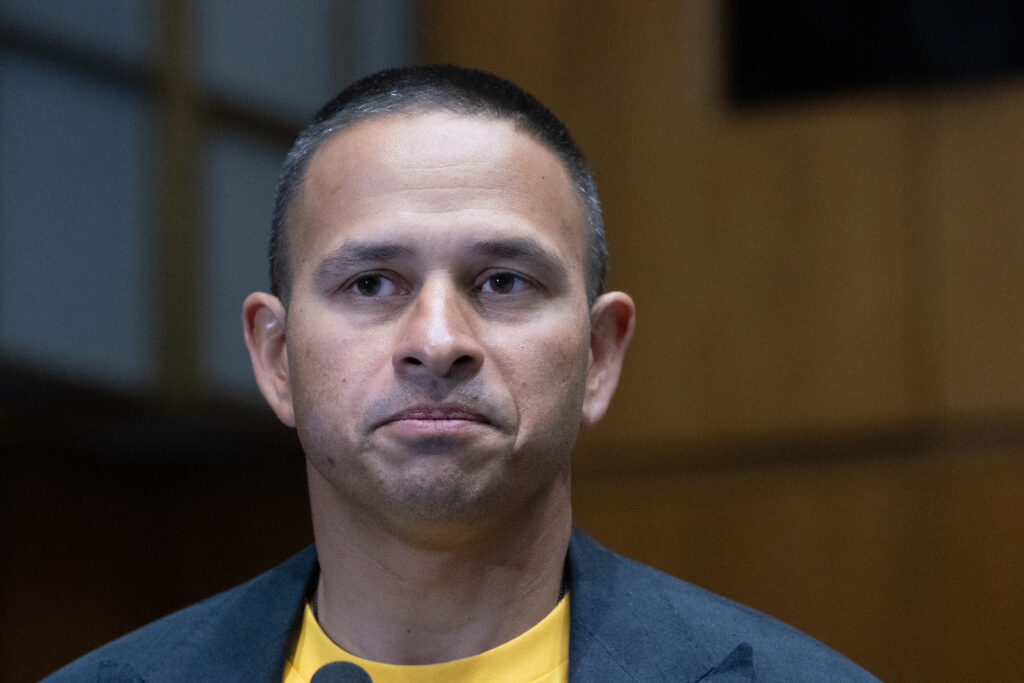
Usman Khawaja at a Gaza discussion in the main committee room of Parliament House in Canberra. Thursday 28th August 2025 Photograph by Mike Bowers.

I’ve just returned from the gambling roundtable hosted by Senator David Pocock and Kate Chaney MP.

The roundtable heard from:

  • Australian cricket champion Usman Khawaja
  • Alliance for Gambling Reform’s Tim Costello
  • Gambling harm expert Deakin University’s Professor Samantha Thomas
  • And families with lived experience of gambling harm

The government has dragged its feet for so long that speakers with lived experience of gambling harm were having to tell their stories for the fifth time. It clearly took a toll.

I’ll share what I can from the other speakers as it becomes available.

I spoke about how the only thing stopping action on gambling advertising is political will. There is no economic or democratic barrier.  

Australia Institute research shows that a small levy on gambling revenues could compensate for all lost free-to-air TV, metro radio and online advertising income: the $240 million the gambling industry spends is equivalent to a levy on gambling revenues of just 1.4%. That would mean:

  • Lower profits for gambling companies
  • More funding for journalism and entertainment
  • Those ad slots become available for non-gambling industries.

Make it a 2% levy, and you could restore much of the ABC’s cut funding as well.

Advertising restrictions have the enthusiastic support of most Australians:

  • Three in four Australians (76%) support a total ban on gambling ads phased in over three years.
  • Four in five Australians support banning gambling ads on social media and online (81%) and in stadiums and players’ uniforms (79%).
  • Nearly nine in ten Australians (87%) support banning gambling ads during prime time TV hours for families and children, including 61% who strongly support.
  • Nearly four in five Australians (78%) agree that Australian Government policies should aim to reduce the amount people spend on gambling.

Bob Katter threatens journalist after being asked about his Lebanese heritage.

Bob Katter is not in the federal parliament today – he is in Queensland, where he has just threatened to punch a journalist in the mouth, because that journalist (Josh Bavas from the Nine network, who I worked with at the Queensland press gallery when he was with the ABC) for asking about Katter’s Lebanese heritage, given Katter’s support for anti-immigration ralles.

Katter’s grandfather migrated to Australia from Lebanon in the late 1800s and changed his name from Carlyle Assad Khittar to Carl Robert Katter. It is not the first time Katter has become agitated when being reminded of his Lebanese heritage – he also became very upset when questioned about it during the section 44 crisis.

Richard Marles is back in the country where he was part of an official meeting:

In a speech to the NSW Treasury and Economic Society of NSW, chair of the Superpower Institute Rod Sims has reiterated his calls for a carbon price:

Why am I talking about a price on carbon?  Do I not know that this and other potential governments will never implement a price on carbon?  Let’s put our emission reduction efforts elsewhere where we can make progress.

This is defeatist and damaging thinking.

We all know a carbon price is first best policy but that statement gets us nowhere.

The following arguments are why a carbon price is necessary and urgent. First, our current policies will not allow us to meet our climate targets and obligations unless further piecemeal, contentious and hideously costly steps are taken along these same paths. Second, current and likely future similar policies will damage our productivity. Third, policies without a carbon price provide no funds to compensate households for the cost of these policies.  Fourth, current and likely future policies damage rather than contribute to necessary budget repair.

How many times have we heard companies say they would like to make or use more green products, but they cannot as they are more expensive?

Well of course they are.  Green and black products compete without any allowance for the damage done to the environment from the use of fossil fuels.  If green products were already competitive with black products there would be no need to encourage a transition; it would simply happen.

Some criticise companies which make such statements, but they should not.  The fault lies with government.  If a government proclaims that the use of fossil fuels damages the environment but then does not recognise this in the way advocated by economists for over 100 years, via carbon pricing, you cannot blame companies for not taking action that would harm their economic interests.

I will argue today as follows.

1.   A carbon price would replace an array of current defective policies

2.   The 2012-2014 carbon price clearly worked, but the political implications are contested.

3.   We need to push for an easy to communicate carbon pricing approach, which clearly compensates all but the largest users of electricity

4.   Carbon pricing best meets the Treasurer’s three areas of focus at the recent Economic Roundtable

5.   There is already significant carbon pricing in the world, and support is growing.

Won’t somebody please think of the children?

Morgan Harrington
Research Manager

At this morning’s press conference with David Pocock and Usman Khawaja called for the government to turn its attention to the much needed reform of Australia’s gambling industry.

The call comes as Australians lost more to gambling than anywhere else in the world – $31.5 billion in 2022-23. Since 2019, average losses have increased by 25%, so the problem is getting worse. And that’s not to mention the social harms gambling causes.

The proliferation of gambling apps and sports betting means that gambling has come to infiltrate our sporting codes, living rooms, and free time in ways that weren’t possible as little as 10 years ago. As a consequence, younger Australians are gambling in unprecedented way. Analysis by The Australia Institute shows that about 900,000 Australian teenagers gamble. Around 600,000 are aged just 12-17-years-old, which means Australia has enough underage gamblers to fill the MCG six times over.

The good news is that Australians are hungry for change. Australia Institute research found that three in four Australians (76%) support a total ban on gambling ads phased in over three years. This is exactly what the Murphy Review recommended, mow all that is needed is for the government to have the courage to implement what would be an incredibly popular policy.

Just snuck away to do another project for a moment, but back with you now.

Seems like things have maintained their consistency with today – it is a parliament Friday, so everyone is just hoping to get out of here as quickly as possible.

So Richard Marles’ meeting that wasn’t a meeting with US defense secretary Pete Hegseth, which was the whole point of his hastily arranged trip to Washington DC this week. There were some meetings – including with VP JD Vance, which we know from Selena Myers is the most useless position in the US government (the very least you could do, as it were)

But while there was a photo Marles posted of him and Dudebro Pete, it seems the US wants Australia to know it wasn’t an official official meeting and instead a ‘happenstance’ bumping in. Kinda like when your Tinder date ghosts you, but you bump into them at a cafe later on in the week.

The thing is, the US, even under the authoritarism of Trump and his lackeys is STILL more transparent about this stuff than Australia, which is notoriously secretive about these sorts of things. So they tend to think ‘this will never come out’ when you know, it does. Especially if the other country is a yapper about this kinda of stuff. And America is a yapper.

Liberal senator James Paterson was holding his fire though. It makes sense – he is very hawkish when it comes to security and America, so he wouldn’t want to just jump in with criticism unless he was sure:

Look, I don’t want to overdramatise this issue, I’ve got to say. The Deputy Prime Minister has had extensive dealings with Secretary Hegseth in the past. And he was in Washington, D.C., meeting with the Vice President and the Secretary of State. So, yes, of course, we want substantial engagement with the Defence Department, and it is particularly important in the context of the AUKUS review, but I’m not concerned based on these current reports

Big Gas’ greed is killing Australian manufacturers

Angus Blackman
Podcast Producer

The colossal price rises on the east coast, brought on by excessive gas exports, have been a disaster for Australian manufacturers and households.

On this episode of Follow the Money, manufacturing industry representative Geoff Crittenden and Australia Institute Principal Advisor Mark Ogge join Ebony Bennett to discuss how governments can ensure there’s more gas available for Australians.

Whistleblower Richard Boyle spared jail sentene

AAP

Whistleblower Richard Boyle has been spared jail after exposing unethical debt-collection practices at the Australian Taxation Office.

Judge Liesl Kudelka sentenced Boyle, 49, in the South Australian District Court on Thursday, seven years after the former debt collection officer went public with allegations that led to reforms within the ATO.

In a plea deal with prosecutors, the Adelaide man has admitted four criminal charges, reduced from the original 66 laid after he appeared on the ABC’s Four Corners program.

Family and supporters sobbed in court when Boyle received no conviction on all four counts, no penalty and a $500, 12-month good behaviour bond.

“Blowing the whistle can be a tough gig”, said Judge Kudelka, who accepted his poor mental health was directly linked to his offending.

Addressing a protest in support of Boyle outside court, Whistleblower Justice Fund founder Rex Patrick sad Boyle and his wife Louise had “been through hell”.

“Richard Boyle is a hero,” he said.

“He actually thought he was protected. It’s taken four judges, and silks and lawyers to work out whether or not he was protected.

“He went in thinking he was, but it turns out that he wasn’t. All he did was press a record button, he took a photograph, he sent an encrypted email to his lawyer.”

In a speech in 2024, Boyle said the experience had left him “broken, physically, mentally and financially”.

The Human Rights Law Centre’s Kieran Pender said prosecuting whistleblowers had “a chilling effect on people speaking up”.

“The sentencing of Richard Boyle concludes a long and sorry saga that significantly undermined whistleblower protections in Australia,” he said.

“It is critical that the Albanese government and Attorney-General Michelle Rowland now act to better protect whistleblowers and ensure cases like this never happen again.”

Mr Patrick said Boyle’s treatment was “disgraceful” and there was no public interest in prosecuting him.

“The federal government knew whistleblower laws were broken and had made a commitment to change them,” he said.

“The attorney-general (Mark Dreyfus) could have, in the public interest, stopped the prosecution, and he didn’t do that.”

Independent senators David Pocock and Jacqui Lambie have tabled the Whistleblower Protection Authority bill in parliament “but that’s only a start”, Mr Patrick said.

“We also need to change the laws so that people are protected when they do reasonable things in the context of preparing a public interest disclosure … the government knows that bit’s broken, and yet they did nothing.”

‘Anything to sustain life is forbidden [by Israel] to come in’ [to Gaza].

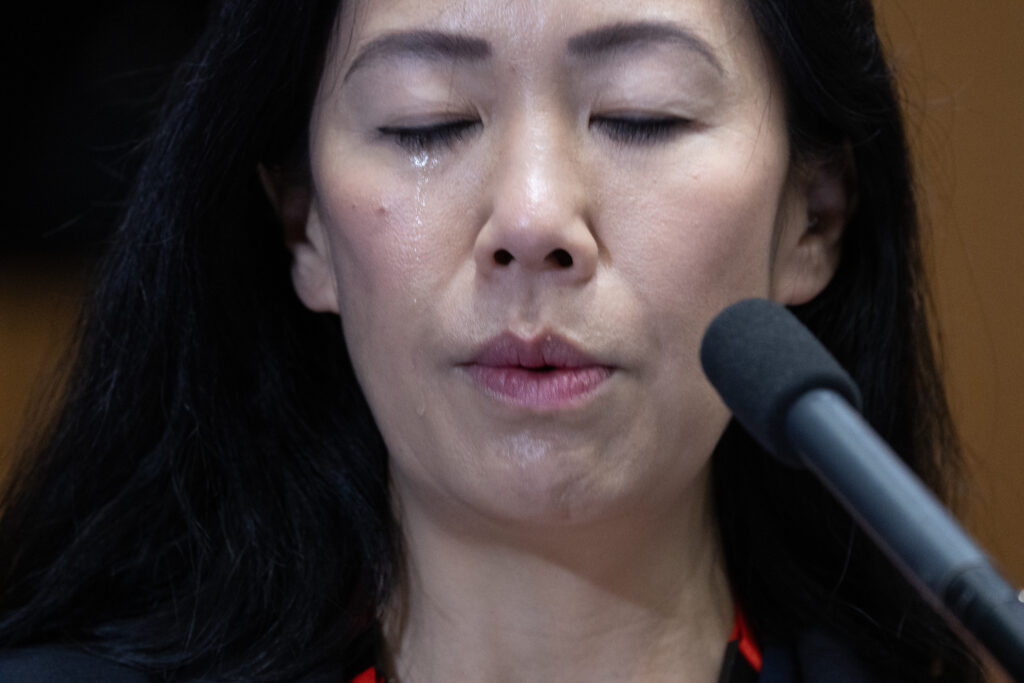
An emotional Scarlett Wong from Médecins Sans Frontières tells the audience harrowing stories about her time in Gaza at a Gaza “roundtable” discussion in the main committee room of Parliament House in Canberra. Thursday 28th August 2025 Photograph by Mike Bowers.

Scarlet Wong continued:

My Palestinian colleagues were treated with humiliation and subjugation, queuing through separate caged checkpoints and being held up at gunpoint for hours in the hot sun while I experienced freedom of movement and safety as a non Palestinian.

However, after spending 10 months in the West Bank, I experienced collective punishment regularly, including the blocking of ambulances and aid, and when our head of mission tried to bring antibiotics to help our sick colleagues in Gaza, he was ordered by the IDF to bin them at the border. The cruelty and impunity of the IDF towards Palestinians shocked me.

I’ve never seen the world the same way again, unprovoked yet protected by IDF settlers, terrorized, tortured, burnt alive Palestinian children in their villages.

If children defended themselves or retaliated by throwing rods, they would be incarcerated or shot. If this was unprovoked, we knew it was possible if provoked.

A year ago, when I went to Gaza, I tried to bring in whatever I could, a carton of scalpels after our shipment had been seized, a life straw prescription glasses for.

A child, watercolor pencils for my translator’s child, protein bars, warm clothes, medications. But now my colleagues who are entering tell me that they can’t enter Gaza without having their calories counted, in case, God forbid, they try to share their food with someone.

Anything to sustain life is forbidden from being brought in batteries, formula, medication. So does our government expect our 18 international colleagues to perform miracles under these circumstances? Our colleagues currently attest to limbless children who have no parents yet have to travel to the Gaza humanitarian fund queuing to die. Are we meant to sew their limbs back on? Are we meant to shield them from bullets as we operate? What are our medical teams expected to do in these circumstances?

Honestly, what do you think MSF, or any of us can do without food, medical supplies and safe access? So do you want to know the diagnoses of mental health in Gaza?

I diagnose human cruelty. I diagnose erasure. I diagnose genocide.

Images of child shepherds hiding behind rocks as Israeli settlers massacre their flock of mothers in traumatic Birds without anesthesia, unable to lactate from shock of little hands desperately grabbing mine to the sounds of quadcopters shooting infiltrate my sleep every night, after staying silent in exchange for access to patients, we no longer have a choice but to tell the world the truth.

As a constituent of Warringah, a citizen of this country, I am angry that MSF and humanitarians have to do what our governments will not.

Know that unless you urgently act to help end this genocide, our colleagues are likely to suffer retaliation for sharing this testimony with you today. We need you to act now. Malcolm Fraser had the courage and moral conviction to fly refugees here. He chose humanity over politics. What is our current government doing and what will our legacy be

‘I was more afraid of looking into my children’s faces if I was to tell them I did nothing as Palestinians were ethnically cleansed’

Scarlet Wong a Sydney-based psychologist who served as mental health activity manager in Gaza in March 2024 with MSF also spoke at the Friends of Palestine event.

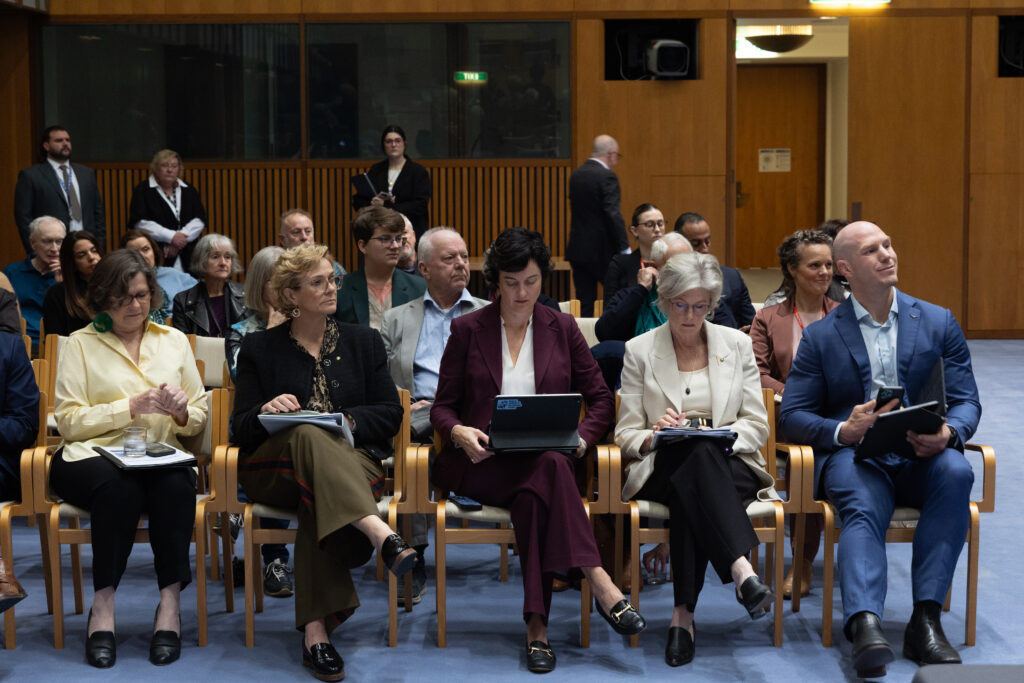
Labor Teal and cross bench MP’s Ged Kearny, Zali Steggall, Kate Chaney, Helen Haines and David Pocock at a Gaza discussion in the main committee room of Parliament House in Canberra. Thursday 28th August 2025 Photograph by Mike Bowers

Wong became very emotional as she described what she had witnessed:

Helping people down on their luck was a part of our national identity. When my parents, who were refugees, came to Australia, the Fraser government once sent Qantas planes to airlift refugees, and I grew up believing in these values, which is why I work for MSF, where I visited the West Bank in 2021 and Gaza last year, I’ve been asked to share what mental health conditions I saw in Gaza, so I’ll give you the example of Tom, but I won’t say how I know him, as I fear for his life.

Tom was hit by an air strike and almost died suffering severe injuries. He was taken to hospital immediately by his family. Israeli soldiers then stormed the hospital.

They arrested Tom for surviving their strike, and immediately snapped his crutches and beat his wounds. Soldiers then transferred him to did him [an Israeli] prison, known as a place where humanity goes to die.

They showed him pictures of his wife and sister and told him, we’ve killed them all. They showed him pictures of his house and said, we’ve blown it up. They pretended to offer him food, and as he reached for it, they stomped on his hand and left it to go gangrenous. They deprived him of medical care. A female soldier mocked him, threatening sexual violence if he didn’t stand

Tom’s family now tends to a broken man still imprisoned in his mind in a state of complete dissociation. So what diagnosis should I give someone who’s dissociated after being psychologically and physically tortured, while the destruction of hospitals has left people with pre existing psychiatric conditions like schizophrenia, wandering the streets without treatment and inpatient care, the majority of presentations do not constitute pathology.

Dissociation, hyper vigilance, panic attacks are all appropriate survival responses to psychological torture, including the persistent hovering of high tech drones threatening to kill at any moment.

I’m a mother of three, and last year, yes, I was terrified to go to Gaza, but I was more afraid of looking into my children’s faces if I were to tell them that I did nothing when Palestinians were being ethnically cleansed.

Too many elections will do that …

Glenn Connley

Hobart is now, officially, the oldest capital city in Australia.

And, after three elections in five years (to achieve the same result), they probably feel it.

The Australian Bureau of Statistics has released this year’s Median Age and Sex Ratio data.

It reveals that Hobart’s median age is 39.3 years, which places it ahead of Adelaide (39.2) at the top of the nation’s age table.

Darwin is the youngest capital city (median age of 34.8 years), ahead of Canberra (35.7).

But that’s nothing compared to the more granular breakdown, which has the retirement seaside community of Tea Gardens/Hawks Nest, just north of Newcastle in NSW, as the oldest in the country, with a median age of 66.5.

The Canberra suburb of Acton, which is populated by ANU students, is the youngest in the nation, with a median age of just 21.1 years.

Darwin is the only capital city with more men than women, with 105 blokes for every 100 women.

Every other capital is home to more females than males, with Hobart (95.2 men for every 100 women) and Adelaide (96/100) the most lop-sided ratios.

Labor’s bill to protect the penalty rate changes has passed through the parliament. The ACTU is pleased. Sally McManus:

Penalty rates are an essential part of working Australians’ take-home pay.

They compensate people for working unsociable hours and giving up time away from family and loved ones.

Protecting penalty rates also protects the weekend. The minute employers can pay people the same no matter the day they work, Australians can kiss goodbye the weekend.

Unions welcome the Albanese Government delivering on this election promise. Without these laws, workers in retail, admin, banking, and finance would stand to lose thousands of dollars a year under proposals by big employer lobby groups.

Workers’ pay will no longer be at risk from employers engaging in a race to the bottom to strip away basic protections needed to maintain the services we all rely on.”  

Big moves on fossil fuel subsidies

Rod Campbell
Research Manager

One of Australia’s biggest mining companies, Fortescue, has co-published a report with a leading science organisation, calling for an end to Australia’s biggest fossil fuel subsidy.

The report by the Australian Academy of Technological Sciences & Engineering calls out Australia’s Fuel Tax Credit Scheme for “subsidising diesel and discouraging uptake of alternative fuels.” It calls for the scheme to be phased out, “especially in high-emission sectors”.

When they say “high-emission sectors”, they mean mining.

Wait a second!? A mining company calling for an end to a subsidy to mining companies?!?…like The Australia Institute has called for for over a decade?

As unlikely as that sounds, Fortescue have been going hard on decarbonisation for years now. They see themselves, and Australia more broadly, as having an advantage in a greener mining industry, and the Fuel Tax Credit Scheme is slowing this down.

But much of the mining industry (think BHP, Rio Tinto, Gina, Adani) is happy to sit back, pollute and enjoy the $10 billion per year diesel subsidy.

A money fight between big mining companies!? Get your popcorn!

Usman Khawaja tells parliamentary friends of Palestine: harsh words don’t have impact on Israel, but maybe action can.

Here is what Usman Khawaja told the room where David Pocock was hosting a parliamentary friends of Palestine gathering:

From my point of view, this has, and still does, remained a humanitarian issue.

People want to muddy the waters and want to make it political and want to make it religious, but at the crux of it, it has always been a humanitarian issue. Innocent people have been dying for two years now and being starved out from Israel. And as we know, it is a man made famine. We know it is.

And so whenever anyone tries to bring religion or bring politics into it, I just don’t agree with that whatsoever.

For me, the way I explain is – say you have a good friend, and he is going out and he is killing people willy nilly. We know it is not right, and we say ‘why are you doing this’ and he says, ‘these people are rubbing me the wrong way, I don’t like the cut of their jib’.

[So you say] ‘Well that is not right, you can’t do that, it is illegal. You are not allowed to go out and kill people’.

And he is like, ‘well, that is just the way I feel.’

Would I still be friends with this person? The answer is no. I wouldn’t be. His values don’t align with my values. I would not be friends with them. And I would draw a line in the sand very quickly.

The same analogy that I used there, applies to Israel and the Australian government. We are allied, and we are accepting these war crimes. We accept these war crimes from an an ally, right now today, against the people of Palestine in Gaza, what then [is it for them] to turn around and [to do it to someone else. Do it to us, to anyone.

The standard we set for them should be higher than the standard we set for anyone else because we are aligned. And if we aren’t aligned, I am hoping, obviously the government doesn’t believe in the starvation of innocent people, then we should detach from that and we should make a statement and act.

Because if we settle on harsh words, and the reality is the harsh words do not have any impact, or care. Israel doesn’t care. Then maybe if we act, maybe then a few other nations will act and then together we can actually put enough pressure on Israel to stop what they are doing.

That is all I really wanted to say.

Usman Khawaja meets Anthony Albanese, says he has an opportunity “for Australians and the Australian government to be leaders”

We will bring you some of the press conferences David Pocock has held with Australian cricketer Usman Khawaja. There was one at 9am, where he said the prime minister had pulled out of a meeting between the pair to speak on gambling reform. By 10am, Albanese had met with Khawaja where he said he asked the prime minister to be brave.

Khawaja spoke to Mike Bowers and said:

I would never tell the PM to do anything. I didn’t tell the PM to do anything.

We just had a conversation, and what I said was, I think there’s an opportunity for Australians and the Australian government to be leaders. And there is opportunity for him to be one of the great leaders and unlike what Netanyahu is saying, that his legacy will be tarnished, I think it is quite the opposite. I think the community and younger generation Australians think it is actually an opportunity to be his legacy, standing up for what is right and for the people.

And I just wanted to thank him for getting a pathway to recognise Palestine as a state and to finally be able to..they have been dehumanised for so long, so first and foremost, I just wanted to thank him for that, and that I appreciate it, because it takes courage, and I just wanted to say that I think Australia can be very influential, I think our voice can be respected, and hopefully we can do that for the right reason and get full aid back in Gaza.


Plastic tax could generate billions

Morgan Harrington
Research Manager

Australia’s first large-scale soft plastics recycling facility has opened, which means you might be able to start recycling all those empty packets piling up in your kitchen again.

The plant has already processed tens of thousands of tonnes of the stockpile leftover from the ill-fated REDcycle scheme, which collapsed in 2022.

The $9.1 million in state and federal investment in the facility is no doubt a step in the right direction. But, as research from The Australia Institute shows, the amount of plastics consumed in Australia has doubled since the year 2000, and it is expected to double again by 2050.

A more effective way to deal with the waste is to not create it in the first place. That’s why the European Union has a tax on plastic waste, set at €0.80 per kilo. Australia Institute research shows that if Australia applied a tax on plastic packaging at the same rate as the EU, and charged it to plastic producers and importers like Spain does, it could raise $1.5 billion a year

Hey guess what Australia? It’s 50 years on from the establishment of the Henderson Poverty Line (the measure of income people need to live above poverty) we still don’t have official poverty measures!

Cool, right?

Half a century on from when we handed down all the research to find that living in poverty is bad for people’s health, future and the overall productivity and equality, we still haven’t addressed it. AMAZING!

The Brotherhood of St Laurence held an event at parliament house to mark the 50th anniversary of the Henderson Poverty Inquiry and wants the government to establish some official poverty measures.

Like lifting people out of it, for instance.

Despite increased focus on cost of living and inequality, Australia remains one of the few countries in the world without official national poverty measures. Over 150 countries, including Canada, New Zealand, the United States, and the United Kingdom, already have official measures in place and report on them regularly. 

The Economic Inclusion Advisory Committee established by the Federal Government has recommended Australia adopt official poverty measures – a monetary and multidimensional measure – to better guide national understanding of poverty and efforts to reduce it. 

“Fifty years on, we have the tools and the data. What we need now is action,” said Dr Travers McLeod, Executive Director of BSL. “This is a chance to align with international best practice and show we are serious about tackling poverty in all its forms. Australia’s economic compass is incomplete without official poverty measures.” 

To support this goal, BSL and the Melbourne Institute have worked together to demonstrate the value of a Multidimensional Poverty Index (MPI) for Australia. Using the internationally recognised framework led by Professor Sabina Alkire and Professor James Foster, an MPI captures the multiple, overlapping challenges that shape poverty, such as health, housing, education, and employment. 

The Antipoverty Centre have also been pushing for the government to officially recognise poverty by raising welfare to above the Henderson poverty line. We know it can be done – we did it during the pandemic, lifting thousands of people out of poverty overnight. And the benefits were enormous – not just for health and wellbeing (which are very important measures in their own right) but also for the economy and productivity.

Australian uni’s selling their integrity to coal and gas companies

Morgan Harrington
Research Manager

Of Australia’s 37 public universities, 26 take money from fossil fuel companies, according to new research by The Australia Institute. Fossil fuelled research centres include The University of Queensland’s Centre for Natural Gas, The Monash Energy Institute, and the University of South Australia’s Future Industries Institute. Such close links between universities and fossil fuel companies undermine the independence of universities and risk greenwashing the activities of companies profiting from climate change.

These cosy relationships are the reason that some student groups, including Stop Woodside Monash, are calling for universities to divest from fossil fuels. The tobacco industry provides a good precedent for the move. In 1994, 30% of universities accepted research funding from the tobacco industry, much of which was used to fund studies about the impacts of smoking. But by 2002 most of Australia’s universities has adopted policies that banned the acceptance of money from the tobacco industry, which put an end to this obvious conflict of interest. When will universities do the same with the fossil fuel industry?

Off the back of the economic roundtable, the government has announced it will be looking at abolishing a number of what it is calling ‘nuisance tariffs’. It has a list of about 500, on top of the 457 tariff cuts last year.

With this reform, we’ll have removed around 1000 tariffs over two years and streamlined approximately $23 billion worth of trade, saving Australian businesses $157 million in compliance costs annually.

It means the Albanese Government has slashed more tariffs than any government in two decades.

These nuisance tariffs risk doing more harm than good.  

From today, Treasury will consult on the proposed list of almost 500 additional tariffs to be abolished by the government.

Submissions will be open on the Treasury website until 10 December and a full and final list of agreed tariffs for removal will be published in the next Budget.

Examples of products include:

  • Tyres with annual imports worth nearly $4 billion, raise less than $80,000 in revenue per year. Abolition will save business over $32 million in compliance costs each year.
  • Televisions with annual imports worth over $1.4 billion, raise less than $43,000 in revenue per year. Abolition will save business over $13 million in compliance costs each year.
  • Wine glasses with annual imports worth over $42 million, raise less than $28,000 in revenue per year. Abolition will save business over $375,000 in compliance costs each year.
  • Air conditioners with annual imports worth over $58 million, raise less than $100,000 in revenue per year. Abolition will save business over $504,000 in compliance costs each year.

We spoke about the right to protest a little earlier – and here is one of the reasons why it needs to be protected.

Here is the bill the Victorian Liberals have offered up to the parliament:

The Bill provides for the registration and authorisation of public protests, confers legal protection for participants in authorised protests, establishes a regime for prohibition and exclusion orders, prohibits the wearing of face coverings at protests (other than for religious purposes), and makes consequential amendments to the Summary Offences Act 1966.

In summary, the Bill:
a. Introduces a registration and authorisation scheme for public protests, enabling the Chief Commissioner of Police and the Supreme Court to approve, refuse, or impose conditions on protests;
b. Allows for prohibition orders to prevent organisers from conducting protests likely to cause serious disruption, endanger public safety, or require unreasonable police resources
c. Establishes exclusion orders restricting individuals from entering specified public places for protest purposes where they have repeatedly been subject to “move on” directions;
d. Prohibits wearing face coverings at protests except for religious reasons, with police powers to direct removal of such coverings; and
e. Amends the Summary Offences Act 1966 to remove certain provisions relating to “move on” powers.
Human Rights Issues

SIIIGGGGGHHHHHHHHH

The AFR is reporting the meeting Richard Marles held with Pete Hegseth, which the US denies was a meeting has “paid off” although no-one is allowed to have the details.

So the defence minister flew to the United States to meet with the Trump administration about the latest conditions on Aukus (as well as working out some sticking points about the builds on the Australian side) and the Trump administration says the meeting wasn’t a meeting, but apparently there was an agreement, but despite spending $1.6bn on this already, we are not allowed to know.

That is a problem. Why? Because one of the sticking points is whether Australia has control over whether these submarines are deployed in the event the US decides to go to war with China. Which I don’t know – seems a big fricking deal? If another country commits us to war?

Am I having a stroke? Why is this not a bigger issue?

One of the reasons defence gets away with sooooo much – the giant spends, the cost blow outs, the delays, the lack of deliverables etc – is that it is never actually tested. Australia hasn’t had to defend itself, so none of it has had any consequences. So instead we concentrate on cutting the funding to things that we know have positive outcomes – the NDIS, welfare, public services – so defence can continue to have an unlimited budget where it delivers nothing – and now we are also being told we can’t know what the government has agreed to.

UNBELIEVABLE.

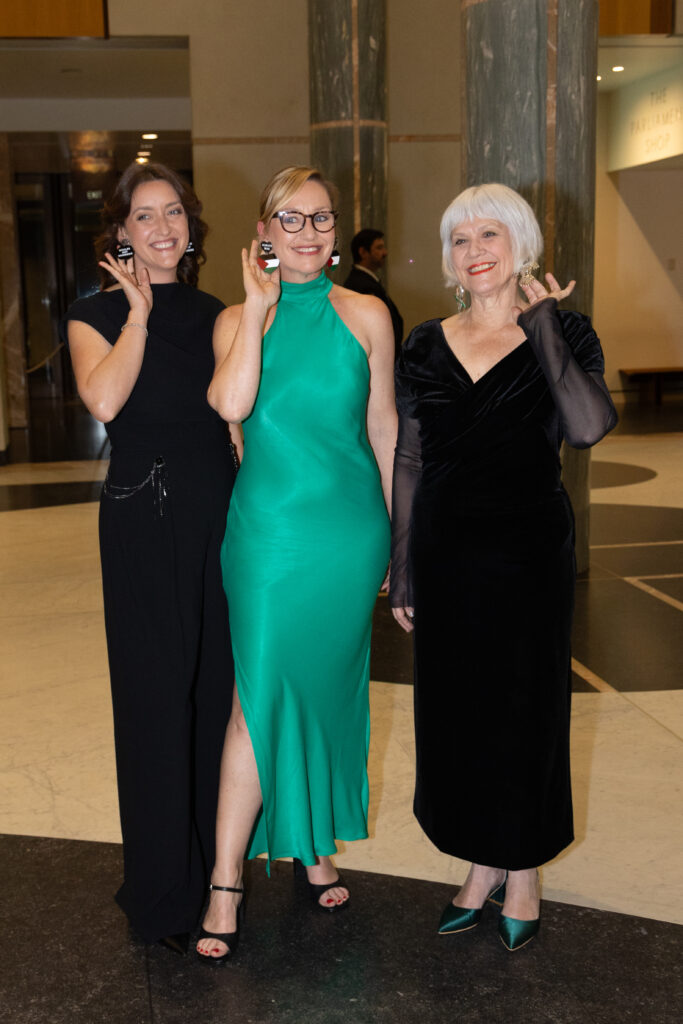
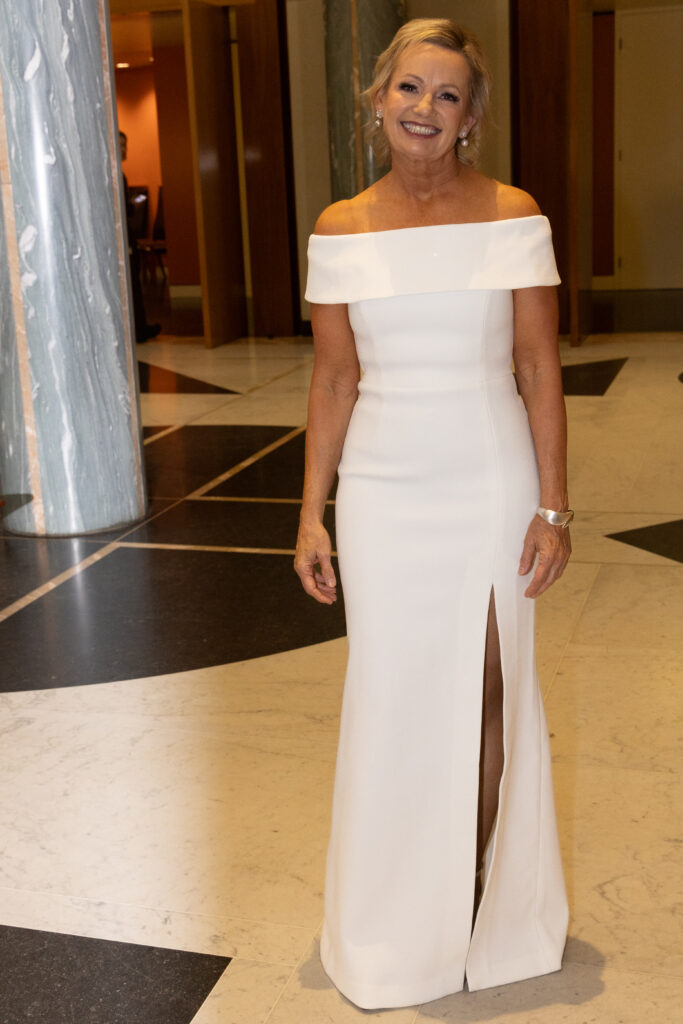
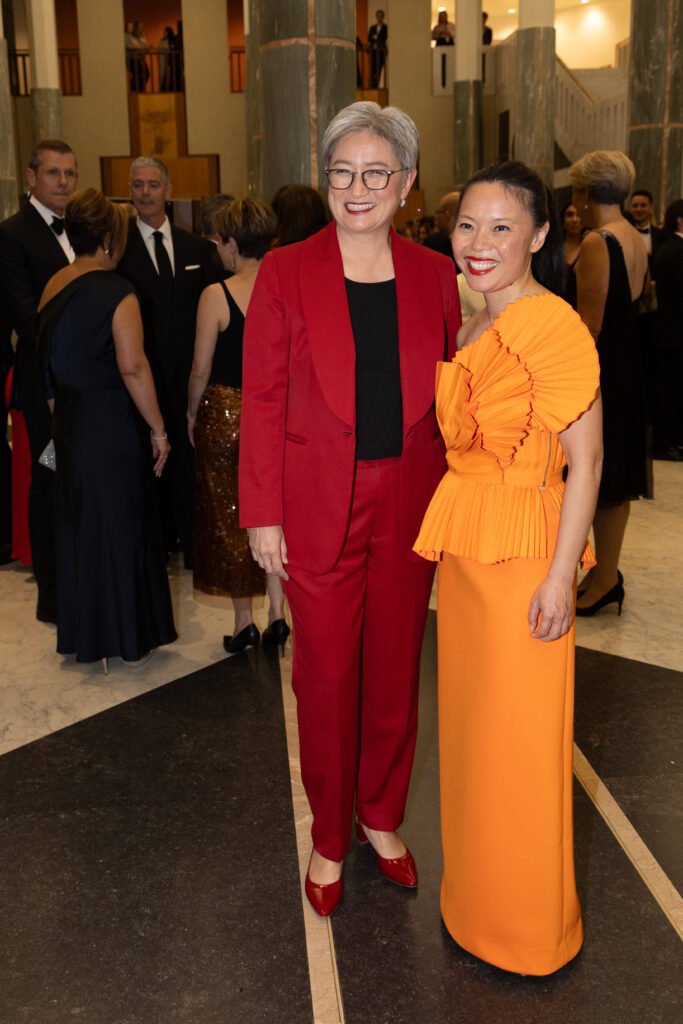
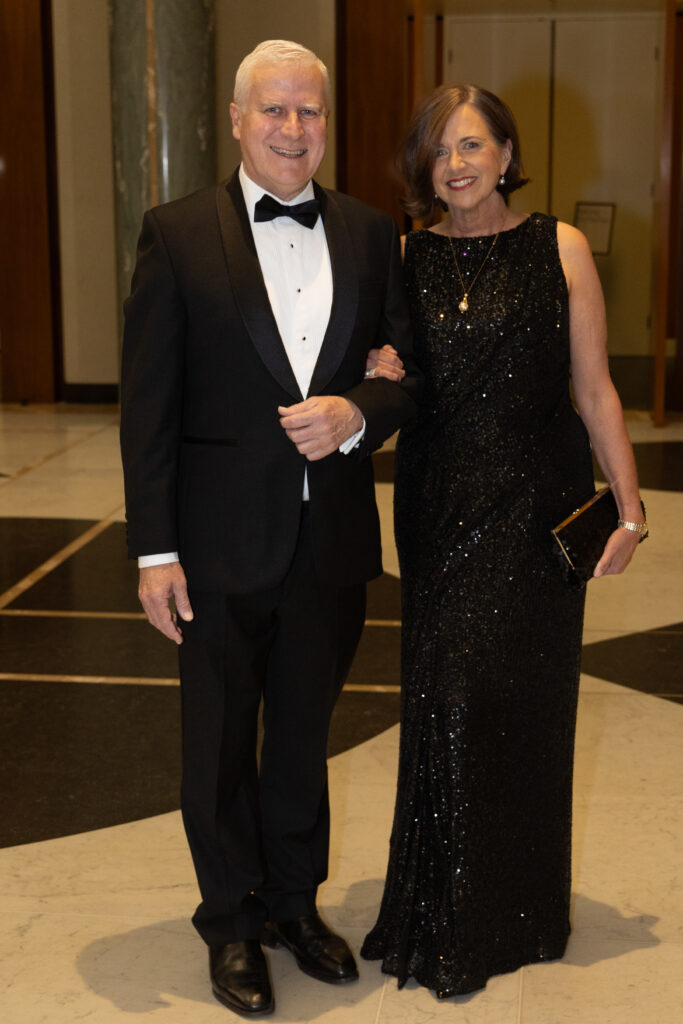
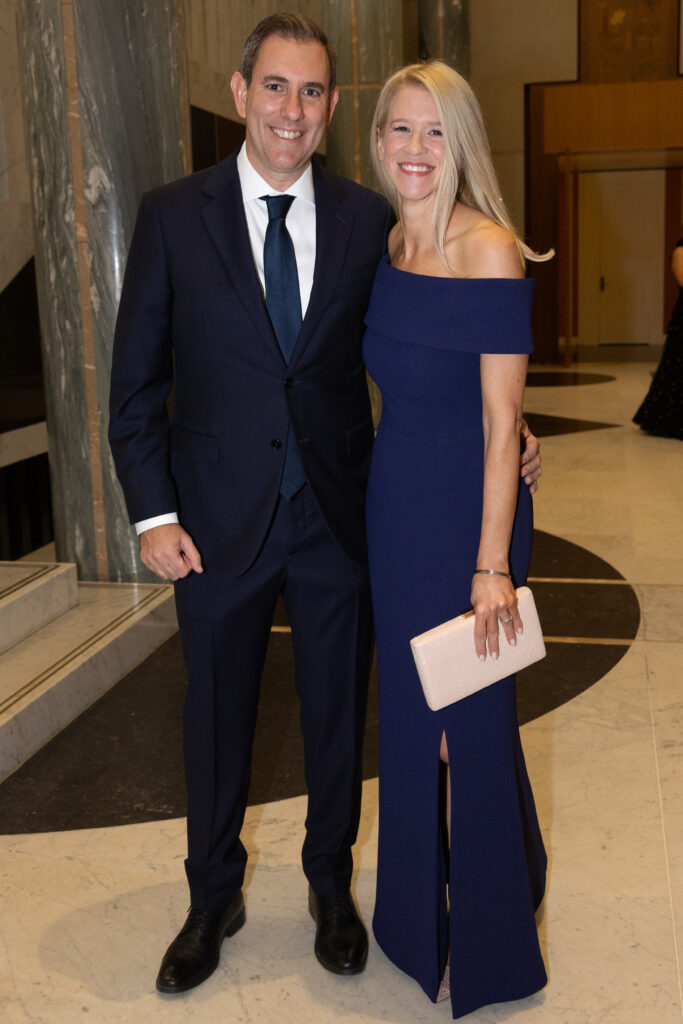
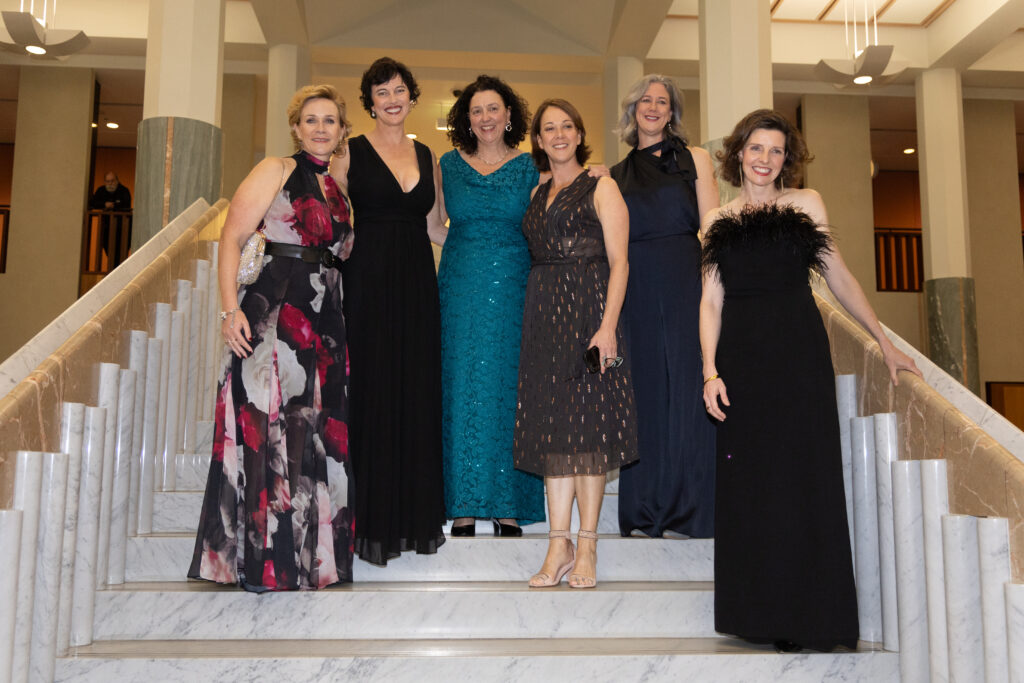
Workwear Guy weighs in on Midwinter ball lewks

The Workwear Guy, after being alerted to the Midwinter Ball’s existence by Crikey’s Daanyal Saeed in previous years, has weighed in once again on the men’s outfits.

We love to see men succeed in women dominated fields. For those not terminally online, the Workwear Guy has an incomparable knowledge of tailoring and men’s clothes and uses it to educate people on how they can improve their outfits.

Sigh

Allan Behm
Advisor, International & Security Affairs Program

Richard Marles has gone to Washington. The KPI? Success in getting a meeting with JD Vance (Dep PM meets VP) and Pete Hegseth (Def Min meets Def Sec).

The message is that fawning to the two most outstanding fawners in the Trump administration pays off. Another billion to the US submaring constructors, and an implicit “deal” to support the US whenever they might want to use “our” submarines?

Marles needs some deep interrogation when he returns.

It won’t happen, of course.

Denmark calls in US ambassador following Trump-connected influence claims

Oh look – the US ambassador to Denmark has been called in after allegations people with connections to Donald Trump have been attempting covert influence operations in Greenland.

You may remember the US take over of Greenland is one of Trump’s batshit ideas in a long run of batshit ideas that dominated headlines (and jokes) for a bit and then cooled off. But the Danish national broadcaster has reported that there have been attempts to influence people on behalf of the US in Greenland.

As AAP reports:

Denmark’s foreign minister has summoned the top US diplomat in the Nordic nation for talks after the national broadcaster reported at least three people with connections to President Donald Trump have been carrying out covert influence operations in Greenland.

In a lengthy written statement, the US State Department confirmed the deputy chief of mission in Copenhagen, Mark Stroh, had met with Danish foreign ministry officials.

It declined to comment “on the actions of private US citizens in Greenland.”

The department said Stroh had “a productive conversation and reaffirmed the strong ties among the government of Greenland, the United States, and Denmark.”

It said the US values its relationships with both Denmark, a NATO ally, and Greenland and noted that Trump and his top aides had all said they respect “the right of the people of Greenland to determine their own future.”

“We continue to foster engagement and co-operation with Denmark and Greenland to support increased security and prosperity for our nations,” it said.

Stroh is the second American diplomat to be summoned by a European NATO ally this week as the Trump administration shakes up its approach to foreign policy. France had called US Ambassador Charles Kushner to its foreign ministry after he sent a letter to French President Emmanuel Macron alleging the country did not do enough to combat anti-Semitism.

The White House did not offer an immediate comment on Denmark’s summons.

Trump has repeatedly said he seeks US jurisdiction over Greenland, a vast, semi-autonomous territory of Denmark. He has not ruled out military force to take control of the mineral-rich, strategically located Arctic island.

Denmark and Greenland have said the island is not for sale and condemned reports of the US gathering intelligence there.

Public broadcaster DR said Danish government and security sources that it didn’t name, as well as unidentified sources in Greenland and the US, believe that at least three American nationals with connections to Trump have been carrying out covert influence operations in the territory.

One of those people allegedly compiled a list of US-friendly Greenlanders, collected names of people opposed to Trump and got locals to point out cases that could be used to cast Denmark in a bad light in American media, the broadcaster reported. Two others have tried to nurture contacts with politicians, businesspeople and locals, according to the report.

DR said its story was based on information from a total of eight sources, who believe the goal is to weaken relations with Denmark from within Greenlandic society.

The broadcaster said it had been unable to clarify whether the Americans were working at their own initiative or on orders from someone else. It said it knows their names but chose not to publish them to protect its sources.

The Associated Press could not independently confirm the report.

“We are aware that foreign actors continue to show an interest in Greenland and its position in the Kingdom of Denmark,” Danish Foreign Minister Lars Løkke Rasmussen said in a statement.

“It is therefore not surprising if we experience outside attempts to influence the future of the Kingdom in the time ahead.”

“Any attempt to interfere in the internal affairs of the Kingdom will of course be unacceptable.”

People who live further from a city and in poorer post codes, have lower life expectancies.

Matt Grudnoff
Senior Economist

Australians like to think that we live in a very equal society – where because of Medicare, unlike in the USA, wherever you live you can expect the same level of healthcare.  Unfortunately, the data shows the lie to this belief.

Healthcare should be universal, but your postcode has a big impact on life expectancy. People who live in inner metropolitan electorates (the inner parts of Australia’s capital cities) live almost a year (0.8) longer than people in outer metropolitan electorates (the edges of Australia’s capital cities).

But life expectancy falls even more for people who live in electorates outside the capital cities. In electorates where the majority of people live in major regional cities life expectancy falls by more than a year (1.1) compared with outer metro electorates. In rural electorates the results are even worse. Almost half a year (0.4) lower than provincial electorates.

This means that those in inner metro electorates can expect to live on average 2.3 years longer than their fellow Australians in rural electorates.

Independent senator David Pocock is about to hold the first of two press conferences he has scheduled this morning.

The first is on the need for gambling reform.

The second will be on Gaza.

We will bring you bits from both.

Home affairs legislation ‘blantant disregard for the law’

The bill Tony Burke introduced on Monday, with very little fanfare, continues to raise a lot of alarms in legal and human rights spaces.

Human rights groups have come together to condemn the home affairs legislation, which allows for easier resettlement of non-citizens in third countries like Nauru, as “yet another baseless attack on the rights of migrants, refugees and people seeking asylum”.


In a move the organisations say shows blatant disregard for the law, the Albanese Government has
introduced legislation that would strip migrants and refugees of their legal rights when sending them to third countries like Nauru, legislating their way out of cases currently before the courts.

The Bill is yet another attempt at rushed law-making, this time stripping protections from migrants and refugees that make sure bungled bureaucratic decisions that affect people’s safety and family integrity can be challenged. It is designed to limit government accountability for making sure those decisions are fair and based in fact.

The Bill also has a retrospective effect – validating incorrect decisions that were made in the past,
preventing the right for these decisions to be corrected. The Bill even allows the government to continue to prosecute criminal charges that were brought as a result of incorrect decisions.

Jana Favero, Deputy CEO of the Asylum Seeker Resource Centre said:

The decisions are serious and lifelong. We are talking about people being permanently deported to
places like Nauru. Decisions like this must not be made without fundamental legal safeguards. This
legislation is clearly designed to manipulate the law so that the Government is not accountable to the courts.”

If the idea of people being deported without the ability or right to challenge the decision makes you think of ICE and Donald Trump – you’d be right. The Albanese government is setting a dangerous precedent of removing people’s legal rights to question when the government has made serious mistakes.”

One of the things we still have managed to reckon with (and there are so many) is the inequality between the regions and the city.

AAP covers some of that here:

Aged care, mental health and disability workers are being priced out of country towns amid soaring housing costs, further entrenching cycles of vulnerability and disadvantage in regional Australia.

Workforce shortages across the community sector were the single greatest factor influencing inequitable access to support services, according to research by Anglicare Australia released on Thursday.

Recruiting staff to rural and remote areas, which experience higher levels of social  disadvantage than the cities, has been hampered by both the high cost of housing and low availability.

“In many regional towns, limited housing stock drives up rents, pricing out essential workers,” said the In Every Community report.

“In mining regions, for example, community workers compete with highly paid mining staff for scarce accommodation, making relocation unviable.”

The shortage of essential staff has created long waiting lists in many regions, while some community services have been forced to shut down, according to the report based on a sector survey and interviews.

Vulnerable people were then forced to travel hundreds of kilometres for support, take limited forms of public transport or go without.

“This disparity between metropolitan and regional service access entrenches inequality,” the report said.

“People in rural and remote communities face higher levels of disadvantage but have less access to the very supports designed to address it.

“Workforce shortages therefore perpetuate cycles of vulnerability and exclusion.”

Outreach service providers in regional areas were also spending thousands of dollars each month on the rising costs of fuel, electricity and compliance activities.

The price of petrol and long distances were also hindering access to support.

“Young people are particularly affected, as they often rely on parents or carers who may not be available due to other commitments,” the report said.

“The result is a cycle in which those most in need of support are also those least able to reach it.”

While community organisations were developing proactive strategies, such as rural workforce incentives, fuel vouchers and transport allowances, public funding often did not reflect the true cost of delivery.

The report called for several reforms, including a dedicated national rural workforce strategy, subsidised housing for key workers and long-term funding models to give employees stability.

“These are vital services – disability support, mental health care, aged care, and family services,” Anglicare executive director Kasy Chambers said.

“But instead of being funded to meet local need, they’re too often treated as one-size-fits-all.”

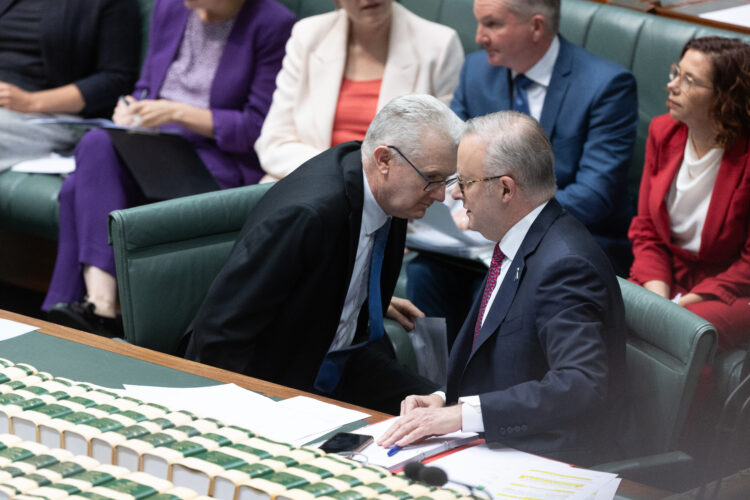
In news sure to get senior economist Matt Grudnoff’s goat, Money.com reports that the bank of mum and dad is now being used to pay for private health insurance premiums.

The finance website said its research found 48% of parents of adult children paid their premiums through family health insurance, while 30% contributed and 22% covered their whole portion of the family policy.

Who are these parents and how do you find them?

Michaelia Cash’s complaints against the bill seem two fold – one that protest will cause inconveniences – which, yes, is the point. And two, she assumes that if protest is protected to the extent David Shoebridge and the Greens are aiming for, then everyone will choose to protest every time their coffee isn’t served right, and start burning cars in the street.

It’s a fundamental misunderstanding of why people protest and what they hope to achieve. The idea that protest is only allowed if it is convenient and doesn’t actually get in anyone’s way or put anyone out is ridiculous. This sanitised idea of protest is one which has taken hold in recent years, leading to poll results like this. Given the hundreds of thousands of people who are turning out across the country, which has forced the government to start paying attention, perhaps they didn’t “fail dismally” after all.

You are going to be shocked to learn that Michaelia Cash and the Liberals are against it. (We have some thoughts which we will outline in the next post)

Cash:

…The Australian people need to understand that (a) they already have the right to protest in Australia,
and (b) let’s call this bill what it really is. It’s been put forward by the Australian Greens for this reason—to give legal cover to the Greens activist base.
For every small business listening in to this broadcast, these are the same groups who block highways, chain themselves to machinery, disrupt small businesses and—listen to this, mums and dads of Australia—even prevent emergency vehicles from getting through when they need to.

This bill has got nothing to do with the right to protest. Let me tell you what this bill does. We’re going to go through a few of the clauses. When you go through the clauses you actually understand what this bill does. It is basically seeking to legislate the right to cause chaos. Senator Shoebridge says that this is an essential reset of the right-to-protest laws in Australia. It depends on what you mean by reset, doesn’t it?

I would have thought that the right to cause chaos and basically have a society based on anarchy is possibly not something that the Australian people will accept.

Let’s have a look at the bill. To say that it’s an absurd bill is an understatement. It is designed to take away safety and civility from our streets, in favour of the Greens’ activist support base. Let’s have a look at what the bill actually does. When you look at the bill, as opposed to listening to the comments of Senator Shoebridge, it is a one-clause bill of rights. Let’s be very clear about what that does. The right is one that enshrines protest rights in a completely unfettered and unprecedented manner. It’s never been done before in any international human rights instrument or in any legislative charter of rights.

I want to read the definition in the bill. Once you read the definition in the bill,
you basically know that you can only go downhill from there. This is what section 5 says:
In this Act: protest includes the following:
(a) actions that are political in nature;
(b) actions that are disruptive, or that seek to be disruptive.

Again, for those listening in to the broadcast, this is what the Greens want to do. They basically want to give, by this bill, legal cover to their activist base—those same groups, as I said, who block highways and cause you inconvenience, chain themselves to machinery and disrupt small businesses. God help any small business—they don’t need any more disruption; it’s bad enough under the Albanese government

David Shoebridge:

The bill ensures that excessive penalties, such as lengthy prison sentences and exorbitant fines, are considered unnecessary and disproportionate limitations on the right to protest. It reads them down. The bill provides that, where state or territory laws conflict with this federal protection, those laws will be invalid, and they’ll be invalid to the extent of the inconsistency. This bill is an essential reset. Some might criticise it as being too reasonable and to proportionate a protection of the fundamental right to protest. I’ll face those criticisms.

What we’re doing here today is placing the protections that the federal government agreed to when it entered into these international agreements into domestic law.
I want to place on the record one person who was critical for me, my office and my team. I want to give a shout-out to my chief of staff, Kym Chapple, for the enormous work she’s done on this. I want to point out one person who was critical for getting this work done, former Greens leader Bob Brown.

Some 18 months ago I caught up with Bob in Hobart. Bob, the Tasmanian Greens and countless forest protectors in Tasmania have been putting themselves on the line to protect that old growth forest. They have seen firsthand how those state laws in Tasmania were designed to criminalise the very act of protecting a forest and standing up for those beautiful natural assets, arresting protesters and grabbing them, even before they get to the forest, on public land. I want to thank him for his courage, his support and his pressure in bringing this bill to the chamber today.

We call on all parties in this place, who live and breathe only because we have a functioning democracy, to join us today to legislate for the right to peaceful and essential protest

Yesterday, we brought you David Shoebridge’s right to protest legislation which he introduced into the senate, with the aim of enshrining the democratic right to protest in Australia.

State governments have used anti-genocide protests as an excuse to crack down on protest rights all around the country.

Shoebridge said if that wasn’t stopped, Australians could lose one of the tenets of their democracy. Here is part of the speech he gave when introducing the bill:

A few short weeks ago I and, I think, all of my Greens colleagues across the country joined thousands of people— 300,000 of whom walked across the Harbour Bridge—in an historic march for a free Palestine and an end to genocide. In that moment, I saw solidarity and the possibility for a better world. I saw people of all ages, all abilities, all backgrounds uniting in the driving rain to stand up for conscience and to end the suffering of the people of Gaza.

But where I saw solidarity and possibility, where I saw hope, where I saw my beautiful hometown of Sydney come together for peace and for humanity, the New South Wales Labor Party just saw a problem. Like too many state and territory governments, New South Wales Labor sees protest not as a fundamental part of our democracy, not as a human right, not as the most powerful tool for driving progress in societies; they saw the protest as an irritant—as a political problem. They would far rather we had not marched.

They would have liked Sydneysiders to stay at home, watch their Netflix and passively let governments fail to oppose a genocide. They would rather our voices had not been heard. They want to keep power in the walls of parliament and in the offices of police commissioners they appoint, and they desperately want to stop power being exercised in our streets and in our workplaces, as we come together as people with good conscience who care about the future

Amnesty International Australia and the Centre for Non-Violence have announced the end of their relationship with healthcare and community sector super fund HESTA over its fossil fuel investments.

It’s part of a growing push to have big funds divest from fossil fuel, given the impacts on the environment and people’s health.

Jesuit Social Services has maintained its relationship but is advocating directly to HESTA to raise pressure on oil and gas companies Woodside and Santos to end their oil and gas expansion plans.

Brett Morgan, the Superannuation Funds Campaign Lead for Market Forces said HESTA has more than 1 million members and nearly $97bn in assets under its management and could divest.

HESTA has disrespected its one million members by supporting Santos’ climate plan, which is consistent with catastrophic levels of global heating.

Woodside and Santos have been on HESTA’s watchlist for nearly three years so it’s high time for the fund to stop failing its members and publish a concrete escalation plan detailing how it will hold these oil and gas companies to account.”

Amnesty International Australia has removed HESTA as its default super provider in its enterprise bargaining agreement, as has the Victorian based Centre for Non-Violence..”

Ok, one more bit of Midwinter Ball news – Climate 200 founder Simon Holmes a Court was the highest bidder at the auction to be flown by Sussan Ley in her plane to a pub for lunch and then watch some sheep shearing. He can take a friend, so he plans on taking a climate scientist, the Sydney Morning Herald reports.

OK, we are done with all of that now. To the real news.

The Midwinter Ball as seen by Mike Bowers

Here are some more arrivals for you:

Prime Minister Anthony Albanese and Jodie Haydon
Anika Wells, Kristy McBain, Ash Ambihaipahar, Clare O’Neil, Sally Sitou, Anne Aly and Amanda Rishworth at the Midwinter Ball in the Great Hall of Parliament House in Canberra.
Ash Ambihaipahar and Anne Aly at the Midwinter Ball in the Great Hall of Parliament House in Canberra.
The Minister for Communications and Minister for Sport Anika Wells with from left Lee Rogers, Kate Cebrano, Tony Armstrong, Rona Glynn-McDonald, Dylan Alcott, Minister Wells, Hollie Rankin and Tessa Kerans-Clay
Melissa McIntosh, Mary Aldred, Anne Ruston, Sussan Ley, Melissa Price and Zoe McKenzie
Greens Leader Larissa Waters with Senator Steph Hodgins-May and the Greens member for Ryan Elizabeth Watson-Brown
Penny Wong and Sally Sitou
Michael and Catherine McCormack
Treasurer Jim Chalmers and Laura Chalmers

Good morning

Hello and welcome to the last day of this sitting week! Some of you may have a sore head after last night’s Midwinter Ball, to which I say – have some avocado on toast, go for a walk outside and drink some flat lemonade and you’ll be fine. And headache tablets. Take them immediately.

From all accounts the ball was exactly what you would expect – lots of flippery and bigwigs, but pretty boring. It’s time has most likely come and gone, but it will take another few years for the gallery to work that out.

Mike Bowers stayed back for The New Daily and took some of the arrival photos – everyone wants a photo in their finery on the marble hall stairs, so expect to see a lot of pfp with this backdrop for the next little while if you follow political types (the journalists and staffers mostly – MPs usually refrain) on the socials

The teals ready for the Midwinter Ball from left Zali Steggall, Kate Chaney, Dr Monique Ryan, Sophie Scamps, Nicolette Boele and Allegra Spender in the Great Hall of Parliament House in Canberra. (Mike Bowers)

We’ll bring you some more of that in a moment.

Early this morning, David Pocock will be hosting back to back press conferences with Australian cricketer Usman Khawaja and advocates and other MPs on the situation in Gaza, and then the need for gambling reform. That starts from 9am, so if you were at the ball and your job is covering this sort of stuff, better get going finding those avocados.

We will bring you more of the day as it unfolds – you have Amy Remeikis this morning and so far, it is only a two-coffee-morning, but I might have to add a bit of sweetened condensed milk to one to get things going (it’s the last day of a long parliament week and we have a whole other week to go after this, so allow me my vices)

Ready? Let’s get into it.


Read the previous day's news (Wed 27 Aug)

Past Coverage

Comments

Start the conversation

The biggest stories and the best analysis from the team at The Point, delivered to your inbox.

Past Coverage