Wed 3 Sep

Australia Institute Live: Government gives in on aged care packages, Anthony Albanese warns Coalition over stunts. As it happened.

Amy Remeikis – Chief Political Analyst

This blog is now closed.

Start the conversation

Australia Institute Live: Government gives in on aged care packages, Anthony Albanese warns Coalition over stunts. As it happened.

Key Posts

The Day's News

See you tomorrow?

We are going to pull the pin because the parliament just has the smell of shenanigans to it and honestly – it is the Wednesday of the second sitting week and no one has the energy for this. Certainly not mine.

There are more meetings – Penny Wong will meet with Yulia Navalnaya (who I believe will also be meeting with Sussan Ley) and then there is also tomorrow’s final round of bullshit before the parliament rests until estimates and the house sitting in October.

The FOI changes will be introduced tomorrow. So that will be fun.

Glenn Connley will take you through tomorrow, as I have an unavoidable commitment. I will miss you. But we will be back together soon. Glenn will keep you entertained tomorrow – so I hope you have fun!

So until next time – be good(ish) and please – take care of you. Ax

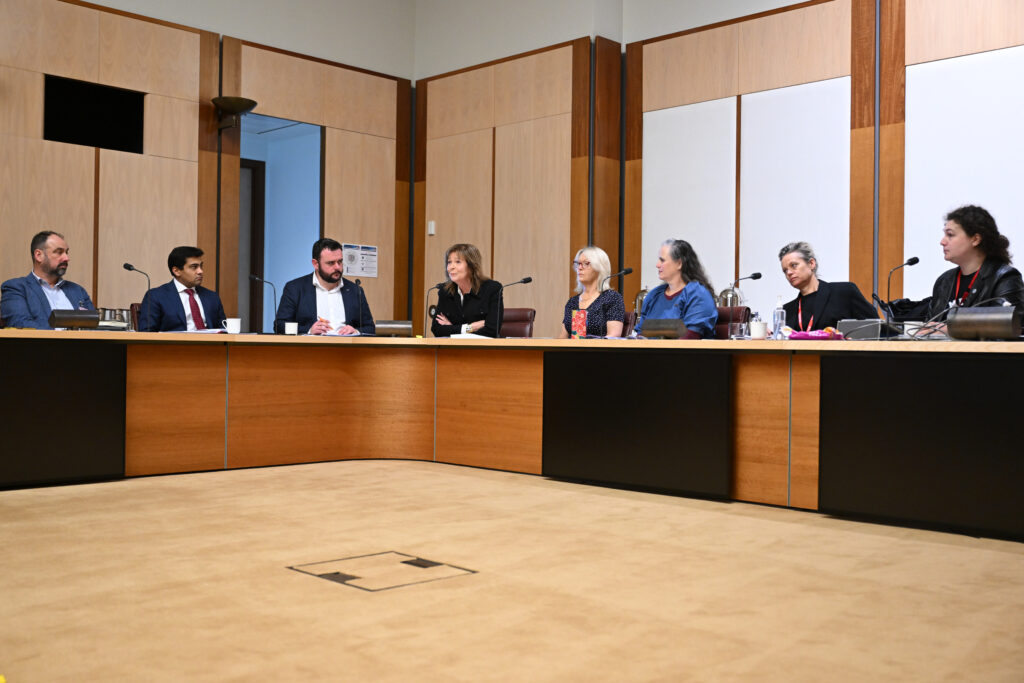
There has been a roundtable on AI at parliament today – Rachel Jackson of AAP covers that here:

When an opportunity arose to work with artificial intelligence and messaging, bank teller Kathryn Sullivan embraced it as a welcome change.

But Ms Sullivan was inadvertently training a chatbot that would lead to the end of her 25-year career at Commonwealth Bank.

It’s an experience that pushed the 63-year-old to share her story at an AI symposium in Canberra on Wednesday, which brought workers, unions, ministers and tech leaders together to discuss the future of new technologies.

Ms Sullivan said she liked the idea of having tools that could help her provide better services, but there needed to be more consultation for affected workers.

Before being made redundant in July, she had no idea that her job was on the line.

“I was completely shell-shocked, alongside my colleague,” Ms Sullivan told AAP.

“We just feel like we were nothing, we were a number.”

The bank then did a U-turn on the job cuts, offering Ms Sullivan and colleagues their positions back weeks later.

But the role was different to the one Ms Sullivan had left, and she was not guaranteed her position would remain secure, so she opted for the redundancy.

At Wednesday’s meeting, Australia’s peak union body embraced a government push to harness artificial intelligence as a force for growth, while advocating for laws that businesses fear will stifle the technology.

Australian Council of Trade Unions assistant secretary Joseph Mitchell said there needed to be an agenda that empowered jobs, workers and growth through AI.

His speech followed the government’s economic reform roundtable, where the regulation of AI formed a major dividing line between employers and unions.

But Mr Mitchell said the meeting delivered a positive breakthrough.

“While rhetoric and reporting suggests an unbridgeable gulf between workers, users, developers and employers on AI – the reality is different,” he said.

“Unions and the tech industry are engaging to find ways to protect and promote our creative sector workers and academics.”

Introducing AI laws is essential to ensure employers and workers are consulted before new technologies are introduced, as well as to protect creatives’ work from large-scale tech company theft, Mr Mitchell said.

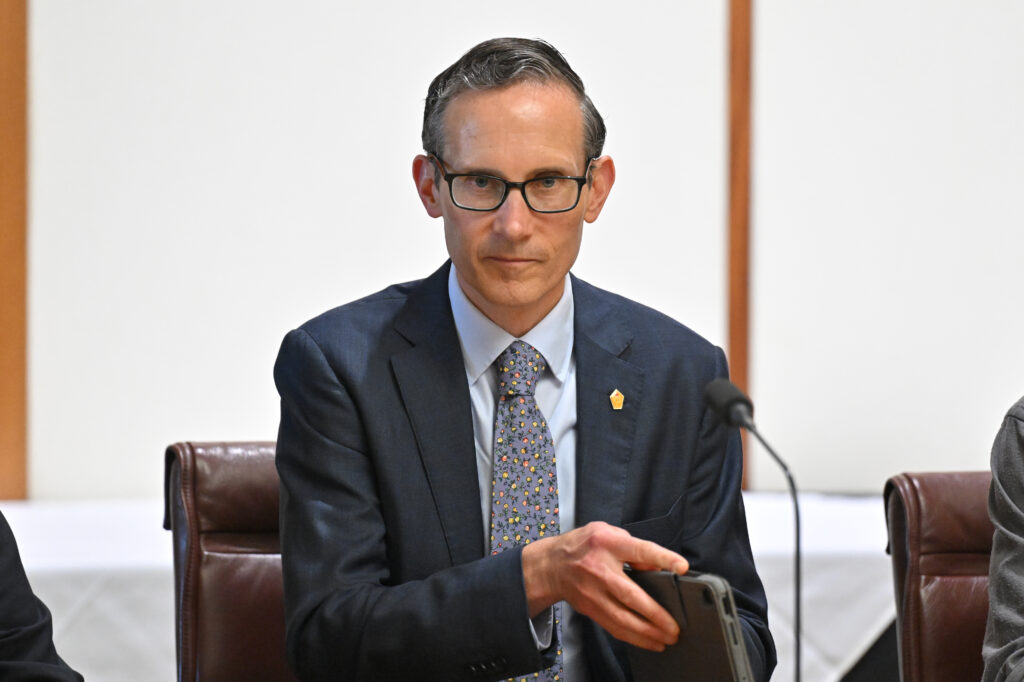
Workers’ voices must remain at the centre of AI adoption, Assistant Productivity Minister Andrew Leigh assured unions at Wednesday’s meeting.

“The Australian ideal of the ‘fair go’ means that prosperity is shared,” he said, meaning “technology should serve people, not the other way around”.

The minister welcomed AI as a force for good, describing the technology as a “once-in-a-generation chance” to restore workers’ dignity after decades of rising inequality and casualisation.

Labor senator Tim Ayres raised questions about the extent Australia adopts technology from overseas, rather than shaping the landscape ourselves.

“How we co-operate and collaborate with our neighbours and partners and competitors on these questions is up for grabs,” he told the meeting.

Following the productivity roundtable, Treasurer Jim Chalmers said the government would perform a “gap analysis” of Australia’s existing laws to determine whether AI regulation would require a dedicated AI act.

The analysis is expected to be delivered by the end of 2025.

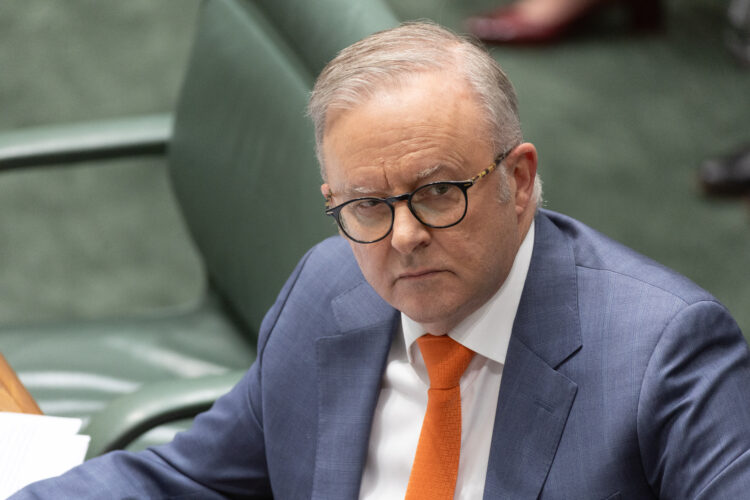
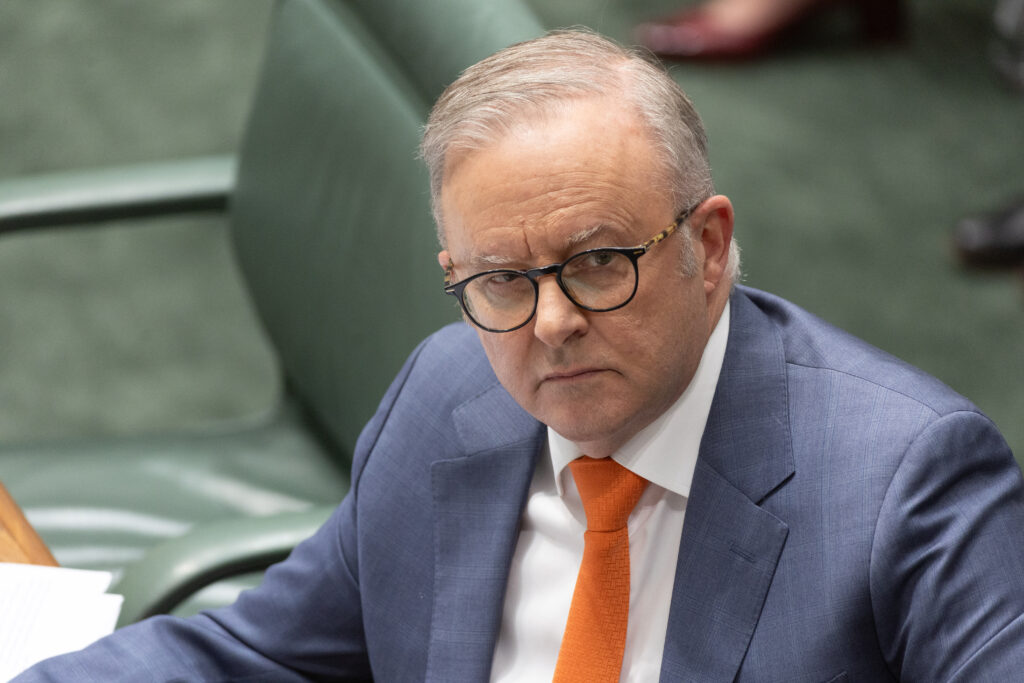
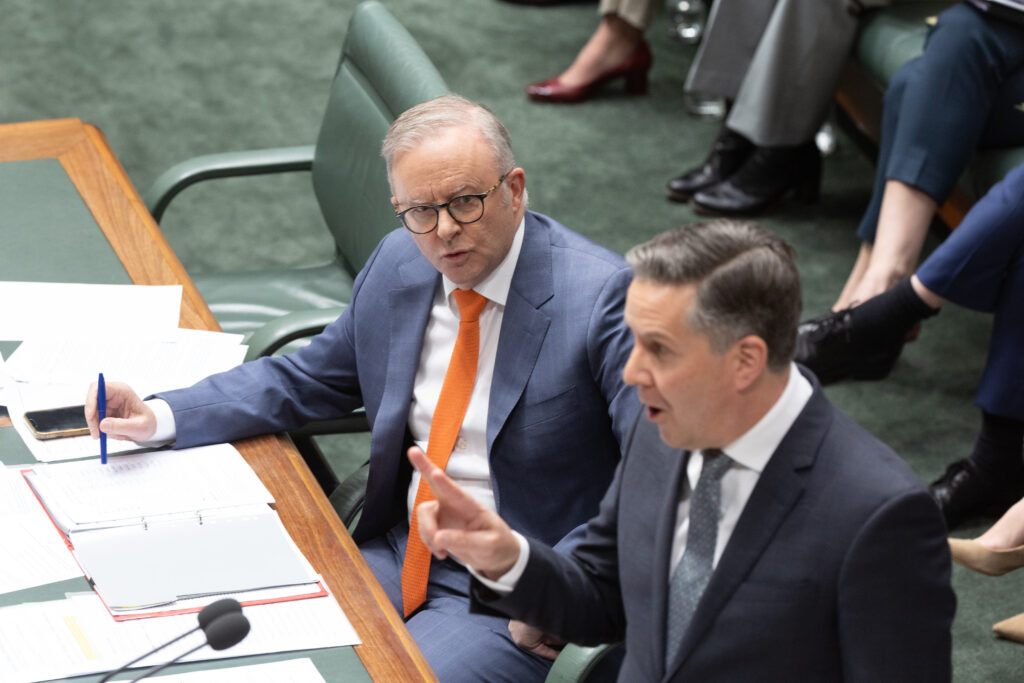
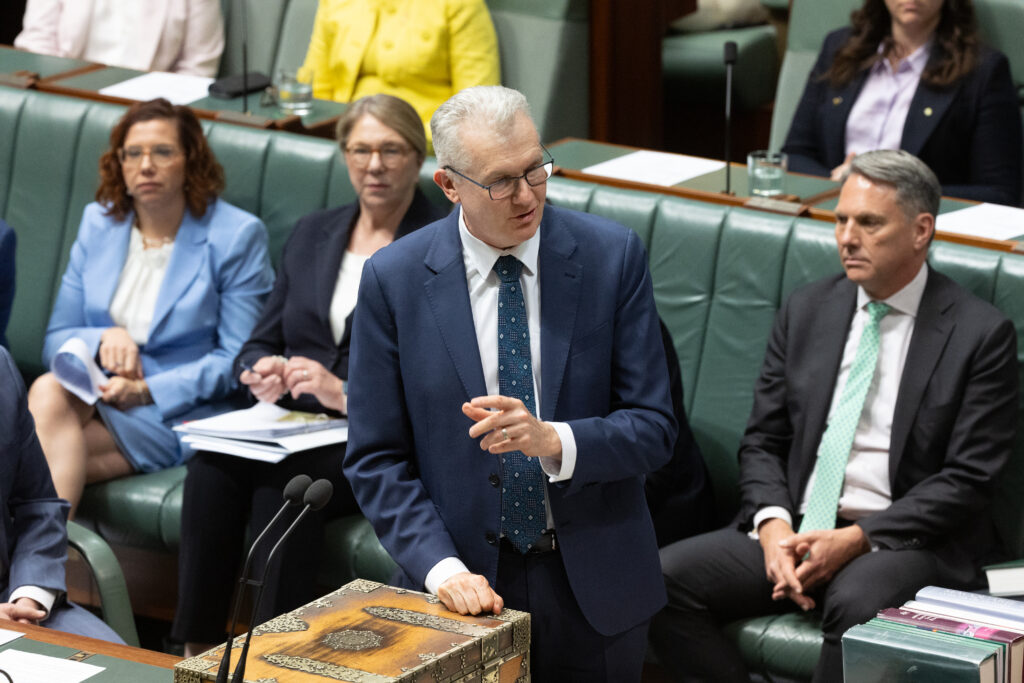
How Mike Bowers saw QT

Anthony Albanese cranky face.
Cranky Mark Butler

Cranky Tony Burke

“We do have a plentiful supply of gas in Australia,” says Chris Bowen

Alice Grundy
Research Manager

Monique Ryan, the member for Kooyong asked:

“The government’s currently undertaking a gas market review with the premise that we need new gas production for our domestic needs. However, only 16% of Australian LNG was sold to the domestic market last year, the rest was exported. More than enough gas for our domestic needs is sold daily on the spot market and exported. Why is the government supporting more gas projects when we have more than enough already? When will you intervene to protect our access to our own gas resources?”

Minister Bowen replied, “we do have a plentiful supply of gas in Australia”.

Good to know.   

Do critics condemn everyone at China’s parade?

Frank Yuan
Postdoctoral Fellow

Former Australian foreign minister, former NSW premier Bob Carr and former Victoria premier Dan Andrews are attending the major military parade being held in Beijing, China this morning. The parade commemorates the 80th anniversary of victory in the Second World War.

Their critics in Australia were quick to point out that Andrews and Carr will joining leaders of “rogue regimes” (to use the scary quotes)—Russia, North Korea, and Iran. But these critics won’t tell you that 23 other world leaders are there as well, including the leaders of Malaysia, Indonesia, and Vietnam. Should we condemn them too? Is anyone going to seriously suggest that they have gone to Beijing to kowtow to the supreme leader of North Korea? The event has attracted important regional neighbours that Australia cannot afford to ignore.

Bob Carr has written about why he is in Beijing on the Sydney Morning Herald.

Plugging our ears and refusing to understand the perspective of others isn’t going to make Australia safer, and engagement doesn’t equal submission. The sooner this becomes common sense, the sooner we can have mature public debate on foreign policy in Australia.

Why is China holding a massive parade today?

Frank Yuan
Postdoctoral Fellow

With about 40,000 troops and some of the country’s advanced weapons on display, a military parade being held in Beijing today’s is meant to showcase China’s triumph over adversity, and to bolster the ruling Communist Party’s claim as the defender of the Chinese people. In Chinese parlance, 3 September 1945 marks the “victory of the Chinese People’s War of Resistance Against Japanese Aggression and the World Anti-Fascist War”. It was the day after Japan formally surrendered to allied nations.

The date is of major significance in Chinese nationalism, akin to ANZAC Day for Australia. It marks China’s victory in a long, existential struggle against Imperial Japan. By the time Japanese warplanes bombed Darwin in 1941 and Australians felt threatened as never before, some of China’s most populous regions had been under Japanese occupation for up to a decade.

For Beijing, China’s contribution to the Allies’ victory also entitles China to leadership in the global order equal to any Western nation. Indeed, Xi is now fond of saying “Every increase of China’s strength is an increase of the prospects of world peace.” But by its own words, China is not seeking some special mandate to rule all under heaven; its declared vision is more mundane: “global governance based on consultation, joint contribution, and shared benefits”.

Whether or not you agree with these statements, it’s important to understand that these views grew out of sentiments that are strongly felt  by Chinese leadership and much of the public.

So what did we learn from question time?

Well, without a social policy to hang their hat on, the Coalition is once again at sea. They ran out of questions on the aged care packages very early on, and their questions on that were largely regressive.

Then they tried with the Oz story on ‘Isis brides’ which seemed more of a digging exercise than anything else. Then it was the the bullshit to bring up the tractors.

Honestly.

Question time ends

There is a dixer for Clare O’Neil on housing and then the PM calls time.

Anne Webster gets up to say that she has been misrepresented and denies the prime minister’s implications that she helped to organise the protest/tractors or that she encouraged the protester with the noose.

And the chamber moves on.

Coalition continues to circle the drain over tractor chase

Anne Webster comes back to her question from yesterday, because she wants to make the point about the prime minister being chased by tractors again.

Again – this is a complete double standard. This is being celebrated by the Coalition. If a pro-Palestinian protester got in a giant vehicle and chased after the prime minister’s car after an event, there would be absolute hell to pay.

Webster:

The Prime Minister told the bush summit “I won’t BS people”. The Prime Minister promised Australians a $275 reduction in their energy bills prior to the 2022 election. Hasn’t that now proven to be BS? Is this broken promise the reason why the Prime Minister was chased out of town by a convoy of tractors?

That commitment was two elections ago by the way, and was not mentioned at the last election.

Albanese:

I did attend a meeting in Ballarat last week and I attended a meeting in Wagga Wagga as well. I attend regularly regional events. When I do, I inform the members as the member for Page would know, as the member for Maranoa would know, as the member for Riverina would know and I took the member for Riverina to the event in his electorate last week. I have attended an event with the member for Mallee where I opened a local community infrastructure at the invitation of the local council.

There were schools there because it was the first time a Prime Minister had visited Horsham, a small community, in some 40 years. There were school children there, lots of people there. The member for Mallee, I rang up, invited to come along.

The member chose to organise people to come along and yell with loud hailers and to disrupt…

I … was fine with that, as I was last week when I engaged in one on one discussions but I do make this point.

Yesterday, a Neo-Nazi crashed the events with the Victorian Order, the Leader of The Premier. Nationals is going to cease interjecting.

I tell you what is dangerous – what is dangerous is encouraging and I was there, as was the member for Maranoa, he knows that the Australian Federal Police had organised a cut off area…a cut-off area so that indeed no-one was chased as the member put it in her question.

Indeed, I, because of the presence of the AFP, I attended a dinner the night before. I went around all of the tables and discussed that with farmers.

Anne Webster gets up. Milton Dick warns her against having a point of order on relevance, as Albanese is being relevant. Webster says it is on relevance. Dick makes her sit down.

Albanese:

I tell you what is dangerous, the encouragement of an event where someone stands on a chair in the second row with a noose around their neck at a time when people are taking their own life is a really serious issue.

All I would say is this – I’m always prepared to front up.

I front up in seats right across this parliament. I front up outside my electorate office which the demonstrations are a lot more willing than what was there in Ballarat the other day.

I front up when coffins are brought to the front of my office with my name on it and front up and address those people and I address them respectfully.

I say this, Mr Speaker to the parliament, you need to be responsible.

‘We have continued to take a principled position that has resulted in criticism from all sides of this debate. It is the right thing to do.’ – Albanese on Israel’s actions in Gaza

Greens MP Elizabeth Watson-Brown asks:

The international association of genocide scholars this week voted overwhelmingly in favour of a motion stating that Israel’s actions in Gaza fit the definition of genocide under international law, calling on states like Australia to uphold our obligations under the genocide convention. Will your government finally acknowledge that Israel is committing genocide in Gaza?

Albanese:

I note there are processes before the ICJ and that people will have different views but, those processes are legal processes and what we do, as a responsible government, is allow legal processes to take their course. What I would say about the situation in the Middle East is my government has been consistent. We have been consistent since the terrorist atrocity that Hamas committed on October 7 in calling that out for what it was. We have been consistent in calling for the release of hostages. We have been consistent in calling for a cease fire and for innocent civilians to be protected.

I must say that the resolution that was carried with the support of the major parties in this house has stood the test of time quite well. It calls for international law to be upheld. It calls for innocent people, whether they be Israelis or Palestinians to be protected.

We have called out issues in Gaza with regard to a failure to adequately provide food and essential aid there. We have called out the double tap that occurred at the hospital in Khan Younis for what it was that saw the loss of life of journalists as well as doctors and nurses and people providing assistance there. We have continued to take a principled position that has resulted in criticism from all sides of this debate. It is the right thing to do.

It’s the right thing to do for the role that we play internationally, it’s the right thing to do to work towards a long term solution where both Israelis and Palestinians can live side-by-side in peaceful security, where Israel can continue to exist as a majority Jewish state providing a home land for the Jewish people but where the legitimate aspirations of Palestinian people for their own state can be realised. That is something that I have held throughout my political life and before I came to this parliament. That is something that our government will continue to do, will continue to be a strong advocate, regardless of criticism that is thrown at us, regardless of the misinformation which is put out there, for example we do not fund or provide arms to the state of Israel, we are not a participant in this conflict. What Australians want to see is two things – they want to see the killings stop. They want to see, whether they be Israelis or Palestinians – and the second thing they want is for the conflict to not be brought here.

Angus Taylor is up. Because there is not enough pain in this Wednesday.

Q: Will the Prime Minister condemn his close personal friend Daniel Andrews attending the Chinese Communist Party military parade, alongside the Presidents of Russia, North Korea and Iran?

Nope, turns out there is no such thing as enough pain.

There is a back and forth over whether the question is in order. Tony Burke says questions need to be in relation to things he is responsible for. Alex Hawke argues that he is the prime minister and therefore responsible for everything.

Albanese says he is fine to answer the question, which stops the never ending stupid debate.

Albanese:

I am responsible for the Australian Government, the Australian Government did have a representative there and the Australian Government did have a representative 10 years ago. That was while the member was in the government. Our government chose that that would not be the case.

Zali Steggall gets a question:

To the Treasurer, climate change is projected to cost the economy up to $76 billion by 2060 per year making it one of the biggest threats to the national productivity. Government has not released the national risk assessment nor the ONI report and is continuing to approve projects that will make this economic risk worse.

You did not have an adaptation or resilience at the table when it came to the economic reform round table. What can you tell the Australian people of the financial exposure to climate risk to the economy?

Jim Chalmers:

The exposure is substantial and that is why it was part of the discussions at the economic reform round table. It is why we had the conservation foundation there. It is why we had Ken Henry there for that and other reasons.

It is front of mind for the government. I have been working closely with the minister for climate change and energy on the risk and adaptation part of our climate change agenda. You’re right to point out that it has very close alignment with all of our broader economic considerations as well. I spent a lot of time with the minister on this question.

He has said publicly that we will be releasing the risk and adaptation work this month, September of 2025 and when that happens, I will be part of that because we have worked closely together on it and when we release that important work I welcome the contribution from the member for Warringah.

These are important issues and they do have a lot of economic consequences attached to them.

Prime Minister, today to, to Australia’s shame, Daniel Andrews, attended a Chinese Communist Party military parade alongside dictators Vladimir Putin, Kim Jong-un and the Iranian President.

Former Labor Premier Annastacia Palaszczuk described here Andrews’ attendance as a bridge too far. Will the Prime Minister echo her condemnation?

Did the Prime Minister or his office provide any personal or consular assistance for the visit?

Anthony Albanese:

At the 70th anniversary, the former government sent a Liberal minister Michael Ronaldson to represent the Australian Government.

I understand that Australian Embassy officials will formally represent Australia this time. Last month, on 15 August, I attended a commemoration for victory in the Pacific Day in Martin Place along with the Leader of the Opposition. It was on that day that we commemorate the end of the war in the Pacific in Australia. In that case we celebrated on the day of the surrender of the Japanese forces.

We also on that day celebrate the courage and sacrifice of all those Australians who served and I can confirm it was a very moving occasion, as these occasions always are when we honour the men and women who wear our uniform.

Why is investment so low in Australia? Fact check.

Dave Richardson
Research Economist

Why is investment so low?

The recent economic round table was based on the premise that private investment was too low and as a result productivity growth was too sluggish. The round table was too late to influence the June quarter results, but those results certainly reinforce the view that investment has been flat.

In the June quarter itself total private investment in non-dwelling construction, machinery and equipment was down 0.7% and for the year to June was down 1.6%. That certainly confirms a failure of business to invest.

What about our history? Are present levels of investment anything to worry about? The following graph puts that in perspective by showing private investment as a proportion of GDP.

Private investment to GDP %

Source: ABS Australian National Accounts: National Income, Expenditure and Product

There is a lot going on in this graph with the inflation of the 1970s, the “recession we had to have” in the early 1990s, and the mining boom from the early 2000s. But whatever way you look at it, the last decade witnessed a steady fall in private investment as a share of the economy. This then stabilised at these historically low levels.

Private investment has settled at about 6% of GDP lower than the high levels seen in the 1960s.

The round table could have asked what was different about the 1960s. The 1960s had

  • higher company taxes,
  • centralised wage fixing,
  • a heavily regulated financial system,
  • controlled interest rates and exchange rates, and
  • governments actively involved in nation building

Andrew Hastie is up next, so you know they mean serious business with this ‘Isis bride thing’

My question is to the Prime Minister. I refer to the aforementioned reports in The Australian and your previous answer. Is the Prime Minister aware of any information that suggests ISIS brides are seeking to return to Australia and is your government making preparations to receive them?

Anthony Albanese:

I refer to my previous I give the call to the answer.

Albanese says reports ‘ISIS terrorist brides’ being brought back to Australia are ‘inaccurate’

Sussan Ley then has a very big run up to this question, which is a rare break from the aged care situation for this week:

My question is to the Prime Minister. I refer to reports in The Australian that government officials are helping to bring ISIS terrorist brides to Australia. These are not ordinary citizens. They chose to align with a barbaric death cult that glorified mass murder, sold women and girls into slavery and cheered for slaughter of innocence. What actions has your government taken to guarantee the safety of Australians if these people return?

Nothing like a nice scare campaign, and also a reminder that the Coalition has always attempted to carve out ways to take citizenship away from citizens.

Albanese:

Those reports are not accurate.

That is the whole answer.

Anthony Albanese then takes the answer to some very strange places.

There are real issues with the current system. One is the anonymous nature of requests, for FOI applications.

Anyone can set up a Gmail address – it could be someone backed by a foreign government seeking interference and we do not know.

Just last week we expelled the Iranian ambassador and certainly the Jewish community, including the Jewish Board of Deputies made representations about some of the FOI applications that go to security, for example, around Jewish synagogues, Jewish schools and other areas as well.

The anonymous nature of applications coming forward is an issue. As is application fees, every state and territory other than the ACT has an initial FOI application fee.

Milton Dick then has to call for calm again.

Albanese continues:

The Opposition knows that charges are already part of the FOI system but under the proposals which we are putting forward, there won’t be any application fee for peoples’ own personal information and waivers will be provided for financial hardship.

In addition to that, we will make sure the issues such as the eSafety Commissioner who, for example, in 2023/24 saw a more than 2,000% increase in FOI requests compared to the previous year. Artificial intelligence means it is possible for someone who wants to disrupt an agency completely and bring it to a halt is able to do so. Governments have to respond to changes of technology.

Wentworth independent Allegra Spender is up with the first crossbench question and it is on integrity issues, which the Teals are on a unity ticket with.

Spender:

The Attorney-General has asked us to be open-minded to the government’s proposed Freedom of Information reforms as a step towards greater transparency. Prime Minister, I might be more trusting if government showed greater commitment to other transparency measures. Publishing ministerial diaries and disclosing sponsored parliamentary orange pass holders as the cross bench has urged would demonstrate real commitment to transparency. When will the government commit to these reforms, Prime Minister?

Anthony Albanese:

I thank the member for Wentworth for her question and for her engagement on this issue, including yesterday, I think it was, when we had a meeting with other members about these issues. I say with regard to other reforms coming on top of our creation of a National Anti-Corruption Commission and other reforms that we have already introduced, today the Attorney-General has announced consultation on stage two of public sector whistleblower reforms, that will be important going forward as I indicated that would come forward. Freedom of Information is a vital part of our democracy but right now the FOI system is broken. The current framework is stuck in the 1980s and this was before new technology was there, before email, before smartphones and we need to keep up with that. Last year public servants spent more than one million hours processing FOIs. Not doing policy, not helping people out there with their issues…

There are a lot of interjections, so Milton Dick calls for quiet. Liberal La Trobe MP Jason Wood does not read the room, and tests Dick’s patience. Dick boots him out. Do not try Dugald Dick on the Wednesday of a second parliament sitting week!

Sussan Ley is back! She has a bit of a bounce in her step today. She is obviously feeling like it’s a good day – and given the low bar for the Coalition – it is. This is a policy win (which was not the Coalition’s sole doing – without the Greens and independents like David Pocock, it would not have happened) which will make a difference for people – and shows the government can be shifted.

But of course, in the celebrations, there is hubris.

Ley:

My question is to the Minister for Aged Care. The Minister has repeatedly claimed there were “Around 87,000 people waiting for a home care package as at the 31st of March”. Moments ago in the Senate the government admitted that the wait list crisis has worsened significantly. Senator[Jenny] McAllister confirmed that, as at 31 July, there are almost 109,000 elderly Australians waiting, another 20,000 in the queue.

When did minister or his office become aware of this number and why didn’t he provide it to the house?

Rae:

There is an established process for verifying and releasing data as it pertains to the national priority system wait list. At the end of March, around 87,000 people were on the national priority system wait list and we were releasing more than 2,000 home care packages every week up to this point to deal with that question.

There is a process of verification because the government doesn’t want to release incorrect information when it comes to the national priority system. It is a long standing process that was the same as was managed under the previous government and I refer the Leader of the Opposition to the numbers that I have given repeatedly throughout this debate

Alex Hawke wants to make a point of order, but Rae decides he has finished his answer. Hawke tries anyway. Dick sits him down. It’s the Wednesday of a second sitting week. No one wants to deal with this any more.

Question time begins

As expected, the questions open with Sussan Ley making some political hay out of the aged care package sun.

In the Senate, the Coalition just dragged Labor kicking and screaming into delivering all 83,000 home care package places that were promised including 40,000 this year. Labor didn’t want this but the Coalition made it happen. Is the minister aware that the Prime Minister took a deliberate decision to exclude him from all negotiations today between Labor and the Coalition on these matters and if the Prime Minister doesn’t want the Minister for Aged Care in the room when the big calls are being made, why should any elderly Australian?

Hmmmkay.

Sam Rae treats the question like a dixer and also pre-emptively thanks the opposition and other members of the parliament for “working with the government to get it right”.

…We are grateful to the opposition, particularly Senator Ruston, for their genuine engagement and commitment to work with us and get these reforms right. The new support at home program will help more older Australians to stay at home for longer and with a higher level of care so people can stay close to family and close to community. To keep up with increased demand we will fast track the release of more home care packages in the lead-up to 1 November. We will bring forward an extra 20,000 packages in the next eight weeks before the new Act comes into affect. Once the new program comes into place w, we will allocate the remaining 63,000 packages to older Australians in the first eight months by 30 June 2026. This is a responsible decision that will deliver more care fast tore the older Australians who need it most while maintaining the prudent fiscal save, a key pillar of our reforms last year.

Australians lost nearly $35 billion gambling over the last year – more than they spent on electricity

Jack Thrower
Senior Economist

New data from the ABS shows that in the year to June 2025 Australians lost nearly $35 billion by gambling; that’s more than households spent on their electricity and gas bills ($29.4 billion). Importantly, this is ‘net losses’ so it cancels out any winnings.

On average, gambling losses are about $3,400 per household, but losses are concentrated among people experiencing harm from gambling, who lose much more.

Australia’s problem with gambling starts early, Australia Institute research has shown that:

Gambling starts well before the age of 18 – almost one in three (30%) 12-17-year-olds gamble. This increases to almost half (46%) of 18-19-year-olds, and these habits persist into adulthood.

There are simple things we can do to crack down on this problem, and they’re highly popular. One place to start would be gambling ads, Australia Institute polling shows that three in four Australians (76%) support a total ban on gambling ads phased in over three years.

Sussan Ley, Anne Ruston and Super Ted [O’Brien] are holding their celebratory press conference over the government bringing forward their aged care package release.

This all happened because on Monday, all the non-government senators were able to unite around a policy cause and force the government to change course. WHO KNEW POWER COULD BE USED THAT WAY!

You can add the Greens to the list of people celebrating the government’s backdown on the aged care package release date. Penny Allman-Payne says:

Today, the Greens have forced the Government to end the pointless delays and start getting older Australians the essential care that they need.

Labor has resisted all calls to do the right thing, so now the Senate has forced them to.

We had to drag the Government kicking and screaming, but after losing a vote in the Senate we have finally forced them to do the right thing by older people.

Senior ministers have had to step in and clean up the mess made by Sam Rae. Labor was too arrogant to make changes themselves, which is why we have united to force them to do the right thing by older people. 

Every day that Labor delays action is another day that our parents and grandparents are going without the help they need. It’s a day that an older Australian gets pushed too early into residential care and into hospital. It’s a day that people are dying without care.”

People are still dying waiting for care, and the only thing stopping them from getting that care is an arrogant Labor Party and a Minister who can’t admit he’s got this wrong.”

In a wealthy country like Australia, we can afford to look after our older people.”

Alice Grundy
Research Manager

After talking for a while about Indian migrants and construction, One Nation Senator Malcolm Roberts finished with: “Why do you hate our country?”

Good question, well asked.

Productivity is slowly improving

Dave Richardson
Research Economist

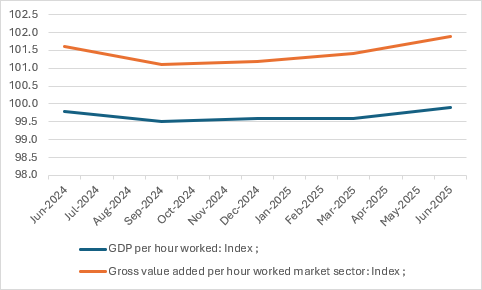
Productivity has been the feature item on some of the big economics events taking place recently and today’s national accounts give us the latest update on productivity for the June quarter 2025.

The figures show a quarterly increase of 0.3% in total output per hour of work (Labour productivity) and an increase of 0.5% in the market sector alone.  For the year to June 2025 the figures were lower at 0.1% for total output per hour worked and 0.3% in the market sector.

The higher figures for the June quarter relative to the year to June are due to the productivity slump we have passed through. We can see this in the chart below. After falling in mid-2024, productivity has been slowly growing.

Productivity: Indexes of output per hour worked.

Source: ABS Australian National Accounts: National Income, Expenditure and Product

The total productivity figure is interesting but it’s the market sector productivity figure that tells us whether or not there is more stuff that you can buy relative to the incomes being received. Fortunately, the market sector figures tend to be marginally higher.

There is a glimmer of hope that the household sector is recovering and will spend more following the reductions in interest rates by the Reserve Bank and in anticipation of future interest rate reductions.

We are rolling into question time.

It is national flag day and so you can expect to see a lot of flags in the chambers with people making a few points.

Matt Canavan just did a little statement about the flag on his desk. It’s that sort of day.

(What’s that? A dog whistle? )

Factcheck: GDP

Matt Grudnoff
Senior Economist

GDP growth was up. The economy grew by 1.8% over the last year, which is higher than the 1.4% last quarter. But before you get too excited, 1.8% is still very low. The long run average is 3%.

The biggest contributing factor to the increase was household spending. Spending on non-essentials grew faster than spending on essentials as households freed the purse strings. This is likely a result of the Reserve Bank cutting interest rates three times this year (although the last interest rate cut in August was too late to impact these figures). It is also an argument for why the Reserve Bank should continue to cut interest rates. With economic growth still very weak, further interest rate cuts would support more household spending and more economic growth.

The second biggest contributor to growth was exports. This was driven by a bounce back in iron ore production after adverse weather conditions in the previous quarter. An increase in agriculture exports, particularly grain also helped, along with an increase in tourism.

The government sector didn’t add or subtract from growth this quarter, with a small increase in government spending being offset by a drop in government investment.

Private investment was weak.

The latest figures show that household spending is the main support for economic growth. Let’s hope that the Reserve Bank recognises this and continues to cut interest rates.

The Coalition are also holding a doorstop responding to Mark Butler and Sam Rae’s announcement that the government will be bringing forward aged care packages.

The government has done this because it was facing its first defeat in the parliament after the Coalition, Greens and independent senators all banded together to push the government to bring forward the packages, or risk losing the entire bill.

Pocock responds to government aged care package backdown

Leading into question time and Independent senator David Pocock has some things to say about the government’s aged care reverse ferret

The Government should have never delayed these additional Home Care packages. My amendment to release additional packages got supported in the senate today despite the Aged Care Minister’s opposition. 

Now the Health Minister has stepped in and announced the Government will release the 20,000 additional home care packages the crossbench has been calling for since June.

This is a huge win for community advocacy and will make a huge difference to older Australians but there is still so much more to do.

121,000 older Australians are waiting for an assessment and 108,000 are waiting for a package.

Thanks to Glenn Connley for that break – it seems like it has been quite the time!

Here is how Mike Bowers saw some of that:

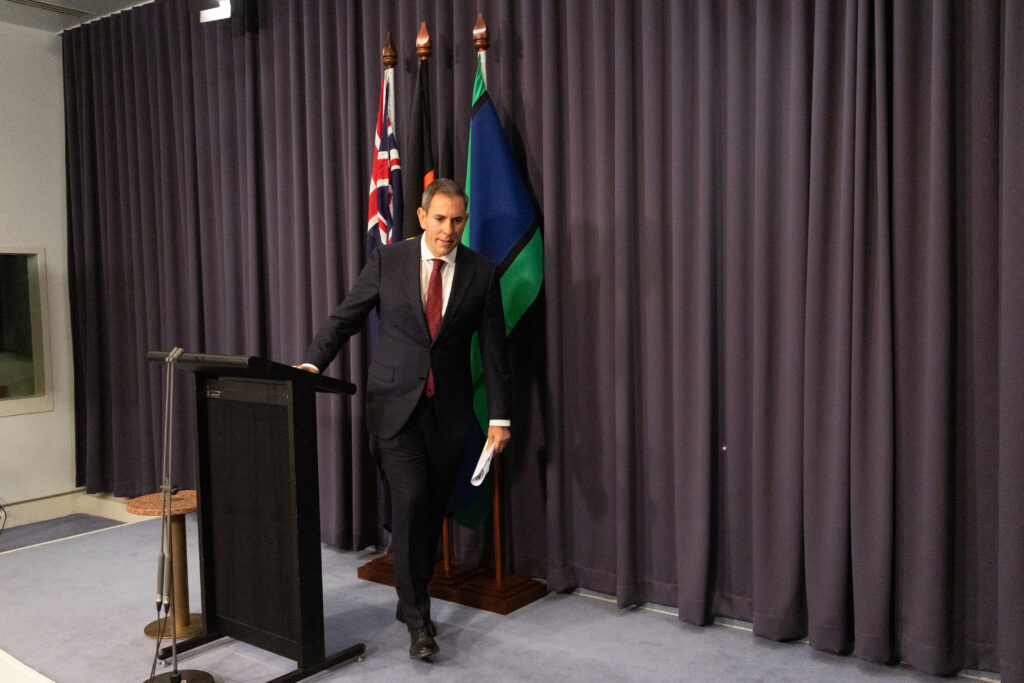
The Treasurer Jim Chalmers at a press conference on the June Quarter Financial figures in the blue room of Parliament House Canberra. Photograph by Mike Bowers. Wednesday 3rd September 2025.
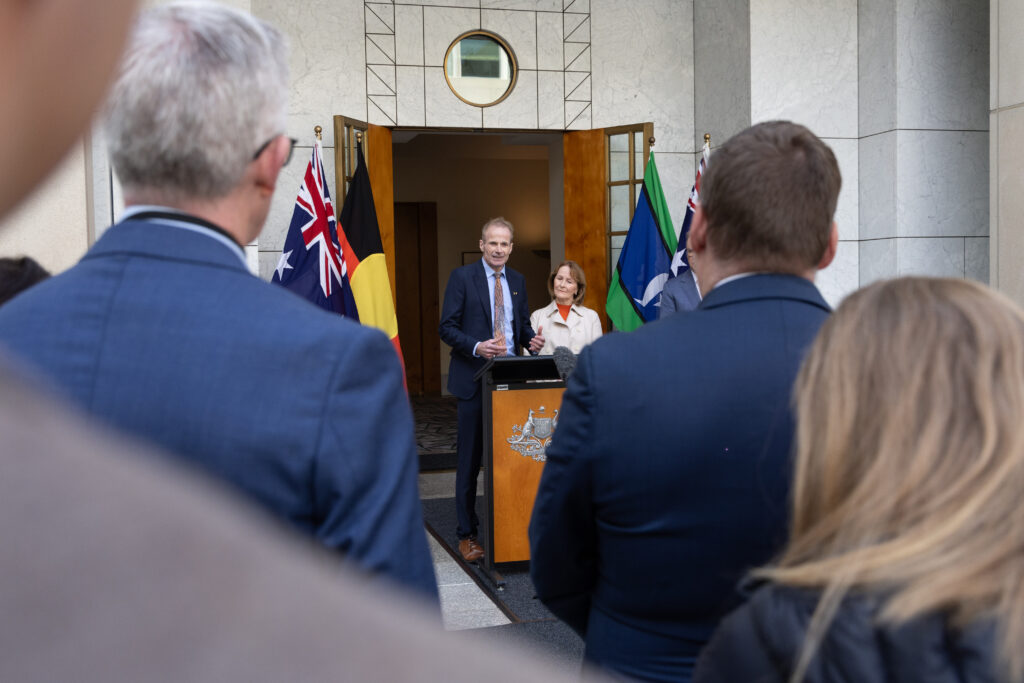
The Prime Minister, Anthony Albanese with the Minister for Health, Mark Butler, and Professor Richard Scolyer.
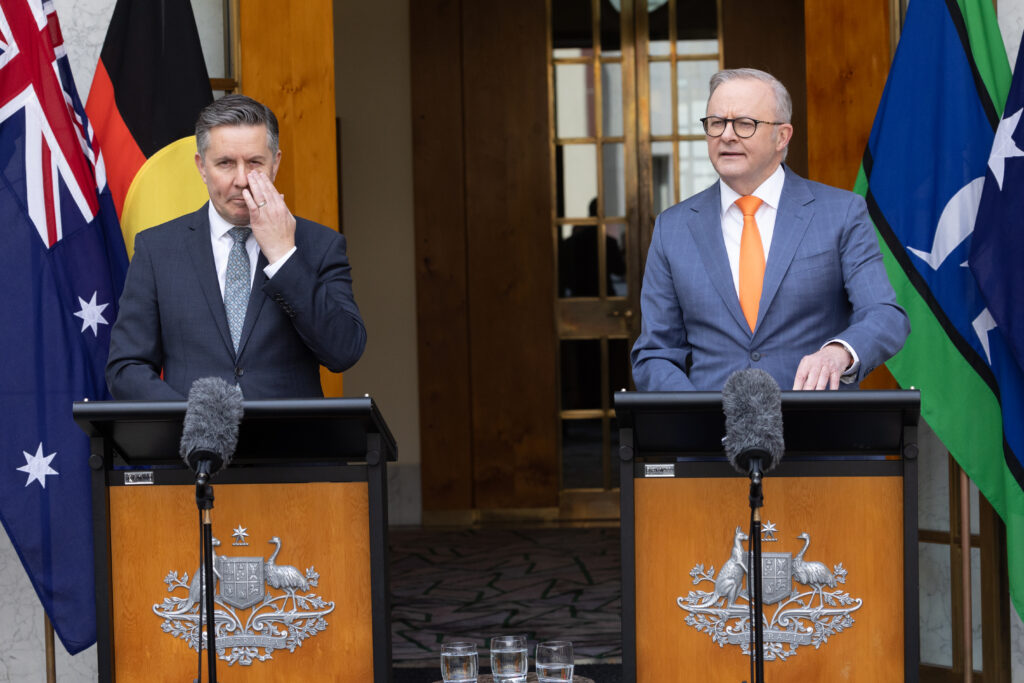
Mark Butler and Anthony Albanese
Jim Chalmers is not pointing fingers

Coal mine expansion “undercuts 2035 climate goal before it’s even set” – Climate Council

The Climate Council has joined the Greens in condemning the approval of Glencore’s Ulan coal mine expansion, near Mudgee, NSW.

Amanda McKenzie, Climate Council CEO:

It’s nonsensical to cut climate pollution with one hand while approving new coal projects with the other.

Every time this government waves through a new coal or gas project, it undercuts Australia’s 2035 climate goal before it’s even set. Our analysis (attached) shows we’d already be starting from a clearly stronger position – about 10 million tonnes closer to net zero – if the government had simply followed the science and stopped greenlighting more fossil fuels.

If the Government wants its 2035 climate target to be taken seriously, it must stop approving new and expanded coal and gas projects. Approving more coal now makes it harder to meet our climate goals, and puts Australians at greater risk of worsening climate disasters.

“While coal and gas projects are still being waved through without considering their climate damage, the Government can’t credibly claim it’s doing everything possible to fight climate change. It’s time to stop rubber-stamping pollution and start making decisions that put people’s lives and livelihoods first.

The government and opposition have struck a deal to pass the Aged Care Bill

Health Minister Mark Butler and Aged Care Minister Sam Rae are up in the Blue Room:

Minister Rae:

Growth and demand for Aged Care Services is growing extraordinarily fast in the home care space. We’ve gone from about 155,000 people accessing home care services through the Home Care Packages program in 2020 to well over 300,000 people now just announcing the profile by which will introduce an additional 83,000 packages, a growth component to that, just over the next 12 months or so.

Minister Butler:

We have to get this legislation through the parliament this week. If we don’t, there is simply no way we can introduce the new aged care system on the first of November.

This demand trajectory is steep, and governments for years, not the next. few years, but for many years ahead are going to have to manage what is going to be for some time, a big increase in demand.

How many times do we have to say it? Migrants are not to blame for the housing crisis.

Wrong, wrong, wrong …

The more the lies are repeated, the more we’ll keep calling them out and fact-checking:

https://australiainstitute.org.au/post/is-population-growth-driving-the-housing-crisis-heres-the-reality/

Treasurer responds to GDP data

The Australian economy grew by 0.6 per cent in the three months to June, taking annual growth to 1.8 per cent.

Federal Treasurer, Jim Chalmers, is speaking in Canberra:

1.8 is a really good outcome in the context of what’s happening around the world and what’s happened in recent quarters but, over time, we’ll need to do better than that, and that’s what we’re working on.

National Flag Day

Assistant Minister to the Prime Minister Pat Gorman has just appeared on Sky, urging respect for the Australian flag on National Flag Day.

Just like respect, you teach respect, you teach people how to be respectful of the flag, you teach them how to be respectful of our national symbols. That’s the appropriate course. I recognise that we need to respect the Australian flag.

Australians’ relationship with the national flag has always been complicated.

First and foremost, it’s one of the few national flags which includes another nation’s flag in its corner.

It’s a flag which represents only a tiny bit of this nation’s history.

And on the weekend it was effectively weaponised as a symbol of division in those silly little marches against immigration.

AAP photos from the AI symposium at Parliament House this morning

Government is trying charge for transparency, but lobbying is still cheap

Jack Thrower
Senior Economist

Economics 101 says “tax what you want less of and subsidise what you want more of”, yet the government is now seeking to charge for transparency. Under proposed reforms to the freedom of information (FOI system), each FOI application may cost $30 to $58 unless you’re seeking your own information. It’s expected to mostly impact journalists, academics, and researchers, in other words the people who help us all understand what is going on in our governing institutions.

Yet it remains relatively cheap to meet with senior politicians, just this week the AFR reported it may cost as little as $20,000 for to meet “10 times annually over private lunches and dinners” with the shadow treasurer, or $2,000 per dinner. This isn’t abnormal, last year we published research showing that while public protest is increasingly criminalised, it remains cheap to meet with government ministers including the Prime Minister:

lobbying on behalf of private, corporate interests remains under-regulated, including the ongoing practice of ‘cash-for-access’ payments – where money changes hands for privileged access to politicians.

Access to politicians is cheap: in 2024, it typically costs from $1,500 to $4,000 for a meal with a government minister. Special occasions offer even more opportunities, for instance during the 2024 federal budget there was a “Standing Networking Dinner” with the Prime Minister, Minister for Finance and a government backbencher with tickets costing just $1,500 per person.…

it costs lobbyists only $4,000 for meetings with South Australian politicians including the Minister for Foreign Affairs Penny Wong; Minister for Trade and Tourism and Special Minister of State Don Farrell; and Minister for Health and Aged Care Mark Butler. In other words, the maximum fine for a single protester in South Australia could pay for twelve lobbyist meetings with prominent South Australian ministers.

Many cash-for-access payments are not publicly disclosed. Payments over $17,000 are disclosed (after a wait of up to 18 months) [from next year anything under $5,000 will need to be disclosed]. But, when dinner with the Prime Minister only costs $10,000 or less, the result is that most of these payments happen in secret.

Despite efforts by politicians and the media to undermine the social legitimacy of protest by labelling them “annoying” or “self-indulgent”, Australia Institute polling research shows widespread support for peaceful protest.

GDP data drops

Statement from the Australian Bureau of Statistics:

Australian gross domestic product (GDP) rose 0.6 per cent in the June quarter 2025 (seasonally
adjusted, chain volume measure) and 1.8 per cent compared to a year ago. This release
includes the first estimates of the 2024-25 financial year, with GDP rising by 1.3 per cent for the
2024-25 financial year, according to figures released today by the Australian Bureau of Statistics
(ABS).
Tom Lay, ABS head of national accounts, said: ‘Economic growth rebounded in the June quarter
following subdued growth in the March quarter, which was heavily impacted by weather
events.’
Domestic final demand was the main driver of growth led by household and government
spending. Public investment was the largest detractor from growth.
Net trade also contributed to GDP growth, led by exports of mining commodities.
GDP per capita increased 0.2 per cent this quarter, following a decrease in the March quarter.

PM on a changing world order

Question: A lot of people are watching the leaders of China, of India, North Korea, Russia, together and wondering about this apparent strategic shift in power in the world and what it means for countries like Australia. Is this a product of what Donald Trump has done – his approach to global affairs? Is this a natural shift in power away from the United States?

Prime Minister Anthony Albanese:

The United States is our most important partner. I make that point. And I look forward to discussions with President Trump, further discussions. My job as the Australian Prime Minister is to stand up for Australia’s national interest. That’s what I continue to do. I engage diplomatically across the board, and I look forward to continuing to participate. This month is going to be a busy month, beginning with the Pacific Islands Forum next week. In our neighbourhood, the relationships that we have, whether it be that or the week after, Papua New Guinea’s 50th anniversary will be a very significant event. Australia, of course, played such an important role in that.

PM asked about changes to Freedom of Information scheme

Question: On the FOI bill, it does make it harder to access freedom of information documents. Does this break your promise for a more transparent and accountable Government?

Prime Minister Anthony Albanese:

Not at all. It’s the opposite.

I stood here last week and spoke about a national security issue, including the expulsion of an ambassador – the first since the Second World War, since the Japanese Ambassador was expelled during World War II. I think most people, and people that I’ve had discussions with, would find it surprising that people can put in anonymous FOI requests.

What that means is that there’s no way to determine whether a foreign agent or actor is putting in requests about information that are sensitive, and no way of ascertaining that.

I think most Australians, and I know some of – without giving up people in the gallery – I know that there are people in the gallery I spoke with this morning, weren’t aware – and I don’t know if you were aware – that you can put in an FOI request anonymously. I’ve got to say, I was somewhat surprised by that. And the obvious implications of security, for example, are there for all to see.

Question: What do you think of Dan Andrews joining a line of people greeting President Xi at this parade (in China today), which includes Vladimir Putin and Kim Jong-un? Do you like that Dan Andrews is there?

Prime Minister Anthony Albanese:

He’s not meeting them. Like I said, the last time around, ten years ago, Minister (Michael) Ronaldson was the government’s representative.

… and we’re back to politics:

Question: Just on comments to immigration by Sussan Ley. She says that the current levels of immigration are affecting our way of life. Do you agree with that, Prime Minister?

Prime Minister Anthony Albanese:

It’s a very broad statement. Immigration has played a role in this country over a long period of time. And with the exception of First Nations people, we are all either migrants or descendants of migrants in this country.

Professor Richard Scolyer:

I want to make a difference for people. And I’ve dedicated my life to doing that. Particularly in adulthood when I became a doctor, and that’s what I want to see. But yeah, my name to it or not – it’s not where the difference happens, it’s through learning how to do things. But being surrounded by the right team of people who know how to organise themselves to address things, and get the right answers as best you can, and that steers you in the direction that you need to go.

Anthony Albanese press conference

Albanese and Mark Butler are announcing the establishment of the Richard Scolyer Chair in Brain Cancer Research at Chris O’Brien Lifehouse.

Professor Richard Scolyer is also there.

It is the first press conference Albanese has held this week, so it will be a packed house.

Approving coal mine extension ‘business as usual for Labor’ says Greens

Greens leader Larissa Waters says the Albanese government decision to approve the extension of Ulan thermal coal mine near Mudgee in NSW is “business as usual for Labor”

The extension would extract an extra 18.8 million tonnes of thermal coal, and extend the mine’s life to 2045. Greens leader Larissa Waters said it wasn’t only an affront to climate emissions targets, but also the environment.

Approving coal or gas in this day and age is a climate crime. Yet for Labor, it seems to be business as usual.

Labor must stop gaslighting the public – opening new coal and gas is the opposite of climate action.

It locks Australia into providing the world with more coal and gas for decades to come, while putting threatened wildlife like our precious koalas at risk.

Last week Minister Watt said he was planning to introduce new environmental laws later this year, but that he wouldn’t call them ‘Nature Positive’.

Maybe that’s because they’re going to be Coal and Gas Positive instead.”

Over in the senate, the chamber is dealing with the amendments to the aged care bill.

With the Coalition, Greens and independents all on a unity ticket to have more aged care packages released sooner (20,000 before the end of the year and another 20,000 or so before the middle of next year) the government may have to agree to move its start date forward, or face defeat on its first bill this parliament.

Independents have held a press conference calling for more attention on homelessness:

The three key asks for government from the group are:

  • Creating a national target for youth tenancies and support (working towards a target of 15,000)
  • ⁠Including youth housing projects in future funding rounds for HAFF and other housing schemes.
  • ⁠Providing a supplement to ensure young people on youth allowance who are homeless can access existing social housing (which would remove the current Youth Housing Penalty)

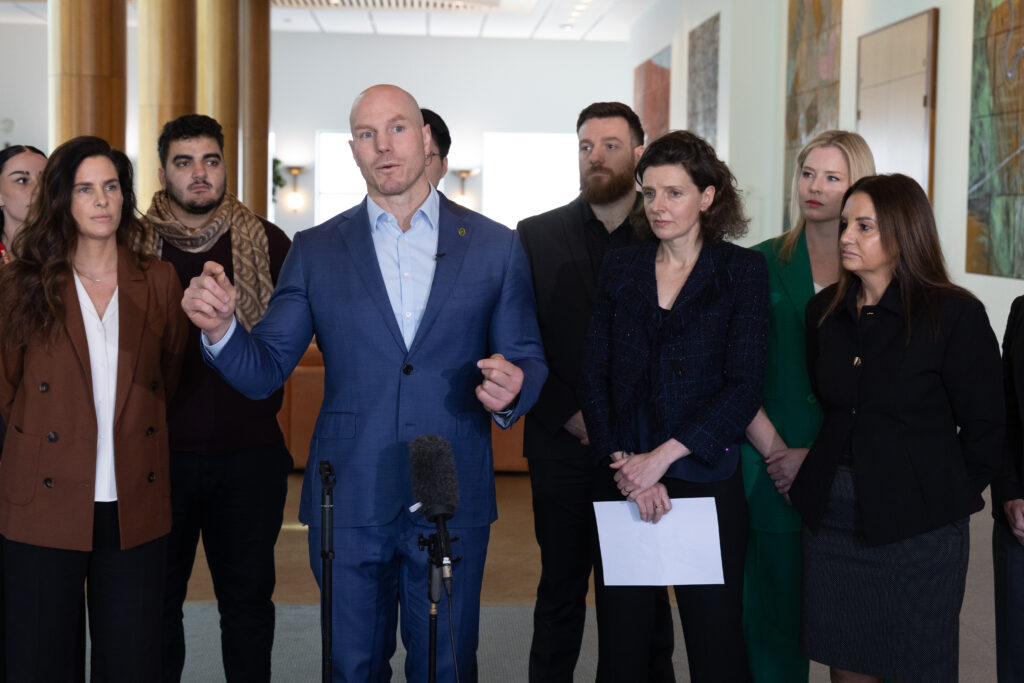
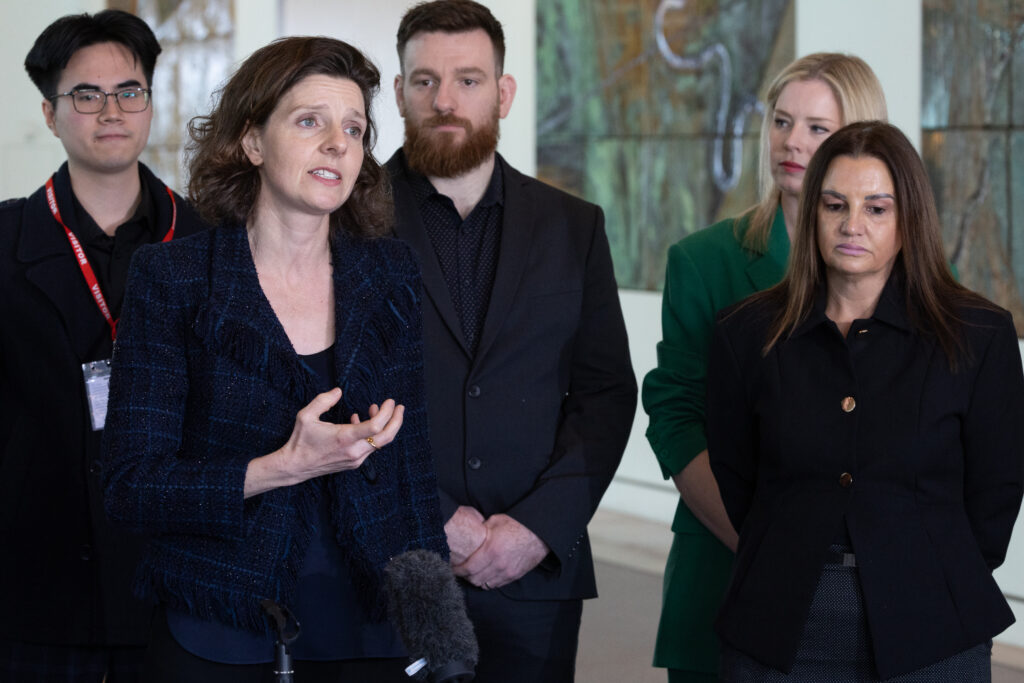
Independent MPs David Pocock, Allegra Spender and Jacqui Lambie at a press conference on Homelessness
Independent MP’s Allegra Spender and Jacqui Lambie at a press conference on Homelessness in the Mural Hall of Parliament House Canberra.

While talking about housing, it is also important to include things like this in the conversation – see this Guardian story for what MPs own what.

All of this seems very fine. From our friends at AAP:

A US judge has handed Alphabet’s Google a key victory, ruling against US prosecutors’ bid to make the tech giant sell off its popular Chrome browser and Android operating system that was part of a larger antitrust crackdown on Big Tech, but ordering Google to share data with rivals to open up competition in online search.

Alphabet shares were up 7.8 per cent in extended trading on Tuesday as investors cheered the judge’s ruling.

While sharing data with competitors will strengthen Google’s rivals to its market-dominating advertising business, not having to sell off Chrome or Android removes a major concern for investors who view them as key pieces to Google’s overall business.

Deepak Mathivanan, an analyst for Cantor Fitzgerald, said the data-sharing requirements pose a competitive risk to Google but not right away.

“It will take a longer period of time for consumers to also embrace these new experiences,” he said.

Spokespeople for the Department of Justice and Google did not immediately reply to requests for comment on Tuesday.

The ruling was also a relief for Apple and other device and Web browser makers, whom US District Judge Amit Mehta said can continue to receive advertising revenue-sharing payments from Google for searches on their devices.

Google pays Apple $US20 billion ($A31 billion) annually, Morgan Stanley analysts said last year.

But the ruling made it easier for device makers and others who set Google search as a default to load apps created by Google’s rivals.

Google has said previously that it plans to file an appeal, which means it could take years before the company is required to act on the ruling.

Google CEO Sundar Pichai expressed concerns at trial in the case in April that the data-sharing measures sought by the Justice Department could enable Google’s rivals to reverse-engineer its technology.

However, Mehta did not order Google to share the full range of data prosecutors had requested. And even for competitors who receive the data, “mimicking Google Search would be no easy task”, he wrote.

“For starters, this remedy requires only disclosure of underlying data; it will be up to [the competitors] to engineer the technology and develop the infrastructure to make use of it,” the judge said.

The ruling results from a five-year legal battle between one of the world’s most profitable companies and its home country, the US, where Mehta ruled last year that the company holds an illegal monopoly in online search and related advertising.

At a trial in April, prosecutors argued for far-reaching remedies to restore competition and prevent Google from extending its dominance in search to artificial intelligence.

Google said the proposals would go far beyond what is legally justified and would give away its technology to competitors.

In addition to the case over search, Google is embroiled in litigation over its dominance in other markets.

The company recently said it will continue to fight a ruling requiring it to revamp its app store in a lawsuit won by “Fortnite” maker Epic Games.

And Google is scheduled to go to trial later this month to determine remedies in a separate case brought by the Justice Department where a judge found the company holds illegal monopolies in online advertising technology.

The Justice Department’s two cases against Google are part of a larger bipartisan crackdown by the U.S. on Big Tech firms, which began during President Donald Trump’s first term and includes cases against Meta Platforms, Amazon and Apple.

Spare a thought for the criminal gangs and foreign agents apparently stuck in freedom of information limbo with the rest of us

Bill Browne
Director of the Democracy and Accountability Program

The Albanese Government announced yesterday that it wants to ban anonymous freedom of information requests and start charging applicants. The FOI system today is more expensive and less transparent than it was 20 years ago under the Howard Government, despite the workload being much smaller today.  

So who is to blame? According to Health Minister Mark Butler,

“Many of them, we’re sure are AI bot-generated requests. They may be linked to foreign actors, foreign powers, criminal gangs … we don’t know where those requests are coming from.”

If we know anything about the Mafia, outlaw motorcycle gangs and the Islamic Revolutionary Guard Corps of Iran, it’s that they’re absolute fiends for government transparency.

When politicians are all out of ideas, they turn to national security, but this claim is particularly risible.

Freedom of information laws only force transparency about information that the public is already entitled to know. If criminal gangs and foreign actors are making FOI requests, they’ll only get information that any Australian resident would be entitled to get via their own FOI request.

I doubt there’s many crooks with the mettle to go through Australia’s byzantine freedom of information process. If they did, then they’d find it trivial to make up a fake name (who’s going to check?) or copy someone’s name and address out of the phone book.

And how shoddy are the Government’s internal processes if they’ll release something with criminal or national security implications just because an anonymous FOI request asked for it?

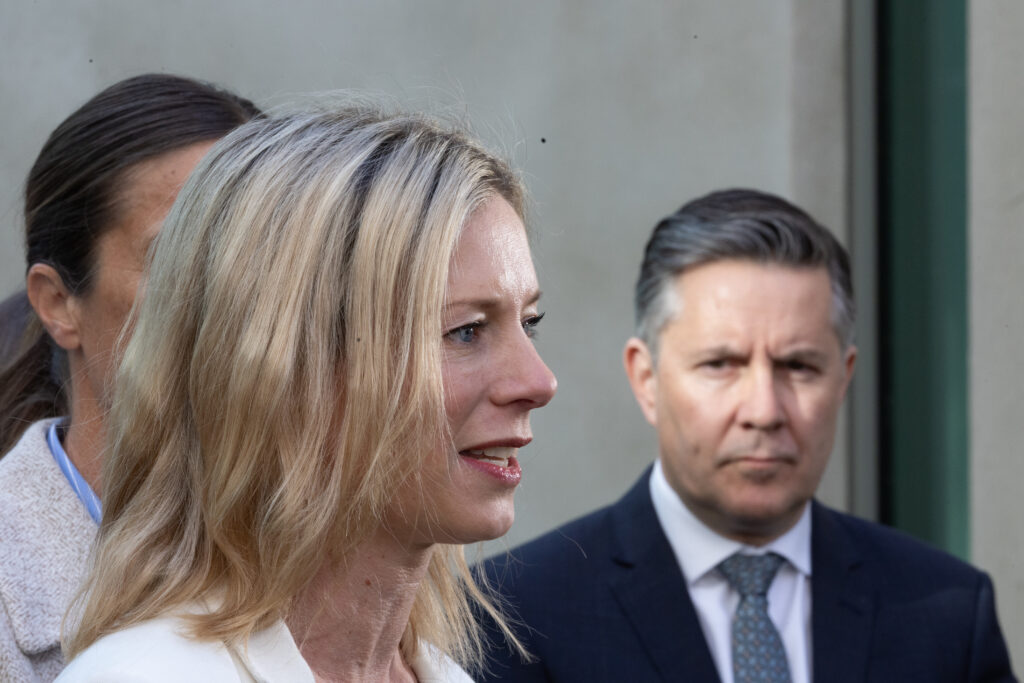
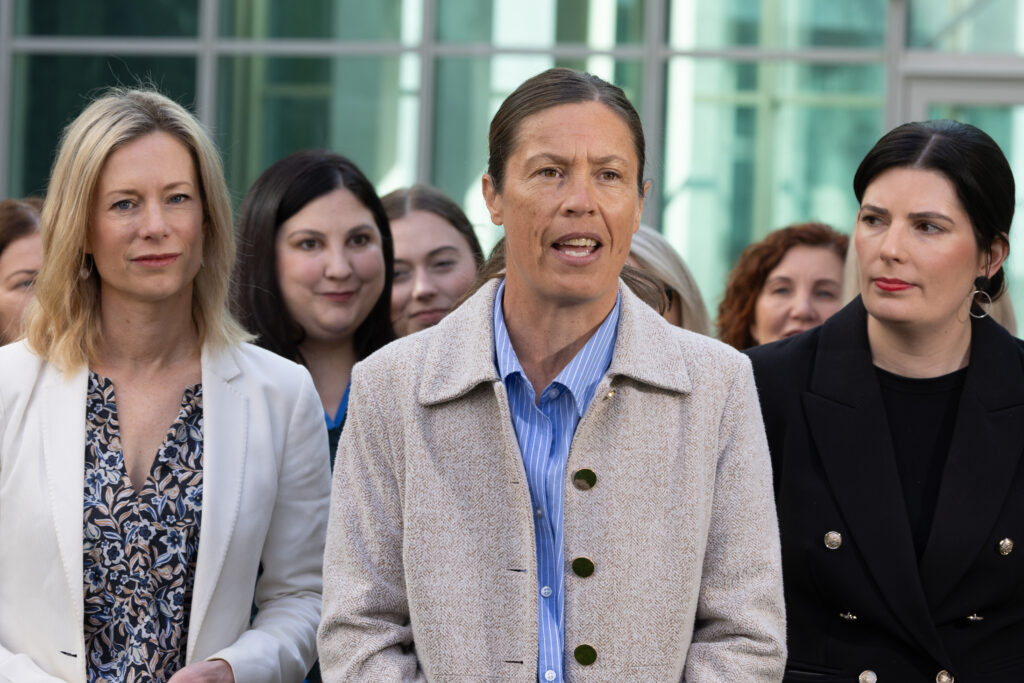
It is women’s health week – there was a statement in the parliament this morning and it has appeared in bits and pieces in the parliament – the assistant minister for women, Rebecca White spoke about the need for special focus on women’s health at a press conference this morning.

Mark Butler looks on as Rebecca White speaks (Photo by Mike Bowers)
Speaking to the assembled media is patient Robyn Smith. Photograph by Mike Bowers.

On women’s health -this is a great podcast on one of the most ignored areas of women’s health – peri/menopause

The urgent need for a National Firearms Register

Alice Grundy
Research Manager

In the Guardian’s reporting on firearm thefts today, we have another reminder of why the National Firearms Register is so important.

As Police Federation President Alex Caruana said:

If [a gun is] stolen in Queensland and used in a crime in WA it can take days to figure out where it came from, but if it was all in a national database, we would be able to see immediately that it was stolen and trafficked across.”

Australia Institute research has been highlighting the need for a National Firearms Register for years, noting that there are now more licenced firearms in Australia than before the Port Arthur massacre.

You can sign our petition calling for greater urgency in establishing the register here.

Sussan Ley was on the Nine Network today, where after her party conflated the Palestinian protests with what happened on the weekend, she called on the government to “lead”.

…This sickness has to be removed. We need to de-radicalise, de-escalate, work together as a society to tackle something that I’m seeing as a troubling trend, an escalation in political violence.

Q:Well, it’s exactly that, isn’t it, though, Sussan? It’s escalating, right? I mean, this is a man, this grub, who decries migration, then allegedly attacks a site sacred to First Australians. So the irony is clear. He also himself is from New Zealand, so he must think of himself as what, a good migrant or something? I mean, what is going on where these people think they’re more superior?

Ley:

What is going on? And I never delve into their agenda or even repeat their lines because they’re sick and they’re un-Australian. But what worries me is this escalation and this hatred and this intimidation, and we can’t have it.

So, I’ve called on the Prime Minister this week in the Parliament to step up, to lead. I know he’s made some sensible statements, but I think governments need to do more. I think we need to act as a society, as I said, to work harder to radicalise, to de-escalate, to tackle this. We can’t be bystanders.

Annnnnd the bells are ringing. The Wednesday session is about to get under way.

Let’s see how this senate fight goes over the aged care bill, shall we?

Siggggghhhhh

After the weekend marches, Sussan Ley’s team thought it was a good idea to celebrate national flag day:

Today Australians come together to mark Australian National Flag Day, honouring the symbol that unites our nation and reflects the spirit of our people.

There is plenty that can divide us. But one thing brings us together – our flag.

It belongs to all of us, and it speaks to the story we share as Australians.

Our flag has flown in times of triumph and in times of trial.

It was carried with pride by the diggers who gave their lives for our freedom and draped their coffins when we brought them home.

It is raised at schools and community gatherings across the country as a reminder of our shared values. And it is embraced by our newest citizens on the day they join our national story.

The Australian flag represents courage, sacrifice and service.

It stands as the emblem of our way of life, a nation built on community, on fairness, and on the belief that every person deserves to feel safe, valued, and at home here.

It carries the strength of generations who chose this country, worked hard, and came together around shared values of tolerance, opportunity, and reward for effort.

As we reflect on our past, we honour those who served beneath the flag, defending not only a nation but the ideals of democracy and freedom.

And as we look to the future, our flag endures as a commitment to unity and to the common good.

In every corner of our nation – from the smallest rural town to our largest cities, from classrooms to council chambers – the Australian flag is a source of pride and belonging.

It is a constant reminder that, whatever our differences, we are bound by a shared history, a shared future, and a shared identity.

On this Australian National Flag Day, let us honour our flag as the enduring emblem of our nation – a symbol of unity, courage, and hope for generations to come.

Happy Australian National Flag Day.

‘No possibility’ Labor will reach aged care target, without ‘major investment’ inquiry hears.

Greens senator Penny Allman-Payne has released this statement:

Labor’s aged care target is doomed without a major increase in investment, a former advisor to the Aged Care Royal Commission has warned, leaving potentially hundreds of thousands of older people without the basic care they need.

Wait times for a “medium priority” recipient of a home care package is 9-12 months from assessment, including at the highest “Level 4” category of care. The Government has set a target to get wait times down to 3 months by 1 July 2027.

But expert evidence given at a Greens-led Senate inquiry into aged care has said that there is “no possibility” of reaching that target based on current government policy. (Submission from Prof Kathy Eager, pg4 question 5)

On the same day that Labor plans to hit their home care target in 2027, Labor is due to shut down the Commonwealth Home Support Program (CHSP), which currently supports over 800,000 older people with their everyday needs.

Responses received yesterday from the Department of Health and Ageing to Greens’ questions at the inquiry suggested the government has not modelled the impact of the closure of the Commonwealth Home Support Program, which currently supports over 800,000 people. Rather than answer yes or no to a factual question on whether modelling existed, the Department refused to answer. [see Response to Questions on notice, Q7] Ending the Commonwealth Home Support Program would place enormous pressure on Support at Home and is a key reason why wait time targets will be out of reach.

The Greens have called on the government to not only bring forward the rollout of home care packages – as the Senate is urging – but to also dramatically increase funding for home care packages and extend the CHSP. This is the only way Labor has any chance of getting the waitlist under control and meeting their target.

The warning comes as Labor is widely expected to lose its first substantive vote in the Senate today, when the Greens, Coalition and crossbenchers join forces to compel Labor to bring forward the stalled rollout of home care packages through amendments to Labor’s aged care bill. (A procedural motion passed yesterday means the bill and amendments must be considered by the Senate today, before it will then move to the House.)

The assistant minister to the prime minister, Patrick Gorman, will deliver a special statement to the house this morning on hate symbols.

This follows the weekend marches, where neo-Nazis were given a platform to speak.

With eyes on China, Trump invades another state

AAP

US President Donald Trump says he will send National Guard troops to fight crime in Chicago, which would mark an extraordinary effort to militarise the nation’s third-largest city and set up a legal battle with local officials who have vowed to fight such a move.

Trump’s comments come just hours after a federal judge blocked Trump’s administration from using the military to fight crime in California.

Illinois Governor JB Pritzker said he had learned that the Trump administration has “gathered ICE agents and military vehicles, and that there are more ICE agents that are on the way” and called his actions “dangerous and un-American”.

Since taking office, Trump has attempted to broaden the role of the military on US soil, which critics say is a dangerous expansion of executive authority that could spark tensions between the military and ordinary citizens.

“We’re going in. I didn’t say when, but we’re going in,” Trump told reporters in the Oval Office on Tuesday.

Trump at one point said he would “love to have” Pritzker call and request troops, but “we’re going to do it anyway”.

“We have the right to do it,” Trump said, adding that the federal intervention would extend to Baltimore as well.

Chicago Mayor Brandon Johnson said over the weekend that Chicago police won’t collaborate with any National Guard troops or federal agents if Trump deploys them.

Pritzker on Tuesday said that the administration was staging Texas National Guard for deployment in Illinois, along with federal agents from ICE, Customs and Border Control, the Department of Homeland Security and other agencies.

Pritzker, a Democrat whose name has also been floated as a possible 2028 presidential candidate, said in the coming days, Chicago could expect to see similar scenes as those that have played out in Los Angeles and Washington, DC, where military personnel have already been deployed.

Trump has been threatening to expand his federal crackdown on Democratic-led US cities to Chicago, casting the use of presidential power as an urgent effort to tackle crime even as city officials cite declines in homicides, gun violence and burglaries.

Trump is almost certain to face legal challenges if he uses a provision known as Section 12406 to send National Guard troops from Republican-led states into Democratic strongholds.

Some Republican governors have sent hundreds of National Guard troops to Washington at Trump’s request. 

The president has depicted the capital as being in the grip of a crime wave, although official data shows crime is down in the city.

Chicago has long had high levels of gun violence but crime, including homicide, has declined in the last year.

Why the silence on Indonesia?

Allan Behm
Advisor to the International & Security Affairs Program

How time flies!

Three years ago, Prime Minister Anthony Albanese was riding his bamboo bike around the Presidential palace gardens in Jakarta with President Joko Widodo. What a lovely picture they made, and how symbolic of the shadow-play relationship between Australia and Indonesia.

Last May, after his impressive electoral win, Albanese was back, this time to shake hands with President Prabowo – all to remind everyone how important Indonesia is to Australia (even though he was actually on his way to Rome to shake hands with the Pope and get his rosary beads blessed).

If Indonesia really mattered, Albanese would be back on his bike right now, given that a stable and prosperous Indonesia is probably Australia’s number one security concern, followed pretty closely by stability in PNG. AUKUS is totally irrelevant in either regard.

In Jakarta, a heavy-duty para-military riot police vehicle ran down and killed a young ojek (a form of motorised becak or trishaw) driver, prompting the torching of buildings and incineration of official vehicles. The homes of the internationally respected Indonesian Finance Minister Sri Mulyani Indrawati and other MPs were looted. The provincial administration building in Makassar was fire-bombed, killing at least three people. Elsewhere in Indonesia, at least twenty people have died.

We’d be beside ourselves if this were happening in New Zealand.

But in Indonesia’s case, none of this matters enough for a Ministerial statement, a MPI or even a few questions in the Parliament. No condolence motions, no expressions of concern. The Opposition is as inert as the government. For all our protestations about the importance of South East Asia, Indonesia just does not matter.

But the travel warning for Bali has been cranked up a notch, just in case the trouble spreads east. Given that President Prabowo has revoked the Parliamentarians’ over-generous housing allowance that initiated the riots, and that a sullen pause to the violent protests is in place, DFAT can now shut the stable door.

It’s a weird state of affairs when Australia’s Deputy Prime Minister can make a magical mystery tour to Washington to achieve not much while our massive neighbour starts tearing itself apart, totally unremarked by our Parliament.

Old people with houses, young people without houses…whatever could we do?

Rod Campbell
Research Manager

With aged care and housing likely to be hot topics today, it’s worth remembering that an obvious response to these problems continues to languish in obscurity in Australia.

Homeshare programs match up older people who have spare room with appropriate people looking for housing. The matches are made by professional social workers and monitored over time to ensure things are running smoothly and safely.

It’s such an obvious idea – match up lonely people who have big, empty houses in prime locations with (usually) younger people needing an affordable place to live near work/study.

Why isn’t it everywhere? It’s very popular. The economics of it are obvious and politicians love to talk about it – here’s Labor’s Ged Carney on our webinar, Lib Ken Wyatt hosted us in Parliament.

Part of the problem is lack of ongoing funding and political support. Also, Homeshare is, as the name suggests, all about sharing. It isn’t about buying and selling a service.

That means it doesn’t fit in well with privatised care systems like the NDIS and Australia’s current aged care system.

There are plenty of ways this could be fixed if Australia’s leaders are serious about an obvious solution to aged care and housing issues.

The government plans on rounding out this parliament session by introducing new upfront fees for people lodging freedom of information requests.

The rationale is that government staff are being overwhelmed by bots and overseas actors who are putting in FOIs to be malicious and waste government time.

Oh yes – that well known espionage trick of *checks notes* putting in FOI requests to create a couple of months of busy work for public servants. OH NO! The nation may fall!

In actuality – workloads are down.

The Albanese Government wants to charge Australians for making a freedom of information request. Makes dubious claims about tech being used to overwhelm the system. In truth? Govt workload one of the lowest in the last 20 years.

Bill Browne (@browne90.bsky.social) 2025-09-02T04:07:46.250Z

Independent senator David Pocock asked this question in the senate yesterday over it:

Minister, a recent report by the Centre for Public Integrity shows FOI requests granted in full have plunged, from 59 per cent under the Gillard government, to just 25 per cent under the Albanese government and outright refusals have nearly doubled over the same period. How can introducing fees that are likely to deter citizens and journalists be justified when the system is already failing to deliver transparency?

Don Farrell:

I thank Senator Pocock for his first supplementary question and his interest in this issue. You’ve quoted some figures there, Senator Pocock, but I’d like to quote some other figures.
These relate to the fact that, in 2024, public servants spent more than one million hours processing FOI requests. If only those public servants could have been working on health, on the NDIS or on education, rather than focusing on answering frivolous FOI requests.

Pocock:

Minister. Unfortunately, the stats show that your government is actually the second most secretive on record…Having spoken briefly to Julian Leeser this morning, from the other place, and from what is happening on the crossbench, who is going to support this friendless bill that will crack down on transparency?

Farrell then pretends this is about transparency:

I thank Senator Pocock. I remember when we had the electoral reform legislation coming up in the last parliament. Everybody said, ‘Look, that legislation is friendless,’ and yet it passed the parliament. Senator Pocock, if you’re seriously interested in transparency, and I— Senator McKim, just be quiet for a little bit while I’m talking. You can learn something from this as well. If the crossbench, the Greens and the coalition are serious about getting genuine transparency, they’ll be on board for these reforms. We can establish that these reforms are really, really important for continued transparency and the operation of government. They are sensible reforms.

China finds closer friends, thanks to the US

Donald Trump had diminishing China as one of his foreign policy goals. Instead he has managed to make it stronger, and bolder than ever, and there is now a firming relationship with India to boot. The tariffs and America’s erratic ‘leadership’ has created a stronger relationship between Chinese President Xi Jinping and Indian Prime Minister Narendra Modi. Trade and political links between the two nations are not exactly new (and if you haven’t read WIlliam Dalrymple’s The Golden Road, you should.)

But now Xi says the “dragon and elephant should dance” and given Trump’s unhinged policies, well, Modi looks into it (given the 50% tarriffs the US has applied to India, after a deal was meant to have been made, you can see why)

Putin is there for good measure – Russia and China have never exactly hidden their relationship, but they are getting bolder in showing it, publicly. Again, you can thank Trump for that.

You’ll be seeing quite a bit of all of that on display today, as China hosts a military parade to make the 80th anniversary of the Chinese defeat of Japan in World War II. Foreign foreign affairs minister Bob Carr will be there, as will former Victorian premier Daniel Andrews.

And of course this all come on the back of Anthony Albanese’s extended visit to China recently.

Penny Wong announces more targeted sanctions against Russians for supporting “illegal and immoral invasion of Ukraine”

Penny Wong has announced that the government is imposing “targeted financial sanctions and travel bans against 14 individuals responsible for silencing political expression in Russia, as well as enabling the illegal and immoral invasion of Ukraine” ahead of her meeting with Yulia Navalnaya.

From her release:

The human rights situation in Russia continues to deteriorate with violent crackdowns aimed at suppressing human rights and anti-war advocacy.

We condemn Russia’s intimidation and reprisals against civil society and human rights defenders, and reiterate our call for Russia to comply with its international human rights obligations.

This announcement builds on our comprehensive framework of sanctions against Russia, including three packages since 2022 targeting individuals involved in the poisoning, mistreatment and death of Alexei Navalny.

Today, I will meet with Yulia Navalnaya, Chair of the International Anti-Corruption Foundation Advisory Board and widow of Alexei Navalny.

Ms Navalnaya is a fearless voice for democracy in Russia, continuing her fight at immense personal cost.

Russia failed to undertake an independent and transparent investigation into Mr Navalny’s death, and Australia holds President Putin and the Russian Government responsible.

We honour Ms Navalnaya’s courage and reflect on Mr Navalny’s sacrifice and enduring legacy in the fight for freedom and justice.

Australia has not imposed the same targeted sanctions against members of the Israeli government, despite the lack of ‘independent and transparent’ investigations into war crimes, including the killing of Australian aid worker, Zomi Frankcom.

Good morning

The Minister for Aged Care and Seniors Sam Rae

Hello and welcome to Wednesday – hump day, parliament Thursday and at this point of a double week sitting, the day everyone tends to be.a little over it and just dragging themselves to the finish line.

If you didn’t wake up for the big US announcement (delivered around 4am our time) be happy – it was a proof of life exercise and an announcement of a new location for the US Space Command, which is as stupid as it sounds.

In domestic news, it is all about aged care at the moment, as the government faces the Coalition, Greens and crossbench senators all uniting to force more action when it comes to home care packages and how the sector is treated.

A plan to open up an additional 83,000 home care places, which was due to start in July, was pushed back to November which is what has sparked the revolt. Minister Sam Rae, who has been under pressure all week, said the decision was based on what time the department and sector needed to get ready, but with more and more people writing to MPs every week, the heat is now on the government to bring the places forward.

His counterpart, Anne Ruston, has put forward an amendment to the aged care bill in the senate, which would bring more home care places on line earlier – 40,000 before the end of this year and another 43,000 by mid-2026.

There is enough support for it in the senate to pass. If it does, then the bill would have to return to the house for the government vote, where it will be forced to either accept the will of the senate, or try and fight to maintain its original plan.

Meanwhile there is still silence over events in Indonesia, where political unrest has been brewing for months. International humanitarian organisations are pleading for more help to address the tragic earthquake in Afghanistan, which has killed almost 2,000 with rescuers struggling to reach people who need help, and the landslide in Sudan which has overwhelmed an entire village of people. Israel is moving forward with its planned forced displacement of Palestinians in Gaza City (a war crime) as it levels the entire sector, forcing exhausting and starving Palestinians to once move, or be killed (despite there being no safe place to go) and the US continues to be a destabalising force, with Trump’s isolationist policies now seeing India get closer to China and Russia.

Sorry for the reminder, but we are in the F.O period of FA and FO. (let me know if you need a translation.)

You have Amy Remeikis with you for most of the day – although Glenn Connley will make a special guest appearance for a couple of hours ahead of his blogging day tomorrow (we love you Glenn!)

It is a four coffee morning. Might need to break open the biscuits a little earlier than usual too.

Ready? Let’s get into it.


Read the previous day's news (Tue 2 Sep)

Past Coverage

Comments

Start the conversation

The biggest stories and the best analysis from the team at The Point, delivered to your inbox.

Past Coverage