The cuts are also a blow to the authority of Senator Dean Smith, the Coalition’s charities spokesperson.
One week ago he was asked at the National Press Club whether he could rule out cuts to foreign aid.
He demurred, pointing out that he does not have the authority to make that commitment (the charities sector employs over a million Australians, but doesn’t get a minister or shadow minister).
“I think, having made a $21 billion defence commitment like the one that’s been made [by the Liberal Party] today, it would seem counterintuitive or counterproductive to then remove foreign aid funding at a time when a vacuum is clearly emerging. …
“Where vacuums get created in the international order, people fill them, and more often than not at the moment they are filled by our opponents.”
There you have it, in the words of the Coalition’s charities spokesperson: the Coalition’s foreign aid cuts are counterintuitive and counterproductive and will leave a vacuum for Australia’s opponents to fill.
15.59 AEST
Jumping in with one last post!
Greg Jericho
Chief Economist
One glorious part of the costings is where the LNP says
The Coalition will wind up Labor’s ineffective off-budget funds, including:
The Housing Australia Future Fund;
The Rewiring the Nation Fund; and
The National Reconstruction Fund (and abolishing the associated National Reconstruction Fund Corporation).
The Coalition will redirect part of the balance sheet improvements from these decisions towards other priorities. These include:
Establishing the Regional Australia Future Fund, which will be seeded with $5 billion from the Rewiring the Nation Fund.
Creating the Critical Gas Infrastructure Fund.
Providing equity for the construction of new nuclear power plants to replace retiring coal-fired power plants.
So the Coalition are saying they will get rid of the ALP terrible off budget funds and replaces them with… err off-budget funds
(and remember they are all administered by the Future Fund – so no fund is anymore or less effective than another.)
15.54 AEST
See you tomorrow?
The campaign is rolling on, but I can not (have columns to write and walls to stare at and interviews to do).
We’ll close the blog for this evening but will be back for the last day of full campaigning in this campaign – day 35 is upon us.
Can you believe it?
I think we all know who will be sitting in the PM’s chair come the next parliament sitting – but what will the parliament look like? And who will be sitting opposite him?
All to be revealed very soon, so please stick with us!
Have a lovely evening and hopefully some switch off time. We will be back with you early tomorrow, but until then – take care of you. Ax
15.51 AEST
Five reasons why young Australians should be pissed off
Matt Grudnoff and Jack Thrower
1. Uni graduates pay more in HECS than the gas industry pays in PPRT
University used to be free but is now more expensive than ever. After graduating with an arts degree a young Australian will now repay the government around $50,000.
Meanwhile, Australia is one of the world’s largest gas exporters, but multinational gas corporations pay almost nothing for Australia’s gas. Uni graduates now pay back much more in student debt (HECS/HELP) repayments than the gas industry pays in Petroleum Resource Rent Tax (PRRT). In 2023-24 Australians paid more than 4 times on HECS/HELP than gas companies did on PRRT.
2. It’s almost impossible to save for a house deposit.
House prices are growing quicker than wages, so the amount a deposit costs has grown faster than most young workers can save. Our Chief Economist Greg Jericho has worked out that for most people, if you started saving for a house 10 years ago, you are now further from having a home deposit than when you started.
He found that in 2014, you needed $154,600 for an average Sydney house deposit. By 2024, an average deposit is over $280,000, meaning that even if you managed to save $126,000 over ten years, you need another $155,404!
3. Younger people pay more tax on the same income than older people
The amount of tax you pay is mainly based on your income. But there are a number of ways that older people end up paying less tax on the same amount of income.
The first is that younger people are more likely than older people to have a HECS/HELP debt. This debt is taken out of their pay at the same time as income tax. That is, it comes out before it arrives in their account. While this is technically a repayment of debt and not tax, for the person making the repayment it acts and feels exactly like paying extra tax.
This comes on top of the fact that most older people paid less for their higher education than younger people. This includes people who went to university when it when it was free from 1974 till 1989.
Older people also get more benefit from tax concessions. Tax concessions are tax loopholes that allow taxpayers to pay less than the full rate of tax. The Federal Government gives many Australians tax breaks, also known as tax concessions. Included are details about some tax concessions that are based on age – these are worth $105 billion per year.1 It shows that people 65 years and older get $27 billion, or 25% of these tax concessions. People under the age of 30 get $6.5 billion, or 6% of these tax concessions.
Older people get a much larger benefit from these tax concessions because most of their benefit goes to the rich, and older people are on average more wealthy than younger people. The result of this is that older people are able to use these tax concessions to reduce the tax they pay considerably more than younger people.
4. Young people are forced to buy private health insurance to help make it cheaper for older people to get medical treatment
Private health insurance is directly subsided by the government – it cost the Commonwealth $7.6 billion in 2024-25. But the Commonwealth subsidises private health insurance in another way that benefits older people at the expense of younger people.
If people who earn more than $93,000 per year fail to take out private health insurance, the Commonwealth government charges them the Medicare levy surcharge, which is a higher rate of income tax that costs more than a basic private health insurance policy. The effect is that young people who earn more than $93,000 per year are forced to buy private health insurance.
On average, young people are less likely to actually use private health insurance than older people. This means that private health insurance companies pay out far less on claims for young people, and far more on older people. Without the Medicare levy surcharge many young people would choose not to buy health insurance. Losing these highly profitable younger people would mean that private health insurance companies would need to put up premiums on older people. The younger customers pay for the older ones.
The result is that younger people earning more than $93,000 per year are effectively subsidising older people’s private health insurance.
Even after a young person turns 18 and becomes an adult, legally allowed to vote, drink, smoke, serve on a jury and be deployed to fight in a war, they can still be paid less than other adults.
Australia’s industrial relations system mandates minimum wages across the economy, many of which allow for ‘junior rates’ that mean staff under 21 years old can be paid less than older workers.
Other countries have moved away from junior rates and towards directly experience-based criteria. For example, in New Zealand, 16- to 19-year-old workers can be paid a ‘starting-out’ minimum wage if they do not yet have six months experience with a single employer. This means that workers are paid according to their ability, not their age. Proponents of junior rates argue that lower pay is necessary to encourage employers to hire younger workers. But over the past decade New Zealand has had broadly similar levels of youth unemployment as Australia, which suggests that junior rates do not lead to higher levels of youth employment.
Power in numbers
This election, Millennials and Gen Z voters will make up 47% of the electorate, which makes them the single largest voting bloc. But young people are being let down by timid governments that are unwilling to make policy changes that would improve their lives. Young people need real action on housing, real action to lower the cost of tertiary education, real taxation reform, and real action on climate change. If Australian governments are unwilling to make these changes, then what incentive do young people have to vote for them?
1 The tax concessions used are superannuation contributions, superannuation earnings, capital gains tax discount, senior and pensioner tax offset, cost of managing tax affairs, franking credits, Medicare levy low-income threshold, individual deductions for gifts and donations, work-related expenses, and tax benefit of rental deductions.
15.50 AEST
You just know the Labor campaign have had this lined up for weeks now
when you finally reveal your costings but they just show higher taxes and cuts to pay for your nuclear scheme pic.twitter.com/5zfNvwHeuz
Let’s assume it’s true that all these jobs will be in Canberra ACT. There were only 69,438 APS jobs in Canberra in Dec 2024. (Not 110,000 like Hume said)
Now let’s exclude:
Frontline services
Services Australia
ATO
Dept of Veteran’s Affair
National Security
Defence
Home Affairs
Australian Criminal Intelligence Commission
Office of National Intelligence
Australian Submarine Agency
Defence Housing Australia
Office of the Inspector-General of Intelligence and Security
This leaves 46,293 jobs, so the Coalition costing assumes that nearly 90% (88.6%) of Canberra’s APS will resign over five years.
What if the Dept of Health counts as frontline? Now we’re assuming 99.2% of people quit.
What if the War Memorial is protected (375 people) now we’re guessing that over 100% of people resigned.
15.30 AEST
Jane Hume shows how natural dog whistling and redbaiting have become in Australian elections
Frank Yuan and Joshua Black
Over two consecutive days, independent MP Monique Ryan and Labor’s housing minister Clare O’Neil faced questions about the support of the Hubei Association for their respective campaigns. As was pointed out yesterday, neither campaign ultimately took up the assistance offered by the Association.
The issue came up in during a regular segment featuring Liberal campaign spokesperson Jane Hume and O’Neil herself on the Seven network. Hume remarked to the minister that there “might be Chinese spies handing out” her how-to-vote cards, but the Liberals had “dozens, thousands, hundreds of young people” on the hustings.
The campaign, which appears to have run out of intellectual material, seems to be resorting to a back catalogue of redbaiting and dog-whistling from Cold War electioneering. But the history of fearmongering about foreign interference in Australian elections runs deeper.
Australia’s first “redbaiting” election was in 1925. The Community Party of Australia had just “a few hundred members”, but that didn’t stop the PM, Stanley Melbourne Bruce, from conflating global communist activism with domestic industrial disputes.
Hardly a centenary worth celebrating.
The poisoning of public debate had grim consequences. Bruce’s redbaiting cemented a political culture where it became impossible to question Australia’s defence policy centred around the British imperial presence in Asia. The Labor party had already been branded as disloyal to the country and to the empire thanks to its opposition to conscription during the Great War. Now the conservatives were tying themselves to a declining imperial power, whose defeat in Singapore in 1942 was as predictable as it was tragic – not just for the POWs but for the civilian populations caught up in Japan’s imperial push into Asia.
Despite that deep history, the redbaiting on display in the recent past has been astonishingly inept. At the last election, Scott Morrison repeatedly claimed that the Chinese Communist Party preferred Anthony Albanese. He also described Labor’s deputy Richard Marles as the “Manchurian candidate”.
It wasn’t just Morrison. At the same election, right-wing campaign outfit Advance Australia ran billboards and truck-side ads depicting Chinese president Xi Jinping casting a vote for Labor.
But Jane Hume’s comments represent a new threshold in the cynicism and hollowness of redbaiting in Australia’s elections. Indeed, just minutes later, Hume and O’Neil were singing one another’s “sense of style” and promised to “have a cocktail” with each other after the campaign. Who cares about those Chinese Australians who served as a stand-in target for the politicking?
It is perhaps reassuring that neither candidate seriously believes that those Chinese Australians were spies, but invoking the threat of foreign interference so flippantly does real damage to the social cohesion about which both major parties dissemble. All Australians deserve better than this kind of ritualistic malice.
15.28 AEST
Coalition’s costing ‘craziness’
Matt Grudnoff
Senior Economist
I can now see why the Coalition didn’t want to publish these costings until the very last minute.
There are all kinds of craziness in there. But my initial thoughts are:
They are planning to save $17.3 billion from sacking… sorry… the natural attrition of public servants only from Canberra and not from front line positions or national security or home affairs . This has as much chance of being delivered on time and on budget as their nuclear plan. At some point the Coalition will either start sacking people from across the country and from front line services, or they will give up on ever getting close to a $17 billion amount.
If they can’t save anything like $17 billion then their claims to improve the budget bottom line by $14 billion will go up in smoke.
Other interesting things from a first quick look:
They’re planning to cut foreign aid by $814 million. The last time the Coalition did this it destroyed our reputation across the region which required extensive work and time to repair.
They want to raise another $3.1 billion from foreign students in additional visa application charges, while also planning big cuts to migration.
At a time when the economic, workforce participation, and child development benefits of early childhood education and care are well known, they’re planning to save $308 million by reintroducing the childcare activity test.
15.27 AEST
Jane Hume messes up public service policy again
In that press conference Hume was asked about the number of Canberra public servants and said:
There was around 110,000 or so in the middle of 2024. In 2024, before the majority of the increase has occurred. There was around 110,000 public servants in Canberra.
So that is the figure they are using to justify cutting all 41,000 public servants from Canberra.
So unless the Coalition is going to cut ADF personnel, then Hume is wrong.
15.11 AEST
Just had a very quick meeting with the economists here who are all walking around with the Coalition costings document looking like Amelia Harmer in a pub.
We’ll bring you the main takeaways in spending/saving very soon
14.56 AEST
Greg Jericho
Chief Economist
Jane Hume: “We know that the two surpluses they delivered were essentially delivered by nothing more than windfall gains from commodity prices and bracket creep. That is not sustainable, that’s not real surpluses, that’s just windfall surpluses”
Cripes Peter Costello and John Howard must be feeling quite silly because that is exactly why they delivered budget surpluses during the mining boom – tax revenue soared – higher than it has ever been!
14.54 AEST
Back to Grogs:
Inflation might be driven by expectation – but not the expectations of a lack of a tax cut in 2 years.
The suggestion that inflationary expectations will be lower because people won’t get a tax cut in 2 years is absurd.
14.52 AEST
Taylor runs press conference as audition for Liberal leadership
Angus Taylor is running this press conference as an audition for the Liberal leadership.
Q: A US campaign strategy expert has been in Australia added the election and says he looks forward to working with Peter Dutton as Prime Minister. What sort of advice did you get from him? Is there a formulation on the economy, speaking to those doing a tough guy with the cost of living, from the US experience, they could guide leadership in Australia because like I have been part of those discussions.
Taylor: Your question was with respect to whom? Donald Trump?
Q: Donald Trump’s campaign manager was here in Australia at the start of the campaign and spoke about meeting with campaign officials and giving structural advice on some of the challenges facing the Coalition campaign.
Taylor: The cabinet? In the US? The Coalition cabinet here?
Q: Peter Dutton’s cabinet.
Taylor:
Can I make a comment about the US? I suppose that is what you are referring to there. You know, we want to have a good relationship with the US. We disagree fundamentally with the position of this administration on the tariffs. We want to have open access to markets and we will work with allies around the world to make sure that we have the most open markets we can get. We want our farmers and manufacturers and miners to get access to markets. That is crucial to growth. I have laid out way investment is so important to this country.
Hume:
Campaign teams talk to each other all the time. From right around the world. This wouldn’t be unusual.
14.47 AEST
Q: You mentioned that Labor’s spending is inflationary. Don’t the facts show that they haven’t been inflationary?
Taylor:
The IMF are telling us they expect inflation to surge 3.5 %. Labor’s own numbers have inflation rising. That is the truth. The thing we know about inflation is you have to keep at it. It can come back and it can come back very fast.
We saw that in the last surge in the ’70s and ’80s. That is why we need to be focused on making sure we have a stronger budget position and Labor’s which we do. Most importantly, we are growing the economy, encouraging investment, getting growth and investment by backing small business.
That is what we’re doing in economic plan. The Instant Asset Write-Off, the entrepreneur accelerator, all these things to give people the confidence to invest in this country.
We know that growth in productivity and we know that strengthening budget position that we have laid out here. It will not only reduce the risk of inflation, but improve prosperity and budgets of households which have been under so much pressure.
14.45 AEST
Q: You have given up on the at it. surplus over the next four years. When and – you have $140 million – billion dollars in deficits over the next four years. When would you get to a surplus?
Taylor:
We will get there faster than Labor. And a critical reason we know that is there is a $14 billion improvement here. The biggest improvement you have seen since the cost of conventions went into place outside of Bill Shorten wanting to lack Australians with almost $400 billion of taxes.
So that is the focus. We know that if we get faster growth and stronger productivity, which is our goal, and we have been our biggest about that, and at the heart of that I outlaid at the press Club the importance of getting investment living to get that happening.
That improvement will improve the budget position faster and ultimately the – we know if we adopt the physical rules that Jane [Hume] talked about there, growing faster than spending, getting growth moving, we will get back to balance and we will get there as fast as we can.
14.44 AEST
Q: This shows bigger budget deficits than Labor for the first two years, and doesn’t this go against the recommendations of the RBA?
Angus Taylor:
There is a $14 billion improvement across the forwards. We are fixing to messes created by Labor. There are many but I will focus on two. The household budget and the government budget. And frankly Labor’s homegrown inflation and economic failures have been truly damaging to both. On the household budget, in the short term, we need to make sure that we make Australian lifestyle is more affordable, which means a cut on the 25 cents off the fuel offset. This makes it easier for first home buyers to get into the market.
These are measures that have to be taken over the short term. You will not see a permanent cost-of-living crisis under a Dutton government. We have had one under a Labor government. And they seem to be planning for one.
You won’t under us. 60 household budgets fast, get them moving back on track. And then focus on making sure we have strengthening government budgets. That’s what you send these numbers. An improvement of $40 billion reduction in gross debt. We are doing that at the same time as we are investing heavily in protecting our great nation.
Which Labor seems to have forgotten about, almost $13 billion they are. Getting this balance across these imperatives is the right thing to do and we are strengthening the budget while we’re at it.
14.39 AEST
Biggest spends
Greg Jericho
Chief economist
A stronger economy with lower inflation
2025-26 ($m)
2026-27 ($m)
2027-28 ($m)
2028-29 ($m)
Total
Increase Defence Spending – including investing in a Fourth F-35A Lightning Squadron
-$200.0
-$2,950.0
-$3,850.0
-$5,700.0
-$12,700.0
Cost of Living Tax Offset
-$400.0
-$9,100.0
-$500.0
$0.0
-$10,000.0
Adjust Fuel Excise – 25c per litre reduction
-$7,413.2
$1,479.2
$0.0
$0.0
-$5,934.0
Tax on unrealised capital gains – do not proceed
-$304.0
-$609.2
-$2,136.6
-$2,437.5
-$5,487.3
Permanent migration program – reduction
-$410.0
-$880.0
-$1,300.0
-$1,620.0
-$4,210.0
Housing Infrastructure Program
-$343.8
-$687.5
-$687.5
-$687.5
-$2,406.3
Instant asset write-off – increase cap to $30,000 and make permanent
$0.0
-$110.0
-$820.0
-$907.0
-$1,837.0
Rewiring the Nation Fund – unwind and redirect (c)
-$213.0
-$278.0
-$403.0
-$439.0
-$1,333.0
Better transport and telecommunications infrastructure
-$72.1
-$360.5
-$518.1
-$333.9
-$1,284.6
First Home Buyer Mortgage Tax Deductibility Scheme
-$7.0
-$132.0
-$402.0
-$710.0
-$1,251.0
Supporting local community infrastructure projects
-$308.8
-$329.9
-$294.0
-$241.7
-$1,174.4
Local Roads and Community Infrastructure program
-$400.0
-$400.0
-$200.0
$0.0
-$1,000.0
Permanently restoring 20 psychology sessions and investing in headspace centres, youth psychosis centres and additional Urgent Care Clinics
-$117.6
-$238.7
-$242.7
-$231.7
-$830.7
Agricultural and Mining Roads program
-$150.0
-$150.0
-$150.0
-$150.0
-$600.0
14.38 AEST
Angus Taylor and Jane Hume are taking advantage of what might be the final time they get to stand at a podium and talk about the economy.
This press conference is going for a really long time and we are yet to get to questions.
14.33 AEST
Grogs has entered the chat:
Over the 4 years the ALP’s tax cut that the LNP are cutting will “save” $15.9bn
But the 1 year petrol excise cut and also the 1 year tax offset will cost $18.89bn
14.23 AEST
Coalition costings
Here is the official announcement (which was leaked out last night to Nine Publishing and News Corp. AWKS)
Today the Coalition has released its plan to repair household budgets, and repair the Commonwealth Budget.
In addition to our immediate cost of living relief to households through our fuel tax cut and then our Cost of Living Tax Offset, the Coalition Government will deliver an almost $14 billion improvement to the budget bottom line over the four years to 2028-29 compared to the Pre-election Economic and Fiscal Outlook (PEFO).
As a result of the Coalition’s responsible budget management we will be able to reduce debt by over $40 billion by 2028-29 compared to PEFO.
At the same time, taxes on families and small businesses will be lower under the Coalition’s plan.
While starting the task of budget repair we will continue to support households with a 25 cent a litre cut in the fuel excise, a $1,200 Cost of Living Tax Offset for low and middle income earners and a tax cut for first home buyers.
14.22 AEST
Lest we forget
Morgan Harrington
Postdoctoral Research Manager.
The culture war has come to the election campaign, with a divisive debate about Welcome-to-Country ceremonies sparked by neo-Nazi booing at Melbourne’s ANZAC Day dawn service.
But the silence on Indigenous policy since the defeat of the Voice Referendum has been deafening. Earlier this week James Patterson said the Liberal Party is focused on “practical” outcomes for Indigenous Australians – and yesterday Prime Minister Albanese said the same for Labor. But this line about ‘practical’ reconciliation seem to be the status quo since the Howard era, during which time inequality between Indigenous and non-Indigenous Australians has only increased.
Aboriginal and Torres Strait Islanders live approximately 10 years less than non-Indigenous Australians which, to add insult to injury, means many Indigenous people aren’t able to take advantage of their super. And incomes are lower to begin with – 35% of Indigenous people (1 in 3) live in a household in the bottom 20% of incomes. Poverty in Australia is higher among Indigenous people, and current policies aren’t helping. Australia Institute research highlights, for example, the failures and inherent racism of the remote ‘work for the dole’ program (CPD). Although Labor rejigged the scheme last year, a report from the Australian National Audit Office found that it still has serious problems. Meanwhile, Indigenous Australians – including children – are far more likely to be imprisoned. But Australia Institute research has shown that the majority of Australians support raising the age of criminal responsibility to 14, which would bring it in line with the global median.
If the ever widening gaps between Indigenous and non-Indigenous Australians are to be closed, the policies that the two major parties haveannounced will need to do a lot… Or maybe it’s time to acknowledge that ‘symbolic’ acts and ‘practical’ outcomes are inseparable.
14.17 AEST
Your comments
On Albanese claiming he couldn’t pass legislation for truth in political advertising because of a lack of bipartisanship, Bruce says:
This one is utterly infuriating. Mate, you are the *Government*!! Your job is to pass legislation based on the fact that you have the numbers! And the cross bench are all on board too (on paper) so anything you put up should just sail through. What other legislation you wanted did you not bother with because the Opposition didn’t want to play? FFS – the disengenuity of it.
Sue asks:
Why is everyone so sure that the Libs will reclaim Aston, when it is a marginal seat and the wind seems to be with the ALP? No-one seems to have any doubt at all, which is a bit depressing for some Aston residents. Is it because the Libs will pick up a lot of preferences from the bus-load of right-leaning candidates? PS – so enjoying having Amy back blogging, and being able to comment
Well, the ALP think it is gone – I was talking to one of the Victorian lead campaigners just yesterday who said that they don’t think they’ll hold it and the voters who went Labor in a protest vote at the byelection will probably turn back to the Liberals this time round.
On Albanese going on the Kyle and Jackie O show, Daniel says:
Honestly, the fact he went on their show just lowers his standing in my eyes. It’s an awful show and they should’ve lost their jobs years ago.
Very disappointing from a Prime Minister.
and Mark asks:
Do you have any polling data on how Michelle Milthorpe is travelling against Sussan Ley in Farrer? Love reading your blogs. So insightful. Thanks
I haven’t checked in recently, as I was told there was not a lot of change, but that campaign seems to be one that is a multi-campaign strategy, not just this one. So watch this space! The Tans (regional community independents – Nats backwards – are making inroads in a whole heap of seats, including Farrer, Lyne and Monash)
14.10 AEST
Nuclear power’s hidden threat to homeowners
Alice Grundy
Research Manager
The Coalition has proposed introducing nuclear power in Australia, but with very little detail, even at this late stage in the campaign. And the detail is important. As Bloomberg NEF’s head of Australia research told ABC late last year:
… the standards, the rules, the regulation, the social licence … the practical things about how thick you have to pour your cement, what materials you’re allowed to use in the plant, what companies are allowed to be involved in the fuel supply chain, where you dispose of your waste, what insurance policies have to look like by regulation and law — [these] do not exist in Australia right now.
The point about insurance is an important one because homeowners’ insurance policies would be void in the event of a nuclear accident. Below is a sample of exemptions for nuclear accidents from seven of the biggest Australian insurers.
“You are not covered under any section of this Policy… for loss, damage, liability, injury or death caused by or arising from any nuclear, radioactive, biological or chemical material or the use, handling, transportation or storage of such material”.
“General exclusions … any radioactivity, nuclear fuel, nuclear waste or other nuclear material, nuclear weapon, or any nuclear detonation or explosion”.
“You are not covered for loss, damage, or any legal liability you incur because of … radioactivity or the use or escape of any nuclear fuel, material, or waste”.
QBE
“There is no cover under any section of your policy for any claims, loss, cost, damage, injury, death or legal liability, that is caused by, or arises from or in connection with … a nuclear weapon, the use, existence or escape of nuclear fuel, waste, radiation or material, or nuclear fission or fusion”.
“Things we don’t cover Loss or damage to, or caused by, connected with or arising from, or liability caused by, connected with or arising from radioactivity/nuclear materials”.
In the event of a nuclear disaster, or even a minor mishap, home and contents product disclosure statements outline that the insurers will not cover policy-holders. Such exemptions are not new: Australia Institute research in 2019 described the same phenomenon.
The Coalition’s lack of consideration of households’ insurance indicates a lack of foresight in proper regulation and planning.
13.43 AEST
A pre-poll slowdown
Skye Predavec
Anne Kantor Fellow
A hair less than 800,000 Australians cast their vote yesterday, a slight decline for the second day in a row. Despite a minor slowdown, yesterday still had a record-high number of votes for the Wednesday before the election, and 4.8 million Australians – more than a quarter of voters – have now filled in their ballots. That’s almost a million more votes than at this point last election.
The ABC reported yesterday that the Labor campaign is fearing a last-minute Peter Dutton recovery. While that’s far from impossible, with so many Australians having already cast their ballot it may already be too late for such a surge to make a difference.
Wondering how pre-polling has evolved over time, and what the implications are of so many early votes? You can read more about that here.
13.42 AEST
Abolishing funds costs money
Dave Richardson
Senior Research Fellow
As we wait for the LNP to release its costings, we not that the Financial Review reports that the Coalition’s costings are likely to include the following:
To reduce debt and make savings on interest payments, the Coalition will scrap two major off-budget funds: the $20 billion Rewiring the Nation Fund and the $10 billion Housing Australia Future Fund. It will also not proceed with Labor’s promise to wipe $16 billion in student debt for tertiary graduates.
But as we mentioned last week, abolishing funds probably will cost money, not save it!
It all gets a tad confusing but remember while the funds do cost money because of the money being borrowed, the funds themselves also make money.
The latest figure from the Reserve Banks says the market rate of interest on government 10-year debt was 4.247% – so that’s ho much the debt costs to repay.
But on the other side of the ledger, the Future Fund, which includes the funds the Coalition wants to abolish, has been producing returns of 8.3% over the last 10 years—well above its benchmark 6.9% – and that goes into the government’s coffers.
So abolishing these funds would save some interest costs but would actually reduce the budget balance by forgoing the high net returns.
Based on the last 10 years, each $1 billion reduction in debt done that way would reduce the budget balance by 8.3% minus 4.247% for each billion dollars, which is $41 million!
So cut $1bn in debt and lose $41m in net revenue! Not so smart.
12.56 AEST
YouGov polling points to very rosy result for Labor
AAP has the latest YouGov polling: The final YouGov poll ahead of Saturday’s federal election offers some startling predictions, given most other polls suggest a hung parliament or a narrow Labor majority.
MAIN FORECASTS
* Labor is leading the coalition 52.9 per cent to 47.1 per cent on a two-party preferred basis
* This would give Labor 84 seats in the lower house, well above the 76 needed for a majority
* The coalition could end up with 47 seats, after a net loss of 11, which would be its worst result since 1946
* Under those conditions, Liberal frontbenchers David Coleman (Banks, NSW), Michael Sukkar (Deakin, Vic) and Dan Tehan (Wannon, Vic) could lose their seats, with the first two going to Labor and the third to an independent
* Independents could also pick up the coalition seats of Cowper, Calare and Bradfield – all in NSW
* YouGov also predicts Labor to pick up Braddon (Tas), Bonner (Qld), Menzies (Vic), Moore (WA) and Sturt (SA) from the coalition
* The Liberals are set to reclaim Aston (Vic) after losing it to Labor in a 2023 by-election
* YouGov also has seat ranges, including 76 to 85 seats for Labor, 45 to 53 for the coalition, two to five for the Greens and 13 to 16 for independents
* But Labor’s primary vote is likely to fall 1.2 percentage points to 31.4 per cent from the 2022 election, with the coalition down 0.3 points to 31.1 per cent
* The Greens’ primary vote appears steady at just over 12 per cent
* One Nation could almost double its vote to more than nine per cent
* YouGov conducted 35,185 voter interviews between April 1 and 29, which it used to model 10,822 respondents to predict the election outcome
12.49 AEST
Your comments
Lewis comments:
I never thought I’d say this, but I’m actually really disappointed with how Dutton and the Coalition have performed this election. Even if the polls are off and it’s closer than expected, they’ve been really underwhelming, allowing the ALP to get away with a lot. Not really a great time to be inspired by politics is it.
We may be entering a period of Australian politics where the Coalition loses its party of government relevancy and the Teals and Tans (Nats backwards – community independents in Nationals seats) start to form more of a power bloc. There is no law saying there needs to be a Labor party or a Liberal-Nationals party. It’s up to the major parties how they respond to the changing electoral landscape
Kim by contrast says:
So the alternative PM is good at gymnastics. Whilst pledging to get Australia back on track he’s still busy back tracking and back flipping, as shown through his comments today saying he won’t go after the “woke” ( my summary of his grievances I’d say) curriculum. It’s like hanging on to the stern of the Titanic whilst the Temu Trump deck chairs fly past into the Atlantic.
Mari:
Dutton ragging on the PM for not being able to answer a question at the Press Club when he himself just doesn’t bother to go to the Press Club? Typical.
Simon:
I guess you would have encountered Gary’s Economics. Wealth tax discussions in the UK are getting more realistic with his expertise but the push back from corporate media reveals, yet again, who is (invisibly) behind the economic policy settings
I’m a big fan of Gary’s Economics and how he breaks it down in such simple fashion for people. But yes, power is always going to fight back, but that only works if people are ignorant
And Michael: Brickwood photo captions
Amelia Hamer – (in a moment of self realisation) What the hell have I got myself into?
Peter Dutton – When can I get out of here (and this campaign).
BTW the stubby holder goes with the corflute issue/strategy at polling booths – advertising will cover for personal appearances & policies.
12.44 AEST
Labor let the Coalition decide if Australians got truth in political advertising laws
Bill Browne
Director, Democracy & Accountability program
A rare mention of truth in political advertising policy this question, with the Prime Minister asked why he deprioritised pursue truth in political advertising laws over the last three years in favour of a deal with the Coalition on other electoral changes.
Truth in political advertising laws have overwhelming public support (89% in the Australia Institute’s last set of polling research) and are proven to work in South Australia and now the ACT.
Anthony Albanese replied that he would like to have another crack at truth in politics laws, and “We tried to do a range of legislation which we didn’t have support for from the Coalition.”
It’s a disappointing response. In 2022, Australians didn’t elect a Coalition Government, they elected a Labor Government – and an integrity supermajority in both houses of parliament once minor parties and independents are accounted for. And Peter Dutton didn’t oppose truth in political advertising laws, at least not publicly – he said they are “probably welcome”.
The Government doesn’t need the Opposition’s permission to bring in popular and proven laws.
12.43 AEST
From being off the beers to nose beers, the PM did Kyle and Jackie O again.
Earlier this morning, Anthony Albanese did an interview with Kyle Sandilands and Jackie O and, well, it went places.
You may remember that Albanese went to Kyle’s wedding. But since the latest controversies over the radio show and it’s content, it hasn’t been a favourite of the Labor campaign. Still, Albanese has called in for his chats (it was on Kyle and Jackie O that Dutton said he wanted to live in Kirribilli instead of the Lodge at the beginning of the campaign so both leaders are doing it) and this morning’s…well, here is some of it.
SANDILANDS: That’s a great thing. Now, where do you reckon you guys need to improve? Because this is where, you know, you and I, we’re pretty friendly. In our last election, I did say I was going to vote Liberal, but this time, I spoke to Dutton the other day on the air, asked him about marijuana, and he’s still down that rabbit hole of, “oh, it’s a gateway drug,” when there’s so much evidence that for kids with real issues like ADHD and all these – I’m not joking, Jackie, you laugh. This is a real thing.
HENDERSON: I would never put my child on weed if they had ADHD.
SANDILANDS: Well, you’ve opened yourself up for a lot of ridicule on social media there.
HENDERSON: Go on then. Please enlighten me here because I actually don’t know.
SANDILANDS: There are a lot of kids with lots of issues that some of this stuff, I’m not talking smoking joints.
HENDERSON: Oh, yeah. Okay, you’re talking about –
SANDILANDS: The CBD and THC.
HENDERSON: Yeah, okay.
SANDILANDS: Because he sort of lost my vote when he went, “nah, we’re never going to look at that.” And I thought, well, how unprogressive.
HENDERSON: But you want just outright weed to get high, though.
SANDILANDS: I do.
HENDERSON: That’s what you’re talking about.
SANDILANDS: Yeah, because I want the crime rate to drop. I want us to stop wasting money chasing weed dealers.
HENDERSON: What are your thoughts –
PRODUCER: But on Kyle’s side, I mean, other countries are doing this, United States.
HENDERSON: Yeah, that’s right.
SANDILANDS: Even Qatar.
HENDERSON: What are your thoughts on that, though? Seriously, Prime Minister, because so many countries have legalised it. What –
SANDILANDS: We don’t want to be the last, like the gay marriage. Remember how embarrassing that was? We were the last to let the gays get married. Embarrassing.
PRIME MINISTER: We were a bit slow on marriage equality. No question about that. And it’s true what you say about some states in the United States and some countries have done what you’re suggesting. It is up to the states, as I’ve said to you. You’re a mate with Minnsy. So, this is completely –
HENDERSON: Oh, that’s right. He keeps deferring back to that.
PRIME MINISTER: This is completely a state issue.
SANDILANDS: Can’t ask him that –
HENDERSON: When do we learn? It was pointless asking him.
SANDILANDS: Yeah, because he’s right. He has told us this many times, you’d think we remember.
HENDERSON: No, but can’t we just ask for your opinion on it? Just your opinion.
SANDILANDS: Would you and I, can you ever imagine you and I blowing a spliff together?
PRIME MINISTER: No, I can’t imagine that, Kyle.
SANDILANDS: Okay.
PRIME MINISTER: But I, you know, each to their own, but I can’t imagine –
SANDILANDS: See I like that. Yeah but you’re probably more of a bong guy right?
PRIME MINISTER: I can’t imagine that. Mate, I’m off the beers at the moment –
HOST: Are ya?
PRIME MINISTER: I’ve been since 1 January, I have had, I’ll put my hand up and say there have been a few exceptions, you know, birthday. And when I cut, how about this for a policy we did? Freezing the excise payments, the tax essentially on beer for two years. That was pretty popular. SANDILANDS: It would have been.
PRIME MINISTER: I had to have a beer when I was announcing that.
HOST: What are your thoughts on the nose beers?
PRIME MINISTER: No. No no no –
SANDILANDS: No, that’s never going to get [inaudible]. That’s never going to get a [inaudible].
HENDERSON: I love that he knows what you’re talking about.
PRODUCER: He knew what that was.
SANDILANDS: He’s no idiot, Jackie. The guy runs the country. He’s not a fool.
12.23 AEST
And that is it for the major press conferences from the leaders today – start the clock, there is only a handful of these left now.
Angus Taylor and Jane Hume will be announcing the Coalition’s costings a little later today and then it is on to the next seats.
12.22 AEST
Capital gains are larger than wages but barely taxed
Dave Richardson and Matt Grudnoff
Earlier this year the Australia Institute released a paper examining the worsening inequality of both income and wealth in Australia. It found that the share of Australia’s total wealth held by the richest 200 people nearly tripled during the last two decades – up from the equivalent of 8.4% of GDP to almost a quarter of GDP today.
A recent report also showed that capital gains now are greater than wages.
Capital gains are essentially profits made from investments – generally either investing in shares or property. If you buy an investment property for $500,000 and sell it 3 years later for $750,000 you have made a capital gain of $250,000.
This marks a great change to incomes and is a major problem because largely capital gains go untaxed
This also exacerbates inequality because overwhelmingly capital gain are earned by the richest in Australia.
That means we now have a situation where more income than wages is generated by capital gains most of which goes to the wealthy, but only a small fraction of capital gains are taxed and even then they enjoy huge tax concessions.
People with taxable incomes of more than $1m a year made up just 0.2% of all taxpayers in 2021-22, but they made up 41% of the realised capital gains.
Our tax system has not kept up with these changes and it means that inequality is being increased because of our tax system, not improved by it.
Currently capital gains get a 50% tax discount – that means that capital gains are taxed at half the rate of wage incomes.
This has neither ethically nor economically justified.
In 2019 the Labor Opposition’s election policies included a proposal to reduce the CGT discount from 50% to 25%, which would have resulted in 75% of the realized capital gain being taxed. That policy proposal lapsed when Labor failed to be elected, and has not been revisited since Labor came to government in 2022.
Reviving or extending to 100% of the realised capital gains, would reduce inequality and provide the government with necessary revenue to help address poverty.
Above all it would mean that those who gain income from investments that often only involve speculation would be taxed the same as those who get their income from work.
12.21 AEST
Q: Does the government plan to re-introduce religion discrimination legislation that was shelved because of a lack of support, and what will the government do to protect transgender Australians?
Albanese:
We on the first issue, one of the things I said, and I maintain my position, you need broad support for legislation, we weren’t able to receive that. This is the last time in Australia, the last time that you would want to have a divisive debate about religion. So I’m up for legislation that has broad support. But we do not need further issues created. I’ve been about turning the temperature down, not up. On those issues. Which is what social cohesion requires. And on the last – I just respect people.
OK, here is one of those little political furphy’s politicians from major parties use all the time when it comes to progressive legislation. Albanese doesn’t need the Coalition to pass any legislation. There is always another pathway and in the last senate, it was through the Greens and the crossbench. There is nothing binding the Coalition to a particular policy from parliament to parliament – just because they voted for something once, doesn’t mean that they won’t reverse their position. Same with every parliament and political party. So the whole ‘we need bipartisanship on this’ is absolutely ridiculous. When major political parties don’t take the more progressive route through a senate it is because they don’t want progressive policy. And if the other major party won’t negotiate on it, they pretend there is no other option. It’s not true.
12.18 AEST
Prefacing this question with the fact that we do not need to open up any more gas fields in Australia to serve domestic needs. We can meet export contracts and domestic needs with what we already have. There is no shortage.
Q: You made it clear that gas is an important part of our energy transition. We’ve heaps of gas under the ground in Australia, yet we’re facing a shortage on the east coast, within a few years, that’s according to AEMO. After the election, if you’re successful, what is your message to the states in terms of boosting gas supplies, getting more gas out of the ground for the domestic supplies we so need?
Albanese:
We need more supply (we don’t) it needs to be done in a sustainable way, but we have also, you know, one of the things had happened during this election campaign is there’s been a range of things announced by Peter Dutton that are happening.
So, he’s announced for example housing infrastructure funding that he announced, I think, here a while ago. We’re doing it. Like it’s rolling out in partnership. We have had two rounds of that program he either doesn’t know exist, or pretends he doesn’t know exists. On gas, on the day of the election, in 2022, gas was $34, today it’s $13. We have mandated the gas code of conduct. We changed the Domestic Gas Security to ensure that we can intervene to ensure supply domestically. We’ve put in place all of those measures, all Peter Dutton has, a bit like his defence policy, is a blank media release with a headline on the top, and no detail.
12.16 AEST
He is asked again whether he will condemn Jerome Laxale’s father and says:
I don’t talk about people’s families and I think they should be kept out of it, to be very clear.
Q: Do you condemn those comments? Do you condemn the homophobic comments?
Albanese:
Seriously, people’s families should be kept out of it. It’s beneath you, beneath you to ask whether I support homophobic comments. Because of course I don’t. Of course I don’t. And frankly, it’s offensive. Even suggesting it.
Q: You wouldn’t condemn it though?
Albanese:
I don’t attack people’s families, is what I don’t do. I don’t think people should. What I’m concerned about, in terms of people handing out, is the mass handing out of, you know, Exclusive Brethren or whatever they’re calling themselves these days – it frankly doesn’t stack up that hundreds of people have just happened to turn up at polling booths, some travelling across state boundaries to hand out for the Liberal Party wearing Liberal Party suits. What’s the quid pro quo given that organisation doesn’t vote in elections? And given the views that they have.
12.14 AEST
Asked about reports that a Trump advisor had been advising parts of the Coalition, Albanese says:
I’ve been focused on Australia, of course. I’m concerned about some of the positions that have been put during the election campaign here. That people, commentators have said, resembles things that have been done, such as mass sackings of public servants, you know. We have a serious election campaign to run here. I’ve not been interested in fighting culture wars. I’m been interested in fighting for Australians, that’s what I’m interested in. The campaign of the Liberal Party has become more and more right-wing under Peter Dutton. That’s just the truth of the matter. Peter Dutton has had different positions, sought to raise culture war issues, and he under the Liberal Party has lost people like Christopher Pyne, people like Paul Fletcher and Simon Birmingham, they’re going at this election, will the last moderate in the Liberal Party turn the lights off? Will the last moderate turn the lights off? That’s what is happening. In the time I have been in Parliament, there were people like Petro Giorgio, people that were moderates in the Liberal Party, under Peter Dutton, he’s a deeply conservative man, there have been increased right-wing elements. We saw in Roger’s election, some of the elements in the Liberal Party, who are candidates at this election, I mean, their candidate for Fowler has said extraordinary things.
12.12 AEST
Q: I just wanted to know if you have spoken or you’re planning to speak to Jerome Laxale over homophobic slurs his father made to a Liberal volunteer? It happened while he was handing out how to vote cards.
Albanese:
You want me to speak to families? I want to keep families out of it. I have answered your question, if you yell you don’t get a different answer. Someone’s family member? I don’t talk about people’s family. I don’t like people talking about mine. I don’t talk about others. I don’t talk about Peter Dutton’s family. I would ask you, you haven’t asked me any questions about Peter Dutton’s family, if you had, you would have got the same answer. I don’t talk about people’s family. Jerome Laxale is the candidate and he’s a great candidate for Bennelong.
12.11 AEST
Q: In the final sprint, if you lose your majority, and you have to go in minority, I know you’ve been asking for majority, is that a loss to you? What right would you have to stay as leader if you do lose the government its majority? Secondly, I know you had a great time in there, but do you think it’s really appropriate to campaign to children?
Sounds like maybe a journalist is struggling to cope?
Albanese:
You bet. I think this election is about young Australians. I make no apologies for going into a school, because I’m giving schools better funding. That’s what I’m doing. How do you tell people we’re giving schools better funding without going into a school?
One of the great privileges I have had as prime minister and the member for Grayndler, over a period of time, going into schools and going into early education centres.
Q: The question about losing the majority. If you lose the majority and you go into minority, is that considered a loss to you?
Albanese:
What I’m about is maximising our position on Saturday. We take nothing for granted. No prime minister has been re-elected in this country having served a full term since 2004. … Minority government… We have a mountain to climb. It is difficult for Labor to be re-elected. I take absolutely nothing for granted at this election campaign.
My job is to go out there, put forward the policies that we have, the Australian people will vote. And we’ll see what happens on Saturday.
But I think we’ve run a positive campaign, we’ve run a clear campaign, we haven’t waited for elections to be called before – well, they didn’t really wait for the election to be called, they waited for this week – I don’t know if they’re costings are out there, anyone know that? No. Well, it’s… You know. I mean, for goodness sake, how do you take this mob seriously when they’ve to hide half that are shadow ministers, I mean, I’m sure Andrew Hastie hasn’t been in any schools, to be fair, because he hasn’t been anywhere.
You know, he’s the shadow defence minister. The shadow foreign minister, I was in his seat the other day with you, the member for Banks. He hasn’t been sighted. This is the alternative government of Australia. And Angus Taylor is busy counting numbers.
12.09 AEST
Q: Just to clarify something that’s been discussed in the last few days, the Australian public has delivered their verdict on the Voice to Parliament, what happens to truth telling and treaty if you get a second term?
Albanese:
Look, we’re focused on practical reconciliation. This isn’t something – one of the things I haven’t done – well, one of the things I haven’t done – is wait for an election campaign in order to announce policy. And I announced our policy at Garma last year, where not a single coalition member, federally, gave the respect that Indigenous Australians deserve at the most important cultural event that is held by First Nations people in Australia. I outlined it there, in a speech, it’s about economic empowerment, it’s about practical ways to close the gap. That is what I’m focused on.
12.08 AEST
While the prime minister answers his next question with an essay, it is worth taking a look at the differences in the leaders today.
Peter Dutton knows he has lost. His press conference was short, his answers shorter, his patience almost non-existent. He did not want to be in the press conference and did not want to be answering questions and had the look of a man who just needed to get through the next day before cocooning himself in his big dumb ute and ignoring the world.
Anthony Albanese, who is naturally more cranky of the two men in terms of personality, on the other hand, is having a ball. He’s answering questions in the future tense, he is talking about upcoming legislation and plans. He is giving very long answers, joking with the press pack and having a laugh. He knows he has won – it is just what the parliament looks like now that is the difference.
12.05 AEST
Voters understand climate change is exacerbating the cost-of-living crisis
Climate change seems to have barely featured in the election coverage and in the contest between the major parties, yet it ranks as one of the top concerns of voters.
“So why is it receiving so little attention? Perhaps it is because everyone has decided this is the ‘cost of living election’,” said Stephen Long, Senior Fellow and Contributing Editor at The Australia Insitute
“Fair call – but the reporting, commentary, and much of the campaign rhetoric largely ignores the significant role climate change plays in driving up prices.”
Insurance premiums have soared due to an increase in natural disasters, with some households now spending over seven weeks of gross income just to cover home insurance.
Food prices have risen by 20% since 2020, with climate-related disruptions wiping out harvests and making it harder for some regions to grow food.
Energy costs remain high due to a reliance on fossil fuels, underinvestment in renewables, and fossil fuel exports locking Australia into high global energy prices, forcing Australians to compete with the global market for Australia’s resources.
The impacts of the climate crisis disproportionately affect lower-income and regional households, who are already feeling the financial strain more severely.
Climate change-related cost increases have also kept interest rates higher for longer.
“The Reserve Bank has repeatedly cited sticky “services inflation” as a reason for its reluctance to lower the cash rate,” said Stephen Long.
“Rising insurance premiums – driven by climate catastrophes – has been the main driver of this services inflation.
“Despite the overwhelming evidence, there are still voters who don’t believe in climate change – but their insurance companies sure do.”
12.03 AEST
Albanese claims he is a reformist, not a revolutionary
Q: What do you say to voters who say you are offering lacks ambition?
Albanese:
We have put in place during our first term which has been a difficult time to be in government, we have inflation headline 2.4 underlying down 2.9, since we inherited it, there was a key task. Real wages have grown, on employment has still been low at 4.1, economists are out and I met one of them in the foyer of my hotel this morning writing articles in a national publication that said that you have to get a boost in unemployment. Y
ou have to see it in order to get inflation down, people need to lose their jobs. That’s not the web away and it’s not the Australian way. We managed to do is to that will be provided cost-of-living relief but I tell you what vision looks like, as it looks like the schools funding agreement. Better and fairer schools funding.
We didn’t promise that. That’s something that where we’ve exceeded expectations, we’re dealing with the transition to clean energy.
We’re continuing with cheaper child care and making a difference there, free TAFE, TAFE was on the verge of collapse in some places because of a lack of investment. We have put TAFE at the centre of the vocational education and training system.
And I will raise one more, because I raised the youngest Australians, the oldest Australians as well. Aged care, we have put in place the biggest reforms of aged care this century. Bar none. Making an enormous difference for older Australians to get the respect and dignity that they deserve in their later years.
When we came to office, the title of the interim report from the royal commission was one word – neglect. That’s what we were left with. They said we couldn’t get 99% of nurses – back in nursing homes 99% of the time. The coalition said it was a fantasy, couldn’t be done. We have done it. We’re paying aged care workers more, early childhood educators more. I don’t pretend to be a revolutionary. I’m a reformist. Putting in place sensible mainstream reforms in a mainstream government that’s making a difference for Australians. Working with business and working with unions, and working with civil society.
12.02 AEST
On emissions and the phase out of fossil fuels, Albanese says:
We all recall the gas-led recovery, remember that? Josh Frydenberg used to stand up every Question Time and go on about the Gasled recovery.
Why didn’t it happen? Well it was all about rhetoric because they could land a policy.
What our policy has done is have a 43% reduction by 2030, net zero by 2050, we are working with industry to do that. In areas like Gladstone and the Pilbara and the Hunter Valley and the Upper Spencer Gulf, the real opportunity that is the is for the mix, for renewables but backed with the firming capacity that gas brings.
That’s why me and this bloke (Roger Cook) are on exactly the same page.
When it comes to energy here in WA and right around Australia. 24 of 28 coal-fired power stations announced their closure under the former government. If Peter Dutton was brave enough and had the courage to visit one of the sites, you could visit the site in Queensland and what he would see is a coal-fired power station that isn’t operating.
Why is it not operating? Because towards the end of their life, there are issues with water, with ageing of these power plants and they are shutting down. They are unreliable. That is something that is impacting on reliability in the system and that is why our plan for energy was packed not just by the conservation groups but by the business Australian Industry Group and other groups as well
11.57 AEST
Q: Will it be compliant? You’re not answering the question.
Albanese:
You will see the legislation when it is done. What we will do is not preempt processes of consultation. We treat people with respect, that is what my government does. We engage with industry and I have a good relationship with the chamber here, have a good relationship with conservation groups as well. We will treat people with respect, engage constructively with the WA government and other state governments as well and we will produce an outcome that is very positive.
Albanese is answering these questions as if he has already won the election, which it seems he has. The only questions now are what will the senate look like (One Nation could win more seats there, at the expense of the Coalition) and will Albanese be in majority or minority.
11.56 AEST
Q: Will the new version of nature positive was become compliant and will you need to be upfront about that while you are in WA next to Roger Cook who called the previous bill a threat?
Albanese:
I said previously what we will have is in accordance with what was recommended by the Samuels review that was commissioned, I remind you by the Coalition what will have as a policy that is good for industry, I met with Rebecca already from the chamber, the minerals chamber here in WA, I had discussions with the Premier here and discussions with conservation groups. What I want is something that is good for business and good for sustainability and that is what they want as well.
11.55 AEST
Q: This election possibly more than many has been characterised by mistruths and accusations of lying all around. Is this why you didn’t pursue the truth in political advertising legislation as vigorously as the campaign finance office put it the same time and would like to have another crack at that truth in ads legislation?
Albanese:
I would. We tried to do a range of legislation which we didn’t have support for from the Coalition. .
11.51 AEST
Anthony Albanese press conference
He is in WA (called it yesterday – I know how these campaigns work in these days. Have done enough blitzes in my time!) with Richard Marles and Roger Cook talking schools, just so he can say this:
Albanese:
We will deliver $16.5 billion over a decade in the [education] agreement that has been signed by every state and territory government. I want to give credit to Roger Cook as the WA premier, being the first Premier to sign up to that agreement, making an enormous difference.
It means an extra $2.4 billion for schools here in WA. We are investing in these young people here, supporting the teachers in the work that they do. I noticed today we are seeing another backflip from Peter Dutton over school curriculum. I make this point.
The current school curriculum was put in place by the former government, not us. But they looked for culture wars in every corner that they can find one. Every Dark Corner is where they are looking and having said they would rail against the curriculum, that it wasn’t appropriate, now they are saying they won’t touch the curriculum.
If you can’t keep a policy for three days, if you’re going to an election saying we will tell you what the cuts are going to be after the polling date which is what Peter Dutton has explicitly said during the debates, then how can you be trusted to have a mandate over the next three years?
11.48 AEST
The reporters are not so sure and ask again why the Coalition has been largely absent from the Northern Territory after the Voice referendum.
Littleproud:
I’ve been here consistently. And that’s what I’ve proven to the people of Alice Springs that I continually come back, thus the respect that I show as potentially the next deputy Prime Minister of this country. I would have thought the people of Alice Springs are pretty happy to have the potential deputy Prime Minister of this country walking around listening to them and I haven’t seen the Prime Minister, I don’t have a big dance or people around me, I walk the streets, go to the pub, have a beer and listen to what people in Alice Springs are telling me, I’m not afraid to do that. I think they get better outcomes, that’s a practical solution for the NT and what National Party brings to Alice Springs and to Lingiari.
Yes Lingiari. You should feel pretty happy to have a potential deputy prime minister walking your streets. The potential deputy prime minister said so. Just ignore that they don’t have any policy and that the policy they have offered up is damaging, oh and that they were there very frequently during the Voice and then not at all. Don’t worry about that – not when you have the potential deputy prime minister there at your pubs!
11.44 AEST
Why isn’t Peter Dutton campaigning in Alice Springs? Especially considering how much time he spent there during the Voice referendum?
Well it’s because it’s David Littleproud’s territory apparently.
I’m the leader of the National Party, want to see the is its own party, I’m responsible for Lingiari. And that’s why I’ve invested my time continuing to be here.
I will be the one that sits beside Peter Dutton in determining the policies for this country, as the leader of the National Party. P
eter has been to Darwin…and my responsibility is to Lisa Siebert and to make sure that she is elected and that is the will of the National Party and the one I take very seriously and I have shown respect, I have shown respect of the people of Alice Springs in central Australia that are not about announcements, it’s about real solutions and you talk about we had a big vote back in October couple of years ago around the Voice, Peter Dutton are I were in the parliament the next week, moved motions to have a Royal Commission on child sexual abuse, move the motion to have a forensic order into the spending of Australian taxpayers money in Closing the Gap.
We made it clear because of the leadership of Jacinta Price about why we didn’t support the Voice, was about that should be about local elders and we want to give that ownership of expanding and giving local ownership of land councils rather than a couple of big ones controlling it all.
That is about leadership, resolution and that’s what I come back to Alice Springs, what I show is respect for the people of Alice Springs, I don’t come here and drop announcements and go, I have been here half dozen times this year alone.
11.40 AEST
What’s up with the Nationals?
The Nationals are not feeling confident of a great result this Saturday, which means the leadership issues are already starting to boil over, with people angling for the top jobs.
Bridget McKenzie is one of the names being put forward for leadership, but so is Kevin Hogan (Page MP)
Barnaby Joyce has been deliberately absent this campaign – he wants to make sure that it is completely owned by David Littleproud (who he doesn’t like) and that no one can blame him in any way for the result (according to some of the Nats)
A few Nats have pointed to the Nationals campaign, making the point to look at who is on tour away from Littleproud. Hogan has been getting out and about a bit, as has Darren Chester.
But Littleproud hasn’t had many friends. He is in Alice Springs today with CLP NT Senator Jacinta Price, who has also been pushed to the back this campaign, because it turns out that being the shadow minister for culture wars and an actual MAGA-hat wearing, slogan sprouting candidate isn’t that appealing when voters are making their choices.
Peter Dutton started off his day in his own suburban Brisbane electorate of Dickson, Queensland’s most marginal seat by two-candidate-preferred.
Our report released earlier this week showed that outer-metropolitan electorates such as Dickson have very few journalists calling them home. Only 27 journalists live in Dickson – putting it in the bottom 50 seats nationally.
Perhaps he went home to avoid the “hate media” that he’s been so concerned about?
11.30 AEST
When talking inequality we need to talk about wealth
Matt Grudnoff
Senior Economist
Wealth inequality in Australia has dramatically worsened over the past 20 years, mainly being driven by investment properties (excluding the family home).
That’s right the housing crisis is also driving an inequality crisis.
The richest 10% have seen their property assets grow by an average of $2.2 million per household over the last two decades.
According to the Productivity Commission the wealthiest 10% have around 725% more wealth than do median households – that’s a difference of around $2.65m on average
Making the inequality worse is that wealth is taxed at much lower rates than income. $100 billion of tax concessions goes to the three biggest assets: other property, superannuation, and the family home.
Investment properties are highly concentrated with half of their increase over the last 20 years going to the richest 10%. This was worth $900,000 per household.
The poorest half of Australian households got just 7% of the benefit ($24,000 over 20 years).
Cracking down on negative gearing and the capital gains tax discount will not only make housing more affordable, it will also reduce one of the biggest drivers of wealth inequality. That’s win-win.
11.27 AEST
The AEC has released a statement that amounts to: ‘stop being dickheads outside polling booths’.
From the AEC: With around 12 million Australians still to vote at this election, the AEC is today again calling on all campaigners to behave respectfully towards voters, one another and AEC staff.
Electoral Commissioner Jeff Pope said that while the vast majority of interactions near a voting centre are cordial, isolated instances of aggression, intimidation and potential violence near pre poll venues are not in keeping with Australian democratic values.
“We want voters to have a smooth and positive voting experience,” Mr Pope said.
“Australian federal elections are rightly a time of heightened passion but they’re also famous and admired right across Australia and internationally for respectful behaviour and a festival type environment. While there is a lot of media coverage of incidents occurring, reports of unsavoury behaviour are relatively limited.”
“The AEC is not a police force and does not have jurisdiction to undertake conflict resolution or get in the middle of a dispute outside our polling places. However, we do have close relationships with local police forces around the country who are closely monitoring activities.”
“In some areas, the AEC has written to candidates and branches of registered political parties to alert them to the reports being received and to remind everyone of the right for voters to have a comfortable voting experience.”
“Campaigners and campaign activities are a very important part of the federal election process, but lawful activities are a must, and respectful behaviour is a firm expectation.”
“Everyone also needs to remember the people who staff AEC voting locations are everyday Australians – parents, grandparents and neighbours. They are giving their time to make a valuable contribution to the health of Australia’s democracy. Without them, we would not be able to deliver the election.”
Could it be? Does one of Clive Palmer’s policies actually have merit?
Glenn Connley
I’ve just been spammed by Clive Palmer for the umpteenth time this week.
I hate to admit it, but the top line was a policy which caught my eye.
To be fair, I usually just delete and report spam the moment these texts arrive. (I know, that doesn’t achieve anything. But it’s a bit satisfying.)
“15% iron ore licence fee repays our trillion dollars of debt” the sms screamed.
Don’t tell anyone, but I went onto the trumpet website for a butcher’s hook:
To reduce debt, the Trumpet of Patriots will place 15% licence fee on all iron ore exports from Australia.
Naturally, there’s zero detail about how it would work or how much it would raise … but when even Clive is saying the giant companies pillaging our resources should pay more, that’s saying something.
11.22 AEST
More senators for the ACT: Unity ticket, bar one
Joshua Black
Postdoctoral Research Fellow
A four-way debate on ABC Radio Canberra this morning produced a rare moment of unity between election candidates. The main candidates for the ACT’s two senate seats agree that Canberra needs more senators.
This was a unity ticket, minus one.
Liberal ACT senate candidate Jacob Vadakkedathu opposes the move. He said that voters tell him, “we don’t need any more pollies”. It’s easy to offer an argument against more politicians in a cost of living crisis.
To be fair to Vadakkedathu, the Liberal Party historically had form on senate representation for the territories.
In the 1970s, Liberals opposed the creation of senate seats for the ACT and NT, arguing that the senate might one day be “swamped” by representatives from other territories like the Cocos Islands, and that it might lose its constitutional character as a “states’ house”. They fought against the measure at three successive elections (including one double dissolution) and forced the matter all the way to an historic, deadlock-resolving joint sitting of the two houses in August 1974.
The idea of “swamping the senate” was laughable then, and even more so now. The quota for ACT and NT Senate elections is extremely high. The Labor Party, the Greens and Independent Senator David Pocock all agree that the ACT’s senate representation should (at least) be doubled.
The Australia Institute has previously proposed a ‘simple formula’ that would make territory senate representation ‘proportionate to Tasmania’s population’. The 48th parliament could pass laws that would set senate places for the ACT and NT in line with their proportionality to the population of Tasmania, and still not upset the federal compact underwriting the Constitution. This would still leave the territories with fewer representatives ‘per heads of population than Tasmania receives’.
Increasing senate seats for the mainland territories from 2 to 4 is less ambitious, but better than nothing. Asked why the government hadn’t advanced the move, Senator Gallagher said that the Liberal Party had pledged to campaign “very strongly” against it.
History shows us that waiting for bipartisanship on this issue is futile. The next parliament would be well advised to wait no longer.
11.20 AEST
Your comments
Hattie says:
Re: print media endorsements: my local newspaper (in one of those coveted western sydney seats) endorsed the Liberal incumbent but in the same column said Dutton doesn’t deserve to be PM and supported a second Albanese term.
They also had “final pitches” from all the candidates in my election… nothing too special, but I found it hilarious that the Trumpet of Patriots candidate’s pitch was fearmongering about Indian immigrants replacing (white) Australians and then at the very end of his pitch said that if there’s no immigration cut, (white) Australians should make plans to leave Australia… so become one of those maligned “immigrants”?
Julius has a question:
Question about gas exports – what’s the deal with gas export contracts etc? How easy would it be to just ‘flick the switch’ and divert the necessary gas exports for domestic comsumption?
I’ll get someone to give you a big answer on that, but the short version is – very easy! There is about 20% of ‘uncontracted gas’ that the gas companies like to sell on the spot market because the prices are so high there, which would be more than enough to serve our domestic needs. The Coalition (and even Labor) have admitted as much as well
Robert:
I’ve known folks who consult to state and federal governments, and they make ridiculous money. The Coalition significantly increased the use of consultants in government. How can they say with a straight face that they will save money by cutting public servants, when they’ll just outsource the work as they did before?
Your guess is as good as ours, Robert.
And thank you Renee! But this really is a team effort
Amy I couldn’t have gotten through this election campaign without your humour and this blog (and the rest of the team) so a big thank you to you all! On an unrelated note I have squares left for election bingo on Sunday if anyone has anything hilarious I can put in a square let me know 😉
11.16 AEST
10 things I hate about Nu-clear
Labor campaign spokesperson, Jason Clare (it is one of his favourite jobs) held a press conference to give his best material on the Coalition’s nuclear ‘plan’.
Nuclear has absolutely tanked this election as a policy. Dutton hasn’t been anywhere near a proposed nuclear site in 34 days and that tells you that the research the Coalition has is that not only is nuclear not a vote winner, it could potentially COST them more support if Dutton was seen to promote it during the election.
This has given Jason Clare some time to come up with his own version of ‘Ten Things I hate about Nu-clear’ (old rom com fans will understand that reference:
Clare:
We’ve got two days to go, and here are ten things that Peter Dutton doesn’t want you to know about his nuclear scheme.
One, they’ll cost $600 billion.
Two, they won’t turn a light on for decades.
Three, even when they do turn on, they’ll only produce four per cent of the energy that Australia needs.
Four, they’ll push up your power bills right across the country.
Five, there’s not even enough water at the sites that Peter Dutton has identified to run them.
Six, you’ll have to pay billions of dollars to manage the nuclear waste that they produce.
Seven, the waste will fill football fields, not the can of coke that Peter Dutton talked about.
Eight, Peter Dutton wants to use experimental nuclear reactors that no one else is using commercially around the world.
Nine, they’ll cause a $4 trillion hit to the Australian economy over the decades to come.
And ten, he’ll cut health and education to pay for them.
That’s why Peter Dutton isn’t talking about this in the last few days of this election, and that’s why he isn’t visiting the seven sites where he wants to put these nuclear reactors.
11.11 AEST
FACT CHECK: Yes, we can afford to lift Australian welfare recipients out of poverty
Matt Grudnoff
Senior Economist
Increasing Jobseeker certainly hasn’t been something the major parties have wanted to talk about during the election campaign. When it does get raised, it is usually batted away as something that would be good to do but we have to live within our means.
Compare that to the current discussion on defence spending. Both sides are not just committing to spend more but committing to ever larger increases as the economy grows. This funding commitment comes even when, in the case of the Coalition, they don’t even know what the money would be spent on.
But lifting welfare recipients would not even be that expensive. It would cost about $6 billion per year to set Jobseeker at the base rate of the age pension.
To put this number in context, the govt spends:
$14 billion per year on tax concessions that encourage property investors to push up house prices – $7.5bn of which goes to the richest 10%.
$22 billion per year to give the top 10% of income earners superannuation tax breaks.
$5bn per year to mining companies because they use fossil fuels.
And of course we are about to spend hundreds of billions of dollars to possibly buy submarines decades from now.
Poverty is a policy choice and successive Prime Ministers have been happy for people to live in poverty.
11.08 AEST
Three struggling Tories walk into a bar …
How’s this for a photo which screams “caption competition”?
Sydney Morning Herald snapper James Brickwood captured this ripper of Peter Dutton with his Kooyong candidate Amelia Hamer (and her bodyguard) having a beer at the Tower Hotel in Hawthorn last night.
Who the hell puts a schooner (albeit a tall Melbourne schooner) into a stubby holder?
10.57 AEST
What can we learn from Trump’s Ukraine deal?
Frank Yuan
Foreign affairs haven’t featured prominently in this election, but events are moving fast in the wider world with real implications for Australia. It looks like President Donald Trump, the Dealmaker-in-Chief, has finally achieved something on trade.
No, his Chinese counterpart still hasn’t called. This is about the US-Ukraine agreement announced hours ago, which grants America privileged access to investing in Ukraine’s natural resources development.
Reportedly, the deal would partly reimburse the US for its future military aid to Ukraine but – likely thanks to Ukrainian negotiators’ effort – the Trump Administration is apparently no longer demanding repayment for the aid already given to Ukraine. As it turns out, even when Trump tells you that “you don’t have any cards”, there are alternatives to capitulation.
Contrast that with the bipartisan consensus in Australia (with voters gravitating away from major parties) on AUKUS, a huge financial contribution to America’s military industrial complex for the highly uncertain prospect of America actually delivering nuclear submarines, even before we get to the questionable strategic rationale for having those submarines.
Another lesson for Australia is that its natural resources can be leveraged for the benefit of the wider public. The mineral and hydrocarbon deposits in Ukraine are just too good for Trump to walk away from. Australia’s advantage is even greater – resource endowment, political stability, and quality of workforce. So, shouldn’t Australians also make better deals for themselves with mining or fossil fuel businesses?
10.46 AEST
Why don’t the major parties understand that climate change and cost-of-living are intertwined?
Stephen Long
Climate change seems to have barely featured in the media’s election coverage and in the contest between the major parties yet it ranks as one of the top concerns of voters.
On the ABC’s vote compass survey of more than a quarter of a million people, about 12% rank it as their number one concern. Overall it’s in the top four, above housing, health and immigration.
Perhaps its because everyone has decided this is the “cost of living election.”
Fair call – but the reporting, commentary, and much of the campaign rhetoric largely ignores the significant role climate change plays in driving up prices.
Australia Institute research shows a direct connection between climate change and the cost of living.
Insurance premiums have soared due to an increase in natural disasters, with some households now spending over seven weeks of gross income just to cover home insurance.
Food prices have risen by 20% since 2020, with climate-related disruptions wiping out harvests and making it harder for some regions to grow food.
Energy costs remain high due to a reliance on fossil fuels, underinvestment in renewables, and fossil fuel exports locking Australia into high global energy prices, forcing Australians to compete with the global market for Australia’s resources.
The impacts of the climate crisis disproportionately affect lower-income and regional households, who are already feeling the financial strain more severely.
Climate change-related cost increases have also kept interest rates higher for longer.
The Reserve Bank has repeatedly cited sticky “services inflation” as a reason for its reluctance to lower the cash rate.
Rising insurance premiums – driven by climate catastrophes – has been the main driver of this services inflation.
Despite the overwhelming evidence, there are still voters who don’t believe in climate change – but their insurance companies sure do.
10.31 AEST
“Punching down on those who can’t fight back”. Gutless Dutton shuns his dud ACT Senate candidate.
Glenn Connley
Imagine being on top of the Liberal Senate ticket in the ACT.
It’s fair to say Jacob Vadakkedathu has been handed Mission: Impossible at this election.
Not only has Liberal leader Peter Dutton flip-flopped on a policy which would rip the heart out of the Canberra economy … the Opposition leader has left what – to be fair – appears to be a fairly poor candidate utterly high and dry.
In February, Mr Vadakkedathu survived a hastily-convened bid to have him booted off the ticket – slammed for his poor performance and accused of branch stacking to win the party’s endorsement in the first place.
Mr Vadakkedathu went on radio a fortnight ago, insisting Mr Dutton’s proposed public service cuts would not all be in Canberra … only for Mr Dutton to slap him down during a press conference in Tasmania a couple of days later. In what sounded like an off-the-cuff comment to keep Tassie journalists happy, the Opposition Leader said, yes, indeed, all 41,000 of his proposed public service job cuts would be in the capital.
This morning, Mr Vadakkedathu was back on ABC radio, in a debate with David Pocock, Katy Gallagher and Greens ACT Senate candidate Christina Hobbs.
When the subject inevitably turned to public service cuts, you could almost hear Mr Vadakkedathu’s heart drop.
To be fair, he vowed to fight Peter Dutton’s plan but, once again, insisted it was possible to rip the equivalent of several departments’ worth of jobs out of the public service, using only natural attrition and voluntary redundancies over five years, without destroying the public service.
To say Mr Vadakkedathu was torn apart by the other three candidates is an understatement.
They destroyed him.
And the more he fumbled and bumbled his way to find the right Dutton talking point, the deeper he dug.
Has Peter Dutton visited the ACT at all in this campaign? I don’t think he has.
For a bloke who wants the most important job in Canberra (albeit working remotely from beside Sydney Harbour) the disdain with which he speaks about the nation’s capital is sickening.
Perhaps he identified early that the Liberals had no chance of knocking off Mr Pocock or Ms Gallagher to win back the Senate spot the party lost in 2022.
Perhaps he identified early that he had a dud candidate.
But, as Mr Pocock so eloquently put it, “punching down on Canberra public service who, by law, aren’t allowed to fight back” … is pretty gutless.
10.11 AEST
Election entrée: Dark money and your money pay for most of the political ads you’re seeing
Bill Browne, Joshua Black
At this stage of the election, you have no doubt seen plenty of political ads.
They’ll be on your TV screens, buffering at the start of YouTube videos and filling up your letterbox.
Who funds these ads?
Well, in large part, you do.
Over three years, Australia’s political parties received roughly a third of their money, $208 million, from the taxpayer.
And nobody knows where another third of their income came from.
Dark money
As Figure 1 shows, undisclosed funding (also called “dark money”) was the largest source of political parties’ income over the three-year period to 2023-24.
Some of that money is undisclosed because it was comprised of small donations gifted by small donors – individuals, small businesses and the like.
A party reliant on that sort of funding will inevitably record a large share of “dark money” in its finances.
But sometimes large donors find ways of evading donation disclosure rules, chiefly by splitting donations over time or spreading their contributions across multiple branches of a single party.
We don’t know what share of undisclosed donations are from bona fide small donors and what share are from large donors splitting their donations.
When the Albanese government proposed sweeping and unfair changes to Australia’s electoral laws last year, the bill’s main redeeming feature was the promise of lowering the donation disclosure threshold from nearly $17,000 (where it sits currently) to just $1,000.
But when the major parties stitched up the deal that saw the bill pass, they raised the new threshold to $5,000. This means “cash for access” payments of $4,999 and less will remain in the dark – which is seemingly most of them.
The Australia Institute, along with the Centre for Public Integrity, Australian Democracy Network and Transparency International Australia, have advocated for all cash-for-access payments to be disclosed, regardless of their size.
Over $100 million in contributions from the mining company Minerology have been placed in a separate column.
These contributions are significant, but exclusively went to Clive Palmer’s United Australia Party – so to include them in the donation figures for other politicians would distort the picture of how most candidates and parties are funded.
Public funding
Better the devil you know.
At least that was the argument for “clean” election funding when it was introduced in 1983.
Theoretically, public funding compensates parties for spending on election material such as advertising. But as Australia Institute research has pointed out, candidates only receive that money after an election campaign, leaving first-time contenders at a disadvantage.
That’s not the only problem with public election funding. At the federal level, there’s nothing stopping parties from using your money to tell you lies. South Australia and the ACT both have truth in political advertising laws, but federal MPs have not yet followed suit.
In 2024 the Albanese government drafted a bill to introduce truth in political advertising for federal elections, but they did not proceed with it. Instead, they prioritised a significant boost to public funding, which the Coalition supported. That means future elections will feature even more advertising with no disinformation guardrails attached.
There’s nothing wrong with political parties wanting to persuade voters. Political debate is a good thing and spending on political advertising is wholly legitimate.
But voters are entitled to expect certain standards from political parties that are in large part taxpayer funded.
For instance, in NSW parties are now more dependent on public funding than some public sector agencies such as art galleries and museums – but with much less public accountability.
Nobody has stopped to ask Australians what they expect in return for their money.
A bit more donations transparency and a lot more accountability for misleading advertising would significantly improve the quality of Australia’s election contests.
09.59 AEST
MAGA ideology isn’t ‘pick and choose’
Dr Emma Shortis is in The Conversation today on how the Trump comparisons have hurt Dutton. (As the originator of Temu Trump I was surprised at how much it took off – but as Emma points out, it’s because it seemed to fit)
You can read the whole thing here, but Emma points out the press conference where JD Vance began berating the Ukrainian leader as a turning point (Or as I like to call it the ‘find out’ era after having ‘f*cked around’)
After this incident, Dutton was careful to distance himself from Trump’s abandonment of Ukraine. He even went so far as to say that leadership might require “standing up to your friends and to those traditional allies because our views have diverged”.
it’s hard to see America made great again if the Trump administration’s message to the world is that the strong do what they will and the weak suffer what they must.
Therein lies the bind for the Coalition – an ideological alignment with “Make America Great Again” cannot be fully reconciled with a nationalism that puts Australian interests first.
MAGA ideology is all-or-nothing, not pick-and-choose.
During the election campaign, the Coalition attempted to walk the path of “pick-and-choose”. And Labor quite successfully used this against them. Assertions the opposition leader was nothing but a “Temu Trump”, or “DOGE-y Dutton”, stuck because they had at least a ring of truth to them.
09.56 AEST
Just back to Peter Dutton’s press conference for a moment – he is already in post-mortem mode:
We should have called out Labor’s lies earlier on. That’s something I have commented on before. But again, I think Australians as time has gone on, through this campaign, and they have seen the negative ads and see the posters, etc, as they go to the polling booths, people are smarter than that. They know, hang on, Anthony Albanese is talking about how good Medicare is. Bulk-billing rates are down by 11%. People are paying $43 out of pocket to go and see a doctor.
If you live here in Strathpine, or at Kallangur or in other areas around the country, in outer metropolitan areas, people are not making doctors’ appointments under this Government.
So I think there will be a level of backlash and a protest vote against the Labor Party for some of these false claims that have been made. The Prime Minister can’t look the Australian people in the eye and say they’re better off after three years. He can’t even answer that question when he’s – when it’s put to him at the Press Club. So the Prime Minister can’t tell you how you’re better off after three years, how do you expect, you know, to tell the story years’ old.
You can’t, because you’re not. The Prime Minister won’t tell people they’re better off after three years because you’re not. Now is the time to change a bad Government.
If we have a global recession or uncertainty in our region, you don’t want a Labor-Greens Government in power. Have a look at the economy in Victoria. Labor near destroy that economy and it’s a tragedy because it’s such a great state and we will rebuild Victoria. But when you have a look at what this Government has done, the hurt, the personal family hurt, that the Albanese Government has delivered on Australians is without precedent. We have had almost two years of negative household growth. A family of two, an average family is $50,000 worse off under this Government. And I think that people in increasing numbers will send a message to Mr Albanese that we’re in the happy about the last three years and they’ll support their Liberal-National Party candidate. If we do that, we can get this country back on track. We’ll get our economy well managed again and provide support to those families who are really in need.
09.54 AEST
Answering your questions: how to vote guides
Bill Browne
Director, Democracy & Accountability program
Vaughan asked:
Do you know if is it an AEC requirement on how-to-vote cards handed out at polling stations to include each political party with each name? The LNP in McPherson (where they are preferencing One Nation) aren’t.
There are very few restrictions on political materials – including how-to-vote cards.
It is against the law to mislead people about how to vote, so for example you could not put out a how-to-vote card encouraging someone to tick the box next to a single candidate (that would be an invalid vote). Most other misleading political advertising is not illegal – although it should be, and nine in ten Australians support truth in political advertising laws.
We see a lot of variety in how-to-vote cards. For example, many independent candidates recommend a first preference for themselves and then encourage you to allocate later preferences yourself. Some candidates have given multiple options: follow this how-to-vote if you want me first and Liberal second, and follow that how-to-vote if you want me first and Labor second.
As long as it’s authentic and doesn’t confuse voters, I don’t think there’s a problem with different candidates taking different approaches to how-to-vote cards.
The ballot with which you vote does show a person’s political party. So when a political party or candidate leaves off political parties on their how-to-vote cards, it could indicate that they are embarrassed about who they are directing preferences to.
We have seen much more serious incidents in relation to how-to-vote cards.
For example, in 2019 in Opposition Leader Peter Dutton’s seat of Dickson people handed out “How to vote for a minor party or independent” how-to-vote cards, with Animal Justice Party, Greens and Conservative Nationalist Party logos on them.
But the preference orders were different to what the parties themselves were recommending, and put major party MP Peter Dutton ahead of minor parties and independents! Journalist Sam Maiden had the scoop and Paul Karp later explained the AEC’s response. Similar incidents occurred in 2013, and in the 2020 ACT election.
09.52 AEST
Poverty is a policy choice
Matt Grudnoff
Senior Economist
Poverty is not something we have to accept. Australia is a rich country and while we might not be able to afford everything, we can afford anything – it is just about priorities.
Right now, both the government and the opposition choose to prioritise giving tens of billions in dollars in tax breaks to the wealthy, billions in fossil fuel subsidies and billions to gas companies by not charging royalties for the gas the extract or properly tax their profits over reducing poverty.
This is the choice they are making.
But two different times in Australia’s history, show how clearly the choice can be different – two times when governments dramatically reduced the number of people in poverty.
The first was in 1987 when Bob Hawke rather famously set the goal: “By 1990 no Australian child will be living in poverty”. He was often ridiculed for that statement afterwards, and yet it is undeniable that his setting the goal did have an impact.
In the 1970s and 1980s a family of 4 living on government benefits was very much living below the poverty line. After Hawke set the goal, that was reversed. The Hawke Government achieved an increase in payments for an unemployed family that put it 10% above the Henderson poverty line in the early 1990s.
All these gains were eroded away when John Howard changed the way payments were indexed. This saw people on these payments fall back below the poverty line.
The second time was during the pandemic when the Morrison Coalition Government introduced the COVID supplement. This gave $550 per fortnight for people on welfare payments and this one change immediately lifted 650,000 people out of poverty, including 120,000 children. Unfortunately, these people were pushed back into poverty when the supplement was later removed.
Both of these show that we don’t have to accept having hundreds of thousands of Australians living in poverty. It is all a matter of priorities.
09.34 AEST
Does Peter Dutton believe in miracles?
I feel confident, I feel good about where our candidates are and we have selected some amazing people, and we have got a record number of doors knocked in electorates, in many cases and this is evidenced in the research that we have done, our candidates have got a higher name ID than some lazy sitting Labor members. (you could say that about independents as well)
They have done more work, they’re more connected with their local electorates and that’s why I think you’ll see a lot of surprises seat by seat on Saturday night because there is an enormous amount of work that’s been undertaken on the ground and I have no doubt that – there are a lot of Australians who are saying – I haven’t voted Liberal before, but I’m going to vote for Liberal at this election because I have just had enough of not being able to afford to pay my bills. That’s the reality of life. I think that will be one of the issues obviously that decides the election.
There is a lot about the Coalition polling and you can tell who has been talking to Coalition sources because they use phrases like their polling ‘gets down under it’ and ‘really narrows down the vote’.
But for the polling to be this wrong, it would have to be wrong on primary and 2PP vote, and preferences and policy and leader’s popularity/unpopularity and trend. That has never happened before.
09.31 AEST
Despite having gone on about ‘wokeness’ in the education curriculum, Dutton says the Coalition don’t have any proposals to change it.
His answers are very, very short. This is a man who knows he has lost but has to keep up the charade for a little bit longer and he is struggling to do so.
Previously, he would have been in the background talking about how he would have done everything different and working to undermine the leader/campaign. Now it’s his. It’s his campaign, his leadership. And he’s not doing so well now that it’s all gone pearshaped
09.26 AEST
Dutton still feels like he is learning in the job, even though he has had it for 24 years.
AWWWWWWWW.
Q: You have said you’ll save $7 billion a year by cutting the Canberra APS by 41,000 over five years. Will the costings back that? And will they take into account any redundancies and any additional external consultants?
Dutton:
The costings will include all of the policies that we have announced and we have announced some excellent policies. 25 cents a litre cut to fuel tax is going to save people $14 a week and more than that. We’re going to provide support to Australians by giving $1,200 back through a tax rebate. And we’re going to provide support to young Australians to get into housing. These are the policies which are important to Australians and we’ll do it responsibly and we got savings as you identify as well and all of that will be reflected this afternoon. If you got a big spending you got upward pressure on inflation. This is what the Reserve Bank Governor has warned about. I want to make sure that we can bring down the pressure on inflation and that means we can drop interest rates and interest rates will always be lower under a Coalition Government. That’s something I’m very proud of, it’s something that we’ll strive for in Government.
Except nuclear. And where they will cut. You know, just little thing.
09.22 AEST
Why has the Coalition ignored younger voters? Dutton says it hasn’t:
As we have pointed out for younger Australians, who are interested and really concerned about climate and transition into decarbonisation, the Coalition is the best party for you. (Lol)
We’re the only party with a plan to achieve net zero by 2050. The Government’s plan is not going to achieve their targets and they’re already behind on their targets. That much is obvious. In relation to housing, we’re going to provide support to young Australians who have lost the dream of home ownership because Labor’s had a big Australia policy where they brought in a million people over the last two years which is a 70% increase on any 2-year period in our country’s history. So I think if you have a look at the policies, we got a 5% deposit, the ability to get a deposit together more quickly, including through super if you so choose, making sure for your $650,000 of mortgage, the interest you pay there, that is tax deductible. That’s about $1,000 a month and that’s incredible important. Now, we will continue to support young Australians and older Australians through the 25 cent a litre cut in our fuel excise as well, and I think there are many reasons why young Australians would want to vote for a Coalition this election.
09.19 AEST
Q: You’re the leader of the party. Shouldn’t we be able to ask you questions about the details of the costings? Are they inaccurate because they don’t include nuclear?
Dutton:
They’re absolutely accurate. And as you can see from the Labor Party policies, when Jim Chalmers put it out, the Prime Minister wasn’t there with him. So I’m not going to get into beltway issues. What Australians will see in our figures is our economy is better off under a Liberal Government. We always make sure that we have support for families, 30,000 small businesses have closed over the last three years and behind each one of those stories, somebody’s lost their home, they have lost their savings, lost their dream. I want to make sure we support the families and I think this is what the election is about.
09.18 AEST
Seems Mr Congeniality is feeling a little over it today:
Q: On cost, will you hold another press conference later this afternoon?
Dutton:
No, Jane Hume and Angus Taylor will present the position that afternoon. What it demonstrates is as we have said all along, as Australians know from their own experiences, the economy will always be better managed under a Liberal-National Government. The lower debt means interest rates come down. That’s the reality.
We’re just going to do one each.(qustions)
Q: I haven’t finished the question.
Dutton:
I have answered that.
09.16 AEST
First question is on Paul Karp’s story in the Fin that the Bennelong Liberal candidate Scott Yung has been telling voters on pre-polling booths that Dutton won’t be the leader forever.
Dutton:
I note that Scott’s denied those rumours. What he’s telling and what all of our candidates are telling the Australian public is you can’t afford three more years of Labor. Three more years means higher costs, power prices are up, gas prices are up, you pay $14,000 more for a Ford Ranger, pay 25 cents more a litre for petrol, and this Government has been a failure. That’s what people are concentrating on as we get to the election.
09.15 AEST
Peter Dutton press conference
Dutton is up early today – he wants to get ahead of the costings press conference Angus Taylor and Jane Hume will be holding.
Plus, he probably wants this campaign, which Niki Savva has called one of the worst in living memory, to be over.
He’s going straight for the dog whistle this morning, continuing the trend from the last two weeks of appealing directly to One Nation voters:
Anika Wells, a Cabinet Minister in the Albanese government has now offered another in relation to the Voice as well. Obviously lending her support to Penny Wong’s position. That is that the Voice in some form, presumably through legislation, is going to be a part of the Albanese Government’s next term in power if they’re successful on Saturday. I just ask you Australians to think about that for a second. You sent a clear message to the Prime Minister that you said no to the Voice, and now, the Prime Minister is saying back to you – well, we got this secret plan when we’re in Government to reintroduce the Voice in the form of legislation. Now, whether that’s truth-telling or Makarrata, or whatever it might be, the Government should be upfront and honest and the Prime Minister should be honest with the Australian people on the Voice and what this means for people if they vote Labor at this election.
Wells said that the government would continue working to address Indigenous issues.
09.05 AEST
Finance minister Katy Gallagher has given an early press conference after the Coalition’s costings were leaked and published by Nine publishing and News Corp.
Gallagher:
The Coalition’s costings today will show what a con job this has being. Five million people have voted and we will wait and see what is in there, but we can already see that there will be cuts, savage cuts, secret cuts that they’ve hidden all campaign cuts to Medicare essentially to pay for their nuclear reactor scheme and no dressing that up on the end of the election is going to change anything. We know students will pay more, there’ll be less housing, income taxes will rise, and I think it’s all a fraud, really, to pretend that you’re improving the budget bottom line when you know that you’re going to have to borrow hundreds of billions of dollars to pay for nuclear reactors around the country.
09.04 AEST
Your comments
Robert says:
I’ve known folks who consult to state and federal governments, and they make ridiculous money. The Coalition significantly increased the use of consultants in government. How can they say with a straight face that they will save money by cutting public servants, when they’ll just outsource the work as they did before?
Might also be worth noting that the Coalition has avoided saying whether consultant spending will be lower than Labor’s under a government it runs.
09.03 AEST
You can find Grogs in the Guardian this morning:
My column on the inflation numbers and why Peter Dutton is a dill www.theguardian.com/business/gro…
Jim Chalmers is in the far north Queensland electorate of Leichhardt, where Labor has a chance to take a seat from the LNP.
He’ll be speaking a pre-polling booth soon.
08.39 AEST
Your comments
Jordan says:
Urghh they want to rein in spending, yet will reverse the modest changes to tax concession on super above 3 million. What’s the message to students v rich retirees here?
Kim on an election tradition:
Almost time for the good ship Print Media to hoist editorials up their mast heads imploring folk to vote one way or the other. What colour will be on their flags?……colour me surprised. How will they spin it?
And Tim:
Re: Ted O’Brien as leader. I appreciate that this campaign has shown some unique strategic thinking in the Coalition, but if Ted was in the Queensland parly I doubt even they would pick him above, say, Andrew Powell – and that is saying something. If Ted is the choice, they’d be better off dumplng a Senator, drafting Tim Mander and pulling a Gorton (incidentally who followed Holt – a CCP spy who swan to a sub off Cheviot). My money is on Hastie.
08.32 AEST
Then after a back and forth over whether the ABC has reported on the nuclear policy fairly (it has, it’s just the Coalition is all butthurt over people not liking it’s post-it of a policy) Littleproud is asked if he would call the ABC the hate media and says:
I think unfortunately, James, what’s happened is much of my electorates, people have dropped off listening to the ABC. And that’s a shame because I think it should be more about news and less about views.
But I have had constructive conversations with Kim Williams who I find an honourable man and I think ABC’s important to me particularly in regional Australia, and I have got to say I worked very well with David Anderson in making sure we got extra journalists out into places like Alice Springs, even in my electorate, in places like Charleville, so our Australian story can be told but I think the ABC needs to just to return to more news, less views. I think that’s what the ABC was predicated on. It does a really good job when it sticks to that. And I think it has a future in not only in regional Australia, but in our country if it sticks to those principles and Kim Williams and I have a very constructive relationship around that. I have given him good feedback as well as he’s given me.
08.29 AEST
Factcheck: David Littleproud on public service cuts
Oh wait! There’s more!
Given that the natural attrition is mostly in front line services (and in departments like Services Australia where there is a lot of front facing work with the public) how is David Littleproud going to cut the funding positions and rely on natural attrition for the rest, without hitting front line services, but also cutting from Canberra, while not cutting in defence or national security?
Littleproud:
We’re saying we want to make sure that the public service who are stuck behind desks in Canberra are fewer in number because we want to see more public service – servants out there delivering the service, making sure that we can afford more hospital beds, more teachers, not more desks in Canberra. That’s common sense.
What we’ll do is work through that methodically in making sure that we stick to that iron-clad guarantee that we replace those front-line services. So to make an assumption so say we’re not going to replace front-line services is false in every sense. What we will do is be calm and methodical about this and making sure we get value for the Australian taxpayer, they are servants of the Australian people and we need to make sure they are out there serving the Australian people not stuck behind desks.
OK, well first of all, the states employ the teachers and nurses. The federal government gives the funding and does the administration. And there is no suggestion that the Coalition will be using the public service cuts to give more funding for the states to hire teachers and nurses – they want to use the savings to pay down debt. So that doesn’t make sense from Littleproud – he is deliberately using emotional language – hospital beds! Teachers! No desks!
And secondly, those desks in Canberra are filled with people who are doing the administration that goes with frontline work – be that payment, programs or logistics. It’s the machinery of government, that managed to keep going even when the parliament wasn’t sitting during Covid – the nation was held together by it’s public service. Public service isn’t just people standing in front of you, it’s people in rooms making sure things get rolled out as the government has set. It’s not always smooth, but that’s usually because of processes the government has put in place, funding constraints, or just rules that have been set by others and the public service has to work within.
The idea that people working behind desks (which is much of ASIO and ASD by the way) are just twiddling their thumbs and playing solitaire is just insulting.
08.16 AEST
Coalition’s public service conundrum
Here’s the Coalition’s public service policy.
First they said they would sack 36,000 people.
Then they said it would be no frontline workers.
Then it was just Canberra based public servants.
Then it was Canberra based, but not in security, defence or home affairs.
Then when the budget came out, the Coalition said they would sack 41,000 public servants.
All from Canberra.
Then it was ‘we’ll work out where from after the election’
Then, no, all from Canberra.
But now it’s not sacking. It’s natural attrition.
Then it was natural attrition AND voluntary redundancies.
Then it was natural attrition, and voluntary redundancies, and all from Canberra, but not frontline and not in defence and not in home affairs and not in national security (which are all based in Canberra)
Now it’s 41,000 of positions that are mostly budgeted for, but no one is actually there yet, so it’s not actually natural attrition, it’s cutting future funding. But it’s ALL from Canberra, and that’s what people get for living in Canberra. Or something.
David Littleproud told the ABC this morning:
That 41,000 much of that is budgeted, not yet hired. So that is what is baked into the Labor budget. So there aren’t actually jobs that have been filled. Much of that will come from the fact we won’t simply employ much of what they’re talking about. And there has, if you look at the APS data last year, through natural attrition, there was over 10,000, nearly 11,000, that left the public service. So you can do this sensibly, James. We’re not slashing and burning. We’re going to use some calm, common sense, and make sure we work through this to make sure that we’re directing the public service to give service, that they have got customers. It’s the Australian taxpayer. We want to see more hospital beds, more teachers, and less bureaucratic desks. That’s what we’re saying. We can do that if you set the priorities in this country. That’s what a Government should do, not let it get away from you.
Calm common sense indeed.
08.04 AEST
Gas drilling off Great Ocean Road dangerous and unnecessary
A gas exploration drilling rig has appeared within sight of one of Australia’s most loved and iconic natural wonders, the 12 Apostles on Victoria’s Great Ocean Road.
The drilling is part of gas exploration program by US oil and gas corporation ConocoPhillips in a sensitive marine environment off the west coast of Victoria and north west coast of Tasmania.
An oil spill could have devastating consequences for the marine environment and coastal communities in Victoria and Tasmania.
The drilling is unnecessary.
Key points:
More than two-thirds of Australia’s east coast gas is exported.
Around 100 PJ (which is more gas than Victoria, NSW, South Australia, Tasmania and Queensland use for electricity) is uncontracted gas, being exported to the lucrative global spot market ahead of supplying Australians.
Gas exporters use more gas just running their export terminals than Australians use for electricity, manufacturing or in households.
Any additional gas supplied to eastern Australia from this project will simply allow an equivalent amount of gas from other gas fields to be exported.
Potential peak demand shortfalls in Victoria can be solved by electrification and pipeline upgrades.
Australia gets little out of gas exports. None of the giant, predominantly foreign-owned, projects exporting gas from eastern Australia have ever paid corporate tax and do not pay resources tax.
“This dangerous oil and gas project is completely unnecessary. Australia doesn’t have a gas shortage. We have a gas export problem,” said Mark Ogge, Principal Advisor at The Australia Institute.
“The Australian government is allowing oil and gas drilling within sight of one of Australia’s most iconic and loved natural wonders, risking oil spills, so that foreign-owned gas corporations can export more gas.
“70% of eastern Australia’s gas is exported, yet the government is allowing drilling within 1 km of a marine protected area instead of requiring the gas industry to prioritise Australians over exports.
“Australia is awash with gas. We don’t need to turn our iconic natural wonders into gas fields and risk devastating oil spills. We need to force the gas industry to prioritise Australians ahead of exports.
08.00 AEST
AAP has some more on the LNP costings, which appear to have been leaked ahead of their release:
The federal coalition plans to scrap Labor’s tax cuts and some of the government’s signature programs to improve the budget bottom line, if it wins the election.
While the opposition will release its full costings on Thursday, some details have already emerged.
These include plans to cut at least two of the Labor government’s off-budget investment funds, including the $10 billion Housing Australia Future Fund set up to build 30,000 new homes, according to reports in News Corp and Nine newspapers.
Labor’s recently legislated tax cuts would also be on the line to make budget savings, according to The Australian.
The coalition’s goal is to add at least $10 billion to the budget – which is walking toward a decade of deficits under Labor – over the four years to 2028/29 while cutting government gross debt by $40 billion over the same period.
Other cuts include scrapping student debt relief worth $16 billion, unwinding Labor’s decision to lower tax concessions for superannuation accounts with balances higher than $3 million, and dumping Labor’s Rewiring the Nation infrastructure fund.
“We will rebuild the nation’s fiscal buffers, reduce debt and begin budget repair because that’s what economic responsibility looks like,” shadow treasurer Angus Taylor will say, according to the reports.
Finance Minister Katy Gallagher said that, given the details so far, the opposition costings looked like a “con job”.
“Housing is going to be cut and income taxes are going to go up,” she told Nine’s Today show on Thursday.
“More lies from Katy,” Mr Taylor responded.
“The important point here is this: by bringing down our debt and bringing down the deficits, we bring down interest rates, inflation.”
(ED) except inflation is down and interest rates are coming down. Sooo……?
07.57 AEST
It’s costings day for the Coalition today, with the SMH reporting the Coalition plans on cutting $10bn over budget deficits and cut government debt by $40bn. This is apparently despite its spending promises on defence, and nuclear, which, as Mick Foley at the SMH has been reporting, could be way more expensive than the Coalition is saying, because of the whole ‘there’s no water allocations in the sites they have chosen’ thing.
07.42 AEST
While Labor and the Liberal party fight it out for the seat of Gilmore, independent candidate Kate Dezarnaulds isn’t ruling herself out either.
In sport it’s called the Steven Bradbury. In politics, it’s called the Andrew Wilkie,” said Dezarnaulds.
Wilkie is now one of Australia’s most trusted MPs, but in 2010 he came from third place with just 21% of the vote. We’ve done the maths, and we think we can do the same.”
Polling shows that Fiona Phillips is attracting a primary vote of about 36%, while Andrew Constance is down to 33.5%, from the high of 42% he received at the last election., Dezarnaulds’ campaign thinks that a primary vote just 18% with a strong preference flow could get her over the line.
The campaign says Dezarnaulds leads among undecided voters and if a late surge of voters turns up in these final days for her, she could beat Phillips into the second spot and win on preferences.
It’s pretty clear the country isn’t excited about either Dutton or Albanese — only one in three voters are backing them,” said Dezarnaulds.
That makes this the perfect moment for an underdog Independent to break through — and that’s how we win.”
07.26 AEST
An election campaign helping the rich, ignoring the poor
With the election just days away, there has been a total lack of focus on the most vulnerable in our society.
Prime Minister Anthony Albanese and Opposition Leader Peter Dutton constantly talk about governing ‘for all Australians’, trotting out slogans like ‘no-one left behind’.
The truth is, hundreds of thousands of Australians are falling further behind every day and neither leader seems to care.
Growing inequality is having a huge impact on children and older people.
The Australian Council of Social Service notes that one in eight (13.4%) Australians live in poverty. This includes 761,000 children. We know that being in poverty as a child has lifelong impacts, even if the child is later lifted out of poverty.
It doesn’t have to be like this. Australia is a rich country.
Australia Institute research showed that the COVID supplement, a $550 per fortnight payment to welfare recipients, lifted 650,000 people out of poverty, including 120,000 children.
This shows that poverty is a policy choice. If governments choose to, they could end child poverty and ensure that all older people have a dignified retirement.
Rather than tackle inequality, tax concessions and other tax loopholes are making it worse. Tax concessions worth tens of billions of dollars per year go overwhelmingly to the rich, while those who need government support the most are told that increases to welfare payments are unaffordable.
“What does it say about the quality of our political debate that during a cost-of-living crisis neither party wants to talk about Australia’s poorest and neither party has any plan to tackle inequality?” said Matt Grudnoff, Senior Economist at The Australia Institute.
“While many Australians are doing it tough, spare a thought for those who do it tough even when prices of everyday essentials aren’t rapidly increasing.
“Australia can act on poverty, but it is not a priority for our political leaders.
“When it comes to defence spending, there is always money available, but whenever the topic of increasing Jobseeker comes up, we are told it is unaffordable.
“We are going to give away $14 billion in investor tax concessions to make housing more expensive. But lifting the rate of Jobseeker so that our most vulnerable are not living in poverty would cost just $6 billion.”
07.21 AEST
Anika Wells, who has turned what was once a Liberal target seat of Lilley into something the party is only half heartedly putting resources into winning, has spoken to ABC News Breakfast this morning:
When I came to Parliament in my first speech, I said I came here to be a good ancestor, I came here to think about policy that stretches beyond the 24-hour media cycle. I love working on Brisbane 2032 because it gives us here the opportunity to work on something that is now seven years away and think about how we want our brilliant town to be seen in the eyes of the world. Set ourselves up in the long-term sense so I’m always thinking about long-term policy and I welcome others to do the same.
Q: OK on the Voice to Parliament, will it make a come back do you think at some point?
Wells:
I think both Penny Wong and the Prime Minister yesterday spoke on this particular matter. The Voice in the form we took to the referendum is gone. We respect the opinions and the votes of people, they made that very clear, but we’re always looking for ways to help First Nations people and for that policy to be tangible and credible.
07.14 AEST
Good morning!
We are almost there. As we suspected yesterday in the blog, Anthony Albanese left Canberra and headed straight for WA as he begins his six state blitz. He’ll work his way back to the east coast pretty soon as part of a final push to shore up votes.
Peter Dutton is back in Brisbane. The Coalition is now attempting to sandbag while also focusing on the few seats they think could change hands.
All in all, it is going to be another messy day.
You have Amy Remeikis with you – and coffee number three is still on the boil. I’ll probably also hunt down something sweet. It is sweater weather in Canberra today, and my cats woke me up at 5.30am over a dawn dispute over who deserved the in between leg spot, so might as well start the comfort eating early.

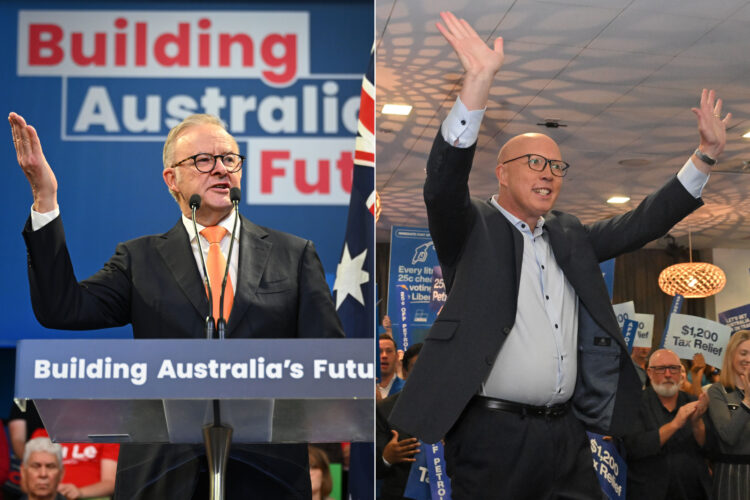
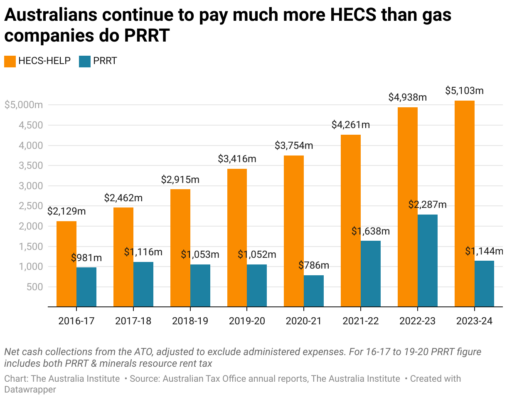
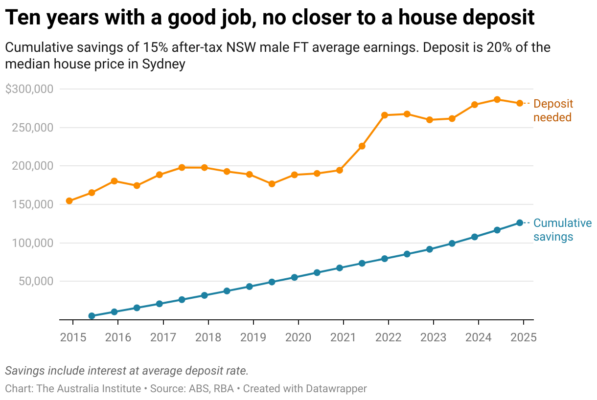
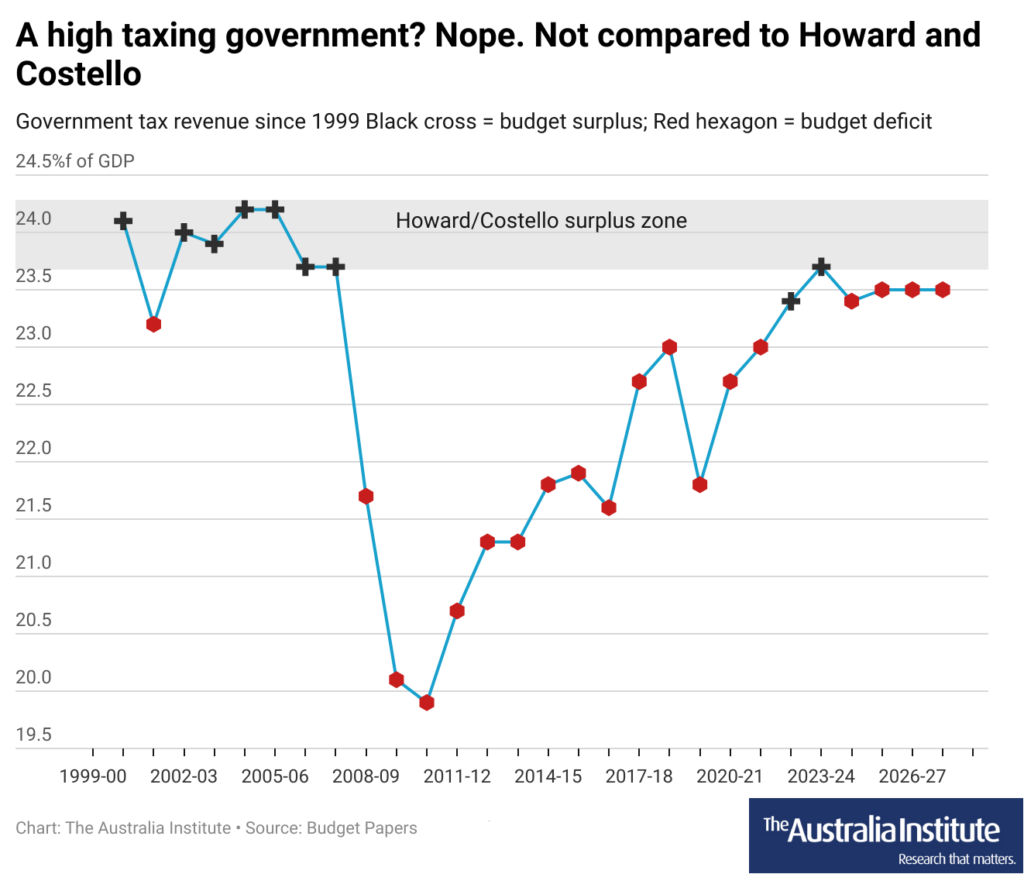
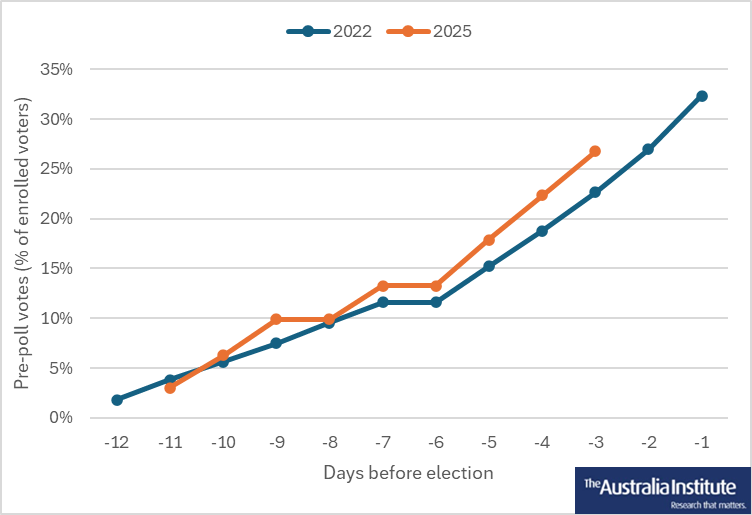
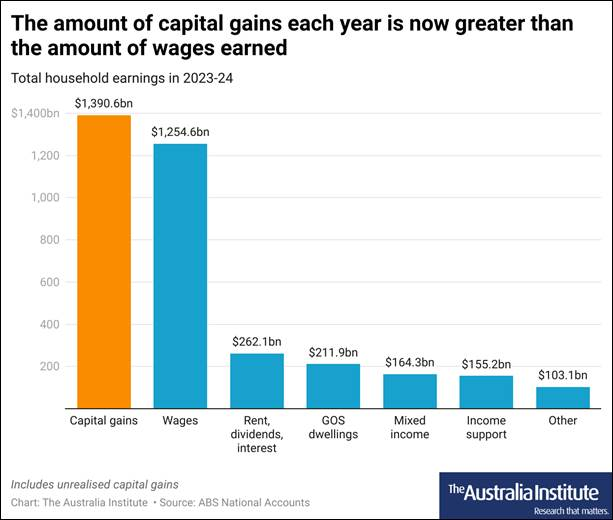
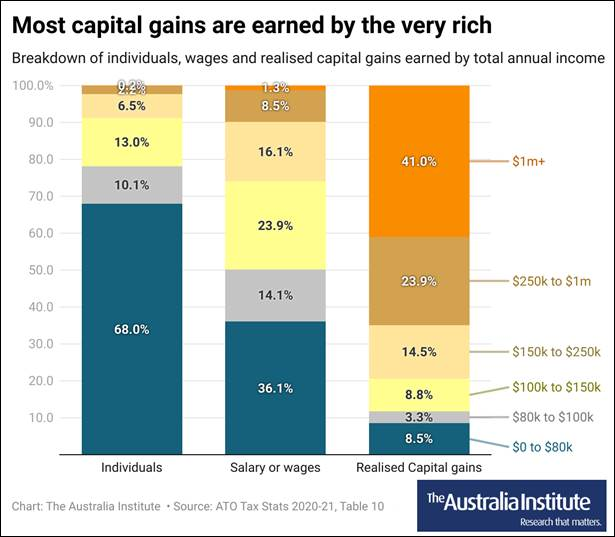
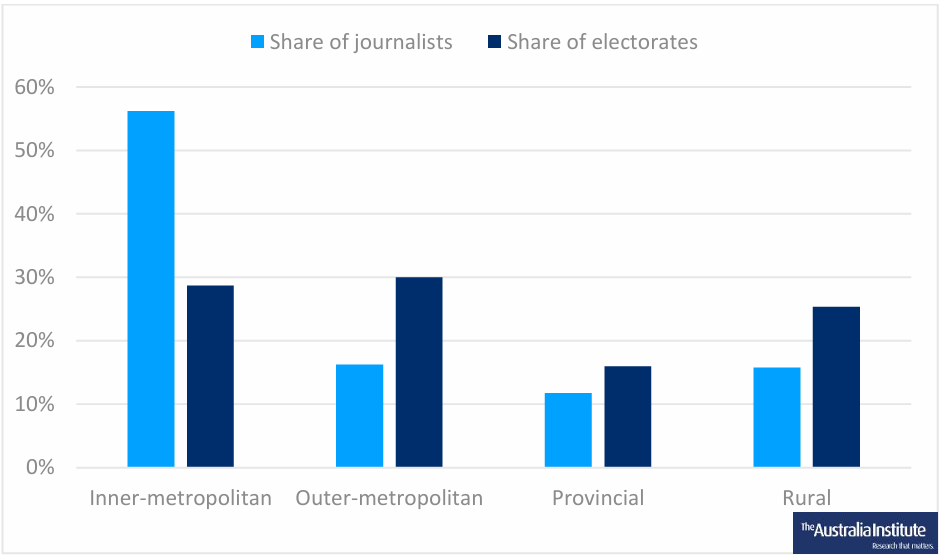
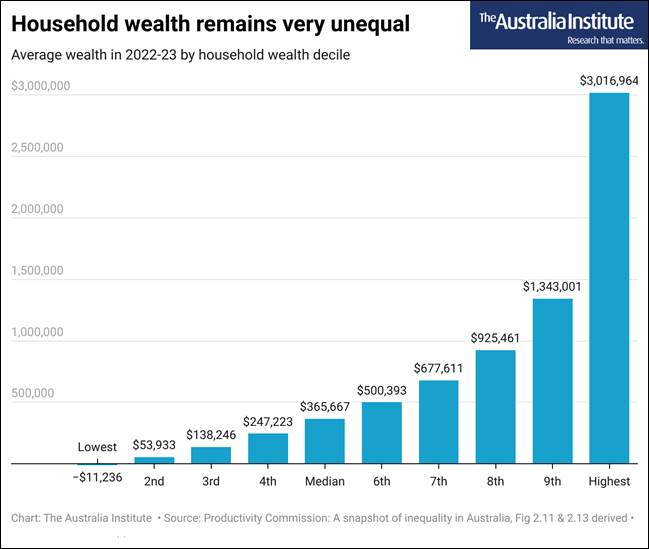
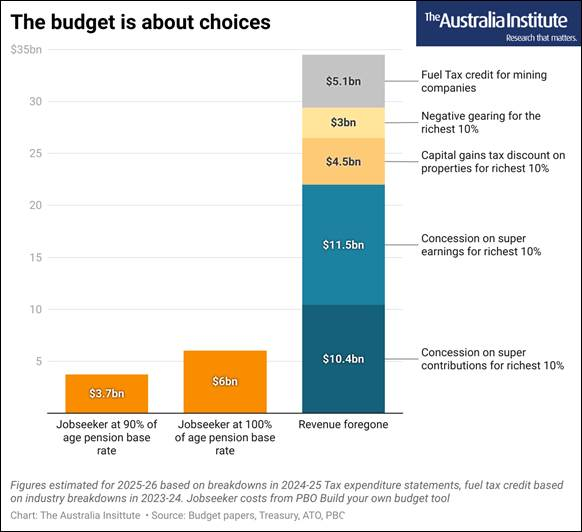
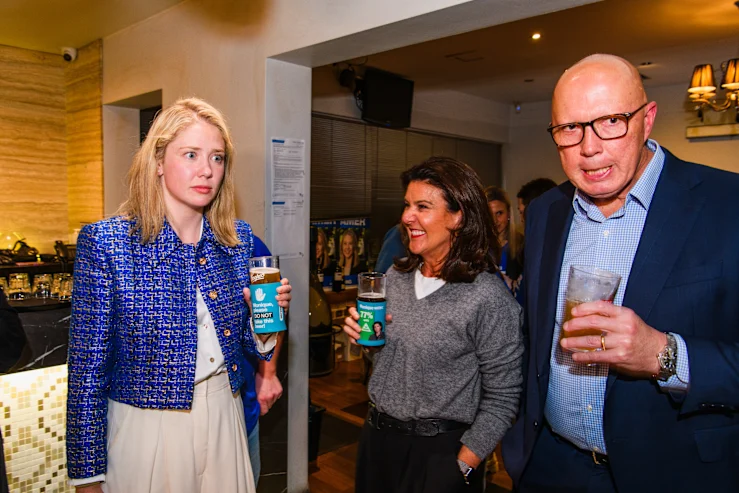
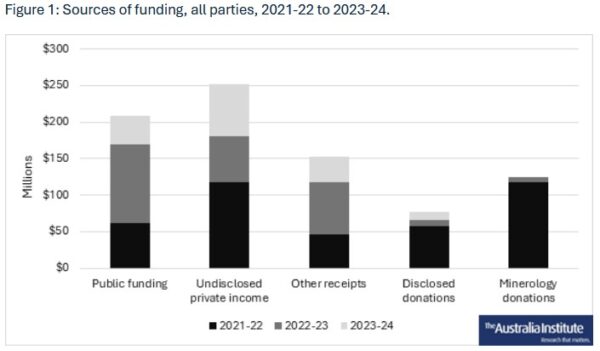
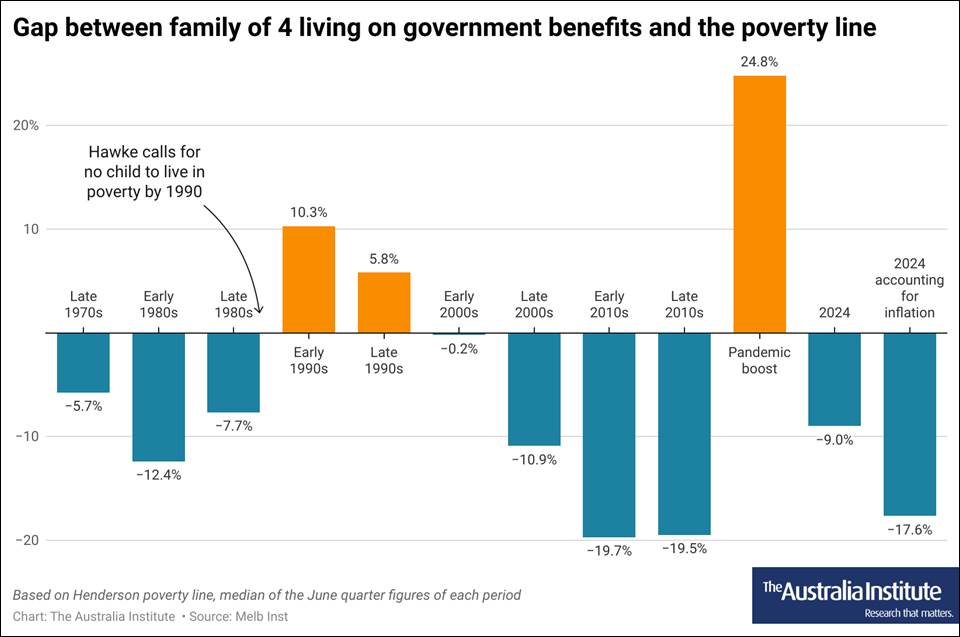
Comments
Start the conversation