Tue 28 Oct

The Point Live: Coalition net zero fight looming. As it happened.

Amy Remeikis – Chief Political Analyst and blogger

This blog is now closed.

Start the conversation

The Point Live: Coalition net zero fight looming. As it happened.

Key Posts

The Day's News

See you tomorrow?

The Australia Institute is hosting a revenue summit at parliament tomorrow, where there will be all sorts of speakers, with all sorts of ideas for raising revenue, better tackle tax reform and housing, as well as help future proof industries, like manufacturing. Former RBA Governor Bernie Fraser will deliver a speech (named for him) tonight to help set the tone.

So I need to go get ready for all of that and bringing you the important parts from tomorrow, as well as what is happening in the parliament.

It’ll be at least a five coffee day. Pray for me.

In the meantime, thank you to all those who joined us today, and all those who came for the first time today – my goodness there were a lot of you! And we really appreciate it. We will be continuing to grow this project, and you’ll find The Point growing every week as we build something that hopefully looks more at the issues you need to know about, without the guff.

Speaking of guff, Dan Tehan is now on the TV, so we are going to run (there is a limit of how much punishment any one person should be made to take)

(For the record, he is avoiding answering questions on whether the Coalition still supports an east coast gas reserve, which was policy under Peter Dutton)

We’ll bring you more of the mess tomorrow – until then, get into good trouble and take care of you.

Tim Ayres then realises he may have contradicted senior ministers

Patricia Karvelas then points out that contradiction we just highlighted:

Q: Isn’t it at odds with ‘everything is on the table? We’re prepared to do anything’? You’re saying ‘this is not a fait accompli, we’re not going to save this if we think it’s too high cost’?”

Tim Ayres:

Both of those things are true.

Karvelas:They’re at odds.

Ayres:

We will look at every responsible option, that means engaging with every option and working them through.

‘Shared approach’ needed to solve Tomago, says Tim Ayres (who also contradicts senior colleagues somewhat)

Because he was in the senate (and we try to avoid that place as much as possible) let’s see what Tim Ayres has to say about Tomago on Afternoon Briefing.

(He is the responsible minister, but other ministers took the questions during QT)

We have been engaged in a disciplined way with the owners of this facility, the State Government, for the future pathway through for this facility, the same way we’re engaged in Queensland in a similar facility and the government in Tasmania and Rio Tinto over the future of bell Bay. There is a different approach in each of the states from the facility.

Is the NSW government on the same page?

We’re working very closely with New South Wales. There’s a shared approach and the only way that you get to a successful outcome in a disciplined way that reflects all of the – all of the pressures that there are on governments in these kind of situations, is to have a shared approach between the governments and also the company in its investment strategy and its business plan and commercial viability.

But could it be too expensive?

In every discussion we’ll examine every opportunity. This is an important part of Australia’s aluminium sector. It’s not the only smelter in the country. But it’s important, it’s been there since 1984, it employs a lot of people. We’ll look at every option, but the future is uncertain. I really want to underscore this, there’s not a guaranteed outcome here by any stretch of the imagination.

Which is not what Pat Conroy and Chris Bowen were indicating in question time.

Who says the Coalition is out of ideas? (The answer is the Coalition)

I was going to leave this entire stupidity, but Mark Di Stefano has the right take here:

Greens, Coalition win senate inquiry into Triple-zero failure

Tess Ikonomou
AAP

Top Optus executives are set to be grilled over the telco’s disastrous handling of a deadly triple-zero outage, with calls for scrutiny of the emergency phone network.

A joint bid between the Greens and coalition for an inquiry into the September outage, which is linked to three deaths, is expected to pass the Senate on Tuesday.

The minor party wants to put the “blowtorch” on Optus and the communications watchdog’s relationship with the telco.

Optus executives might face a probe at Parliament House as early as Monday.

Opposition communications spokeswoman Melissa McIntosh said the triple-zero network needed to examined.

“I want the whole triple-zero ecosystem to be questioned and to be tested, to be prodded, and for people to have reassurance that every part of that process, every part of the business process, contract, everything is investigated,” she said.

Liberal senator Sarah Henderson, who will move to set up the inquiry, called on Communications Minister Anika Wells to appear before the sought probe.

A triple-zero custodian will be set up following the passage of legislation in the upper house on Tuesday to increase penalties for breaches to $30 million.

While the Australian Communications and Media Authority has set up its own inquiry into the outage, Senator Henderson said it was “woefully inadequate and riddled with conflicts of interest”.

An Optus spokesperson said the company had commissioned an independent review and was co-operating with the communications watchdog.

The minister has meanwhile notified the communications watchdog of an intention to establish a public register of network outages to ensure people are aware in real time.

“Triple zero is a critical public safety system and Australians need confidence that it will be available when they need it,” Ms Wells said.

View from Mike Bowers

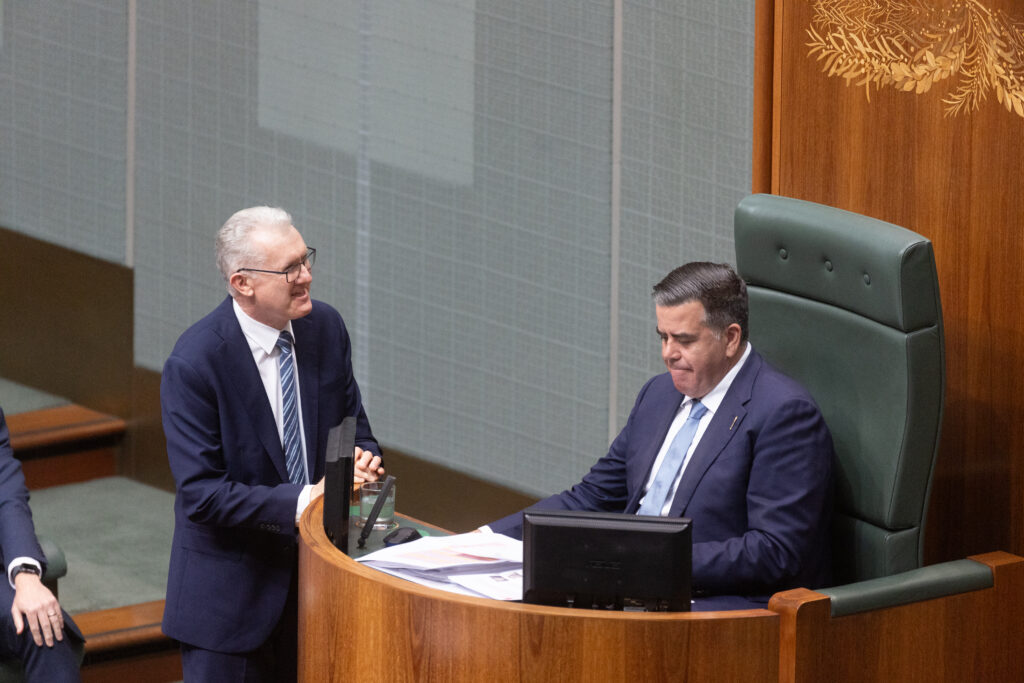
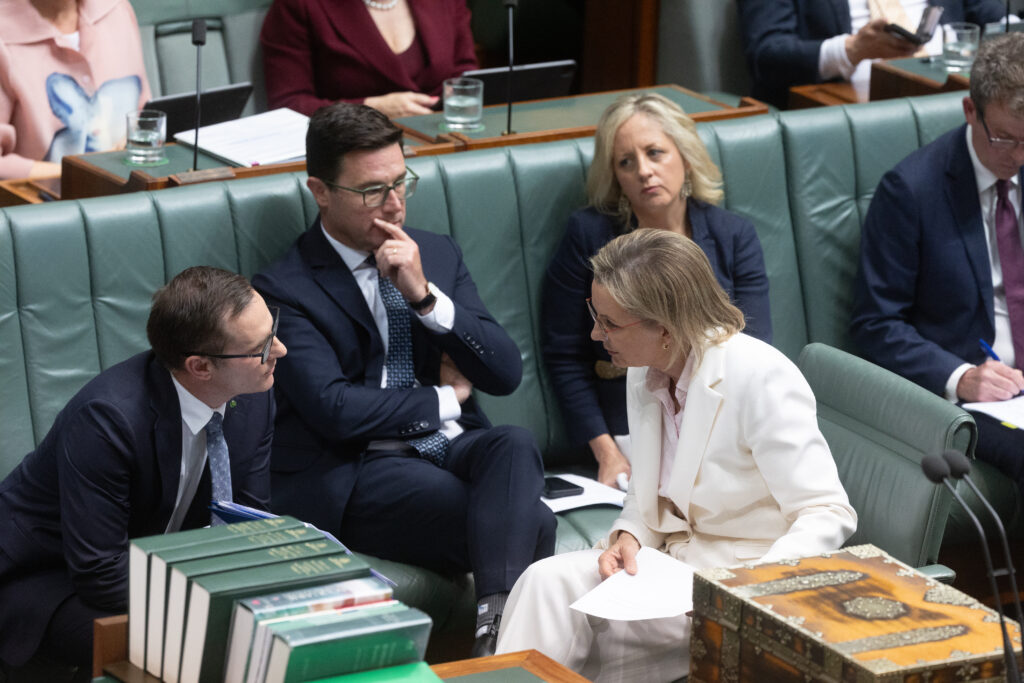
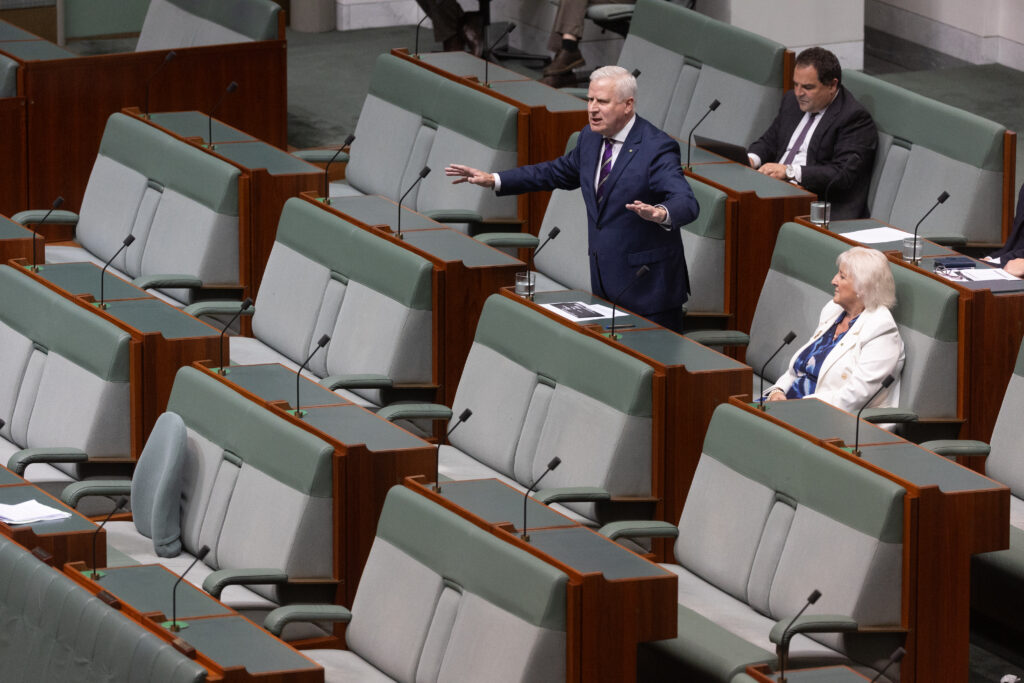
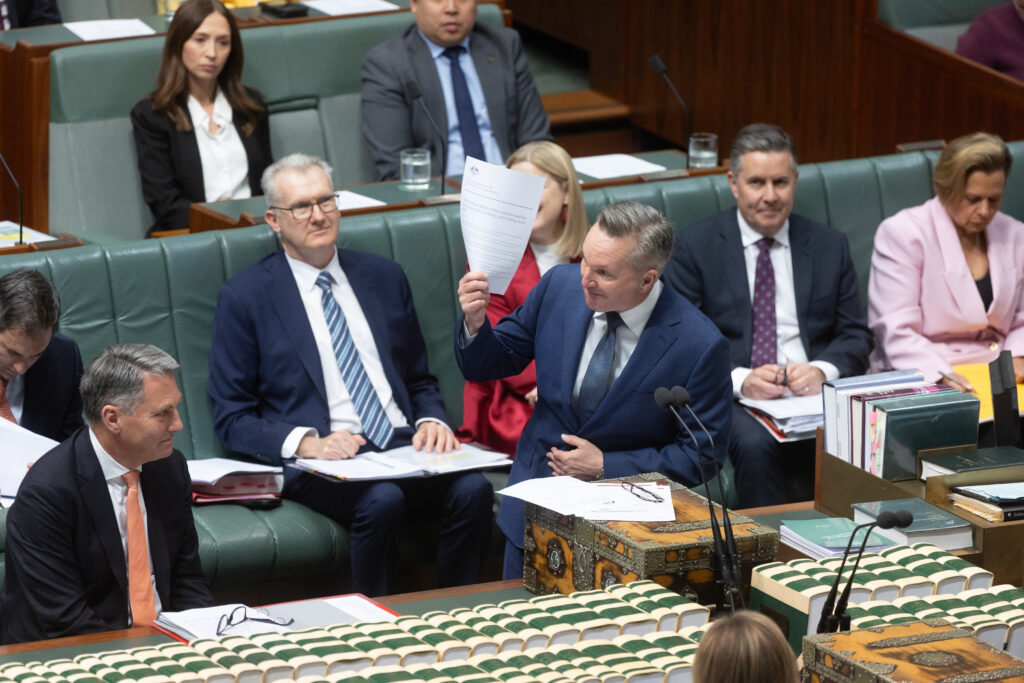
How did Mike Bowers see QT?

(Captions by me – I will not let Mike take the fire I deserve)

Explaining how your Uber driver got the Judas Cradle (yes I am very online)
Again, tag yourself (also give this teacher an award – she was ON it all QT)
Hmmm, yes.

Michael McCormack and all his friends

You just know that Chris Bowen would have been insufferable at school. You just know.

After QT

A lovely reader just asked me what I do immediately after question time.

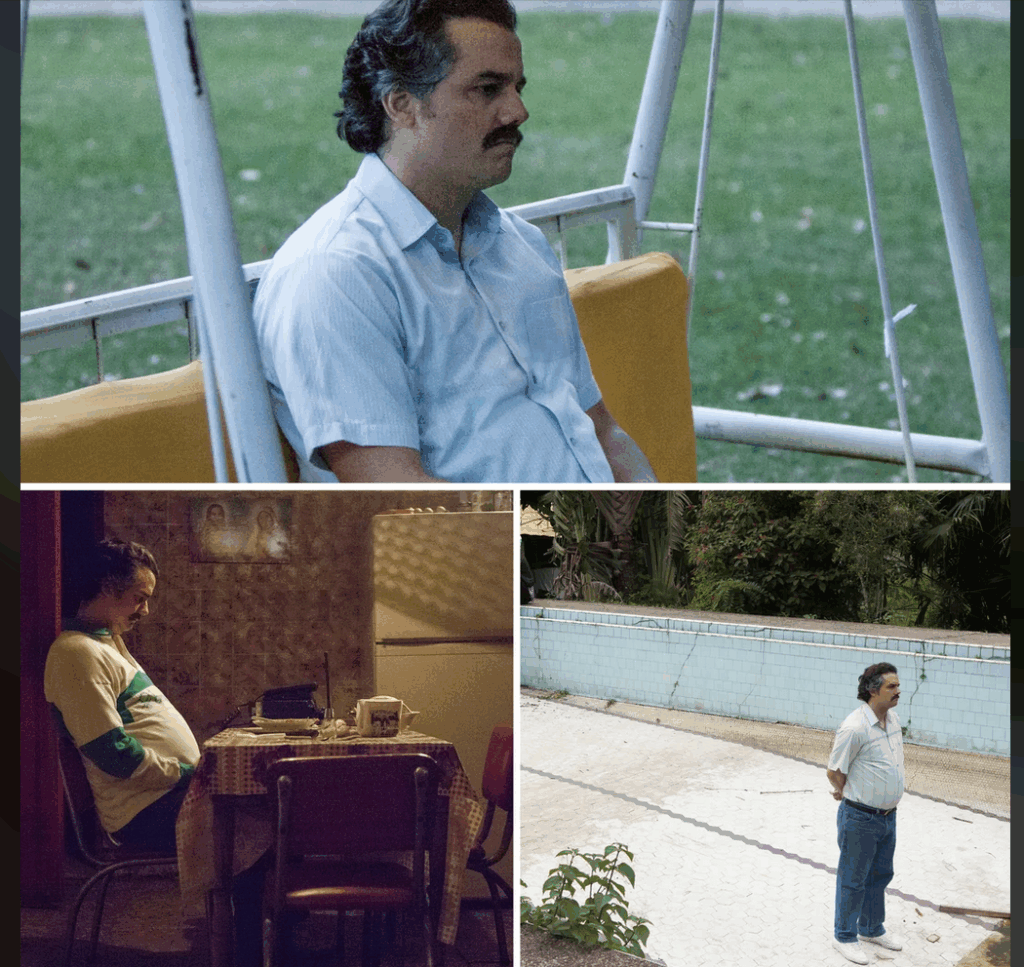
I make a cup of tea (usually about my eighth for the day) and I spend a few minutes doing the Pablo Escobar alone meme.

Question time ends

Stupidly, the Coalition then use a question on whether or not the government will apologise for its energy policies. Which, look – there is obviously a lot governments should apologise for. And while it can be doing more on energy (a lot more – and the ACTU seem to be thinking the same thing given its recent campaigns) Tomago is not the result of Labor’s policies.

The Coalition, like all oppositions, is relying on these questions getting traction in the media, but not the answers, or the context. It’s lazy and dumb and does nothing to help the debate.

So what did we learn in that session?

The Coalition worked out that the CFMEU attacks were probably not nation grabbing so how lucky (again DEIDRE CHAMBERS) that there was a story on energy price predictions from before the election (which were mostly public) in the newspapers today. Of higher importance was the Tomago news, which is not new, but does show the pressure on the manufacturing industry in this country, which is not at all aided by the largely free-ride gas companies have received in this country.

The Coalition are smart enough to recognise that, but not to follow it through to a conclusion that would actually put the government under pressure – because, apart from the brief foray into gas policy (which included reserves and potential future taxes) under Peter Dutton, it has largely folded on the issue of gas. Which means it attacks Labor on renewables, which is not the problem, allowing Labor to just turn it back on the Coalition and its poor record on climate.

How to get an invitation for infrastructure funding? (It remains unclear)

Independent MP Helen Haines gets a question:

My question is to the Minister for Infrastructure: The major and local community infrastructure program opened on 1 September as an invitation-only program providing up to $560 million to identified projects. With the merit-based growing regions program now out of money, organisations and councils in my electorate are asking how can they be invited to apply to this program? Minister, how does a community organisation or local government secure an invitation to the major and local community infrastructure program?

Catherine King:

As the member would know and I have had numerous discussions with her about this is, that, at elections, political parties make election commitments, and then under the grant rules, we are required to establish a program to then fund, assess and contract those election commitments. That is what that fund does.

That is the same way in which the community development grants program of those opposite was supposed to be used but, if I’m asked about that, I might talk a little bit more about that as well. But of course, in terms of what we are delivering in community infrastructure currently, we are already delivering billions of dollars of community infrastructure projects across our regions and our suburbs. Those programs have included $317.65 million through for suburbs, $67.6 million under the Urban Precincts and Partnerships Program, and the $230.3 million..

Haines has a point of order on relevance:

I appreciate the list the minister’s giving us, but the question was – how do our local councils and community organisations secure an invitation to this special program?

Milton Dick says he’ll keep listening that King stays relevant.

King is not happy:

I have specifically answered your question in relation to that program and what the requirements of me are under that particular program.

As I was saying, we are delivering billions of dollars of community infrastructure projects right the way through the regions and our suburbs.

And I note, in particular, there are a number of projects being delivered in the member’s own seat at the moment. She’s done very well out of the regional precincts and partnerships program, and the urban precincts and growing regions program as well.

And those projects, I know, are incredibly important to her community, because she’s advocated very strongly for them. From the Benalla Art Gallery, Eildon Community Hub, the baseball club, they are all community projects that have been delivered in the member for Indi’s electorate. There are projects I could list in seats across the country that I could indicate from the elects of those opposite and on the crossbench. The roads of Significance funding – an increase for local road funding right the way across the country in our regional areas.

Your comments

Reader Pageboi has responded to one of the posts on energy costs:

I really appreciate the work TAI and others like Punters Politics are doing on the Gas problem, but I don’t think gas is the whole story. there’s also the insane decision to privatise the system, especially transmission and retail, all of which have to make their profits and must also be contributing to high prices. Just like child and aged care we shouldn’t have profit in essential services

So let’s take a look at that, from a report Dave Richardson did on this recently:

  • AGL makes $755.01 profit per customer, per year for household electricity
  • Origin makes $595.25 profit per customer, per year for household electricity
  • AGL makes $414.04 profit per customer, per year for household gas
  • Origin makes $417.57 profit per customer, per year for household gas
  • Between June 1995 and June 2024, electricity prices increased at more than twice the rate of inflation.
  • Between June 1995 and June 2024 gas prices increased at three times the rate of inflation.
  • For every $100 of an AGL customer’s electricity bill $35 is profit, $34 goes to “network costs” (such as the cost of using poles and wires), $15 goes to “other costs” (such as advertising) and just $12 is spent generating electricity. $4 covers “depreciation and amortisation”.
https://australiainstitute.org.au/post/power-gouge-how-agl-and-origin-are-milking-monster-profits-from-battling-families/

All of the sighs

In very Coalition areas, they eventually get to the point of linking the Tomago troubles to “Labor’s energy policy’ as if Australia’s energy issues happened suddenly over the last three and a bit years.

I am old enough to have been reporting on this stuff during the Coalition years, and there were warnings about Tomago and other closures, then. Why? Because energy prices are f*cked and it is not helping anyone, and that’s been something that has happened over decades, not years.

Pat Conroy takes this one and says:

In terms of other industry policies, we won’t be lectured on support for the aluminium sector by the Liberal Party. Let’s remind people what’s happened over the last few years. In 2014, when the last aluminium smelter was being considered for closure – which was Point Henry – what did those opposite do? They did nothing.

They didn’t engage with Alcoa. They didn’t engage with the Victorian government. In fact, they cheered the closure of that smelter. Joe Hockey – then Treasurer – said that we shouldn’t be despondent about the closure of the Alcoa facility. I tabled a news article quoting Joe Hockey saying that we shouldn’t be despondent about those jobs going. Almost 1,000 jobs went. Those opposite did nothing about it. In fact, they actively cheered it on.

..As I was saying, we’ve range of policies to strengthen and grow the aluminium supply chain. From fixing mining approvals while protecting the environment, securing affordable gas for alumina refineries through the gas market review, and backing our smelters with the green aluminium production credit.

We’re going to keep working on this, and we’ve got to keep working with Rio and the state government to explore every option.

Unlike those opposite, we don’t cheer when manufacturing jobs go overseas. ) We don’t dare them to leave. We fight for manufacturing jobs every day, we back Aussie workers, unlike those opposite, whose election policy was based on Tomago being closed down. That’s what they think about manufacturing in this country. We get up, we fight for aluminium jobs every day, like we fight for every manufacturing job – unlike those opposite.

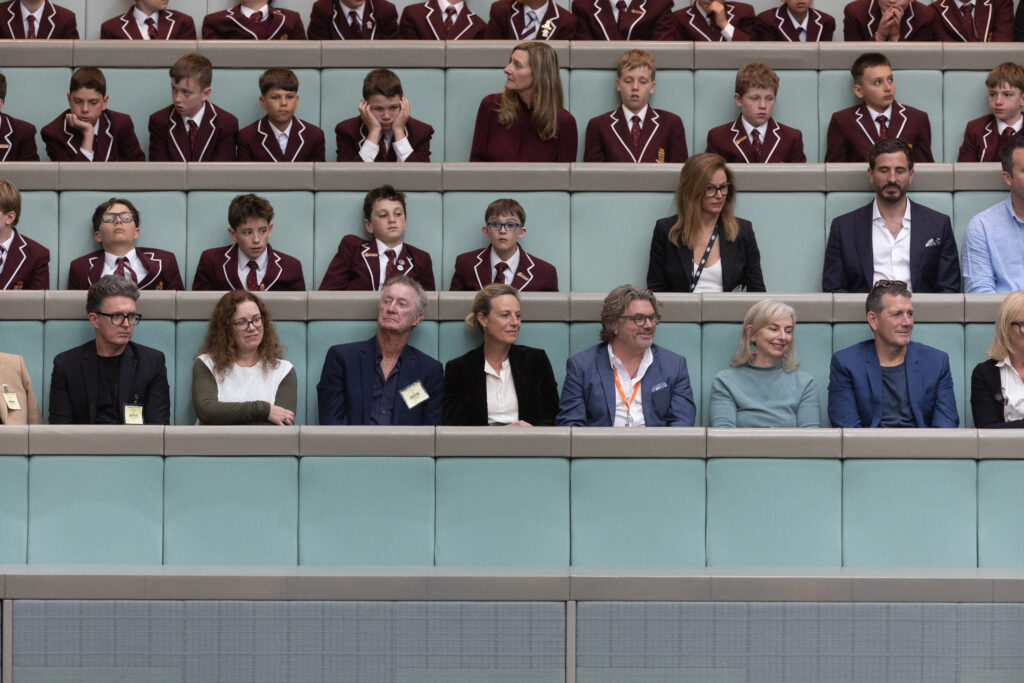
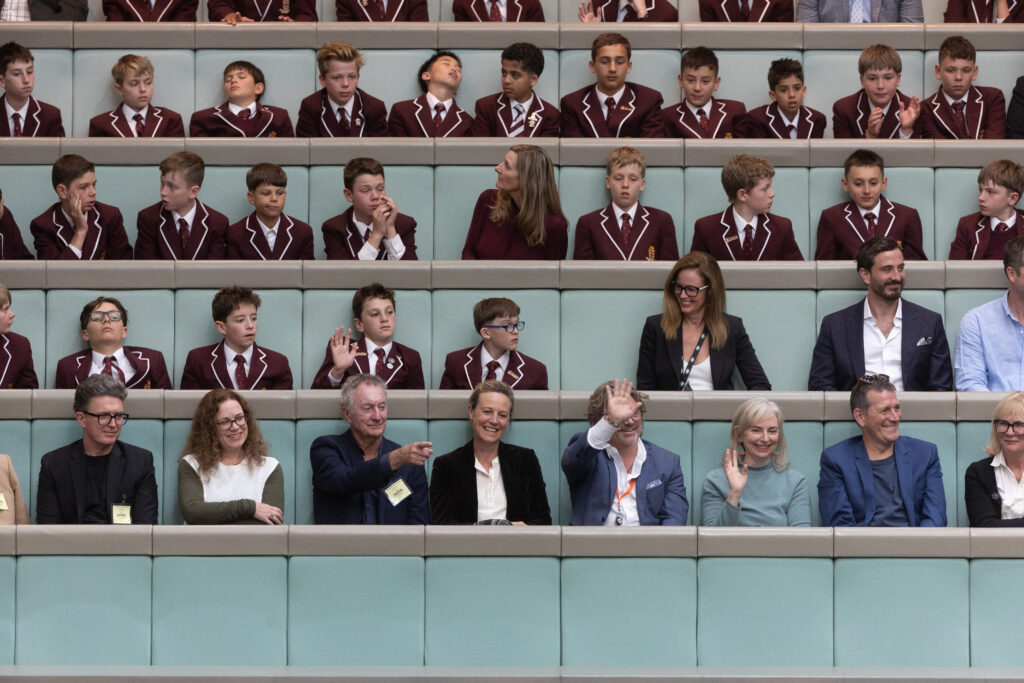
Stars of the gallery

Milton Dick acknowledged the Australian actors and creatives in the gallery who are watching QT after their press conference with members of the crossbench, who have launched a petition asking people to ‘save Australian stories’ by urging the government to follow through on its commitment to create local content creators. When the Speaker officially acknowledges you, you can take photos of the gallery (you can’t take photos before then, which is why when there is a protest, we often can’t show it to you)

(While the actors are very welcome, the real start of this shot from Mike Bowers is the kids, particularly those in the top row. Tag yourself.)

Some of Australias best know actors watch Question Time from the public galleries after attending a press conference calling on the government to support them in calls for minimum local content production for streaming services in the house of representatives chamber of Parliament House this afternoon. Matt Day, Bryan Brown, Rhys Muldoon. Tuesday 28th October 2025. Photograph by Mike Bowers

Zali Steggall said:

The screen industry has shrunk by about 60% because of the lack of investment in local stories, putting about 55,000 jobs at risk,” Steggall said. “Streaming platforms use the NBN, which is paid for by Australian taxpayers, to deliver their content. But the international streamers pay very little tax. We are asking for 20% of Australian streaming revenue to be reinvested in local stories.”

You can find the petition, here.

Chalmers on ACCC action

Jim Chalmers then takes a dixer on the ACCC’s action against Microsoft (which he has to talk about in the broad, because of the court case)

Yesterday, the ACCC launched legal proceedings in the Federal Court against Microsoft for allegedly misleading about 2.7 million Australians when communicating subscription options and price increases after it integrated its AI assistant Copilot into Microsoft 360 plans.

Since 31 October last year, Microsoft told subscribers it would renew subscriptions and customers would need to either accept it or cancel their subscription.

The ACCC alleges this was false and misleading because a third option wasn’t disclosed. Whether it’s the regulators or this government, we take these sorts of developments very seriously. This case is currently before the courts and, for that reason, I won’t comment on the specifics.

But I will say this. There is no place for dodgy and deceptive behaviour like that being alleged in this case. If it’s proven that this has happened, it amounts to deception on an industrial scale. This week, the regulator has sent a powerful message to tech companies – we won’t let Australians be treated like mugs.

Cash Rules Everything Around Me

Independent MP Andrew Gee asks about the future of cash. On this, he and Bob Katter are on a unity ticket.

The government recently released its draft regulation on cash transactions, which only provides that cash has to be accepted for transactions of $500 or less, and only at big supermarkets and major fuel retailers. With respect, it’s a dud. It’s the green light for the phasing out of cash in Australia. Why won’t you support my private member’s bill which would apply to all businesses and all face-to-face transactions of $10,000 or less, and which would truly keep cash king in Australia?

Jim Chalmers takes this one (and really, he should get the pun in the headline as well)

The Albanese government is taking steps to ensure that Australians can use cash to pay for more of the essential items that they need. In saying that, I acknowledge from the outset that the honourable member would like us to go further and do more.

And I’ll run through those reasons in a moment. But I remind the honourable member that there is currently nothing preventing any business in Australia from refusing to accept cash. And we consider that situation to be unacceptable.

That is the status quo that we’ve inherited. That’s the status quo that we are changing. We know that cash still plays an important role in the lives of many Australians.

Right now, there’s no obligation. And we’re changing that. We take seriously the issues the honourable member and others have raised with us. In 2022, we know that the Reserve Bank found that around 7% of Australians still used cash for the majority of their in-person purchases. But we also know that many of those cash users are older Australians, and also Australians living in rural and regional communities like those represented by the honourable member.

Last year, we said we would introduce a cash acceptance mandate for the first time. And we’re delivering on that promise. From 1 January, we’re ensuring that Australians can buy their fuel and groceries by mandating cash acceptance for essential purchases through a mandatory industry code under the Competition and Consumer Act. This follows extensive consultation earlier this year, we received 61 submissions from organisations – 4,000 from individuals.

We met with a range of organisations about it. We know there’s a balance to be struck here between ensuring that Australians can use cash to pay for essentials, but also we don’t want to place unnecessary burdens on small businesses, particularly small businesses, particularly small businesses in the regions.

After that extensive consultation, we think that we’ve got the balance right. We’ve also committed to reviewing the mandate after three years to ensure it’s functioning as it’s supposed to. We will then whether it should be expanded. We’ll look at its impact on businesses of all sizes. And any developments in cash distribution and access at that time as well.

We do know that, for many Australians, cash is more than a payment method – it can be a lifeline. That’s why we are taking the steps that we are taking to make sure that more businesses in this country have to accept cash for essential items. And that a very substantial change, a very substantial improvement, on the status quo that we inherited.

Let’s talk about transparency, shall we?

Col Boyce, the LNP MP for Flynn reads his question, which is again, on Tomago.

We learn nothing new.

We then get Alex Hawke asking Pat Conroy (who is representing Tim Ayres, the minister for industry, who is in the senate)

My question is to the minister representing the Minister for Industry and Innovation: The government has repeatedly refused to release the details of a secret departmental report obtained by the opposition under the existing Freedom of Information laws, which was given to the Minister for Industry and Innovation, titled Industry Facilities At Risk – Key Dates And Proposed High-Level Handling given on 19 June 2025. Minister, how many Australian businesses are on this list of Australian industrial facilities at risk, and how many Australian jobs would be impacted should any of these at-risk facilities close?

Conroy says he’ll take it on notice because it refers to a document and as the minister representing the minister, that is the right thing to do (he says). Hawke wants the unredacted document. There is a back and forth but nothing is resolved.

The Albanese government is absolutely using loopholes to be as least transparent as they have to be (common theme with the government – the least it can do) but we should also remember that the Morrison government really stepped up anti-transparency measures (Morrison secretly swore himself into five ministries) and this tends to lead to a mutually assured destruction cycle. It never is an excuse that the other guys did it, but its constantly used and abused in Australian politics, and new normals get set all the time. And it’s the public who suffers.

Bowen all but confirms the government will save Tomago

Chris Bowen doesn’t put the blame where it belongs though. He says:

We can more than promise a future made in Australia. We can deliver a Future Made in Australia. Because we believe in the opportunities throughout our country.

We believe in the opportunities in our country for de-carbonising. And we believe that the regions that have powered Australia for so long will power us into the future in a different way. And we believe that industries – industries like aluminium – need a supply of energy which is reliable, and we believe they need a supply of energy which is cheap.

And that’s why we are determined to continue the transition that’s underway in this country, which those opposite would stop. They would stop if the opportunity.

Again, the honourable member quotes the Tomago statement today, which I had already quoted. And I had already quoted because it says – it says – that the submissions they’ve had from coal-fired power were uncompetitive. And that is true.

And they also went on to say, “There is significant uncertainty about when renewable projects will be available at the scale we need.” That’s unfortunate. But we agree we should have more renewables quicker. Those opposite would see less renewables across our country. T

he Boyne Island smelter in Queensland has managed to get enough renewables. They’ve secured more than two gigawatts of renewables. That’s a good thing. That’s the future of aluminium smelting. The Tomago facility is in a different situation.

As I said previously, this government, through the Prime Minister, the Treasurer, the Industry Minister, the member for Shortland, and the Hunter members, will leave nothing on the table. We will continue the conversations with Tomago and with Rio, with the New South Wales government, to see if anything is possible to support this facility and to support the workers. And regardless of the outcome, we will be there for the people of the Hunter, because when the industrial change happens, it’s important that government steps up.

And this government will step up for the people of the Hunter. We will step up not only about Tomago, but about the other opportunities in the Hunter, because the people of the Hunter, having powered Australia for so long and having shaped so much of Australia’s future, deserve nothing less. They don’t need a minister at this dispatch box celebrating the departure of manufacturing jobs, goading manufacturing to leave, or saying, “Don’t worry, another business will come along,” which is what Joe Hockey said when the Point Henry smelter, the last smelter to close in Australia, announced their closure in 2014.

That’s what would happen if those opposite held the levers. It will not happen on our watch

Why is energy so expensive? Three letters

After a very easy dixer to Richard Marles to remind everyone he is there, we get to Dan Tehan who asks:

On 20 January this year, the Prime Minister visited the Tomago aluminium smelter, where 5,000 local jobs depend on its future. And told journalists, “This is what a Future Made in Australia looks like.” Yet today, Tomago Aluminium said, “Finding competitively priced energy remains a central challenge.” How can Labor promise a Future Made in Australia when all it can actually deliver is higher energy prices?

You can almost feel the excitement rolling off the Coalition tactics team with these questions today. They truly feel they are onto a winner. Which, on the face of it, sure. But dig a tiny bit into it and what do you know? The cost of energy in Australia is largely due to the cost of gas. Because we export so much of it, our domestic prices are exposed to the international spot market and that is not great for our prices.

What’s the government doing on AI and deepfakes?

Independent MP Kate Chaney gets the first crossbench question today and asks Anika Wells:

The rise of AI is making it hard to tell what’s real and what’s not, and Australians need to be able to distinguish fact from fiction online. The government has committed to developing a national media literacy strategy. What’s the progress on this strategy, and will it deal with AI deepfakes and misinformation?

Wells:

We on this side of the House agree this is a real a important topic and we’ve been putting a lot of effort into the space of the future of news media, what online safety looks like, where this is going, how this dovetails into the work that we want to do with AI.

It’s a really interesting space and I appreciate your interest in it. We really care about this issue. And I think we are very clear-eyed about the fact that AI is changing the landscape and it is changing it very quickly.

And whilst we on this side of the House want to make the most of every opportunity that AI presents us, we want to be a country that is seen across the world as being forward-leaning on AI and making the most of the opportunities.

There are things that we need to do to make sure that our kids, in particular, and everybody who engages with it online, has the kind of literacy and resilience needed to be able to make the most of those opportunities whilst being safe at the same time.

That is why what that looks like is the $132 million that we have put into Newsmap to make sure we have a strong and vibrant news media space in this country, particularly in regional areas.

We have put money into the Alannah & Madeline Foundation, which works with children in schools to improve digital literacy and trying to recognise what you said in your question around what is and isn’t real online, and we’ve put money into Newshound, which helps students and schools work on news media and come up through the ranks, perhaps to one day meet the high calibre of the Press Gallery that watch us now*.

It is an interesting space. I talked to the media students at places like East Doncaster, where I was with the member for Menzies recently. I think we can agree that kids are swamped with what’s happening. A platform like YouTube uploads 600 hours of content every 60 seconds. That is not something new that we have time to prepare for. That’s why the news media literacy plan you referred to was announced by my predecessor as commencing this year a program of work we’re looking to do over the coming three years. I look forward to continuing.

*Debatable

‘Nothing is off the table’ for Tomago says Chris Bowen

Chris Bowen answers Sussan Ley’s question with:

I thank the Honourable the Leader of the Opposition for the question. The first thing to say is that today is confronting news for the employees of Tomago.

And on behalf of the government, I’m sure I express our solidarity with the workers of Tomago and the people of the Hunter. And that, regardless of what comes, there is a month of consultation, but we will stand with the workers of Tomago regardless of what comes.

That is the first and most important thing to say. Tomago and Rio have today announced the beginning of a consultation about the future of the Tomago smelter. I

t is true – it is true – that they referred to energy prices in that announcement. And they made clear in the announcement today – it is true that they said that finding competitively priced energy remains a central challenge.

They went on to say, “Based on market proposals received to date, the cost of both coal-fired power and renewable energy options from January 2029 would increase significantly, fundamentally changing the operating economics and leaving the smelter unviable.” That is what they said. And then they go on to say that it is difficult to find enough renewable energy for the project.

What they’re saying is what we say – that we need more of the cheapest and most reliable energy for our grid.

This is an important and difficult period for the Tomago smelter. The government has been in discussions with Rio through the Industry Minister, the Treasurer, myself and others for some time, and we will continue that over the coming months, and for as long as it takes, to make sure that nothing is left on the field when it comes to the future of the workers of Tomago.

That’s the view of our Hunter MPs. That’s the view of every member of the Cabinet. What we won’t do – what you will not hear any one member of this government do – is stand at this dispatch box and celebrate the death of manufacturing jobs in this country.

I’m old enough to remember that happening. I’m old enough to be sitting there when a Treasurer of Australia goaded manufacturing to leave this country*. I remember what that was like, and it won’t happen on our watch.

And nor – nor will we say – nor will we say, as a Liberal government said the last time an aluminium smelter closed in Australia, the then-Treasurer said, “If you get entirely despondent about one business closing, you’ll ignore the fact that, at any other one time, other businesses are opening, and they’re the jobs of tomorrow.”

I’m sure that made the workers of Port Henry feel better when the Treasurer said that last time an aluminium smelter closed in this country. We’ll work with the unions and communities of the Tomago and Hunter to ensure that nothing is left on the field for the jobs of the day, but we are creating the jobs of tomorrow for them as well.

*He is referring to when Joe Hockey told the car manufacturing industry to leave Australia during the Abbott years.

Greens call for public stake in Tomago bail out

Sussan Ley is back: “My question is to the Minister for Climate Change and Energy: In January, the Prime Minister said of Tomago, “5,000 jobs depend on this facility.” But Tomago is now in crisis, with its CEO saying future energy prices are not commercially viable. Under Labor, there have been closures of the Kwinana and Kalgoorlie smelters in WA, emergency bailouts in Hobart, Whyalla, Port Pirie and Mount Isa, and mayday calls from Bell Bay and Boyne Smelters. How can Labor promise a Future Made in Australia when all it actually delivers is future shutdowns, future job losses, and higher energy prices?

As an aside, the Greens think the government should save the plant, but through a public stake.

Before QT, senator Penny Allman-Payne said:

Senator Penny Allman-Payne:

The Albanese government should take a public stake in Tomago Aluminium, and make sure the Australian people get a return on their money.

In addition to taking a public stake, Labor must underwrite the cost of a clean energy build out to power the smelter to support the green transition.

This is an opportunity to both put workers first and accelerate the transition out of fossil fuels, not just deliver another Glencore-style corporate bailout that offers no public benefit. 

We can’t keep doling out public cash to billionaires and big corporations without expecting a return. 

Minister pays respects to killed miners

Madeleine King takes a dixer on mining, but opens up with giving her condolences to the families and loved ones of those injured and killed in the Cobar mine tragedy today. A man and a woman were killed and another was hospitalised after an incident in a mine, which is currently under investigation.

King:

I want to take this brief moment to express my deepest sympathies to the families and workmates of the two workers who have died in a mining accident in Cobar earlier today. It’s a reminder to each of us here and around the country that mining is dangerous work and that every person who works in this industry deserves to come home safely at the end of a swing or at the end of a shift.

Question time begins

I didn’t cover this story off this morning, because, well, I thought we already knew it. It’s been covered in stories on the incoming brief and I am pretty sure has made a question time appearance previously (Amazing that this story popped up in the Australian just as the Coalition have lost the plot on net zero too. DEIDRE CHAMBERS)

But what Chris Bowen knew about the forecast increase in retail power prices opens up the questions today.

Sussan Ley:

I refer to the front page of today’s Australian: Under pressure from Senator Dean Smith in the other place [the senate] Labor has finally released a secret government document which warns of a “further significant increase in retail electricity prices”. It was also revealed that the clerk of the Senate called Labor’s obfuscation “not acceptable”. Why did this minister do everything he could to hide this document from the Australian public instead of doing everything he could to reduce power prices by $275?

Bowen:

I’m deeply grateful to the Leader of the Opposition for the question. Although I think it might have been better if she had been more transparent with the House. The Leader of the Opposition has asserted that the incoming government brief said one thing and didn’t read the full quote from the incoming government brief. I will. It says…

“The draft default market left. offer points to further significant increase in retail electricity prices in the next financial year.”

Now, the important thing about the incoming government brief referring to the default market offer is that that market offer was already public.

Not only when I received the incoming government brief – so it was hardly a revelation – but before the election. Because the default market offer increase was released by the Australian Energy Regulator before the 2025 election.

That is not uncommon for a minister to receive a default market offer just before an election. And the minister has an opportunity, has a decision point, before them at that point.

The minister can say, “Well, it should be released in a transparent fashion.” The minister can do that. That’s what I did. Here’s the press release from me, referring to the release of the default market offer, this “secret briefing” that the Leader of the Opposition is so concerned to read about in the front page of The Australian today.

I table my press release from 11 March 2025, which was before the federal election. The alternative option available to a minister when receiving a default market offer that is high before an election is to change the law to keep it secret.

That is the alternative option before a minister. An option I declined to take. An option one of my predecessors did take.

The Minister for Industry, energy and emissions reduction [Angus Taylor] on 31 March 2022, almost three years before, changed the law by regulations to keep it secret until after the election. I table that as well. The Leader of the Opposition quotes the incoming government brief – if the Leader of the Opposition had read on, she might have further quoted that brief, “De-carbonising the electricity and energy system is foundational to achieving a whole of Economy transformation maintaining energy affordability and reliability.”

There’s a whole lot more. There’s a whole lot more where that came from, Mr Deputy Speaker. I hope I get more questions from the opposition on the incoming government brief.

No JAUKUS yet, but maybe in the remix

Q:There are growing prospects that China may back off what’s on its rare earths export controls as part of a US deal on Thursday. Do you anticipate they’ll change anything about the critical minerals deal we signed to the White House last week?

Albanese:

Our deal is a good deal for Australia and for the United States. Critical minerals and rare earths as an opportunity for Australians to benefit Australians to have more jobs, to have more, not just resource extraction, but value adding as well with processing. This is all important for Australia as we go forward, and we will engage, and I think, continue to see more investment, which is about setting ourselves up for success in coming years and decades. These rare earths and critical minerals are what will power the global economy this century, and just as Australia has benefited from resources in the last century, such as iron ore, that will continue, but we need to diversify our trade and where we get that economic growth and activity from, and that’s why we’re doing this. 

Q:President Trump is in Tokyo, and he’s meeting with the new Prime Minister. You met her the other day. What did she have to say about AUKUS? And are we looking at the possibility of JAUKUS?


Albanese:

AUKUS is an arrangement between Australia, the United Kingdom, and the United States, and we’re very much focused on delivering that and getting that right. And significant advances have been made in that, as President Trump made clear. The meeting I had with the new Japanese Prime Minister was very positive and constructive. I’ll see her again. She will be at APEC. She has invited me to come to Japan. Of course, some Mogami frigates that we are purchasing from Japan are going to be very important. And that process, as well, is a separate one, where we not only will be purchasing frigates, we’ll be producing frigates as well in Western Australia, with the support and know how as well of our friends in Japan. All of this is very positive going forward.

‘We need to uphold international rules and norms’ Albanese says. About Asia.

Let’s take a look at what Anthony Albanese has had to say today at his press conference in Malaysia:

Albanese:

I’ve just had the enormous pleasure of meeting young people from throughout the ASEAN region who are receiving support with the Australian Leaders Dialogue Program that we have with ASEAN, bringing together people from all of the countries of ASEAN to engage with each other, and importantly, as well, to engage with Australia. They visited Parliament House just a few weeks ago, and I got to see them there when they were walking around Parliament and engaging in Canberra. At the end of the day, what the world needs is more interaction, more cooperation, more engagement on peace and security, dealing with the challenge but also the opportunity of climate change. And these are young people who are optimistic about the world’s future and who are helping to create that better future for the entire region.

Q: Prime Minister, what will your message be to ASEAN this afternoon, particularly about responsibility for regional security?

Albanese:

My message this afternoon to ASEAN leaders is that we need to uphold the international rules and norms. We need to as well, engage with each other. This is the fastest growing region of the world in human history. If we have more cooperation, more engagement, more free and fair trade, then that represents an opportunity for the entire region. From Australia’s perspective, what we want to do is to be more engaged in this region. In recent years, we’ve doubled our trade with this region, that means more jobs for Australians, more economic activity in Australia, as well as a more prosperous and secure region. We have three pillars of our foreign policy – our engagement and alliance with the United States, our engagement with our region, but also our support for multilateral forums – and that’s why this positive engagement is so important. The fifth Australia-ASEAN Summit this afternoon will be an opportunity for that. It will also build on the bilateral meetings I have this morning with the leaders of the Philippines and Thailand, and last night as well, there was an opportunity for me to engage with the leaders in our region. We have a new Prime Minister of Thailand who I was able to meet informally with last night. These relations are all important for Australia as we go forward.

And further to social media bans…

Further to the social media ban, Grogs has pointed this out from the UK – which saw VPN sign ups skyrocket.

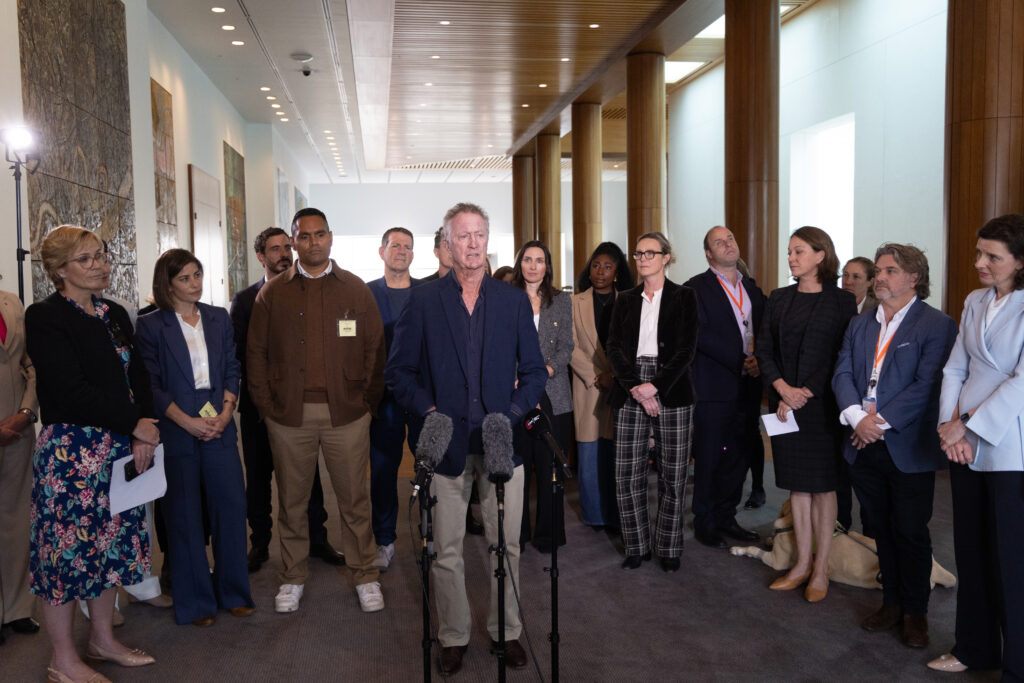
Bryan Brown takes charge

Australian actor Bryan Brown took control of another press conference (he has a way of doing that and the MPs are usually so star struck they let him.

The MPs and Australian creatives were there to talk about the next steps in protecting Australia’s creative industries.

Cross Bench and Teal members Zali Steggall, Kate Chaney, Monique Ryan, Nicolette Boele, Sophie Scamps and Alegra Spender hosted screen industry actors, producers and workers calling for the government to honour their election commitments on Australian streaming content. Actor Bryan Brown, Rob Collins, Brooke Satchwell, Marta Dusseldorp and Rhys Muldoon talk to the media in the Mural Hall of Parliament House in Canberra. Tuesday 28th October 2025. Photograph by Mike Bowers

The man knows how to command a room.

Don Farrell wants peace in our world

Given we are in the downhill slide into question time, let’s take a look at some of the transcripts from today.

Here is some more of Don Farrell from this morning’s ABC News Breakfast interview, where he was asked about China:

Q: How do we see Australia’s position in the region in the event of any escalating conflict between different nations, and some of the tension between the US and China? What is Australia’s role? Is that something that’s being discussed this week at ASEAN?

Farrell:

Look, we want a peaceful region. We’ve seen the conflict in the Middle East, we’ve seen the conflict in Europe. We don’t want conflict in our region. And one way to avoid conflict is to increase the prosperity of our region. How do we do that? Well, free and fair trade does that precisely. And so, we want to build those strong links, build those trading opportunities. Part of my job, is to try and push Australian companies out the door and into the region to take advantage of this growing prosperity in Southeast Asia.

If you’re an outward-facing Australian business, then your profits are likely to be higher, but also the wages of your staff are likely to be higher. So, there’s great opportunities there to take advantage of this improving prosperity. And, I think the more we can engage economically with the region then the more peaceful our region is going to be. And that’s the way the Albanese Government would like to see it.

Social media giants say ban will send teens into ‘darker corners’ of the internet

Tom Wark, Melissa Meehan and Tess Ikonomou
AAP

Snapchat, Facebook, Instagram and TikTok will comply with Australia’s looming social media ban for children under the age of 16 but claim the restrictions will push young people into “darker corners” of the internet.

Kids who do not meet the age requirement will be booted off social media platforms from December 10, but there will be exceptions for health and education services including WhatsApp and Meta’s Messenger Kids.

Tech executives were grilled during a parliamentary inquiry hearing on Tuesday, saying although they did not agree with the age restrictions they would implement the ban.

TikTok public policy lead Ella Woods-Joyce said the company shared the concerns of experts that the “blunt” age bans won’t work or resolve the concerns the laws aim to address.

“We support evidence-based sensible legislation that improves safety standards for all internet users … a ban will push younger people into darker corners of the internet where rules, safety, tools and protections don’t exist,” she said.

Jennifer Stout, a representative from Snapchat’s parent company Snap Inc, said the platform believed the ban had been applied unevenly and risked undermining community confidence in the new rules.

“For teens, connection and communication are strong drivers of happiness and well being, taking that away does not necessarily make them safer and it may instead push them towards other messaging services that lack Snapchat safety and privacy protections,” she said.

Meta regional director of policy Mia Garlick said compliance presented challenges because 16 was a “globally novel age boundary” as existing technologies were built to identify the age milestones of 13 and 18 years.

“Distinguishing 13 from 16 is inherently less reliable and it also found greater challenges at the 16 age boundary with age estimation technologies,” she said.

Platforms face fines of up to $50 million if they do not take reasonable steps to comply with the ban, but there won’t be penalties for young people or their families if they gain access to the platforms.

Greens senator Sarah Hanson-Young previously threatened to force executives from TikTok, Snapchat and Meta – the parent company of Facebook and Instagram – to appear at the inquiry into online safety after they were no-shows at an earlier hearing.

The law puts the onus for compliance on the companies to “detect and deactivate or remove” accounts from underage users.

This will mean about 1.5 million accounts on Facebook, Instagram, YouTube, TikTok, Threads and X will be deactivated in less than two months.

Tech giants Apple and Google removed OmeTV from their app stores this week after being alerted to concerns predators were using it to groom and sexually exploit  Australian children. 

OmeTV instantly connects individuals with random strangers for a video chat. 

The app’s Portugal-based parent company Bad Kitty’s Dad, LDA did not comply with requests sent by eSafety Commissioner Julie Inman Grant in August to introduce protections for Australian children. 

The tech giants have since banned the app and are expected to review all others available in their Australian stores. 

“This is an app that randomly pairs young children – with pedophiles,” Ms Inman Grant told ABC News on Tuesday.

“This app will no longer be able to reach Australians and they will no longer be able to make money off children’s misery.”

Subsidising gas has failed; it’s time Australia tried something else

Frank Yuan
Postdoctoral Fellow

My colleague Greg Jericho has pointed out earlier today how gas was the culprit in the potential closure of Australia’s largest aluminium smelter, Tomago.

More precisely, Australia’s gas giveaway is responsible for the high gas prices and the consequently high electricity prices.

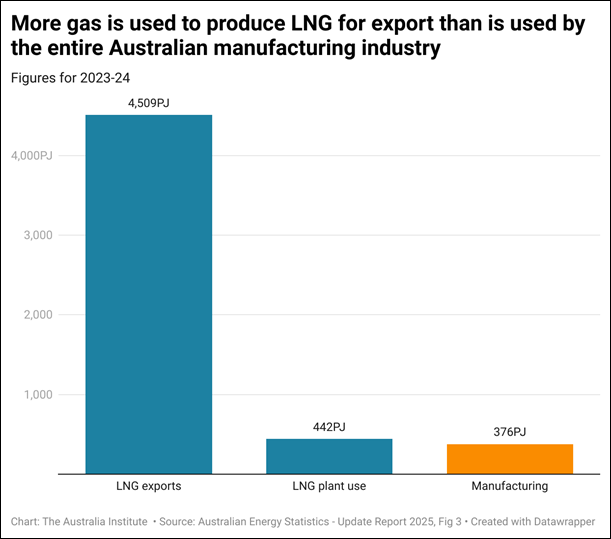
It’s worth reminding ourselves again: Australia gives away so much gas that, it uses more gas to process gas for export, than it uses gas for manufacturing or domestic electricity generation. The closure of Tomago would see that balance tip even further into ridiculousness.

And why wouldn’t gas companies chase profits by selling it overseas? The government doesn’t charge them royalty (or likely any petroleum tax) on over half of the gas exported. Australia is effectively subsidising its gas exporters (and other fossil fuels). This has manifestly not helped Australian manufacturers.

Why not channel that subsidy money to renewable energy instead? The aluminium smelter doesn’t care whether the electrical power comes from a gas turbine or a wind turbine, so long as it’s there. And it’d be better of we can source the electricity without further polluting the atmosphere.

In fact, this would not even need to be a hand-out. Tomago could have benefited from a rapid build-out of renewable power generation and storage capacities. Targeted government financing, such as credit support and concessional loans, can stimulate private sector investment in renewables. The additional electricity could then be contracted for the smelter at a stable and sustainable price.

The loss of Tomago would be devastating for their workers in Newcastle; but if Australia does not act soon, its three other remaining smelters could be in danger, as would its other electricity-hungry industries.

Tech giants reluctantly agree to social media ban

I haven’t had eyes on the senate inquiry into the social media ban, but the SMH’s Nick Newling has.

He reports the major tech companies have agreed to comply with the government’s under-16 ban. Reluctantly.

You can read that, here.

Five fun/not-fun facts about Australia’s environment laws

Rod Campbell
  • Minister Murray Watt has never refused a project. He’s approved 38, including the North West Shelf gas export project and an extension to the Ulan coal mine.
  • Since coming to power in 2022, the Albanese Government has approved 226 projects and rejected 2…a solar farm and a Clive Palmer coal mine.
  • In the 5000 (exactly!) project referrals published, just five were considered “clearly unacceptable”…including a solar project and a Woolworths goods distribution hub!
  • Under the current laws, the minister CANNOT intervene in a project to protect a threatened species, even when there is scientific evidence an extinction is imminent (e.g the Maugean skate threatened by salmon farming in Tasmania’s Macquarie Harbour).
  • There are 334 projects classified as “under assessment” or “assessment commenced”.

    Climate crisis summit

    Larissa Baldwin Roberts from Common Threads held a press conference a little earlier with some of the participants of the Climate Crisis summit held yesterday (which was supported by The Australia Institute) which brought together First Nations leaders, climate experts and advocates to talk about what actually needs to be done for Australia and its communities to navigate the climate crisis (which isn’t something off into the future – we are living it now)

    Serena Joyner (the CEO of Bushfire Survivors for Climate Action) was one of the attendees and said:

    Australia has always had bushfires, but climate change is making them worse. Climate change is making the deadly and almost impossible to defend, and that’s at 1.2 or 1.4 degrees of warming. We simply cannot afford more global warming and have safe communities.

    And that’s why bushfire survivors for climate action exists. 

    Because we know through Black Summer just how bad catastrophic fires can already be. And with the kind of warming we’re seeing, a black summer will be normal in the year 2040. And beyond that, it will be a cool summer.

    That’s why we’re calling on the government to stop the approval of coal and gas projects. Stop the approval of coal and gas projects, and make a clear timeline to phase out coal and gas production and exports. 

    Co-CEO of the Australia Institute Leanne Minshull:

    We also need a plan to rapidly phase out of fossil fuels, and this is something that we can do apart from our combined and, and, apart from our shared determination to see the end of fossil fuels. We also shared some emotions after hearing from frontline communities, scientists, firefighters and unionists and those emotions that we were all feeling. 

    Australia’s approval decisions under the EPBC act – how many were rejected?

    Rod Campbell

    With Australia’s environment laws back in the news, here’s a bit of context based on numbers I just pulled off the official public portal for Australia’s Environmental Protection and Biodiversity Conservation Act.

    In the last ten years, approval decisions were made on 271 projects. 269 were approved…leaving just 2 not approved!

    One was a solar farm. It was refused by Tanya Plibersek due to its “unacceptable impacts on…wildlife including koalas”. Which would be fair enough…except that it is surrounded by coal seam gas wells and next to a gas processing plant.

    The other was Clive Palmer’s Central Queensland Coal project that had already been rejected by the Palaszczuk Queensland Government, so was in no danger of going ahead when Tanya Plibersek “courageously” ruled it out.

    Votes by Woolies and Coles shareholders may determine the fate of the Maugean skate

    Dave Richardson

    The Australia Institute has documented that salmon farming in Tasmania’s Macquarie Harbour is endangering the Maugean skate and the harbour’s World Heritage value.

    At Woolworths annual general meeting (AGM) on Thursday 30 October there will be two resolutions which affect the future of the skate now threatened with extinction. The resolution most directly relevant says: 

    5(b) Farmed seafood reporting

    Shareholders request that Woolworths identify and report on the impacts of farmed seafood it procures for its Own Brand products on endangered species under the Environment Protection and Biodiversity Conservation Act 1999 (EPBC Act) List of Threatened Fauna in its 2026 Sustainability Report.

    Whether or not it gets up will also depend on a procedural motion that will be considered first. Last year a similar resolution was not put because a procedural motion that would have allowed the vote was defeated. But we know it would have had 30% support based on the proxy instructions.  (Proxy instructions are instructions on how to vote from shareholders who do not attend the AGM to vote in person.)

    30% is not sufficient to change the company’s rules but it carries a powerful moral force, especially given that 61% of Woolworth’s shareholders with voting rights are institutional shareholders among the company’s top 20 shareholders.

    A similar resolution is being put to Coles’ AGM on 11 November. Last year such a resolution received 39% of the vote as indicated by voting instructions but the vote was not put, again for technical reasons. While that vote was never put, Coles has made some positive changes. It discusses the endangered Maugean skate in its sustainability report and claims it has reduces sourcing from the Macquarie Harbour. It is also reported that Coles no longer labels its own brand Tasmanian salmon as “responsibly sourced”.

    Clearly Coles could do a lot more to pressure Tasmanian fish farmers to clean up their act, and Woolies could make a start in that direction.

    Outsourcing tax collection is bad for democracy

    Jack Thrower
    Senior Economist

    There is worrying news that the ATO has referred more than 355,000 taxpayers, including people on Centrelink benefits, to a private debt collector.

    This is highly concerning for the health of Australia’s government capacity and broader democracy. Outsourcing basic government functions (such as the enforcement of laws, collection of taxes and formulation of government policy) leads to the hollowing out of government capacity. This means that, not only does the government become unable to perform these functions, but it loses the expertise to even assess which private provider would be best able to meet government requirements. Australia Institute research has shown how privatisation and outsourcing of services traditionally provided by the public sector have historically led to failures and scandals, and how these failures could have been predicted by basic economics.

    Outsourcing tax debt collection also raises serious concerns for democracy and the rule of law. Debts owed by citizens to the government, such as tax debts and Centrelink repayments, have serious financial and legal ramifications for those involved. Pursuit of alleged debts needs to be done with care, particularly when debts are alleged against vulnerable people; failing to do so leads to horrors such as Robodebt. This is why Australia’s legal system has developed principles such as ‘procedural fairness’ to restrict public sector decision-making and help prevent injustices. Relying on profit-driven companies to collect tax debts puts these core principles in danger and risks grave injustices to individual citizens.

    Head to the Hill event held at parliament

    We will bring you some more from some of the press conferences being held in just a moment.

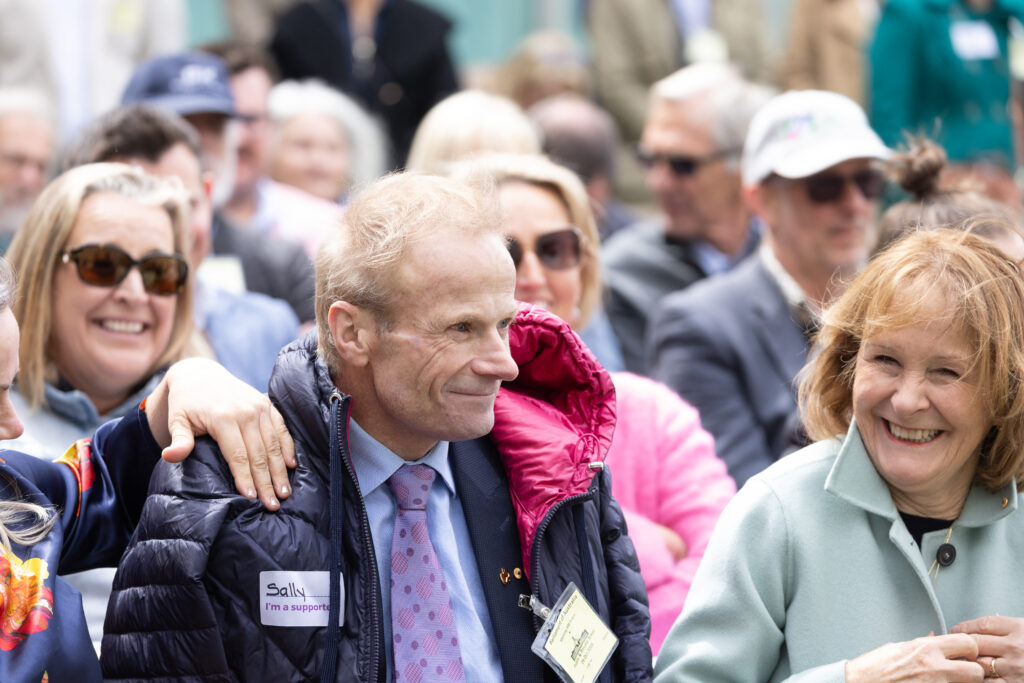
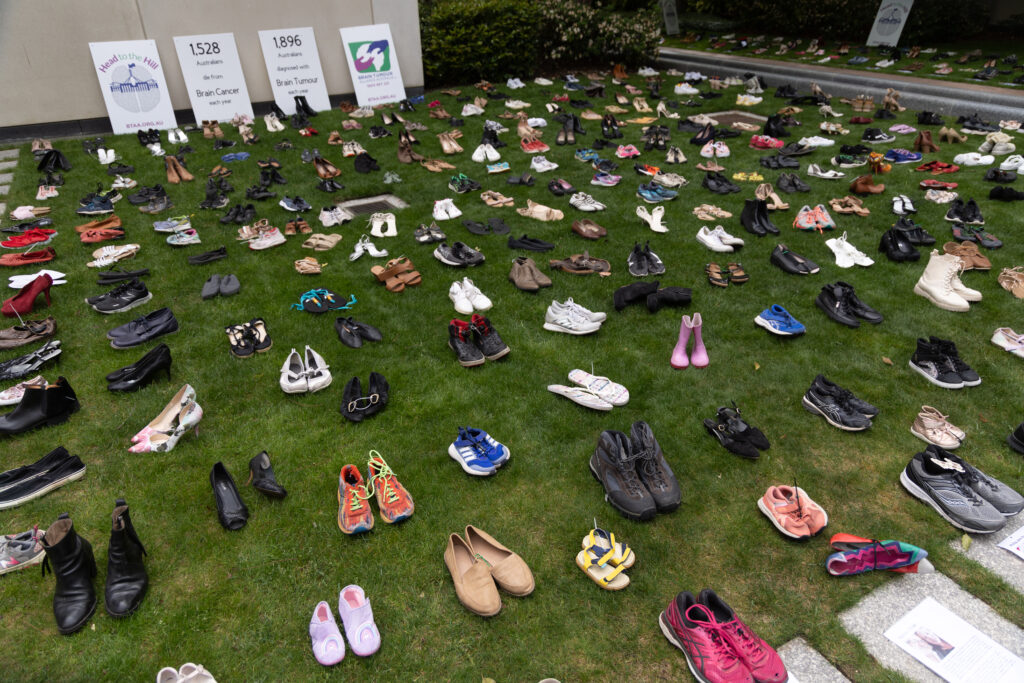
    Mike Bowers attended the Head to the Hill event for 2025, which aims to advocated for brain cancers and this year was attended by hundreds of families, survivors and advocated, including Professor Richard Scolyer AO, a world-leading pathologist who has been diagnosed with brain cancer.

    Shoes represented those who have been diagnosed and those lost to the disease, with 1896 Australians diagnosed each year, were placed at the event.

    The attendees wanted urgent action from the government to fund further research and treatments.

    Head to the Hill 2025 was held in a freezing courtyard at Parliament House this morning
    Shoes represented those who have been diagnosed and those lost to the disease

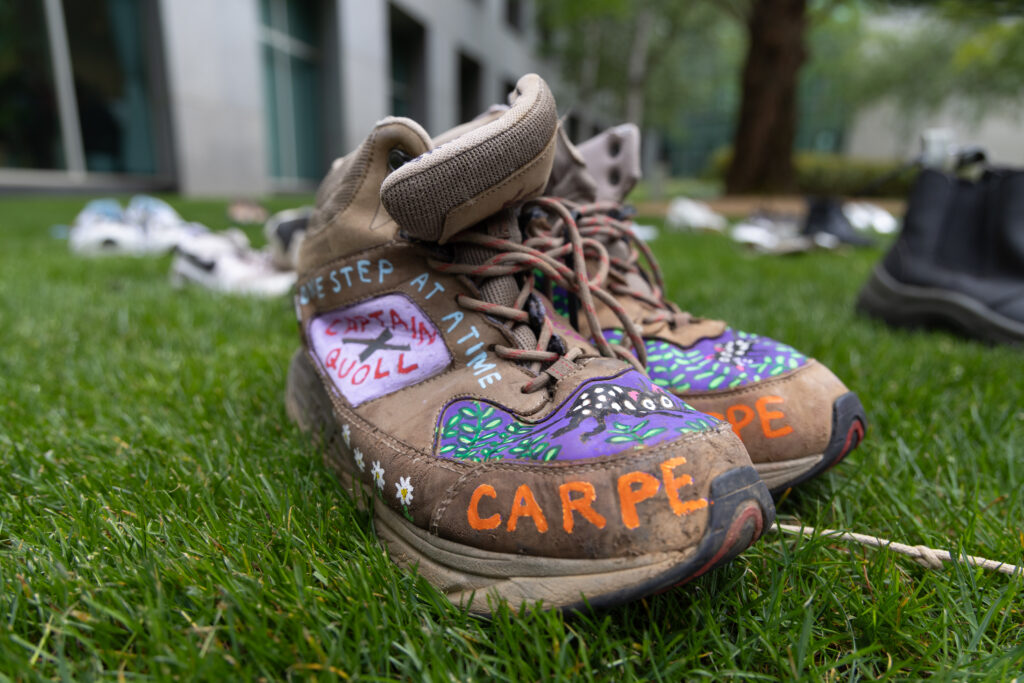
    Among the shoes was these pair belonging to star cartoonist and all round wonderful human, Jon Kudelka, who illustrated his pair for the event.

    eSafety Commission cops friendly fire courtesy of Labor Government’s freedom of information backsliding

    Bill Browne

    The Albanese Government has copped criticism today for its culture of secrecy, including its floundering attempts to further restrict the freedom of information system.  

    Labor ministers made sensational claims about criminal gangs and foreign agents abusing the FOI system, claims that they have been totally unable to back up. Nor have long-suffering public servants been able to substantiate the Government’s dark warnings about AI bots overwhelming the FOI system.

    Ironically, the Albanese Government’s clumsy scaremongering will only encourage the kind of FOI requests that they are complaining about.

    That’s because Albanese Government has used the eSafety Commission as its example of a government agency brought to its knees by an overwhelming number of FOI requests. According to Attorney-General Michelle Rowland:

    “we’ve had cases where FOI requests have been generated, sometimes around 600 of them in one instance, going to a small agency [the eSafety Commission], which tied up the services of that agency for over two months.”

    Never mind the absurd claim that a $43 million dollar a year agency could be “tied up” by 600 FOI requests. My colleague Skye Predavec’s fact check ably disproves that claim.

    But as I argue in The Point today, the bigger problem is that those 600 FOI requests came from a web form called “END eSAFETY”.

    The Government has handed them a major PR victory. Their mission is to bring down the eSafety Commission, and here is the Attorney-General of Australia telling them that, for two months, they succeeded.

    The truth is that the eSafety Commission quickly dealt with these 600 FOI requests, using existing laws. But in their eagerness to sell its FOI changes, the Albanese Government made it look weak and vulnerable. 

    The Albanese Government has done the eSafety Commission no favours by making it the face of secrecy, panic and government overreach. 

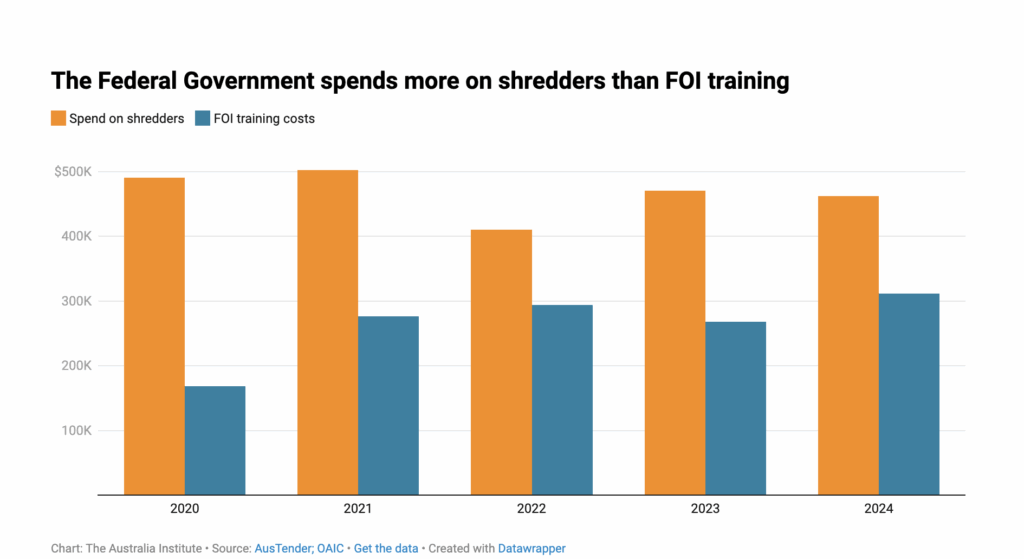
    The federal government spends more on shredders than FOI training

    Skye Predavec
    Researcher

    In the five years from 2020 to 2024, the Federal Government spent at least $2.3 million on shredders. That’s according to AusTender, the centralised database of Australian Government contracts. Among the 54 contracts were contracts for office machines with supplier Kobra Shredders Australia and shredders purchased from other companies. 

    By contrast, government agencies reported spending just $1.3 million on FOI training in the financial years ending between 2020 and 2024. The FOI system has become much more expensive, rising from $64 million in 2020 to $86 million in 2024, but in 2024 just 0.5% of the total cost of the FOI system was for training.  

    The imbalance between spending on shredders and the FOI training budget was spotted by Phil Dorling in the Sydney Morning Herald in 2012.  

    There are some similarities between Labor Governments then and now. For one, Anthony Albanese is one constant, then the Minister for Infrastructure and Transport, and now the Prime Minister.  

    But there are stark differences. Labor in 2012 made sweeping reforms to the FOI system that underscored the role of public servants as facilitating the open and transparent release of information. Today, however, the Labor Government seemingly wants to do the opposite, their proposed bill would make it harder and more expensive for Australians to get information from the government. 

    You can read the rest of Skye’s article, here.

    And another thing:

    Further to what Greg just reported on Tomago:

    Why is Tomago in trouble? Because @qldlabor.bsky.social and @australianlabor.bsky.social governments approved unconstrained gas exports, causing gas prices to triple and electricity prices to double.Gas exports are an economic disaster for Australia.australiainstitute.org.au/post/gas-exp…

    Mark Ogge (@markogge.bsky.social) 2025-10-27T23:22:26.885Z

    Post party room meeting briefings scheduled

    The party room meetings are coming to a close. The Coalition and the Greens have sent out the alert that their post-meeting briefings are ago. Caucus will soon follow.

    These are off-the-record briefings of the meeting minutes, in a tradition that goes back to John Curtin giving off-the-record briefings about what Australia was doing during World War II. None of it is attributed and journalists have to do the work of finding out who said what and whether there was more not reported in the briefing, but it is always amusing to me when MPs say they don’t discuss party room, because they literally brief the media on it.

    Australia keeps its Fitch AAA credit rating

    The global ratings agency Fitch has reaffirmed Australia’s triple-A credit rating – if you were wondering what those sounds were it was the whoop of joy from the Treasurer’s office and the stomping of tantruming feet from Super Ted, the shadow treasurer’s office.

    Now ratings agencies don’t count for much – it basically means that Australia can borrow money at cheaper interest rates, because we have been judged as a good bet for returns/paying it back by ratings agencies. Think of it as a credit score, but one that gets you a press release and some crowing rights.

    Jim Chalmers is pretty happy. From the release:

    It shows that under the Albanese Government, Australia has one of the best budgets in the G20.

    In its latest report, Fitch acknowledged the government’s efforts in paying down Liberal debt, praised the government’s focus on boosting productivity and outlined the private sector recovery that was under way in Australia’s economy.

    “Consumption will continue driving the recovery on the back of a still strong labour market and a steady improvement in real household incomes resulting from lower inflation, tax cuts, and declining debt service payments,” Fitch said.

    “The government appears focused on productivity reforms after its re-election in May 2025…

    “Australia is likely to benefit from a larger role in critical mineral global supply chains, as signalled by its recent rare earths agreement with the US…”

    Who is to blame? In energy, the answer is most likely always gas

    Greg Jericho
    Chief Economist

    A report out today in the AFR suggests that “Australia’s biggest aluminium smelter, Tomago, has started a consultation process with employees on the plant’s potential closure”

    The reason for the possible closure? Energy prices and especially that “its current electricity supply contract with AGL Energy expires at the end of 2028”.

    Electricity is a massive cost of producing aluminium – it makes about 40% of the costs. It’s also part of the reason why aluminium smelting is a very big greenhouse gas emitting process.

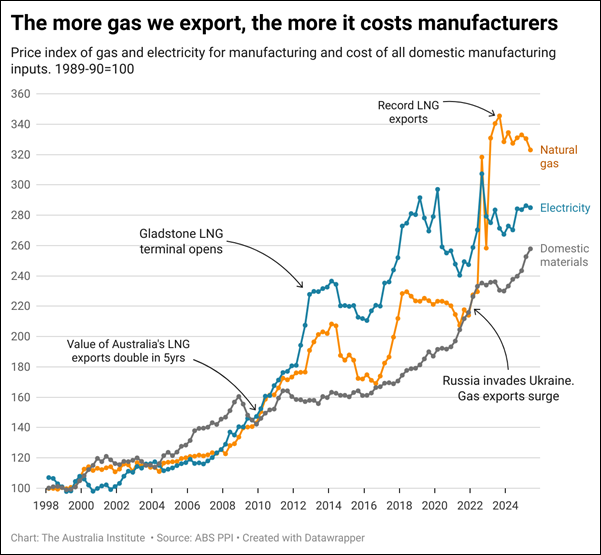
    But when it comes to the cost of electricity and all energy, the culprit is very much gas.

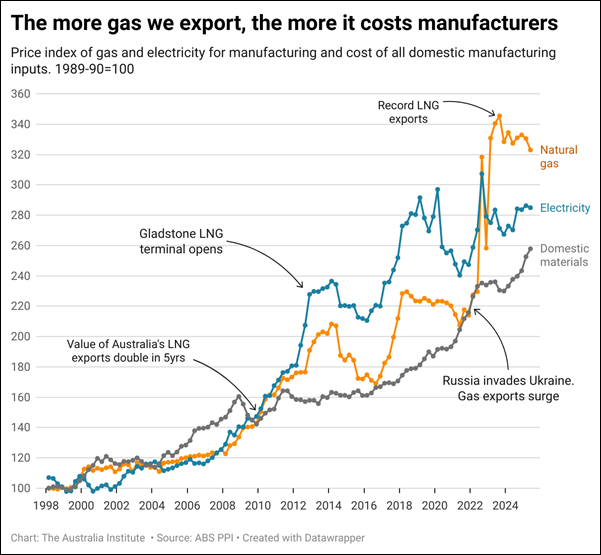
    In Australia, as readers will no doubt know, we export about 80% of our gas. So, despite being roughly tied with the USA and Qatar as the biggest exporter of LNG we constantly have stories about a possible “gas shortage”. That in itself is bad enough, but since the opening of the Gladstone LNG terminal, the price of gas, and electricity, has been tied to the world price for gas. And the picture is clear – as Australia’s exports have gone up, so too has the cost of gas and electricity for manufacturers.

    If we were to tax Australia’s gas exports – say at 25% – and also had a reservation policy, that would not only deliver greater revenue to the government it would provide Australia’s manufacturing industry (and households) with lower cost energy.

    But instead, we are told we can’t restrict gas exports and that we need to get more gas (for export).

    Serious piss taking by the gas industry, and unfortunately the government is letting them do it.

    ‘We need to take profit out of child care’

    Matt Grudnoff
    Senior economist

    The terrible stories that continue to come out about childcare have a common thread. Abuse is more likely to occur in for-profit centres.

    Long ago we worked out that education and profit shouldn’t mix. There is no profit motive driving school education in Australia. Private schools in Australia are not-for-profit. They are run by school boards that are supposed to be focused on providing the best education for their students.

    How does the government keep the for-profit sector out of school education? A for-profit school is ineligible for government funding. We need to do the same for childcare.

    Childcare has become big business. The biggest for-profit providers are worth hundreds of millions of dollars who pay their CEOs millions of dollars a year.

    We need to take profit out of childcare.

    The solution is for more state and not-for-profit centres.

    We should look to the model we already have for primary schools. In almost every suburb there is a local government run primary school. The same could be true of childcare centres. Where practical, these childcare centres could be built at primary schools.

    Parents should expect that when they send their kids to childcare that they are safe and receiving top quality education and care. This is not consistent with the profit motive.

    The government is already spending billions of dollars on childcare. Let’s use that money to give them the best start in life.

    You can read more on this in my Point article here.

    More press conferences

    Just before question time, Holly Rankin (who performs under the name Jack River), Kate Ceberano, Neralda Jacobs and Sam Hales will speak at a press conference with the co-chairs of the Parliamentary Friends of Aussie Music, Dr Sophie Scamps, Tom French and Melissa Price over what needs to happen now that the government has decided against AI companies being able to train their models on Australian content for free.

    First jet to land at Western Sydney airport

    Catherine King is very excited – today the first jet will land at the Western Sydney (also known as the Nancy-Bird Walton) international airport, with the NSW Rural Fire Service 737 marking the milestone.

    There will also be a multiagency emergency exercise held as part of the airport’s final tick off for public use.

    Does the Labor–Liberal deal to change electoral laws really make things fairer?

    Bill Browne

    The Albanese Government has come in for criticism today as a Centre for Public Integrity report card marks them as failing on six of seven transparency measures. When asked about it on ABC Breakfast, Special Minister of State Don Farrell pointed to the changes he and the Liberals negotiated earlier this year:

    “At the next election, all donations that are going to be made to any political must be fully disclosed. Previously, the amount was $17,000. So, we have significantly dropped that money. More importantly, those donations have to be disclosed before the election. So, every single donation above $5,000 has to be disclosed before the next election.”

    The improvements to donation disclosures are the one bright spot in the electoral changes, which otherwise make it much harder for independents and new parties to challenge the incumbents.

    Meanwhile, the electoral law changes ensure the major parties will receive tens of millions of dollars more in taxpayer funding, and enjoy several loopholes to get around donation and spending caps. Rules for thee but not for me.  

    That’s why Senator Farrell, when asked in Senate Estimates, couldn’t identify a single integrity group in the country that supported the changes.

    ‘Fireside chat’ with RBA Governor raises more questions

    Greg Jericho
    Chief Economist

    Last night the Governor of the RBA, Michele Bullock had a “fireside chat” at the Australian Business Economists annual dinner.

    It was all very comfy with the audience full of suits who know that they will never have to be one of those who will lose their job due to the RBA believing we need 4.5% or more of the labour force without a job so we have inflation below 3%.

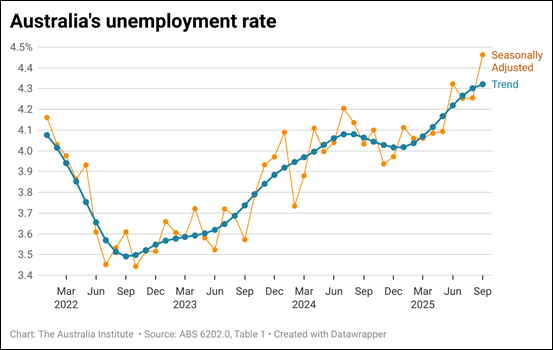
    She was asked about the current state of the economy, specifically the unemployment rate hitting 4.5%, which was above the RBA’s forecast peak for the next 2 years of 4.3%. She told the room

    “Monthly numbers can be volatile. The jump up in the unemployment rate was a bit of a surprise. But monthly numbers can be volatile, and we do know sometimes that they jump up and then they jump back down again.”

    She is right, it can be volatile, but it is clear the path the unemployment rate is on, so suggesting the 4.5% is just a blip is a bit off:

    But after telling the audience that she and many central bankers around the world were confused why the markets were so “sanguine” given everything going on (which was code for Donald Trump) she then wheeled out her own sanguine views on unemployment.

    She suggested “We always thought it would drift up a bit. Maybe it’s drifted up a bit further than we thought. But it’s not a huge amount out. So, I think we just have to wait for a bit more data.”

    And then she tried to gee up the room by arguing “but let’s be positive, inflation is back in the band – it’s not down at the midpoint where we’re supposed to be aiming but it’s still in the band – and the unemployment rate is still pretty low compared to where it was pre-COVID so still think we’re in a pretty good position.”

    And sure, compared to 2019 we’re are doing well. But in 2019 the RBA was cut rate 3 times down to 0.75% because all the talk was about a recession (people really do forget just how crap the economy was before the pandemic).

    Later when asked by a journalist about unemployment she calmly replied that “there are still jobs being created, just not as many”  Again, this is what happens when unemployment rises, so not sure why she thinks this is great, given the only time jobs actually fall is during a recession.

    She then suggested that this rise in unemployment “is bringing the labour back more to balance” and that the RBA wants to “keep the unemployment rates as low as we can without fuelling inflation. How close are we to that? We think we’re close-ish but it’s very uncertain and so we have to be prepared to consider different possibilities and if we’re wrong on that we have to be prepared to change our mind and we would.”

    Just what this means though is unlcear. Does she think the RBA is wrong that unemployment is too high or too low?

    My gut feeling is that she thinks we could do with a bit more unemployment (even though she said the RBA “are not aiming for an unemployment rate”) because she kept saying that “our judgement is there is still a little bit of tightness in the labour market”. What does that mean? It means they think too many people are employed and it is causing wages to rise faster than the RBA wants.

    She also suggested that she thinks the current cash rate is “still a little bit restrictive” which means that it is still slowing the economy and causing unemployment to rise.

    All of which suggests the RBA is comfortable with unemployment continuing to rise and truly has no worries that we are well above 4% unemployment now.

    The RBA never wanted unemployment of 4% or lower. It never considered that “full employment”. It has devoted all its might to ensuring the hope of establishing 4% as a ceiling of unemployment was absolutely dashed.

    And they are very comfortable telling a room full of people comfortably employed that.

    ‘Don’t just chase the new shiny thing’ industry group warns business over AI

    Australia’s largest accounting body, CPA Australia has taken the step of warning the finance and accounting sectors of not jumping to AI to replace junior staff, warning of the long term effects of over reliance on technology.

    CPA Australia’s Business Investment and International Lead, Gavan Ord, said businesses should strike “an appropriate balance between technology and talent to maximise the value they get from their investments, without losing equally valuable human skills”.

    It’s the latest warning as the unregulated sector of AI continues to change how we live and work.

    Ord said there was a “clear link between AI adoption and successful business performance, but an overreliance on new technology could ultimately backfire”.

    CPA Australia has released its 2025 Business Technology Report, which found 19 per cent of businesses across the Asia-Pacific say they have reduced or ceased filling junior or entry-level accounting roles because of the introduction of AI tools. In mainland China, this rises to 32 per cent.

    Which is not exactly re-assuring for long term viability of jobs.

    Ord:

    Businesses must not underestimate the importance of keeping people in the loop. Specialist human oversight remains essential. Turning over finance functions that require accuracy, assurance and verification to technology leads to elevated risks.

    We are now seeing many high-profile examples of businesses and organisations suffering financial and reputational damage because they have swung the balance too far in favour of poorly verified AI.

    Again, Ord was pushing for balance:

    The key to technology is understanding the problem you want it to solve – not chasing the latest shiny thing. Some businesses seem to be experiencing FOMO when it comes to AI – and they are the ones who risk being behind the eight ball if they don’t invest wisely in their people and fail to follow appropriate processes to identify the right AI solutions for their needs.”

    However many others are urging governments to step in and regulate AI usage, before its too late.

    It is easier to get into Heaven than it is to get into ASEAN”: Timor-Leste joins South-East Asian regional group

    Bill Browne
    Director, Accountability & Democracy Program

    Last night I had the privilege of attending a ceremony celebrating Timor-Leste (East Timor) becoming the 11th member of ASEAN (the Association of South-East Asian Nations). It’s been a long journey for the small island nation, which applied in 2011.

    Foreign Minister Penny Wong was among the speakers who emphasised Australia’s long and warm ties with both ASEAN (of which we were an early supporter) and Timor-Leste. 

    Australia led the military force that protected the Timorese from Indonesian retaliation after they voted for independence in 1999, and has long provided Timor-Leste with financial assistance (including to prepare for its ASEAN admission).

    My pride in Australia’s contribution to Timor-Leste’s continued independence was tempered by the outrageous way that Australia has sometimes treated its near neighbour. It wasn’t mentioned last night, but while John Howard was prime minister, Australia spied on the Timor-Leste government to gain an advantage in negotiations over how to carve up oil and gas resources.

    The pretext for accessing Timor-Leste government offices? One of those aid projects that we are so proud of.

    Then Australia prosecuted the whistleblower who revealed the bugging, and his lawyer Bernard Collaery. To his credit, former Attorney-General Mark Dreyfus dropped the prosecution of Collaery.

    Australia Institute research often explores issues relating to Timor-Leste. Back in 2016, our polling research showed that Australians supported a fairer maritime boundary between Australia and Timor-Leste, even though it would give Timor-Leste a greater share of oil and gas reserves. More recently, we have researched how to make temporary workers from Pacific Islands and Timor-Leste less vulnerable to exploitation.

    Last year the Australia Institute hosted President José Ramos-Horta to discuss the lessons from Timor-Leste’s path to freedom. You can watch the speech online.

    Meanwhile, Don Farrell has disagreed with the Centre for Public Integrity’s assessment the Albanese government is less transparent than the Morrison government. He told ABC Breakfast TV:

    I just don’t agree with that assessment, Can I go to my area of electoral reform? At the next election, all donations that are going to be made to any political must be fully disclosed. Previously, the amount was $17,000. So, we have significantly dropped that money. More importantly, those donations have to be disclosed before the election. So, every single makes a donation above $5,000 have to be disclosed before the next election. Now, I’d say that was very significant transparency issue and, for the first time, when you in to vote at the next election, you’ll know exactly who is contemplating voting for. just one example, I think, of where this government has been transparent, and will continue very transparent.

    Hmmm, OK – but that area of electoral reform Farrell is referring to is about to make it a lot harder for anyone who isn’t in a major party and already in the parliament to get an even playing field to get elected. As director of the Accountability and Democracy program Bill Browne has repeatedly said, it makes elections less fair.

    There looks to be the numbers in the senate to get the inquiry into the Triple 0 failure up and running. The Greens and Coalition support it (although terms will still need to be agreed on) and Larissa Waters says she is confident the numbers will be there for the vote.

    That is after the Greens won a concession from the government to increase the penalties for telcos who fail to uphold the triple 0 responsibility.

    Earlier today Waters told ABC RN Breakfast:

    People’s very lives depend on it and those increased penalties are long overdue.

    And so I’m really pleased that we’re now going to have that deterrent and try to make sure that telcos perform this essential service and having them be accountable in front of a Senate inquiry is part of that.”

    Trust Trump to be Trump

    Angus Blackman
    Executive Producer

    You may not be able to take the ‘president of peace’ at his word, but you can trust Trump to have his own interests in mind.

    On this episode of After America, Matt Duss joins Dr Emma Shortis to discuss Trump’s deployment of troops in the domestic United States, the administration’s attacks on Venezuela, negotiations over Gaza and Ukraine, and what it really means when the President makes a promise.

    There are a couple of press conferences coming up:

    At 11am, Greens leader Senator Larissa Waters, ACT Senator David Pocock and a number of the nation’s climate leaders will hold a press conference following yesterday’s Climate Crisis Summit (which was supported by the Australia Institute)

    and then at midday, Zali Steggall and fellow crossbenchers will be joined by 16 Australian screen industry figures including actors Bryan Brown, Marta Dusseldorp and Brooke Satchwell to talk about the impact of foreign content on streaming services. They want the government to meet its promise on local content quotas.

    Today is going to be a little slower than usual – it is Tuesday, which means it is partyroom meeting day and the parliament sitting won’t get underway until midday.

    Plus, Anthony Albanese is on the summit circuit, which means the government will be trying to keep it tight while he is away and keep its head down as much as possible.

    The Coalition don’t really want attention given *gestures to the burning trash heap* so it will also be trying to keep a lid on things.

    All of this adds up to a fairly quiet morning.

    Larissa Waters said she was pretty sure the government would work with the Coalition on the environment legislation and the opposition was just ‘posturing’ by trying to split it into two bills and delaying the inevitable.

    Look at the moment this this package is written for big business, and the Coalition, I think, are posturing, and probably will end up doing a deal with Labor on this.

    The Greens want to see environment laws that work for nature, protect communities rights, and actually don’t see coal and gas and logging fast tracked.

    The Government’s got the choice on who they want to work with. They can either protect nature and work with the greens, or they can deliver for business, continue to fuel and fast track coal and gas and I am sure the Coalition will be very happy to facilitate that.

    undefined

    ‘Wrong way, go back’

    Greens leader Larissa Waters also spoke to ABC radio RN Breakfast, where she laid out the Greens’ issues with the government’s environmental ‘protection’ legislation:

    The government is making a decision who they want to work with here. We’re very willing to have constructive negotiations, but at the moment, the government’s proposed a plan that just says green light and fast track for coal and gas, which we know is making everybody’s lives more difficult with extreme weather events, and frankly, that we’ve just seen in South East Queensland – I’ve just heard overnight that thanks to the great work of Energex, that power’s back on in my suburb, but this is just a taste of what is to come.

    And the government refuses to take it seriously and just keeps handing out approvals like confetti – wrong way, go back.

    Shadow early childhood minister, Julian Leeser, has spoken to ABC’s RN Breakfast’s Sally Sara about the ABC’s Four Corner’s episode last night:

    He says the Coalition have written to the government asking for its support for the Coalition’s mandatory minimum sentences bill for people convicted of child abuse and those who distribute child abuse material (Labor has a general rule against mandatory minimum sentences)

    It was just chilling. And I think this morning, as taken the childcare sentence, we have to have world we get, and we need to do everything we can to ensure that families are safe, and we’ve offered written to the minister again this morning, following this report, we introduced a piece of legislation the last couple of weeks talking about mandatory minimum sentences for child sex offenders produce and distribute material online

    Senator David Pocock is hosting a screening of Sold: who broke the Australian dream (oooh, ooh, I know this one – pick me!*) at parliament house tomorrow. Richard Denniss, Alan Kohler, Barbara Pocock and Maiy Azize will be there. You can register here:

    *it was John Howardd

    Social media execs to be questioned over compliance today

    Tom Wark and Melissa Meehan
    AAP

    A roulette-style video chat service has been removed from Australian app stores after pressure from the eSafety regulator, as social media giants succumb to demands to appear before an inquiry into online safety. 

    How the companies will ban under-16s from their platforms will be the focus of a grilling from senators on Tuesday.

    Greens senator Sarah Hanson-Young previously threatened to force executives from TikTok, Snapchat and Meta – the parent company of Facebook and Instagram – to appear at the inquiry into online safety after they were no-shows at an earlier hearing.

    But all three companies agreed to give their views on the social media ban at the hearing without a subpoena.

    Children younger than 16 will be banned from social media platforms from December 10, but there will be exceptions for health and education services including WhatsApp and Meta’s Messenger Kids.

    Gaming platforms were lined up for exemptions, but eSafety Commissioner Julie Inman Grant said the list of banned platforms would be “dynamic” and subject to review.

    The law puts the onus for compliance on the companies to “detect and deactivate or remove” accounts from underage users.

    This will mean about 1.5 million accounts on Facebook, Instagram, YouTube, TikTok, Threads and X will be deactivated in less than two months.

    Google previously told the inquiry the ban would be extremely difficult to enforce and a lack of detail around how the platforms plan to implement age verification systems have clouded the ban since its announcement.

    Platforms face fines of up to $50 million if they do not take reasonable steps to comply with the ban, but there won’t be penalties for young people or their families if they gain access to the platforms.

    The three tech giants have had meetings with Ms Inman Grant and Communications Minister Anika Wells to discuss expectations of their roles.

    The Safety commissioner also announced on Tuesday that tech giants Apple and Google had removed OmeTV from their app stores after being alerted to concerns predators were using it to groom and sexually exploit  Australian children. 

    OmeTV instantly connect individuals with a random stranger for a video chat. 

    The app’s Portugal based parent company Bad Kitty’s Dad, LDA did not comply with requests sent by the commissioner in August to introduce protections for Australian children. 

    Following further discussions in recent weeks, the tech giants have removed the app from its stores and are expected to review all others available in their Australian stores. 

    “This is a great example of how the codes and standards work in practice to improve safety across the online industry and protect children,” Ms Inman Grant said. 

    There are a range of additional enforcement powers available to eSafety, including seeking civil penalties of up to $49.5 million.

    eSafety encourages children, parents, carers and the community to read eSafety’s recent advisory on the risks of these “chat-roulette” services.

    Productivity Commission to look at regional airfares

    Jacob Shteyman
    AAP

    Improving airline competition and reducing regional airfares are the focus of a fresh review into the industry as a vital carrier’s future hangs in the balance.

    The Productivity Commission will conduct an inquiry into sky-high regional airfares, Treasurer Jim Chalmers and Transport Minister Catherine King announced on Monday.

    The commission will examine issues including competition, pricing practices and whether profits along the supply chain are fair.

    “Regional Australians deserve reliable air services at reasonable prices and that’s what this review is about,” Dr Chalmers and Ms King said in a joint statement.The inquiry was a recommendation of the Aviation White Paper released in August 2024, which found ticket prices for flights involving regional airports were on average 52 per cent higher per kilometre than flights between capital cities.

    Regional Australians are also increasingly under-served, with the number of regional routes falling from 458 to 291 between 1989 and 2021.

    The number of regional aerodromes served has fallen from 278 to 142 over the same period, while many routes are only serviced by a single operator, limiting choice and competition.

    The collapse of key regional airline Rex, which is the sole operator on many routes, has threatened to further limit mobility for regional Australians.

    US company Air T has thrown the troubled carrier a lifeline, with administrators last week confirming they had entered into a sale and implementation deed for the airline.

    Rex has continued to operate with taxpayer funding since entering voluntary administration in July 2024.

    But the sale must still be approved by creditors, who will meet in coming weeks.

    The Productivity Commission will hold public hearings and invite submissions before delivering its final report expected in early 2027.

    Watching Four Corners last night was difficult. If you couldn’t watch it, but could maybe listen to some of what is happening in the sector, the 7am podcast has crime reporter at The Age Sherryn Groch discussing the tension between rapid business growth – and child safety – at the heart of the childcare sector.

    You can listen to that here, or wherever you get your podcasts.

    Chris Bowen ‘happy to assist’ Coalition on net zero

    Sky News has reported Chris Bowen has written to Sussan Ley offering to ‘help’ her formulate her party’s net zero position.

    In the letter published by Sky News, Bowen says he is happy to organise a party room briefing for the Coalition.

    “If the Coalition’s new approach is to listen to science and experts, then we would be happy to assist in making the science and experts available”.

    Which again, for those who read shade, is shade. Politicians love this sort of language, because it looks very helpful, but everyone involved knows exactly what is being said.

    Good morning

    Hello and welcome back to The Point Live.

    We are so happy to have you back with us as we muddle our way through another parliament sitting day.

    The Coalition are still trying to pretend they can find some relevancy in the self-saucing mess they have created, but there will no doubt be more mess coming out of today’s joint party room meeting. Matt Canavan presented part of the net zero review he and Ross Cadell have been working on, which we were all supposed to pretend did not have a pre-determined outcome. It also didn’t include any economic modelling, because as Canavan sputtered in the Insiders interview he did on Sunday;

    It’s very clear that the cost of not doing something is avoiding the cost of doing it. That’s pretty common-sense

    Huzzah! We can just stop anything we don’t like, because the cost of not doing it, is avoiding the cost of doing it! Great news for critics of Aukus and other government decisions people don’t agree with. And also great for just scrapping the mutual obligations system – if the cost of not doing it, is avoiding the cost of doing it, then we should just scrap it, save billions, and harm to some very vulnerable people, who are just trying to get by.

    It’s not often I agree with Canavan, but he has me there. It is just amazing how the argument he has just made only applies to things he doesn’t agree with. Much like identity politics – it is only labeled as such if the identity is different to the one they have proclaimed the standard.

    Anthony Albanese is still on the summit circuit, and given that we haven’t sent any other ministers, Albanese is wearing a lot of different hats, having a lot of different chats.

    That doesn’t leave the Coalition with a lot of wriggle room on how to attack the government – yesterday they came up with the CFMEU and the probable early closure of the Gladstone power station. So not exactly applying the blow torch.

    Meanwhile, the independents have continued to push for actual change – they have come together to push for more transparency around the lobbyist register, as well as push the government on gambling, the CDC and environmental reforms.

    Pauline Hanson is enjoying the residual attention from Barnaby Joyce’s game of ‘will-he-or-won’t-he’ leave the Nationals. Yesterday she announced she was dropping her name from Pauline Hanson’s One Nation (which she only added after some kerfuffle over who actually owned the registration of One Nation) which set the hens-a-running (and deliberately so).

    Barnaby Joyce talks to the media in the Press Gallery of Parliament House in Canberra on Monday. Photo by Mike Bowers.

    Meanwhile, Sussan Ley is still sticking to her line that Labor needs to split the environmental protection bill, and just pass the taking care of business bit and deal with anything on environmental protection, later. Except business don’t want that – it wants one bill, because one bill makes it less likely that the legislation will butt up against each other and not give industry what it wants. The Coalition is betting on Labor not wanting to do a deal on the legislation with the Greens enough that it gives in to the Coalition.

    And Ley is only doing this because she needs to somehow hold on to the party room, which will blow up (even earlier) if she agrees to the Coalition passing anything that has environmental protection in the title, even if its the very least Labor can do on the subject.

    And so, dear readers, that is where you find the parliament today.

    There will also be the fall out from Adele Ferguson’s excellent Four Corners on day care child safety failures from last night and Liberal senator Sarah Henderson will push for a senate inquiry into the Triple 0 failure.

    So join us and my three coffees (at least) as we navigate the second parliament sitting day. You’ll have Amy Remeikis with you for most of the day, with an able assist from Mike Bowers, who is on loan from The New Daily.

    Ready? Yup, me neither. But let’s get into it.


    Read the previous day's news (Mon 27 Oct)

    Comments

    Start the conversation

    The biggest stories and the best analysis from the team at The Point, delivered to your inbox.

    Past Coverage