Wed 8 Oct

Australia Institute Live: Senate estimates continues, Opposition still struggling for relevancy. As it happened.

Amy Remeikis – Chief Political Anayst

This blog is now closed.

Start the conversation

Australia Institute Live: Senate estimates continues, Opposition still struggling for relevancy. As it happened.

Key Posts

The Day's News

See you tomorrow?

It has been A DAY.

So we are going to leave it there – thank you to everyone who came along and joined us today, it truly does mean the world.
We will be back tomorrow with the last day of the house sitting before we get another two week break – hope you have steeled yourself.

Until then, take care of you Ax

The QT view from Mike Bowers

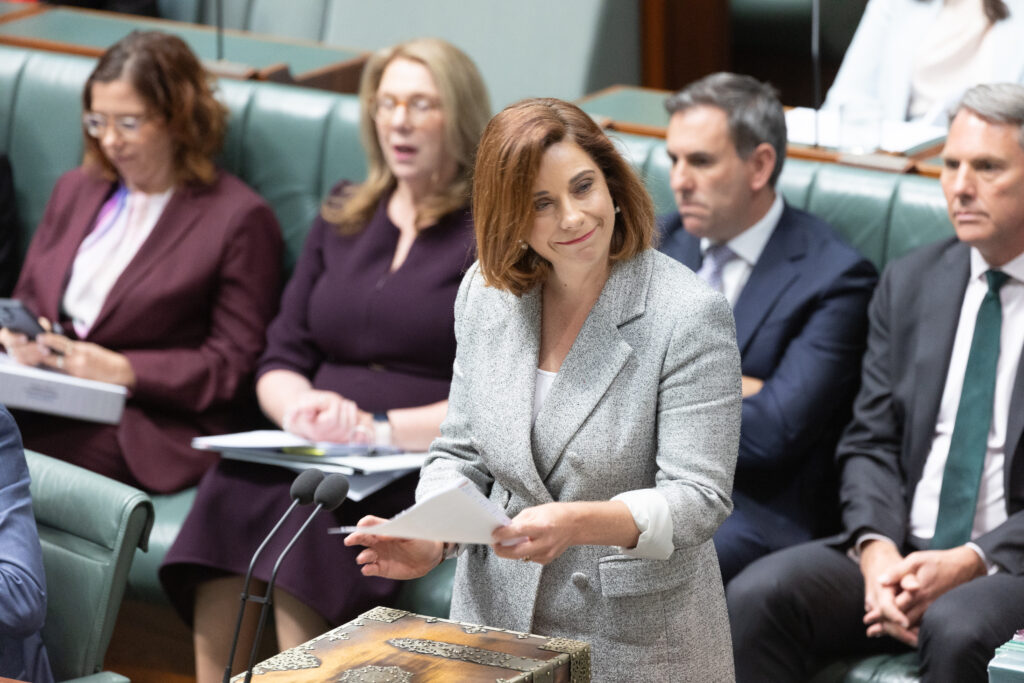
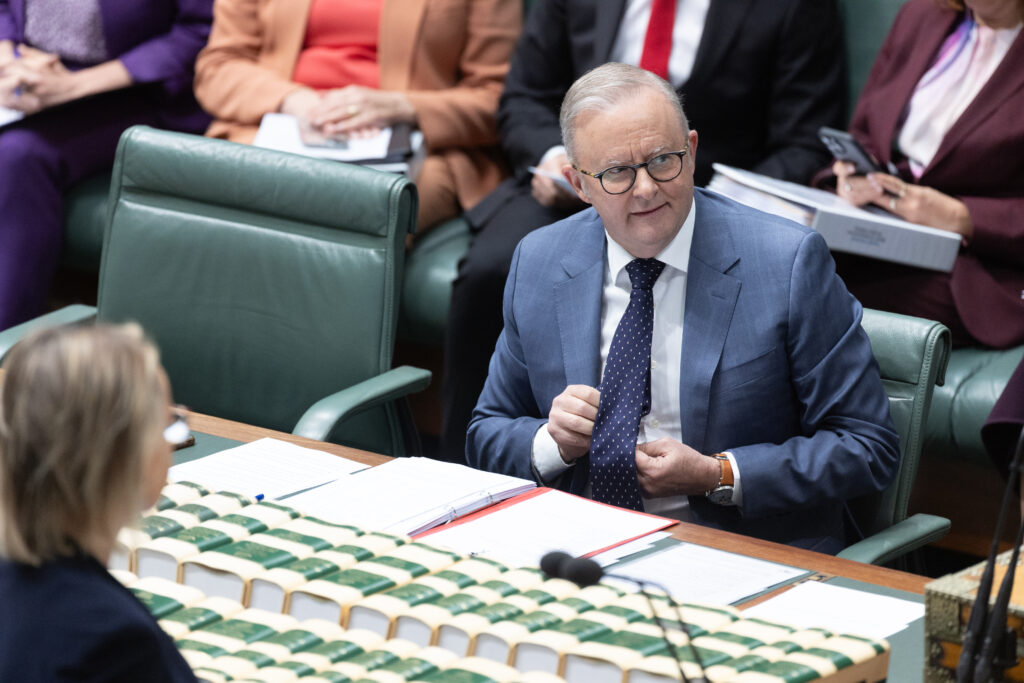
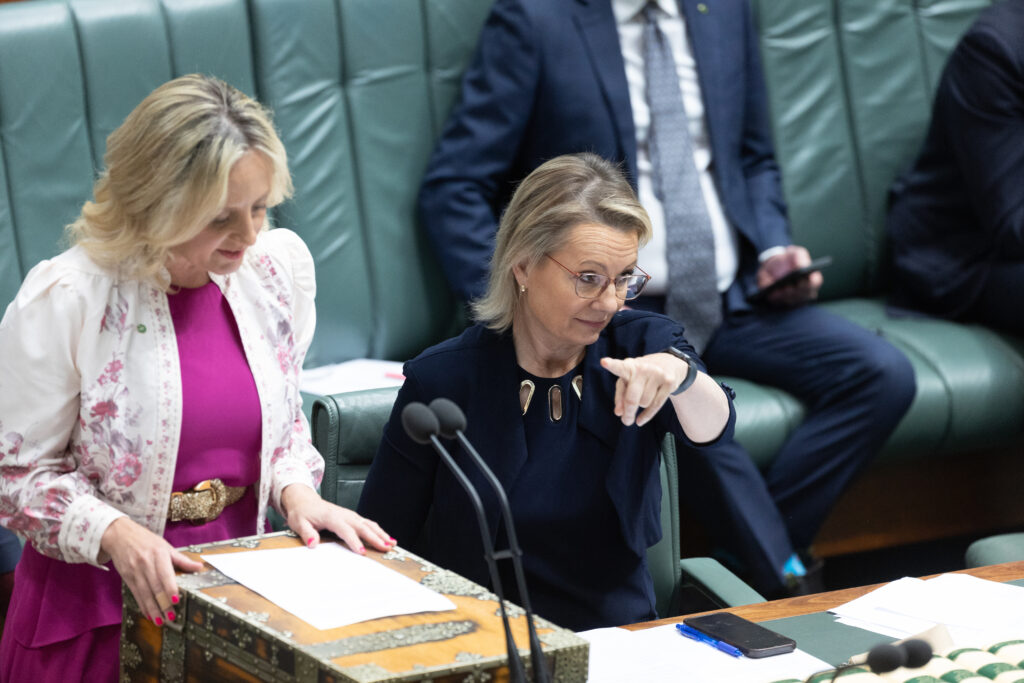
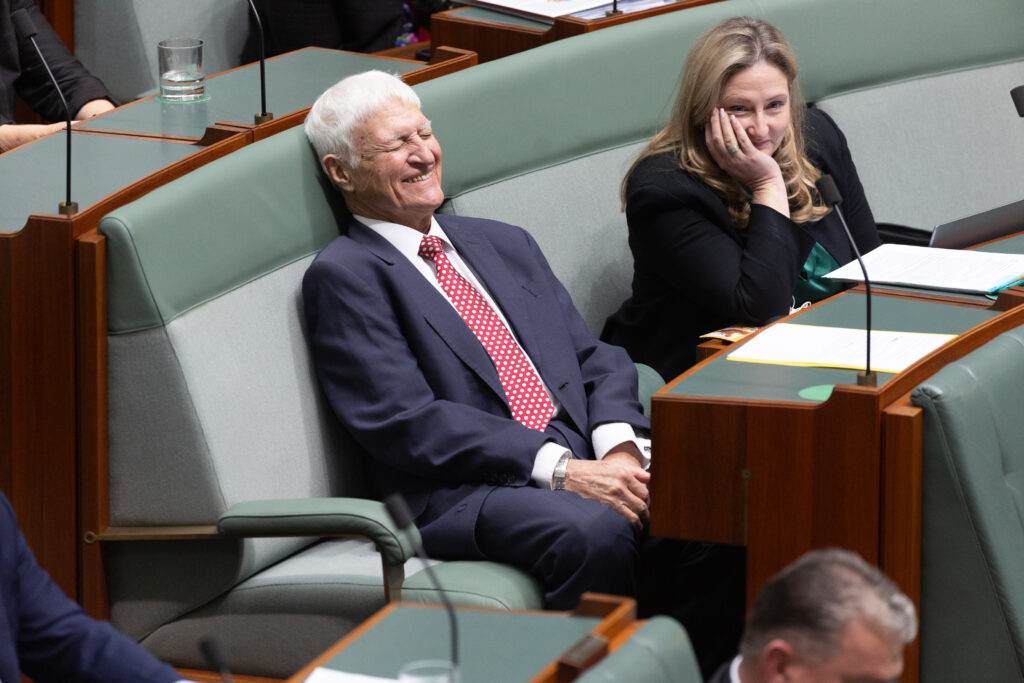
Here is some of how Mike Bowers saw question time:

Anika Wells during question time in the house of representatives in Parliament House
The Prime Minister Anthony Albanese
Opposition Leader Sussan and the Shadow Communications Minister Melissa McIntosh
Bob Katter Bob Kattering

Ed Husic is right

Labor MP Ed Husic, who was very strong on building up Australia’s manufacturing industry while he was industry minister – and who since being dropped from the cabinet has been making his views known on gas and other issues he thinks need more attention, has also dropped by the ABC’s Afternoon Briefing studio.

Q: We heard from Mark Vassella, the CEO of BlueScope Steel, saying a gas reservation policy is needed and other heavy industries say the same. I know a gas market review is under way. It is east coast reservation policy inevitable, something you have to do?

Husic:

I think so. If you look in the last decade, gas demand has fallen 20% and yet we are paying extraordinary prices for an Australian resource.

Australia averaging is $10 a gigajoule for gas. In Qatar you can get of a for $2.20 and in the US for $3, what BlueScope Steel pointed out today.

Part of the recent prices are so high is because we export a phenomenal amount of gas and a lot of foreign multinationals who are on a great deal do not want to have us get access to the uncontracted gas. We want to be able to get that as part of a reservation plan.

The other important point that people need to understand as well is we will have foreign buyers intervene in our market saying do not touch the gas arrangements, yet some of these countries are on selling the very gas they get from us, so Japan, for example, has on sold between 600 to 800 petajoules of gas, nearly double what we use on the east the coast.

Q: Yet knowing that Resources Minister Madeleine King has given a speech given great assurance to the Asian markets Australia is a secure partner for other Asian nations to seek energy security from which seems to suggest she does not want to interfere in any of the existing arrangements we have with those companies from places like Japan which are historically some of our biggest buyers of LNG.

Husic:

Yes and I think most Australians would think if you are buying that gas for your own use, we totally respect the need to hold a contract. But if they are on selling at a phenomenal rate to South Korea and Taiwan, for example, where some of the markets they are on selling to, nearly double what we use on the east Coast and we are paying incredible prices as a result, that is not good.

Q: Do you want a limitation on what buyers can then do with the gas they buy?

Husic:

The other point is this is not a one off. Japan has done this four consecutive years in a row where they have on sold Australian gas while telling us we should not have a right to intervene. My view is Australia needs to assert itself and we should have mechanisms like use it or lose it mechanisms. They are not using it for themselves and just profiting which is exactly what they’re doing, profiting from that gas while we are struggling and we have manufacturers like BlueScope Steel, Dulux and others trying to get access to competitively priced gas. That is an issue and we should assert ourselves.

Q: Should that be imposed on existing contracts because a lot of these are long-term contracts that will run for many years. Should that be imposed on contracts in place the now?

Husic:

I absolutely think if foreign buyers are not using it for themselves and are simply using it to make money by on selling it, we should have a mechanism to intervene.

We cannot have a situation where Australian manufacturers are put under such pressure because of the state of gas pricing. Interventions we have tried here, even the ACCC has redoubtable working, the gas trigger, gas code, heads of agreement, two times now the ACCC said we do not see evidence that is working. We will have to take a stronger stand and my view is the country, if it is serious about manufacturing capability, if we said we learn the lessons of the pandemic and needed to build capability, we need to take a stand to get access to a resource that should confer on us commercial and economic advantage.

For some reason, and I end on this point, for some reason we always seem to be browbeaten easily by either the foreign multinational set up approach setting up the contracts or by foreign buyers making money by answering the gas and we think our national interest [should] take a backseat …and despite having sand kicked in our face when we should be asserting; this is an Australian resource, our gas, our price should be the [set by us].

Alex Hawke, who had to step in and help save Sussan Ley’s preselection is now taking on a Praetorian guard role for Ley’s leadership. He has done several interviews asking for time and is now speaking to Mel Clarke on ABC’s Afternoon Briefing about some of the issues within the Liberal Party. Including the leaks. Jacinta Price had a bit of a spray on Sydney radio 2GB earlier today, but Hawke seems to be taking more of a gentle parenting approach.

[Ley] has a different culture and a different approach to the previous leader and that is you can speak your mind in the party room. I welcome it and people are speaking their mind. That comes at a cost sometimes it looks more messy however you do have to be able to speak your mind and if you are constructive colleagues I think I going to be receptive.

New forests needed to meet the 2035 emissions target

Frank Yuan
Postdoctoral Research Fellow

Yesterday at Senate estimates (the Rural, Regional Affairs and Transport Legislation Committee to be exact), Senator Bridget McKenzie has flagged the potential impact of tree-planting on agricultural land.

To achieve the Albanese Government’s 2035 emissions reduction target of 62 to 70 percent, Australia will need to remove a total of 100 million tonnes of carbon dioxide from the air by 2035, according to the CSIRO modelling on which the government’s target is based.

For a start, if Senator McKenzie and her colleagues are genuinely concerned about the impact on agriculture by either climate change or mitigation efforts, they would support policies addressing the root of the problem. That is, fossil fuel extraction and usage which put excess carbon in the atmosphere in the first place, and native forest logging which deprives the land of its natural carbon sink.

It makes no sense trying to scoop out water from a leaking boat without fixing the leak.

In answering Senator McKenzie, a Deputy Secretary of the Department of Agriculture, Fisheries and Forestry noted that, in the agricultural sector, existing technologies will have to do most of the emissions reduction work in the next 10 years, as other technologies gradually mature. By implication, tree-planting may be the most important way for land-use sector to capture carbon.

ABC’s Alan Kohler agrees: the most viable way to capture carbon for the immediate future is to plant new trees, over an area of about 10 million hectares, roughly half the size of Victoria.

Given Australia’s experience before, it’s crucial that the government carefully design any such program to ensure long-term efficacy. A tree-planting program had been carried out under the Abbott Government, resulting in about 30,000 hectares of revegetated forest by 2021, that’s only 0.3% of the scale needed to make the 2035 target possible.

That relatively small program had both conservation and carbon reduction as its objectives. But as experts have pointed out, the benefits were limited on both fronts. Because the government prioritised minimising “cost per tree” with its competitive grants for private providers, the planting of certain tree species (such as tropical rain forest trees) were hardly funded. It also meant that the funding was not specifically directed to areas with high potential for carbon capture.

If the Albanese Government is serious about meeting its 2035 emissions target, it will need to generously fund tree-planting projects, and to fund them according to a rigorous process so that the trees are planted where they grow the best and where they matter the most.

Mark Ogge

BlueScope Steel Chief Executive Mark Vassella has confirmed what The Australia Institute has said for years, that our governments have put the interests of foreign owned gas exporters ahead of Australians.

Australia Institute research shows gas exports have caused east coast gas prices to triple and electricity prices to double, causing the decimating Australian manufacturing businesses. The government could solve this tomorrow by forcing gas companies to supply Australians rather than exporting uncontracted gas to the global spot market

Mr Vasella has called out the gas export industry for its spurious claims of  “sovereign risk” at every suggestion of prioritising Australians instead of gas exports. He rightly identifies the real sovereign risk issue is the sovereign risk to Australian manufacturing caused by excessive gas exports driving up energy prices.

Australia Institute research shows that new gas projects will not solve the problem, and that the gas crisis could be solved immediately simply by diverting gas exports to Australians.

Mr Vassella also agreed with the Australia Institute and the ACCC that the Government’s tepid policies including the Gas Code, Heads of Agreements and Australian Domestic Gas Security Mechanism (ADGSM) have completely failed.

The Government has nowhere left to hide. Its decade of policy failure and letting foreign owned gas corporates trample the interests of Australians is on full view. It will finally have to prioritise the interests of Australians over gas industry profits. 

“The best solution is for the government to implement the ACTU’s policy of a 25% tax on gas exports. This would immediately ensure sufficient gas was supplied to Australians at reasonable prices and that Australians get a fairer return for the exploitation of our gas resources, raising around $12.5 billion annually for better health, education, and housing.

Question time ends – what did we learn?

Well, again not a lot.

The opposition feels like it has some meat on the 000 issue, which is understandable – it is a complete and utter failure, which has had devastating consequences for at least four families.

But it still can’t get a handle on the baser political instinct that exists within the Coalition’s senior leadership team, when it comes to how to handle these issues.

There are questions to be asked. Yesterday, Helen Haines showed us how that is done, asking about preparation to ensure there are no further outages during natural disasters.

The Coalition have valid questions over timing and when Anika Wells knew, as well as differences in the timeline presented to the parliament. To continue to tack on cheap politics about travel and to deliberately twist her answers to suggest a lack of empathy, is not just university grade politics, it speaks to the broader issues within the Coalition – that a thread of nastiness has seeped into how it carries out it’s politics, and that is one of the reasons it has been unable to arrest its fall off the cliff of relevancy.

I have been saying it for years – this is an issue that stretches back to how Howard changed the Liberal party and the impact that has had on the party leadership and direction as a whole. And now, so is the Australian’s editor-at-large Paul Kelly who wrote today:

The crisis transcends the Coalition parties – this is an intellectual, cultural and political crisis of the centre-right in Australia, 20 years in the making, with the nation since 2020 moving decisively to the left; witness Labor’s wins at the 2022 and 2025 elections and, more important, the collapse of a consistent, conviction Coalition policy stance.

The Liberals are increasingly divorced from the centres of cultural and opinion-forming power in Australia – the education and university sectors, the professional classes, much of the corporate sector, the climate change lobby and the renewable energy industries, the not-for-profit community organisations, the arts community, the public broadcasters, public sector employees, the trade unions and constituencies vital in shaping opinion – professional women and ethnic communities.

There was no sign today, or any day, that Sussan Ley knows how to handle this.

Anika Wells:

To deal with the various elements of it in regard to penalties; there is a bill before the house, the enhancing consumer safeguards built, it’s an amendment of humankind — telecommunications act and was introduced on 28 August, debated on the 4 September.

…The shadow minister for Women occasions spoke on this bill about enhancing consumer safeguards on the 4 September. She spoke about penalties on the 4 September. She spoke about her support for the increase to penalties, the increase to penalties up to $10 million and in some particular cases even more than that. She spoke in support of that work.

So I would contend it is confusing having done that on the 4 September to now bring an amendment to a different bill and object to us not supporting that amendment because we have already done this work which she has already supported in this place. Nonetheless…we can all agree surely that what happened in September was not good enough, and Albanese Government will always work to protect Australians and we will always work hold those who failed to deliver on their obligations to full account. There are several investigations under way now to this effect. In the telco fails Australians like Optus did, they will face real and serious consequences.

Real and serious consequences, Mr Speaker. There are no excuses. Telcos must deliver resilient and reliable000 services. That is their obligation under the law and that is the work we will continue to do on this side of the house to hold them to account.

For reasons known only to the universal deity in love with Queensland at the moment (understandably, it is is the greatest nation on earth) Bob Katter gets his second question for the week. Two days of Katter in a row. Aren’t we lucky.

Katter:

Prime Minister, grand final is over, Queensland won – sorry about that! Season is over, 1,000 North Queensland rugby league players are bored you know, an idle mind is a devil’s workshop. In some of the last jungles left on earth, 3 million pigs are destroying our fauna and flora. Please give the boys back their rifles and licence, I emphasise licensed, access to national parks. Prime Minister, now doomed cassowary and the North Queensland turtle. Give the boys back their air-rifle, you may eliminate some of the 2,000 million toads in North Queensland. Prime Minister, too late for the Rabbitohs, sorry, sorry. And don’t worry about the pests in this place, please would you worry about the pests in North Queensland?

Alex Hawke, who has the misfortune of not being a Queenslander has a point of order. It is not a point of order. The question about pests, is in order.

Anthony Albanese:

I’m concerned about pests, Mr Speaker. I assure the House of that. And I know that this is a really serious issue around our national parks and around regional – not just regional Queensland, but right around the country. I visited some time ago the Northern Territory with the Cattleman’s Association looking at the issue of feral pig there is is just devastating the country, and having a real impact on our wildlife and, therefore, it is something that we do take seriously. I will ask the member for the Minister for Agriculture to supplement, but I will say to the member for Kennedy that as a South Sydney supporter, we have been 43 years in a drought and we always have hope. We always have hope and we have something that those on this side of the House have in abundance, it’s called loyalty. (LAUGHTER)

Julie Collins gets the question and she is thrilled to have it:

I thank the Prime Minister for passing that question through from the – for Kennedy. Can I say… (INTERJECTIONS) ..to the member for Kennedy, I do appreciate and we had many discussions in-person about his love of the land in Queensland and his genuine commitment to improving land management in Queensland and his concern for invasive species because there’s no doubt they are having a serious impact in Queensland and elsewhere around the country. Which is why of course since coming into Government we have strengthened our biosecurity system because we want to stop more pests and disease from getting into the country and we invested $2 billion in doing that.

Etc, etc, etc

Sophie Scamps asks Mark Butler:

The former Director-General of the American centre for disease control, testified she was illegally sacked from the role by US secretary for health for refusing to fire top scientists at the agency or to preapprove changes to vaccine advice without evaluating the evidence. In her place the health secretary’s own deputy has been inserted into the role. Minister, will the Australian CDC be safeguarded from political interference by ensuring that Director-General must be appointed by a short list by an independent panel?

Butler:

Thank you to the member for her question.

Her engagement about this really important reform. As the member knows, as many in this House know, the lack of a single trusted source of advice and data was one of the very significant restrictions we had in our preparedness and our pandemic response.

That was the view of many public health organisations, it was the first conclusion of the independent COVID inquiry. That is why we’re currently debating legislation to introduce an independent CDC. It’s supported by all state and territory governments, supported by every public health organisation I’m aware of, supported by many members in this House. I’m not sure whether it’s supported by the opposition, they indicated at the last election they would not proceed with this, but it’s an important debate for this Parliament to continue to have.

The CDC will be an independent agency that operates separately from the Department of Health. The Director-General of the CDC is a very important role and many of its arrangements, its powers and functions, are set out in the bill that’s currently being debated by the House. It’s very important that the Director-General perform his or her functions at arm’s length from the Government. They will not be subject to direction from the secretary of my department or from the Minister or anyone else for that matter.

There are also importantly to the member’s question very limited provisions allowing the termination of the Director-General of the CDC and they are for misbehaviour or an inability to perform their duties due to physical or mental incapacity. Importantly, that person cannot be terminated for providing advice that the Government of the day does not agree with.

As to the appointment, the Minister for Health, in this case, must be satisfy that the Director-General holds appropriate expertise, qualifications or experience in public health matters prior to their appointment and the process of appointment will reflect the Government’s well-understood merit and transparency policy.

And that involves a selection being put together which in this case will probably involve the secretary of my department along with a nominee of the Public Service Commission and other potential representatives. They would undertake an interview process after advertisement, they would then provide a short list with a report on every short-listed candidate to the Minister for the Minister’s consideration and then the decision of the Government in the usual way.

I’m very confident that that provides a level of independence and assurance for the community that this person occupying a very important role in this new agency will have the appropriate qualifications and experience and the appropriate protections and independence from political interference. … All Australian children.

We are now getting into the very emotional areas with the Optus questioning.

Melissa McIntosh asks:

I refer to the Minister’s previous answer where she refused to address whether welfare checks had been conducted. It is an open secret in the press gallery that Labor MPs are complaining to journalists the Minister continually fails to show any compassion for victims. Today – secret emails have revealed the Minister’s office was aware of this crisis 24 hours before the time which the Minister told the House she found out. Yesterday, the Minister refused to apologise for this failure. Will the Minister finally now apologise to victims and their families

She has to ask twice because the interjections are so loud.

Anika Wells:

As I said in an earlier answer, the information that Optus provided to my office on 18 September was that there had been a minor outage that affected 10 calls, that had been resolved and most importantly that there were no adverse impacts on any person. With respect to the more catastrophic outage that affected 631 calls and potentially with links to three deaths, potentially four deaths as we found out on Saturday, I inquired as to correct process about dealing with families in this situation. I was advised that emergency services is the correct and proper agency we use to reach out so that’s what happened. I also spoke to the Premiers of South Australia, of Western Australia, and the Chief Minister of the NT numerous other people across that weekend as we all worked on our collective response. Of course, I would absolutely meet with affected families if that’s what they wished. I am respecting their space. There are, of course, many sensitivities here and I’m not going to make their lives harder by politicising their grief in this place as you have now done two days in a row.

Independent MP Monique Ryan has the next non-government question, which means we actually get something on policy. It’s to health minister Mark Butler:

Minister, Australian medical researchers and universities are struggling to survive while your government is releasing less than half of what it could spend from the medical research futures fund. The Parliamentary Budget Office says that you could spend up to 1.4 billion a year while still keeping $24 billion in a fund which was never intended to hold more than $20 billion. Why won’t you release taxpayers’ money for the purpose for which it’s been set aside?

Butler:

I thank the member for her question as a paediatric neurologist…she understands this area very well and has been a strong contributor to a debate about the future of health medical se that I’ll come to that includes the questions of dispersements from but goes more broadly than that.

The RMF was set up about a decade ago not just to add more money to our health medical research sector from Government but also to take a slightly different approach. Not only to have funding flow essentially bottom-up from investigated initiator applications to the NRMHC but other countries that set out particular priorities that would be through a priority fund. It means now we’re funding about $1.5 billion of medical research, health and medical research projects every year, when I set up the review that set – that set the NRMHC in motion that was about $650 million. So more than double the amount of funding going in. $850 million, the member looks confused, $850 million from the mRNA, the account and the about $650 million per year from the NMRF. As the member knows $650 million has been the annual dispersement from the NRMF for some years now.

The member also knows the department of treasury and finance conducted its statutory review after 10 years of the MRNF, that review has been published over the last couple of eweeks and raised a number of issues around the funding from the NMRF including the annual dispersement amount. More broadly than that, as the member knows, we are in the process of receiving a national strategy for health and medical research that’s been prepared by Rosemary huxble, a very esteemed public servant.

This has been a big asked from the health and medical research sector to have an overarching national strategy. Ms Huxble has released a draft strategy that’s out for consultation now. I encourage the member and other interested members to engage with that. We have asked Ms Huxble to deliver the final strategy to Government by the end of the year and that strategy obviously along with pieces of work like the 10-year review commissioned or delivered by the departments of treasury and finance will guide the government’s future thinking

Melissa McIntosh is back:

Noting the Minister’s determination to hold Optus to account, why did the Minister express confusion about the opposition’s amendment to double the maximum penalty for getting things so badly wrong on behalf of the Australians dialling 000? Will the Minister review her decision and act to double this penalty as the opposition has suggested.

Anika Wells (who would most likely be seeing this week as a bit of a chance to prove that she is battle tested) says:

I’m sure as the Shadow Minister for Communication she would recall that a few sitting weeks ago, we introduced the enhancing consumer safeguards legislation to this place where we enhanced penalties for telcos doing the wrong thing by 40 times. So penalties are now up to $10 million and more, in particular situations. I believe and I believe with her support this House is already considering penalties. And I offer in good faith if that is a live issue for you given the House – this bill is before the House we can continue to work on penalties where it is already tabled in the House.

After another dixer on climate and renewables (gee, wonder what message the government is trying to send with these questions)

Nationals MP Anne Webster asks:

A chain of emails revealing the Minister’s personal office’s knowledge of the escalating 000 outage crisis on 18 September included alerting the Minister’s office to the fact that, quote, “Welfare checks will be made.” Did the Minister take any actions to satisfy herself that those welfare checks were being conducted or the wellbeing of those impacted, for examples by phoning to apologise to affected people and their families?

Anika Wells:

The information that Optus provided to my office on 18 September was that there had been a minor outage, it affected 10 calls, that it had been resolved and most importantly, that there were no adverse impacts on any person. My office sought assurance that ACMA had been informed, ensuring that the regulator was investigating that incident, and ACMA has publicly confirmed that they were informed.

Back to the questions.

Melissa McIntosh asks Anika Wells:

Minister, when you were advised of a 000 outage that your department had no idea about, why didn’t your office raise it with your department immediately?

Was it because you were planning your well-publicised trip to New York?

Wells took a delegation, which included parents who had lost children to suicide, to speak on Australia’s social media laws at the UN general assembly in New York.

As expected, there are now points of orders about these questions – this time over the use of ‘you’ (not allowed in the standing orders) which is a bit ridiculous, but indicates the government is getting pretty annoyed about it all. Which the opposition will take as a win.

Wells:

As is the matter offer public record, became aware of the major Optus outage on 19 September at approximately 4:30pm after my office was contacted by Optus. Through my office, I received briefings and information following the Optus press conference. Overnight, I made arrangements to delay my trip to gather information and inform premiers and the Australian public which I did at a press conference on Saturday. And we can agree this is a tragic circumstance. People have lost loved ones and that hardens my resolve.

My department, my office, will pursue this with absolute rigour. You have every right to raise these questions, but I am not led by the opposition, I am led by Australians, by telco customers, and by ensuring that this system is as safe as it possibly can be and ensuring all telcos including Optus treat this as too important to fail.

Trump’s plan no path to lasting peace

Angus Blackman
Executive Podcast Producer

After several failed attempts at brokering a ceasefire, President Donald Trump, alongside Israeli Prime Minister Benjamin Netanyahu, announced a 20-point peace plan for Gaza.

On this episode of After America, journalist Antoun Issa joins Dr Emma Shortis to discuss the prospects for a deal that did not include Palestinians in the negotiating process. They also discuss the role of the United States in the Middle East, how power works in foreign policy, and opening up space for a bigger discussion about foreign policy here in Australia.

The opposition have not asked any questions about the Australians who have returned home from Syria, which the Coalition, with News Corp’s help have labelled ‘Isis brides’ despite hard right members of the Coalition trying to make this a major security issue.

Australians are able to return to Australia. That’s citizenship law. Does that mean that security agencies are not involved? Of course not. Does that mean that there won’t be any investigations into possible crimes? Also of course not. Australian law still applies. In front of Australian courts.

The only area where Sussan Ley has any authority over her party is the question time pack. She can decide which questions are asked. And despite members of her party pushing this issue for months, including this week at estimates, the Coalition have not asked any questions about it.

But now Dai Le has.

The independent MP asks Anthony Albanese:

Prime Minister, recent media reports state that your Government had no involvement in bringing the back the ISIS-affiliated group. My community in Fowler, home to large Assyrian, and man dayian and other communities who are all persecute and subjected to genocide by the ISIS regime is rightly terrified. Will your Government give my community in Fowler an absolute guarantee that none of the returned ISIS affiliated women and children will be settled in our community?

Tony Burke takes this one:

I thank the member for Fowler for raising this issue in the House. Those opposite have given the impression in the media they were going to, but once they get in here, appear far some reason unwilling to raise the issue.

If I start… (INTERJECTIONS) If I start with this principle… (INTERJECTIONS)

First of all, as the Prime Minister has made clear, there has been no repatriation. So when the question at the end of that for the member for Fowler refers to the Government settling people, the Government is not settling people.

The Government is not involved in settling people. What we have is a situation where we have a number of Australian citizens who made a terrible decision, an absolutely dreadful decision, to go off and join and, you know, join others who were involved in what has been described as some of the most – one of the most horrific organisations that the world has (INTERJECTIONS) seen.

This is not the first time that Australian citizens who made that decision have returned. When Australian citizens seek to return to Australia, they are able to do so. Now, this is not the first – there have been two times that there were repatriations.

One under this Government and one under the previous Government. But there have also been repeated occasions where people have returned of their own volition. Those opposite seem to have forgotten the number of people who returned to Australia of their own volition in exactly this way while they were in office.

And while – while the discussion has been about women and children who have recently returned, those who returned under those – and this is in their own words from question on notice – include some who fought for ISIL, a few who would join other Islamic extremist groups, others who provided support for sigh ISIL and returned in exactly this way and that was a group of around 40 people in a question on notice that those opposite appear to be wanting to forget.

The thing that is consistent throughout all of this – and this is why I’m glad the member for Fowler has raised it – is our security agencies are constantly engaged. Constantly engaged. And every conversation that you would expect the Minister of Home Affairs would have with those security intelligence agencies about making sure that Australians are safe, you are guaranteed is happening and our agencies are working with the full professionalism you would expect.

There are some feisty little puppies in the chamber today, given the number of interjections coming from all sides.

Anthony Albanese takes a dixer where he talks about the government’s climate target (weak as it is) so he can drop a bucket of excrement over the Coalition’s absolute batshittery.

Since July 1, of course, as the Minister has proudly informed the House just minutes ago, we’re now up to more than 80,000 home batteries being installed. Now what that is doing is storing the energy that comes from our roofs that have the highest per capita rate of solar panels in the world and making sure panels in the world and making sure – making sure that you get the permanent reduction. Now, 94% of ASX 50 companies are committed to net zero. 94% because they recognise it’s good for their business as well as good for the environment.

Everyone is doing their bit except, of course, for those opposite who are busy interjecting. They’re the only people who aren’t on board with this. They’re stuck in the past and they’re too busy getting stuck into each other to worry about Australia’s national interest.

Sussan Ley is back:

Yesterday, the Minister told the House that the Government made no error in the 000 crisis and that it was, quote, “The facility of Optus and Optus alone.” But today, when the Coalition moved an amendment to double the maximum penalty for a telco company to $20 million per offence, the Albanese Government shamefully voted it down Shame.

Minister, if Optus and Optus alone is to blame, why did Labor vote against the interests of Australians who just want 000 to work when their lives are on the line?

Anika Wells:

I thank the Leader of the Opposition for her question. As I noted when these amendments were moved earlier today, we were keen to engage in good faith on potential amendments but unfortunately that was not reciprocated by the opposition who then pulled a Parliamentary stunt. However, since then, we have had a bit of time too look over the proposed amendments by the member for Lindsay and I must say unfortunately for all of us, they are quite poor.

In relation to the proposed amendment to the Security of Critical Infrastructure Act 2018, at best the amendment is completely redundant. The current definition of critical telecommunications asset already capture it is infrastructure the amendment is targeted towards.

At worst, the amendment would extend the critical of communications asset far beyond its intent. The proposed insertion of a telecommunications network that is used to supply an emergency supply service is untethered to the concept of carriers an carriage services and does not define what an emergency call service is and so it potentially capture any system, or series systems.

Question time begins

Anika Wells has had to address some wrong information she gave at a press conference regarding the Optus failure, which she says came from the telcos:

I spoke about that incorrect information that Optus provided to my office and to the ACMA regulator on Thursday, 18 September, that transcript is available on my website if you would like. That advice that Optus gave to both my office and ACMA on Thursday afternoon was clearly incorrect. It was inaccurate and it was misleading. That is why we have put in place changes that will be further strengthened on 1 November when a new ACMA determination takes effect. It will mean that telcos must immediately share information relating to outages with relevant emergency service organisations, police, fire, ambulance, and the regulator and people who are relevant. So I have asked and telcos have agreed to start that early.

Rod Campbell
Research Manager

In news just in, online gambling companies are bad…at paying tax.

We’re still sifting through last week’s ATO corporate tax transparency data, and here’s what we just found for the couple of online gambling companies listed.

Looks like Aussies have lost about $4.5 billion with these two charmers over the last two years and they’ve managed to pay not a cent of company tax.

Could it be time to do something about online gambling in Australia?

BlueScope managing director and CEO Mark Vassella has addressed the national press club on how gas prices are choking Australia’s manufacturing sector (no lies there).

Here is a bit of the Q and A:

Q: I will begin with two words you are probably sick of hearing when it comes to gas prices – bear me – sovereign risk.

The way that you outline it there, to simplify it – is it that when we might be dealing with these companies and countries the message would be, going from getting the deal of a lifetime to still a very good deal. And that’s what should be manageable about sovereign risk? Is that a simplified version of why you think this would be something that we could pull off as a country?

Vassella:

Yeah, I think that we need to be really careful with the term “sovereign risk” or those two words, and I think that it gets used for reasons to justify an argument, of course. But the first thing that I would say is – many LNG producers operate in countries that just naturally have a much greater sovereign risk than Australia does. We have a fabulous economy, law, principles, values, so we’re naturally lower sovereign risk right from the get go.

What also concerns us is – people talk about redirecting supply and the damage that would do to our trading partner, and as I said, that is not from our perspective, something that we think is appropriate.

But there’s enough uncontracted gas to be redirected that we think could occur, make a change for the Australian economy and not create any sovereign risk. The other point I’d make is that right now, we’re facing into a serious sovereign risk when it comes to our manufacturing capacity. We are potentially going to lose that and de-industrialise, and there’s a serious sovereign risk that comes with that.

Bob Katter, the independent MP for Kennedy, which takes in Mt Isa, has welcomed the taxpayer funded bail out of the Glencore smelter. He’s singled out the minister for industry, Tim Ayres for a special thank you, but he also wants more than $600m.

We must put on record our appreciation of the involvement by the Minister. [Queensland KAP leader] Robbie Katter said the [Queensland] Premier too has been helpful, but this game is not over. It is just starting. This proposal is a Band-Aid on a compound fracture. It might staunch the bleeding but it ain’t going to fix your leg.

We must thank all the people who came to our meetings and put shoulder to the wheel here. Thank you to all fighters for their role in achieving this stay of execution, particularly the Mayor of Mount Isa, Peta McRae, Townsville Enterprise Limited, CEO, Claudia Brunne Smith, Paul Farrow from the AWU, Maria James, CEO of MITEZ and all those other fighters who have not slept a wink over the past few months in their effort to save our town and Townsville’s industrial base.

To Glencore I say congratulations for out-negotiating not one government, but two. I take my hat off to them, these two governments have made a $600m bet that Queensland’s minerals economy is going to be much stronger by the time the next election comes around. How convenient.

Another phrase comes to mind. Danegeld. For those that aren’t familiar with this, it was a tax levied by the Anglo-Saxons to pay off Viking invaders of England.

We will eager learn more about this ‘transition authority’ they have proposed.

We are pleased to be fighting another day but are fired up by this decision and it has made us more aggressively and relentless on pursuing a reserve resource policy for gas.

A $600 million Band-Aid is helpful, but we need an outcome that solves the source of the problem.”

View from Mike Bowers

Here is a bit of how Mike Bowers has seen the day

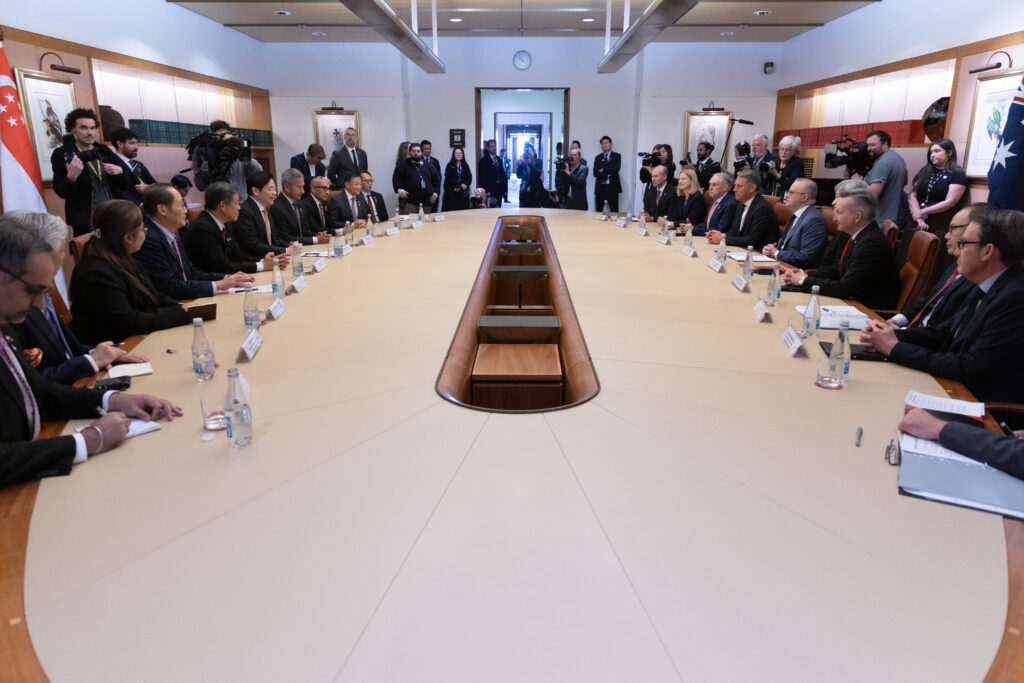
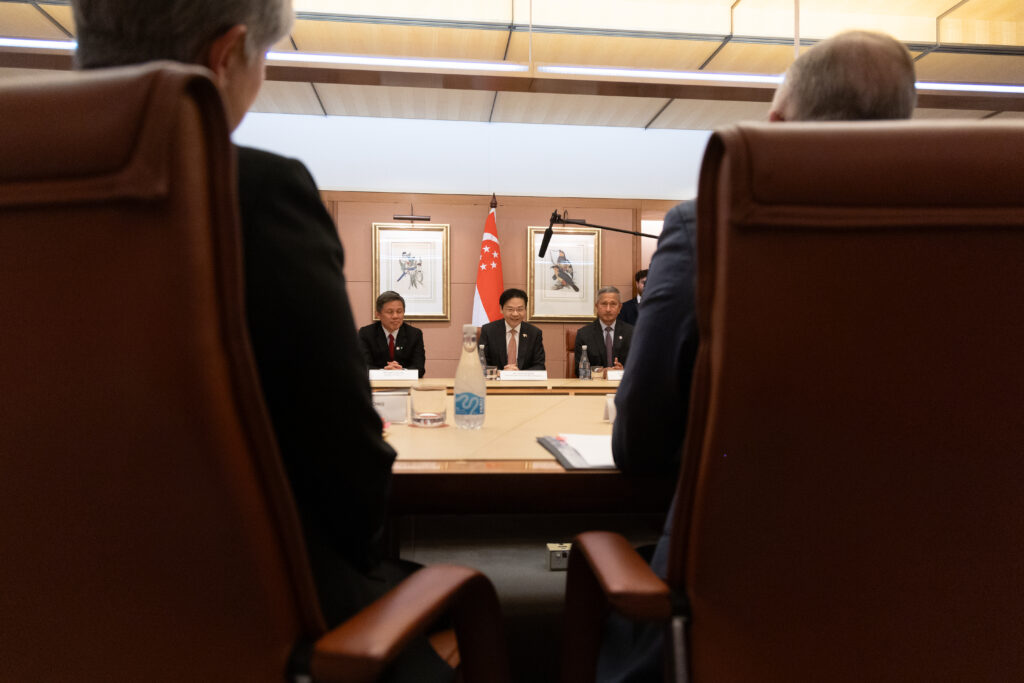
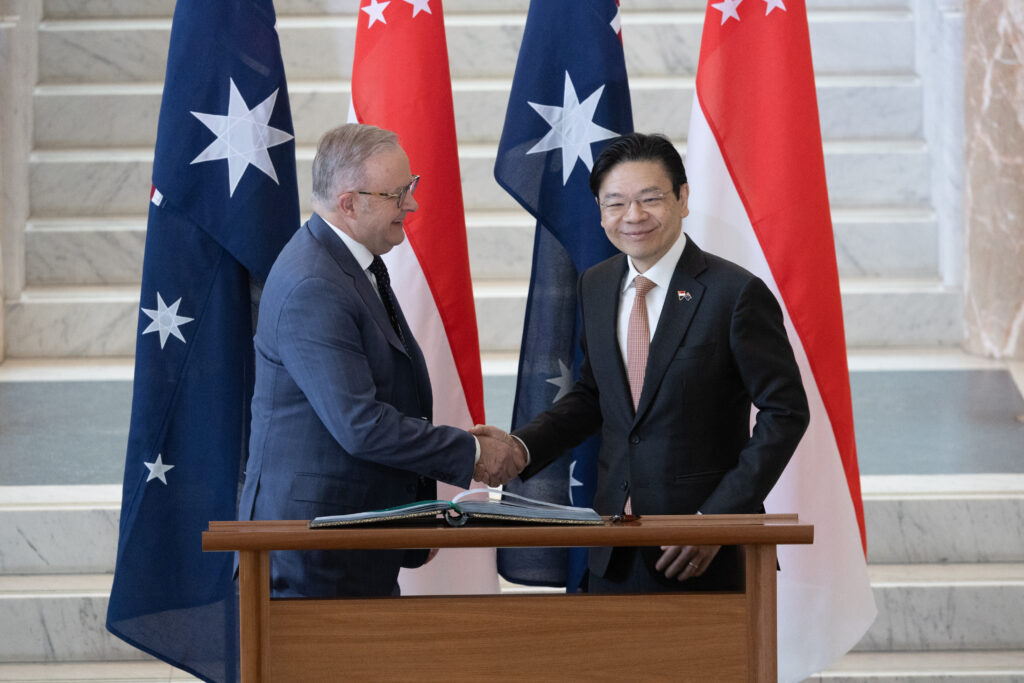
The Prime Minister Anthony Albanese meets with the Prime Minister of Singapore Lawrence Wong in the Cabinet Room of Parliament House in Canberra this morning. Photograph by Mike Bowers.
Prime Minister of Singapore Lawrence Wong in the Cabinet Room of Parliament House
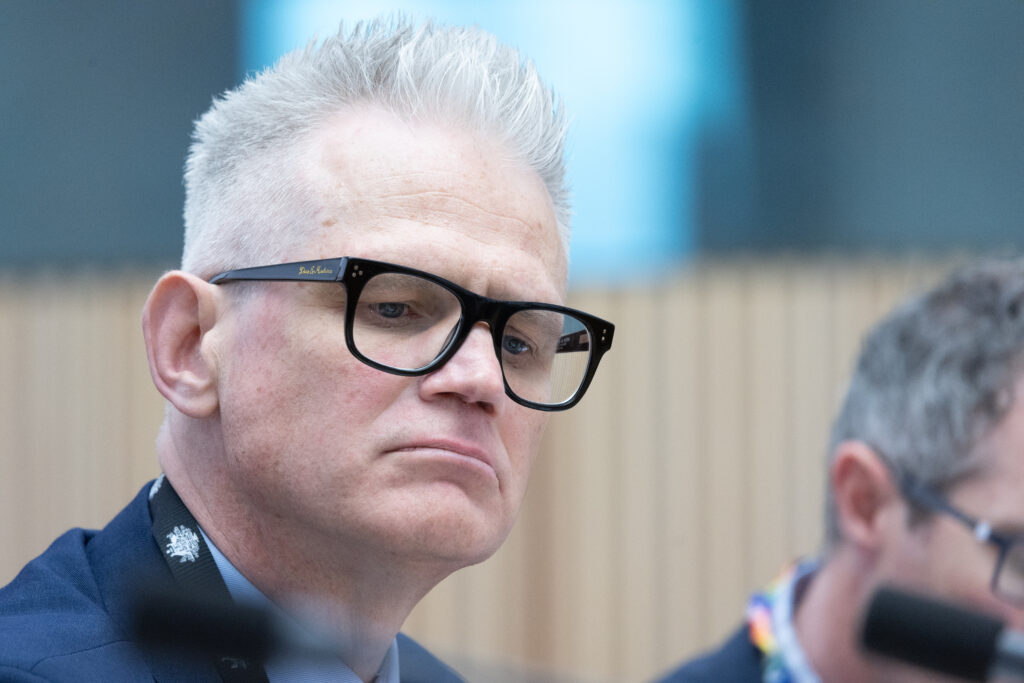
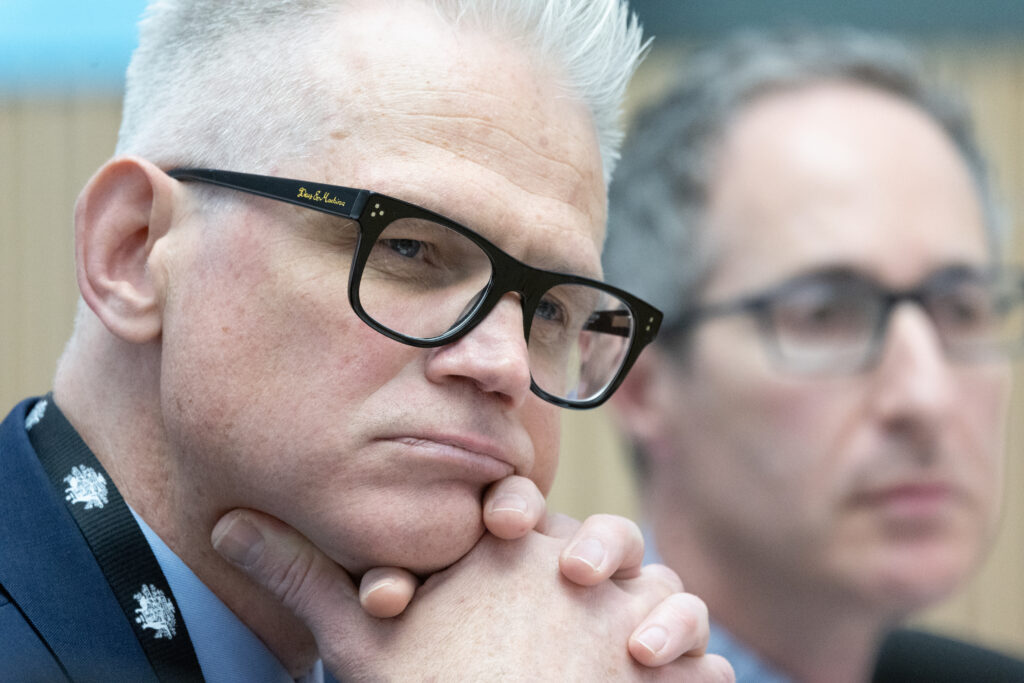
The deputy secretary of the Department of Communications, James Chisholm before the Senate Environment and Communications Legislation Committee this morning, he told Senate estimates Optus sent information about triple-zero outages in two emails – to an incorrect address.
Probably not his favourite day at work

Thanks to our friends at AAP we have an update from Agriculture estimates:

The former head of Australia’s agriculture department was paid out nearly $900,000 upon his sudden departure, as the government insists he left on amicable terms.

Agriculture Minister Julie Collins announced department secretary Adam Fennessy would leave his role in September, two years into a five-year term.

“I wish Mr Fennessy all the best with his future endeavours,” Ms Collins said on September 4, crediting him for stabilising the department during a transitional period.

During a Senate estimates hearing in Canberra on Wednesday, acting secretary Justine Saunders said Mr Fennessy was paid out $899,620, or one year’s salary minus superannuation.

Changes in executive roles across government departments were not unusual, Ms Saunders insisted.

“Both the minister and Mr Adam Fennessy, on his departure, made very clear that Mr Fennessy left under amicable circumstances,” she said.

Nationals Senator Matt Canavan asked whether Mr Fennessy was fired, given that he was compensated under a particular clause in the Public Service Act that deals with the termination of department heads.

It was the department of prime minister and cabinet that oversaw the end of Mr Fennessy’s role, not the agriculture department, assistant minister Anthony Chisholm said.

“They’re not issues that we were directly involved with,” Senator Chisholm told the hearing.

“I don’t think it’s helpful to speculate, particularly when we are talking about an individual that has been impacted by this.”

Mr Fennessy, who previously led primary industries, environment, water and planning departments for the Victorian government, said he was proud of his work to shake-up the federal portfolio during a Senate hearing in 2024.

“My focus … continues to be leading an efficient and focused department that delivers on Australian government priorities and, importantly, the needs of the Australian agriculture, fisheries and forestry sectors,” he said in November.

“Our significant departmental transformation program is continuing. We have engaged staff internally to lift our capabilities across a range of areas, and the department is on a sustainable financial footing.”

Ms Saunders would act in the role for three months, while recruitment for Mr Fennessy’s permanent replacement continued.

Tasmanian government ‘delusional’ over stadium: Tas Greens

The Tasmanian Greens are NOT happy with the Tasmanian government’s response to the stadium review:

Vica Bayley MP, Greens Acting Leader said:

The Liberal Government are utterly delusional in their response to the Tasmanian Planning Commission’s unequivocal recommendation that the stadium should not be built. There is nothing in this response that offers any credible answer to the multiple, profound negative findings of the expert panel that the Premier himself established.

The Liberals’ response, designed to replace the facts with spin, is convincing no one. Their so-called positive impacts were already put to the Planning Commission and have been roundly rejected in their cost-benefit conclusion.

The Planning Commission were clear – the stadium should not proceed. It will be a budget black hole, accumulating $2 billion of debt within the decade.

The Commission found that Tasmanians will be worse off as the government is forced to up taxes or cut services to pay for the stadium.

This Government response does nothing to clarify exactly how Premier Rockliff will pay for this.

With health and housing services already underfunded, Tasmanians simply can’t afford a stadium. The Premier needs to remind himself who he’s working for. Are Labor really going to keep letting the Premier get away with this?

The Australia-Singapore annual leaders’ meeting has resulted in a VERY long agreement which you can find below (if you like scrolling, you’ll enjoy this)

JOINT DECLARATION BY THE PRIME MINISTERS OF AUSTRALIA AND SINGAPORE ON THE COMPREHENSIVE STRATEGIC PARTNERSHIP 2.0

  1. On the occasion of the 10th anniversary of our Comprehensive Strategic Partnership (CSP) and the 60th anniversary of diplomatic relations, we the Prime Ministers of Australia and Singapore announce today the launch of our enhanced bilateral CSP 2.0. This CSP 2.0 will better prepare our economies and societies for challenges and opportunities now and in the future, and extends our cooperation further to engage effectively with our regional partners. It includes strengthened and new initiatives to be implemented over the next ten years under five common objectives.
     
  2. Since the launch of the CSP in 2015, we have deepened economic engagement and cooperation and forged new pathways in frontier areas such as the digital and green economies. Our longstanding defence and security cooperation contributes to a stable and peaceful region. The strong ties between our peoples underpin the bilateral relationship and have continued to strengthen through education, research, science, culture and the arts and business ties.
     
  3. Australia and Singapore celebrate our longstanding friendship based on deep strategic trust, respect and shared global outlooks. We recognise our common history and future focus as Indo-Pacific nations.

Contributing to Peace and Stability, At Home and In Our Region

  1. Australia and Singapore share a vital interest in the peace, stability, economic growth and development of the nations of Southeast Asia and the wider Indo-Pacific region. Both our countries recognise and support the central role of ASEAN and the ASEAN-led regional architecture. We underscore the importance of an open, inclusive, resilient and rules-based region, which promotes free trade and open markets, and where differences are resolved peacefully in accordance with international law.
     
  2. We value our enduring defence and security partnership which has been strengthened with the 2020 Treaty on Military Training and Training Area Development. Building on the successful joint development of the expanded Shoalwater Bay Training Area (SWBTA), we will enhance our respective militaries’ reciprocal access to defence facilities in Australia and Singapore. This will include expanded access for the Australian Defence Force (ADF) in Singapore in support of its regional presence and increased access for the Singapore Armed Forces (SAF) to training areas in Australia, including SWBTA. We will further strengthen defence cooperation by:

    5.1 Deepening and increasing the complexity of defence science and technology collaboration;

    5.2 Expanding professional defence exchanges and collaboration between both militaries; and 

    5.3 Enhancing mutual collaboration and strengthening linkages between our defence supply chains and logistics ecosystems.
     
  3. In accordance with these lines of effort, our Defence Ministers have signed an MoU concerning Enhanced Defence Cooperation. The signing of the MoU demonstrates our shared commitment to strengthen our close and longstanding defence partnership.
     
  4. We value our ongoing security cooperation and policing cooperation on shared areas of interest, including countering terrorism and violent extremism, border and civil maritime security, national resilience, building resilience against foreign interference, disaster and emergency management, and combatting transnational, serious and organised crime. We will further strengthen and broaden our national security cooperation and policing cooperation by:

    7.1 Continuing to build and expand cooperation under the newly established Australia-Singapore Security Dialogue;

    7.2 Implementing the MoU on Cooperation in Security Matters between the Department of Home Affairs of Australia and the Ministry of Home Affairs of Singapore; 

    7.3 Strengthening collaboration on immigration and border management through the Border of the Future Partnership;

    7.4 Implementing the renewed MoU on combating transnational crime and developing police cooperation between the Singapore Police Force and the Australian Federal Police, and the MoU on operational science and technology between the Home Team Science and Technology Agency and the Australian Federal Police; and

    7.5 Implementing the MoU between the National Emergency Management Agency of Australia and the Singapore Civil Defence Force for cooperation on emergency management and disaster risk reduction.
     
  5. We are committed to supporting the rules-based multilateral system to deliver on its core functions and mandates, and to uphold the rules, norms and institutions that underpin prosperity and security in our region.
     
  6. We affirm the importance of working closely with partners in ASEAN to promote a stable, peaceful and prosperous region.

    9.1 The Foreign Ministers have signed an MoU on the Singapore-Australia Third Country Training Programme to jointly extend technical assistance to Southeast Asian countries. We will also deepen development policy discussions between the Department of Foreign Affairs and Trade of Australia and the Ministry of Foreign Affairs of Singapore, with a view to regularise discussions at the senior officials’ level.

    9.2 We will work together on conflict prevention in the region, including through regular expert-to-expert exchanges, to build our collective capacity to maintain the conditions for peace and stability.

    9.3 In this 25th anniversary year of UNSC resolution 1325, Australia and Singapore underline our shared commitment to the Women, Peace and Security (WPS) agenda, including through implementation of the ASEAN Regional Plan of Action on WPS.
     

Connecting Our Economies

  1. We affirm our enduring partnership and shared commitment to deepening economic integration in the Indo-Pacific and beyond, especially in the face of growing geoeconomic uncertainty. We underscore the importance of upholding the rules-based trading system and a resilient, inclusive and open multilateral order. We will continue to build on the upgraded Singapore-Australia Free Trade Agreement, in addition to the various multilateral platforms Singapore and Australia are party to, such as the ASEAN-Australia-New Zealand Free Trade Area, Comprehensive and Progressive Agreement for Trans-Pacific Partnership, Regional Comprehensive Economic Partnership, Asia-Pacific Economic Cooperation, and Indo-Pacific Economic Framework for Prosperity. Through enhanced collaboration in sectors of shared importance, we will aim to unlock new opportunities for businesses, while reinforcing a
    rules-based, open and inclusive regional economic order.
     
  2. Our Ministers have signed an MoU on Economic Resilience to expand collaboration and strengthen economic resilience. We will work towards negotiating an Arrangement on trade in essential supplies by end 2026, and will explore options for a future legally binding commitment involving bilateral arrangements such as consultation and early notification in case of potential disruptions. We will establish the Australia-Singapore Economic Resilience Dialogue.
     
  3. We have a long and trusted food partnership and established a Food Pact in 2023 to increase cooperation in food trade, safety, and research innovation. We look forward to strengthening food supply resilience, including through facilitating agri-food investment opportunities between our two countries and the ongoing joint development of the Simplified Transshipment Model for red meat to encourage trade and distribution of Australian food products through Singapore to the wider region.
     
  4. We will expand cooperation in trade and investment to support Australia and Singapore’s commercial interests in each other’s economies. We will continue to work together on wider and mutually beneficial cooperation by leveraging Singapore’s strong connectivity and ties with Southeast Asia and Asia, as well as through “Invested: Australia’s Southeast Asia Economic Strategy to 2040” which is deepening two-way trade and investment between Australia and Southeast Asia. We acknowledged the role of Australia’s Investment Deal Team in Singapore and the Southeast Asia Investment Financing Facility (SEAIFF), which have facilitated Australia’s AUD175 million investment in the Singapore Government’s Financing Asia’s Transition Partnership (FAST-P). Similarly, the Future Made in Australia (FMA) agenda will create opportunities to further cooperation with the region in priority sectors.
     
  5. Our closer economic relationship has facilitated the establishment of a bilateral Digital Economy Agreement, a first-of-its-kind Agreement globally. We will continue to promote cross-border data flows and to secure a permanent multilateral moratorium on customs duties on electronic transmissions. We will review the Singapore-Australia Air Services Agreement that enhances connectivity and business exchanges between the two countries.
     
  6. We will unlock new deltas of partnerships between EnterpriseSG and Australia by leveraging the unique strengths of Australian states and territories.
     
  7. We will work closely to preserve and strengthen the rules-based multilateral trading system, with the World Trade Organization (WTO) at its core, to provide meaningful impetus to respond to current trade challenges, take advantage of available opportunities, and ensure the WTO’s proper functioning. This includes continued partnership as co-convenors of the WTO Joint Statement Initiative on E-Commerce, as we proceed towards incorporating the E-Commerce Agreement in the WTO legal framework.
     

Transitioning to Net-Zero

  1. We will deepen cooperation to support ambitious action on climate change and achieve our respective commitments under the Paris Agreement. Building on our strong complementarities, we will work closely to take advantage of the enormous economic and industrial opportunities as the region moves to net-zero, and to strengthen regional economic, climate and energy resilience.
     
  2. Recalling both countries’ shared commitment to growing renewable energy capacity and the importance of cooperation in trade and investment to accelerate the region’s clean energy transition, we will hold a Ministerial Dialogue on Energy. Recognising the role of LNG in the energy transition and Australia’s role as a reliable energy provider, we will continue cooperation to support the stable supply of natural gas as the region transitions to net-zero.
     
  3. We will deepen collaboration under the Singapore-Australia Green Economy Agreement with new and refreshed initiatives to support energy security and transition to net-zero emissions by 2050. Australia and Singapore will also:

    a. Work towards a legally binding bilateral instrument for the cross-border movement of carbon dioxide for offshore geological sequestration, so as to meet Australia’s obligations under the London Protocol;

    b. Collaborate on batteries and hydrogen and ammonia certification schemes;

    c. Implement the Green and Digital Shipping Corridor; 

    d. Expand cooperation on sustainable finance; and

    e. Promote bilateral partnerships between businesses to drive trade and commerce in green industry sectors.
     
  4. We are pleased today to announce our Cross-Border Electricity Trade Framework between Australia and Singapore. At the regional level, we will endeavour to catalyse regional cross-border electricity trading and advance the ASEAN Power Grid, including through collaboration on standards development and harmonisation, governance, subsea power cables, and Renewable Energy Certificates. We will also explore new avenues for cooperation, including working with the private sector to mobilise the financing required for regional energy connectivity projects.
     
  5. As part of our efforts to support energy resilience in Southeast Asia, we will consider establishing an investment roundtable involving the Australian government and the private sector.
     
  6. We will expand cooperation on climate and environment, including discussions between our officials on adaptation, risk and resilience, circular economy, negotiations on the internationally legally-binding instrument on plastic pollution and support for the UN Agreement on Biodiversity Beyond National Jurisdiction (BBNJ).
     

Forging New Frontiers

  1. We recognise the demonstrated value of, and immense potential for collaboration between Australia and Singapore in frontier domains and public health. Our partnerships in the areas of science and innovation, health, and pandemic preparedness will contribute to regional prosperity and set new benchmarks for international cooperation.
     
  2. We will establish a Cyber and Digital Senior Officials’ Dialogue and advance joint efforts under the MoU on Cooperation on AI and the MoU on Cyber Security Cooperation, including in AI, digital governance and online safety. Our digital partnership will be strengthened through cybersecurity and digital economy cooperation, and collaboration on international standards for AI and advanced communications.
     
  3. We welcome the recently signed MoU between our intellectual property offices, IP Australia and the Intellectual Property Office of Singapore. This MoU will pave the way for Australian innovators to choose Singapore to do their international patent search and examination, providing more options for where such work is done.
     
  4. We will continue cooperation on norms and practices on the protection and maintenance of undersea telecommunications cables.
     
  5. We will continue collaboration under the Australia-Singapore FinTech Bridge. Building on the longstanding collaboration between A*STAR and CSIRO, including joint research initiatives, talent exchanges, and shared innovation platforms, we will expand our science and innovation partnership, leveraging established institutional links to drive progress in areas of mutual interest.
     
  6. We reaffirm our shared commitment to advancing the peaceful, responsible, and sustainable use of outer space. Recognising the transformative potential of space technologies for global prosperity, security, and connectivity, we will establish a regular senior officials’ Space Dialogue to deepen space cooperation and expand collaboration between our space sectors.
     
  7. Australia and Singapore will establish the Australia-Singapore Partnership on Innovation and Research (ASPIRE) to facilitate cooperation at the government and institutional levels on research, innovation, and science and technology. We will also deepen research ties between our leading university sectors in priority areas such as climate and energy, global health, and emerging technologies.
     
  8. Building on the strong ties between our health officials and close cooperation during the COVID-19 pandemic, we will deepen health collaboration through the bilateral Health Policy Dialogue, cooperation on health emergency management, as well as communicable disease surveillance and control. We will also continue to discuss the implementation of refreshed agreements between Health Sciences Authority Singapore and the Therapeutic Goods Administration, Australia and enhance cooperation on communicable diseases control and prevention between the Communicable Diseases Agency, Singapore, and the Australian Centre for Disease Control once established.
     

Deepening Friendships and Capabilities

  1. Education and research are the building blocks of innovative economies. Friendships formed between our peoples while learning and working together underpin our countries’ relationship.

    Australia will establish a new, ongoing Australia Awards program in Singapore, which will provide postgraduate scholarships, short courses, and other targeted education opportunities.
     
  2. We will expand cooperation in sustainability education, student well-being, teacher exchanges, continuing education and training, and tertiary partnerships. Both sides will explore discussions on transnational education.
     
  3. We will establish regular education policy dialogue at the ministerial level to discuss emerging policy challenges and review progress on bilateral education and research cooperation between Singapore’s autonomous universities and Australian universities.

    Both countries will increase support to promote student exchanges and deepen people-to-people connections.

    We will explore a regular roundtable between our universities to facilitate exchanges and research collaboration.
     
  4. We will enhance collaboration in public administration under the renewed MoU on Cooperation between the Australian Public Service Commission of the Commonwealth of Australia and the Public Service Division of the Republic of Singapore.
     
  5. We will enhance collaboration in culture and the arts, including through the Australia-Singapore Arts Group.
     
  6. We task our Ministers and officials to work closely to implement a Plan of Action for the CSP 2.0. As leaders, we will review implementation and provide further direction as necessary. We agree on the continued importance of the Annual Leaders’ Meeting, the Singapore-Australia Joint Ministerial Committee meeting and the Public Service Roundtable. We also look forward to regular engagement between our Ministers and officials across the various sectors.
     
  7. This Joint Declaration marks the beginning of yet another phase of our longstanding friendship. We are convinced that the CSP 2.0 will benefit our two countries and peoples and contribute to regional stability and prosperity.

Jacob Shteyman of AAP

The federal government only learned about Optus’ deadly triple-zero outage the day after it happened because the telecommunications provider sent a notification email to the wrong address.

Optus was required by regulation to notify the Department of Communications about the emergency call outage, which was linked to three deaths, on Thursday September 18.

The Singapore-owned telco sent two emails to the department on the day, one at 2.45pm notifying about the outage and another at 2.52pm advising the matter had been resolved, department deputy secretary for communications and media James Chisholm said.

But the emails were sent to a redundant address, meaning the department didn’t learn about the outage until it was called by regulator the Australian Communications and Media Authority (ACMA) at 3.30pm on Friday, more than 36 hours after the outage began.

That communication … was sent to the wrong address, which we have told industry a number of times is not to be used as a source for notification,” Mr Chisholm told a Senate Estimates hearing in Canberra on Wednesday.

We were not notified of the outage properly, and in this case, it was by the regulator, until the Friday afternoon.”

The outage was caused by a routine firewall upgrade to the Optus network and prevented more than 600 triple-zero calls from connecting in South Australia, the Northern Territory, Western Australia and some parts of NSW.

The calls also failed to redirect to another functioning network in the area, even though they are legally required to do so.

On Tuesday, Communications Minister Anika Wells met with Optus chief executive Stephen Rue and introduced legislation ratcheting scrutiny on the sector by enshrining a triple-zero watchdog into law.

As the Senate hearing was ongoing, in the House of Representatives, the opposition launched a push for an inquiry into the outage, arguing a review being conducted by ACMA was insufficient.

Opposition communications spokeswoman Melissa McIntosh said the government had displayed “disgraceful” behaviour in refusing scrutiny on the triple zero network by not calling an independent inquiry.

Optus sent outage notification to the wrong government address

Praise be to AAP who have been keeping an eye on estimates for us while we have been running around this morning covering the whoosh whoosh of the morning:

The federal government only learned about Optus’ deadly triple-zero outage the day after it happened because the telecommunications provider sent a notification email to the wrong address.

Optus was required by regulation to notify the Department of Communications about the emergency call outage, which was linked to three deaths, on Thursday September 18.

The Singapore-owned telco sent two emails to the department on the day, one at 2.45pm notifying about the outage and another at 2.52pm advising the matter had been resolved, department deputy secretary for communications and media James Chisholm said.

But the emails were sent to a redundant address, meaning the department didn’t learn about the outage until it was called by regulator the Australian Communications and Media Authority (ACMA) at 3.30pm on Friday, more than 36 hours after the outage began.

These press conferences with leaders tend to be very carefully managed, with only a few people able to ask questions (the leaders don’t know what the questions are, but do know who will be asking them)

So it’s short and sharp.

Q: In a troubled world, how can Singapore and Australia, what concrete steps can we take to work together, be it together, through multilateral platforms to keep multilateralism alive and effective? For example, will Australia consider joining the FIT partnership?

Wong:

We are taking concrete steps. The CSP we are launching today is an example of this. The upgraded CSP we are launching. Many of the initiatives we with working with one another are not just to benefit our two countries, but potentially can serve as path finders for the wider world, as we have already done, because we had the world’s first digital and green economy agreements and that indeed served as path finders for other countries eventually to think about digital roofs for the global economy, to think about how trade and climate action can come together within the WTO framework. So, when we work together like that, we are not only looking at bilateral initiatives that benefit each but looking with a view to preserve important multilateral frameworks or strengthen them that will enable us to keep the rules based global system going. Besides bilateral initiatives I add that we work closely together in regional and multilateral platforms. That is another way in which we enablings the frameworks to be strengthened, for example through the CTPTP, through our other partnerships and many arrangements.

Albanese:

One of the reasons I was so delighted to welcome Prime Minister Wong including Mrs Wong joining myself and Jodie at the lodge last night, is that when we have discussions, discussions as friends and a trusting, and part of our discussions, informally and formally has been about the world as it is in 2025 and the world as it is is more uncertain, perhaps than it’s been in the past. There is more disruption than in the past. One of the things that makes this relationship so solid is that we know where we’re coming from and we know where we’re going together. We have a common world view about the importance of multilateralism, of free and fair … the institutions where the Prime that will be an important gathering hosted by our friend Anwar Ibrahim. And the APEC, that Australia played a proud role in founding of cop oh co-operation in economic activity in our region and the G20 as well will … who have travelled to be with us here as part of the delegation.

Was the Optus 000 failure discussed? Singtel, the parent company, is Singaporean owned.

Anthony Albanese said it was and Lawrence Wong adds:

Indeed, I have expressed my views in an interview recently on the outage. The company, Optus and its parent company, Singtel, operate commercially but we expect them to behave responsibly and comply with domestic laws wherever they operate as I stated. So, I have no doubt that Singtel, as a parent company of Optus in this instance, will extend its full support to the independent investigation happening and I have no doubt that the company together with regulators and awe thoroughties here l get to the bottom of this, identify the root cause and make sure something like that never happens again.

Singapore-Australian leaders’ press conference

Australia and Singapore have come to an agreement to step up “our security cooperation to enhance defence cooperation and we will improve our military is reciprocal access to facilities and deepen cooperation in defence technology, logistics and supply chains”.

How is that going to work?

Lawrence Wong:

On defence co-operation, we see Australia as a resident power in Asia. Your continued presence in this part of the world contributes to stability, security, for all the countries in Asia. That’s why we already have a strong defence partnership, but we are enhancing it further and providing more support and enhanced access to Singapore’s air bases.

This will enable Australia to deploy more of its forces in our part of the world. We are working out the details of what this will entail, but clearly it will mean stronger facilitation for Australia to participate in Asia, for Australia to expand its security presence in South-East Asia and the region more generally: We believe this will be critical and important for Asia’s stability and security.

Anthony Albanese:

Can I thank Prime Minister Wong for the engagement in defence but also on green energy. On defence, the Wallaby exercises are taking place as we speak. The enhanced availability of Singapore’s ports and air access is obviously important for Australia to have that presence in South-East Asia in that region and it is a logical next step and I thank Singapore for that. On the green economy. The green economy agreement between Australia and Singapore is one of the world’s first. We are further enhancing it. Singapore is doing extraordinary work as well in creating a grid in its region. That is something this morning we had really constructive discussions with the Singaporean minister and the Australian minister going forward. I’m sure that part of what we need to do with the challenge of climate change that both of us understand is real and needs action is we need more co-operative action towards our common goal which is reducing emissions to reduce the impact of climate change.

The thing about events in the Marble Hall is that you often run into the school tour groups which meet in the hall ahead of their Parliament House trip.

Which suits politicians having photo ops down to the ground.

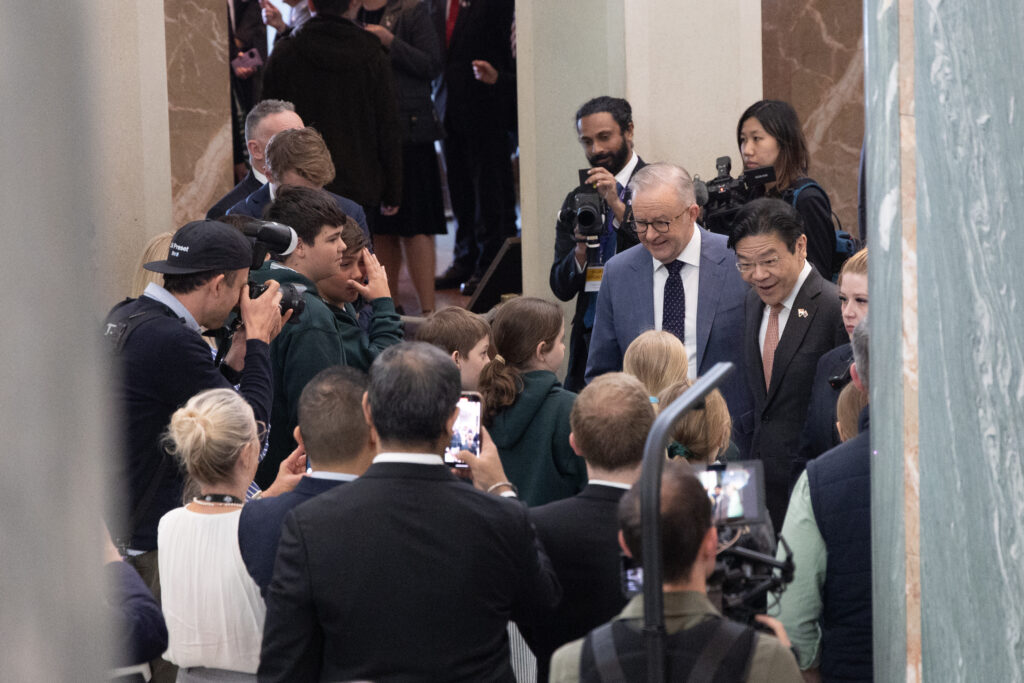
The Prime Minister Anthony Albanese with the Prime Minister of Singapore Lawrence Wong in the Marble Foyer of Parliament House in Canberra this morning.. Photograph by Mike Bowers.

All that glitters

Dave Richardson
Senior Research Fellow

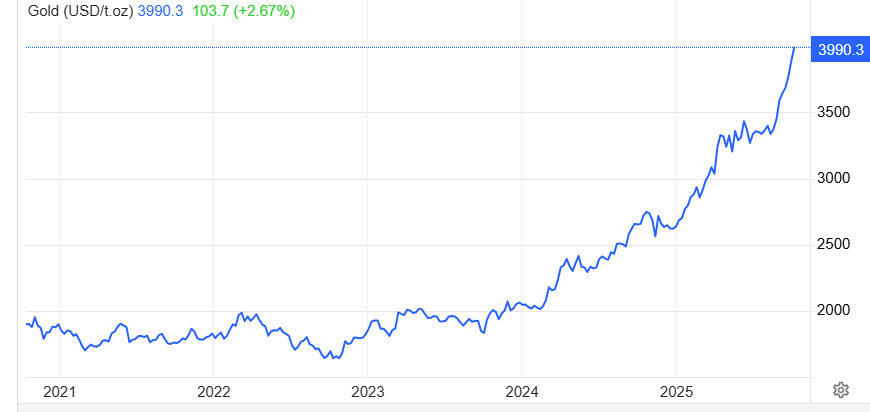
The Financial Review has reported that gold futures have topped US$4,000 for the first time. That means you could sign a contract to deliver gold to a customer in December at US$4,000 an ounce.

Record high gold prices usually reflect heightened tensions in the world economy. The press is point to the government shutdown in the US and political uncertainty in France. This part is unclear. Nobody really knows the motives behind deals in gold prices but, nevertheless, increases in gold prices are usually a good sign that there are problems in the world economy. 

People who wheel and deal in the financial markets tend towards safe assets when there are problems about. Uncertainty about individual companies means things like share prices may become less stable so speculators in shares will dump them and seek safe havens in things like gold.

The following graph from Trading Economics tells the story.

You could almost say the graph of gold prices follows the fortunes of Donald Trump. Since the end of 2023 and over the following two years the price of gold doubled. The sharp movement over the fortnight to 6 October is also apparent on the graph.

And for those who like graphs…

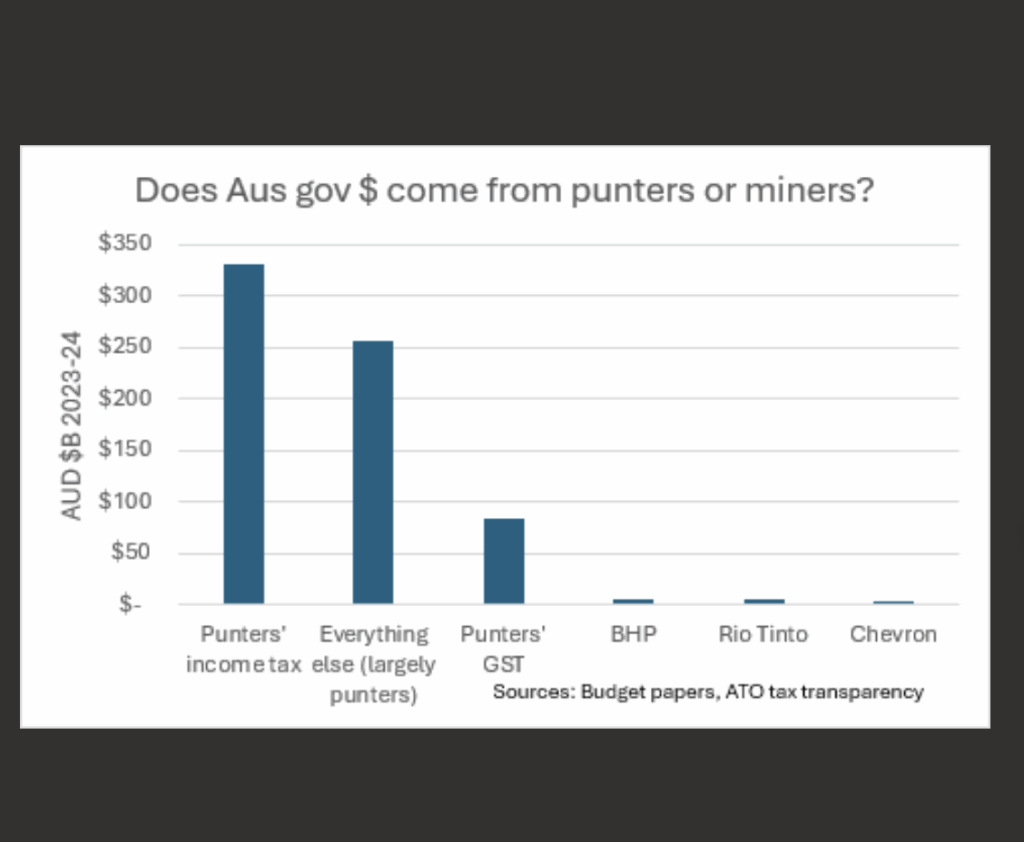
Just to illustrate that point about tax – here you go.

Factchecks: Mining companies are among the biggest taxpayers in Australia

We had a friend of the blog question some of what we were saying on tax, arguing that miners are some of the biggest taxpayers in Australia. Which as Grogs says – is correct. But that doesn’t mean they are paying the RIGHT amount of tax.

As Grogs explains:

Yes, miners are one of the biggest taxpayers, because shock, they are with banks the biggest profit sector in Australia.

Glencore Investments is the 10th largest taxpayer – paying $1.9bn tax on $31.6bn revenue and $7.9bn taxable income, but Glencore Holding, which had revenue of $4.3bn paid $0 tax. And to be honest that is not a surprise, given Glencore holdings has not paid tax since 2019-20 and in the 4 years from 2020-21 to 2023-24 it had $24.3bn in total revenue and an astonishing $27.8bn in taxable income and yet it paid $0 tax!

And while Glencore Investment paid tax, what about Santos Ltd? It had $8.3bn in revenue, and yet $0 taxable income and paid $0 tax. Again, not a shock. Santos ltd hasn’t paid tax for a decade – despite taking in $43.3bn in revenue – guess it must keep losing money and have no profit to declare? Weirdly, though Santos told investors in 2023 it made $1.432bn in underlying profit and in 2024 the profit was $1.2bn.

Yes, iron ore companies pay a lot of tax – Rio Tinto and BHP especially. Good for them. But gas companies like AGL,  ICHTYS, Inpex, and Chevron are notorious for paying negligible or no tax. And we will call that out.

For those keeping an eye on the Tasmanian stadium mess, the Tasmanian government have now released their response. Here is what the minister for Macquarie Point Urban Renewal Eric Abetz (we are never losing him) had to say (and the whole response is here)


We have carefully worked through the Commissionʼs report and responded to issues raised in
relation to economic and social effects, outlining the stadiumʼs unquantifiable benefits.

The stadium is much more than just a sporting precinct, it will have strong intergenerational
benefits. We have responded to the Commissionʼs concerns about urban form, activation and public realm by highlighting opportunities for broader site activation and drawing comparisons with other stadia sites interstate.

The Commission found that challenges such as parking, traffic, pedestrian movement, noise and
environmental effects can all be effectively managed. The Government has also responded to issues raised by the Commission in relation to historical cultural heritage and community values.

Our response makes the important distinction between direct and indirect heritage impacts,
reiterates the importance of the roof and highlights that community sentiment about the stadiumʼs
visual impacts may vary across individuals and communities.


The official photo op between Lawrence Wong and Anthony Albanese has occurred in the Marble Hall. Mike Bowers was there:

The Prime Minister Anthony Albanese with the Prime Minister of Singapore Lawrence Wong in the Marble Foyer of Parliament House in Canberra this morning. Photograph by Mike Bowers. Wednesday 8th October 2025.

“Is that how you used it? To work out what not to do?” Greens and Liberals critical of Government changes to FOI

Bill Browne
Director Democracy and Accountability Program

Last ninght in the Senate Legal and Constitutional Affairs Legislation Committee, Senator David Shoebridge pursued Senator Don Farrell and the Attorney-General’s Department on the Government’s proposed changes to Freedom of Information law.

Liberal and Green senators were united in their concern that the Government had ignored their efforts in the 2023 inquiry into the operation of FOI laws – or, worse, that they had used it to “work out what not to do”, as Senator Shoebridge put it.

The questions revealed that:

  • While the Department claims the changes are consistent with Senate recommendations, that is just not true. Senator Shoebridge had the benefit of Liberal Senator Paul Scarr confirming, as the author of those recommendations, that the Department was misrepresenting them.
  • There is no evidence that many FOI requests are generated by AI bots, as the Albanese Government has claimed.
  • The Department cannot provide a single example of a foreign actor abusing Freedom of Information law, despite the Government warning that anonymous FOI requests could be abused by criminal gangs and foreign agents.

Senator Shoebridge quoted yesterday’s report from The Australia Institute:

The Australia Institute has done some analysis of your government’s performance under FOI. 

In 2006-07, it took 13 hours on average for the Government to determine an FOI. It now takes your government, in 2023-24, 51 hours. 

In 2006-07, 81% of applications were granted in full, now under your government, in 2023-24, it’s just 21%.”

Human rights group urges PM to address Singapore’s capital punishment regime in annual leaders’ meeting

Anthony Albanese will meet with Singapore’s prime minster Lawrence Wong today, as part of the latter’s three day tour of Australia and the annual Australia-Singapore leaders’ meeting.

Human Rights Watch say its the perfect opportunity for Albanese to raise Singapore’s capital punishment regime, given Australia adopted a strategy for the abolition of the death penalty in 2018 and pledged to advance the cause, globally.

HRW says “Singapore’s harsh capital punishment laws also “quiet diplomacy is unlikely to stop Singapore from sending more people to the gallows”.


Singaporean authorities are planning to execute a 38-year-old Malaysian national, Pannir Selvam Pranthaman, who was convicted in 2017 of trafficking drugs into Singapore. Pannir Selvam’s family was informed on October 3 that his clemency plea had been rejected and that his execution would take place just five days later.

Singapore has already executed 11 people in 2025, 9 of them for drug-related offenses. Human Rights Watch opposes the death penalty in all circumstances because of its inherent cruelty.

In addition, Singaporean authorities routinely target anti-death penalty activists using media censorship and anti-protest laws to stifle dissent.

Singapore’s suppression of critical voices underscores the importance of governments like Australia speaking out on the death penalty and other human rights issues in their public engagements with the city-state.


Two weeks after putting in a joint offer to save the Mt Isa smelter, it looks like the Queensland and federal governments have agreed on terms for a taxpayer funded bail out of the Glencore copper smelter.

AAP reports:

Swiss mining giant Glencore looks set to get a taxpayer funded bailout to save an ailing smelter, potentially saving hundreds of jobs.

Federal Industry Minister Tim Ayres will be in Mount Isa in north Queensland on Wednesday for an event at 1130am AEDT before heading to Townsville for another event at 3.30pm AEDT.

He is likely to be joined by Queensland Resources Minister Dale Last.

In July, Glencore closed its underground copper mine at Mt Isa, with a loss of almost 500 direct jobs.

It also warned it was preparing to put the nearby copper smelter and its Townsville copper refinery into care and maintenance until market conditions improved.

Glencore had said the assets were losing money and forecast a $2.2 billion loss over the next seven years.

Rental market still cooked.

Property analysts Cotality (formally CoreLogic) have released their quarterly report – and if you are living in a capital city, you are not imagining it – the rental market is even more cooked. But it’s not much better in the regions, where wages also tend to be lower.

From the report:

The median weekly rental value across Australia’s combined capital cities surpassed the $700 mark for the first time in August, before landing at $702 per week in September.

By comparison, regional rents remain somewhat more affordable, holding below the $600 mark, with the typical regional dwelling renting for $591 per week.

[Economist Kaytlin] Ezzy noted this gap has narrowed in recent years.

“With the regions outperforming the capitals through the second half of 2024 and into 2025 the affordability advantage offered by regional rental markets has reduced from $123 in May 2024, to $111 in September.”

Across the capitals, Sydney remains by far the most expensive rental capital, with the typical dwelling renting for $807 per week, while Hobart maintained its title as the country’s most affordable city to rent in, with a median weekly rental value of $584 per week.

Senate estimates is about to get underway for the second day of hearings. Among the political point scoring, it seems like the Coalition is also planning to ask why there has been no movement on banning gambling advertising, 2.2 years after the Murphy review was handed down.

Crossbench MPs, including David Pocock, Kate Chaney, Monique Ryan and Andrew Wilkie raised that issue yesterday in a press conference following the Four Corners report into gambling harm.

When the Coalition works with the crossbench and Greens on areas of public policy, there actually is room for change.

NACC CEO Phillip Reed grilled over Paul Brereton’s ongoing work with the IGADF and potential conflicts

Last night, the National Anti-Corruption Commission CEO Phillip Reed faced a senate estimates hearing, where he, according to those in the room, didn’t look like he was having the greatest of times.

The CEO of the National Anti-Corruption Commission Mr Philip Reed appearing before the Senate Legal and Constitutional Affairs legislation Committee. Photograph by Mike Bowers.

The NACC has been a bit of a fizzer so far, with questions over what it is actually investigating, and how those investigations are being managed. We don’t have a lot of insight into that, because Labor gave the Coalition it’s demand for secret hearings, in order to get bipartisan support (which it didn’t need, because the Greens and crossbench would have supported public hearings) for the establishment of the NACC. Jason Koutsoukis with The Saturday Paper reported over the weekend that was Albanese’s decision and he over ruled the push to have public hearings.

Before he was named NACC commissioner, Brereton worked at the Inspector General of the Australian Defence Force and was head of the inquiry into Australian forces’ alleged war crimes in Afghanistan (the case is still ongoing). The ABC reported last month that Brereton was still giving advice to the IGADF, which makes sense because he was the commissioner of the review. But it’s a potential conflict of interest, which has already been an issue given Brereton had been found to have not fully recused himself from the decision to not investigate Robodebt, given his ‘close association’ with one of the people put forward for investigation.

There is no suggestion of wrong doing by Brereton in either case. But it did make for some uncomfortable questioning for Reed overnight (Reed defended the commissioner)

Rumours: Parliament to be extended by an additional week at the end of the year

Mike Bowers has heard it, and so have I – there are rumours floating around that the government plans on extending parliament at the end of the year, by one week.

That would make sense – there were not that many sittings planned for after the election, and the senate is getting a bit clogged (there were only a couple of sittings after this one week).

So prepare yourself – the end of the year is always the busiest time, and it looks like it is about to get a lot more hectic.

Labor MP Jerome Laxale gave a short speech yesterday which was a lovely reminder of the power, and absolute crucial nature, of local journalism.

I rise today to congratulate Lane Cove journalist Jack Kelly on his nomination for a Walkley Foundation Mid-Year Media Prize in public service journalism. Jack reports for In the Cove, a local news outlet that so many in our community turn to for trusted grassroots reporting.

In the Cove also run the local chat group, the source of brilliant posts about all sorts of things, including ‘breadgate’, the mysterious bread saga of River Road. I digress though; back to Jack and his nominated story, ‘Cabling Cowboys’.

This uncovered serious risks posed by cabling operators in the Lane Cove community. It was thorough, fearless reporting that shone a light on a problem few knew about but many were affected by.
Jack’s work didn’t just inform the public; it actually helped deliver change. After personally reading his coverage, I was able to raise it directly with the then Minister for Communications.

That led to direct engagement with the Telecommunications Industry Ombudsman, who opened an investigation into provider delays and poor customer service. Importantly, because of that extra attention, many of the issues uncovered by Jack and In the Cove’s journalism was fixed.

The Walkleys are a gold standard of Australian journalism. For a young reporter like Jack to be recognised at this level is an extraordinary achievement, and it just shows how important local media like In the Cove is to our democracy. On behalf of Bennelong, thanks to Jack and thanks to In the Cove.

Canberra Labor MP Alicia Payne has welcomed her third child, which was announced in a statement this morning. Payne is practiced at balancing parliament and a newborn – her second child was born shortly after Labor’s election during a time known as ‘Labor’s baby boom’ given the number of children welcomed by government bench dwellers.

Alicia Payne and husband Ben Phillips are excited to announce that their son Joseph Douglas Phillips was born on Saturday 4 October at 4:50am at the Centenary Hospital for Women and Children at the Canberra Hospital, weighing 3.7kg.

Both mother and baby are doing well and older siblings Paul (7) and Elena (5) adore their new brother.

Ms Payne said “We’re delighted and feel very blessed to welcome little Joseph into our family. A huge thank you to all the team at Canberra Hospital for taking such wonderful care of us and the amazing job they do to support mothers and babies each day. I also want to thank Dr Ken Tan and his team for the excellent care and support we received throughout my pregnancy.”

The Prime Minister announced Joseph’s arrival in Parliament saying:

“I can inform the House that Joseph Douglas Phillips arrived over the weekend—the newest ACT constituent. Young Joseph weighed 3.7 kilograms and was 49.5 centimetres long. Mum and young Joseph are going very, very well and are delightful. I have seen some fantastic photos of the very, very happy family. So to Alicia and her partner, Ben—I’m sure on behalf of everyone in this House—congratulations. We look forward to meeting young Joseph.”

Good morning

Hello and welcome to day two of the house sitting, with senate estimates.

You can always tell just who won the previous day by how hyperbolic the Sky News politics now newsletter is. Today’s is full with claims the Coalition smashed it yesterday. Which is how you know that didn’t happen. You don’t need to pump up the tyres of winners, you know? Federal politics is largely missing from the other major websites homepages, which is another indication that the Hill isn’t exactly providing the goods. This isn’t a bad thing – events should be covered according to their impact, and not blown up into something just to squeeze out some content. But given the break, Anthony Albanese’s international tour, and the ongoing issues regarding mutual obligations, house prices, a whishy washy climate target, ongoing approval of fossil fuel projects etc, it is telling just how much control the government has over the agenda at present. Because none of them have become major headaches.

That tends to be what happens when one side of politics is a rabble.

Labor went through it in 2014 – it was just that Tony Abbott’s leadership was SO batshit, that he managed to take himself down.

Albanese is sticking pretty close to that middle road, which works if your goal is political steadiness, but doesn’t if you want to address the major issues facing the nation in a way that brings about the necessary changes that are needed.

But while the crossbench continues to highlight many of those issues, and changes, we still have a government committed to the very least it can do, on almost any issue. Ultimately, it will be voters which shake it out of that, not the Coalition. But we have some road to go before the main political parties work that out.

So join us today as we wait to find out what a fresh new day brings us. You have Amy Remeikis with you, along with the brains trust of the Australia Institute and others, and the New Daily’s Mike Bowers, who is already up and about in the hallways, given the messages he is sending my way.

It’s a four coffee morning (and yes, we had a little sleep in today. Daylight saving always leaves me feeling a bit jetlagged in the first week)

Ready? Let’s get into it.


Read the previous day's news (Tue 7 Oct)

Comments

Start the conversation

The biggest stories and the best analysis from the team at The Point, delivered to your inbox.

Past Coverage