We are going to wrap up Trump’s tariff day there, given that the campaign itself has basically been put on hold to discuss every single angle of this.
No doubt this will continue tomorrow. Is there any more to say on it? No doubt we will find out!
Thank you to everyone who joined along with us today. We truly, truly appreciate your support and trust and we are humbled by how quickly you have jumped in to see what we are doing with this little project.
Thank you.
We will be back tomorrow for Day Seven of this never ending campaign early, if not necessarily bright.
Until then, do good and take care of you. Ax
16.26 AEDT
Peter Dutton has been in Western Australia, which on Trump tariff day may have been a bit of a tactical mistake, given the time delay. Or maybe that was the point, because there doesn’t seem to be much of a cogent message coming out from the Dutton camp on what a Coalition government could have actually done differently, given that Australia, comparatively, got the best deal Trump had going.
Not sure how you do better than that, but hey, Dutton’s message seems to be his sparkling personality and his Temu version of Trump politics would dazzle Trump so much, he would just have a come to Dutton moment and turn it all around.
But as to the actual announcement Dutton had today:
An elected Dutton Coalition Government will support our mining, resources and farming sectors by investing in infrastructure to upgrade agricultural and mining roads critical to getting product to domestic and export markets.
Let’s break down what a trade deficit and surplus is. A trade deficit means that a country buys more stuff from another country than that country buys from them. A surplus is the opposite. The reason that Trump seems weirdly obsessed with getting rid of trade deficits, seems to revolve around that fact that the word deficit has negative connotations.
But deficit is not a negative. It just means I like buying stuff from you. I have a trade deficit with my local supermarket. Why? Because I buy stuff from them, and they buy nothing from me. I equally have a trade deficit with all the shops I use. The only place I don’t have a trade deficit with is my employer. I sell them my labor and they don’t sell anything to me.
If I wanted to, I could stop buying stuff from the supermarket or other shops. I could grow my own food. I could make my own furniture. I could cut my own hair. I could provide my own medical care.
If I did this, I would reduce the trade deficit I had with lots of different places. Of course, I would need to spend lots more time on all these things. I wouldn’t be able to sell anywhere near as much labour to my employer. In fact, I would probably have to quit my job entirely.
I’m also not very good at growing food. I’m not good at building furniture. Or cutting hair. Or providing medical care. And because I quit my job, I wouldn’t have an income coming in.
I would end up with poorer quality goods and services and less of them.
Would I be better off. No way.
But I would have zero trade deficits.
16.14 AEDT
Did Anthony Albanese lose his “mojo” last year?
(This assumes Albanese had any mojo, but we will move on)
Albanese:
No.
Q: So, what are they talking about if they think that you sort of wasn’t quite working last year?
Albanese:
I don’t know. I’m not part of the press gallery group chat.
Q: You talk to them from time to time. You know who they are.
Albanese:
Look, we have been a determined government. We’ve governed in what have been turbulent economic times. The largest energy crisis since the 1970s. We have seen countries around the world with double digit inflation, some of them with double digit unemployment at the same time. Across the ditch, New Zealand is in recession. What we have managed to do is negotiate our way through those turbulent economic waters, keep our eye on the horizon. We now have inflation falling from six down to 2.4. We have unemployment being low.
We have wages that have grown five quarters in a row. We have interest rates that started to rise before we came to government, now they’ve started to fall. We’ve provided tax cuts for every Australian taxpayer and cost of living relief whilst getting that downward pressure on inflation.
We have, as well, a really positive agenda going forward. I started to make the agenda for the second term very clear way back in October with our 20 per cent cut to student debt, with our making free TAFE permanent, with our Three Day Guarantee for childcare, with our childcare infrastructure investment, with the tax cuts for every taxpayer that are a top up, so that every Australian will get a tax cut, an average tax cut there of $2,500 that they’re worth. So, we want Australians to earn more, keep more of what they earn. Peter Dutton wants to cut everything except for people’s taxes.
They are not ready as an alternative government. That is becoming clearer and clearer and in discussions I’ve had with you, Raf, you’d be aware that I was always of the view that when people focus on what the alternative, what the choice is in this election, going forward with a positive agenda or going backwards to the chaos, the leftovers of the Morrison government, they would choose to vote Labor and that’s what I hope on the 3rd of May
16.09 AEDT
Anthony Albanese took some calls from ABC Melbourne listeners a little earlier this morning with one caller, Alan, wanting to know:
A few years ago we upset our French colleagues by cancelling a submarine contract. Why don’t we cancel the US submarine contract and go back to France again? If that means scrapping AUKUS as well, then so be it.
Albanese:
Because we believe that AUKUS is in the interest of defending our nation. We think it’s in Australia’s interest. And whilst we regard this as an act of self harm by the United States when it comes to their economy, what I’m not prepared to do is do anything that is not in Australia’s interests.
Yeah, that’ll learn them!
15.58 AEDT
Given Anthony Albanese falling off a stage has momentarily diverted attention away from the tariffs, let’s take a look at what AAP’s Lukas Coch saw:
Lodge DOWNLodge RISING LODGE ALMOST THERE LODGE OK!
15.40 AEDT
Anthony Albanese has just had a small stumble off a stage at a Mineral and Energy Mining Union conference event, which has caused GREAT excitement among some media networks.
He was walking on the stage and seemed to misjudge where the stage platform ended and the floor began at the back of the stage while moving for a photo with some delegates. (He seems fine)
That sound you hear is the Sky headline generators whirling up; ‘can’t stand on a stage, can’t stand up for the country!’
15.33 AEDT
Gina Rinehart agricultural boss criticises prime minister for criticising Trump’s tariffs
The former NT Country Liberal Party Chief Minister Adam Giles who now heads up Gina Rinehart’s agricultural baby, Hancook Agriculture, has stood up for Australia and Australian industry by criticising the Australian government for “whinging and moaning…like a petulant child” in response to the Trump tariffs.
It’s a pity we don’t do the same in Australia,” he said.
Instead we implement electricity policy that drives up costs of operations and make ourselves uncompetitive internationally, then close down our industries. The whinging and moaning is like a petulant child, with a government acting in a mendicant mindset.”
The ‘whinging and moaning’ is pointing out that there is no reason to level taxes on Australian goods being imported to the US as there is a trade deficit and also, Australia doesn’t have tariffs on the US goods.
And protecting bio security. And Australian sovereignty. And I don’t know? Just standing up for Australia?
A timely reminder that after losing the CLP leadership and government, Giles had a short lived show on Sky where he interviewed Australian neo-Nazi Blair Cottrell, which at the time (2018) was too far even for Sky.
15.18 AEDT
Peter Dutton doesn’t have a favourite ABC journalist (hold the presses!)
Earlier this morning, while in his safe space (Sydney radio 2GB) Peter Dutton was asked who his favourite ABC journalist was.
Ben Fordham: Who’s your favourite ABC journo?
Dutton:
My favourite ABC journo… I might have to go back a fair way Ben to identify that. Look, I think there’s are some good journalists…
Fordham:
What none are alive? What David Speers, Sarah Ferguson, Laura Tingle, who’s your favourite?
Dutton:
Well, I think there are some good journalists at the ABC, but I think there are some who frankly are just partisan players and people see that on their TV screens every night. Again, the ABC is using taxpayers’ money, so use it wisely. But I think Australian families at the moment are looking at their Prime Minister and scratching their head about how bad it could get over the next three years if there’s a Labor Greens government, which would see funding increases to all sorts of causes, but not those that would help families… and just finish on this note Ben, I think there are a lot of families and a lot of pensioners and a lot of people at the moment who are weighing up the difference between the two parties.
The Prime Minister is promising a 70 cent a day tax cut in 15 months’ time. We’re saying 25 cent reduction in every litre of petrol that you put into the tank – about $14/15 dollars a week just for one tank. If you’re filling up just one car, that’s a big difference, and I think there are many other reasons why we’ll ask for the Australian public to support the Coalition at the next election.
14.43 AEDT
Robert Reich: ‘the rest of the world should come together to create a new free trade zone, away from the US’
David Richardson
Senior Research Fellow
It is not just Australia that will experience the impact of Trump’s tariffs. Trump has now imposed new tariffs on US imports from all over the world. They include a new 34% on China, 20% on the European Union, 46% on Vietnam and 32% on Taiwan. Robert Reich, former Secretary of Labor under President Bill Clinton, advises countries not to retaliate or try to bargain on their own. He advises other countries that there is strength in numbers and they should join together to create new free trade zones that exclude the US but would apply a modest tariff on US exports. Expansion of trade initiatives may compensate other countries for the loss of American markets.
He also suggests other actions such as
1. limiting American banks’ access to local stock markets,
2. putting limits on what their residents can invest in American companies annually, and
3. increasing taxes and regulations on American digital platforms.
The rest of the world might also contemplate the strength of intellectual property laws and the way they restrain competition and preserve monopolies. This and other topics might be taken up by a G20 less USA, or indeed the United Nations.
14.41 AEDT
Continued from previous post:
Q: So you’ve worked both as a public servant and you’ve worked as a consultant with the government. Previously. You’ve had a role with KPMG from your career experience. Jacob, are consultants more effective than public servants?
Jacob Vadakkedathu:
Look at certain areas as the government have to rely on consultants, particularly in specialist skill areas where if the government doesn’t unable to recruit any subject matter expertise or in certain areas, of course they have to reach out to consultants in certain areas. So obviously the government will have to rely on consultants in specialist areas. If the APS doesn’t have the capacity or doesn’t have enough people to do that sort of job, of course we’ll have to reach out to consultants who have got expertise in that area.
Q: Are consultants more effective than public servants? That’s the concern from a lot of our listeners, that if the public service is reduced by 41,000 positions, that that will need to be filled by consultants who would cost the government a whole lot more. Ultimately.
Vadakkedathu:
Yeah, as I just mentioned, the government may have to reach out to consultants at times to undertake a certain task. And of course, if the government cannot find enough subject matter expertise in specialist areas, they will have to reach out to you in order to get the task undertaken, and they may have to reach out to consultant. And that’s been the case.
Q: But isn’t that more expensive than cutting the public service jobs?
Vadakkedathu:
I mean, if you have to reach out to consultants to get the work undertaken, you have to end up the day, you have to get the job done. And if you can’t find a person within APS, of course you will have to reach out to consultants. But I’m not saying that or cut all the public service and get all the jobs to the consultants. No, I’m not saying that. I’m saying in specialist skill area, subject matter expertise. If we can’t find enough people within the public service, then we may have to reach out to consultants to get that job done.
Q: And my question is, would that be more expensive then cutting the jobs or reducing the jobs from the public service?
Vadakkedathu:
I’m not saying massively cutting public service jobs.
(But the Coalition, his party, is.)
Q: But on the funding, would that be more expensive?
Vadakkedathu:
I mean, certain jobs, subject matter expertise, consultants charge a high fee. I mean, of course that’s a reality. Everyone knows that that’s a true reality. But to get the job undertaken and if APS doesn’t have the capacity, we may have to reach out to consultants.
Q: Could you avoid this by not reducing those jobs from the APS in the first place by ensuring that it does have the capacity?
Vadakkedathu:
Ideally. Ideally, everyone would like to get to the job done through the APS. What I’ve said it very clearly is if we can’t get the job done, so if I’m the director of a section and if I don’t have a subject matter expertise to undertake a certain task, and end of the day you have to deliver that job. So you may have to reach out to consultants, and that’s the case in the past. So if we don’t have enough skill specialists, workers in the area, in the public service, then obviously in order to get the work undertaken, you may have to reach out to consultants.
Well that went well.
14.37 AEDT
Liberal senate candidate admits ‘of course we’ll have to reach out to consultants’ when questioned on public servant cuts
Glenn mentioned one of the local ABC interviews with an ACT Liberal candidate, Will Roche this morning.
But there was another interview that Saskia Mabin had with ACT Liberal senate candidate, Jacob Vadakkedathu this morning where the quiet parts on the 41,000 public service sackings the Coalition have promised, were made clear. Vadakkedathu is a former public servant who now runs a private consulting agency, that has done work with governments.
Q: On the job cuts. Peter Dutton has been saying he wants to cut the 41,000 jobs that have been added by Labor, he has pointed to wanting to make those job cuts primarily from Canberra. Is that frustrating for you to hear that? I mean, your leader is not making it easy for you to be elected here in Canberra.
Vadakkedathu:
Look, as I’ve been a public servant, I worked in public servant for 14 years and I know how public service works and they’ll really work hard and they’ve made a good contribution to the government providing advice to the minister and the government.
Look, we made it very clear, and Shadow Treasurer made it very clear yesterday that we will deal the public service cuts, reducing the public service through natural attrition. I mean, it’s not in a sacking or termination. We will deal it gradually through natural attrition or a period of time.
Q: Is that possible? When you’re talking about 41,000 jobs though, that’s quite a lot to be dealing with through attrition.
Vadakkedathu:
Not all 41,000 jobs are based in Canberra. Not all 41,000 are based in, we’ll ensure that the frontline services are delivered. We are not going to cut any frontline services, but we will reduce the other numbers or a period of time through natural attrition. And let me make it very clear, those 41,000 are not all based in Canberra.
(Dutton has said they will all be in Canberra. The Coalition have been unable to confirm they will be through natural attrition and have said they are looking for value for money)
Q: Do you agree then that there should be significant cuts though to the public service in Canberra because this is the home of the public service?
Vadakkedathu:
Yeah, no, as I said, Saskia, we are not cutting the public service. I mean that terminology, I mean, we are reducing the number where it was before Labor took over.
Q: Okay, well that’s semantics. So reducing the number is quite similar to cutting the number. Let’s use reducing the number then should it be
Vadakkedathu:
Reduced, reducing the number where it was through a natural attrition.
Q: Okay. And that’s important. Do you think the public service needs reduced numbers?
Vadakkedathu:
Where it was before Labor took over, it was I think around 170,000. So that’s where we are looking at and we deal it through natural attrition. We are not going to sack anyone on the very next day when we form the government. We are not going to do that. We are not going to terminate anyone on the very next day. If we form the government, we will deal it through natural attrition. And as the Shadow Treasurer mentioned yesterday, yes, we deal through natural attrition over a period of time and we are not going to sack anyone.
(This is not what Bridget McKenzie or anyone else has said. Including Peter Dutton)
(Continued in next post)
14.21 AEDT
Australia is on track to spend 2.5% of GDP on defence
The Trump administration, including Elbridge Colby, who is soon to be confirmed as head of policy at the US Defence Department, is now telling Australia it needs to spend 3% of GDP on the military. That would be quite a large increase from what Australia currently spends, but rather than push back, both major political parties are fully in step with the view that Australia needs to spend more boosting our military.
The Treasurer, Jim Chalmers told reporters, “We’re taking defence spending from about 2 per cent of our economy to more than 2.3 per cent in the course of the next decade or so.” The Coalition also seems to be considering an advance on this position and lifting the military budget to 2.5 per cent of GDP by 2029.
The budget papers explain just how much is being spent on both the ongoing military spending, as well as the capital investment.
For the capital investment, the budget papers give both “net capital investment” as well as “purchases of non-financial assets”. The main difference is that the former is adjusted for depreciation and amortisation,n while purchases of non-financial assets are not adjusted. There really is no good reason for deducting depreciation and amortisation. They are both rather meaningless concepts when it comes to military assets – is anyone really caring about the decline in the commercial value of the tanks the army has? Moreover, almost all discussions of the budget balance etc are based on cash accounting, which excludes depreciation.
The table above presents the military expenditure and investment.
It clearly shows that total military spending has hit 2.3% of GDP (rounded) in 2024-25, and yet in his Budget speech, the Treasurer said “defence funding will grow beyond 2.3 per cent of GDP by the early 2030s.”
That suggests the Government is using the depreciation adjustment to estimate its spending. In reality, the Treasurer should already be saying that Australia is already at 2.3% of GDP and headed for 2.5%.
Importantly, however, this has all happened with very little debate.
14.18 AEDT
I haven’t seen a lot of this covered in the media, but this post on Reddit it getting a bit of attention on the socials:
Protesters have continued to find the campaigns, despite the intense security arrangements around the campaign travel arrangements.
Anthony Albanese was greeted with protests in the electorate of Paterson today:
Protesters interrupt a visit by Australian Prime Minister Anthony Albanese and Labor member for Paterson Meryl Swanson to Maitland Hospital
A reminder that people have the right to protest in democratic nations, despite the rhetoric going the other way.
14.05 AEDT
A very big thank you to Glenn for his stewardship of the blog while I stepped out for other projects – like an absolute duck to water there.
You’ve got Amy Remeikis again for the rest of the day, for whatever else happens.
(Please Dolly, let there not be much else today)
14.04 AEDT
Dueling pressers
Thanking the good lord I have two ears, because both leaders are up again – at the same time!!!
Peter Dutton is speaking in the Perth electorate of Hasluck (ALP 10.1%), with Bridget McKenzie and Michaelia Cash nodding in spectacularly perfect unison in the background.
Nothing particularly new here – the PM can’t get Trump on the dog n bone, Dutton would force gas companies to redirect gas earmarked for export into the domestic market (still no modelling on what it would save consumers) and, watch out, Adam Bandt could end up “co Prime Minister”.
Over on the east coast, the PM is back in the Hunter Valley, talking-up the (painfully slow, almost non-existent) transition away from coal.
Just as the pack is starting to nod off … there’s a flash of colour … a blur of movement.
He’s interrupted by a protester demanding to know “why has your government approved 33 new fossil fuel projects?”
It’s a fair question.
The PM doesn’t answer.
zzzzzzzz
13.42 AEDT
Penny Wong has branded Peter Dutton “Captain Obvious” over his claim that leader-to-leader dialogue could yet earn Australia a carve out from the latest Trump tariffs.
Speaking to Kieran Gilbert on Sky, Penny Wong said:
“Peter Dutton seems to think he’s Superman but he’s actually Captain Obvious.”
13.31 AEDT
ACTU minimum wage claim
Fresh from the PM revealing he’d pursue an above-inflation increase to the minimum wage yesterday, the ACTU has agreed today – but put a figure to its claim.
Australian Unions will pursue a wage claim of 4.5 per cent in the upcoming Annual Wage Review.
The ACTU’s claim will increase the minimum wage to $25.18 per hour, lifting the annual full-time rate by $2,143 to $49,770.
ACTU statement:
The 4.5 percent claim directly affects the 2.6 million Australian workers whose pay is set by awards, but it also affects all working Australians, as it sets minimum wage floors.
ACTU Secretary Sally McManus:
Australia’s lowest paid workers need and deserve a decent real wage increase. We must remember that our minimum wage for a full-time adult worker is only $47,626 a year. It is not enough and needs to increase. We are not America, and no one should be left without a liveable wage after working full-time hours.
13.21 AEDT
Dutton in freefall
The Liberals’ teenage candidate for the ACT seat of Canberra joined a debate on the local ABC today.
It was his first radio interview, bless him.
But this kid ain’t just making up the numbers. He’s full of bright ideas.
While Will Roche struggled with questions on cutting (sorry, as an ex journo, I think I’m obliged to say slashing) the public service, he dropped Peter Dutton in it, big time, over the leader’s preference for Kirribilli over the official PM’s residence in the capital.
Young Will revealed his fiendish and cunning plan to lure his leader to The Lodge … he wants to dump Dutton down the vertical slide at Questacon.
This may be the best idea of the campaign so far.
Even Roche’s Labor rival, sitting MP Alicia Payne, reckons it’s a cracker.
Win or lose on May 3 … we’d like to see that.
13.03 AEDT
RBA Financial Stability Review drops
I added “drops” because nobody would read beyond “Review” without it.
This is a “half-yearly assessment of the current resilience of the financial system” clearly written for smarter people than me.
But I’m an old journo, so I click, click, clicked my way to the bit where it talks about households.
Not quite a statement of the bleeding obvious, but not far short …
Many households continue to experience pressure on their cashflows. Real disposable income per capita – that is, income after tax and interest payments and adjusted for inflation – declined notably over 2022 and 2023 as inflation picked up and interest rates and tax payable increased.
More recently, real disposable incomes have stabilised at around pre-pandemic levels, supported by Stage 3 tax cuts and easing inflation.
Meanwhile, restrictive monetary policy continues to put pressure on mortgagors’ budgets, with debt-servicing payments expected to remain high as a share of household income even following the 25 basis point reduction in the cash rate at the February Board meeting.
Information from the RBA’s liaison program suggests that community service organisations continue to report strong demand for assistance, as they did throughout 2024.2 Inquiries to services such as the National Debt Helpline have also increased significantly since 2022, though this trend appears to have stabilised towards late 2024.
So, we’re all struggling but – in ever-so-tiny, painfully slow increments – things are getting better.
12.49 AEDT
Home economics: housing, living standards and the federal election
With housing affordability at an all-time low and the spectre of Trump looming large over our region, Australians’ standard of living will be at the heart of the debate from now until election day.
On this week’s episode of Follow the Money, Australia Institute economists Matt Grudnoff and Jack Thrower join Ebony Bennett to discuss the Australian economy in this election.
12.45 AEDT
Why don’t you cancel AUKUS?
The PM was interviewed on ABC radio in Melbourne this morning.
He took calls from listeners.
Alan (I’m going to say Alan is from Allansford because I loved ‘footy talkback’ on the Coodabeen Champions on the same station) is our caller of the day.
ALAN FROM ALLANSFORD: A few years ago we upset our French colleagues by cancelling a submarine contract. Why don’t we cancel the US submarine contract and go back to France again? If that means scrapping AUKUS as well, then so be it. RAF EPSTEIN, HOST: PM? PRIME MINISTER: Because we believe that AUKUS is in the interest of defending our nation. We think it’s in Australia’s interest. And whilst we regard this as an act of self harm by the United States when it comes to their economy, what I’m not prepared to do is do anything that is not in Australia’s interests.
For what it’s worth, we agree with Alan from Allansford … but not as an act of revenge against the little orange man’s tariff nonsense.
AUKUS is a dead set dud.
The incomparable Allan Behm (different Allan) lays it out chapter and verse here.
12.26 AEDT
Second debate locked in for April 16
The ABC’s Greg Jennett has just broken the news to ABC viewers that the ABC will host the second leaders debate … on April 16. On the ABC*
It will take place at 8pm at the ABC’s new Western Sydney studios and will be hosted by the ABC’s Political Lead David Speers, who is also host of the ABC’s Insiders program.
Next Tuesday’s first debate, hosted Kieran Gilbert on Sky News, will also be held in Western Sydney.
*SOURCE: ABC News
12.19 AEDT
UK House of Commons to ‘examine’ AUKUS
The United Kingdom has launched a parliamentary inquiry into the AUKUS partnership, led by Labour MP Tan Dhesi, chair of the House of Commons Defence Committee.
Mr Dhesi said the committee “will examine whether the partnership is on track and will consider the impact of geopolitical shifts since the initial agreement in 2021.”
An inquiry into AUKUS back home would not be unwelcome, although as Allan Beam wrote in The Australian last year, “there is still no compelling argument, strategic or otherwise, for Australia’s acquiring eight Virginia class nuclear-propelled submarines.”
Let’s not forget that, as Dr Emma Shortis pointed out last month, US President Donald Trump has already made it clear he does not care about Australia’s values or interests (as today’s tariff news also proves).
When Mr Trump was asked about AUKUS earlier this year, he responded “what does that mean?”.
12.14 AEDT
Speaking of poverty …
Ok, neither leader has been speaking about poverty.
But they should.
Specifically about the impact of poverty on Australian children.
There’s some pretty amazing work being done in this space by the Valuing Children initiative, which runs the End Child Poverty campaign.
They’re campaigning both sides of politics for a legislated end to child poverty.
That doesn’t mean poverty would end with an Act of Parliament, but it would set targets and – for the first time – actually define and measure poverty in Australia.
It would be much easier to implement meaningful policies with accurate, local, up-to-date data.
How would it work?
Reporting to Parliament every year, governments are held accountable to targets, while providing transparency to the community about the extent of child poverty. When considering initiatives in the Budget, Governments of all levels would then be required to give greater focus to the wellbeing of children in Australia.
Here’s what we know about child poverty:
More than 820,000 Australian children are living in poverty and that this has increased by over 100,000 since the pandemic. The authors state poverty is expected to be even higher given increased essential living costs since 2022 when the data was collected.
The report confirms that single parent families face more than 3 times the poverty rate of couple families (more than 1 in 3, compared with less than 1 in 10)
Children who experience poverty and housing stress are significantly more likely to suffer nervousness or feel unhappy with their lives for up to ten years after leaving home. “Poverty scars people. It gets under the skin. Children growing up in poverty often carry these scars with them for life.”
The Australia Institute released a discussion paper – Ending Child Poverty in Australia – which included some pretty conclusive polling that found Australians want genuine action to end poverty.
83% of those polled want the government to regularly measure and report poverty rates in Australia.
More than 4 in 5 (81%) agree that income support payments should be set at a rate that does not cause any child to live in poverty.
Australians are highly concerned about the effects of poverty on children’s education and employment (85%) and their health and lifespan (83%).
12.12 AEDT
Rewriting history
Peter Dutton was asked about his team editing a comment out of the transcript of an interview he did with Mick Molloy on FM radio.
These days politicians’ media teams send out transcripts of their media appearances each day.
They know journalists are time-poor and benefit from (fall for) a bit of spoon feeding.
But the temptation to edit a stumble or cut something out all together – as Mr Dutton’s team did yesterday – is sometimes too great for protective spinners.
For what it’s worth, the line which was cut was a light-hearted line about Australia’s Collins Class submarines, where he said “You can hear them rattling down the coast”.
Hardly controversial. Hardly worth removing.
Dutton:
I haven’t seen the transcript. It shouldn’t be edited out. It was a jovial conversation
12.03 AEDT
Job vacancies
The Bureau of Stats has just released the latest job vacancy data:
Job vacancies fell by 4.5 per cent to 329,000 in February 2025, according to new figures released today by the Australian Bureau of Statistics (ABS).
Sean Crick, ABS head of labour statistics, said: ‘The drop in the number of job vacancies reversed the recent rise of 17,000 vacancies in the three months to November 2024. As a result, there was a similar number of vacancies to what there had been in August.’
Compared with February 2024, the number of job vacancies in February 2025 was down by 34,000, or 9.3 per cent.
“There were 146,000 fewer job vacancies in February 2025, which was 30.7 per cent lower than the series peak in May 2022,” Mr Crick said.
“However, despite the falls in job vacancies over the last two and a half years, the total number of vacancies was still 44.5 per cent higher than before the COVID-19 pandemic in 2020.
11.58 AEDT
Peter Dutton media conference
Hey everyone, this is Glenn Connley, taking over while Amy hosts a webinar on media reform. Stay tuned.
Continuing coverage of Peter Dutton’s media conference, where Sky’s Political Editor Andrew Clennell has just asked the Oppo Leader if he’s kowtowing to Trump. Good gear.
Q: It sounds a bit like kowtowing, frankly. It sounds like you’re trying to offer the Americans more. Albanese and Farrell tried the critical minerals deal. They couldn’t get it off the ground. Why are you going to make a difference?
Dutton:
Andrew, again, if you look at what we were able to do in government, we were able to negotiate an outcome with Trump mark 1. A Coalition government got access to the administration, able to talk to key players and the people of influence in the sphere of the West Wing and that achieved an outcome. This Prime Minister hasn’t been able to do that. We need to look at the decision which has been made which is bad for our country and I condemn it. The question is what do we do now to rectify the situation and turn it to a positive? There’s no doubt that we can do that. The Prime Minister has it surely in front of him to be able to do over the course of the next few weeks and that’s an outcome that will be in the better interests.
11.38 AEDT
This is what Peter Dutton has been left to argue:
Frankly, the US requires Australian beef. It’s not just that we’re, you know, great producers of beef, and that we found an export market. They can’t produce enough beef to satisfy domestic consumption.
So this is why I say it’s a negotiating position, and we need to approach extensively, but we need to have a position here in Australia which is going to be taken seriously by the President and by the Americans.
And at the moment, I think, as the Prime Minister, frankly, has demonstrated over the last three years in economic decisions and the reality of life for Australians that it’s been a bad government, and a bad government here in Australia is not going to be able to negotiate a good outcome on this free trade agreement when they can’t even reduce the cost of groceries or electricity.
Everything has gone up for households and for small businesses under this government, and they have been bad government, and nobody believes that this prime minister could negotiate the best possible outcome with the United States.
Except, comparatively – Australia does have a good deal?
Which even the chamber of commerce essentially agrees with?
11.26 AEDT
Meanwhile, a Texas congressman just openly quoted Goebbels in the chamber. And not in the ‘Goebbels was bad’ way.
Joseph Goebbels was a literal Nazi and one of Hitler's closest allies.
To my Republican colleagues, it is probably best not to quote him during a congressional hearing. pic.twitter.com/qCTXbMEEUJ
— Congresswoman Julie Johnson (@RepJulieJohnson) April 1, 2025
11.24 AEDT
Dutton has also given his first response to the Trump tariffs, and of course it is to Sydney radio 2GB.
Dutton seems to think that the 10% tariff – the lowest that Trump has imposed on any nation – is a “negotiating” position, despite other nations having tariffs three times the size of Australia.
Temu Trump seems to think that he could do better with the actual Trump than the best deal that practically any other nation did, just by having a chat.
Oh, but Dutton isn’t going to back down on the issues that the US has with Australia – like biosecurity, or regulating tech giants, or the PBS. So he has no new negotiating tools, but just by the power of his sparkling personality, Trump will concede.
I think in the end, what we need to be able to do is to sit down with the administration and negotiate hard on our country’s behalf. And I think part of the problem is that the Prime Minister hasn’t been able to get a phone call or a meeting with the President, and there’s been no significant negotiation, leader to leader. So that has been the significant failing, and we need to be strong and to stand up for our country’s interests. And I think at the moment, the Prime Minister sort of flailing about as to what to do and how to respond.
There were at least two phone calls and regular communication at a diplomatic level as well as at a business level. And the response has been pretty clear?
We won’t change our stand on what Trump is upset at, we may go to the WTO (for all the good it would do), we won’t put on tariffs of our own, and we are already looking to further diversify trade.
Dutton’s problem is that the deal isn’t as bad as it could have been and that leaves him with not much of a position. Because he is saying he would take the same stance as Albanese, but also that he would just somehow be better at talking to Trump and that would change things. It would not change things.
11.17 AEDT
Peter Dutton and the main Coalition campaign are in Perth (the first time Dutton has been there this campaign) where he has told people that if he can “win Pearce” he can “win the election”.
The idea there is that if the swing is big enough to win Pearce, than he’ll win the 20 or so other seats he needs for majority government.
So far though, Labor’s vote is holding in WA, and there is a bit of a move to independents and the Greens in some seats, so it’s not exactly a shoo-in for Dutton.
10.59 AEDT
Greens leader Adam Bandt has a simple reply to the Trump tariffs:
“End Aukus”
Forget Trump’s ‘Liberation Day’, today should be Australia’s liberation day — when we finally liberate ourselves from being shackled too closely to Trump.
Trump is dangerous. It’s time for Labor & Liberal to act. Let’s cancel AUKUS & set our own independent foreign policy.
The chief economics commentator for the Wall Street Journal has posted a chart showing how these tariffs Trump is applying will be higher than the Smoot-Hawley ones which destroyed the US economy for years.
A couple of folks have crunched the numbers (Evercore ISI – their chart, below; @fcastofthemonth) and concluded that the U.S. weighted average tariff, with all Trump's new orders in effect, will be higher than under Smoot-Hawley. pic.twitter.com/yI1jNghvDm
Is Anthony Albanese happy with how Australia has come through this?
Albanese:
There is no country that has received a better outcome than Australia. Australia has been presenting our case to the United States very strongly across the board.
We will continue to put our case for what we regard as a reciprocal arrangement just for our products to be tariff free just as products into Australia from the United States are tariff free and importantly, the United States does enjoy a two historical trade surplus with Australia.
10.31 AEDT
Is Anthony Albanese worried about Trump’s strong language?
Albanese:
President Trump’s statements were for him to make. He had raised beef was part of the issues that was raised by the US administration.
We have responded appropriately. We will defend Australia’s interests, whether it be the Pharmaceutical Benefits Scheme, the Media Bargaining Code but importantly as well, our bio security.
One of the things that makes Australia products so valued around the world is that people know we produce clean, green agricultural products.
That is why they are in demand, that is why whether it is up beef, sheep meat, wine, our barley or wheat, we have the best products in the world. We’re really proud of that.
10.29 AEDT
Australian beef is not banned from the US (allegedly)
Anthony Albanese says there has been clarification between now and his last press conference and there is not a ban on Australian beef as thought, given Trump’s singling out and confused language around Aussie beef imports in his press conference, but the same 10% tariff.
We have received confirmation that what we thought was the case, that it is just a 10% tariff. Similarly, I just spoke with the head of the National Farmers Federation about 15 minutes ago as well and confirmed that with him. I’ve also spoken to beef producers and confirmed it with them. Our Queensland friends who do such an amazing job and a shout out at this point in time to Queenslanders ,in western Queensland who run these big cattle stations who are doing it really tough with the floods.
All-Australian supports are with them at this time and it is a really difficult period for them but it will be a 10% tariff. Brazil has the same so in terms of the competitive position, it is maintained.
On the territories… Norfolk Island has got a 29% tariff. I’m not quite sure that Norfolk Island, with respect to it, is a trade competitor with the giants economy of the United States but that just shows and exemplifies the fact that nowhere on earth is exempt from this. President Trump has been determined to put this in place. He has indicated that that was the case and we will continue to argue Australia’s case.
10.26 AEDT
Anthony Albanese’s (2nd) press conference
Anthony Albanese is still in Melbourne (obviously) where he is holding his second press conference of the day – but this is the campaign press conference. So it is at a pharmacy.
The main announcement is about adding a couple of new medications to the PBS, but the underlying announcement is ‘we love the PBS and won’t be bending on it so suck on that Trump’ but with much more polite, diplomatic language (curse civility politics).
Mark Butler is also there:
This medication the Prime Minister mentioned for kids with glaucomaand also I’m particularly excited about the listing of this drug for bone marrow cancer, a discovery made here in Melbourne at 20 years ago which is now taking the world by storm.
It has been listed for treatment in the US through the FDA and this week it is added to the PBS here in Australia. 1900 patients a year who would otherwise be paying $70,000 on the private market for this life changing, life-saving treatment for this rare form of bone marrow cancer.
That is why we have defended the PBS so hard. We did it 20 years ago in the parliament when the US big Pharma industry tried to get concessions on our PBS under the negotiation of the US free trade agreement. It was Labor that insisted on amendments in Parliament that were resisted and opposed by the US trade representative at the time and opposed by John Howard, who opposed our amendments to secure the PBS pricing arrangements in Parliament right up until the last minute of the parliamentary debate and again, the Prime Minister, the Foreign Minister have made it clear we will never ever negotiate about the PBS. It is delivered Australians such good health outcomes, great cost measure for decades and we absolutely are confident we can do that for decades to come.
10.21 AEDT
How did Trump come up with the tariff rates?
US journalist James Surowiecki has a very credible theory on how the Trump administration has come up with these tariff rates (as Greg Jericho pointed out earlier the explanation of ‘non-monetary trade barriers’ combined with tariff rates didn’t make any logical sense)
Surowiecki has calculated that Trump’s acolytes have taken the trade deficit America has with nations and just halved it as a tariff rate. That is why Australia only has the ‘baseline minimum’ of 10% – because the US exports more to Australia than Australia exports to the United States.
10.13 AEDT
Alice Grundy
Alice Grundy
Anne Kantor Fellows Research Manager
We have just heard a teaser from Anthony Albanese that Labor would establish a ‘critical minerals strategic reserve’
Australia has a track record of allowing multinational corporations to profit from local resources, tax free.
Research from The Australia Institute shows this is true for salmon, liquid natural gasand coal, to take just three examples.
What guarantees can the government offer that critical minerals will be taxed appropriately so all Australians benefit?
09.55 AEDT
David Littleproud claims Peter Dutton could do what rest of the world, experts, the courts and logic has failed to do and change Donald Trump’s mind and save the world.
Nationals leader David Littleproud doesn’t really know what to do or say in response to the Trump tariffs.
He lands on the ‘relationship needs to be reset’ which is code for ‘elect us and we will do it!’ but given these are worldwide tariffs, Australia got off fairly lightly, and the restrictions on beef are because Australia won’t compromise on biosecurity measures that stop things like Mad Cow Disease and rabies from entering the supply chain, what exactly does Littleproud think a Coalition government could do here? Littleproud thinks that Peter Dutton could convince Trump of ‘the impact of this’ on the whole wide world and that Trump – DONALD TRUMP – would magically have an epiphany and suddenly change his mind.
Perhaps Littleproud is imagining he, Barnaby Joyce and Dutton could all visit Trump on the same night as the ghosts of trade past, present and future and lead Trump to his own Scrooge moment. Actually scrap that. Littleproud and Joyce working together? Could never happen.
He tells the ABC:
There’s a bit of confusion about exact details on some of this. We’ve been a rules-based trading partner and those rules within the WTO should apply and when we were in government, we got form. We took China to the WTO. We even took Canada to the WTO on wine. So you should stick to the process and respect the process.
But again, what we want to do is actually reset the relationship with President Donald Trump. You’re not going to change his mind unless you can get a reset, get in the door or even get him to pick the phone up.
If we reset the relationship, not only this is about Australia, but this is about getting the world back to an equilibrium of a rules-based order.
If we’re elected in four weeks, a Prime Minister Dutton would be on a plane near immediately to Washington to meet with President Donald Trump, to have this out with him. And to make sure he understands the impact this will have, not just on the world, but a consequence on the United States as well. This is inflationary for the whole world, and there needs some leadership, strong leadership, you can do that if you’ve got a relationship. That relationship needs to be reset.
Maybe Littleproud could write Trump a really nice song and have Dutton sing it? That might do it!
09.45 AEDT
Everyone please spare a thought for Australia’s richest woman and Trump cheerleader, Gina Rinehart, whose Hancock Agriculture wagyu beef exports to the US may now be banned.
Turns out the face eating leopard party will just eat faces! Who. Could. Have. Known.
09.41 AEDT
Trump tariffs include barren Australian territorial islands ‘tariff on penguins’
For those looking for the full list of tariffs, here is the chart that Donald Trump showed in the press conference.
This includes the Australian territory of the Heard and McDonald Islands, which is a volcanic group of barren islands in part of a protected marine park in the Antarctic zone, which can only be accessed by sea and takes two weeks to reach from Australia. Nothing lives there except birds, penguins and beatles.
09.32 AEDT
There was a ‘five point plan’ to responding to the US tariffs Anthony Albanese spoke about in that press conference. This is all contingent on Labor winning the election though.
We have broken it down in point form for you:
One: Australia will strengthen the anti-dumping regime (anti-dumping is basically a safeguard against importing and selling goods at well below domestic prices. This can happen in trade wars, where exporters seek to offload their goods for whatever price they can get, undercutting local markets). This will be aimed at steel, aluminium and manufacturing.
Two: $50m in funding will be given to peak bodies like the National Farmers Federation to help impacted industries “secure and grow new markets” for their products. New business and investment missions to ‘priority markets’ will be sent out in the first 100 days of a new Labor government.
Three: A economic resilience program will be established through the national reconstruction fund, with $1bn in zero interest loans for firms to “capitalise on new export opportunities”
Four: The ‘Buy Australian’ campaign will be turbo charged. Government procurement will look for Australian first.
Five: A critical minerals strategic reserve will be established.
09.24 AEDT
Premiers much ado about nothing
Joshua Black
Postdoctoral Research Fellow
In a campaign wrap-up yesterday afternoon, the ABC made a big deal of the “Jacinta Allan-shaped hole’ in the PM’s press conference. Anthony Albanese responded bluntly by pointing out that the Victorian parliament was currently sitting.
There are shades of electoral history here. In 1990, the Hawke Government made its re-election bid knowing that it was in deep trouble in Victoria. The state government of John Cain Jnr was deeply unpopular and the beginnings of a recession were making their mark felt already in that state.
Hawke was re-elected but lost nine seats, for which he blamed Cain and his colleagues.
What the ABC didn’t point out is that it can be dangerous for a leader to rely too heavily on state premiers who are obviously more popular. In 1980, Bill Hayden led the Labor Party, but its campaign material for that year’s election gave him equal billing with Bob Hawke (already popular but campaigning to win his first election to parliament) and Neville Wran, the much-liked premier of NSW. People thought that the party ‘lacked faith’ in its leader.
There were echoes of this in the commentary on Albanese’s use of South Australian premier Peter Malinauskas on Tuesday. The premier joined the PM for a health-themed day of campaigning in a state where the government hopes to hold and maybe even win seats. But as the Australian Financial Reviewpointed out, the ‘Malinauskas strategy has limitations’.
Albanese clearly hopes that he can walk a fine line between both precedents, using premiers only where they’re wanted.
In the end, Australians actually do know the difference between state and federal elections and weirdly don’t always vote the same way in those elections. So it’s all a bit of a nothing.
09.22 AEDT
Recap of Albanese press conference
Ok, so what did we learn there?
Australian beef exports to the US are probably banned from midnight. The government knew beef was a sticking point (it had been in previous discussions and deals) but is still working out the details (this has since been clarified that it won’t be a banned, it will be a 10% tariff)
A 10% tariff to other goods has been applied, but Australia is considering that light treatment compared to what has been leveled at other nations
There may be exemptions for pharmaceuticals and gold bullion
Australia will not be imposing tariffs against US imports (which makes sense given the trade deficit we have with them)
Greg Norman is once again involved in national affairs
Australia is restarting discussions with the European Union for a trade union, after talks were originally abandoned. “Things have changed” Penny Wong said.
Australia won’t be budging on loosening biosecurity, the PBS or regulating tech giants
‘This is not the act of a friend’ Anthony Albanese said in perhaps the strongest condemnation he has had of the Trump administration to date (we can excuse openly talking about ethnically cleansing Palestinians and turning Gaza into a US run beach resort, but we draw the line at trade tariffs apparently)
Australia is considering taking action at the World Trade Organisation (which will do nothing)
09.11 AEDT
And the last question at this press conference called for this very important issue:
Will Jacinta Allan be campaigning with him?
Yes.
09.10 AEDT
Anthony Albanese says he won’t be talking about what advice Greg Norman gave him about how best to deal with trump, because his advice about having confidential discussions is to keep them confidential.
Look, Greg Norman clearly is someone who is a proud Australian, he is someone who of course lives largely in Florida, he’s someone with connections with the US administration. And we are engaging with Australians who have connections with the United States to advance our national interest
09.08 AEDT
What Australia exports to the United States
Greg Jericho has stopped swearing at the TV long enough to create this handy graph for you to see what is being talked about here:
09.07 AEDT
So Australian beef may be banned from entering the US from midnight.
Albanese says he didn’t say he had information that wasn’t happening – just that they are still getting the details straight.
I said that beef was a part of the negotiation between Australia and the United States. In the written agreements that went between our two nations, it’s one of the things that was discussed. We’ll of course seek further clarity about all of the decisions that are made.
But the[Trump has made] is to impose across the board tariffs on all goods entering the United States.
09.05 AEDT
Is Australian beef banned in the US?
Everyone is a bit unsure.
We are aware that beef has been an issue. That’s been, as I said to an earlier answer, this is one of the issues that we were negotiating over between Australia and the United States. That did not reach an agreement because the United States did not reach an agreement with any nation.
So did the government know beef was an issue?
He refers to his previous answer.
09.04 AEDT
Asked if he has spoken to Australia’s US ambassador, Kevin Rudd, Albanese said he held the press conference first, but will speak with him:
I have spoken with Kevin Rudd on a daily basis over recent times. As have ministers. I make this point about Kevin Rudd – no-one can question Kevin Rudd’s work ethic, Kevin Rudd works relentlessly in Australia’s national interest and he’s developed very positive relationships with key people in the Trump administration.
09.03 AEDT
What about the Australia-US relationship as a whole?
Albanese:
Our relationship with the United States is an important one for us. And our defence relationship with the United States is one that’s in our interests.
09.02 AEDT
CAN ALBANESE GET DONALD TRUMP ON THE PHONE?! WILL SOMEONE PLEASE THINK OF THE PHONES? PETER DUTTON SAYS ITS A FAILURE THERE HASN’T BEEN A THIRD PHONE CALL!!!!!!
Also are we sending in the Great White Shark?!
Albanese:
What I would like from Peter Dutton is to stand up for Australia and back Australia’s national interest. This isn’t a time for partisanship, I wouldn’t have thought.
But people will draw their own conclusions about this behaviour that you have just indicated.
That’s consistent with last time around on aluminium and steel.
Where Mr Dutton came out and was critical of Australia, not critical of the United States for imposing these tariffs.
Even though they were universal and across the board.
And Greg Norman is of course a great Australian. I had dinner with him last night. He is someone I got to know over the years. He’s my nominee on the Olympic board for the Brisbane 2032 Olympics. We are using every asset at our disposal. Ministers, people in departments, our embassy in Washington DC, our business community links, and our other links as well, to advance Australia’s national interest.
09.00 AEDT
Seems like a few journalists have realised that the World Trade Organisation ain’t what she used to be.
Q: Given structural issues at the WTO, what confidence do you have any complaint that Australia makes will be progressed, and minister Farrell, you walked away from negotiations last time with the EU, will you walk away again if they don’t offer greater market access for our products?
Don Farrell:
These take some time. The WTO. We know that’s the case. Our free trade agreement with the United States does have dispute resolution mechanisms. We want this to be resolved in a way that avoids those contests. If I can be so bold as to answer on your behalf, we’ll always stand up for our national interest. The agreement with the EU wasn’t good enough. We walked away. If it’s good enough, we’ll sign up.
Here is what Matt Grudnoff had to say about the WTO yesterday:
Should Australia take the US to the World Trade Organization (WTO) if Trump imposes tariffs?
We would have a strong case, but it would also be pointless.
Why? Because the US has stripped the WTO’s ability to hear appeals. There are supposed to be 7 judges on the WTO’s appellate body. But the US has blocked all appointments since 2017. It now has no judges and can’t hear any appeals.
But even if the WTO was working perfectly, the only way WTO decisions can be enforced is with the consent of the countries involved.
If Australia won, Trump would have to agree to drop the tariffs because the WTO told him too. Can anyone really see that happening?
08.56 AEDT
How did Australia learn about the tariffs and does this make pushing back against China’s strategic goals in the region harder?
Albanese:
There’s no doubt the response on a range of issues, be it action on climate change, as well as trade issues, will affect the strategic competition that is here in the region.
There’s no question that that will occur.
And countries will have their own assessments of that.
We’ve been expecting this decision. We put a position to the United States. The United States responded. We responded to them. There’s been a series of written to and ‘fro, if you like. There’s been negotiations with Mr Lutnick and with others in the United States as well.
So, this came as no surprise to us. We – we had prepared for a period of time the response, the 5-point response that you will – we announced this morning. We met as leaders last night. And again had contact this morning with obviously the relevant ministers, as well as our economic ministers.
08.55 AEDT
Anthony Albanese repeats that Australia won’t be compromising on beef:
The beef issue was about mad cow disease, to give its colloquial name. And about also the fact that beef to Australia couldn’t be guaranteed whether it had also come from Canada or Mexico as well. It was those issues that we’re working through. Those issues have been worked through. There’s currently frozen beef that can come into Australia.
We certainly, in the discussions we’ve had with the United States put a position that was consistent with ensuring our biosecurity is looked after than we would give consideration. But that didn’t progress. And so, that is where we’re are at this point.
08.54 AEDT
So we don’t know what is happening with beef just yet it seems, but it looks like pharmaceutical drugs and bullion (two of Australia’s biggest exports to the US) may have been carved out globally from these tariffs (Trump is a wrecker, but even he knows the US needs vaccines, drugs and gold to keep functioning at a bare minimum)
Albanese says the details are not entirely clear yet:
I have more to say about pharmaceuticals very soon, later this morning – to give you a bit of a tip off of where we’re headed next.
But, we regard this as being universal. Of course, we’ll await an assessment. To be fair to us, out of respect to you, we are standing up less than half an hour after President Donald Trump’s press conference. We’ll analyse the impact. But importantly, no country that imports to the United States will have less tariffs than Australia. That’s an important point of what has arisen out of today.
08.51 AEDT
‘The world has changed, as of today’ – Albanese
How does this compare to when China put tariffs on certain Australian imports (remember when lobster suddenly became available everywhere for about the same price as prawns?)
Before Anthony Albanese answers it is important to note that when China applied its tariffs, it was ONLY to Australia. Trump has applied tariffs to EVERYONE. So everything being imported in the US just got more expensive, no matter where you import it from.
Albanese:
Let’s put beef to one side. In respect of all the products, we’ll continue to sell our product into the United States. What we’re going to do is look for other markets as well, to sell our products in. Now, you’re right – the agreement with the European Union did fall over, over beef imports into the EU. The world has changed as of today.
The world has changed for Europe. Europe is now subject to a much higher tariff into the United States. If they’re sensible, they’re make up a better offer on the issues that made the agreement fall over last time, and we’ll get a free trade agreement with the EU. The largest economy in the world.
08.47 AEDT
Time for the questions. Does Anthony Albanese think Australia actually emerged OK compared to other countries?
Albanese:
There’s no doubt that there’s no-one has got a better deal. And people will see that themselves. That doesn’t mean it’s a good thing. It’s very clear that President Trump was determined to go down this road.
We have made very strong representations. Ministers, our ambassador, people in the embassy, people at departmental level, we’ve used every asset at our disposal.
But what it does mean – it’s a bit like what I was saying yesterday. Steel and aluminium, there’s not more steel and aluminium being produced in the United States today than there was in February.
If you have a tariff across the board, that has a – a comparatively neutral position for imports coming in.
Indeed, some countries have higher tariffs. Canada, for example. Which is another major exporter of aluminium to the United States. This position is the minimum 10%, Norfolk Island is 29%. I’m not sure what Norfolk Island’s major exports are to the US or why it has been singled out, but it has. On the table that is there. It’s across the board. It’s quite clear the Trump administration was determined to do this.
08.46 AEDT
Talks restarting with the EU for a new trade deal: Wong
Penny Wong is next. She says Australia will continue to engage with the United States “to seek to remove these unfair 10% tariffs on Australian goods. We believe that it’s by negotiation, by discussion, by sitting down and explaining to people the issues at hand that we can best present the case for Australia”.
Which is all very sensible mum trying to talk her adult child out of dropping out of university to become a content creator vibes.
She also goes through the trade deals and says on Monday she will speak with her EU counterpart and says while everyone knows how the last chats with the Europeans went “I think things have changed”.
And the opportunity to have further negotiations about a free trade agreement on better terms than have been previously offered now exists.
We should take that opportunity.
The last month, I have spoken to all of our major trading partners and we’re going to continue expanding our trade opportunities with them. I also had the opportunity to speak to all the affected industries by these decisions, the Prime Minister’s outlined the way in which we’re going to continue to support those industries, but in particular, push them out the door into new markets.
That’s what we’ve got to do.
We got to push Australian companies out in the world, why is that? Well, because we know that if you’re an export-focused company, your profits are higher but more importantly, the wages of your staff are higher. So, we have now a renewed opportunity, people want to talk to us, we want to talk to them, it’s all about expanding our opportunities to get our wonderful food, wine, and manufacturing product to the rest of the world.
08.41 AEDT
Trade minister Don Farrell now has carriage of the press conference and everyone is doing a very good job of trying to look interested.
He ends by pleading for unity, which is a message for an audience of one: Peter Dutton.
(Actually this might also include Rupert Murdoch, the entire Australian newsroom and Gina Rinehart.)
We succeed best in this pursuit when we stand together as Australians. When we stand up for Australians together. So I would say this – this is a day for anyone who is a political leader or aspires to be a political leader to be part of that unity. And stand with us for Australia.
08.38 AEDT
Albanese announces Labor would establish ‘a critical minerals reserve’ – but gives no detail
As part of this press conference, Anthony Albanese drops this line:
A Labor Government will establish a critical minerals strategic reserve.
But says there will be more detail coming over the next few weeks of the campaign.
That is the first Labor has publicly spoken about a critical minerals reserve (which is what we should have been doing on gas from the beginning) but there have been hints.
Anthony Albanese repeats there will be no compromise on biosecurity measures, the PBS or loosening restrictions on tech giants when it comes to producing local content and paying for Australian news.
Albanese then urges people to calm their farms when thinking about the impact on Australian trade:
While we have an important trading relationship with the United States, it’s important to put this in some perspective. It only accounts for less than 5% of our exports.
Many other countries will be hit much harder by today’s decision than Australia, and because it is across the board with no exemptions, of course, there’s an argument, actually, about comparative impact of these – this decision made by President Trump, that puts us in a position where I think no nation is better prepared than Australia for what has occurred today.
For three years, my government has been working to make Australia’s economy more resilient and our exports more diverse. We have deepened our economic engagement in north-east Asia, South-East Asia and India. The fastest growing region in the world in human history.
He then talks about the trade agreements with India and the UAE and expanding trade with the UK, EU and Indonesia which has occurred as part of the diversification strategy Australian governments began undertaking over the last 10 years, which has been turbo charged in recent years.
08.30 AEDT
‘This will have consequences for how Australians see this relationship’
Anthony Albanese then gets a bit tougher (in language – we are not actually doing anything:
Our shared history, our friendship, our alliance, these are all bigger than a poor decision.
But the Australian people have every right to view this action by the Trump Administration as undermining our free and fair trading relationship and count tore the shared values that have always been at the heart of our two nations’ longstanding friendship. This will have consequences for how Australians see this relationship.
These are uncertain times, but Australians can be absolutely certain of this: Our Government will always stand up for Australian jobs, Australian industry, Australian consumers, and Australian values. That is why we have been crystal-clear with the United States about what is not up for negotiation.
This has very “this is going to ruin the tour. The world tour’ vibes, for people who are as terminally online as I am.
08.28 AEDT
Trump tariffs have ‘no basis in logic’ Albanese says. “This is not the act of a friend”.
Anthony Albanese has toughened his language against the US president. Anyone would think there is an election campaign on and that maybe, just maybe, our leaders have worked out that the public doesn’t want Australia kowtowing to the US. But Australia will not be imposing reciprocal tariffs (which would be paid for by Australian consumers)
Albanese:
The unilateral action that the Trump Administration has taken today against every nation in the world does not come as a surprise.
For Australia, these tariffs are not unexpected, but let me be clear – they are totally unwarranted. President Trump referred to reciprocal tariffs.
A reciprocal tariff would be zero, not 10%.
The administration’s tariffs have no basis in logic and they go against the bases of our two nation’s partnership. This is not the act of a friend.
Today’s decision will add to uncertainty in the global economy and it will push up costs for American households. It is the American people who will pay the biggest price for these unjustified tariffs. This is why our Government will not be seeking to impose reciprocal tariffs. We will not join a race to the bottom that leads to higher prices and slower growth.
We will stand up for Australia. We will continue to make the strongest case for these unjustified tariffs to be removed from our exporters.
Our existing Free Trade Agreement with the United States contains dispute resolution mechanisms. We want to resolve these – this issue without resorting to using these. As we do support continued constructive engagement with our friends in the United States.
Given agriculture is one of the industries Trump has singled out and that he has also singled out the EU so comprehensively, well you would imagine that there has been at least some chatter between Australia and its EU counterparts about maybe getting that deal back on the table.
08.12 AEDT
Anthony Albanese has announced a press conference for 8.20am. It is with trade minister Don Farrell and foreign minister Penny Wong.
This is not a friendly campaign doorstop press conference – this is a serious one, in a room and everything. You already know there will be flags.
08.09 AEDT
We are waiting to hear from the prime minister who will be responding to this announcement very soon.
No doubt Peter Dutton will also have a bit to say.
But the issue is – right now, it is not entirely clear what applies to Australia. So we imagine there are some very urgent phone calls happening right now in the diplomatic corps.
08.01 AEDT
Pinned
Recapping the tariffs
So after all that hyperbole, the main take aways you need to know are:
Trump is applying a 10% minimum baseline tariff to all imported goods to America
This is what will apply to Australia (there could be more – this is all that was mentioned)
Australian beef was singled out when Trump was going through his list of grievances, but he attempted to soften the blow by claiming Australians were “wonderful people”
A 25% tariff will apply to all automotive imports from tomorrow
Trump and his administration have then made up numbers to apply to individual countries he has particular issue is.
He has claimed this number has been by adding up the ‘tariffs and non-monetary trade barriers’ and then halving it.
This doesn’t seem to be based in reality, as Trump is including things like good and services taxes which apply to all goods in certain countries as well as biosecurity measures as ‘barriers to trade’
China is at the top of that list with a 34% tariff. Taiwan has a 25% tariff on all goods and the EU a 20% tariff
07.52 AEDT
AAP has some fast response to the tariff announced on Australian beef:
Australian Meat Industry Council chief executive Tim Ryan said Australian beef producers play a critical role in feeding American consumers as there is a shortfall of meat which won’t change overnight.
“The global demand for high-quality Australian red meat continues to grow, and our supply chain is well-positioned to respond to shifts in the international trade landscape,” he said.
The shortfall Ryan is talking about is because the US has been in drought, which means there own beef production has been down.
07.44 AEDT
Again, here is a quick history lesson on what the Hawley-Smoot tariffs did to the US in 1930. It WORSENED the Great Depression
07.42 AEDT
Trump:
We’re going to be an entirely different country and it will be fantastic for the workers, fantastic for everyone. They will never have been a transformation of a country like the transformation that’s already happening in the United States of America.
Well he is half right – America will be a very different country, but it won’t be fantastic for workers, or for everyone outside of the very wealthy.
07.38 AEDT
Greg Jericho
Chief economist
None of these numbers Trump is talking about are real. They are not reciprocal tariffs because he is coming up with any reason he wants to put a tariff on – “non-tariff barriers” for example in his head is a GST or our biosecurity measures that stop diseases coming into Australia that apply to every country we trade with not just the USA.
He’s decided to just come up with a number that he thinks represents that and then halved that nonsensical number to make it look like he is being good – and probably because maybe someone close to him told him maybe it is best to just partially destroy the US economy not completely destroy it”
07.35 AEDT
Trump announces ‘minimum baseline tariff of 10%’
Trump continues:
At the same time we’ll establish a minimum baseline tariff of 10%. That will be on other countries to help rebuild our economy and to prevent cheating.
So, we’re going to have a minimum of cheating and we’ll be very severe on the people that at the gate that watch the tariffs and watch the product coming in.
Because there’s been a lot of – a lot of bad things happening at the gate because the money is so enormous, you’re talking about. There’s never been anything like it, in terms of the enormity and there’s a lot of bad things happen, the people that do the checking.
They are looking at 10-year jail sentences – we’re going to treat them so good, but if they cheat, the repercussions are going to be extremely strong.
Foreign nations will finally be asked to pay for the privilege of access to our market, the biggest market in the world, we’re right now the biggest market in the world.
The US is the biggest consumer market. But foreign nations will not be paying these tariffs
07.32 AEDT
Trump is also treating this as if it were a business deal – which is how he treats everything.
I mean, if anything, we are finally seeing what happens when you run a country like a business (spoiler: it is not going to be good)
We’re going to have to go through a little tough love, maybe but they all understand. They’re ripping us off and they understood it.
He has announced that the US has added up every tariff and non-monetary trade barrier to US imports in each country, and then halved it. So if Japan is considered to have put a 46% tariff on US imports (which would be paid by the Japanese importer and then consumer) then the US will put on a 23% tariff on all Japanese goods (this is an example, not actual figures)
07.28 AEDT
Trump announces ‘reciprocal’ tariffs from tomorrow
Trump has just gone through the history of tariffs in America and is implying (without directly saying it) that it was other countries which paid these taxes, which made America rich.
That is not how a trade tariff works – a tariff is an import tax on a good. So the importer pays it, and then factors it in to their cost to the consumer.
Trump:
Starting tomorrow, the United States will implement reciprocal tariffs on other nations. It’s been a long time since we even thought of that. We used to think about it a lot, we didn’t think about it for many decades and you see what’s happened.
For nations that treat us badly, we will calculate the combined rate of all their tariffs, non-monetary barriers and other forms of cheating, and because we are being very kind, we’re kind people, very kind, you’re not so kind when you got ripped off salaries my auto worker friends and teamsters friends and all of the unions that were voting Democrat, they’re not voting Democrat anyone, because worker, whether union or not worker, they’re for the Republicans now.
That’s what happened. But we will charge them approximately half of what they are and have been charging us.
So the tariffs will be not a full reciprocal, I could have done that, I guess, but it would have been tough for a lot of countries. We didn’t want to do.
Again, Trump is implying that other countries will pay these tariffs, which is not true. Americans will pay them
07.23 AEDT
Tariffs to apply to Australian beef
Trump moves on to agriculture, where he says American farmers and ranchers have been “brutualised”. This is where Australia gets its first mention:
…with countries like Canada, you know, we subsidise a lot of countries and keep them going and keep them in business. In the case of Mexico, it’s $300 billion a year, in the case of Canada it’s close to $200 billion a year. And they say why are we doing this, why are we doing this?
At what point do we say, “You got to work for yourselves and you got – this is why we have the big deficits, this is why we have that amount of debt that’s been placed on our heads over the last number of years. We’re really not taking it anymore.”
Through non-tariff barriers, the European Union bans imports of most American poultry. You understand, they say we want to send your our cars an everything, but we’re not going to take anything that you have.
Australia bans and they’re wonderful people, and wonderful everything, but they ban American beef. Yet we imported $3 billion of Australian beef from them just last year alone. They won’t take any of our beef. They don’t want it because they don’t want it to affect their farmers and you know, I don’t blame them but they’re doing the same thing right now starting at midnight tonight, I would say.
07.15 AEDT
Trump is now reading what he described as “vicious attacks ” on American trade:
The United States charges other countries only a 2.4 tariff on motorcycles. Meanwhile, Thailand and others are charging much higher prices like 60%, India charges 70%, Vietnam charges 75%, and others are even higher than that.
Like-wise, until today, the United States has for decades charged a 2.5 tariff, think of that – 2.5% – on foreign-made automobiles.
The European Union charges us more than 10% tariffs and they have 20% VATs, much, much Higher. India charged 75%, perhaps worst of all are the non-monetary restrictions imposed by South Korea, Japan and very many other nations as a result of these colossal trade barriers. 81% of the cars in South Korea are made in South Korea. 94% of the cars in Japan are made in Japan. Toyota sells 1 million foreign-made automobiles into the United States, and General Motors sells almost none. Ford sells very little.
None of our companies are allowed to go into other countries. And I say that friend and foe and in many cases the friend is worst than the foe in terms of trade.
But such horrendous imbalances have devastated our industrial base and put our national security at risk. I don’t blame these other countries at all for this calamity, I blame former presidents and past leaders who weren’t doing their job. They let it happen and they let it happen to an extent that nobody can even believe. That’s why effective at midnight we will impose a 25% tariff on all foreign-made automobiles.
07.09 AEDT
Trump announces tariffs
Donald Trump has brought out his allies to cheer at all the right places here:
My fellow Americans, this is Liberation Day. We’ve been waiting for a long time. April 2, 2025, will forever be remembered as the day American industry was reborn, the day America’s destiny was reclaimed, and the day that we began to make America wealthy again!
Trump has been characterising this as a way to bring back wealth to America, but it’s important to remember that tariffs are taxes that Americans pay to import goods – which will be passed down to the American consumers.
07.06 AEDT
The PBS is a ‘national treasure’
The Australia Institute has compared the staggering difference between the prices Australians and Americans pay for some of the most common medicines in the world.
For example, Atorvastatin – a cholesterol pill which is among the top ten most prescribed drugs in Australia – is 125 times more expensive in the US. Australians pay $21.07 for a prescription of Atorvastatin. Americans are slugged $2,628.39 for the same medication.
A commonly used tablet for high blood pressure, Lisinopril, is almost 25 times more expensive in the US than in Australia.
More than 10 million Salbutamol asthma puffers are prescribed or sold over the counter in Australia each year. For every $30 Australians spend on these puffers, Americans are charged $50.
“Americans who can’t afford health insurance are going without life saving medicines and, in extreme cases, dying as a result,” said Matt Grudnoff, Senior Economist at The Australia Institute.
“It is a shameful situation which cannot be repeated here.
“Our Pharmaceutical Benefits Scheme is a national treasure.
“In economic terms, it’s the Australian government using its buying power to deliver cheaper medications for all Australians.
“It is not a restriction on trade.
“Regardless of what the US drug companies think of this practice, the Australian government has a sovereign right to design policy that benefits Australians.
“If the price of maintaining our relationship with the US is paying exorbitant prices for medicine, then Australians will inevitably ask the question – is this a friend we really want?”
06.54 AEDT
Anthony Albanese was also doing media until late in the day on Wednesday. Speaking to the ABC radio Brisbane host Ellen Fanning, he was asked if he would “fight” Trump (Dutton said in a Sky interview that if he had to, he would “fight with Trump [or any world leader] in a heartbeat” in an attempt to address concerns Malcolm Turnbull raised about how Dutton would react if prime minister, when it came to Trump, given that so many in his support network (Rinehart, Murdoch) were pro-Trump)
Albanese:
We will stand up for Australia’s national interest. I don’t take these issues as personal with President Trump. That’s not the way that you get diplomatic action, and you get engagement between nations. What I will do is stand up for Australia’s national interests, as I did after the decision on aluminium and steel, and as I will if there are any decisions made against Australia’s national interest. And that is why we have refused in the negotiations that we have had with the United States, we have refused to compromise or negotiate on Australia’s national interest, whether that is keeping the Pharmaceutical Benefits Scheme, keeping our biosecurity rules that are so important for Australia’s agricultural products, albeit our Media Bargaining Code as well.
All of those issues, we have stood up to the United States and said they are not up for negotiation. Now, Peter Dutton isn’t a part of those discussions.
And when he had a chance to stand up for Australia’s national interest last time, he chose to stand up with President Trump at that time.
06.52 AEDT
Treasurer Jim Chalmers was out doing media late yesterday to try and calm people’s farms about the coming tariffs.
He told the ABC:
I mean, first of all, if we are impacted by these next rounds of tariffs, we won’t be uniquely impacted by them, the same way that we weren’t uniquely impacted by the steel and aluminium tariffs. It’s something that’s been applied and imposed on the rest of the world. We think in self-defeating ways, we’ve made that clear as well.
Our job is to make sure that in the face of all of these escalating trade tensions and all this global economic uncertainty, that we make our economy even more resilient, which was a big theme of the budget, and also that we make sure that we make our export markets even more diverse.
The Prime Minister was talking about this this morning [Wednesday]…In the face of these escalating trade tensions, we will do everything we can to make our export markets more diverse, to make our economy more resilient, to stand up for and speak up for the things which make us Australian, like Medicare, like the PBS, like our strong biosecurity arrangements. Those will be our priorities, whatever the decision that’s announced out of D.C. in the next 12 to 24 hours looks like.
06.52 AEDT
Good morning
Hello and welcome to US servitude day, where everyone becomes convinced that Donald Trump applying tariffs to goods his nation imports to prove a non-existence points somehow means we all just have to kowtow to him a little harder.
Trump is calling it ‘liberation’ day. The announcements will start coming in around 7am Australian time and there are some feverish fingers on keyboards and very agitated voices already.
So first, let’s take a look at what Australia exports to the United States, and what could therefore have tariffs applied to it under whatever Trump’s administration announces.
It is pharmaceutical products which have most people worried, given the issues American drug giants have had with Australia’s PBS (which subsidises the cost of certain medicines in Australia) over the years.
But the Trump administration have also had issues with Australia’s biosecurity conditions for meat and poultry imports, as well as the News Media Bargaining Code (which has the tech bro oligarchs all up in arms). There is sort of a unity ticket between Albanese and Dutton on not compromising on those three areas, given the importance of the PBS and Australia’s own agricultural industry. The News Media Bargaining Code is probably one of the only areas where Murdoch diverges from Trump on policies, mostly because News Corp is a beneficiary. So there is some united rah-rah, although that hasn’t stopped Dutton from attacking Albanese over Australia being included in the global tariff assault Trump is inflicting on friend and foe alike – even though there doesn’t seem to be any rhyme or reason to what he is doing.
Australia imports much more from the US than it exports. We are, as they say in the global economic game, in a trade deficit with the United States and have been since Harry S Truman was president.
How much is this going to matter? Well it matters that Australia’s “exceptional friend” the United States is applying trade tariffs to allies, which has all the hallmarks of starting a global trade war, because of ideological issues he has with free trade and the belief that no one can move without America.
But as has been pointed out time and time again, nations have begun looking elsewhere for their trade arrangements pretty much since the first Trump presidency, when he first went on a tariff bender, and that has seen China (the original target of Trump’s tariffs) benefit. In fact, trade started to deviate away from the US during the global financial crisis, when American markets weren’t looking too crash hot and many nations have found other homes for their products (Mexico being an exception).
So again, it is more about the wider issues of what does this mean for Australia’s relationship with the US, given the strategic ties governments from both the Coalition and Labor have made with the US and how our leaders now handle that (and everything else that is coming) given the Trump take over of American institutions and increasing authoritarian crack downs on the US population?
We probably won’t get the answers we should today, but we should hope that we at least start getting the questions.
You’ve got the entire Australia Institute brains trust with you to help guide you through the day – and me, Amy Remeikis at the helm. It is going to be at least a six coffee day. And it’s Thursday. The worst day of the week even without all of this.

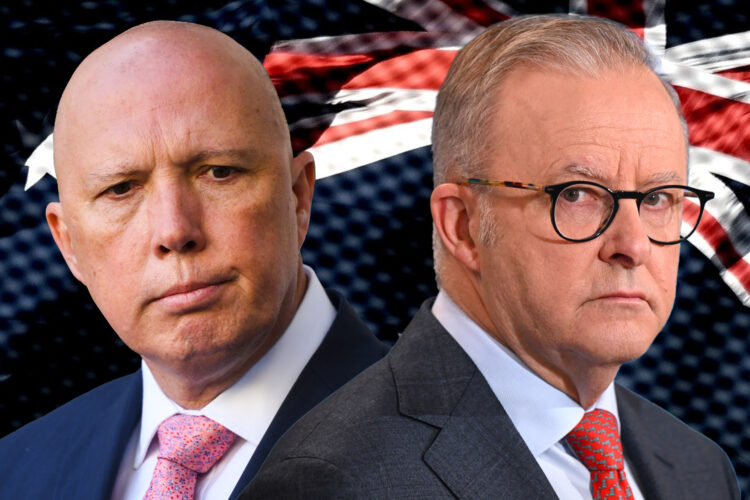
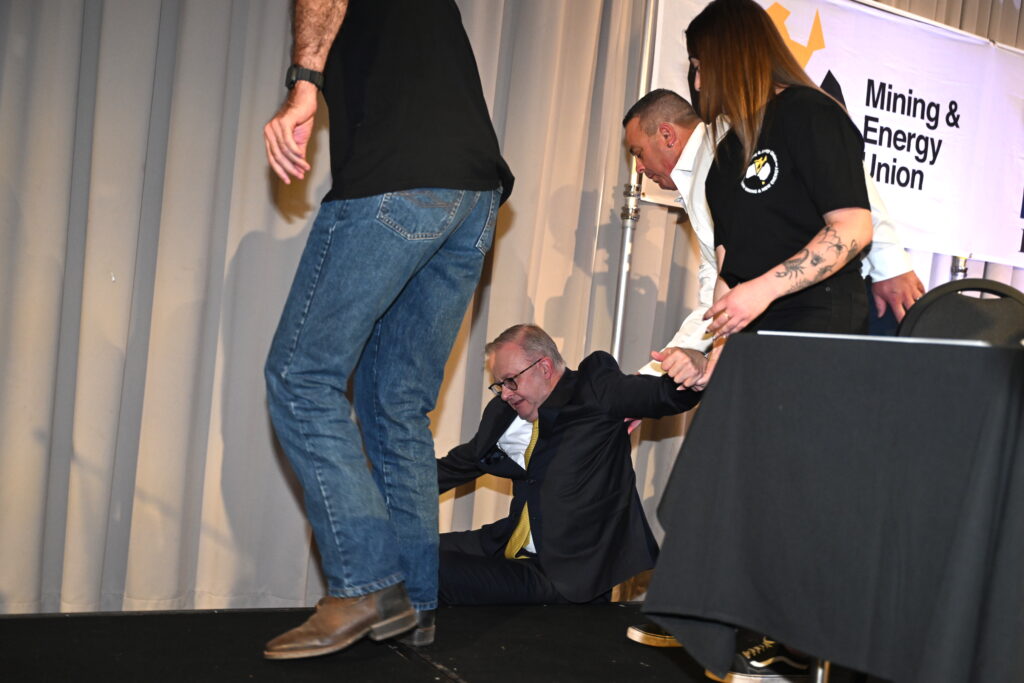
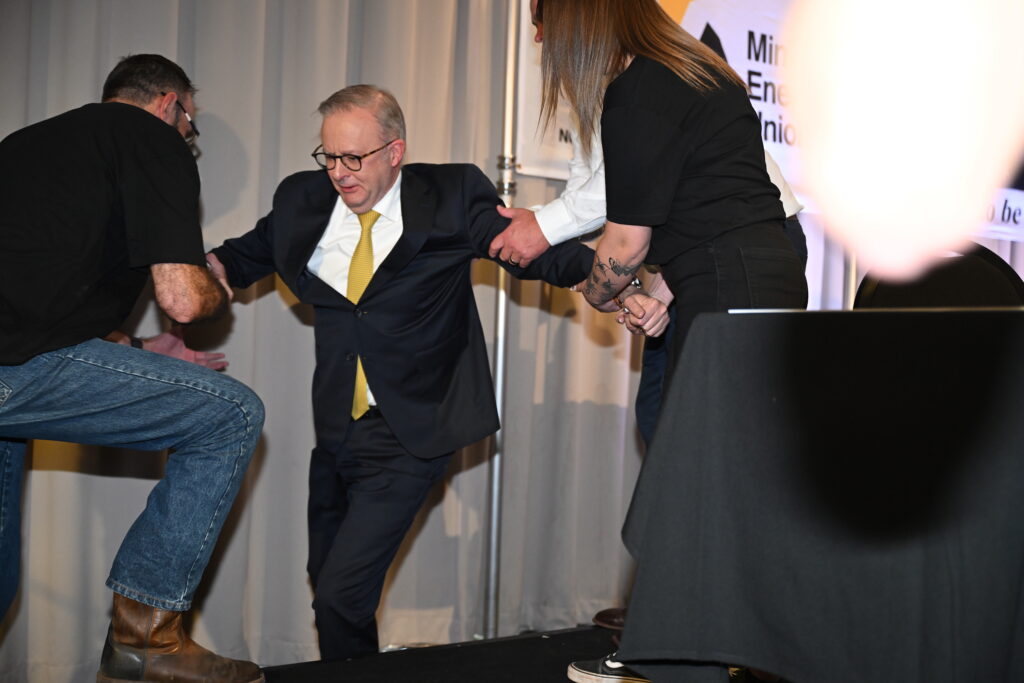
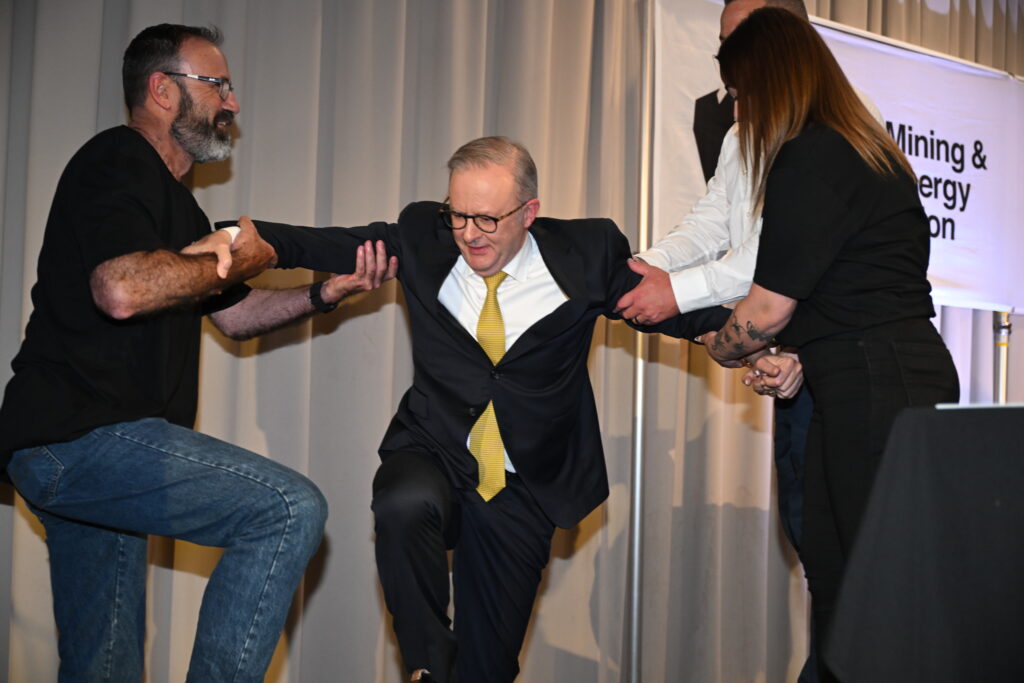
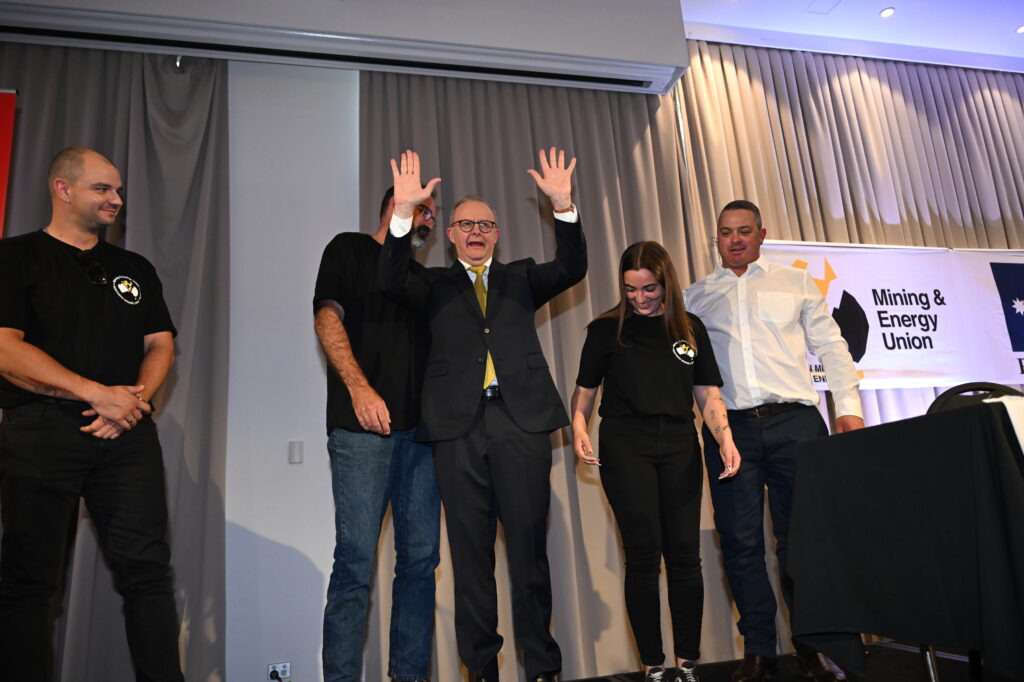

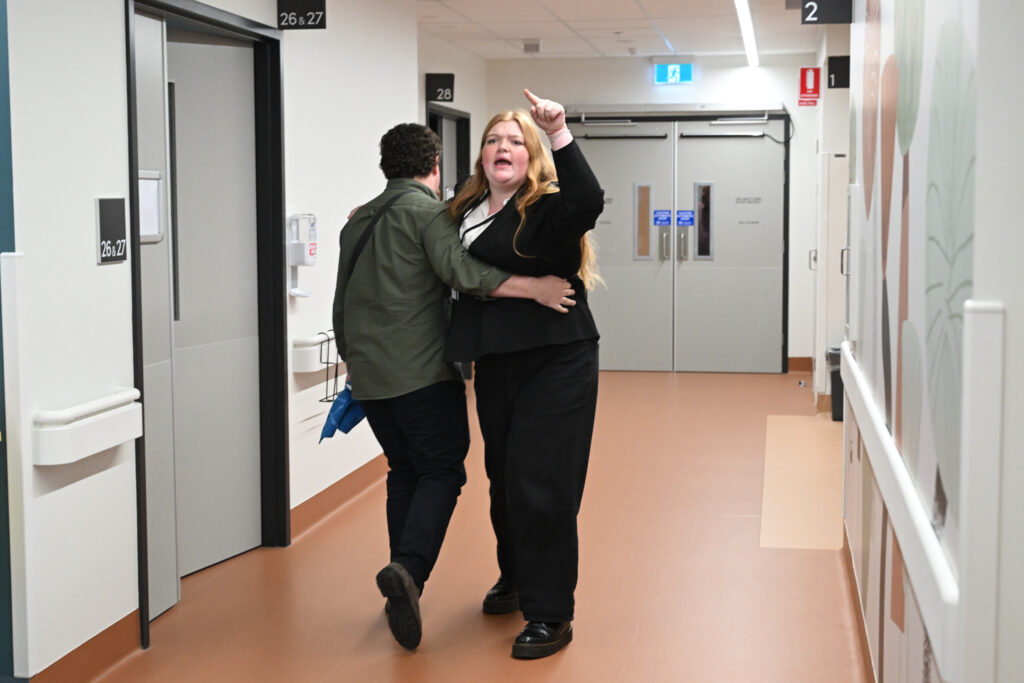


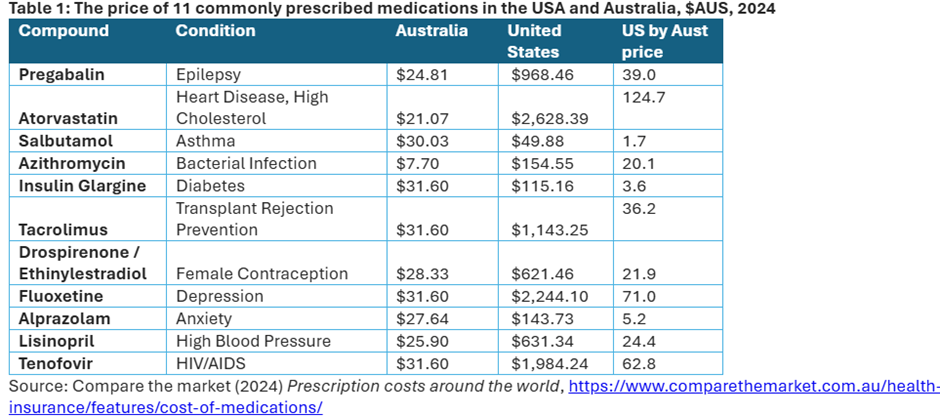

Comments
Start the conversation