And with that, we are going to say good evening – it is important to take these slightly early marks where you can because the days are only going to get longer.
Today we saw:
Labor stick with its health week theme, with a $150m announcement for the Flinders’ medical district in Adelaide
More questions on the spy/research vessel and press gallery worries about underwater sea cables for reasons which still remain unclear
Anthony Albanese has worked out after three years how to control a press conference (looks like that Dan Andrews coaching is paying off!)
Albanese heading to Geelong to talk kids sport and get more images of him being very positive on the campaign trail
Peter Dutton and Bridget McKenzie looking at a sign in a field as they promised funding for Melbourne’s rail link (at the expense of the suburban rail loop no one seems to want)
Dutton unable to say what is ‘woke’ in the educational curriculum he was gung ho about de-woke-ifying on Sky News the night before
Dutton very upset about the Chinese spy/research vessel and very worried about underwater sea cables
Dutton holding a very quick press conference with victims of crime in the seat of Bruce (which is one of the Coalition target seats)
No one talking about the Coalition housing policy to lighten lending regulations, because the policy seemed to get very confused depending on who was talking about it.
Malcolm Turnbull having a great old time on his victory lap about not putting all your eggs in the Aukus basket
The RBA holding interest rates shocking no one
The RBA getting a bit confused about the impact of tariffs
Tomorrow is Trump’s ‘Liberation day’ eve which means we are going to get more panic over how Australia is going to react to it’s ‘greatest ally’ slowly circling the geopolitical toilet bowl.
WHAT FUN!
Thanks so much to everyone who joined us today – we hope to see you again tomorrow. Until then, send in more of your questions (amy.remeikis@australiainstitute.org.au) and I will get them answered by our experts – and take care of you. Ax
Shadow Minister for Infrastructure Bridget McKenzie and Leader of the Opposition Peter Dutton try to find where they are.Australian Prime Minister Anthony Albanese and the Labor Member for Corangamite Libby Coker borrow some charisma
“And that is precisely how America is behaving now.”
16.34 AEDT
Canada’s new PM wants the government to build a lot more homes
Charlie Joyce
Carmichael Centre Researcher
Meanwhile in Canada, freshly-minted PM Mark Carney has announced that, if re-elected in the nation’s snap April 28 poll, his Liberal Party government will solve the housing crisis by (gasp) getting the government to build a lot more affordable homes.
“We’re getting government back in the business of building affordable homes. Acting as a developer, […] Build Canada Homes will work with industry to build affordable homes at scale including on public lands.
Under Carney’s plan, the government would create Build Canada Homes, a new housing development corporation, to directly construct new housing projects.
The Canadian Liberals’ plan also includes significant new support for prefabricated housing manufacturers, with Carney arguing for the economically and environmental benefits of prefab housing:
“The way we build homes needs to change. Prefabricated and modular housing will play a big role in the future they can drive down the time to completion by up to 50%. They are cheaper to build by up to 20% and they are a more sustainable way to build, producing 22% fewer emissions than traditional construction methods.
[…] We want Canada to be the world leader in this new innovative industry. That’s why we’re providing $25 billion in financing to scale up that industry and in the process we will create good jobs up and down the supply chain.”
We’ve argued for a long time at The Australia Institute that if governments want to make housing more affordable, they should start building affordable housing again.
If they want Australia’s current contenders for PM are serious about tackling the housing crisis, taking inspiration from Canada might be a good place to start.
16.05 AEDT
There is more to this press conference, but honestly, it is too boring for words.
Save yourself. Even Grogs has switched off.
15.47 AEDT
Greg Jericho is also listening to this press conference with his economist brain:
“So, the way we think about forecasting inflation and forecasting activity is about total demand and supply. And what we’ve been saying is that total demand, which is private and public together, has been above the level of supply in the economy. The ability of the economy to supply what is being demanded. And that’s what is driving inflation.” – Michele Bullock.
[But inflation is falling, or at worst stable, household spending growth is weak, private investment growth is weak. So no idea what she is worried about. GDP growth is bugger all. Excess supply? Come on.]
15.43 AEDT
Michele Bullock press conference
The RBA Governor is holding her presser and the press pack seems a little calmer than usual.
She opens with her statement which includes:
The board is focused on risks to activity and inflation in Australia. But there’s also a lot of uncertainty around the global outlook at the moment. One of things we’re cautious about is that policy unpredictability overseas could lead to slower growth. The implications for inflation here, though, in Australia, are less clear. The recent commentary from the Federal Reserve and other Central Banks is worth noting. They’re all conscious of the I will pact of global growth but uncertain about the medium term inflation implications. We’re not on our own in navigating this period of unpredictability.
So the board can properly debate and consider the risks for outlook for Australia, the team at the RBA has been working on a number of scenarios and we’re talking to our peers in other Central Banks – particularly other small open economies, to try to make sense of what is going on now and what we can expect in the next year or so.
We’re paid to worry, to analyse and to make judgements as new data comes in and as the environment evolves, and that’s what we’ve been doing and will continue to do. We’ve come a long way and it hasn’t been easy, but we have made good progress on bringing inflation down and keeping unemployment low. This is a good position for the economy to be in as we approach a period of uncertainty. But we have to be careful not to get ahead of ourselves. Inflation pressures remain, and cost of living pressures are still very real for many Australians. The board will continue to look at the data to assess if the economy and inflation continue to evolve expected.
Which suggests that far from being ‘home grown’ pressures as the Coalition is trying to make stick, it is the global uncertainty which has the central bank’s eye
15.38 AEDT
Angus Taylor responds to RBA decision to not do anything
Angus Taylor has been allowed to front the cameras! Good job Angus!
He has the usual things to say:
The Reserve Bank today, of course, kept interest rates on hold, which continues to underscore for Australians is that there’s no fast pathway back to the standard of living they had when Labor came to power.
Let’s be clear – Australian standards of living have collapsed since Labor came to power. 8% down in just under three years. 8 % in just under three years.
That’s the incomes they had, what the goods and services are that those incomes can buy – down by 8% since Labor came to power.
And we know from Labor’s own numbers and from the Reserve Bank that we’re not getting back to where we were when we were last in power until the end of the decade. This will be a lost decade for Australians if Labor stays in power. That is their plan. Their plan is for a lost decade. And that’s why Australians are losing hope.
We see anxiety – not confidence.
Etc, etc, etc
Just as they are about to go to questions, Michele Bullock stands up for her press conference and all the broadcasts leave Angus. Sad.
15.25 AEDT
Greg Jericho
Chief Economist
In the RBA statement and in Treasurer Jim Chalmer’s press conference there was a lot of mention of “uncertainty”, which is code for Trump’s idiocy about tariffs which is due to happen on Thursday.
To get a sense of just how uncertain things are, the Economic Policy Uncertainty index for Australia that is calculated by recording mentions of uncertainty and similar terms regarding economic policy in the media each day is at a record high for Australia – so Trump has made economic policy more uncertain than COVID, or the introduction of the Carbon Price, the GFC or September 11.
15.18 AEDT
On housing prices, Chalmers says:
It’s not unusual for house prices to rise in our economy. It’s been more or less a permanent feature of our economy for as long as I can remember. And obviously, the interest rate cut has a number of economic consequences, including, I think, injecting another $5 billion, I think from memory, into the economy over the course of the 12 months after the decisions taken. The most important economic consequence of the rate cut that we saw earlier this year is that it took a little bit of pressure off Australians who are doing it tough. That’s our motivation as well with our cost of living package.
That’s why it beggars belief, frankly, that when Labor is trying to cut income taxes for every Australian taxpayer, Peter Dutton and Angus Taylor have said that they will legislate higher taxes on every Australian taxpayer, and that would make it harder for Australians to service their mortgage. I wanted to one more thing about housing, because you’ve given me the opening today. Today, on the front of one of the newspapers, we hear that the Opposition want to direct APRA, the regulator, the banking regulator, to change the serviceability buffer when it comes to home loans.
This is a little bit like the mess that they got themselves into on insurance divestiture. Because Michael Sukkar was in the paper saying that they’ll direct APRA. Peter Dutton was saying that it is a matter for APRA to determine the serviceability buffer. And Andrew Bragg was on TV earlier on saying that Australians could borrow $40,000 more as a consequence.
So they have to clear this up. Michael Sukkar is saying that they’ll direct APRA. Dutton is saying it’s a matter for APRA. Bragg has a specific number in mind that he’s making this off. This is what happens when the Liberals and the Nationals make the policies on the run. They announce it as a distraction from the nuclear reactors which will cost $600 billion – which will neccisitate cuts to pensions and housing.
So I call on the Opposition, I call on Peter Dutton and Angus Taylor to immediately clear up this latest policy bin fire that they’ve come out with as a distraction from the secret cuts to pay for the nuclear reactors.
And with that, Chalmers’ bounces.
15.16 AEDT
Q: Tomorrow, Donald Trump will outline his tariff plan. Are you concerned that this decision was made a day prior to what could change Australia’s relationship with the US?
Chalmers:
A couple of things about that. First of all, the Reserve Bank’s made it really clear that one of the things that’s front of their mind is all of this global uncertainty. And escalating trade tensions are obviously a big part of the story, but not the whole part of the story. And the budget was designed as well to address, really, two main pressures – cost of living pressures and also this global uncertainty.
And so, no doubt, the Reserve Bank Governor will have an opportunity to talk through this afternoon how they’re seeing this global economic uncertainty and what it means for their deliberations when it comes to decisions taken from the new administration in DC, we will continue to stand up for and speak up for Australia’s national interests. When it comes to the PBS and when it comes to those elements of Australian policy architecture that’s so important to us, those policies are not up for negotiation.
And I think that there is a difference here when it comes to the major parties in Australia.
You know, as I said before, DOGE-ee Dutton always takes his instructions and cues and policies from US. When stand up for Australia’s national interest. We want to strengthen the PBS and we will strengthen the PBS because Australians need us to – not weaken the PBS because American multinationals would prefer us to. And so, whatever comes out of DC, whatever announcements are made in the next little while, we have spent a lot of time engaging, speaking up for and standing up for Australia’s national interest and we will continue to take that approach. We are well placed and well prepared to deal with whatever the decision is out of Washington DC.
15.14 AEDT
Q: You said that the February cut was a reflection of Labor’s strong economic management. Are you disappointed that you didn’t see a cut today?
Jim Chalmers:
I try not to second guess decisions taken independently by the Reserve Bank. I don’t make decisions in advance and I try not to second guess them. One of the things that I implemented is that the Reserve Bank Governor gets an opportunity to talk the Australian people through their thinking and through their deliberations over the last couple of days at the Reserve Bank Governor. But I do think that the way that Labor has responsibly managed the economy, the way that this Government has been able to get inflation down and real wages up, keep unemployment low, keep the debt down, and the fact that interest rates have started to come down is a reflection on the progress that Australians have made together on our watch as a government. If you compare the economic situation now to three years ago, inflation was much higher and rising when we came to office. It’s much lower and falling now. And the fact that interest rates have started to come down is a reflection of that.
Q: Is the hold today a detriment to your election campaign?
Chalmers:
I don’t see this decision in political terms, and I’m sure that the independent Reserve Bank doesn’t see it in political terms either. We’ve already seen rates start to come down this year. That’s a very good thing. It’s a reflection of the progress that we’ve made together in the economy. And I don’t make predictions about the future. But I do remind people that there was almost no expectation whatsoever from the markets and from the economists today of a rate cut, but there is an overwhelming expectation of a rate cut in May, and in subsequent months. That’s the expectation of the market. I don’t get into those sorts of predictions.
15.10 AEDT
DOGE-EE Dutton: Chalmers tries on a new Dutton nickname
Chalmers continues:
A vote for Peter Dutton is a vote for higher taxes, for no ongoing cost of living help, and for secret cuts to pay for his nuclear reactors. Now, every policy idea that he makes up on the run is only designed to distract from the fact that he doesn’t want to come clean on his secret cuts to pay for his nuclear reactors.
He says that the detail will come later, but we are now well into the election campaign, and Peter Dutton has still not come clean on his $600 billion in cuts that he needs in order to build these nuclear reactors which will push up electricity prices.
Now, today, he threatened cuts to school funding which was right from the DOGE play book. And we also know that he wants to Americanise Medicare as well, because when he was the Health Minister, he tried to gut and cut Medicare.
He said that the best predictor of future performance is past performance. When Peter Dutton was voted the worst ever Health Minister in our history, he tried to Americanise Medicare, and now we hear that he has in mind, cuts to education as well.
This is DOGE-ee Dutton, taking his cues and policies straight from the US in a way that will make Australians worse off.
And this Albanese Labor Government is getting inflation down, interest rates have started to come down, growth is rebounding solidly in the economy, unemployment is down, the debt is down as well. Real wages are growing in our economy.
So we are making welcome and progress in our economy together, but we know that there’s more work to do because the global environment is so uncertain, and people are still under pressure. That’s why our cost of living help as the centre piece of the budget is so important. It’s why it’s so important that we cut income taxes for every Australian taxpayer – not jack up taxes as Peter Dutton and Angus Taylor are proposing to do. Happy to take your questions.
15.07 AEDT
Jim Chalmers press conference
Jim Chalmers is in his element here, as he talks about inflation and gives a bit of verbal side eye to the RBA board:
Rates have already started coming down this year and that’s a good thing. When we came to office, inflation and interest rates were both rising, and now, inflation and interest rates are both falling. And this reflects the progress that we’ve made together as Australians on inflation the Reserve Bank’s statement says that it has fallen and the continued decline in underlying inflation is welcome.
But they also make it very clear that they’re very focused on global economic uncertainty as well. Inflation was much higher and rising at the last election. Now, it is much lower and falling. Inflation was higher than 6% when we came to office, and it was rising fast. It peaked in 2022 – the year that we were elected.
And now, it is a fraction of what we inherited from Peter Dutton’s Coalition. It’s gone from 6.1% and rising before the election, and it’s now 2.4%, and underlying inflation is coming down as well. Now, we know that cost of living is front of mind for many Australians, and it’s absolutely front and centre in the budget I handed down last week. And it’s central to the big differences between the parties as well. Labor is helping with the cost of living, cutting income taxes for all 14 million Australian taxpayers, and strengthening Medicare at the same time.
15.01 AEDT
RBA ‘confused about how tariffs work’
Matt Grudnoff
Senior Economist
The RBA seems very confused about how tariffs work and twisting itself to come up with a reason not to cut rates
In the RBA’s statement it said of the impact of Trump’s tariffs
On the macroeconomic policy front, recent announcements from the United States on tariffs are having an impact on confidence globally and this would likely be amplified if the scope of tariffs widens, or other countries take retaliatory measures. Geopolitical uncertainties are also pronounced. These developments are expected to have an adverse effect on global activity, particularly if households and firms delay expenditures pending greater clarity on the outlook. Inflation, however, could move in either direction.
But here’s the thing given Australia has ruled out retaliatory tariffs, Trump raising tariffs will not raise prices for Australia.
Let’s assume a worst-case scenario where the US puts tariffs on everyone and everything, but Australia does not retaliate with tariffs.
The biggest impact on prices will be in the US where prices for all its imports will rise.
Prices for US goods and services in other countries (apart from Australia) will also rise.
Maybe it will raise some of the input costs for stuff made in America that is then bought by Australians. But this is second or even third round effects, that are not likely to be strong.
So what else could happen? Well, a tariff war would likely cause the global economy to slow. What happens then? Well price rises slow because people can’t afford to buy things. So why is the RBA thinking this could be inflationary for Australia.
And here’s the kicker – an interest rate cut or rise has ZERO impact on prices that have changed due to a tariff. If a tariff raises prices by 25% the prices have gone up due to the tariff, not due to us all having more money and spending madly. So, what is the RBA thinking it is doing?
14.51 AEDT
RBA minutes (annotated by Greg Jericho)
At its meeting today, the Board decided to leave the cash rate target unchanged at 4.10 per cent and the interest rate paid on Exchange Settlement balances at 4 per cent.
Underlying inflation is moderating. [same subheading they had in February]
Inflation has fallen substantially since the peak in 2022, as higher interest rates have been working to bring aggregate demand and supply closer towards balance. Recent information suggests that underlying inflation continues to ease in line with the most recent forecasts published in the February Statement on Monetary Policy. Nevertheless, the Board needs to be confident that this progress will continue so that inflation returns to the midpoint of the target band on a sustainable basis. It is therefore cautious about the outlook. [This is rather weak. They have gone from wanting underlying inflation to be consistently within the target band, now they want to be confident about this. In February they had a whole paragraph about “However, upside risks remain.” That has been removed this month and yet… ]
The Board noted that monetary policy is well placed to respond to international developments if they were to have material implications for Australian activity and inflation.
The outlook remains uncertain. [same subheading they had in February]
Private domestic demand appears to be recovering, real household incomes have picked up and there has been an easing in some measures of financial stress. However, businesses in some sectors continue to report that weakness in demand makes it difficult to pass on cost increases to final prices. [Yes! Because we are struggling!]
At the same time, a range of indicators suggest that labour market conditions remain tight. Despite a decline in employment in February, measures of labour underutilisation are at relatively low rates and business surveys and liaison suggest that availability of labour is still a constraint for a range of employers.[ie – we think more of you should be unemployed because you might start wanting higher wages] Wage pressures have eased a little more than expected [ie oh you’re getting lower wages rises than we thought you would so errr gee better come up with a reason why this is irrelevant] but productivity growth has not picked up and growth in unit labour costs remains high. [Productivity is a weird thing for the RBA to care about for a rates decision. Productivity is a slow-moving long-term thing. A rate cut won’t affect it one way or the other and there will never be a quarterly change in productivity that would justify either a rate cut or increase.]
Deputy Governor of the Reserve Bank of Australia (RBA) Michelle Bullock speaks during Senate Estimates at Parliament House in Canberra
There are notable uncertainties about the outlook for domestic economic activity and inflation. The central projection is for growth in household consumption to continue to increase as income growth rises.[Given household consumption has been either flat or falling, this is not a big call] But there is a risk that any pick-up in consumption is slower than expected, resulting in continued subdued output growth and a sharper deterioration in the labour market than currently expected. [Gee, ya think? So the RBA here is giving a good reason to cut rates, and yet… guess they want to be cautious about… err the economy tanking??] Alternatively, labour market outcomes may prove stronger than expected, given the signal from a range of leading indicators.[The RBA not doing much to suggest they are just guessing – sure thing could be bad or could be good. But surely you can do a bit better than that?]
More broadly, there are uncertainties regarding the lags in the effect of monetary policy and how firms’ pricing decisions and wages will respond to the demand environment and weak productivity outcomes while conditions in the labour market remain tight. [Here the RBA is admitting it is not sure how long it will take for the rate cut of February to have an impact. If you are starting to think the RBA using a magic 8-ball to work out what is happening, you might be right]
Uncertainty about the outlook abroad also remains significant. On the macroeconomic policy front, recent announcements from the United States on tariffs are having an impact on confidence globally and this would likely be amplified if the scope of tariffs widens, or other countries take retaliatory measures. Geopolitical uncertainties are also pronounced. These developments are expected to have an adverse effect on global activity, particularly if households and firms delay expenditures pending greater clarity on the outlook. Inflation, however, could move in either direction. [again, very helpful. Thanks] Many central banks have eased monetary policy since the start of the year, but they have become increasingly attentive to the evolving risks from recent global policy developments. [essentially – some have cut because they raised rate higher than the RBA, and now they are wondering what the hell Trump might do]
Sustainably returning inflation to target is the priority. [same subheading they had in February]
Sustainably returning inflation to target within a reasonable timeframe is the Board’s highest priority. This is consistent with the RBA’s mandate for price stability and full employment. To date, longer term inflation expectations have been consistent with the inflation target and it is important that this remain the case.
The Board’s assessment is that monetary policy remains restrictive. [ie we are still thinking that the current interest rate will cause more people to lose their jobs, and we like that] The continued decline in underlying inflation is welcome, but there are nevertheless risks on both sides and the Board is cautious about the outlook. [we are scared to do anything because life apparently is not certain]
The Board will rely upon the data and the evolving assessment of risks to guide its decisions. In doing so, it will pay close attention to developments in the global economy and financial markets, trends in domestic demand, and the outlook for inflation and the labour market. The Board is resolute in its determination to sustainably return inflation to target and will do what is necessary to achieve that outcome. [come back in May when we will cut rates and no one will accuse us of being political]
14.32 AEDT
Australia Institute view: Interest rate hold more political than the cut we should have had
Today’s decision to keep interest rates on hold is just as political as if the RBA had cut rates.
And a second cut – from 4.1% to 3.85% – is exactly what the Reserve Bank should have delivered today.
The Treasurer and Prime Minister constantly remind us that the bank is independent of government and politics.
Now, suddenly, the RBA doesn’t want to look political.
“Australian mortgage holders are suffering too much for the bank to tiptoe around the sensitivities of our political leaders,” said Greg Jericho, Chief Economist at The Australia Institute.
“When rates were going up, the bank had no problem slugging borrowers ten times in a row.
“Now that rates are coming down – and the bank board is meeting less often – the RBA is more worried about appearing political than doing the right thing by Australians.
“All the indicators have continued to move in the right direction since the last rate cut. Underlying inflation has now been below 3% for three straight months – so why wait?
“Interest rate cuts never happen as a one-off. The RBA has already indicated that more are coming. So, I repeat, why wait?”
14.30 AEDT
No change in interest rates
In news shocking no one – the RBA has not cut rates
14.30 AEDT
Greens campaign in Perth
Greens MP Adam Bandt has been in Perth (which is one of the target seats for the Greens) where he has appealed to the people of WA to think about their vote.
The Greens had a very good state election, taking the balance of power in the legislative assembly, and getting about twice the vote of the Nationals. And this is despite a massive counter campaign about protecting the fossil fuel industry.
Bandt:
In the seat of Perth, if less than one in ten people shift their vote to the Greens, then Sophie Greer can be the next member of Parliament.
As we head towards a likely minority Parliament, that puts the voters of Perth in a really powerful position to keep Dutton out and get Labor to act by getting dental into Medicare, by wiping student debt, and by taking real action on the housing and climate crisis.
Two thirds of people in Perth are in housing stress. We’ve got people who are skipping meals because they can’t afford to pay the rent. The price of groceries is soaring. People know we can’t keep voting for the same two parties and expecting a different result.
Here in Perth, the local member is a patsy for the gas corporations, is quite happy with the status quo where one in three big corporations pays no tax, and meanwhile, everyday people struggle. This election if you want change, you can vote for it. Perth can be in the box seat, by getting a Greens representative in the middle of Parliament.”
When it comes to the Coalition’s housing policy, Bandt said it would only make housing prices increase (which our research bears out)
[His] plan is for first home buyers to have to pay more for their homes, and take out bigger mortgages that they’ll struggle to afford.
It is not an answer to the housing crisis.
We’ve got to ensure the government starts building homes that first home buyers can actually afford, and make the banks offer low-rate mortgages at rates people can afford.”
14.24 AEDT
Factcheck: Let’s take a closer look at Victoria’s budget and economy
Victoria, like much of Australia, is one of the richest places in the world and can afford anything it decides is a priority. Victoria can build a rail loop, a train to the airport, a bunch of other things and the sky will not fall in.
Victoria’s economy has grown faster than the rest of the country since the pandemic:
The Victorian Government’s books are not in bad shape:
This doesn’t mean everything the Victorian Government wants to build is a good idea. All government spending should be backed by clear, robust analysis, something that has been lacking from some of the Vic infrastructure proposals. But the idea that Victoria can’t afford to build more major infrastructure isn’t right.
14.20 AEDT
Factcheck: Australia’s underwater cables
Frank Yuan
Postdoctoral Fellow at the Australia Institute
Having addressed the ridiculous idea that the Chinese navy might somehow cut the Sydney-Perth underwater cable, let’s look at the cables connecting Australia with the rest of the world, for which Dutton and various commentators breathlessly ring alarm bells.
If an adversary does decide to cut a cable, the most stupid way to do so would be to cut it right on Australia’s doorstep, rather than doing sabotage at a safe distance, somewhere along the thousands of kilometres’ length of one such cable. (You’d think as a former police detective, Dutton would be attuned to how criminals’ think.)
It would be difficult for Australia to defend the full lengths of all these cables in any case – and you can’t do worse in attempting to protect them by planning for only 6 to 8 incredibly expensive submarines, which may or may not arrive by mid-century. And are we all suppose to forget that Australia would still have satellite communications in the unlikely event of losing ALL of its communication cables?
14.11 AEDT
Answering your questions: the Coalition’s housing policy
Greg Jericho
Chief Economist
Further to the proposal today by the Liberal Party to loosen the lending standards for people borrowing for a home. This is long time wish of Liberal Senator Andrew Bragg. He was pushing it last year and held Senate committee hearings on the issue looking for people to come out in support of it. Banks love it because it allows them to lend more and make more money. The restrictions were made tougher after the GFC to make sure that… well another GFC does not happen!
Matt Grudnoff and I appeared before the committee rather to his disappointment, not in support of it.
I pointed out that the housing market is already massively distorted by benefits to investors through the 50% capital gains tax discount and negative gearing and relaxing the lending buffers to homeowners was just introducing another distortion.
I suggested it was akin to introducing cane toads to get rid of another introduced species.
“I’d also add that you need to think of why we would even seek to reduce the buffer for first home buyers. Clearly, from your point of view, it is actually to enable first home buyers to get into the market and to be able to actually buy a home and to borrow higher. What is the reason that they need to do that? It is because of the distortions that are in place in the taxation system through the capital gains tax discount and negative gearing. Our argument is: let’s get rid of those distortions rather than bringing in another distortion to try and counter that distortion. It starts getting into a little bit of financial bringing in cane toads to try and get rid of another introduced species. Let’s not try and counter bad things with a potentially other bad thing. Let’s get rid of the bad thing initially.”
Before Matt and I appeared, Paul Holmes the Director of Disaster Relief, Legal Aid Queensland gave evidence in which he pointed out that loosening the rules in place fo mortgages would mean people would be more likely to borrow too much and get into trouble repaying their home loans much quicker.
He told the committee that people usually do everything they can to pay their mortgage and this has can have dire consequences:
“They don’t eat. Their kids don’t eat. They don’t spend on basic expenses such as going to see a doctor. I don’t want that as a life for people. That’s what people are currently doing. These are the people who could afford a mortgage. We are talking about people who aren’t able to afford a mortgage under the current. They are going to be in that position far quicker than people who currently have a loan. It is important, and we can’t forget the human here.”
To recap – the policy will introduce yet another distortion in to the housing market which will raise house prices and make it much more likely that people will find themselves in financial hardship.
So no. Not great.
14.10 AEDT
Answering your questions: gambling reforms
Australians are the biggest gamblers in the world according analysis from The Australia Institute.
The rise in popularity of online and sports betting means that more and more young Australians are gambling – over 900,000 teenagers gambled in the past year, which is enough to fill the MCG nine times over. Almost one in three 12-17-year-old Australians now gamble, as do almost half of 18-19-year-olds.
So far, the Albanese Government has taken the same hands-off approach to problems in universities that federal governments have taken for decades. The federal government provides substantial funding to universities, but most regulation is left to the states, which have mostly also not taken responsibility. This has created a general governance crisis in the sector.
The university sector is in desperate need of accountability and responsibility, it’s time for the federal government to take this role. It could start by implementing a range of reforms recommended by the Australia Institute.
14.05 AEDT
Eyes are now turning to Martin Place and the RBA Board decision, so we will leave Malcolm Turnbull there (although he seemed to have a very good time).
It is time to have the fourth coffee of the day and my colleague Glenn is throwing around M&Ms so we need to get in on that. Take a short break and we will update you with everything you need to know when you get back.
13.59 AEDT
What does Malcolm Turnbull think of Peter Dutton’s plan to cut the public service?
Turnbull:
I won’t either support it or oppose it but I’d just make this point – it was becoming very obvious to me when I was prime minister – and this is why we set up this inquiry and something that Martin Parkinson and I talked about a lot and we set this up, as becoming obvious to me that there were far too many consultants being used.
Now, I’ve got nothing against consultants. I’m sure many of them are here. Love you all, but you run the risk that you deskill the APS.
So you’ve got to I’ve give you an example – and this is the attitude and this is what – my colleagues, particularly Matias [Cormann], had a different view.
I am sceptical about the cult of consultants. I’ll give you an example. When I was Communications Minister, I wanted to have a line-by-line cost review of the ABC and SBS, the public broadcasters. Lucy and I had done that for the Ten Network in the early ’90s, so I knew what – when we restructured the Ten Network, so I knew what needed to be done and I said to the department you should do this and they said we’ll have to get a big consulting firm in and I said, “Hang on. You’re the department of communications supervising the public broadcasters is your core business. You do it.”
And I insisted that they do it. A very smart man who had just retired as the Seven Network and got him as a domain expert for a modest fee but that was the only consultant we had and they did the work but it was really interesting to me, coming back into government in 2013 after having been out since 2007, how the reflexive action was get a consultant, get a consultant.
I think we need to ensure that the APS is efficient that competent people are retained and incompetent ones are eased out, but you cannot afford to deskill the public service. That is – that was actually the reason one of the main reasons why that inquiry which David Thodey chaired was set up. Sadly I wasn’t around when it reported. Do you think Labor is heading in the right direction in terms of hiring more public servants? As long as they’re capable. It’s like defend spending. Is it better to spend 4% or 3% or 5% of GDP on defence? Well, it depends what you’re spending it on. Is it better to have 50,000 or 40,000 public servants, it depends on how capable they R it’s always a good day to hire capable people. The concern is you run the risk of deskilling your APS and you say to a young person who wants to do this kind of work, if you want to do really interesting work, get a job with a consultant, don’t work in the APS and that’s a problem.
13.57 AEDT
What does Malcolm Turnbull think about Peter Dutton saying he wants to live in Kirrabilli House on the Sydney Harbour, instead of Canberra and The Lodge? (Turnbull lived in his own home while prime minister)
Turnbull:
He’s been in Parliament longer than I was and he’s run in more elections than I did. But if I was running in a seat in Brisbane, I wouldn’t be saying the minute I become prime minister I’m leaving to live in Sydney. I don’t think it’s a wise thing to say. Obviously Lucy and I stayed living in Sydney. We stayed in our own house in our own electorate, in the centre of our own electorate where we’ve been for 30 odd years. I think that will be used against him but I don’t think it’s going to – you know, this is one of the kind of gotcha issues in the election. I don’t think it’s a big deal but I’m sure he’s regretting having said that
13.56 AEDT
Some in the gallery are just waking up to the fact that Australians are growing increasingly worried about the Trump administration, but don’t necessarily feel the same about a threat from China. (Welcome! Great to see you! There can be a habit in media of not actually believing something until your own cohort have validated it. Kind of like we can all see what is happening in Gaza because of the very brave Palestinian journalists who continue to risk their lives recording the genocide of their people for the world to see, but because ‘western’ journalists are not in Gaza (as Israel won’t allow them in) it doesn’t have the same level of legitimacy (in terms of how western media organisations see it)
China is a partner on the economic front and in many other areas indeed and there are plenty of technological areas where we cooperate and could do more. You know, I’m President of the international hydro power association and Lucy and I have a renewable development company working on some pumped hydro projects.
The expertise and experience in China on pumped hydro where, they’re building an enormous amount of it, is valuable and I would welcome the opportunity to learn more from their experience. But there are security issues.
And so you’ve got to look at the relationship with other countries in some ways a bit like the way you look at relationships with other people. There is a boundary of trust. There are things you would say to your wife or husband that you may not say to your best friend. And there are things that you would say to your best friend that you wouldn’t say to everybody you work with.
And so I think we have a much, much greater circle of trust with the United States but – as to all its allies. The US one of its greatest assets vis-a-vis China in terms of geopolitical competition, is the alliance system. China has very few allies. If you can call it that.
And America has many. But there is no question – of course this is the point I made on Bloomberg that upset Mr Trump so much, so I hope he’s not watching the ABC or I’ll get another Truth Social post, but the point is that China will take advantage of this.
Now, I don’t… We are not trying to hedge between China and the United States. We are very, you know, very committed to the relationship with the United States and disrupting of that relationship is coming solely from the Washington end at the moment. There are plenty of countries in our region and elsewhere in the world who do hedge between China and the United States and if the United States inflicts serious economic damage on a country, they will look more favourably on China. So I think that’s, you know, it’s a competitive world out there. America is not the sole superpower it once was.
13.49 AEDT
On Australia sending peace keepers to Ukraine, Malcolm Turnbull says:
Former Australian prime minister Malcolm Turnbull gives an address on Sovereignty and Security – Australia and the new world disorder at the National Press Club Of Australia in Canberra, Tuesday, April 1, 2025.
I thought Albanese made the right decision there and I’ll explain why. He stayed in the conversation. The signal Dutton was sending will be seen as washing our hands of Ukraine. It was quite… I think it was the wrong judgement call. And everyone makes mistakes. I think he made a wrong call there. Obviously peacekeepers do not go there unless there is peace and the Russians have said they’ll never accept them. So this is all hypothetical.
What Albanese said was, yes, we’ll stay in the conversation. We’re committed to supporting Ukraine. We’ll send someone along to the meeting and, you know, subject to a million factors, we are not, in principle – we are, in principle, happy to be part of it. I think that was a better call. He hasn’t committed to anything and, as I said, peacekeepers only turn up if there is peace. So I think Peter, you know – and, again, as you know, we’ve identified a few potential errors I made but we all make mistakes.
There it is. I don’t think much will turn on it, but it sent – I thought it sent the wrong signal to be honest. I think solidarity with Ukraine is very important and it’s important if you want to distinguish yourself from Trump too, if that’s part of your political mission, your communication mission.
13.47 AEDT
Q: How do you feel about the current election we’ve got at the moment?
Malcolm Turnbull:
I find it one of the most exciting elections I’ve ever seen. Don’t you?
I can’t drag myself away from the television! I’ve seen a few. I tell you what. It is… It is sort of – there are certain… It’s kind of a cultural continuation, you know, the democracy sausage, Antony Green, of course, for this election at least, and also, of course, wars about corflutes. Putting corflutes up. ‘He stole my corflute. Where’s my corflute. No, I didn’t’. It’s great. If you’ve run, as I have, in a marginal seat and ended up not being marginal, at least for my candidacy, but you get into all this grass roots stuff and I don’t miss it, no.
Q: Are you planning on campaigning at all for the Liberal Party?
Turnbull:
No. I think… No. No, I’m not. I’m not campaigning for anyone.
Q: Voting Liberal, though?
Turnbull:
It’s a secret ballot.
13.39 AEDT
Ferris Bueller’s Day Off continues to be relevant
Q: So Dutton’s public sector cuts and his commitment to I guess addressing a woke agenda appear to take inspiration from Trump. Should Australia be looking to the US for policy inspiration right now? And what kind of risks does it pose?
Turnbull:
As to whether Peter Dutton is taking inspiration from Donald Trump, that’s, you know, a matter for you to write about or Albanese to claim. I’m not going to buy into that. But certainly I wouldn’t be taking inspiration from Donald Trump’s policy agenda. Leaving aside all the public service cuts and the DOGE stuff and the, you know, the DEI campaign and anti-DEI campaign and, you know, the down with work from home. None of that is very popular here of course. But the big thing is protectionism. We are an open trading country. I cannot tell you the damage – Heather Smith spoke it very eloquently yesterday, an experienced economist and national security specialist. We face enormous damage potentially from a global trade war. It’s not just tariffs on our stuff that goes to America. It means there will be retaliations around the world and the trading system will close up and, you know, this is what made the Great Depression as bad as it was, America doing this in the Smoot-Hawley tariffs it wasn’t just those tariffs. It was the fact that everyone retaliated. So it’s a chain reaction.
There is ONE reason I know about the Hawley-Smoot tariffs and it is because of…anyone? Anyone?
Ferris Bueller’s Day Off.
I think the guy playing the teacher is an actual economist and his dad worked for the Nixon administration and he’s very conservative himself, but he ad-libbed this.
13.33 AEDT
Q: What about the PM’s current strategy? It to be, keep your head down, try not to cause trouble with Trump?
Turnbull:
It’s not a question of causing trouble, right? And there is – I noticed, you know, I gave a pretty mundane, I thought, interview with Bloomberg the other day and markets and geopolitics and we talked about Trump and Trump was obviously watching and took exception to it and put out a post having a go at me. Which, as you can see, shattered me. (LAUGHTER) But it didn’t shatter me very much but, ohs, you know, you saw the media. Malcolm Turnbull has ruined the chance of the tariffs and it created the most terrible tension at Holt Street. Who are we going to blame for the steel and aluminium tariffs? Albo? Malcolm? Kevin Rudd? And if we blame Kevin we can’t blame the other two. If we blame Malcolm, we can’t blame Albo. As it happened, nobody got an exemption, which is what I predicted. We’ve got to stop running around pretending that there is not an issue here andively sense organise ourselves. Does Donald Trump self-censor himself? Of course he doesn’t. If you want to be respected by people like Trump, you have to stand up for yourself, full stop. I’m not in the first bloom of youth and Trump is not the first bullying billionaire I’ve dealt with over the years so I can tell you I’m confident in this judgement.
13.29 AEDT
Q: You say you have to be tough to deal with Donald Trump. Peter Dutton, you know, says he’s the guy to do that. He can stand up to Trump and also forge a productive working relationship. Anthony Albanese is struggling to get a call with Trump. Maybe that won’t hurt him. In the long run, depending on what happens with the tariffs decision. But from your perspective, who would be the better leader to deal with Donald Trump.
Turnbull:
I honestly couldn’t pick between them, really. Being frank with you, I think it’s really hard to say. I think Dutton has a particular challenge, it’s a two-edged sword for Dutton. On the one hand, he would say, “I’ve got a great relationship with Gina Rinehart. She’s a friend, one of the biggest donors to the Liberal Party and to Dutton’s cause and she’s made a beeline for Trump and,” and he would say he’s got access to Trump through those connections. I don’t think it would do you any good but that’s sort of the pitch and that’s the kind of thing that, you know, frankly, on the right-wing media, that is the line that is being put.
Dutton is closer to Trump politically and therefore would be able to deal better with him. That’s one side of the coin. On the other side of the coin, the problem Peter has is that his political environment is that right-wing media ecosystem, you know, Sky After Dark, shock jocks, Murdoch tabloids, your paper (the Australian) That’s part of the world in which he operates and it’s all tied up with Fox News intimately connected to the Trump Administration, so the difficulty of taking on Trump is you’re then taking on the most popular person in the ecosystem in which you live, OK? So I think the only way you’ll find out is if he becomes prime minister and does that
Albanese doesn’t have that. He doesn’t have the advantage of great connections through, you know, plutocrats and billionaires but he also doesn’t have the problem that his political base, his media environment, if you like, is, you know, fan boys for Donald Trump.
13.22 AEDT
Turnbull: ‘There is a big whale in the bay called Donald Trump, splashing around, wetting everybody and creating mayhem and our political class are pretending it’s not there.’
On Peter Dutton saying he wants a ‘whole squadron of F-35s’ Turnbull says:
I’m not saying that is the particular right decision. I notice Peter Dutton has said he wants to buy a new Squadron of them. You certainly shouldn’t be saying that, I wouldn’t have thought. It sends quite the wrong signal but this is why we need to have a proper conversation about this and this is what we were having yesterday. But you can’t keep on pretending it’s not happening. There is a big – moving to another marine metaphor, there is a big whale in the bay called Donald Trump, splashing around, wetting everybody and creating mayhem and our political class are pretending it’s not there.
13.18 AEDT
Q: I think one of the issues with plan B is there’s not many sort of credible options given that Australia’s record on submarines is burning everyone who has offered to sell us one essentially. We saw, obviously, your predecessor, Tony Abbott, with the wink and the handshake deal with the Japanese. Obviously torched the relationship with the French over the attack class. We talk about the need for a plan B but what is a realistic plan B, given…
Turnbull:
Look, you cannot deal with a risk unless you acknowledge it exists. This is the fundamental problem that they’re literally in denial. I won’t say who it was but I was speaking to have a very senior official in this area the other day and I said, “What is your plan if the Virginias do not arrive,” and he looked me straight in the eye and he said to me, “They will arrive.” And I said that’s actually not the answer to the question I asked. I said what will you do if they don’t. He said, “They will arrive.” After he said it a few times this is like me saying to you, “I am having a party in the park or the garden, on Sunday and invite you,” and if you say, “What are you going to do if it rains?” And I say, “It won’t rain.”
We have a real risk here that is contemplated by the parties. It is real. It’s set out. It’s been flagged by the new deputy secretary of defence, in his confirmation hearings. It’s self-evident. But denial. Here’s the problem.
You’re right. The alternative submarine plans are difficult but they’re not even being looked at. Doing nothing, however, is even worse because then you have nothing. At least if you say, alright, the odds are we’re not going to get any subs, let’s acquire some other long-range capabilities that may not be as effective but at least do something. It is as though the Government and Opposition are frozen in bipartisan at the oar of admitting the truth. That’s the problem and where the system is failing us. Bipartisanship is all very well but not when the two sides of politics are united in error.
13.16 AEDT
Malcolm Turnbull press club; ‘we may need the crossbench to help us face reality with the US’
The former prime minister is addressing the press club where he is talking about what he believes Australia needs to do when it comes to the US.
This is a bit of a victory lap for Turnbull who has been a critic of Aukus from the beginning because of the impact to Australia’s sovereignty. Turnbull was among the first voices to raise questions about how much control Australia would have over any submarines it may receive under the deal (he is also doubtful we will get any) and what that would mean for Australia’s own decision making in conflicts.
He was pretty much ignored, but with the Trump administration showing exactly what American foreign policy is like when the mask is off, suddenly, everyone wants to hear from Turnbull. And he is happy to oblige.
If the big parties won’t face reality, it may be that Australians will need the crossbench, assuming they have the balance of power, to demand a thorough and urgent assessment of the state of the AUKUS submarine project, a rigorous analysis of the risks and a clear assessment of the measures and alternative options available to address those risks. Hope is not a strategy. It’s better described at danger’s comforter, a solace for those who have already lost. We need a plan B. And not one where the B stands for blindness, as in wilful blindness.
13.03 AEDT
First debate between Albanese and Dutton set for next Tuesday
The pair have agreed to a debate at the Sky News/Daily Telegraph People’s Forum for next Tuesday night. So I guess we will see you next Tuesday (boom, tish!)
Anthony Albanese is taking advice from Daniel Andrews
Peter Dutton is taking advice from Tony Abbott/Peta Credlin (they are basically the same person) and Scott Morrison.
FUN TIMES.
13.01 AEDT
Q: The Prime Minister ruled out negotiating over PBS and said you won’t undermine our biosecurity, would you like to see any of those other negotiating tables to secure an exemption for the next round?
Dutton:
No, and I agree with the Prime Minister’s position and I would say this that I will stand up for our country’s interest every day, if given the great honour of being Prime Minister of this country I will not compromise in relation to issues that have national significance and importance to us. I will always make the decision to keep our country safe and I’ll stand up for our interest and negotiate the best possible outcome for Australia and I will not compromise on any of that for our country.
Leader of the Opposition Peter Dutton at a press conference after visiting the Marnong Winery, on the northern outskirts of Melbourne on day 4 of his 2025 Federal Election Campaign in the seat of Calwell, Tuesday, April 1, 2025.
On the tariffs, Dutton walks a very fine line:
The President of the United States will stand up for America, I’ll stand up for Australia. It seems the Prime Minister is not able to stand up for our national security and is not able to stand up for homebuyers, is not able to stand up for families, he is not able to stand up against people who are trying to do a deal that is not in our country’s best interest. I have the strength of leadership and experience to be able to stand up to the President of the United States or anyone else if they are acting against our countries interest and I… I will always take the best interest of our country is the objective is Prime Minister and I think I have demonstrated that we negotiated to the AUKUS agreement and stood up for ourselves in international fora. That is it that I would do.
12.59 AEDT
Q: On your lending for policy for both homebuyers, what kind of buffer percentagewise do you think is acceptable, 3%?
Dutton:
Ultimately it is a decision for APRA but our position is to make sure that you can get into housing as quickly as possible. That is the first principle. Why are we making announcement? I want young Australians to achieve the dream of home ownership that is managed under the Albanese government. We think potential arrangements are in place at the moment that are too difficult for young homebuyers. I’ve made this point many times but I’m not going to be a prime minister as Mr Albanese is that is happy with the housing market were only those kids with a Bank of Mum and Dad can buy a home. That is not my dream for our country, my dream is to help a young Australian into a house to achieve the dream of home ownership and we do that through a number of measures. Our $5 billion plan to help infrastructure and that will create 500,000 new homes, to put the 2-year ban in place for foreign buyers and also make sure we have a well-managed migration program and to make sure we can help younger Australians.
This announcement would only send housing prices even higher, because suddenly you’ll have a whole heap more people able to borrow.
Also the lending criteria was cut because of the horror stories during the banking royal commission, which showed the trouble people got in and the potential for a housing bubble
12.57 AEDT
Q: Is Peter Dutton a drag on the vote in Victoria?
Dutton:
I have seen the Prime Minister ‘s numbers and he is not far off when Jacinta Allan is in Victoria at the moment and people know in relation to this project that if you vote for Anthony Albanese you are voting against this Melbourne rail link and the airport link and that much, Victorians can see on display every day because you’ve got Jacinta Allan, Anthony Albanese and the CFMEU joint of the hip.
I am breaking that up. I am breaking the cabal up for the benefit of Victorians. I’m going to invest into Victoria, I’m going to put money into infrastructure. We’re going to get our great state again. At the moment I think we can win a number of seats and I think we can form government consistently and we will demonstrate to Victorians and Australians that there is a much better way for our country.
Q: In February are you prepared to call an RBA to cut rates again?
Dutton:
As we know, interest rates have gone up 12 times under Mr Anthony Albanese so families are worse off under this government and I think that’s important to point out. When the Prime Minister is promising 70 cents a day tax cut in 15 months time, he is saying that to families that he has taken $50,000 over the course of the last three years and that is why I think it is insulting Australians see it as insulting. We are saying to Australians we want to provide support now way of the 20 sent — 25 cents a litre tax cut for fuel and that will help families immediately and the things we want to do but in relation to interest rates, I’ve always pointed out the Reserve Bank governor has independence. I’ve always respected that. I want to see lower interest rates are families at the best way to get low interest rates in this country and to help families is to support your liberal and national candidates of the next election because as we know with this government and as a Reserve Bank governor has pointed out, homegrown inflation is because of Labor’s reckless spending and waste. We don’t see this in comparable countries. We are seeing it here because Labor continue to put pressure on inflation and that is what puts upward pressure…
Inflation is going down on all measures.
Comparable countries saw inflation rise earlier and their central banks raise rates earlier so it is not surprising that inflation which came later to Australia, and where the RBA raised rates later, drop later than comparable countries.
The fuel excise savings have been overestimated.
12.50 AEDT
Q: Members of your party have raised concern about your side of the campaign so far, we saw some polling that raised concerns that there has been a bit of a downward turn about not really getting the message out why Australians should vote for the Coalition. The case has been made that Labor is a bad government but the public is not convinced that the Coalition is a good option.
Dutton:
I think you haven’t seen anything yet, wait till we get into this campaign and you see more of what we have to offer and you see the government is offering in terms of increasing taxes on prices, when you see the two parties by election day you will see a prime ministerial candidate who will be able to protect and defend our country when the Prime Minister is too weak to do so. Y
You will see a prime ministerial candidate who is able to make a decision is required to get our economy back on track and to reduce inflation to make sure that we can restore the dream of home ownership, where the Prime Minister has taken a dream away from Australians and I will lead a team into the next election which is experienced and which has the ability not just to clean up Labor’s mass but to implement our positive plan and that is evidence today by what is a once-in-a-generation opportunity for Victorians to get this rail link built and it will be built under a coalition government. It will not be built under an Albanese government and that much is obvious to every Victorian and will have more to say the country.
12.49 AEDT
Q: On your gas plan, you promised four days ago to release modelling that would say that prices will go down under your government. That was four days ago, you said very soon. How much longer do we have to wait?
Dutton:
I like that anticipation is building because there is good news coming. People will know that gas prices will always be cheaper under a coalition government. People know that electricity prices will be cheaper under a coalition government. We are promising a 25 cents reduction in the fuel tax so people living in the north and west of this great city, people in outer metropolitan and regional areas know that if you are filling the car up twice a week and having to drive to the city 40 minutes, one hour, hour 20 minutes in traffic each day and coming back the afternoon, you know that you are saving $28 roughly each week if you are filling your car up twice, if there are two of you in the same situation in a household, it is $56. That is a significant saving.
12.49 AEDT
Q: Question from our readers. This is from Percy in Brisbane. Will there be any changes to superannuation under a coalition government, for example would you do as some backbenchers have suggested and dropped the super guarantee?
Dutton:
No, there are no changes to superannuation and as Assistant Treasurer, I pushed really hard for adequacy in superannuation, for people’s retirement. I believe very strongly in superannuation and I do also believe that you can do a lot of good with the current superannuation policy. The first thing is you can stop Labor’s big tax on unrealised capital gains and superannuation and I’m not sure whether millions of Australians have heard this but the government is proposing a tax on unrealised capital gains. (Labor already capitulated on this and didn’t need to – we are talking about a few thousand Australians who have more than $3m in their super paying a tiny bit more tax)
For farmers, if you have got a farm or if you were a mechanic with a shed or if you are somebody who has got family with maybe a delicatessen and a couple of shops either side and that is in your superannuation fund, you don’t have to sell that to pay tax under Labor. (They have put these assets into their super fund to AVOID paying the tax they should in the first place – it is taking advantage of a loophole, not a right)
Labor is going to charge you a tax levy against your superfund just because the value of that property goes up (that is because you pay lower taxes in the meantime)
We’re not going to do that and we have promised to repeal that and I think that is an important difference. The final point that I make in relation to superannuation is that we are going to allow young Australians to access up to $50,000 of their super because if we allow young people into superannuation a few years ago to take $50,000 to help them by their first home, they would be in a net position hundreds of thousands of dollars better off today, owning a home right now. (This would only increase house prices and mean young people had less to retire on) We require them to put that money back into super when they dispose of the house but that sets them up for their life and provides huge opportunities for them as they continue to have a family and go into retirement etc..
12.45 AEDT
Q: Obviously have said you will invest in those areas. Will that be at a similar level that they are currently invested?
Dutton:
As you see the numbers in the budget papers now in relation to health and education, that is our commitment. We have said we will legislate
Q: Last night a woman asked you about getting the woke agenda out of schools. You spoke about potentially conditioning funding from schools to change their curriculum, to influence the curriculum. I think influence was the word used. Can I ask specifically what lessons or units you are concerned about having a woke agenda and in the same as you spoke about the Department of education employing a lot of people and not running any schools. Would the Education Department be one of those areas you would look to make cuts as part of your pledge to cut 41,000 public servants.
Dutton:
We have said we want to take waste out of the federal budget and put back into frontline services. The second point is I want to make sure our kids, whether they are school or secondary school for young Australians at universities receiving the education of their parents would expect them to receive and our position will reflect community standards in relation to what is being taught at our schools and universities and you have seen some recent examples in relation to law school and the requirements being made. I think Macquarie University of the time. You have seen other academics that are out as part of protests on the streets and teachers similarly. That is been translated into the classroom. That is not something I support. I support young Australians been able to think freely, being able to assess what is before them and not being told and indoctrinated by something that is the agenda of others and that is the approach we would take.
OK, few things there. One, protest is a democratic right. It doesn’t matter who you are, you have the right in democracies to protest. And the thing here is that Dutton doesn’t have a problem with protests (he did not bat an eyelid at the protests against lockdowns, and has had very little to say about far right nationalists marching in Victorian streets, or the protests anti-trans advocates have held. He has a problem with with some of the issues people are protesting. Like genocide. That’s what he is trying to control.
Secondly, the Coalition under Scott Morrison wanted to do the same thing – which is a continuation of what John Howard did when he started protesting against the ‘black arm band of history’. Abbott and Morrison both wanted a very euro-centric western civilisation version of history taught, where there were no questions of actions taken by settlers, or those who attempted genocide of Australia’s Indigenous people. Dutton is also against age-appropriate sex education being taught in schools and wants a very rigid binary taught to children (imagine the 1950s version of sex ed) where the research shows that children taught appropriately about their bodies and sex ed not only have healthier views of it, they are also better protected.
There is not a ‘woke’ ideology taught in schools. There are research backed facts. That is what he is pushing against.
12.37 AEDT
Q: Tony Abbott said no cuts to health or education. Would you make a similar pledge?
Dutton:
We have said before we are going to provide support and funding to essential services, guaranteed funding in relation to health, for example, in relation to education and examples that you cite because I want to make sure that we are spending money on frontline services, not back office operations and I have been clear about that.
I was Assistant Treasurer in the Howard years and I worked on a number of budgets since then.
A Liberal coalition government will always manage the economy more effectively than Labor. Look no further than what is happening in Victoria. Look no further than what is happening in Queensland, they rack up debt, $1.2 trillion in debt that the government announces in this budget and it is going to take a generation to pay it off because it is about $125,000 per household so the next generation is going to have to pay the bill and Labor will continue to rack up that debt.
That has what has been inflationary in our country and that is part of the reason why groceries are up by 30%. The reason why gas is up by 34%, while electricity is up 32%, why insurance premiums are up. This government has made an economic disaster of the last three years and families, Australian families are paying the price so we will always manage the economy more effectively.
12.36 AEDT
Dutton ties himself in knots
Q; On the Chinese ship off Australia’s southern coast, are you concerned about the route it has taken and what would a Dutton government to deter such activity and specifically, are you concerned such activity is about collecting intelligence on the undersea cables leading from different parts of Australia to another and why would China want to be looking at our undersea cables in that way?
Dutton:
(and me)
A first charge of any prime minister is to protect and defend our country and Anthony Albanese doesn’t know what to do. (There is no threat to our country. The Chinese vessel is not in Australian waters. Oh my Dolly I am going insane)
One part of the government is saying to the Australian border forces monitoring what is happening, the other party saying it is the Australian Defence Force that is monitoring what is happening. (Dutton, as a former defence minister knows that both can be true)
The Prime Minister himself doesn’t know what is happening. That is the problem and for a Virgin pilot to have to notify the government of what was happening off our shores is a disgrace and it shows the gap there is in intelligence collection and in exercise of our military forces at the moment. (That is not what happened here)
It is unbelievable the Prime Minister can’t explain to the Australian people what is happening here. (It has been explained. Several times. This ship was previously in a joint operation with NZ)
Of course there is a collection of intelligence and of course there is a mapping of sea cables. (OK – to do what? We know where theirs are as well.)
We require connectivity to the rest of the world as an island nation and the way we communicate with our partners and allies of the rest of the world is contingent on those cables. (No one has said there is any actual evidence the Chinese are after our sea cables and as Frank Yuan has pointed out, to do anything to the underwater cables would actually require the Chinese to come into our waters, which we can do)
The Prime Minister cannot stand up and be honest with the Australian public and I think this is a test that the Prime Minister has failed and I think he needs to be frank. (About what?!)
The other thing I think is completely offensive to the men and women of the royal Australian navy draw some equivalence between the men and women of the royal Australian Navy and the exercises that they conduct in our country ‘s name and that of the Chinese Communist Party and what those vessels are doing. (This is absolutely ridiculous. Australia does conduct ‘exercises’ in the ‘north Philippine sea” which we know annoys the Chinese. Every nation does this. So everything Australia does is fine and upstanding and anything that is done to us is horrendous and evil. Honestly. The victim mentality here is off the charts)
The Prime Minister needs to explain that statement. (No, he doesn’t) He has made it on multiple occasions. He does it in a way to dismiss what is happening but this is a very serious concern forever Australian and we need to make sure that we have the defences and be a strong country and show leadership to show up for our interests because if we don’t, weakness does not prevail in difficult circumstances and when the Prime Minister says to the Australian people that we live in the most precarious period since 1945, he is right. It is based on intelligence and it is being played out not far from our shores right now and yet the Prime Minister himself has no idea what he is doing.
HONESTLY.
12.21 AEDT
Peter Dutton press conference
Peter Dutton and Bridget McKenzie have moved out of the white board in a field to a room for the press conference where they are talking about infrastructure funding.
Leader of the Opposition Peter Dutton at a press conference after visiting the Marnong Winery, on the northern outskirts of Melbourne on day 4 of his 2025 Federal Election Campaign in the seat of Calwell, Tuesday, April 1, 2025. Leader of the Opposition Peter Dutton at a press conference after visiting the Marnong Winery, on the northern outskirts of Melbourne on day 4 of his 2025 Federal Election Campaign in the seat of Calwell, Tuesday, April 1, 2025.
11.42 AEDT
We have just seen Peter Dutton and Bridget McKenzie looking at a white board in a middle of an empty field. Which absolutely looked like something out of Utopia, not helped by the poor Sky camo who was doing their best to get in amongst the scrum, but was having to move fast meaning the camera shot took you on a bit of a roller coaster, in case you were wondering what was happening on the Coalition campaign today.
Here is a screenshot
11.36 AEDT
We are still waiting on Peter Dutton’s first press conference of the day, but AAP has an update on how Victoria’s state Labor government has reacted to the news he would scrap federal funding for the suburban rail loop (Jacinta Allan’s pet project)
A coalition plan to scrap federal funding for a contentious Victorian rail project in favour of an airport link would devastate thousands of workers, the state’s premier says.
Opposition Leader Peter Dutton has made an election campaign pledge to pump an additional $1.5 billion into Melbourne’s airport rail if the coalition wins government on May 3.
This would shorten travel from the city to half an hour and reduce congestion on the arterial Tullamarine Freeway, the coalition says.
Leader of the Opposition Peter Dutton enters a mine cruiser during a visit to the Cougar Mining Equipment facility in Tomago in the Hunter Valley on day 3 of his 2025 Federal Election Campaign in the seat of Paterson, Monday, March 31, 2025.
The additional $1.5 billion – which would take the Commonwealth share to $6.5 billion, or half of the estimated cost – would be matched by a future Victorian coalition government, Mr Dutton said.
However, the next state election isn’t until November 2026.
The other catch is that the money will come from the axing of federal Labor’s $2.2 billion commitment to the suburban rail loop.
That would likely be the final nail in the coffin of the contentious project, as the debt-laden state struggles to find funding.
The contentious suburban loop is a major 90km orbital rail project running from Melbourne’s southeast to the outer west via the Tullamarine airport, with the first stage due to open in 2035.
Victorian Premier Jacinta Allan said the coalition’s plan amounted to a cut, rather than a redirection of funding.
“It’s April Fools’ Day but Peter Dutton’s cuts are no laughing matter,” she told reporters at state parliament on Tuesday.
“His cuts will cut thousands of jobs, but those job cuts also mean cuts to the pay packets of those workers.”
She deflected questions about whether Victoria would go it alone to fund the Suburban Rail Loop if the federal coalition won government, saying that was a hypothetical prospect.
“The Australian community is voting in the coming weeks to determine the outcome of the next federal election,” Ms Allan said.
11.33 AEDT
Sign up for reminders (if you want. No pressure)
Don’t forget, if you don’t want to miss out on all the latest research, fact checking and analysis here on the liveblog, you can sign up to receive an SMS alert each weekday morning (around 9am AEDT, hopefully after your first (or third) coffee) that will bring you straight here.
You can opt out at any time.
And a reminder for anytime on how to enrol to vote or update your details with the AEC
Every vote counts and there’s no such thing as a safe seat at this election, so don’t forget to enrol or update your details with the AEC.
You must be correctly enrolled by 8pm local time Monday 7 April 2025.
Ahead of today’s RBA decision the market says there is about a 10% chance of a cut. So it is likely they won’t because usually the RBA doesn’t do surprising things (probably because if you do the thing most people expected you to do it gives you cover to justify doing it).
But should the RBA cut rates? Of course they should!
Three reasons.
Inflation is under control.
The RBA consistently says it wants to see “underlying inflation” consistently within its 2% to 3% band. Underlying inflation is nothing special – it’s just inflation that cuts out the biggest 15% rises and biggest 15% falls in prices – so it gets “the middle” 70%.
So how is that going? Well the monthly inflation measure that came out last week showed that underlying inflation has been trending down and has also been below 3% for 3 straight months
Unemployment
The RBA’s job is not to just worry about inflation but also “contribute to the stability of the currency, [this is economic speak for inflation] full employment, and the economic prosperity and welfare of the Australian people.”
So how in unemployment going? Well, it’s ok. Holding up around 4.0%, and underemployment is also doing ok. But the RBA has kept thinking that “full employment” is actually 4.5% unemployment. Because it thinks we need that many people out of a job and living in poverty to keep inflation from rising. Well unemployment has been below 4.5% for 3 years and 3 months and in that time, inflation went up and then down. Unemployment is currently 4.1% and guess what – inflation is not rising! The RBA should be doing all it can to keep unemployment from rising and a rate cut would do that, with little risk to inflation.
Welfare of the Australian people
So about that last bit of what the RBA needs to care about. Well the rate cates have caused at least half of the rise in cost-of-living for anyone paying a mortgage, and have also helped make sure rents have gone up as landlords used the rate rises as an excuse (even though they get to deduct mortgage costs – you know, negative gearing!). So a rate cut would definitely help improve our welfare. Also how is our welfare right now? Well a good guide is are we spending in a way that suggests we are happy and feeling good? Nope. In 2024 we bought less stuff per capita (ie per person) than we did a year earlier.
Once you take into account inflation, on average every Australian bought $3,849 worth of stuff in the shops in the last 3 months of 2024, compared to $3,883 worth of stuff in the last 3 months of 2023. That is not good – we should be buying more each year because we should have more money to spend!
Why aren’t we? Well if you have a mortgage you know why…
11.06 AEDT
Coalition lending easing plan likely to drive up housing prices even further
Matt Grudnoff
Senior Economist
The Coalition is promising to reduce the safeguards that the financial regulator requires for people to get a mortgage. This will allow people to borrow larger amounts and, they reason, more of them will be able to buy a home.
But if everyone can borrow more then everyone shows up to the auction able to bid up the price. All that happens is house prices rise even faster.
Those that thought they might finally be able to buy a home realise they’re still locked out as prices race away from them. Those trying to save up watch as house price rises mean the deposit they need grows at a faster rate than they can put money away.
Just like the idea to let people access their super to buy a home, these kinds of ideas only help people who already own houses. They don’t help people trying to buy their first home.
Rather than pumping up demand for houses the Coalition should instead announce reforms to negative gearing and the capital gains tax discount which would reduce investor demand for housing. This will make housing more affordable and lift home ownership rates.
10.57 AEDT
Bill Browne
Director, Democracy & Accountability Program
The Auditor-General has released a “performance audit” for the last three years of government advertising. This is taxpayer-funded advertising – and could be anything from life-saving public health and natural disaster awareness campaigns to barely-disguised boasting and self-promotion.
Government advertising is distinct from the party-political advertising that political parties and candidates pay for, which you’ll be seeing a lot more of during the election campaign.
Over the three years July 2021 to June 2024 (around one year of the Morrison Coalition Government and around two years of the Albanese Government), government advertising cost $769 million. That makes the government a major advertiser, on the scale of companies like Coca-Cola, McDonald’s, Amazon, Pepsi and Qantas.
And as you can see from the Auditor-General’s graph, some election years (2015–2016 and 2021–22) see high spending on government ad campaigns. Some of this spending is to make the government of the day look good, not to genuinely inform the public.
So how did governments do? The Auditor-General looked in detail at three advertising campaigns and concluded they were “largely compliant” with the rules that government advertising must follow. Unfortunately, the rules are pretty limited. When The Australia Institute looked at this topic in 2022, we wrote:
“The current regulatory model for government advertising is clearly insufficient. A box-ticking exercise by chief executives and sign-off from an independent committee that does not see the actual materials (just the overall strategy) has failed to prevent controversial campaigns from proceeding.”
We recommended a greater role for the Auditor-General in reviewing government advertising – and polling research at the time showed three in four Australians agreed.
10.54 AEDT
Factcheck: informal votes
Joshua Black
Postdoctoral Research Fellow
The acting AEC commissioner, Jeff Pope, told ABC news breakfast this morning that part of the Commission’s role is to educate voters about how to cast their vote accurately (or rather, not to accidentally vote informally).
There’s good reason to be thinking about this as a problem. On average, informal votes (the technical term for votes that are invalid and therefore not counted) have been more common in recent elections than in the 1980s and 1990s.
The highest informal vote in recent years was in 1984, when new voting rules for the Senate had the unintended consequence of producing a much higher informal vote for the House of Representatives. (Informal votes shot up from roughly 2% to nearly 7%.) Informal voting tended to sit between 3% and 4% for much of the 1990s, but it has steadily increased in this century. Informal voting hit 5.9% in 2013 and was roughly 5.2% at the last election.
Some of these informal votes are deliberate – when an informal vote is defaced or has a message written on it, this is clearly intended as a kind of statement about their political opinions. But some informal votes are accidental, and showing those voters how to cast a valid vote ensures they are counted.
The best way to ensure your vote gets counted is to number every box in order of your preference.
10.38 AEDT
Peter Dutton is in Victoria – we will hear from him very soon.
He left Brisbane early this morning – he returned to his electorate for a Sky News event, where he had a bit of a whinge about Labor ‘throwing mud’ at him this election.
Meanwhile – everyone deserves someone who looks at them like Paul Murray looks at Peter Dutton.
Leader of the Opposition Peter Dutton with Sky News presenter Paul Murray during a ‘Pub Test’ segment broadcast on Sky News on Day 3 of the 2025 federal election campaign, at the Eatons Hill Hotel, in Brisbane, Monday, March 31, 2025.
10.34 AEDT
But don’t worry, Aukus is set. in. stone. (upside down face emoji)
Albanese:
I will not negotiate over coalitions over our values, we will stand on our own two feet.
That is our position and it does not have to be theoretical – to quote someone else, ‘look at past performances’, my past performance in 2013 was to become Deputy Prime Minister of Australia, we did no deals, we went onto the floor of the Parliament, and for our position and then we called an election later after that.
I am very determined to win an absolute majority, we currently hold 78 seats, I think that when Australians focus on what the choice is at this election, the choice is not whether the Government has been perfect in everything that people would like, the choice is, at an election, it is between the Labor government, committed to building Australia’s future, committed to strengthening Medicare, committed to providing homes for Australians, committed to our schools package getting fair funding for schools, something talked about 15 years ago delivered by my government, a government that is seeing wages growing, inflation falling, interest rates are starting to fall, tax cuts for all Australians and Peter Dutton, a Coalition leader, who will cut everything except for your taxes because he has to pay for his $600 billion nuclear plan which will not provide anything until the 2040s and when it does it will provide 4% of Australia’s energy needs.
Peter Dutton and his team, his team, most of whom have run hiding, has anybody seen Angus Taylor in this campaign? – Peter Dutton is not ready for government and his team are not ready to be a fair dinkum opposition.
10.32 AEDT
Q: The leaders will get on the phone once it is agreed between the teams, is that the wrong way around? Should you not be going directly to Donald Trump and trying to convince him that Australia’s position is the best?
(Does anyone understand that diplomacy is not just leaders speaking to each other? That there are whole systems and institutions set up around international diplomacy? Does no one remember the ‘masterstrokes’ that was having Donald Trump play golf with Greg Norman (and that one time with Joe Hockey that he has made an entire career out of) which at the time was GENIUS, but actually happens with countries all the time? And are we standing up to Trump and channeling ‘our inner Mark Carney’ and unbending on what we know is right and our own values, or are we meant to be grovelling? The Australian had a story today about Kevin Rudd “begging” the Trump administration not to put on tariffs, which is apparently what large chunks of the media expect Australia’s ambassadors to be doing, but when it’s allegedly done (Rudd was making the usual entreaties) it’s to be ridiculed. Do you see how ridiculous the whole thing is?)
Albanese:
We have. I have spoken to him. I have put our position very clearly. Consistently. He heard the message and he has commented on it indeed, when we spoke, about tariffs and Australia, put the position very strongly to him, one on one in a 40 minute conversation that for a range of reasons, one, I did not pitch up the theoretical free and fair trade versus tariffs because he has a clear position on that. It is one that I don’t agree with. But it is one that he took to the election and he is pursuing. We have different positions.
On Australia’s position, I put to him that the United States has an interest in that relationship with Australia because it has a two for one, historically since the Truman presidency, twice as much exports from the United States into Australia as the reverse and also the role that Australia plays with our investment in the United States, the Treasurer travelled to the United States after that and President Trump did what I asked of him, to have the Treasury of Secretary and officials attend the meeting held with Australian superannuation funds, I indicated how much investment potentially to the tune of $500 billion, in Australian superannuation funds, can make into the United States in coming years. I reiterated all of that, the president is fully aware of our position, and fully aware of my position.
10.27 AEDT
Q: Labor and Liberal MPs have been forced to cancel appearances at Mosques in recent days, are you concerned about anger in parts of the Muslim community for backlash that might come your way?
Albanese:
I’m not concerned about the policies for this, I’m concerned about social cohesion. Social cohesion is really important. Elections come and go. Do you know what stays? Our commitment to multiculturalism. Our commitment to respect each other. At citizenship ceremonies, my stump speech, has in we can feel about Australia like we can be a microcosm for the world, if you look around the world, conflict in the Middle East, conflict and land war in Europe, wars in Africa, we live in really uncertain times, and I want us to be a microcosm for the world that can show that people of Catholic, Jewish, Muslim, Hindu, Buddhist and no religion can live next door to each other and enrich diversity and by the respect that we show each other. That is what is important.
10.25 AEDT
Q: Earlier in the press conference you asked about the RBA and you listed your cost-of-living relief measures, your progress in lowering inflation, why is this election not a slam dunk for you?
Albanese:
People will vote in an election, and we know that all elections in Australia are close, the only person who thinks it is a is the bloke who has measured up the curtains at Kirribilli House.
I respect the Australian people too much to take anything for granted.
If you look at history…no Prime Minister has been re-elected since 2004, the last seven elections have produced seven different prime ministers, we live in a period of global inflation that has had an impact and place pressure on people, the difference between the two sides of this election in terms of what we have done in the first term, is that Peter Dutton has sought to elevate grievances, to be negative, to talk Australia down – what my government has done is said, people who are under financial pressure, you know what we will do?
We will take measures that reduce the cost-of-living, while putting the downward pressure on inflation while not leaving people behind by throwing people onto the unemployment queue. That is what we have done, that is what Labor governments do, will not sacrifice people because we understand that an economy has to work with people and not people working for an economy, an important distinction
10.22 AEDT
Q: Back to Donald Trump, the latest result, of the strategic Coalition poll would have us believe that Peter Dutton will have the best leadership to handle Donald Trump, why do you think that is and you think you should be channelling your inner Mark Carney to bring to the game?
Albanese:
I am not a commentator, I will leave that to all of you. On Mark Carney I have had the opportunity to speak to the new prime minister of Canada, he is in an election as well and the election will be held before ours. That is a matter for the Canadian people.
Q; An increasing number of Australians believe that the election of Donald Trump is bad for Australia.
Albanese: There seems to be a theme at this press conference.
Q: You can’t get our most important security ally on the phone to talk about tariffs, should there be a consideration to shift our policy towards Washington?
Albanese:
No, we support our foreign policy. As I have set out on a number of occasions, now, what happens is that there is negotiations with the respective side between Australia and the United States. They have put positions to us, we have put positions to them.
Then, things are agreed, then what happens is that the leaders get the grand signature or they get to have that declaration. There is, at this point in time, a lot of cooperation and discussion, a lot of commonality going forward, but I have said in the document that was released by the United States overnight, just to name three, some of the issues raised as well, pharmaceuticals, bargaining code bio security, I will stand up for Australia’s national interests.
10.19 AEDT
Would Peter Malinaukus work with Peter Dutton nuclear? (Apart from the cost, Dutton would need the states to agree)
Albanese:
I have spoken plainly on this on a number of occasions. Why would any premier of any jurisdiction around the country support making electricity more expensive households in business? When we talk about cost of living, there is little doubt that energy is top of mind for all Australians.
Peter Dutton has a plan to make it more expensive. More than that, the plan he has specifically to South Australia is not just a plan to make it more expensive, it is a plan to build a small modular nuclear reactor that has not been deployed anywhere in the world for civil electricity purposes anywhere, ever.
It seems more like a… I can’t be clear about it. His plan would make electricity and energy prices for South Australia is more expensive and there is not a month of Sundays we would support a plan to do that
10.18 AEDT
Asked about the Melbourne suburban rail loop and infrastructure, Albanese pivots to Dutton in general:
Melbourne was Australia’s fastest growing city and they got completely neglected by three prime ministers who saw themselves as the Prime Minister for Sydney. You might recall we had an announcement yesterday from Peter Dutton that this Queenslander is going to be the Prime Minister for Sydney as well because there he is, measuring up the curtains at Kirribilli.
I will give him a tip, working from home is what he says he is against – well, the office is in Canberra. Parliament House is in Canberra.
I live in Canberra. You [the press pack] were all at The Lodge on Saturday night, just to out all of you. You were all fair on Saturday night at the Prime Minister ‘s residence and it was in Canberra, not Sydney.
But only have Victorians have to put up with three liberal prime ministers we saw themselves as being just the Prime Minister for Sydney, they are now going to have a Queenslander who sees himself as being the Prime Minister for Sydney as well, if Peter Dutton is elected.
I see myself, a proud Sydneysider but the Prime Minister for Australia. That is why I have been to South Australia more than 20 times, that is why yesterday was my 30th visit Western Australia and that is why Victoria is now getting its fair share of infrastructure investment.
10.16 AEDT
Albanese is asked whether he is taking a leaf out of the SA Labor campaign’s book by focusing on health. Labor always does this though – they break their campaign up into themed weeks. This week is health week.
Albanese:
I am quite happy to be associated with the Premier. We have been friends for a long period of time before both of us were in the position we are in now and indeed, we had dinner I think the night before your election here in South Australia in a pub, quietly, which was pretty extraordinary under the circumstances.
We work really closely together but health is an important priority. That is what Labor governments do. There are two issues the property into public life, being the son of an invalid pensioner who got a rough deal before Medicare existed and housing.
The importance of social and public housing. Bring my experience into public life. I care about health. There is nothing that is more important than healthcare. Labor governments have always made a difference on health.
Just remember this.
When Medicare was introduced by Gough Whitlam, he had to go to a double dissolution election in order to get it up. That is how much they hated the idea that this little card here would be able to give the same healthcare to a billionaire that it gives to an invalid pensioner. They went to an election that they got elected under Fraser.
They abolished it. It took a Labor governments under Bob Hawke to bring it back and it took Bob Hawke to be re-elected and re-elected began to secure it. What is at stake in this election is the same thing.
We will secure these games for health. The increased funding for public hospitals, the support for urgent care clinics, the quadrupling of the bulk billing incentive for GPs.
The training of additional health professionals or Peter Dutton, who had what is a fantastic job as health Minister and chose to use that to try to gut Medicare, gut health funding and to undermine the idea that older people need is this little bit of green and gold plastic.
That is why I am concentrating on health. We will continue, we have not finished yet, we will continue to see a whole range of other issues on health.
My government has had to repair 10 years of disrepair in so many areas, health, education. The education deal, we will have more to say about that as well but my government is a big reforming government and healthcare is front and centre of it.
Two have become a bit more liberal in your language on a Trump over time, DC political benefit in muscling up to US administration on the tariff issue.
10.13 AEDT
Q: Prime Minister, to follow-up on questions about Trump, you have requested a third phone call. Why have you not been able to get it?
WHY OH WHY
Albanese:
What we are doing is putting forward. The US is putting forward a position, we are putting forward a position. What happens is that phone calls come together when things are agreed. I have very clearly indicated Australia is not negotiating over the Pharmaceutical Benefits Scheme. We are not negotiating over the news bargaining code. We will not undermine our bio security.
10.12 AEDT
On private health companies like Healthscope, Albanese says:
I am concerned about the private hospital sector right now which is why asked the secretary of the department to convene a group of CEOs not just of key hospitals but of their funders and the private health insurers, patient groups and clinicians.
There are some structural issues in the sector more broadly. We have put some quite concrete suggestions about ways to improve that viability and that group is continuing to do its work. Healthscope, the second biggest private provider of hospitals has obviously very publicly had a whole range of issues that they are working through with their lenders and landlords. We are watching that closely.
Ultimately it is a commercial matter between the three parties that we are watching very closely.
We are keen to ensure that we are on top of any strategic fit to the system. For example, in Tasmania we have provided additional money to cover maternity services that Healthscope has closed, which has some relationship to its viability issues.
We work constructively with the Tasmanian government to ensure there is no interruption to maternity services for Tasmanian families and we continue to monitor the situation closely. I’m not going to provide a day-to-day commentary over the ins and outs of these commercial negotiations that are taking place between Healthscope and its lenders and landlords.
10.08 AEDT
For context ahead of this question: lol.
Q: Prime Minister, you have previously said that Donald Trump scares the shitt out of you, what scares you and are you still frightened about those things?
Those comments were from 2017 when Albanese was in opposition. He spoke at a music festival where he said:
“We have an alliance with the US, we’ve got to deal with him (Trump), but that doesn’t mean that you’re uncritical about it.
“He (Mr Trump) scares the shit out of me … and I think it’s of some concern the leader of the free world thinks that you can conduct politics through 140 characters on Twitter overnight.”
That was six months into Trump’s first administration. Those comments were rehashed late last year by conservative media (The Oz, Sky and 2GB) but obviously some people have just found them.
Albanese:
I have a constructive relationship with the president and I have had two very constructive phone calls with him.
Q: What scared of the shit out of you? You said this, what did you mean?
Albanese.
As prime minister I have a constructive relationship with the president and I look forward to continuing to engage with him.
10.05 AEDT
Q: The Trump Administration has gutted US 80, leaving a void in terms of foreign aid. The budget did not include a huge optic in foreign aid. Can you explain the thinking behind that and can we expect the Albanese government to fill the void in the next term?
Penny Wong takes this one:
There was an increase in aid in accordance to indexation and it is a big difference between the billions of dollars Peter Dutton and the Coalition took out of eight while in office which created a vacuum in the Pacific for others to fill.
But impacted Australia’s security. We have reshaped the aid budget to reflect Australia’s security circumstances we live in and to reflect the reality of the USA cuts. The vast majority of Australian aid goes to the Pacific and South East Asia because it is in this region of Australia security interests lie.
10.03 AEDT
Q: A new trade report out of the US has updated a list of grievances that the Trump Administration has with Australia, including your attempts to force big companies like matter to pay for news. Are you worried that Donald Trump will expand the tariffs on Australian products and have you been able to get on the phone again?
Albanese:
I have seen this report and the report has three things that are of concern at least. One is the news bargaining code, the second ‘s pharmaceuticals and the third is by a security. Those issues are not up for negotiation from the Australian Government. We will defend Australia’s interests. The idea that we would weakened via security laws is like cutting off your nose to spite your face. In order to defend the exports that total less than 5% of Australia’s exports, you undermine our bio security system. Not on my watch. On my watch, our bio security system is essential. We will negotiate sensibly but we will not undermine the bio security system. These are the issues we have been discussing with the US administration. Those discussions are ongoing. I want to see a constructive outcome but what I will not go is undermine our national protections.
He doesn’t answer whether he has been able to ‘get him on the phone again’.
A reminder that Mark Carney didn’t take Trump’s calls for three weeks.
10.02 AEDT
Q: The Coalition is promising today to loosen the mortgage lending rules to let more younger Australians buy homes. Will you match that? What’s your plan to get younger Australians into homes?
Albanese:
It’s pretty hard to work out exactly what it is that they’re promising. One of the things that we have done is to ensure that banks won’t take into account people’s HECS debt which is really important. In addition to that, the support we’re providing young people is to take 20% further off student dealt on top of the $3 billion we reduced HECS debt by, by changing the indexation arrangements which are there. We’ll give every young person a tax cut.
If you look at the difference that our changes to stage 3 made, 98% of young people were better off because we intervened to changed tax cuts to make sure they got looked after. It is overwhelmingly a much greater proportion due to the number of young people working pardon time who benefit from that tax cut from the first rate up to $45,000.
They benefited from the last tax cut and they’ll benefit from the next one and the one after. Peter Dutton will take that away. In addition to, that we have the series of our $33 billion homes for Australia plan, whether it’s social housing, build-to-rent schemes or whether it is the help-to-buy schemes – All of those measures were opposed by the Coalition.
A Coalition where Peter Dutton sat in the cabinet room for the entire time of the three different prime ministers that were there under the chaotic form a coalition government and he did not once sit there and think to himself, why haven’t we got a Housing Minister? Because behalf the time, they did not even bother to have a Housing Minister and that is one of the reasons why over the period of their government, this became such a major issue.
09.59 AEDT
And to the questions:
Q: The Reserve Bank decision this afternoon, we’ve seen one rate cut this year but the wide expectation today is we won’t see another. What does that say to Australians about where the worst of the economic pain is in the past?
(Just for context, the RBA historically has done more than one cut in a row. That is the USUAL way of doing things. And all the inflation indicators (trend and underlying) is showing that inflation continues to fall. So by holding rates, because it is an election campaign, is the independent RBA being political. But no one likes to talk about that)
Albanese:
Well, Australians know that inflation had a 6 in front when we were elected. It peaked at 7.8% in 2022 and today it’s at 2.4%. It’s in the bottom half of the Reserve Bank band. We have worked hard with the Australian people.
Australians have worked hard to get those inflation rates down because we know that it has been punishing. But what we’ve done is be able to get the inflation rate down to less than half of what we inherited at the same time we’ve provided cost-of-living relief.
Tax cuts for all Australians, not just some, energy bill relief, free TAFE, cheaper childcare, all of these measures together. And importantly as well we have managed to get wages up.
09.55 AEDT
Anthony Albanese press conference
Anthony Albanese is standing next to South Australia’s wildly popular Labor premier, Peter Malinauskas (who is part of the Lithuanian diaspora – labas!) to announce $150m for the Flinders health precinct in Adelaide.
Australian Prime Minister Anthony Albanese speaks to patient Campbell as he visits Flinders Medical Centre on Day 4 of the 2025 federal election campaign, in Adelaide, Tuesday, April 1, 2025.
Mark Butler is giving the health week spiel – he has this absolutely DOWN by now.
“”It could be mapping the ocean floor, it could be mapping our submarine cables which are critical for our lines of communication as a country,” Andrew Hastie, the shadow defence minister said.
In the absence of evidence – why stop there? It could be laying mines at the bottom of the ocean, it could be laying sensors to detect Australian submarines (with hitherto unthought-of ultra long range underwater communication capability), it could be giving resupply to Harold Holt’s underwater palace…!
Let’s take a look at what else was reported in that ABC article:
“While it’s not clear exactly what research the ship is conducting, analysts have told the ABC that its submersible vessels could be mapping the undersea environment south of Australia — including a major submarine cable connecting Sydney and Perth.”
Which analysts? And what advantage would it give China if it knows where the cable runs? If they want to cut it during a military confrontation, they would have to either sail some ships close to Australia’s south coast, where they would be extremely far away from any support and easily sunk, or spare a long range, nuclear-powered submarine from their fleet of 8 (currently only 6), and out of 3-5 of such submarines they could put to the sea at any one point.
Sometimes we just need some facts in the debate.
09.22 AEDT
One thing we can expect to crop up again today – and until the opposition leader explains it – is how are households going to get cheaper gas under the Liberal Party’s gas reservation policy.
Dave Richardson
Senior Research Fellow
Peter Dutton is right – more gas for domestic use should bring down prices. He is also right – Australia does not have a gas shortage. And while we he seems a little bit reticent to say it again, he clearly said on Saturday when announcing the gas reservation policy that we don’t actually need more gas to have a gas reservation scheme. Here’s the quote – put it on a bumper sticker!
We can do it straight away because the gas is there, it’s being produced now. It doesn’t require any infrastructure. It is a matter of turning it back into the economy.”
So ok, we don’t have a gas shortage. But the problem is while Woodside and Santos and INPEX might be the ones extracting all the gas we poor folk living in homes in Australia don’t buy our gas from them, we buy it from retailers – mostly three of them – AGL, Origin and EnergyAustralia.
And when you have an industry dominated by 2 or 3 retailers… well they get to make a lot of profit at our expense.
It is easyish to mode the wholesale price of gas – ie the price those big three pay to get gas from Santos, etc, but it is tougher to do it for the retail sector.
Modelling consumer prices means somehow modelling what these three retailers charge their consumers. And those big three can pretty much do what they want without much logic on the surface.
For example, AGL has been charging consumers three times the price for its large business customers and the others are not far behind. Are they going to change that? They could for example just raise the price they charge businesses and leave household gas at the same price. How will a govt under Peter Dutton get AGL, Origin and EnergyAustralia to actually pass on the lower wholesale costs to their customers?
When you look at what AGL charges – the big chunk is not the cost of their gas (energy procurement costs) but retail profit! Anyone think they are about to give that up?
Journalists love to call for modelling. But always remember – modelling of anything generally delivers what the people who commissioned the modelling wanted it to say (think the modelling for the Liberal Party’s nuclear power fantasy).
So good luck for anyone who thinks they can model any reactions from AGL, Origin and EnergyAustralia, and also if or when it does come up, let’s hope journalists don’t swallow it in one gulp.
09.19 AEDT
More on the coming rate decision
Matt Grudnoff
Senior Economist
Today the RBA board announces its decision on interest rates.
What the board should do: Cut. The inflation rate is well within the RBA’s target band. Every indicator we have points to further falls in inflation in the coming months. The recent budget showed that Treasury believes that inflation will stay in the target band for the next few years.
Interest rates are currently restrictive, that is they’re designed to slow the economy down. The RBA needs to take its foot off the break.
Remember that shifting interest rates has large lags. That means that changes in interest rates takes a long time to work its way through the economy. The RBA needs to set interest rates for what they think the economy is going to be doing in the months and years ahead, not what the ABS says inflation was several months ago.
What the board will do: No change in rates. The RBA believes that there is a risk that the low unemployment rate might suddenly set off a rapid increase in wages which will then flow through to inflation. They keep believing this despite all the evidence that has shown the opposite.
We get the next quarterly measure of inflation from the ABS at the end of April. It will most likely show all the measures of inflation will fall again. After this data release the board will hopefully accept that inflation has been controlled, and they will cut at their next meeting in May.
08.46 AEDT
Meanwhile Energy Minister Chris Bowen appeared on ABC’s 7.30 overnight, where he was grilled over energy prices and promises made at the last election:
Q: Now you and the Prime Minister relied on modeling by Reputex before the last election to promise a $275 drop in power prices by 2025 and a further cut by 2030 have you now dumped that modeling?
Bowen:
Well, we’re fighting the 2025 election, not the 2022 election, and not the 2028 election. We’re fighting this election with policies for this election. We did model the impact of our policies and released it very transparently, and that modeling showed that renewable energy is the cheapest form of energy, and if you get more in, you will see downward pressure on prices. But of course, since then, we’ve seen the impact of the previous government’s hidden price rises today. It is actually the third anniversary of Angus Taylor changing the law.
Host: We’ve heard this one before.
Bowen:
It’s true today is the third anniversary of Angus Taylor changing the law to hide a 20% electricity price rise before the last election. And of course, we’ve been dealing with very difficult international circumstances. We’ve been very clear about that all the way through this.
Q: So does that mean that? The answer is, you have now dropped that model.
Bowen:
It’s modeling done in 2021 we’re now in 2025.
Q It was something that you relied on to make multiple promises. We heard the Prime Minister today say it’s Reputex modelling. So it’s no longer modeling that you will be using?
Bowen:
No because it’s 2025, not 2021. That was modeling done in 2021 for a 2022 election. It was the modelled impact of our policies for the 2022 election. We’re now going to the 2025 election. You don’t go to every election with exactly the same policy.
08.31 AEDT
Australia Institute view: Gas giveaway: $170 billion for gas companies to 2030, $0 for Australians
Australia Institute analysis of the latest Australian Government commodity forecasts shows that, to 2030, multinational gas companies are expected to export $170 billion worth of liquified natural gas, made with gas that attracts zero royalties.
Previous Australia Institute research showed that 56% of Australia’s gas exports are based on royalty-free gas and Treasury has confirmed that no gas export project has ever paid Petroleum Resource Rent Tax.
Key points:
Gas export volumes are expected to be maintained at 80 million tonnes per year to 2030.
This gas is expected to sell for a total of $303 billion.
56% of this, or $170 billion is based on royalty-free gas and is unlikely to pay any petroleum tax.
“Big gas is taking the piss,” said Mark Ogge, Principal Advisor at The Australia Institute.
“Last week we saw Opposition Leader Peter Dutton acknowledge that excessive gas exports are harming Australians.
“Unrestricted gas exports have been a disaster, but even worse is that most of it is given away for free.
“It’s important to understand what these forecasts mean – the Australian Government is planning to give away vast volumes of public gas, for free, out to 2030.
“Not only is this fiscally irresponsible, but this is making climate change worse.
“Fossil fuels need to be phased out and kept in the ground, not given away for free.
“The next parliament has a real opportunity to end the gas industry’s free ride and deliver for the Australian public and the climate.”
08.28 AEDT
Answering your questions
Q: Can Australia dictate the levels of gas reservation from the current gas fields under the current extraction contracts with the companies extracting and exporting Australian gas? Gezza.
Thanks for your question Gezza. The good news (and easy answer) is – they don’t have to!
Australia has an abundance of uncontracted LNG capacity over the next 20 years – so much that just 5% of the uncontracted gas could be used to meet any potential ‘shortage’ that usually comes up everytime we talk about domestic capacity.
In a March 2023 Senate committee hearing on the Cost of Living, the Chief Executive Officer of the leading gas lobby group, the Australian Petroleum Production and Exploration Association (now renamed Australian Energy Producers), Samantha McCulloch, told senators that “that gas was produced in large part because of plans to access the export market. Essentially, it wouldn’t have been produced without that export market there. When those facilities were built, they had long-term supply agreements with our trading partners in Japan, Korea and elsewhere, so there is a very strong export market.”
And so the gas industry argues that Australia has a gas shortage, and that gas converted to LNG can’t be used to meet any “shortage” because of the long-term supply agreements in place. However, analysis of the government’s Future Gas Strategy and AEMO reports shows this line is just an excuse because the uncontracted capacity of LNG well exceeds that of any supposed shortage.
From these reports we know the amount of gas currently contracted for exports, this enables us to calculate the level of uncontracted gas relative to current export outputs. This analysis reveals that by the middle of the next decade, when the annual gas shortage in South East Australia is predicted to be equivalent to 3MT of LNG, Australia will have around 53MT of LNG export capacity that currently has no export contracts.
That means a mere 5% of that uncontracted gas could be used to meet any potential “shortage”. The reason gas companies have not agreed to do so is because they hope to make greater profits selling the gas overseas.
So we don’t even have to alter contracts to create a domestic gas reserve. We have enough just sitting there waiting for an export contract.
But either way, we don’t need new gas fields to meet our domestic needs.
08.14 AEDT
Dutton government to end Melbourne’s suburban rail loop
Shockingly, we are not on the Coalition campaign’s media list (I know – let’s all gasp together). But lucky we have the good people at AAP who have written up some of today’s announcements:
A $13 billion airport line at the centre of a major infrastructure federal coalition election offering could sound the death knell for a suburban rail loop, if the opposition wins government.
Opposition Leader Peter Dutton has pledged to pump an additional $1.5 billion into Melbourne’s airport rail to shorten travel from the city to half an hour and reduce congestion on the arterial Tullamarine Freeway.
The additional $1.5 billion – which would take the Commonwealth share to $6.5 billion, or half of the estimated cost – would be matched by a future Victorian coalition government, Mr Dutton said. The next state election isn’t until November 2026.
The catch is the money will come from the axing of federal Labor’s $2.2 billion commitment to the suburban rail loop, if the coalition wins the May 3 national election.
That would all but put the final nail in the coffin of the contentious project, as the debt-laden state struggles to find funding.
The contentious suburban loop is a major 90km orbital rail project running from Melbourne’s southeast to the outer west via the Tullamarine airport, with the first stage set to open in 2035.
The airport link is a separate project that would be connected to the massive loop in decades to come.
Premier Jacinta Allen hasn’t been able to explain how the state would make up the funding shortfall if a federal Liberal government axed the funding but vowed to continue with the loop regardless of which party took power.
Victoria hoped the federal government would cover a third of the more than $30 billion price tag for the first phase but it has been reticent to do so beyond the $2.2 billion it has already committed.
The independent Infrastructure Australia has called for an “exit strategy” in case it cannot be delivered as costs blow out.
08.11 AEDT
RBA expected to hold interest rates
The RBA is meeting today, and it is the first meeting of the new regime, but most economists expect the central bank to hold the cash rate at 4.1%
After the last meeting in February and the decision to cut rates, attention immediately turned to this meeting given that it was going to be held during an election campaign. The bank doesn’t like to make changes in election campaigns, given it fears it would be seen as ‘political’ but actually, the data shows that historically, the bank usually cuts twice in a row. So not doing so now, given further falls in both trend and underlying inflation, is also ‘political’ – because it’s making considerations to not be political. Which is just as political.
But I’m just screaming into the abyss with that train of thought.
07.58 AEDT
Research vessel/spy ship still vexing…everyone
The research ship that might be a spy ship, that begins as ‘research vessel’ in media questions but quickly becomes ‘spy ship’ as the hysteria increases is still making its merry way around Australia.
Mark Butler was asked about that on Nine’s breakfast show today and whether it was the ADF who was monitoring it as the PM said, or Border Force or both and says:
Our agencies obviously work very closely together. Australians will want to be assured that when there’s a ship circumnavigating Australia, that our agencies are monitoring it. Obviously, we’d prefer that ships from other countries didn’t circumnavigate our country, just as China would prefer that we don’t travel through the South China Sea and the Taiwan Strait, but we do, because we’re a country that supports freedom of navigation.
The host jumps in to say that ‘that’s a bit different to circumnavigating OUR ENTIRE NATION and Butler says:
Countries do this right across the world in all of the oceans. And the critical thing Australian viewers will want to know is that our agencies are watching this boat very closely, and we are. We know exactly where it is, we know where it’s heading, we know the speed at which it’s travelling. Obviously, you don’t want ministers going into operational details on TV about exactly what we’re doing, but your viewers can be very confident that our excellent agencies, our security agencies, are monitoring this boat very closely.
BUT ARE THE UNDERWATER CABLES OK?!
Butler:
Obviously, ministers aren’t going to go into the details of exactly what our agencies are doing. They don’t report to the Health Minister, you won’t be surprised to hear either. These are details that we don’t broadcast over the TV. Your viewers know we’ve got excellent security agencies, and they’re doing their job in monitoring a boat that is circumnavigating our country.
(That’s code for, I am not part of the inner workings, but protecting the underwater communication cables is one of the priorities and if the shit had hit the fan, I would have heard, so things are OK)
07.53 AEDT
On the need for additional health care workers, Mark Butler says:
We added 17,000 new doctors to the system in the last two years. The biggest number in over a decade. But we need more. This year we’re training more junior doctors to become GPs than we have ever done in Australia. But we need more. So we’re making it easier to recruit doctors from GPs in particular, from jurisdictions we’re very confident in, UK, Ireland, New Zealand, where we know their training regimes are pretty much exactly the same as ours. We need more doctors. It’s not just affordability, as important as it is, we need a better supply of doctors and nurses and midwives and so many other allied health professionals.
Australian Health Minister Mark Butler reacts at a press conference during a visit to Midland Hospital on Day 3 of the 2025 federal election campaign, in Perth, Monday, March 31, 2025. (AAP Image/Lukas Coch) NO ARCHIVING
07.45 AEDT
Given it is health week, Mark Butler is a pretty busy beaver.
He was in WA with the prime minister yesterday and is back in his home state of South Australia this morning where he tells the ABC that Labor wants to see bulk billing get back to around 90%.
That’s the modelling we’ve done. It’s a very big investment, $8 billion of additional investment into Medicare. But there’s strings attached. Some of the doctors groups said give the additional funding and we’ll do the right thing.
No, I said we want an outcome for patients from this very big taxpayer investment and that outcome is bulk billing. Our modelling suggests once it flows through the system there will be an additional 18 million free visits to the GP. It’s good for people’s hip pocket, obviously, but we don’t want people deferring a visit to the doctor because of cost. It’s why we’re making medicines cheaper and we’re so heavily focused on bulk billing. Affordable free visits to the doctor is a critical to a well functioning health system.
The government is tripling the incentive for doctors to bulk bill, but so far, has not announced a change to the bulk billing rate itself. That matters because there are conditions to get the increased incentive that not all private doctor clinics can meet for a variety of reasons (but the main one is that for some GPs, it would be asking them to work for less pay)
07.34 AEDT
On election misinformation and disinformation, Jeff Pope says:
It’s actually now a feature of life regrettably, and it’s driven a lot by social media. We work closely with social media companies.
But the main thing we’re focusing on is giving the voter tools and resources which are all on our website but you’ll also see our Stop and Consider campaign rolling out again also in multiple languages, to help assist the voter in understanding there is misinformation and disinformation out there, how to disinformation out there, how to spot it and we’re asking people stop and consider the source of the information that you’re hearing or information that you’re hearing or seeing or reading,see if you can verify it.
If it makes you angry or it’s got emotive language in it, it probably is disinformation and misinformation and don’t share it and certainly don’t add to that problem to your algorithm on your social media platforms.
So we’ll be out there with lots of messages but please go to our website if you’re looking for tips on how to counter misinformation and disinformation.
07.29 AEDT
ActingElectoral CommissionerJeff Pope has spoken to the ABC this morning about the deadline to enrol to vote and making sure your details are correct:
You have until 8:00pm next Monday night and we’ve had over 77,000 people update theirtheir enrolment or get onto the electoral roll , so time is ticking away so time is ticking away so please go to www.aec.gov.au and update your enrolment details
You just need your driver’s licence, or Medicare card to update or enroll.
It is also running one of the largest advertising campaigns in its history to remind people to get on the roll.
David Crowe has written up the paper’s Resolve poll which has found “Australians have scaled up their concerns about United States President Donald Trump after his first six weeks in office, with 60 per cent saying his election victory has been bad for Australia – up from only 40 per cent who said the same last November.”
If it sounds familiar it is because Australia Institute polling released 4 March found:
The results show that:
Three in 10 Australians (31%) think Donald Trump is the greatest threat to world peace, more than chose Vladimir Putin (27%) or Xi Jinping (27%).
Most women (56%) feel less secure in Australia since the election of Donald Trump; only 13% of women feel more secure.
More Australians prefer a more independent foreign policy than prefer a closer alliance with the United States (44% v 35%).
Half of Australians (48%) are not at all confident that Donald Trump would defend Australia’s interests if Australia were threatened, compared to only 16% who are very confident that he would do so.
Half of Australians (51%) think Donald Trump’s election is a bad thing for the world, twice as many as think it is a good thing (25%).
So there is obviously a trend, which has been identified early by those who are looking. But as the SMH’s Peter Hartcher has pointed out in today’s paper: “As the pincers of Australia’s geopolitical position continue to close in on the Complacent Country, our leadership would rather not talk about it.”
But that too, is not new:
07.13 AEDT
Good morning
It’s April’s Fools day, which means its going to be even more painful than usual out there, so take care.
Anthony Albanese is in South Australia for another health announcement (Labor likes to break up its campaign by themes so this seems to be health week) while Peter Dutton is in Melbourne where he will talk infrastructure, and according to the Australian, easing the home lending rules the financial regulator has put in place. You know, the ones which were created after the banking royal commission? It’s almost like we have been here before.
Dutton was in Brisbane overnight for a Sky After Dark event, where he accused Labor of “throwing as much mud as they can” which is like Elon Musk having a cry because people don’t want to buy Tesla’s anymore. Dutton, who has a history ranging from accusing asylum seeker women on Nauru of “trying on” rape claims to come to Australia for treatment, calling the opening of migration to Lebanese Muslims “a mistake”, stirring up a fake “African gang” ‘crisis’ for political gain in a Victorian state election, accusing the Labor government of “letting out” “hardened criminals” when it was a high court decision, destroying the Voice referendum with lies and mistruths, who wants to hold a referendum to be able to deport dual citizens and who has a history of just disappearing whenever there are hard questions, suddenly has to face up every single day of an election campaign and is now accusing his opponents of “throwing mud”.
While Dutton has been in the political eye for years, he is largely untested when it comes to facing scrutiny. He’s always had a leader who has cleaned up the messes he made while a minister, and as opposition leader he has mainly stuck to interviews with friendly media. He rarely faces the Canberra press gallery and tends to hold his doorstops outside of Canberra where there is not a lot of institutional memory. When things are on the nose for the opposition leader, he, has Niki Savva and others have repeatedly pointed out, disappears for four or so days and then comes back and pretends there was never any issue. Every time there the Liberal party suffered a mis-step, he would throw up a distraction – nuclear, opposing the voice, won’t stand in front of the Indigenous flag – the list goes on.
This election campaign is the first time he has had to front up every day and face the media and so far, it is not going great. That’s not to say he won’t be successful – a day can be a long time in politics, but in an election campaign it may as well be a month – or that he won’t find a sense of momentum. But the struggles we have seen so far were all predictable.
Dutton is running a campaign on where he wants to take the Liberal party – to the outer suburban seats, which is where he sees the Liberal party’s future. But as a major party, you have to appeal to everyone. And so far, Dutton is struggling with the duality required, not just in an election campaign, but as leader.
Still, there is a long way to go. And while Anthony Albanese has had a better start than last election campaign and has Daniel Andrews helping to coach him on delivering lines and preparing for debates, he doesn’t just have to be across Labor’s election platform, but the world. And with Trump continuing to freak out everyone with pattern recognition, Israel making it clear it’s plan is for the ethnic cleansing of Palestinians with the “Trump” plan, global unrest in general and an Australian public bruised by inflation, the pandemic and dashed hopes, it is not exactly smooth campaign waters for him either.
So let’s get into day four of this mess we are calling an election campaign. Coffee number three is on the stove (I spent last night reading political history and regret many of my choices).
Thanks for spending some time with us today. We promise to try and keep it interesting.

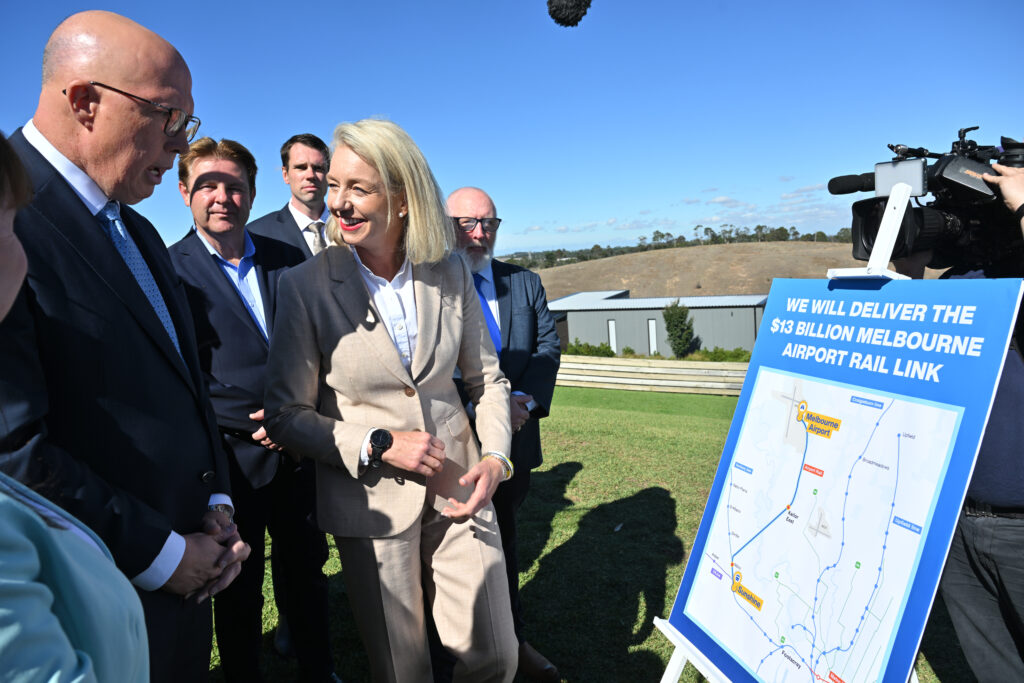
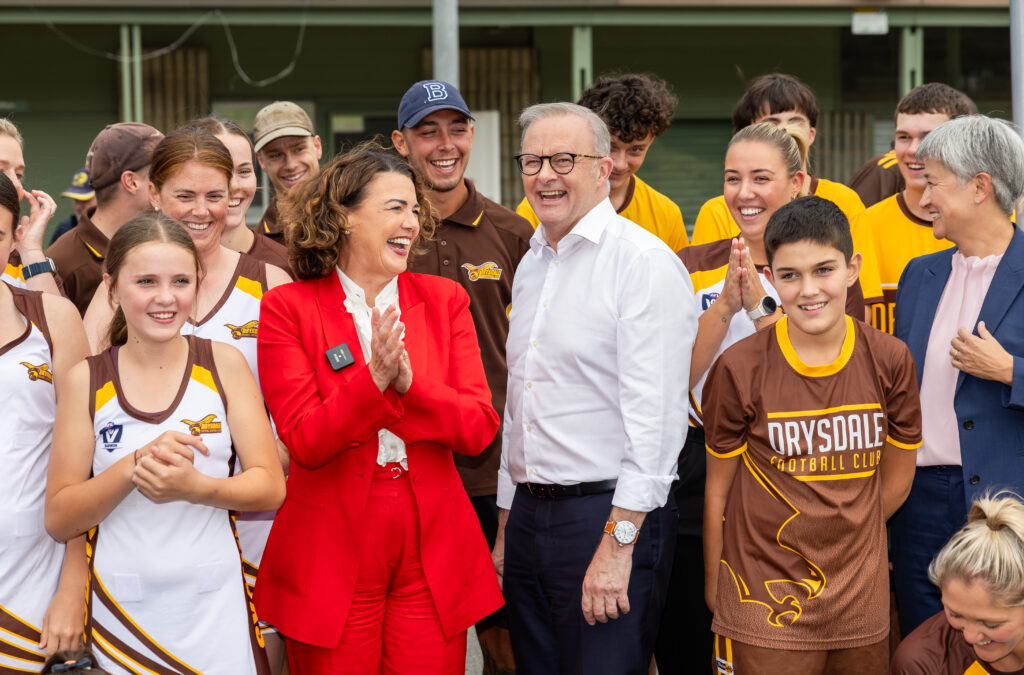


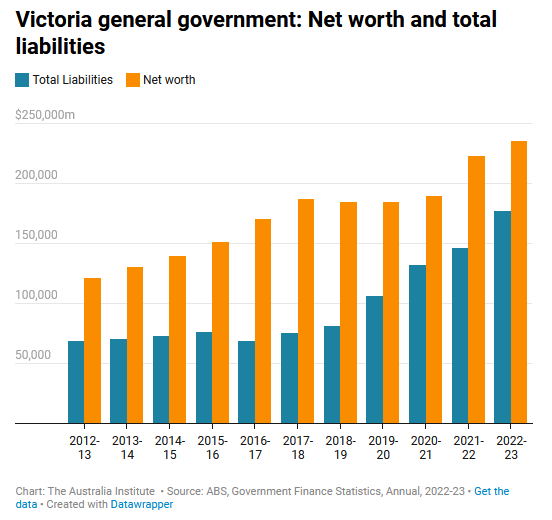
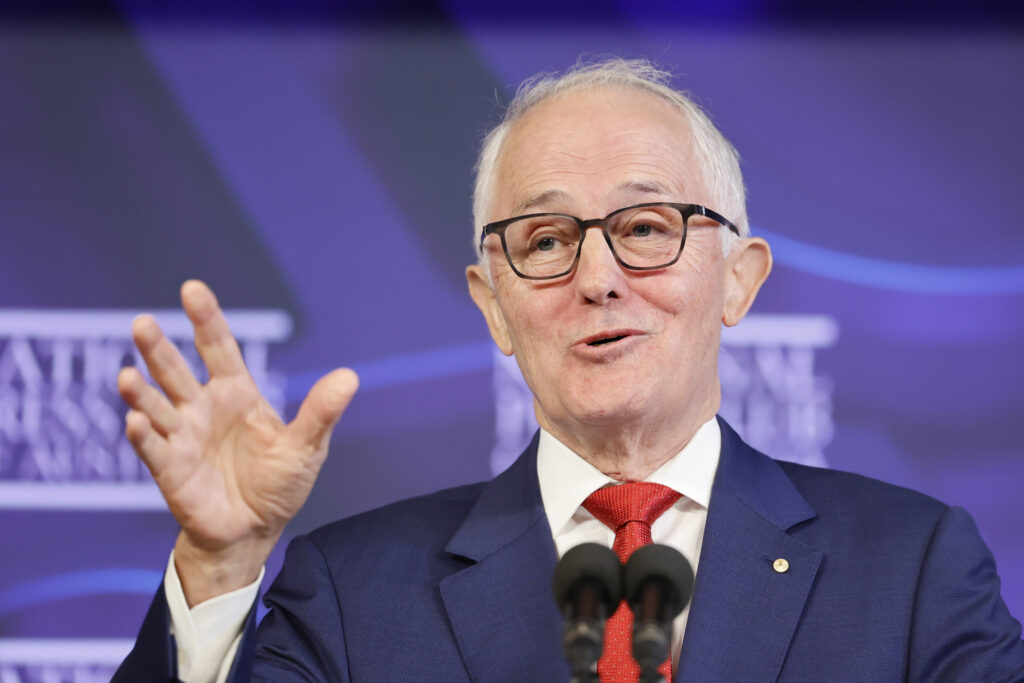
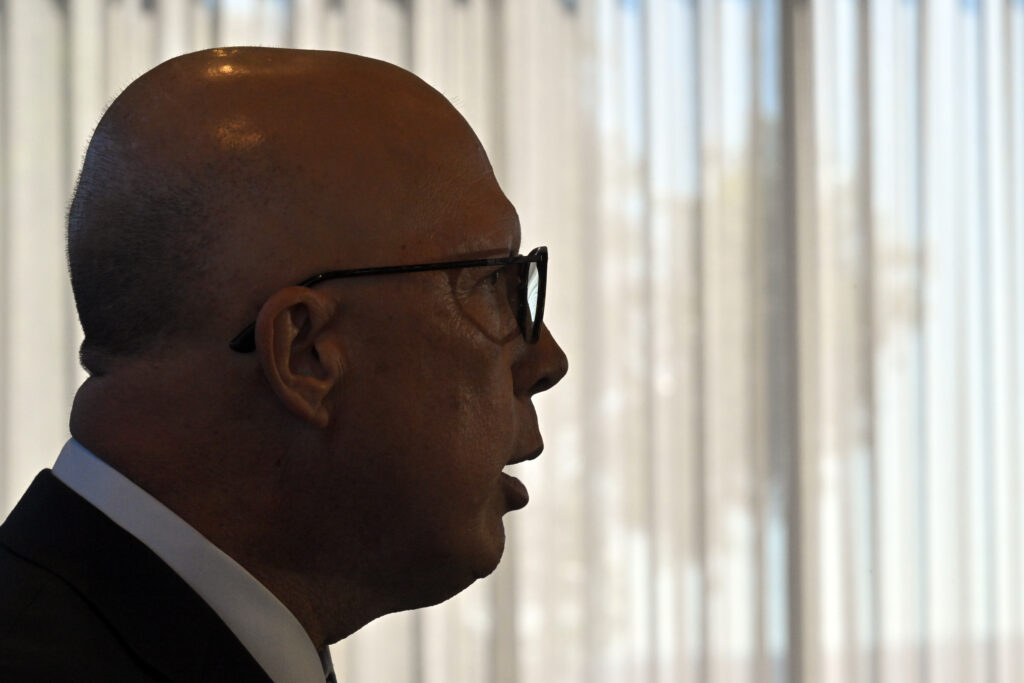
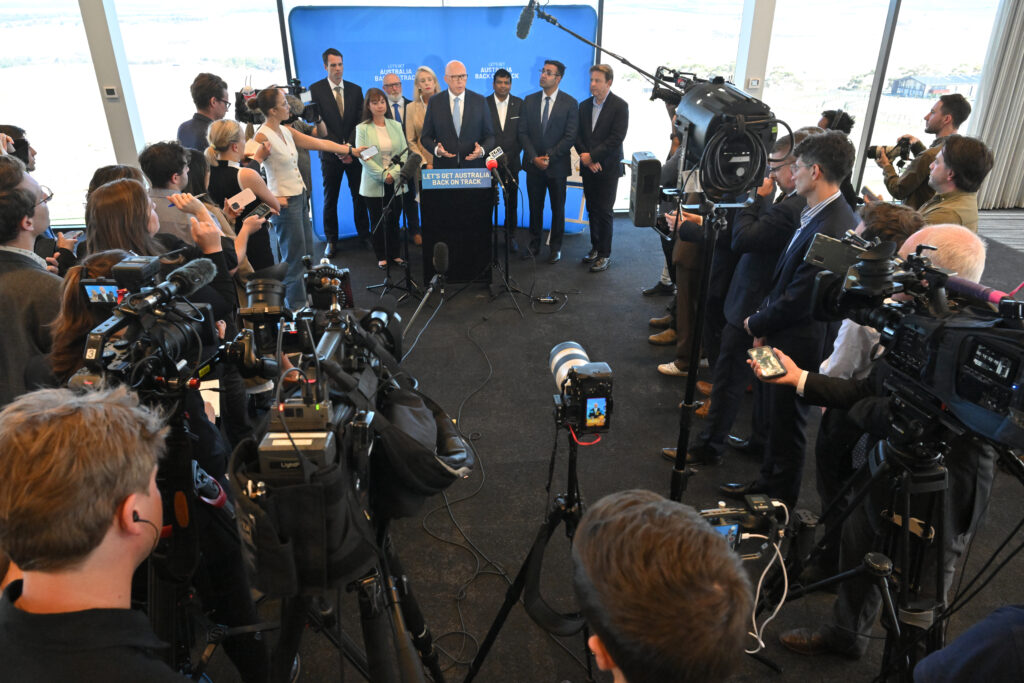


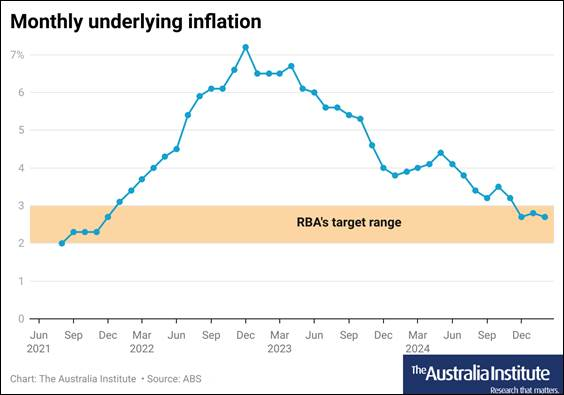


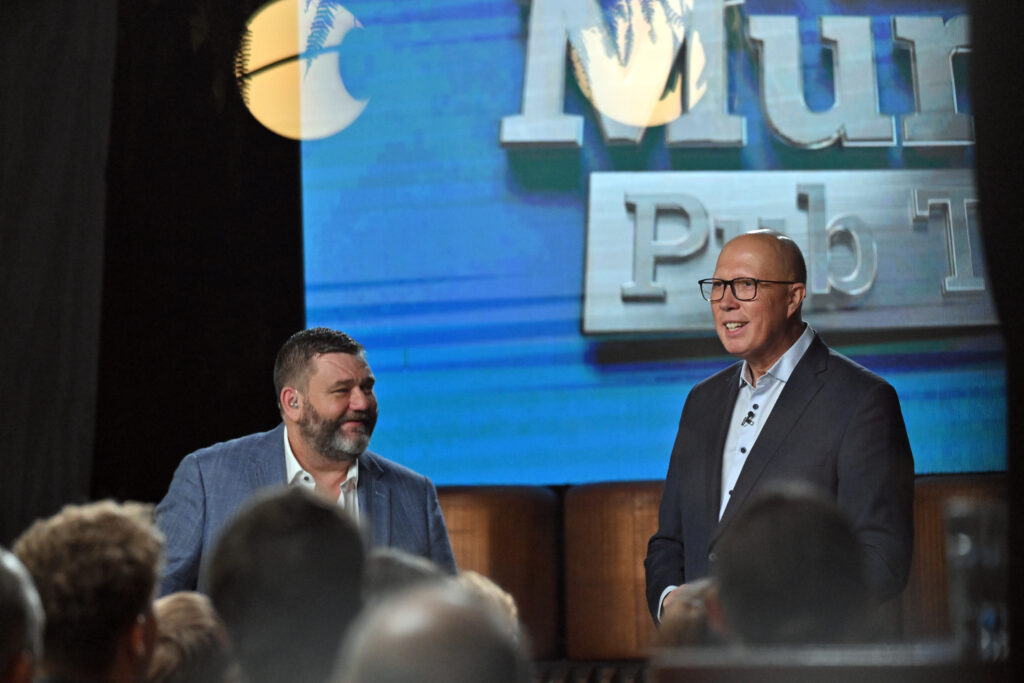
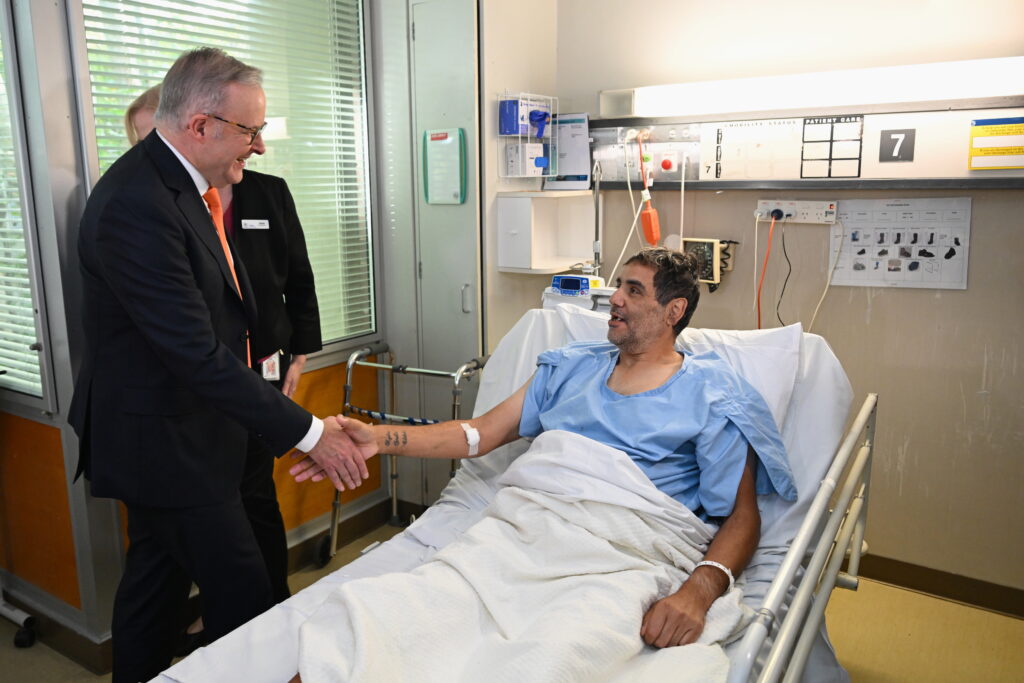
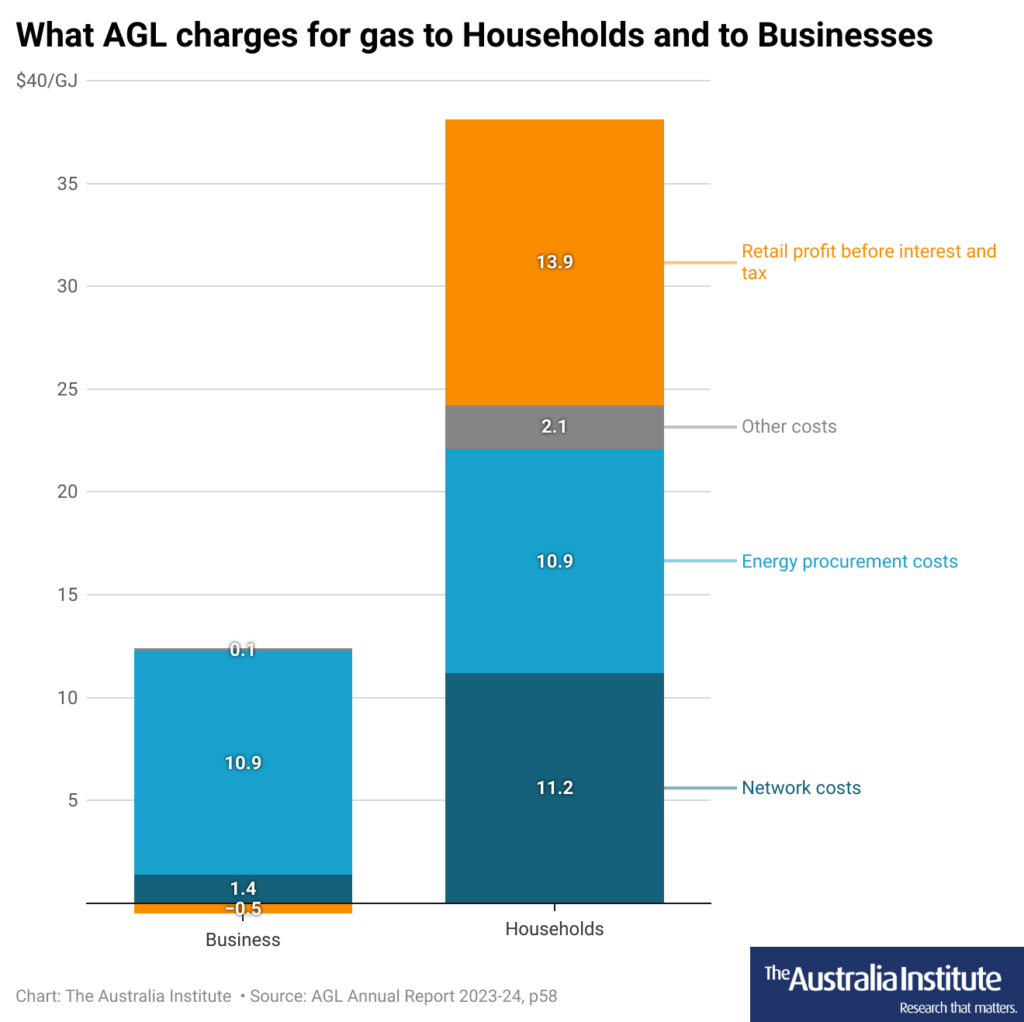

Comments
Start the conversation