Tomorrow it will all be about Trump’s tariffs, so brace yourself for that.
The ‘debate’ is about to get realllllllll stupid.
So we are going to go stare at a wall and prepare ourselves for that. Maybe watch Top Gun in honour of Val Kilmer.
Keep your questions coming – amy.remeikis@australiainstitute.org.au (put Questions for blog in the subject line so I can make sure I spot it) and we’ll keep on those fact checks for you.
Until then, do good – and take care of you. Ax
16.02 AEDT
There has been a high court decision today that will, no doubt, make its way into the election campaign.
Here is what the Asylum Seeker Resource Centre (ASRC) had to say about the CZA19 and DBD24 case (asylum seekers are given these names to protect their identities):
The Court held that detaining people seeking asylum while their visa applications are pending is lawful in some instances, even when there is no real prospect of their removal in the foreseeable future.
The ASRC’s client, LPSP, was allowed to join the case as a “friend of the court” because he had started a class action in the Federal Court with the same argument as the main applicants. His argument was that once someone is recognised as needing protection, their detention is no longer lawful.
High Court Justice Edelman called LPSP’s arguments “strong,” even though the court ultimately disagreed with the main claim made by CZA19 and DBD24. The decision permits the continuation of prolonged detention practices that are cruel and inhumane. The judgment means that even if it’s clear someone will eventually be released into the community – either because they get a visa or removal isn’t possible – they can still be kept in detention indefinitely while their visa application is processed. This goes against human rights and moral standards, continuing a system of long, unnecessary, and harmful detention.
Despite the landmark NZYQ decision, the ASRC continues to see people seeking asylum held for years and the devastating impact on their lives, their family and community. The ASRC’s Human Rights Law Program will continue to challenge and advocate for a migration system grounded in fairness, justice and human dignity.
15.59 AEDT
Labor campaign spokesperson and education minister Jason Clare was asked at an earlier press conference whether he has ever had a parent raise concerns about ‘woke’ with him (that is in reference to Peter Dutton saying that ‘many parents’ were concerned about school’s “woke” agendas)
Clare:
I tell you what, parents come up to me asking about, how are we going to make sure that our kids learn to read and write and count? How do we make sure that more kids finish high school? They don’t talk about indoctrination. This is straight out of the United States. This is a cut and paste from the United States. This is cut and paste.
Let’s be very, very clear about what’s going on here. But Peter Dutton talks about the curriculum — message to Peter Dutton, the curriculum is the Liberal Party’s curriculum. They signed this curriculum three years ago yesterday.
He talks like this curriculum was written by Adam Bandt. Wrong. I’m not interested in fake fights or talking about indoctrination. I’m making sure and I’m focused on making sure that our kids learn to read and write and count, that kids who fall behind catch up and keep up and finish high school.
The Liberal Party ripped the guts out of funding for public schools when they were last in office, $30 billion worth, and we’re still feeling the consequences of that today. This is personal for me. I’m a kid who grew up going to public school.
I know the kids who are suffering today as a result of the cuts that Tony Abbott, Scott Morrison and Peter Dutton made. As a result of those cuts, the number of kids finishing high school today in public schools is going backwards, from 83 per cent 10 years ago to 73 per cent today. We’ve got to turn that around. That funding is about fixing that. And I’m not interested in these fake fights about indoctrination. It’s not what mums and dads are talking to me about.
15.51 AEDT
Where have the campaigns been?
Labor:
Deakin (Fair Work Submission) and a Childcare centre
Braddon (Tas) (health announcement)
Australian Prime Minister Anthony Albanese visits the proposed site of a new healthcare hub at the University of Tasmania (UTAS)
Coalition:
McEwen (cost of living and crime)
Hawke (Headspace funding announcement)
Leader of the Opposition Peter Dutton visits Fulbert Xavier, Priya Xavier and their son, Aidan Xavier in Donnybrook
15.44 AEDT
Pinned
Recap of the day
It has been A LIFETIME today.
So the big announcements happened outside the main campaigns:
The Coalition would designate gas as a ‘critical mineral’ which would mean the gas industry would have access to the $4bn fund for transitioning to net zero and also subsidies for trade etc. The subsidies are meant for non-fossil fuels.
The Coalition aims to lower the price of gas from $14 a gigajoule to “under $10 a gigajoule” and Angus Taylor confirmed that a Coalition government would intervene on the spot market.
Peter Dutton has said the ABC’s funding would be under question if it wasn’t showing ‘value for money’
The Coalition can not say where the public service cuts will come from
Labor have asked the Fair Work Commission to consider a real wage minimum wage increase, which is above inflation (there have been claims this is in inflationary – it is not)
Anthony Albanese won’t go into whether he would take Trump’s trade tariffs to the World Trade Organisation (there would be no point, even if we did)
Labor made a health precinct funding announcement in Burnie, Tasmania which the Coalition have matched
The Coalition continued on their side campaign issues of youth mental health funding (good!) and crime (not as good)
Both Anthony Albanese and Peter Dutton have said they will ‘stand up for Australia’ but are keeping their powder dry on Trump criticisms.
15.14 AEDT
Should Australia take the US to the World Trade Organization (WTO) if Trump imposes tariffs?
Matt Grudnoff
Senior Economist
We would have a strong case, but it would also be pointless.
Why? Because the US has stripped the WTO’s ability to hear appeals. There are supposed to be seven judges on the WTO’s appellate body. But the US has blocked all appointments since 2017. It now has no judges and can’t hear any appeals.
But even if the WTO was working perfectly, the only way WTO decisions can be enforced is with the consent of the countries involved.
If Australia won, Trump would have to agree to drop the tariffs because the WTO told him too. Can anyone really see that happening?
Trump says he is going to impose tariffs on a lot of countries. If he does, I expect some of them will take the US to the WTO. All I can say is good luck.
15.08 AEDT
Peter Dutton and ABC cuts
For those wondering what Anthony Albanese was referencing when he said Peter Dutton would cut the ABC’s budget, it came from an interview Dutton gave to ABC radio earlier this morning.
Dutton phoned into Raf Epstein’s program where he was asked if he knew Melbourne and if Melbourne and Victoria knew him (Dutton has not visited Victoria that often as opposition leader)
Dutton said Victoria knows him because he does [Sydney based] commercial TV network breakfast shows quite regularly, which broadcast into Melbourne.
I do know the city, and I’ve been coming this city for the last 25 years, and I love Melbourne. It’s a great, great city, and I have lots of friends and family here. I have lots of support here.
Dutton has long been seen as a drag on the Coalition vote in Victoria since he said people were afraid to dine out in Melbourne because of a made up ‘African gang’ fear. But that has changed since the state Labor government has become increasingly unpopular with voters.
Now on the ABC’s funding, Dutton said:
Well, Raf, we’re going to make sure that we can, I think, reward excellence. And we’ve said very clearly, if families are really having to tighten up their budgets and they’re looking for savings just to get, you know, through the week or the month until the next paycheck, then I think where we find waste and we find ineffective spending, then we don’t support that.
I think there’s a lot of very good work that the ABC does, and if it’s being run efficiently, then you would keep the funding in place.
If it’s not being run efficiently and there is waste, then I think taxpayers who pay for it, and who are working harder than ever just to get ahead, would expect us to, you know, to not to not support the waste, but to invest into areas where the ABC is doing [good work]
So is that an efficiency drive on the ABC specifically?
Dutton says:
No, there’s just going to be a ruler run across where we’re spending money in government, and we are spending more money under this government than we ever have in our history, which is why inflation is going up.
None of that last bit is true. Inflation is GOING DOWN – both trend and headline (so the volatile prices and the measure with the volatile prices wiped out]. Every government spends more because populations grow, which means spending increases. The opposite of this is AUSTERITY.
14.56 AEDT
Liberal Party will miss its decade-long target for female representation
Bill Browne
Director, Democracy and Accountability Program
At the Press Club, Angus Taylor was asked about how few women the Liberal Party is nominating as candidates.
It’s a reminder that despite women making up half the population, men outnumber women in most Australian parliaments and most party rooms.
Ten years ago the Liberal and Labor parties set the same target for women’s representation: 50% of parliamentarians to be women by 2025, this year.
While the Labor Party meets that target, the Liberal Party is far short of it.
When the Australia Institute crunched the numbers last year, male Liberal parliamentarians outnumbered female Liberal parliamentarians more than two to one.
The Liberal Party used to lead on women’s representation. Eight of the first 10 female federal MPs and senators were Liberals.
Gough Whitlam’s “It’s time” win in 1972 included 93 male MPs and senators – and not a single woman. While things soon improved (it was not possible for them to get worse), it would be another three decades before the Labor Party was consistently more gender-representative than the Liberals at the federal level.
Nor were early Liberals opposed to quotas. As former Liberal senator Judith Troeth notes, “from 1944 the Liberal Party had reserved 50 per cent of the Victorian Division’s executive positions for women”. The argument that quotas do not allow women to be selected on “merit” is facile: Coalition Cabinets always have a quota for National MPs.
Only Labor opposes prioritising Australian gas for Australians – over exports to the global spot market.
Mark Ogge
Principal Advisor
Shadow Treasurer Angus Taylor has confirmed Peter Dutton’s view that excessive gas exports are the cause potential gas shortages and driving up energy prices for Australian households and businesses.
In his National Press Club speech today, Mr Taylor has confirmed that a Coalition government would divert gas from current production which gas companies plan to export to the lucrative global spot market, to Australian customers.
This is consistent with the views of almost all independent members of Parliament including Sen. David Pocock, Sen. Jacquie Lambie and the Greens.
Only Labor opposes diverting uncontracted gas that multinational gas companies are planning sell on the global spot market to Australians.
14.39 AEDT
Gas to be a ‘critical mineral’ under Coalition government
LNP senator Susan McDonald has told a gas industry conference in Sydney that a Coalition government would make gas a critical mineral.
That would give the gas industry access to the $4bn fund established to help new industries transition to net zero.
The Coalition has told a gas industry conference in Sydney it would give gas the same status as a critical mineral, to allow the industry to access a $4bn export finance fund set up to support the transition to net zero.
Adam Bandt had some thoughts:
Labor and Liberal are now in a contest as to who loves gas the most.
They’re each trying to outbid each other to open up new coal and gas projects and to say they’ll bend even further for the big gas corporations that pay no tax and get their gas for free.
Well gas is as dirty as coal, and the scientists have said very clearly, there can be no new coal and gas mines open if we’re to have any chance of meeting our climate targets. The Greens are now the only party at this election saying we’ll put a stop to opening these massive new gas projects that are just climate bombs and contain countries worth of pollution.”
14.31 AEDT
Still with the Greens and Adam Bandt also had a bit to say about the coming Trump tariff announcements:
If there was ever any more evidence needed that Australia needs to put its own interests first and detach itself from Donald Trump, it’s unfolding in real time right now.
Other countries have realised we’ve got to stop being joined at the hip to the dangerous Donald Trump, because otherwise, Australia’s interests are at threat – our defense interests, our security interests and our economic interests.
Trump says it’s going to be Liberation Day. Well, we should say the same, and it’s time for Australia to liberate itself from Donald Trump and not be joined at the hip to this dangerous demagogue that is a threat to peace, a threat to democracy and a threat to Australia’s economy.
We’ve got a Prime Minister who is hiding behind the couch while Peter Dutton takes a leaf out of Donald Trump’s playbook every day. It is time for us to put our country’s interests first, have an independent foreign policy and realise that there are now countries right around the world who are also in Donald Trump’s firing line.”
14.21 AEDT
Greens announce national regulator for childcare centres
The Greens have announced a plan to have a “full national regulator that would have the power to shut down [child care] centers that aren’t keeping our kids safe, and aren’t meeting the basic minimum standards”.
Adam Bandt said he wants to see early childhood education treated the same as primary schools.
Early learning should not be an opportunity for these corporations to take billions of dollars in subsidies from Labor and the Liberals only to leave our children wanting and falling behind basic standards.”
14.14 AEDT
And then there is a rapid fire end to Anthony Albanese’s press conference:
Q: There’s a couple of examples in Chinese state media, praising you and accusing Dutton of beating the drums of war. Is this a sign that you’ve gone easy on the Chinese government?
Albanese:
I stand up for Australia’s national interest. That’s what I do each and every day.
Q: Prime Minister, following up on [another] question, so you’re not ruling out action at the World Trade Organisation against the US?
Albanese:
No, I’m not engaging in hypotheticals because if you do that – we’re still in discussions with the United States.
There’ll be plenty of time to respond to whatever the decision is for the United States and I’ll respond after.
Q: Are you concerned about claims that EPBC Act amendment do not apply to Macquarie Harbour salmon farms as Bob Brown referenced before?
Albanese:
No.
And with that, he exited the press conference
14.06 AEDT
Anthony Albanese is asked about the Coalition either pre-empting or instantly backing spending pledges – like the health hub in Burnie, which the Coalition are also backing. So how does Albanese close the gap he is talking about:
This is a guy who said along with the Coalition last time they came into government there will be no cuts to health and education. $1 billion out of health, try to stop bulk-billing altogether when he was health minister, tried to impose a tax every time people visited a hospital and they tried to increase the cost of pharmaceuticals, not decrease them, and Peter Dutton, in a moment of candour, under a grilling, I assume, I did not watch the program on Monday night, said that essentially if you have… If the Commonwealth doesn’t run schools why do we have an Education Department?
He said yesterday if the Commonwealth does not run hospitals, why do we have people working for the Health Department?
Tony Abbott before 2013 there said there would be no cuts to education and the ABC. At least this bloke has told people in a roundabout way there will be cuts to health, education, the ABC if the Coalition are elected.
14.00 AEDT
Albanese on US trade
Will the Australian government take any tariff dispute to the World Trade Organisation if Trump moves forward with his tariff plan against Australian steel and aluminum?
Anthony Albanese:
I don’t want to preempt the decision that is made by the United States in the coming period. What I can say is that we are prepared for all possibilities going forward and a repeat what I’ve said before – tariffs are an act of economic self-harm by those who have imposed them, increase costs for buyers in the United States of America.
The important issue to state as well and I will make one more thing on top of the comments I have already made on this is the United States represent under 5% of our exports, goods exports, around the world. But, importantly, as well, we will continue to diversify our trade relationships. We do that, we have done that over the last few years, not in anticipation of action by the United States, but because one of the lessons of the trade issues that were there with China is we did not have enough diversification of our trading relationships.
We think free and fair trade is important, but Australia more so than the direct effect of any trade decision by the United States on Australia, the issue I think is for global trade and the impact that will have if the United States takes actions that diminish global growth and diminish global economic activity. That is one of the concerns that we have, is the indirect impact as well.
13.54 AEDT
Sky moves away from its exclusive interview to the prime minister’s next press conference in the Tasmanian electorate of Braddon, which is in Burnie.
Gavin Pearce, the Coalition MP is retiring, which is why Labor had it on its target list. They have Anne Urquhart running in that seat, but Tasmania is a mixed bag and Labor are not doing as well there as they first hoped.
Labor is announcing a health care hub for the area, which is part of the health week announcements.
13.48 AEDT
Sky News is running an “exclusive” interview with Peter Dutton, which is like me saying coffee has an “exclusive” interview with me each and every morning.
Dutton says he thinks his campaign will grow in momentum….later.
…There’s a lot of water to go under this bridge and I think, a lot of policy to come out, a lot of contemplation. And when people compare the pair, they’re going to see a Prime Minister who has let them down over the last three years, broken his promise about $275 power bill reductions, they’ve gone up by $1,300 and that’s just the start of the financial pressures families are under. And on the other hand, we have a positive plan to manage the economy effectively, to keep Australians safe, to make sure we can help young Australians realise the dream of home ownership and also deliver a quality healthcare system. And that’s the choice that people will have at the next election.
13.42 AEDT
We will have some more to say to you on gas very shortly.
Anthony Albanese’s campaign has landed in Tasmania for the first time – he is in the seat of Burnie, where he will make a health announcement (health week continues!)
13.41 AEDT
Angus Taylor says the Coalition will change the spot price market for gas
Ok, here is something interesting.
Q: Will your plan only apply to future offshore projects? Or, as Mr Dutton suggested in his speech, on current projects, which therefore is a market change of rules? And if that’s the case, how do you possibly improve price business the end of the year and supply?
Angus Taylor:
No, it’s on, the focus is on getting more gas supply in from current production.
So that’s a change of rules. It’s a production reservation program. And that means we can move 50 to 100 petajoules and it will did every from year to year, so that number won’t be the same number each year, into the Australian get network to drive down the price and we’re very confident that we can get that price down to below $10 a gigajoule with a significant reduction…
Q: So you’re changing the rules?
Taylor:
Yes. I think I’ve answered the question. So, you know, as I say, this is incredibly important, this is the one big lever we have in the short term to bring down the cost of energy in this country and the cost of everything that uses energy. This is the key. It’s not just energy itself and it’s why Andrew’s question was a good one, asking about the flow-on to industry and households. It flows onto everything that uses energy and it’s a very, very powerful leave and it gives us space, then, over the medium to longer term to put in zero-emissions nuclear generators.
13.26 AEDT
We are back to gas, where Angus Taylor says:
Well, the economics of this is absolutely essential to understand – more supply drives down price. It’s always been true. And we have an opportunity in this country, as one of the biggest gas exporters in the world, between us and the US and Qatar, is to make sure that Australian gas is not just working for international customers but is working for Australians. And that means pumping more gas into our network in the short term we think that gap is between 50 and 100 petajoules in a market of just over 500 petajoules and that’s a substantial domestic market.
We don’t need more supply. We have plenty already. And you could still have a domestic gas reserve without eating into those exports everyone is worried about, because the gas industry has said about 20% of gas is uncontracted.
But more supply does not mean lower prices if those prices are exposed to the international market. Taylor keeps talking about the North West Shelf extension which is ONLY for export. And Woodside wants more of WA’s domestic gas to run its expansion project. THIS WILL NOT LOWER THE PRICE OF GAS IN AUSTRALIA.
13.23 AEDT
Angus Taylor does not think the Liberal party has a woman problem.
Q: I was really struck by something you said near the start of your speech. You came back to it at the end. You said, “Our team reflects the people they seek to represent.” Less than a third of your candidates are women. It’s a quarter in WA. What does that say to the women voters in Australia?
Taylor:
That’s not right. If you look across both houses of Parliament, I think the right number is 47%.
…I can’t speak to every state but I’d say across Australia, and, you know, they are an amazing group of candidates. The most amazing group of candidates I have seen in my time in politics.
I thought the 2013 crop was pretty good. I was lucky enough to be one of them. But I tell you the people we have out fighting across this country for better government, for making sure that we don’t have another three years of Labor, making sure that we do have a vision for beating inflation, for boosting growth, for backing business, for making sure we fix our housing supply, our energy supply in this country, they are the most incredible group of people and the truth is, unlike our opponents, most of them are coming from outside of politics.
But I think we need that. We need a balance and I’m a great believer that we should have that balance and I think we’ve got an amazing balance on so many different dimensions.
13.20 AEDT
Angus Taylor hopes more public service workers head into private consultancies (which are contracted back to the public service for more money)
On the public service cuts, Angus Taylor says:
On the 41,000, that’s the growth in the public service under Labor. That’s the growth in the public service under Labor. I want to see a strong and effective public service in this country. I’ve lived around Canberra for much of my life and I think it’s incredibly important that we have a very strong and effective Canberra-based public service, but I’ve also learned through the course of my career a business career, so I’m, you know, compared to most who we’re up against on the Labor side, I’m a relative newcomer to politics, but I learned in that career that you don’t need to have a bigger team to have a better team. I want to empower the very best public servants in this country to be their absolute best.
Take away some of the bureaucracy – and I’m talk about this today – and help them to be part of the mission to make this country a better country. And I think that’s what every public servant wants to do. But right now, I don’t think that’s how the public service is working in many cases. And so we do think – we’ve got to get it back to the size it was before Labor took government and we’ve said we’ll do that in a way which does not threaten front-line services. It won’t be from front-line services and the focus will be on the Canberra-based jobs of course. I also think that some movement in and out of the private sector with the public service is what we want to see more of too.
One of the best people I’ve worked with in my career, a public servant, Rod Sims, came over from the public sector, went into the private sector, went back to the ACCC. We need more of this.We shouldn’t be frightened of having a public service that moves in and out of the public and private sectors and that mobility, I think, will make us a stronger country and it’s far more likely to achieve the kind of results that I have talked about in this speech today in terms of getting investment moving, because that is the absolute key. If we can get investment moving. We get productivity, higher real wages, we get a growing economy. We can pay for the things we want and need and we can have a strong and effective public service.
Angus Taylor, the shadow treasurer, is literally pushing for more public servants to head into the private sector – he is literally promoting the revolving door between the public and private sectors which ultimately cost more money and lead to institutional knowledge walking out the door with it – which is why so many of those people usually end up contracted back.
13.16 AEDT
Angus Taylor and Elon Musk’s ‘good work’
Over the last few months, senior Coalition shadow ministers have expressed their admiration for Elon Musk, which, I probably don’t need to tell you, is just a tad, shall we say PROBLEMATIC as he continues his coup of the United States.
Among those is Angus Taylor, who said that Musk was “doing good work” on a recent podcast.
So what did Elon-lite mean by that?
I use Starlink. I live about an hour from here and I have to tell you it has changed the way the internet works for me, my family, and people around me. It is unbelievable.
I love innovation that works, that changes the world, from the private sector, from entrepreneurs and from enterprise.
And anyone… There’s lots of farmers and others in my electorate who use that amazing technology and that’s… I think, the best work the very best work that we’ve seen from Elon Musk and I think many Australians in regional Australia will absolutely back me up on that.
This on its own is incredible, because you know who was part of a government that rolled out the NBN – which was meant to connect the regions to super fast internet – but changed that roll out for cost savings? ANGUS TAYLOR.
But we should absolutely let far right billionaires with facist and authoritarian leanings control our internet. Absolutely. WHAT COULD GO WRONG.
13.04 AEDT
Greg Jericho
Chief Economist
Angus Taylor:
“And meal deductions will give 98% of Australian businesses a tax cut when they invest in productive assets”
Angus is trying to suggest that taking your mates out for a round of golf and framing it as a business meeting is “investing in productive assets”!
In his Budget Reply Speech Peter Dutton gave this actual example – “It will allow the local real estate agency or a builder to take staff to a local cafe to celebrate a big sales event or simply to say thank you to their hardworking employees.”
I mean, wonderful, but why on earth should taxpayers be paying for a real estate agency to go out to lunch? And how on earth can they say this will improve productivity. All it will mean is workers probably have to spend more time with their bosses so they can justify claiming their dinner as a business expense.
12.58 AEDT
This next bit from Angus Taylor is straight out of the Institute for Public Affairs, which is one of the Liberal party’s most favouritist think tanks ever – the IPA to Liberal party pipeline works better than most digestive tracts.
Taylor:
“Australian small businesses have been crowded out by a ballooning public service and a rising cost of Labor’s red and green tape. “
I’ll let Grog’s take this one:
Actually, one of the big booms of “small business” has been in the health and care sector – primarily associated with the NDIS. This is because care and services that used to be done by the public sector are now funded by the NDIS but done by “private sector businesses” – often care and service workers who are either sole traders or working in small businesses. Far from “crowding out” public spending on NDIS is “crowding in” small business.
12.56 AEDT
Back to Angus Taylor and he is promising that a Coalition government, would, *gasp* SLASH RED AND GREEN TAPE.
All those pesky environmental regulations that barely regulate the environment are just holding up fossil fuel projects too much Taylor says.
He wants a new body in Treasury called ‘Investment Australia’ and “it’s legislated powers will include calling powers to hold agencies to account for bureaucratic delays on significant projects for our nation, implementing pathways for escalation to cabinet.”
Greg Jeicho:
Hard not to see this as a way to gut even more any environmental regulations, because the key “projects for our nation” are invariably mining ones – and certainly those are the ones Dutton and Taylor most care about.
Am guessing protecting the Murujuga rock art will just be one aspect that is framed as “bureaucratic delay”
12.54 AEDT
There is one area where the Coalition is making more sense when it comes to policy and that is mental health services, particularly for youth mental health.
The Coalition have pledged $400m for youth mental health and today, expanded on that announcement by breaking down how some of the money would be spent:
An elected Dutton Coalition Government will invest $6.2 million to upgrade headspace Melton and ensure young Australians living in Melbourne’s western suburbs have affordable and accessible mental health services.
Mental health and suicide prevention remains one of the Coalition’s highest priorities. This announcement forms part of the Coalition’s commitment to invest an additional $400 million to deliver a world-leading focus on youth mental health.
Today’s announcement will boost capacity at headspace Melton, including through additional support workers and youth mentors, to ensure more young people can access free support and bring down wait times. This funding will support an additional 12,000 occasions of service per year at headspace Melton, allowing up to 2,500 more young people in the local community to access the support they need.
The funding will also support headspace Melton to proactively perform community outreach activities, which will greatly benefit families living in the Western suburbs of Melbourne.
It will provide certainty to parents that the mental health support their children need will always be delivered by a Dutton Coalition Government.
12.51 AEDT
Angus Taylor:
“We’ll bring forward more gas through our national gas plan, for example, through unlocking the north-west shelf, to decarbonise our grid and support manufacturing and data jobs into the 2030s”
Not one drop of the gas from the North West Shelf will go to Australians. ALL OF IT will be exported.
And on top of that, Woodside wants the use of domestic gas FOR its expansion plans. So not only will all the gas be exported, it will also TAKE gas from the WA domestic market.
12.50 AEDT
Greg Jericho
Chief Economist
Angus Taylor just said:
“A collapse in home ownership has profound inflations not just for — implications not just for our aspirational character, but the cost of our retirement system. The challenge requires every lever to be pulled with a focus on three in particular, security, serviceability and supply.”
But not it seems the levers that give investors massive tax breaks that give around $7.5bn a year to the richest 10%
12.49 AEDT
Angus Taylor is speaking about the loosening of financial regulations (which the Coalition confused between Peter Dutton, Michael Sukkar and Andrew Bragg when they announced it yesterday.
A reminder – that it will only increase house prices because it will mean more people get loans, or get bigger loans – which will just send housing prices up.
As Matt Grudnoff said yesterday:
The Coalition is promising to reduce the safeguards that the financial regulator requires for people to get a mortgage. This will allow people to borrow larger amounts and, they reason, more of them will be able to buy a home.
But if everyone can borrow more then everyone shows up to the auction able to bid up the price. All that happens is house prices rise even faster.
Those that thought they might finally be able to buy a home realise they’re still locked out as prices race away from them. Those trying to save up watch as house price rises mean the deposit they need grows at a faster rate than they can put money away.
Just like the idea to let people access their super to buy a home, these kinds of ideas only help people who already own houses. They don’t help people trying to buy their first home.
Rather than pumping up demand for houses the Coalition should instead announce reforms to negative gearing and the capital gains tax discount which would reduce investor demand for housing. This will make housing more affordable and lift home ownership rates.
12.45 AEDT
Angus Taylor addresses the press club
It is going exactly as you would expect.
It is a lot to fact check already and by fact check I mean he has said a lot that needs context and also just some facts.
Greg Jericho has started:
The Liberal Party has announced it will dump the ALP’s vehicle emissions standards. Not surprisingly they’re doing this by saying it will make the prices of HiLux’s and Rangers more expensive – because they are the 2 biggest selling cars purely because our tax system has been designed to allow people to pretend they are work vehicles even when they are just being used as the family car.
The problem is because of our lack of emissions standards Australia’s light duty vehicles are much less fuel efficient that those vehicles in other countries – such as the UK
Our research has found that Australia’s light duty vehicle fleet is among the least fuel efficient in the world, using 24% more fuel per kilometre travelled than the UK. If the UK’s modest standards could be met here, Australian drivers would save $13 billion a year in fuel costs and overall transport emissions would be 17% lower.
So yeah, the current fuel heavy vehicles would be less popular, but more efficient light commercial/duty vehicles would come into the market that would be cheaper to run! Without emissions standards, Australia will just be the dumping ground for the worst kinds of vehicles rather than the best.
And our lack of emissions standards, combined with tax measures designed to make utes less expensive have not been good for Australia transport emissions .
The emissions standards is a good step, but it can’t be all we do. It should be accompanied by a broader transport decarbonisation strategy, include targeted subsidies for electric vehicles, e-bikes and micromobility options, and above all remove incentives for fossil fuelled vehicles. (just remember the government gives $10.8bn a year in fuel tax credits)
12.41 AEDT
And over on the Labor campaign, here are how things have looked so far today:
Australian Prime Minister Anthony Albanese reacts during a press conference
‘Missed it, by that much’
Australian Prime Minister Anthony Albanese speaks to the media
You should see the face he makes reading hansard
Australian Prime Minister Anthony Albanese reads a book to children
12.33 AEDT
I have been very lax and not shown you any photos from today.
So let’s have a look at what is on offer:
Looks like the AAP photographer on the Dutton bus has had some fun today:
Leader of the Opposition Peter Dutton visits a Headspace facility in Melton north east of Melbourne
We imagine the advancers worked very hard to keep him away from the ‘space’ part of Headspace
Leader of the Opposition Peter Dutton leaves after visiting the Xavier family in DonnybrookLeader of the Opposition Peter Dutton
12.26 AEDT
Funding constraints mean Auditor-General cannot deliver full work program
Bill Browne
Director, Democracy & Accountability Program
Connor Pearce in the Canberra Times has a worrying article about the under-resourcing of the Australian National Audit Office (ANAO) – which will conduct fewer performance audits in the coming years than it did under the Morrison Government:
“The Australian National Audit Office will not meet its target for the number of reports into misbehaving agencies it will publish this year as the independent oversight body struggles with a lack of funding.”
It’s a warning echoed by chair of the Public Accounts and Audit Committee, Labor Senator Linda Burney:
“The inability of the ANAO to deliver a full work program due to funding constraints is of serious concern to the committee, as it undermines the future of robust audit functions for the Commonwealth that can foster and drive efficiency and effectiveness throughout the public sector.”
But over the years, the National Audit Office has been neglected. Back in 2011, the Auditor-General was resourced to conduct 55 performance audits a year. The number fell under the Coalition governments, and could get as low as 38 per year in the next term of government.
Penny Wong was asked a question during Anthony Albanese’s morning press conference this morning. Wong has been traveling with the main Labor campaign for the better part of this week. Mark Butler has also been there, as well as a variety of other Labor ministers and MPs doing the side campaign.
So far it seems that just Nationals senator Bridget McKenzie has been the only shadow minister Peter Dutton has taken with him, although he did do an event with David Littleproud on Monday.
Q: The Chinese Ambassador has urged Australia to work closely with China to counter the impacts of tariffs. So is teaming up with China economically to counter Trump’s tariffs on the cards?
Wong:
Look, Australia is a trading nation and we know, we live in a time, where there is a lot of change globally, including on trade, but more broadly. And what we have to do is to recognise the reality and make good decisions for Australia and they include making sure we diversify our trade. And you’ve seen over the three years of this Government, our work to diversify our trading markets, not only to remove $20 billion of trade impediments on the Chinese market, but to do more to exploit the economic opportunities, to take the economic opportunities of Southeast Asia, of India, of a free trade agreement with the UAE. So, what I would say is we know as a Government, we live in times of great change, including on the economic front, and I’m sure we’ll talk about that shortly. But one of the things we have to do very clearly is to focus on Australia’s strengths, on diversifying where we export and where we trade to. And we will do that.
Now just on that, China, South Korea and Japan have come together in a statement saying they have concensus on trade. And as has been pointed out on social media – do you know how bad you have to be to get China, South Korea and Japan to come together in agreement?
11.44 AEDT
Well there is a short break until Angus Taylor takes to the National Press Club, so take a break and then join us for some light belief, as the man who wants to be the next opposition leader (according to his colleagues) tries to explain economic policy.
11.28 AEDT
Where exactly are the 41,000 public servants going to be sacked? Dutton can’t say, but it can’t be all Canberra. That’s a fantasy.
Dave Richardson
Senior Research Fellow
The call to sack 41,000 public servants is almost always being pitched as cutting public servants in Canberra but a look at the number of Commonwealth public servants from June 2022 to June 2024 in the most recent public sector employment numbers form the Bureau of Statistics shows that around half of the increase in public servants since the last election have been outside of Canberra.
And if all the 41,000 to be cut were only those in Canberra that would mean the there would be fewer public servants in Canberra than was the case during the last LNP government and much fewer when you take into account the size of Australia population. Is Peter Dutton now saying that the public service was bloated under Scott Morrison??
Sacking “Canberra public servants” might appeal to the talk back radio hosts, but at some point, Peter Dutton will need to say who is being cut, and where and then explain what it will mean for services.
11.19 AEDT
Let’s take a look at another of the Coalition’s policies: the gas reserve.
The ABC’s Sally Sara asked Ted O’Brien this morning on RN Breakfast:
Can you clarify how gas companies will be forced to reserve supply for the domestic market. What’s the stick here? What’s the penalty if they choose not to do that?
O’Brien:
Well, look. Our number one priority is to increase supply of gas. That’s the number one thing. We need to unlock more gas, get gas out of the ground. Number two, we need to prioritise gas for the Australian people. And number three, we need to get it to where it’s needed. So, we have a full suite of policies to deliver on those outcomes and to make sure it’s delivered in Australia at a cheaper price, which means we need to decouple it from the international market. Then how we do that, well in the short term, how we do it is we work with the big gas companies, especially those which are exporting to ensure that they can allocate more Australian gas to the Australian market. So we’re wanting to see up to additional 20% put into the market. And we believe that can be done while also honouring the volumes and economics of the deals in place with our key trading partners.
A few things
O’Brien is admitting that we do not have a gas shortage. We don’t need more gas, because we can have a domestic gas reservation even with the current contracts in place.
He has no idea how this will actually lead to cheaper gas, because as we have pointed out our gas retail sector is dominated by the Big 3 of AGL, Origin and EnergyAustralia and they already charge households up to 3 times more for gas than they do businesses, all because they can. So if we want lower gas prices, we will also need stronger regulation of the gas retail market.
That 20% figure he is using emerged from the gas companies talking about how their ‘uncontracted gas’ which just backs up number one – they don’t need to break into export contracts to do this, as we have more than enough gas just sitting here. So we don’t need to open more gas fields. But while those gas prices are still exposed to the export market, you can not guarantee that energy prices will come down.
11.15 AEDT
Don’t be scared – it’s a suggested real wage increase for minimum workers
Greg Jericho
Chief Economist
Today the Government has announced that it will recommend to the Fair Work Commission for an “economically sustainable real wage increase to Australia’s award workers.”
If you are unshocked by that announcement – congratulations, you still have retained your hold on reality.
All the government is saying is that they believe that the minimum wage (which is a whole $24.10 an hour) should rise by more than inflation – but not by so much that it would affect inflation.
This of course has been met with scare headlines from The Australian and the AFR of “Labor pushes for above-inflation wage rise despite RBA warning”.
They are trying to pretend that the RBA warned yesterday about a tight labour market still maybe putting pressure on inflation and well… please. The RBA has been saying that for three years and they have been wrong for three years.
Wages growth is coming down, inflation is under 3%.
Business groups argue this will set off a wages-price spiral and send businesses to the wall because… well they always do that.
In 2017 when inflation was just 1.5% and the RBA was actually worried that it was too low, the Australian Chamber of Commerce and Industry recommended to the Fair Work Commission the Minimum wage rise by just 1.2%. So even when inflation was well below the RBA;’s target range, business groups still thought the minim wage needed to be increased by less than inflation because… well cruelty might be a factor, because economics surely is not.
If you are waiting for business groups to argue for a real wage increase for the poorest works, then you will be waiting for a very, very long time.
Thankfully the FWC has ignored them – the real wages of those on Minimum wages normally goes up each year – because people’s living standards should improve! Each year inflation rises and so the value of the minimum wage falls and each year the FWC increases the minimum wage y a bit more than inflation to recover that lost value.
The problem is the past 4 years have seen the rise of the minimum wage fall behind where it was in the decade up to the pandemic.
So an increase in the minim wage above inflation is not scary – it is normal.
And the good news for The AFR and The Australian and business groups is they can stop worrying. Our research has shown that there is absolutely no connection between increases in the Minimum wage and inflation. Why? Because they account for a very small amount of the total wages of all Australian workers – they are the poorest paid, after all.
11.13 AEDT
Cutting public services employees undermines capability
Fiona Macdonald
Acting director Centre for Future Work
Peter Dutton says he will cut the Australian Public Service by the same amount it has grown under the Labor Government – 41,000 employees. He and Bridget McKenzie say they will work out which jobs need to be cut when they are in government.
But where is the evidence there are too many public servants?
The Australian Public Service is not large in historical terms nor in international comparison
Keeping public service employment numbers low is not efficient. Experience shows service delivery suffers and/or money is spent on contractors, consultants and labour hire workers to meet demand.
When the Albanese government took office, there was recognised under-investment in the public service. More staff were needed.
Underinvestment in the Australian Public Service was due to previous governments keeping public service numbers artificially low by placing a cap on staffing.
The Services Australia annual report for 2023–2024 includes the following summary of improved service delivery outcomes following the recruitment of 5,000 ongoing staff in the latter part of 2023 and in January 2024.
In July 2024 staff were:
• answering Centrelink calls six minutes faster than in January 2024
• answering Medicare customer calls nine minutes faster than in January 2024
• processing Paid Parental Leave claims in four days, down from 25 days
• processing Job Seeker claims in six days, down from 22 days
• processing Medicare Online Account claims in two days, down from 11 days.
So who is doing this work? Yes, public servants.
Saying you will cut 41,000 jobs and it will have no impact does not stand up to scrutiny – and when we look at what happening when the Morrison government replaced public servants with consultants the line does not stand up to reality.
11.11 AEDT
What’s in productivity?
Joshua Black
Postdoctoral Research Fellow
One of the gotcha questions at the PM’s press conference this morning was about wages and productivity growth. Yesterday, the RBA said that Australia had ‘weak productivity outcomes’ even though ‘conditions in the labour market remain tight’.
Also yesterday, employment minister Murray Watt suggested it was possible to have wage growth without waiting for productivity growth to rise. (This prompted plenty of gasps at the AFR.)
Does the PM agree with the RBA Governor or his minister? As far as gotcha questions go, it’s pretty lame.
Productivity growth is notoriously hard to measure, and it is especially unreliable for making short-term decisions. Economics commentators love that famous line from Paul Krugman, who said that ‘Productivity is not everything, but in the long run, it’s almost everything’.
But economic policy in the short run is a different kettle of fish. Quarterly productivity measurements shouldn’t dictate wages, especially for those on minimum wages.
It’s also worth noting that wage increases can actually help, not hinder, productivity. Higher wages can produce greater workplace satisfaction and worker buy-in. They are also one of the main incentives for employers to explore efficiency-enhancing technologies and work techniques.
Want to see productivity grow? Grow minimum wages first.
11.08 AEDT
Factcheck: Dutton and America
Also in that press conference, Peter Dutton was asked about Donald Trump.
Now Malcolm Turnbull raised an interesting point about the wedge Dutton is in when it comes to Trump. As alternative prime minister, and especially as prime minister, Dutton’s job is to represent Australia and Australia’s interests.
But his biggest supporters, his network some would say, of billionaires – like Gina Rinehart and Rupert Murdoch, have wholeheartedly embraced Trump and what he is overseeing in America. They don’t just support it, they are cheer leading from within Trump’s inner tent.
So how does Dutton then stand up for Australia, when it means alienating the support network he has cultivated during his decades in politics?
Dutton hasn’t really been tested there, because so far, he hasn’t had to be. He can blame others and spit out platitudes like ‘standing up for Australia’.
But on Aukus, he did say this:
…we negotiated with president Biden into the AUKUS submarine delt we drove a very hard deal.
We’ll let the director of the International & Security Affairs Program, Emma Shortis take that one:
I mean, sure. It’s a really hard deal that involves Australia handing over upwards of $368 billion dollars with no guarantee of return on anything. Including the very hard negotiating tactic of indemnifying the United Kingdom and the United States for anything they do give us, so if it doesn’t work, too bad. Oh, and we’re talking the nuclear waste too. And now dealing with an administration that doesn’t even care about US laws, let alone agreements with its allies.
Great result.
10.51 AEDT
Woke agendas – but what does it even mean?
Bill Browne
Director of the Democracy & Accountability Program.
Liberal-National Opposition Leader Peter Dutton committed to keeping “woke agendas” that have “come out of universities” out of schools – but yesterday he couldn’t actually identify what woke issues were in the national curriculum.
That’s not uncommon. After I was amused and surprised to hear Liberal National senator Matt Canavan accuse Queen Elizabeth II of being “woke”, the Australia Institute assembled a list of people and organisations whom conservatives had accused of being woke.
The Queen was in surprising company: among the “woke” were the Wiggles, the Australian cricket team, the Tasmanian Liberal Party and the Pope.
So who isn’t woke? Well, Labor Prime Minister Anthony Albanese, at least according to the Daily Telegraph.
Woke is a useful pejorative precisely because it means nothing – the listener can fill in whatever grievances they have, not realising that to other listeners, *they* would be considered woke.
In fact, it’s not just Peter Dutton who is unclear on what is woke or not.
When talking yesterday about the Coalition’s plan to cut 41,000 public servants, Peter Dutton said:
“I want to make sure that we are spending money on frontline services, not back-office operations,”
The Coalition are obviously sensitive to voters concerns about the impacts that these cuts might have to public services. But does just committing to cut back-office operations really make sense?
If you sacked all the administration workers in a hospital then the amount of time that doctors and nurses could spend caring for people would drop dramatically, as they would now need to attend to all the administrative work.
Worse, because doctors and nurses are trained and proficient in providing medical care, they would not be as efficient at doing the administration as the previous admin workers. This means the admin work would take more hours to do. The back-office staff help make the front-line services more efficient.
Claims that massive cuts to the public service can be done without reducing services to Australians might make a good campaign slogan, but if political parties plan to make cuts, they should be up front with people about what the real effects they will have.
10.47 AEDT
Factcheck: Peter Dutton on public service growth
Peter Dutton loves using numbers to bamboozle people, but the numbers never stand up to any sort of critical thinking.
Take this line:
Our argument is growing the public service at three times the rate the Rudd Gillard Government did is not sustainable
Now, I am not in Dutton’s head (thank Dolly) so I am assuming he is talking about headcount. (And I think this from the IPA which appears to include state-based public sector workers)
Now when we talk about the Rudd-Gillard government, the NDIA was only in its infancy. It was supposed to have 10,000 staff under the Rudd-Gillard plans. Then it was capped at around 3,000 and about 7,000 jobs were outsourced.
So we have a whole new public service department since then.
And also, there is a little thing called POPULATION GROWTH.
The Rudd-Gillard years were a decade ago. So the population in the 2014 census had Australia’s population at 23,625,600.
In 2024, (the last formalised population data) the population was 27.2m people.
Now we know the Coalition is aware of the population growth, because it is on a whole cut-migration bender (to make housing more affordable allegedly, which is just complete bupkis) so we can say that the Coalition and Peter Dutton are absolutely aware the population has grown since the Rudd-Gillard years.
As the population increases, so does spending on essential services (as do tax receipts – so don’t forget that). It is why governments always brag about ‘record’ spends on health and education – of course they are spending more, because there are more people they need to spend on.
So as the demand on services increases, there is a need to increase the number of people who are delivering those services. That’s just maths.
Putting it in private sector terms – if more people want what you are selling, you usually put on more staff to help you meet your orders. Angus Taylor loves to talk about his private sector experience, so surely he can understand that.
So if more people are using public services because there are more people full stop – the public service must also increase to meet that demand. If you don’t increase the numbers of people to meet that demand, then you offer less service. And can’t answer the phones at Services Australia. For example. Or process claims for veteran’s affairs. For example.
Or you have to outsource the work to consultants and labour force hires, who do the same work for more money (but you can hide that in different budget lines, by including the cost as part of different projects)
Peter Dutton is continuing to conflate the cost of living crisis with the public service (the two are not related) to try and manufacture consent to slash the public service.
Cutting the public service under the Coalition only means money for the private sector.
Dutton wants to cut 41,000 jobs. He keeps talking about the ‘bloated’ public service in Canberra, but the numbers don’t show that. At all.
Dutton keeps saying he wants “come back to reality” but the reality is, that the public service has not grown out of control. No where near it.
The independent review into Services Australia’s capability which was delivered in December found:
With the support of short-term government funding, the agency recently recruited over 5,100 APS 3 and 4 level staff between November 2023 and March 2024, to address excess demand in the system. The additional resourcing reduced claims on-hand by more than half (from a peak of 1.35 million), and over one million phone calls were answered, reducing call wait times.”
And then there is this, which shows the growth of the public service as as proportion of the population:
So you see how in June 2024, which covers the three years where Labor was in government, it is LOWER than what it was in 2008-2012? Which is the Gillard/Rudd years? Very demure. Very mindful.
09.59 AEDT
Peter Dutton press conference
Peter Dutton and the Coalition are also in Melbourne, and Dutton is holding his first press conference – which is a lot earlier than he has held them earlier in the week.
His main purpose is to continue to combine the unpopular Jacinta Allan government with the federal Labor government in people’s minds.
A series of attack ads have gone out across Victoria, which link Allan and Albanese and Dutton is working to reinforce that this morning:
You’ve seen how Labor has mismanaged and really wrecked the Victorian economy, and you’re seeing the first signs at a federal election as well. Three more years of Mr Albanese at a federal level, governing like Jacinta Allan, will be a disaster for our country.
09.56 AEDT
That answer continues:
Albanese:
Now, that’s happening in other places (he means, but won’t say, America) I don’t think it’s a good thing for us to copy.
Now, on Medicare, he’s also then gotten on Medicare, he’s also then gotten on to say that we don’t run hospitals, and therefore why have you got so and therefore why have you got so many people in the health many people
Well, like, hello? When we went through COVID, t the Commonwealth had a critical role and Commonwealth had a critical role and we supported the Morrison Government n that role. We fund hospitals, we in that role.
We fund hospitals, we fund aged care, we have a critical role in health.
We’re the body that role in health. We’re the body that looks after things like pharmaceuticals, l looks after immunisations, the Commonwealth has immunisations, the Commonwealth has a critical role in health and a critical role in health and education, Peter Dutton wants , nup, we’ll get out of j there and we’ll leave it all to the states.
That’s the contrast, that’s what people will vote on 3 May.
And they shouldn’t be surprised, if the coalition is elected, I mean – sometimes when governments get elected people go, ‘oh, they’re doing what they said what they would do’ and expressing some surprise at that.
Now, they’re being told very clearly what the choice is.
My government that will look after people, that won’t leave people people behind, won’t hold people back, will support increased wages, will support lower taxes, will support early childhood educators, will support fixing the aged care sector, will take action on climate change, and an opposition that says there’s no role for the Commonwealth, to need to have people in education or health.
I mean today Angus Taylor is giving a speech saying there will be new public servants at the same time they’re ripping the guts off they’re ripping the guts out of Medicare, out of education and the and the public service.
09.51 AEDT
Anthony Albanese takes aim at the Coalition (timeless statement)
We will bring you some more of what Anthony Albanese has had to say about the minimum wage in a moment.
But he is having a bit of a moment here, speaking about Peter Dutton and what the Coalition is offering. The question was on whether the Allan Labor government in Victoria was a drag on the Labor federal vote in Victoria (it is. All Labor candidates in Victoria are fighting against the swing against the Labor state government)
Albanese says:
The real choice at this election.
The choice is between a government choice is between a government building Australia’s future, cutting building Australia’s future, cutting taxes, addressing cost of living taxes, addressing cost of living pressures, and a coalition that will pressures, and a coalition that will increase taxes, that doesn’t have increase taxes, that doesn’t have policies in so many areas, and now policies in so many areas, and now have confirmed – this – this is an have confirmed – this – this is an opposition that are talking about no opposition that are talking about no need to have an education need to have an education department. That’s what they have department.
That’s what they have said federally.
Peter Dutton, you know, went on that Sky News show know, went on that Sky News show late at night, and said that there late at night, and said that there was no need for a Department of was no need for a Department of Education because the federal Education because the federal government doesn’t run schools. government doesn’t run schools.
Well, actually we’ve got a bit of a role in early childhood education, role in early childhood education, in the schools funding agreement in the schools funding agreement where we’ve just put $14.6 billion where we’ve just put $14.6 billion of additional funding into public of additional funding into public schools, we fund private schools, we schools, we fund private schools, we are providing free TAFE, we run are providing free TAFE, we run universities and coordinate that, universities and coordinate that, but this guy says, nup, we can get but this guy says, nup, we can get rid of the education department. rid of the education department.
09.45 AEDT
Australia Institute view: minimum wage increase would not impact inflation
The Australia Institute supports the call for a real wage increase for those on the minimum wage and award wages.
Our research has shown that minimum and award wage increases have no impact on inflation.
Those on the minimum wage are the poorest paid workers in Australia and they deserve to see their living standards improve.
The cost of living pressures of the past three years have hurt those on low incomes the most because the biggest price rises have been on necessities like food.
“Those on award wages have seen their real wage fall by nearly 4% since 2020 and they deserve a wage increase that will restore their living standards,” said Greg Jericho, Chief Economist at The Australia Institute.
“It is not surprising that business groups are arguing for a wage rise below inflation because that is what they always do.
“A decent wage rise for Australia’s poorest workers will not fuel inflation; it will only ensure those workers are able to keep their heads above water.”
09.44 AEDT
Anthony Albanese press conference
The prime minister is once against off the mark with press conferences.
The main announcement is as previewed – that the federal Labor party has put in a submission to the fair work commission asking for a minimum wage increase above inflation. What that means is Labor is asking for a ‘real’ wage increase – an increase inline with inflation only takes you to where inflation is (and we all know it is delayed) and wants something above inflation, so people see a difference above the cost of living.
That’s a throwback to the last election and that $1 coin that haunted all of our dreams.
09.02 AEDT
Coalition won’t say where public service jobs will be cut until after election
Nationals senator Bridget McKenzie was the guest on ABC 7.30 overnight, as the ‘sensible’ voice to clean up some of the public service cut mess. As you can expect for anyone working with the post-it Coalition policies have been scribbled on, she didn’t manage to do a great job.
We are not making any cuts to front line services. And no matter how often the Labor Party tries to say we’re cutting biosecurity agents or we’re going to make some sort of cuts to front desks in Centrelink offices, that is not the case.
We are not cutting the service providers to the public, what we are looking to do is the additional public servants and those roles that have been created under the last three years that have also driven up the cost to the Australian taxpayer into the tune of billions of dollars.
That’s billions of dollars that’s not being spent on building hospitals, schools, rail, filling potholes, our defence force. So we want to have a sensible approach to budget appropriation which doesn’t see taxpayers money funneled into roles that aren’t required to deliver front line services, so that we can get on with actually delivering the types of services and infrastructure. and defense forces that the Australian public needs and deserves.
OK the new public service roles include Services Australia and the Department of Veteran Affairs.
Barnaby Joyce told his local Seven News that he wouldn’t allow for any cuts there:
We’re not cutting DVA jobs because I’ve actually fought for the increase in DVA jobs to get the backlog of claims through.
But McKenzie says the Coalition don’t know where the cuts will be coming from. Just that they will be made.
As Jane Hume has made very clear, we will be taking a very close look at this if we are successful at the next federal election, because it would be inappropriate at this time to be naming different types of roles when we don’t have the actual ability not being the ministers, not being able to comb through the detail of departments and what the Labor Party has done on their watch and the prudent thing to do, the responsible thing to do would be to make those decisions very shortly to come into government, if we get the great privilegeof [being elected to government].
So no cuts to frontline services (where have we heard that before) but we won’t tell you where the 41,000 jobs will be coming from until we are in government. But it will be new hires under the Labor party. But not the frontline service hires. Which means it has to be other people, doing other roles, but we can’t tell you which ones. And also the education department is woke, so we should be filling potholes with the money we spend there.
08.40 AEDT
Peter Dutton, who often goes further in explaining who he absolutely is when fronting ‘friendly media’ (where he does not face any critical questions or push back) went into the made up ‘woke’ agenda schools and universities are supposedly teaching children (and adults), which is a conspiracy theory that seems to be pushed by people whose adult children don’t speak to them.
On Monday he told Sky After Dark:
We do provide funding to the state governments, and we can condition that funding, and we should be saying to states, and we should be saying to those that are receiving that funding that we want our kids to be taught the curriculum, and we want our kids to be taught what it is they needed to take on as they face the challenges of the world, and not to be guided into some sort of an agenda that’s come out of universities.
And I think there’s a lot of work to do, but that’s that’s the way which the government can try and influence the New South Wales Government or the Queensland Government or the Victorian Government, whatever it might be. And I think that’s, again, a debate that we need to hear more from parents on.
I think there is a silent majority on this issue right across the community. And when the government, at the start of this term of Parliament tried to stop independent schools and religious schools from deciding on who they could employ* or what they were going to teach at their school, I think there was, there was an uprising then, not just from the religious leaders, but from parents as well, who pushed back on that, and I think that was, you know, something that the government dropped fairly quickly thereafter because they knew they were going down the wrong path. But again, I think it’s a big difference between the two parties.
(The legislation was mostly aimed at protecting LGBTIQ students at religious schools. The Coalition didn’t support it and given there was no bipartisan support, the government dropped it)
But it is very important to note that on Tuesday, less than 24 hours later, in front of the press back, Dutton couldn’t name what he thought was woke. He couldn’t say what issues he had with the federal curriculum. He didn’t name a single issue, just repeated talking points.
It would be really great if someone could ask these people to actually start defining ‘woke’ because it seems to be anything they disagree with.
08.24 AEDT
Dutton’s DOGE-clone doesn’t add up
Peter Dutton has followed the DOGE playbook (we resent writing DOGE as much as you hate reading it) and has started in attacking the department of education.
Dutton took aim at the education department while speaking at a Sky After Dark event set up in his honour on Monday night, which you can see below, but to save you, here is the main part where he echoes the shadow US commander in chief, Elon Musk:
The Commonwealth Government doesn’t own or run a school, and which is why people ask why we’ve got a department of thousands and thousands of people in Canberra called the education department if we don’t have a school and don’t employ a teacher, but we do provide funding to the state governments, and we can condition that funding
As the SMH and others have pointed out, the federal education department DOESN’T employ thousands and thousands of people in Canberra. It employs 1,639 people.
And I mean, I know I only barely have a bachelor’s degree, but I am pretty sure that not everyone who works for the department of education is meant to be a teacher or work in a school. That’s because I learnt at my public school, that the federal government gives the funding and the states are responsible for the services. Like schools. And given that across Australia there are just under 10,000 schools, SOMEONE has to administer that funding. Because the ‘independent’ schools also receive funding, not just the state-run schools. And then there is the curriculum, which the federal department helps to create, training, processing of payments, IT departments, general administration – you know, all the things that happen in the backend which become very, very obvious when they are missing.
08.04 AEDT
Public service growth – it’s not where Dutton says it is
We have been reporting on these public service headcount numbers here in this little blog and its great to see the SMH do an analysis of what the cuts Peter Dutton and the Coalition are talking about will actually mean.
The APS headcount we covered on Monday was released on Friday, so it is the most up to date figures.
And far from showing that the growth in the public service (which is still very low when considered on a per population basis – and when the population grows it makes sense that the public service which implements their services also grows) has been in Canberra, it shows that the public service has been boosted across the country.
As a reminder:
The APS headcount was 193,503, an increase of 16,462 or 8.5% from December 2023
Ongoing employment as a % of total headcount is 92.1%, up from 88.5% in June 2022
Overall, APS headcount is up 34,313 or 21.6% since June 2022
64.1% of the APS headcount is located outside of Canberra, up from 61.7% in June 2022
The APS headcount in Canberra is 69,438
The APS headcount outside of Canberra increased by 25,846 or 26.3% since June 2022
75.3% of the growth in APS headcount since June 2022 was outside of Canberra
24,377 or 12.6% of APS headcount is located in regional Australia, up by 3,229 or 15.3% since June 2022.
And for those who like tables:
Here’s the broad geographic breakdown of the APS workforce by capital city, rest of the state and state
Location
Headcount
% of total APS headcount
Canberra
69,438
35.9%
Sydney
28,779
14.9%
Regional NSW
5,312
2.7%
NSW
34,091
17.6%
Melbourne
22,953
11.9%
Regional VIC
9,668
5.0%
VIC
32,621
16.9%
Brisbane
18,737
9.7%
Regional QLD
6,836
3.5%
QLD
25,573
13.2%
Adelaide
13,147
6.8%
Regional SA
468
0.2%
SA
13,615
7.0%
Perth
8,875
4.6%
Regional WA
725
0.4%
WA
9,600
5.0%
Hobart
4,111
2.1%
Regional TAS
678
0.4%
TAS
4,789
2.5%
Darwin
1,549
0.8%
Regional NT
690
0.4%
NT
2,239
1.2%
Overseas
1,537
0.8%
Regional
24,377
12.6%
Capital cities
167,589
86.6%
All
193,503
100.0%
07.39 AEDT
Most voters haven’t heard of the Albanese government achievements
Now, if you are here, than chances are you follow politics more closely than most Australians. That’s not shade on people who don’t – life is busy and people are just trying to make their way through it and sometimes, that means they only have room for what they have room for. And politics? Especially the way Australian politics plays out? That can be an easy one to push to the side.
But it also means that there is a disconnect and that journalists assume people know more about policies and politics than what they do. Which means that often, not a lot of explaining gets done because many in the media operate under the impression that there is assumed knowledge of what they are talking about. (We in the media also often make the mistake of thinking that everyone is as interested in what we are doing as we are, which can also be a bit of a turn off)
So the Australia Institute decided to do some research into what Australians actually knew about the key policy measures introduced by the Albanese government.
Here are the results:
84% of Australians support a wage increase for aged care workers and creating a National Anti-Corruption Commission, but only 39% (aged care pay rise) and 20% (creation of NACC) were aware of these reforms.
Legislating a social media ban for under 16-year-olds is the only reform that most Australians have heard of (55%).
Each reform is supported by the majority of Australians.
12% of Australians incorrectly identified a national ban on native forest logging as an Albanese Government policy, which it is not. 71% support it – more support than for some real Albanese Government policies.
For the polling boffins – 2009 Australians were polled and respondents were given a list of nine policies (including one fake) and asked to answer whether each policy was implemented by the Albanese government. They were then asked if they supported or opposed each policy.
Senior Fellow at The Australia Institute Stephen Long said “high levels of news avoidance and declining trust in mainstream media make it harder for governments to communicate their policies and achievements, posing issues for democracy.”
Bill Browne, Director of the Australia Institute’s Democracy & Accountability Program
In a fractured media landscape, there is no longer a ‘national debate’ or a ‘national swing’ – so politicians will need to pay more attention to the priorities of particular communities,” said
Australians have relatively high awareness of changes to stage 3 tax cuts and of wage increases for aged care workers, a reminder that voters notice when governments improve the financial position of those worse off.
The high level of support for a native forest logging ban, even though it didn’t happen, is a reminder that this government could have been much braver on environmental issues. The public is way ahead of the Albanese Government on environmental, climate and integrity reforms.
Most voters haven’t heard of the Albanese Government’s achievements, but when they are told about them, they support them.”
07.31 AEDT
In what we know of today’s campaign plans so far.
Anthony Albanese and the main Labor campaign are in Melbourne, and the minimum wage is once again set to become an election issue – Labor is announcing it has written to the Fair Work Commission asking for an “economically sustainable real wage” increase above inflation for about three million low paid workers.
Angus Taylor is at the National Press Club, where he will become part of the main Coalition campaign for the first time. Can’t wait for that!
The Greens will pledge to spend 1% of GDP on nature – that is in response to all of the Trump talk that we need to spend 3% of GDP on defence, which has been dominating the security hawks for weeks,
07.17 AEDT
Good morning
Hello and welcome to day five of the election campaign.
Try as the leaders might to avoid it, international issues continue to overshadow the Australian election campaign. Donald Trump’s tariffs and authoritarian take over of already weak institutions, Israel’s assault on the Palestinian civilian population and plans to ethnically cleanse the people of Gaza, Europe’s concerns, China’s needling of the region – the world continues to creep in on the domestic campaign and there is nothing either leader can do to stop it.
Meanwhile, protesters on the campaign have heightened security concerns – you may remember the laughable shots of Dutton’s campaign in a field at a winery looking at a placard from yesterday, which was meant to be the Melbourne airport announcement.
Shadow Minister for Infrastructure Bridget McKenzie and Leader of the Opposition Peter Dutton at the Marnong Winery on the northern outskirts of Melbourne
Well no one really knew why they were there, and the Coalition wasn’t saying, but Rising Tide protesters have been following around the campaign and it seems like maybe the Coalition is a bit sick of it.
Meanwhile, anti-genocide protesters are continuing to make sure MPs and candidates who they feel have not responded to the war on Gaza as one ought when innocents are being slaughtered and international law trodden on, have made it clear that Mosques and locations hosting Eid celebrations are not comfortable places for them.
These are just some of the undercurrents to the campaign, where the leaders are doing their best to stick their head in the sand and pretend there is nothing more happening than the Australian election campaign.
We’ll continue following them today, as well as let you know what else is going on around the campaign and fact check and answer your questions as they go.
You have the entire brains trust of the Australia Institute at your disposal and me, Amy Remeikis, the least smart person in the room – but I bring a bit of sass, too much coffee and fast fingers.
I can hear the second coffee about to boil on the stove and my third cup of tea is almost empty.



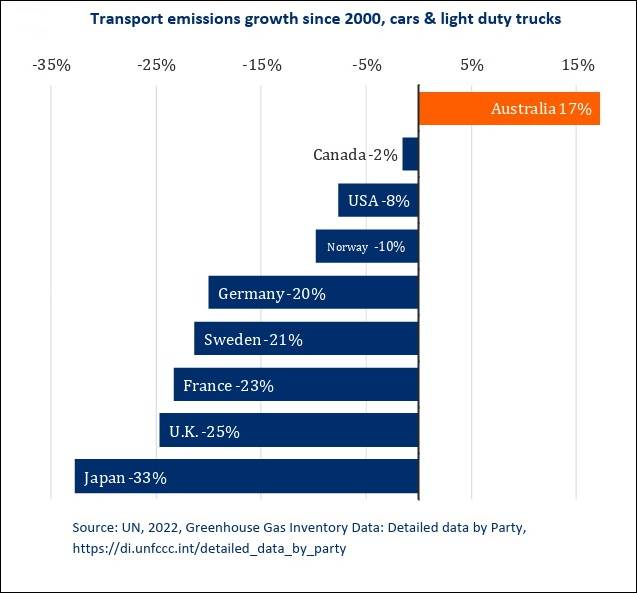

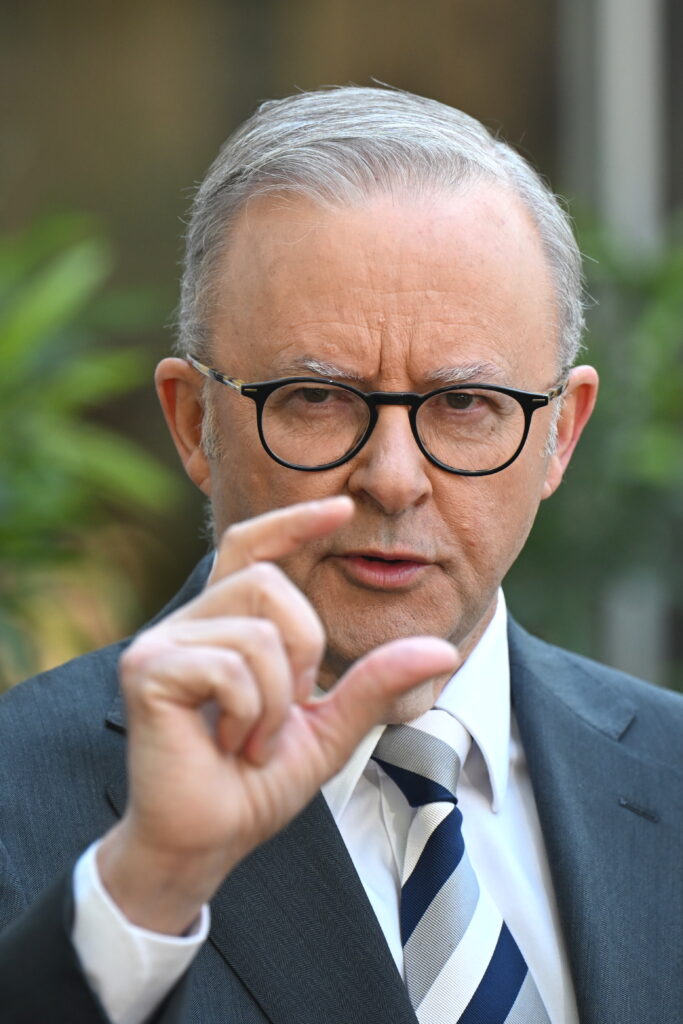

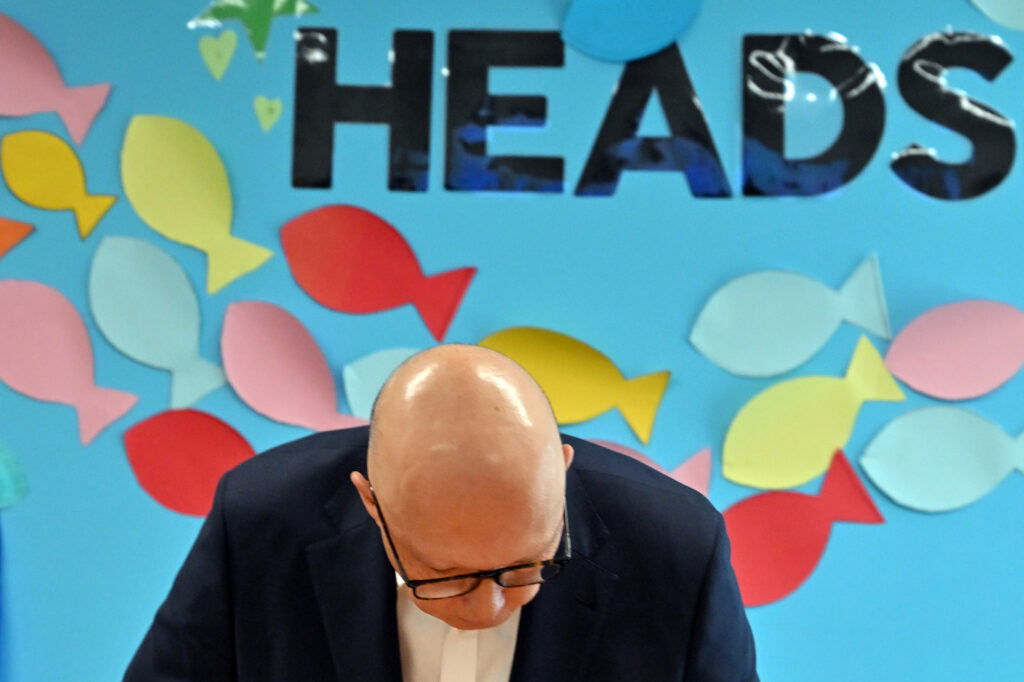
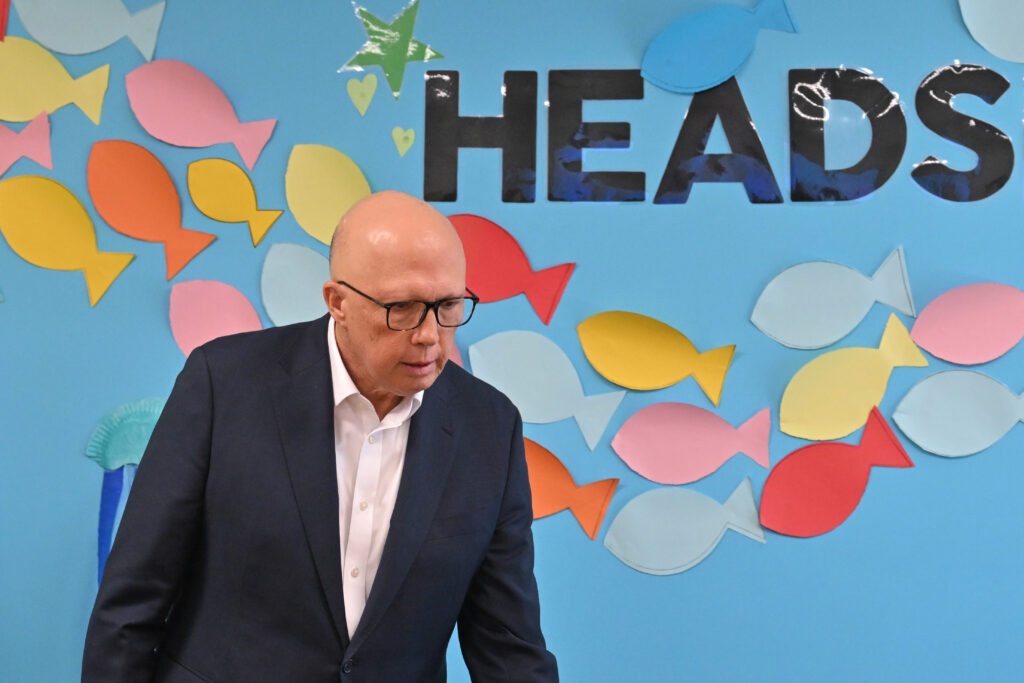
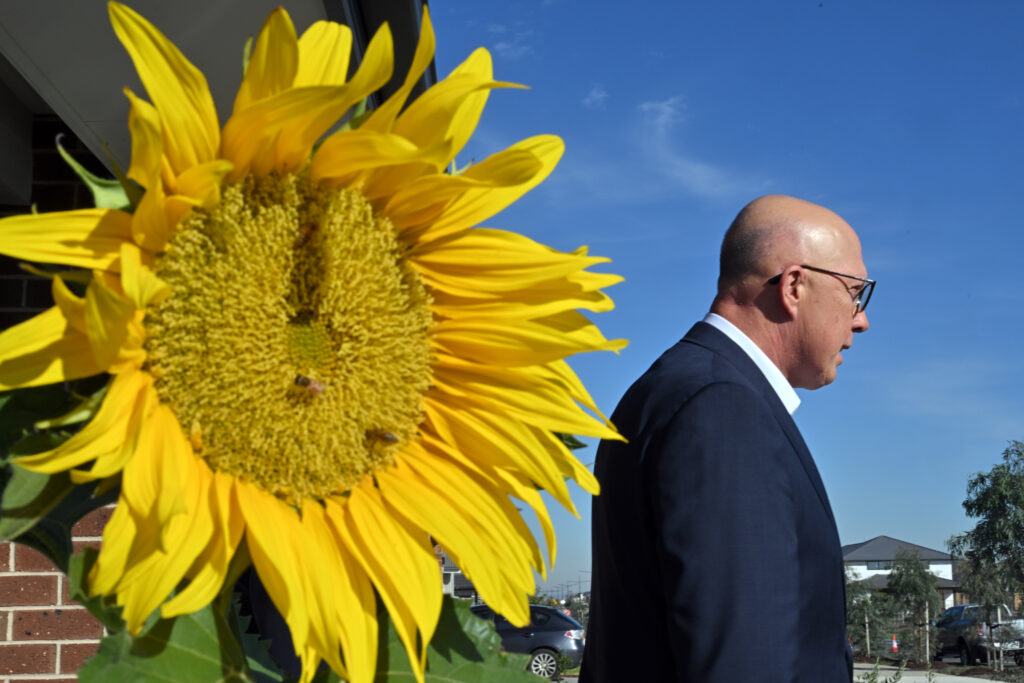
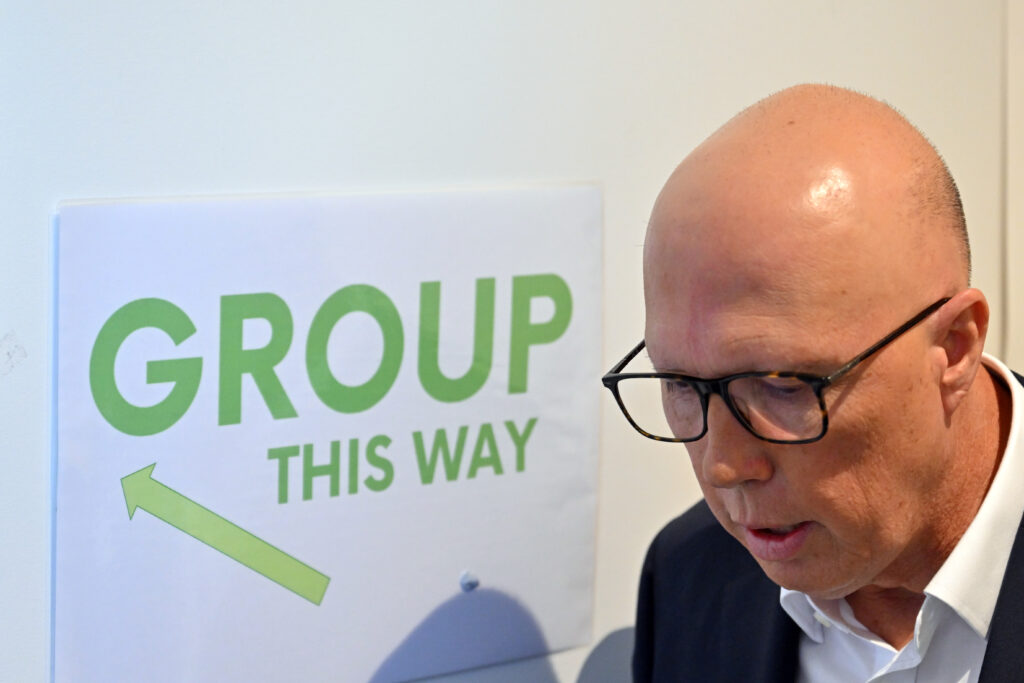
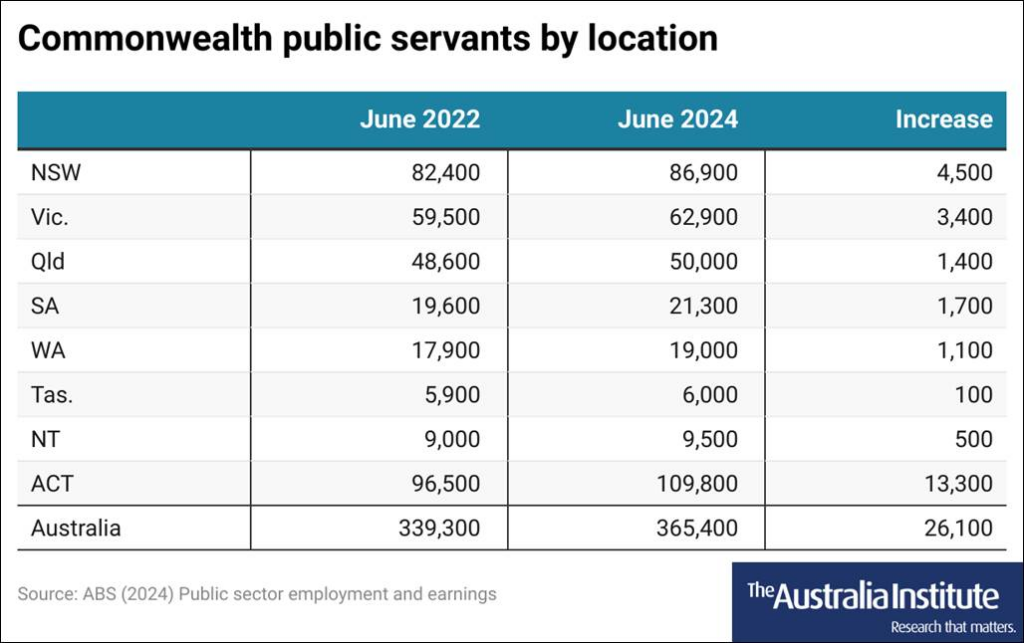
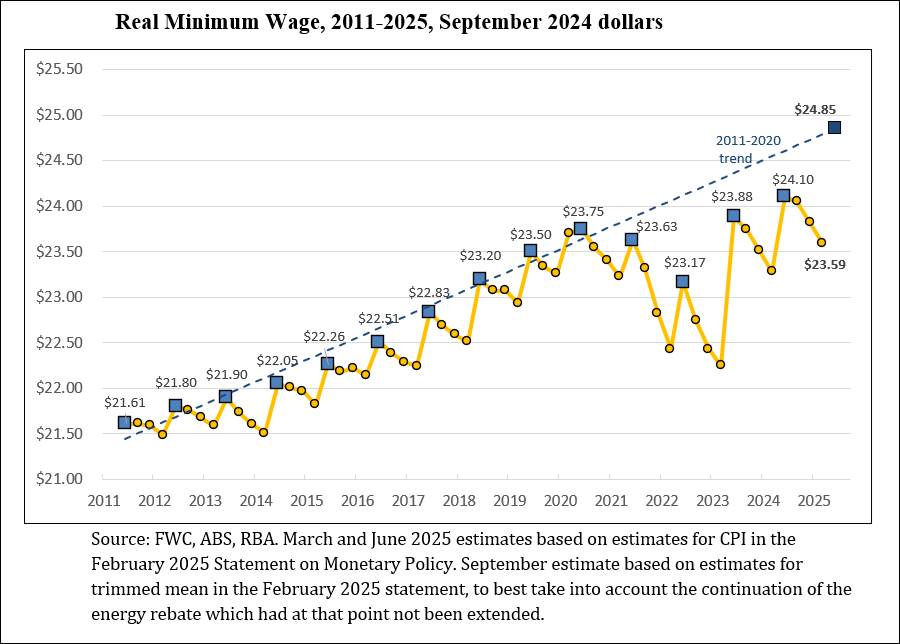


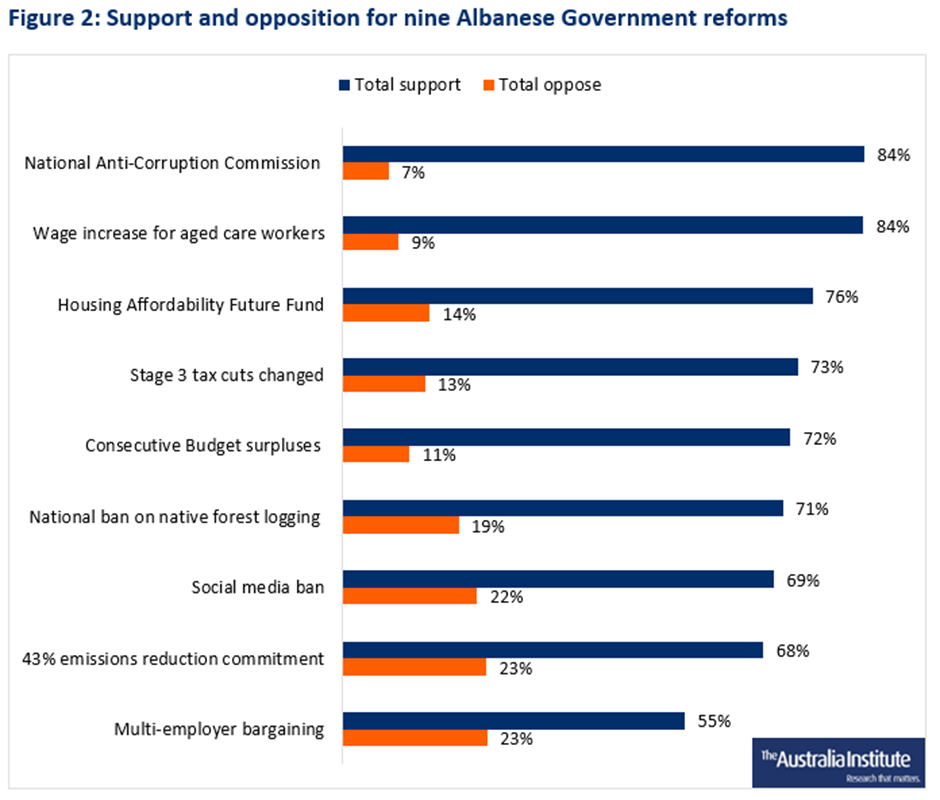

Comments
Start the conversation