
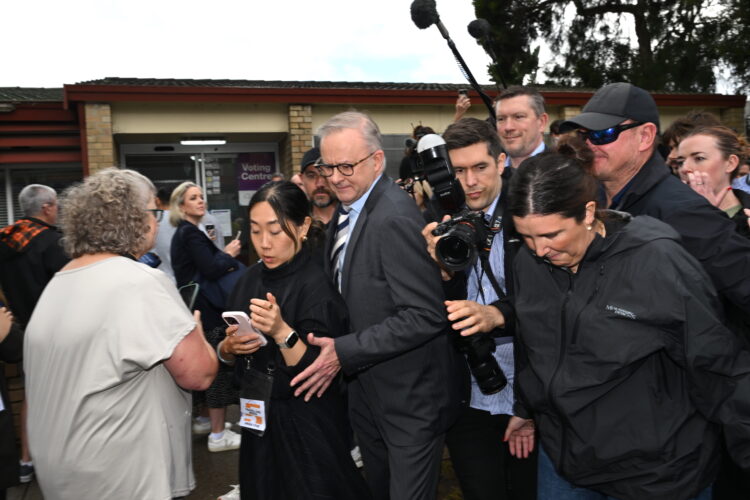
Good evening – see you tomorrow?
And on that note, we are going to leave you, although we will be back with you bright and tomorrow morning for the fifth last day of the election campaign (we count Saturday here)
In answer to Kim:
Does your site, fact checking and evidence based as it is, qualify to be a part of the “hate” media stable?
We couldn’t possibly comment.
And to Lewis:
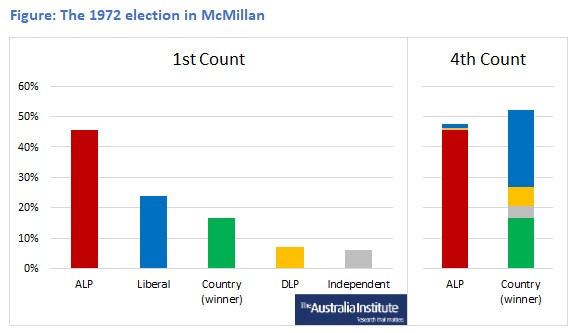
Seems like there’s a lot more three/four candidate battles around the country this election than before. With all the parties having their preferences on HTVs and most independents not having preferences listed on their HTVs, how well people follow them will make it very interesting!
P S – Hope the Russian Caravan and coffee stocks are full!
Hello! And yes – I think you are right on the HTV cards – and something to watch for is how One Nation does, particularly in areas where the Coalition’s vote is tanking. You could see some surprises come election night – and that’s the democracy – but don’t think anything is set in stone until the votes are counted. Particularly in areas where One Nation has always held a bit of sway. Coming from behind to win is not unusual in these situations – so will we see One Nation back in the House of Reps? (You can read more on the Coalition’s relationship with One Nation in my column for the New Daily, here)
(And I ran out of Russian Caravan and it was a tragedy)
Looking forward to more of your comments tomorrow, and as we said, the Australia Institute will be going live from 5.30 (on Facebook and YouTube) on election day, so you’ll get to see some of our responses live on air (I promise to limit the swears)
Until tomorrow, take care of you. Ax






Comments
Start the conversation