Good night – see you tomorrow? (After we all scrub our eyes and ears of that debate)
Ok, so fact checking a moderator is now ticked off my bucket list – a very big thank you to Matt Grudnoff and Greg Jericho (two nights in a row) for helping me through that.
The work support meeting will be in the wellness room. Bring a plate.
I will be back very early tomorrow morning for Day 13 of the election campaign, which hopefully will be a lucky number, and by lucky I mean that the campaign will end and we will all be freed.
Please have a very lovely sleep and take care of yourself. That was a pretty blah way to spend 90 minutes on a Wednesday, but your emails and social media comments made it easier.
Thank you again for joining us – we will hopefully see you back again tomorrow. Until then, take care of you. Ax
20.41 AEST
The winner is – anyone who never has to ever see a moment of that debate
Good God. That was perhaps a bigger waste of time than filling up a leaky bucket. I don’t think there has been a debate where I have had to get experts to fact check the MODERATOR.
In 1873, William Shanks sat down and decided to start calculating Pi to 707 places. By hand. It took him 15 years and he made a mistake that made the last 180 or so of his calculations incorrect, which wasn’t discovered until 1944. And even THAT was less painful than watching that debate.
Scott’s South Pole expedition would have been less painful.
I would rather watch someone sit and paint cheese as it slowly decomposed than ever experience something like that again.
Goodness me what a waste of time.
20.31 AEST
WTF even was that?
The pair give closing statements which are pretty much their press releases and campaign speeches.
We are all dumber for having watched that. Actually, not even dumber – we are all closer to being like Angus Taylor and that’s even worse.
20.28 AEST
Productivity and interest rates explained for Ross Greenwood
Matt Grudnoff
Senior Economist
Last 2 questions from voters. Since no one is going to try and answer these questions I’ll have a go.
How can we make housing more affordable?
We need to reform the capital gains tax discount and negative gearing to stop investors bidding up the price of housing. This will also raise billions of dollars that could be used to build more housing.
Why haven’t interest rates come down?
Because the RBA is failing to understand where inflation is at. When the March quarter CPI comes out at the end of this month, it is more likely to be below 2% than above 3%. The RBA should already have cut. They haven’t because they wrongly believe that a wage price spiral is about to break out.
20.27 AEST
Greg Jericho
Chief Economist
It is worth noting given Ross Greenwood has decided that we need to cut company tax to be “competitive”.
Firstly, that is laughable. Companies invest here because of access to markets in SE Asia, our educated workforce, our stable government, and because we have a SHIRT TONNE of iron ore, coal, and gas
And the problem is especially on gas we don’t tax companies at all.
eg INPEX who are exporting a stack of Gas from NT
20.27 AEST
WHAT THE F*CK IS THIS DEBATE?
This is maybe the worst moderated political debate I have ever seen and I had to sit through the mess that was the Nine debate in 2022.
Does Ross Greenwood think he is at a dinner party? Is he imaging this is just a chat over a bottle of God Knows What (something out of my pay packet)
Is he hearing what we are hearing? Is he even present in this debate? Is he aware of the questions coming out of his mouth?
20.22 AEST
I can not with these questions.
Angus Taylor was just asked if it would be bad if Labor and the Greens went into a coalition after Jim Chalmers just said that Labor and the Greens would not be going into a coalition.
20.21 AEST
Let Matt know if you need any of this explained:
This is insane. From the moderators we have had:
Deficits are bad
The Treasurer and shadow Treasurer should commit to no cuts
They need to cut taxes
Do I need to explain the problem with this?
20.20 AEST
Both were having a bit of a fight over productivity growth, and well the story is not good for either
Greg Jericho
Chief Economist
Under Howard/Costello it fell, When Rudd and Gillard ditched WorkChoices it rose, then it fell before rising abnormally due to the pandemic, and since then it has fallen again.
20.19 AEST
Q: A decision was made by you as energy minister. We’ve heard about it from Jim Chalmers tonight in 2022 before the last federal election, to delay a decision on electricity price rises past election day rises which were 11% and 12% so you effectively hid that power price rise from the Australian people.
Now you’re promising or releasing modeling claiming your gas reservation policy will cut power prices by a meager 3% and your only other power price solution is 15 years away in nuclear.
Why in 2022 did you hide that price rise from the Australian people? And given you did, why can we believe your policy promising this 3% reduction in power price?
Angus Taylor:
Well, I absolutely didn’t. And in fact, what we saw in my time as energy minister is a cut in electricity prices of between eight and 10% depending on whether you’re a small business, large business, or a household. We also saw big reductions in gas prices. Hear me out. They’ve got up to close to $20 and we got them down to closer to five to $7 over my final time in the role. And we saw as a result of that, we saw as a result of that, lower electricity prices and lower lower costs right across the economy. This is the key. If you can get gas prices down, it’s not just gas prices that come down for consumers, they clearly do, but also the price of food, the price of building materials. So much of our economy is energy. Energy is everywhere through our economy.
If we can get those costs down, and we can, by getting more Australian gas working for Australians, we can have a lower cost of living for all Australians,
20.18 AEST
For reasons not immediately clear to anyone except maybe contract conditions, Sky Political Editor Andrew Clennell is now asking a question.
There is a very big run up to this about deficits etc:
Your budget contains $179 billion worth of deficits over five years. Over that period, the extra cost of the cost of the NDIS will be another 33 billion. The cost of your five to $10 tax cuts will be 17 billion over four years. Your public service wages bill after you hired another 46,000 public servants will be 8 billion a year. That’s 40 billion over the five years. That’s 90 billion I’ve just spelled out of the 179 billion of deficits, and that’s before we get to other campaign promises.
You also have us heading to a trillion dollars of debt, in fact, $1.2 trillion of debt having had a go at the Coalition for the same thing. Jim Chalmers, isn’t this the opposite of your hero, Paul Keating, so called beautiful set of numbers. Given these numbers, are you prepared to rule out cuts if you are re elected and haven’t you left Australia in a weak position in terms of a fiscal buffer for a global economic crisis? Jim Chalmers, why have you left us with a decade of deficits?
Chalmers:
Well despite all of that investment in strengthening Medicare, providing tax cuts, providing energy supplements, delivering the NACC, making our economy more resilient.
The budget is $207 billion stronger than when we came to office, and that’s made room for those investments, and it’s meant that we delivered two surpluses our predecessors delivered none.
The deficit this year is half as big. We’ve made a structural difference to the budget in areas like the NDIS and aged care and also interest costs. And so we are getting the budget in much better nick, and we’re doing that without ignoring our responsibilities to people who are doing it tough.
20.15 AEST
The debate dissolves into a cacophony of noise
Greg Jericho
Chief Economist
The pair are having fights over real wages, tax reform and productivity.
The instant asset right off is quite possibly the worst way to help productivity. All it does it let small business owners buy a new ute or some new stuff, much of which does nothing to help productivity. It is purely a tax break for the people the LNP thinks they need to vote for them to win.
20.13 AEST
Let’s talk tax.
Matt Grudnoff
Senior Economist
Are taxes high?
Compared to other developed countries, Australia is a low taxing nation. We would have to collect an extra $115 billion per year just to be at the OECD average.
Australia’s taxes at the federal level are not even particularly high compared to Australia’s recent history. The graph below shows the tax to GDP ratios since 2000-01, with the blue columns being years the Coalition was in government and red column being years when Labor was in government.
20.13 AEST
Angus Taylor tries to get Jim Chalmers to apologise for the ‘biggest fall in living standards’ yadda, yadda – you know how that question ends.
First of all, I mean, Angus wrote down that question and then you asked it, and he didn’t have the ability to think up a second question.
Chalmers then goes through the economy. He asks Taylor whether he will look down the camera lens and say no cuts to health and no cuts to education and Taylor uses a lot of words to say a whole lot of nothing, but he also won’t say the words.
OK, we have now moved on to company tax and whether anyone will cut it to attract investment.
20.08 AEST
Ross Greenwood says “friends and foes” have told him that Jim Chalmers is a great communicator, but gets cranky around criticism.
K.
Ross Greenwood says that “friends and foes” say Angus Taylor is brilliant, and a future prime minister, but doesn’t put in the work.
Cool.
Both of them talk about how they are just normal, dedicated dudes, doing normal, dedicated work.
20.06 AEST
Fact Check: the Coalition’s numbers
Reupping this from Greg Jericho earlier in the day:
Today very much is the day for the Liberal Party throwing around numbers that don’t actually mesh with reality (that’s very polite way of saying they are total crap)
We’ve already dealt with the lie that grocery prices have gone up 30% under the ALP govt (they haven’t – it’s 12% on average), but we also have the line that people are paying $1,300 more for their power bills than they were under the Morrison govt.
This one is a bit tougher to work out because they are not just talking about an increase they are also throwing in some very dodgy maths.
Here’s the Liberal’s Ted O’Brien this morning on ABC:
“Instead, power bills have gone up by $1,300. If you look at the default market offer that comes out each year, what you see is increases since Labor came to office of well over $1,000 and they promised you a reduction of $275. So, what you have, including here, I’m in Sydney today, you have people in Western Sydney paying $1300 more than what Labor had promised them.”
Ok, first off, even under O’Brien’s explanation bills have not gone up by $1,300 at best they have gone up $1,025. And sure that might be $1,300 more than Labor promised, but let’s not pretend that is the same thing.
But let’s be kind and not get too worried about that clear fudging of numbers. Let’s get to the real issue – have power bills gone up by even $1,025 let alone the $1,300 extra if we include the ALPs promise of $275 cheaper bills?
Well to work out, let’s use O’Brien’s measure of “the default market offer” (or DMO)
This comes out each year by the Australian Energy Regulator and is “the maximum price an electricity retailer can charge a standing offer customer each year.”
O’Brien referred specifically to Western Sydney, so let’s just use the DMO for NSW distribution regions.
We also know what the DMO is for this year because in March the AER put out its draft proposal (the final numbers will come out in May/June).
So excellent – we have the 2 numbers, so let’s compare the changes for the three distribution regions in NSW – Ausgrid, Endeavour and Essential.
And we’ll look at the price for residential with and without controlled loading (which is just separately metered tariffs used for appliances such as electric hot water storage systems, pool pumps or underfloor heating). The prices also vary from each other because of different usage levels – but they are unchanged from 2002 to 2025, so we are comparing apples with apples.
Residential without Controlled load
Residential with Controlled load
Ausgrid (May 2022)
$1,512
$2,122
Ausgrid (March 2025)
$1,969
$2,714
Change
$457
$592
Endeavour (May 2022)
$1,836
$2,383
Endeavour (March 2025)
$2,397
$3,050
Change
$561
$667
Essential (May 2022)
$2,092
$2,490
Essential (March 2025)
$2,713
$3,174
Change
$621
$684
As you can see, we are nowhere near $1,000 let alone $1,300 – even if you add in the $275.
But we also can use the ABS’s number from the quarterly inflation figures. Because remember the DMO is just “the maximum price an electricity retailer can charge” that doesn’t mean it is the price you are paying. Many get better deals. Households also get the energy rebate.
So let’s assume in June 2022 your annual electricity bill in Sydney was $1,000, that same amount of electricity on average across Sydney would now cost $1,075. Or $75 more.
Not quite the $1,3000 extra that Ted O’Brien is saying.
We have clearly had high inflation over the past three year. Why the Liberal Party feel the need to make up numbers to suggest things are bad is beyond me.
20.05 AEST
Angus Taylor is now pretending the world inflation crisis has not impacted the Australia economy.
Jim will look for an excuse for everything. He will look for an excuse for everything. Labor promised 97 times that electricity prices will come down by $275 and and the excuses are across. Whether you know it’s Vladimir Putin, it’s President Xi, it’s Donald Trump, he’ll use them all. (Because um, it has had an impact?)
But the one thing he won’t do is accept the people who are promised a $275 reduction in my electorate, and in those areas we just heard from a moment ago, a $1,300 a year worse off than was promised. (We can not find how they got this number – it seems like it has been made up)
Jim Chalmers has had enough.
“He’s making up numbers, he just made that up!” he says.
Ross Greenwood has to move on.
20.02 AEST
Farrrrkkkk me. Even I can fact check this one and I am maybe the dumbest person in the room.
Angus Taylor:
You’ve got to make sure you’re not spending money that doesn’t need to be spent, and you focus on the things that are really going to help people’s lives at a difficult time…like making sure that the cost of energy is going down so that we can get our energy sector where it needs to be, and that’ll help with our food our construction sector under Labor, we’ve seen groceries go up by 30% (No we haven’t, it is 12 %) gas, electricity, insurance all up by over 30%(this is because of climate change) your home grown inflation has had this impact (it is not home grown)
There is a better way, Jim, we know how to beat inflation, we know how to beat inflation, we know how to beat inflation, and you’ve completely failed to achieve it. (inflation has fallen under the target band)
20.00 AEST
Poverty…anyone…anyone?
Greg Jericho
Chief Economist
Oddly both Taylor and Chalmers as they talk about people doing it tough are not mentioning anything about those living on Jobseeker – those who live around 38% below poverty.
And talk of increasing that? Nope. None. Even though as we saw during the pandemic, raising Jobseeker took people out of poverty.
Amazing how both the ALP and LNP forget the obvious and forget history.
19.58 AEST
OK, so it doesn’t seem like any undecided voters will ask any questions here – it is all Ross Greenwood interrupting Jim Chalmers every 30 seconds, but letting Angus Taylor speak every time he says ‘this is really important’.
So far none of what Taylor has said is important.
19.56 AEST
For the people at the back; spending is higher now because we have an NDIS
Greg Jericho
Chief economist
Just to repeat, the same graph and line I said last night during the leader’s debate. Spending is higher now because we have an NDIS. We did not use to have it. If you think the NDIS should not cost anything, then it might be time to go lie down for a very long time.
Take out spending on disability support, and this govt is not a big spending govt
19.55 AEST
Sky seems to have discovered there is a cost of living crisis.
The daylight anchors have been talking about the moment in last night’s debate when the host Kieran Gilbert asked those in the audience who was feeling the cost of living crisis and most of the room held up their hand.
And I mean, yes. Has Sky just discovered this? I would expect the vampires who host the after dark shows to have no idea, but why is this just suddenly an editorial epiphany?
19.53 AEST
Seriously, wtf is this debate
Matt Grudnoff
Senior Economist
Ross is asking what they’re going to cut if there is a downturn. You don’t cut if there is a downturn. They last did that during the great depression.
They then go on to say spending was high during the pandemic but that doesn’t count because it needed to be high during the pandemic.
It was high during the pandemic because the economy had turned down.
19.52 AEST
WTF is this debate
Greg Jericho
Chief Economist
Angus Taylor is betting on the confidence fairy delivering faster growth. This is exactly what Joe Hockey used to preach in 2013. It is a fantasy that does not face realty,
Also Ross Greenwood is suggesting you need to cut govt spending during a recession? That would deliver a depression.
I was sure most people had grasped what happened during the Great Depression when the Australian govt tried to “balance the budget” by cutting spending
19.52 AEST
Jim Chalmers:
Now, the reason why Angus was so evasive when you asked him to come clean on his cuts is because I think for the first time in our history, Angus is going to the election with three policies; First of all, to increase income taxes on every Australian taxpayer.
Second of all lower wages, and thirdly secret cuts to pay for nuclear reactors, and you can’t find $600 billion to pay for those nuclear reactors without coming after Medicare just like Peter Dutton did when he was the Health Minister
Angus Taylor says he needs to “stick to the facts” which is kinda hilarious.
There will be lower taxes. There will be lower taxes under a Dutton government (this is not true? It is the Coalition’s policy to repeal Labor’s latest tax cuts – which is not lowering taxes, it is increasing them) a lower fuel tax, 25 cents off at the Bowser, and immediately for every Australian guy’s fuel cost of living who buys fuel at the bowser, and you might dismiss that.
You might think that’s irrelevant, but let me tell you, you said you’re going to increase in my part, in my part of the taxpayer reducing fuel tax. That’s his policy. Real. It’s relevant, and it’s immediate, unlike your 70 cents a day in 15 months time.
19.48 AEST
Angus Taylor is absolutely tying himself into knots in this debate when he is asked about the Coalition’s planned cuts.
He is being rinsed ALMOST as well as in the interview with Billi FitzSimon, but I would say the Daily Aus editor in chief still has a nose in front here. No wonder Peter Dutton refuses to go on their podcast debate.
19.46 AEST
Greg Jericho
Chief economist
Angus Taylor is just straight out lying by suggesting that Jim Chalmers is forecasting either a recession or lower interest rates. All Chalmers was doing was saying that the market is pricing in 5 rates cuts.
Taylor is basically saying Chalmer is to blame for just reading a chart.
Want to know how fast things have changed? Well right now the market is forecasting a 77% change of a 75 basis point cut in May. That is the equivalent of 3 standard rate cuts!
19.46 AEST
Fact check: Is the Australian economy heading into recession?
Matt Grudnoff
Senior Economist
Trump’s tariffs are not enough to push the Australian economy into recession. Our goods exports to the US make up only about 1% of GDP and 10% tariffs doesn’t mean that all exports to the US stop. They might just drop a little.
But what about if the US economy goes into recession?
The main fear is that if the US economy goes into recession, this might weaken the world economy including Australia’s major trading partners. This would have a bigger impact but even then, a recession is not likely.
Remember the rest of the world is not putting up trade barriers between each other. If they are putting up trade barriers it is only between themselves and the US. This might well have a large impact on the US, but only a moderate impact on the rest of the world.
At the moment Treasury is predicting that the trade war will only shave 0.1% off economic growth.
While it might make for exciting headlines, a recession at this stage is unlikely.
19.45 AEST
Jim Chalmers is seemingly fighting his worse angels to just let loose at Taylor and says:
We don’t expect that, and that’s what I said earlier in the week, and Peter Dutton has lied about that multiple times since then.
And given the fact you have spent a lot of money and over the last 50 years, this is one of the highest spending governments, except for COVID, in the history of Australia, over that period of time.
Q: So what I’m wondering is, what shape is the government’s budget in right now, after that spending? Because even yesterday, the Prime Minister Anthony Albanese said he would keep on spending. He sees no reason not to keep on spending.
Well, first of all, it is important to remind everyone that we expect the Australian economy to continue to grow, and Angus and Peter Dutton should stop lying about that. That’s an important correction, an early correction, when it comes to the space in the budget. The budget is in a much stronger position now than it was three years ago, and that’s because I’ve delivered two budget surpluses. There’s been a $207 billion cumulative improvement to the budget. Bottom line, the debt this year is $177 billion than what we inherited. That’s saving $60 billion in debt interest over the course of the next decade today, and that gives us over the next 10 years, because that’s the issue, is that gives us more room, if necessary, to respond to these difficult global conditions
19.44 AEST
Q: Alright, I want to go to the markets now, as in the stock markets, they tell you something about the future. They tell you that the risk of a recession is much higher. Peter Dutton has said, basically, under a under a Labor government, if re elected, Australia will go into recession. Why wouldn’t Australia go into recession if there’s a coalition government in power, surely you’ve got to have if it’s good for one, it’s good for the other. You can’t avoid that.
Taylor:
Well, Peter is responding to Jim’s forecast, which is now forecasting interest rates cuts.
He likes to forecast, we need someone who wants to manage the economy, not just forecast, and he was forecasting big cuts in interest rates. Now that’s only going to happen if the economy is falling off a cliff. If there’s something that Jim knows about the economy falling off a cliff, he should be telling us
Interest rates under the Morrison government were as low as they possibly could be in Australia, so what does that tell you about how Taylor would judge the Morrison government’s economic management?
19.42 AEST
Angus Taylor then has a crack:
The government are trying to pretend that they’ve always been advocates for free markets.
This is the government that has shut down the sheep trade in Western Australia. I mean, they’re not advocates for getting access to markets. They’ve done the exact opposite. The last Labor government shut down the cattle trade into Indonesia. We have always been the ones fighting for open markets, for our farmers, for our exporters, for our miners, for our manufacturers, and we will always be the ones who stand up for them.
When we were last in government, of course, we did take on the Trump administration, and we avoided tariffs as a result. (It was a very different situation – these are worldwide tariffs).
Jim went over to the US not long ago, got the photo opportunity, but he didn’t come back here with what we needed, which is free access to the US market.
19.40 AEST
Treasurer’s debate begins
The first topic is ‘Australia’s Future’.
The pair gave opening statements, which went as you could imagine.
Angus Taylor seems nervous.
OK, the first question follows the clip of Democratic Senator Mark Warner who questioned why Australia had tariffs at all – given we are an ally, and also in a trade deficit.
The answer from the Trump administration was because we have banned US frozen beef and pork (we do import a small bit of frozen beef, but also US beef is terrible) and we do have big biosecurity requirements which is why US pork isn’t on the menu.
Asked about Australia’s response, Chalmers says:
I think we’ve got the first contrast of the debate tonight, the first choice, because we’ve got a prime minister standing up for and speaking up for Australia, and we’ve got an opposition leader and an opposition which is absolutely full of these kind of DOGE-ie sycophants who have hitched their wagon to American style slogans and policies and especially cuts which would make Australians worse off, and now they wonder why nobody believes them when they desperately try to pretend to unhitch their wagon from some of the policies and cuts that we’ve seen in the US.
And so this is a pretty important choice, a prime minister speaking up for Australia and standing up for Australians, or an opposition leader and an opposition who have made it clear for some time that they take their cues and their instructions and their policies directly from the US and DOGE sycophants.
19.25 AEST
OK, now Sean Spicer, Trump’s first press secretary who flamed out and then made a career about being the guy who flamed out, and is now back in Trump’s fold, is speaking to Bolt and somehow, Bolt is the sensible one in this conversation, in case you were wondering how it was all going on Sky.
19.19 AEST
Goodness. Bolt. Two days in a row.
Not sure any of us signed up for this. But you are worth it.
19.16 AEST
All eyes on the money men as global economy shudders
Joshua Black
Postdoctoral Research Fellow
With Trump’s tariffs beginning to bite and consumer confidence dropping here and elsewhere, all eyes tonight will be on the debate between treasurer Jim Chalmers and his Coalition counterpart Angus Taylor. But who are the money men, and where are the money women?
Chalmers has long been Labor’s coming man. As treasurer over the last three years, he has modelled himself on Paul Keating, who made complex economic problems understandable for the public in the 1980s.
The similarities stop there. Unlike Keating who left school aged 14, Chalmers enjoyed a university education at Brisbane’s Griffith University and did his PhD in political science at the ANU, studying … you guessed it: Paul Keating. Before he was elected to federal parliament in 2013, Chalmers worked for Labor politicians including Treasurer Wayne Swan, right at the height of the global financial crisis.
Angus Taylor arrived on the scene at the same election, but his pathway to parliament was rather different. Twelve years older than Chalmers, Taylor was a medal-winning student of economics and law at the University of Sydney and enjoyed a Rhodes Scholarship to Oxford. He cut his commercial teeth with McKinsey and Co in the 1990s and Port Jackson Partners in the 2000s.
Taylor rose quickly up the Liberal league under Malcolm Turnbull and Scott Morrison years. From 2019 he was never too far from the whiff of scandal, with questions asked about documents potentially forged in his office, questionable government water purchases from companies he used to run and more.
These are the men who will compete tonight for the economic trust of Australians. But why no money women?
There has never been a woman federal treasurer in Australia. Just one woman, Julie Bishop, has held the portfolio in opposition, but she lost the confidence of colleagues and was replaced by Joe Hockey.
There have been more women in the finance portfolio. Liberal Senator Margaret Guilfoyle was the first woman to do that job in 1980, followed by Labor’s Penny Wong in 2010. Her colleague Katy Gallagher currently holds the job.
The states have done fractionally better. Victoria’s first woman treasurer got the job five months ago. NSW, Queensland and Tasmania have had one each. The territories are unique, with the ACT boasting three (including Gallagher) and the Northern Territory with six.
It matters who our treasurers are. Their life experiences and perspectives help shape the economic debate at the heart of government. Better economic and social outcomes are likely if half of Australia’s population can see itself in the engine-room of economic policy.
19.15 AEST
Money Men….where are the Money Women?
Joshua Black
Postdoctoral Research Fellow
With Trump’s tariffs beginning to bite and consumer confidence dropping here and elsewhere, all eyes tonight will be on the debate between treasurer Jim Chalmers and his Coalition counterpart Angus Taylor. But who are these money men, and where are the money women?
Chalmers and Taylor were both elected to parliament in 2013. Chalmers studied political science and went on to work for Labor politicians including Wayne Swan, at the height of the global financial crisis.
Taylor was a medal-winning student of economics and law at Sydney, a Rhodes Scholar (yes, you read that right) and a successful business consultant. In the Turnbull and Morrison years he was always the coming man, until the whiff of several scandals slowed him down.
These are the men who will compete tonight for the economic trust of Australians. But why no money women? Australia has never had a woman as federal treasurer, and only (briefly) one woman shadow treasurer, Julie Bishop.
Women have more often played number 2 as Minister for Finance, starting with Liberal Margaret Guilfoyle in 1980 and more recently Penny Wong in 2010. Her colleague Katy Gallagher currently holds the job.
The states have done marginally better. Victoria’s first woman treasurer got the job five months ago. NSW, Queensland and Tasmania have had one each. The territories are unique, with the ACT boasting three (including Gallagher) and the Northern Territory with six.
It matters who our treasurers are. The job is important. Their life experiences and perspectives help shape the economic debate at the heart of government. We should care about having women’s voices properly represented in those debates.
19.02 AEST
Good evening and welcome back!
We are standing by to cover the Treasurers’ debate -it is the same format as yesterday’s with the leaders -you’ll have Jim Chalmers and Angus Taylor and 100 undecided voters asking the questions and deciding who wins.
You’ll also have Greg Jericho and Matt Grudnoff to fact check and add any tidbits you should know, and me, Amy Remeikis doing all the typing monkey stuff.
Ready?
Let’s get into it. Again. May Dolly help us.
16.05 AEST
See you at 7(ish)
We are going to take a small break and come back at 7(ish) to bring you the treasurer’s debate.
You’ll have Greg Jericho and Matt Grudnoff along for the ride. Along with my krupnkis.
So go have a wonderful evening and come back if you need to make your night worse.
See you soon. Ax
16.04 AEST
We mentioned a little bit ago that Jacqui Lambie had been everywhere, including Abbie Chatfield’s podast, It’s A Lot.
And she went even harder on the salmon industry. Asked if people should boycott salmon, Lambie said:
Yeah, don’t eat bloody Tasmanian salmon.
I’ll tell you what, (in) another couple of weeks, I reckon Woolies and Coles, they’re feeling the pressure down there as well, I know they’re about this far from pulling salmon.”
….You show up on Bruny Island (and) there’s always a dirty filthy f**king fish net sitting there with salmon in them.
And Tasmanians have had enough because what they’re going to do is kill brand Tasmania.
People come because it is Tasmania. It is clean and green. It’s much bigger than salmon. It is taking Tasmania out and I’m not going to tolerate it.”
…We don’t want that bloody salmon farming in Tasmania, they can piss off.
15.41 AEST
Coalition gas plan: Do retail customers benefit?
Rod Campbell and Dave Richardson
The Coalition’s acknowledgement that gas exports are responsible for gas supply issues in Australia is welcome. It’s a big and important shift, and the proposal for an export levy might just work.
But…there are plenty of buts!
Peter Dutton claims the policy will save 4 million residential customers 7% of their retail gas bill, by reducing the wholesale price from $14/GJ to $10/GJ.
Looking at AGL’s 2024-25 half-year report, AGL’s wholesale gas costs were $11.5/GJ of which $8.2/GJ was AGL’s cost for gas purchases (the rest ($3.3/GJ) was “haulage, storage and other.”).
So if AGL pays an average of $8.2/GJ for gas, it’s not clear that it will benefit from a reduction in the spot price to $10/GJ.
Still less clear is how much would be passed on to AGL’s retail customers. They pay an average of $38.8/GJ plus GST, meaning a 7% decrease would represent a saving of $3.0/GJ…were it to materialise.
Like a lot of energy policy, the devil will be in the detail, with customers and the climate not looking like big winners.
14.50 AEST
I mean, if there is one positive to take from the Trump tariffs, it is that Gina Rinehart’s companies are suffering too.
AAP have done a markets wrap:
Nearly $50 billion has been erased from Australia’s top-500 public companies as US tariffs take effect and US-China trade war tensions escalate.
The S&P/ASX200 had fallen by 133.9 points, or 1.78 per cent, to 7,373.8 by 2:10pm AEST on Wednesday as the broader All Ordinaries lost 142.8 points, or 1.84 per cent, to 7,562.6.
The sell-off has erased almost three-quarters of Tuesday’s 2.3 per cent relief rally, leaving the key S&P/ASX200 down more than 14 per cent from mid-February’s 8,615 all-time high.
Roughly $49 billion had been wiped from the All Ordinaries’ 2.6 trillion market cap on Wednesday alone, as hopes of easing trade war tensions came to nothing, and ‘Liberation Day’ tariffs took effect at 2pm AEST, including a 104 per cent impost on Chinese exports to the US.
“We are on the verge of seeing the two largest economic and military superpowers collide at high speed, with Australia caught squarely in the middle,” IG Markets analyst Tony Sycamore said.
“If current lines hold, the fallout has the potential to dwarf the economic impact on the Australian economy felt during the GFC and COVID.”
The sell-off came after another volatile Wall Street session that finished in the red with the White House confirming the tariffs, and forging ahead with the counter-retaliatory measures against China.
China has vowed to “fight to the end” the US-led trade war.
The S&P500 benchmark index has lost $US5.8 trillion ($A9.8 trillion) from its combined market cap since the ‘Liberation Day’ tariffs were announced on April 2.
All 11 local sectors were in the red by the afternoon, with energy stocks, materials and health care stocks all shedding more than 3.4 per cent.
14.45 AEST
Are the Trump tariffs as dumb as they seem? (They’re even worse)
Richard Denniss and Emma Shortis discuss Trump’s plan to tank the world economy:
14.34 AEST
Jacqui Lambie has been quite busy lately – the Tasmanian senator has also appeared on Abbie Chatfield’s podcast, ‘It’s a lot’ where she spoke about her political journey so far, and her mistakes early on – including that she looks back at some of her clips when she was pushing conservative lines and wonders what the hell she was doing.
She has been steadfast against what the salmon industry is doing in Tasmania for some time, and she discusses that in this interview:
Senator Jacqui Lambie tells ABC Statewide Mornings the salmon industry lost her support when the companies were bought out by multinationals. "They don't care, they can't care about clean, green Tasmania," Senator Lambie says. #auspol
Labor Friends of Palestine push for Albanese government to act against Israel’s genocidal war in Gaza
Labor Friends Of Palestine NSW have issued their federal election statement, calling on a re-elected Labor government to “unconditionally” condemn Israel’s genocidal war in Gaza and the ongoing occupation and settler violence in the West Bank, end military cooperation with Israel and act in accordance with humanitarian law (These groups are party members who have come together in sub groups to try and get the party to change positions – in this case, the response to Gaza)
— Labor Friends of Palestine NSW (@labor_palestine) April 8, 2025
14.21 AEST
This conspiracy theory wasn’t helped by the fact the News Corp panelists discussing the debate once it finished were completely miffed by the questions the audience asked. Almost as if the hosts were….out of touch?
This has gotten a lot of traction. It isn't true. Per Sky News Australia – the questions and voters were independently selected by Q&A Market Research and Sky didn't know the questions ahead of time.
In any case Parramatta sits on a 3.7% margin, it's hardly a woke lefty haven. https://t.co/Fp4ZgG0SC9
Let’s take a bit of a look at how the campaigns looked today, thanks to AAP:
Australian Prime Minister Anthony Albanese serves ice cream while attending the official opening of Hay St Market Leader of the Opposition Peter Dutton visits BlueScope steel facility in Erskine ParkICE CREAMDutton hears the call of the ice cream
14.12 AEST
Matt Grudnoff
Senior Economist
The Greens plans to crack down on negative gearing and the CGT discount is a policy that will have a real impact on making housing more affordable.
It is the rapid increase in investor demand that is driving up house prices, not the lack of supply of housing. Building more housing will make housing more affordable but real progress can only be made if we tackle to root cause, too many investors flooding the market, bidding up house prices.
Not only will reforming these two massive tax concessions help make housing more affordable, but it will also raise billions of dollars that can be further used to build more public housing.
The Dutton gas reservation policy explained; the simple way
Matt Saunders
Senior Economist
The Dutton policy works by creating a strong incentive for some gas to first be sold locally rather than exported.
It first does this by setting a benchmark price of $10/GJ. It chose this price because it is a nice round number and because it will allow everyone to still make profits. In comparison, the current domestic wholesale price of gas is around $14/GJ. And you can export gas as LNG for a bit more than $14/GJ, but it costs money to turn it into LNG and ship it overseas, so the exporter still receives around $14/GJ.
The aim of the incentive is to reduce domestic wholesale gas prices down to $10G. The ‘incentive’ is a Gas Security Charge on some, nor all, exports of LNG from Queensland. A Gas Security Charge is a fancy name for a term economists like to call a ‘tax on exports’. The tax on exports does not apply to all exports, but only those exports that are not ‘locked-into’ existing long-term LNG contracts. Gas exported in addition to the existing long-term contracts are known as ‘spot-trades’.
The tax is set at a little over $4/GJ on these ‘spot-trades’. Let’s say $4.10/GJ. That means that if a gas producer decides to export gas as an LNG ‘spot-trade’ they will now receive only $9.90/GJ ($14/GJ – $4.10/GJ tax). But they can instead sell at any price to the domestic market. Initially still at $14/GJ. As more gas is pumped locally the domestic wholesale price should start to fall. In theory, the domestic price should keep falling until it reaches the $10/GJ, the benchmark price, as produces find it more profitable to sell locally rather than exporting.
The upshot is that the Gas Security Charge should generate zero revenue. It is an incentive not to export. If gas producers find enough gas to get the wholesale price down to $10/GJ, they are free to re-start LNG spot-trades without the ‘burden’ of the Gas Security Charge. So there remains a built-in incentive for ever more gas because… Coalition. Meanwhile, other parts of Dutton’s gas policy are wacko like:
Making gas a critical mineral (Hint: Gas is a gas not a mineral)
Including gas generation in the Capacity Investment Scheme (an existing policy designed to increase renewable electricity not fossil fuel gas generation).
The benefits to households of the lower gas prices are modest, household gas prices are expected to fall 7% and electricity prices down 3% (gas prices strongly influence electricity prices). Which could be about $96 saving per average household per year. Industrial uses of gas, particularly some manufacturing, will get bigger falls in their gas prices and that may have additional positive benefits across the economy.
But while on the topic of export taxes on gas, sorry Gas Security Charges, a plain-Jane vanilla export tax of just $2/GJ on all of Australia’s LNG exports could raise close to $9 billion a year.
13.59 AEST
Speaking of Chris Bowen, he had a few lines he liked today:
Also today, I note that the Liberal Party has released their scam-phlet, which is their alleged modelling of their gas policy. I mean, I’ve seen longer menus in a restaurant than this, and there’s 135 words in here about the impact on electricity prices. James Paterson told the Australian people that they’ve been working on this for a year, which works out at a very low productivity per word, if this is a year’s work. This is a nonsense document filled with holes, and I’ll be having more to say to that tomorrow at the debate.
13.58 AEST
The debate between Jim Chalmers and Angus Taylor is being held this evening (again on Sky) and Greg Jericho and I will be going double or nothing in subjecting ourselves to Sky After Dark, so you don’t have to. Sky business editor Ross Greenwood will host that one.
And then we have the energy debate between Chris Bowen and Ted O’Brien tomorrow afternoon – this one is at the national press club and will be at lunch time, so no need to break into your schedule there either. We will have you covered.
13.55 AEST
If you missed this yesterday, the Liberals have sacked the campaign manager for their Bruce candidate – Bruce being one of the seats the Liberals at one point thought they could get.
Libs have sacked the Bruce campaign manager after we discovered dozens of offensive social media posts about women and politicians… Read more here: www.theage.com.au/politics/fed…
Liberal party spokesperson, Senator James Paterson, continues to show as much enthusiasm for the job as a turtle returning from a funeral.
He is speaking on the Coalition’s gas policy and repeating that the Coalition could do it with the existing gas wells. Which is true.
13.41 AEST
Factcheck: Have power bills gone up $1,300 under Labor as claimed by the Coalition? (no, they are making it up)
We have had more than one reader ask us this question, so we tasked our best minds on it. Here is Greg Jericho with the answer:
Today very much is the day for the Liberal Party throwing around numbers that don’t actually mesh with reality (that’s very polite way of saying they are total crap)
We’ve already dealt with the lie that grocery prices have gone up 30% under the ALP govt (they haven’t – it’s 12% on average), but we also have the line that people are paying $1,300 more for their power bills than they were under the Morrison govt.
This one is a bit tougher to work out because they are not just talking about an increase they are also throwing in some very dodgy maths.
Here’s the Liberal’s Ted O’Brien this morning on ABC:
“Instead, power bills have gone up by $1,300. If you look at the default market offer that comes out each year, what you see is increases since Labor came to office of well over $1,000 and they promised you a reduction of $275. So, what you have, including here, I’m in Sydney today, you have people in Western Sydney paying $1300 more than what Labor had promised them.”
Ok, first off, even under O’Brien’s explanation bills have not gone up by $1,300 at best they have gone up $1,025. And sure that might be $1,300 more than Labor promised, but let’s not pretend that is the same thing.
But let’s be kind and not get too worried about that clear fudging of numbers. Let’s get to the real issue – have power bills gone up by even $1,025 let alone the $1,300 extra if we include the ALPs promise of $275 cheaper bills?
Well to work out, let’s use O’Brien’s measure of “the default market offer” (or DMO)
This comes out each year by the Australian Energy Regulator and is “the maximum price an electricity retailer can charge a standing offer customer each year.”
O’Brien referred specifically to Western Sydney, so let’s just use the DMO for NSW distribution regions.
We also know what the DMO is for this year because in March the AER put out its draft proposal (the final numbers will come out in May/June).
So excellent – we have the 2 numbers, so let’s compare the changes for the three distribution regions in NSW – Ausgrid, Endeavour and Essential.
And we’ll look at the price for residential with and without controlled loading (which is just separately metered tariffs used for appliances such as electric hot water storage systems, pool pumps or underfloor heating). The prices also vary from each other because of different usage levels – but they are unchanged from 2002 to 2025, so we are comparing apples with apples.
Residential without Controlled load
Residential with Controlled load
Ausgrid (May 2022)
$1,512
$2,122
Ausgrid (March 2025)
$1,969
$2,714
Change
$457
$592
Endeavour (May 2022)
$1,836
$2,383
Endeavour (March 2025)
$2,397
$3,050
Change
$561
$667
Essential (May 2022)
$2,092
$2,490
Essential (March 2025)
$2,713
$3,174
Change
$621
$684
As you can see, we are nowhere near $1,000 let alone $1,300 – even if you add in the $275.
But we also can use the ABS’s number from the quarterly inflation figures. Because remember the DMO is just “the maximum price an electricity retailer can charge” that doesn’t mean it is the price you are paying. Many get better deals. Households also get the energy rebate.
So let’s assume in June 2022 your annual electricity bill in Sydney was $1,000, that same amount of electricity on average across Sydney would now cost $1,075. Or $75 more.
Not quite the $1,300 extra that Ted O’Brien is saying.
We have clearly had high inflation over the past three year. Why the Liberal Party feel the need to make up numbers to suggest things are bad is beyond me.
13.40 AEST
Q: You’ve pushed for negative gearing to be scrapped entirely for a long time. Now you’ve got a more kind of, I guess, moderate proposal compared to that. Are you trying to move away from the image of being the party of activism? Are you concerned that some of your voter base is going to see you as too moderate now?
Bandt:
Thanks for asking about the housing policy. I think. It that might be the first… Thank you. Thank you. (LAUGHTER)
Housing is now such a crucial issue. What we are trying to do is chart a pathway to real change that we think could be achieved that is something that’s been advocated by a number of experts that we know that even the Labor Party was considering changes to negative gearing under pressure from us during the course of the last year, during the housing debate.
Even the Labor Party was looking at some of this. What we’re trying to do is put on the table something that we think that could be implemented by the end of the year. And we think it’s more urgent now with the potential for interest rate cuts, fallout from Trump.
I think people want us to go to parliament to put these ideas on the table, push, get as far as we can and get some real outcomes for people.
And that’s been the history of what we’ve been doing. I notice – that’s the first time someone has made that characterisation, but I think – ’cause we’re putting forward – what we’re putting forward, I think, is actually a common-sense idea. When you ask people the basic question, the basic question is this – “Do you think it is right that Labor will give more money to someone who’s got five homes to buy their sixth than to someone who hasn’t got their first?”
Most people would say that is wrong. Most people would say that is wrong. What we’re saying is – how do we chart a way out of it? I think people will respond well to this.
What we’re tying to do, I guess, is build an understanding – not only are there renters and first-home buyers over here who are locked out, we understand there are currently people in the system for whom this might mean a lot. What’s the pathway that protects everyone? That gets us there? We think it’s a good policy.
And I hope that the others will consider it seriously.
13.39 AEST
Asked what are his red lines in terms of what he would support in government, Adam Bandt says:
The red line is we won’t support Peter Dutton.
After the laughter dies down he says:
We will go into any discussions with an open mind, but with a clear platform that we’re going to put on the table. And that’s what we’re doing in advance of the election. We’re letting people know that, in this coming minority parliament, we’re saying, if you vote for the Greens, here’s what you’re going to get. Like, you’re going to get a party that is in your corner and that is trying to make the billionaires and big corporations pay their fair share of tax to fund things like getting dental and free childcare into Medicare, and ensure we have a roof over our head.
Are we going to get it all in one set of negotiations at the start of the parliament? I don’t know. I don’t know. But we’ve got to try. Nothing changes if nothing changes. These ideas that we’re putting on the table, and these reforms that are going to make people’s lives better, are not things that are being advanced by the two major parties.
If we want some of these changes – and you want to tackle the housing and rental crisis – then you’ve got to have Greens there. Because otherwise, it’s going to be more of the same. Otherwise, it’s just going to be more of the same.
13.31 AEST
“A stunning admission of reality from Peter Dutton” – Bandt
Bandt on the Coalition’s gas policy:
I think Peter Dutton’s made a stunning admission that there’s not a gas shortage in Australia. That’s – this is what people have been saying for a very long time. There is not a gas shortage in Australia. What’s happening is that these big corporations are sending it off overseas together with the profits tax-free and making billions of dollars along the way.
Why I think this is a significant moment is that there is, I think now a growing understanding that Australia is awash with gas, and there are no – there is no shortage. But, when it comes to the solution, you see that, for Peter Dutton, it’s a cover for opening new gas mines, right? It’s just a cover for opening up new gas mines and he’s been explicit about this.
There’s a much simpler thing that we could do. A much simpler thing that we could do. Corporations like Santos at the moment pull more gas out of the domestic market, or pull gas out of the domestic market so that they can send it overseas and then claim that there’s a shortfall.
If we stop the big corporations from plundering the gas from Australian industry and households, and said, “You can’t do that just to send it off overseas to make profits off of it,” we would have more than enough gas in Australia to help us through the transition as the gas use declines and we get to renewables backed by storage, and wouldn’t need to open up any new coal and gas mines. You wouldn’t need to open up any new coal and gas mines.
A stunning admission of reality from Peter Dutton, which I don’t always expect from him, to acknowledge facts – but there you go. Again, as usual, his prescription is just to do what the gas industry wants and fast-track new coal and gas mines.
On that – no, I can’t see us working together
13.28 AEST
Bandt on Gaza: “So many people have watched on with horror and seen that the Australian government has just done nothing”.
Bandt continues:
We have just said from Day 1 that the people of Palestine and the people of Israel are both entitled to live in a just and lasting peace and have their rights to self-determination recognised under international law.
And we’ve said that – that has to be premised on an ending of the occupation of Palestine.
Because that is the only way that there can be that just and lasting peace. Our position is grounded in humanity. It’s grounded in international law. And what we’ve seen over the course of this year is slowly, organisation after organisation, coming and recognising the tragedy of what is happening.
I suspect that, at this election, there are going to be many people who will be voting on the basis of the Australian government’s backing of this invasion.
There will be many people who are going to change their vote on that. Because there are things that the Australian government could do that would actually make a difference. We did it when Russia invaded the Ukraine.
We not only issued words of condemnation, but we took active steps to say, “This is wrong.” Because the thing about a breach of international law is there’s not some overriding police force that comes in and holds an extremist leader to account. It’s up to other governments to do it. It’s up to other governments to do it.
And so many people have watched on with horror and seen that the Australian government has just done nothing.
Every time a red line was crossed, they’ve done nothing. They’ve continued the 2-way military trade. They’ve refused to even put the most basic of sanctions on someone who was subject to an arrest warrant from the international court.
So, we’re going to keep saying very, very strongly – as we see now the ceasefire failing to hold and we see paramedics killed, we see more invasions, we see more deaths, we’re going to keep saying – the killing’s got to stop. The killing has to stop.
13.27 AEST
Q: I’ve listened to your speech and I’ve read it now through. Forgive me if I’ve missed it, but it appears to me there’s not a single mention in this speech of the crisis in Gaza. Given how much of the past 18 months has been dominated by that conversation – particularly from your party – that is surprising to me. Is that an example of you softening your position on Gaza, and is it recognition of how much it’s potentially damaged you on the Australian electorate?
(I don’t actually see how the Greens advocating against genocide and calling for lives to be saved has hurt them in the Australian electorate? There has been an increase of support for the Greens in some seats, including in Melbourne.)
Bandt:
I don’t agree with that assessment. When the attacks on October 7 took place and the hostages were taken and the killings happened, we condemned it. We condemned it at the time. We also said that, as an invasion loomed on 2.2 million people walled into an area half the size of Canberra, 40% of whom are under the age of 15, and they’ve got nowhere to go, it was going to be a slaughter.
And we are said that could not be backed.
And so we opposed, in parliament, the Labor and the Liberal backing of that invasion when they brought their motion to parliament. And it gives me absolutely no pleasure at all to see that, in the year plus since then, tragically, so many of the things that we warned about have to come to pass.
You now have tens of thousands of children who have been killed by an army and who have been separated from their parents.
Their healthcare system has been destroyed. People’s homes have been reduced to rubble. Amnesty International says there’s a genocide occurring. We’ve said that. If you don’t necessarily believe us, listen to Amnesty International.
There are now international courts that have issued arrest warrants for the extremist prime minister Benjamin Netanyahu.
Continued in next post
13.21 AEST
A reporter then reads out a bunch of stuff Bandt’s political opponents have said about the Greens, like it is a shock that opposing politicians say negative stuff about the politicians and party they are opposing. Like, that’s politics babes. What is the point.
The question is whether Bandt and the Greens can work in the parliament as a balance of power given those negative comments.
Again, has anyone seen the senate? They already work together.
UGH
13.19 AEST
Q: Just quickly on China, the Greens have had issues with China in the past on human rights. Do you think those should now be secondary when we’ve got more in common with China against Donald Trump?
Bandt:
We were the first people, I think, in this parliament – including during the mining boom, when no-one else wanted to raise these issues – we were the ones raising human rights issues.
And we’ve continued to do so. And we’ve continued to do so and continue to say that they’re important. Of course they’re important. And so I don’t agree with the suggestion about downgrading that you’ve said – they’re important, and we should continue to raise them.
But again, I make the point – we were in quite a good position of having strong relationships with both of them, and we should be using that to de-escalate. It’s not about sweeping anything under the corp It’s about saying, in this situation where Trump is a danger to everyone, government needs to – one of the other questions you asked was what the government should do.
The government needs to put up that umbrella across the country to ensure that we are protected from the Trump fallout. I mentioned with housing that there’s a real risk that we could see a spike in house prices unless the government gets in and acts quickly.
So, protect our people – like, now is precisely the right time to be investing in things that make our society more equal and that hold us together, because a more equal society is a more cohesive society, is a more secure society. That is how we avoid going down that US road.
13.17 AEST
How do the Greens see Australia’s defence role and who should it be looking to in the region?
Bandt:
Australia should be a force for peace. Australia should be a force for peace. And we should do everything we can to be contributing to de-escalating tensions in the world at the moment. If there was a conflict – including an armed conflict – between the US and China, it would be devastating for the world, as well as being devastating for Australia. We’re in a position where we’ve got relationships with both countries.
And we are in a position to now start joining with those other countries that Donald Trump is attacking and saying, “We need a new way of doing things that puts peace first.” At the moment, Labor and Liberal have completely 100% put us in Donald Trump’s pocket and given us next to no room for manoeuvre at all.
Economically – you mentioned a number of things there. Economically, there are other countries now that are bearing the brunt of Trump’s tariffs. We should be exploring and deepening relationships with them. He’s doing this to a large part of the world, including people with whom we’ve got a lot in common in Europe, for example.
There’s some significant opportunities there for us. Likewise on the security front – we have to get out of AUKUS and on ANZUS that you mentioned.
That is something we need to renegotiate. It is something we need to renegotiate. Because Australia has, I think, a not very proud history of following the United States into every war it has chosen to go into.
And I don’t think we should be signing up in advance to go off and join whatever war Donald Trump wants to fight next. Like, he’s already made – he’s already made a number of claims about how he will use troops and so on.
We should be putting our country first. And instead, what we’ve got is Peter Dutton, who wants to bring Trump-style politics to Australia, and Anthony Albanese, in the middle of all of this, going out and inviting Trump to come out to Australia.
As if sucking up to these bullies is going to change the way they do things. No, we have to put our country’s interest first, be a force for peace and de-escalation, and exploring economic relationships with those other countries who are also in the firing line of Trump, because that is I think how we will set ourselves up for the future. And it also begins to pave the way to isolate him. And that’s what you should do with bullies like that: work with others and isolate him.
13.15 AEST
To paraphrase Bec Shaw, we’re watching the world being burned down by powerful men – we just didn’t know they would be such losers.
Q: In March, your party unveiled a costed policy for new military programs. Do you intend to make your backing for a potential minority government contingent on cutting military spending and dumping AUKUS?
Adam Bandt:
We have outlined what our priorities are and the priorities that we put on the table in a balance-of-power situation – anti-native forest logging, getting dental into Medicare, making childcare free, and housing reform. We’ll announce more as we go on.
We think we can win the argument about AUKUS on its merits. Now is precisely the wrong time for Australia to be joined at the hip to Donald Trump.
Not only are these AUKUS submarines never going to arrive – because they’re not building them fast enough, and the US government has said they don’t consider giving them to Australia as a priority – but they’re about joining Australia at the hip to a dangerous demagogue in the United States. And they’re not about defending our country – they’re about joining Donald Trump in his next attack that he wants to make on someone else.
Our position should be about defending Australia, not joining in Donald Trump’s next war of aggression. We think we’ve got the Australian people behind us on this. We think we’ve got the Australian people behind us on this, and that this is an argument that we can win.
And with – can I say, with Trump – Labor and Liberal have tied us so closely to Donald Trump’s America over so many years now that it is time to start having a more independent relationship and assessing our relationship with Donald Trump.
But seriously – people are holding their loved ones close.
People are flicking through news articles in their feeds because it is too distressing. People are thinking about their future. And my message would be – you’re not alone. There are millions of us across this country right now who do not want Australia to go down the US route. Who want to detach ourselves from Donald Trump and to look after us in this country. Trump and the billionaires and those who back him – they will try to pick us off one by one, but they can’t beat us all together. And there are millions of us – there are millions of us in this country at the moment – who do not believe in what Donald Trump is doing and do not believe in what Peter Dutton is doing.
And this election is an incredible chance to say – say no to that big-loser energy that can is coming out of the White House, and we want us to be a country where everyone can afford the basics and, where we are not joined at the hip to Donald Trump the next time he decides to go and press the nuclear codes and go to war.
13.11 AEST
Q: One of the key things that you would have in the House of Representatives over the Senate in terms of balance of power is that the confidence lever – being able to have a sway in a vote of confidence in a balance of power – is that something that you would consider using to achieve your objectives and aims?
Adam Bandt:
I would expect that the next – the government will respect the parliament that the Australian people choose. I’d be astounded if they didn’t. And what we know is that there are going to be more voices in the next parliament, and greater diversity. And that is a good thing. That puts an obligation on us, I think, to work together. To work together.
And to ensure that we get outcomes for people. One of the things I learnt from last time in 2010 is that there’s the ability to get things done at the start, and then there’s the ability to get things done during the course of the parliament. At the start, we got dental into Medicare for kids. Dental am to Medicare for kids, and world-leading climate legislation.
And we got more reforms as the parliament went on.
So, yes, in that situation where Labor or Liberal doesn’t have a majority, we keep Peter Dutton out and we would get Labor to act using that position that you describe, but also during the course of the parliament continuing to put good ideas on the table and getting them passed.
13.09 AEST
What are those big shifts?
Bandt:
The Prime Minister couldn’t convince a third of the country to vote for him last time. There’s less than a third of the country voting for the government. A bit more than a third voting for the opposition. And about a third voting for someone else. People are realising that we can’t keep voting for the same two parties and expect a different result.
And they want more voices at the table. And I think, as that flows through to the election, and there are more voices at the table – as there have been in the Senate now for a period of time – there’s going to be an obligation on those old parties to listen to new ideas. That is what people are crying out for. I think it would be incredibly popular to put dental into Medicare.
The things that we are putting on the table would be things that I think would stand the next government as a beacon of progressive reform that would go down in history. That is the exciting opportunity that is there for us.
So I think the short answer is that I think times are changing, people want more voices at the table, and they want governments to listen to the ideas that are being put there, work together, because good ideas should be implemented. And it’s about time that things like dental into Medicare became a reality.
13.09 AEST
Q: At your campaign launch in 2022, you announced seven policy priorities when exercising the balance of power in the Senate during the current term. No new coal and gas. Free childcare, dental and Medicare, et cetera. You weren’t able to achieve the vast majority of those during this term of parliament, with balance of power in the Senate.
What will you do differently in the next term of parliament, either with that balance of power in the Senate, or even with balance of power in the House of Representatives as well, to achieve the things you say are going to be your priorities in the next term?
Adam Bandt:
We’ve achieved a lot. And it’s clear from this parliament already that Greens pressure works. $3.5 billion extra for public and community housing – extra money spent that was never on the table before. Ensuring that water flows to the Murray – that’s something that has been achieved.
Getting the right to disconnect for workers so that people can clock off when they log off. All of that, we’ve been able to achieve in this parliament in a majority government, right? And we now see, as we head towards the election, Labor deciding to adopt our policies to make supermarket price gouging illegal after they voted against it in parliament – but now are supporting it.
We’re seeing – we is a them adopt our plan to triple-bulk-billing incentive for GPs so that we can get a step closeren for being able to see a GP for free.
This is happening because there are Greens in parliament. When we were in minority parliament last time, we got dental into Medicare for kids. We have a track record of delivering.
More Greens in parliament gives us a greater chance of getting these outcomes. One of the things I’ve noticed about this place over the years is that they all say, “No, no, no, no, no” until they say yes. (LAUGHTER)
The Greens were the only one pushing for marriage equality for years. All the other parties said, “No, no, no,” and then they said yes.
We were the only ones pushing for a National Anti-Corruption Commission.
They said, “No, no, no, no, no,” until they said yes.
What that shows is that more Greens in parliament – we’re getting to put these ideas on the table. The next parliament – the reason I think it’s such an exciting opportunity, and the ability to actually get a lot of these dings done – is that there are big shifts happening.
13.04 AEST
To the questions: Where is Max Chandler-Mather?
Bandt:
Max Chandler-Mather has helped us craft this policy and is the reason that we are having a national discussion about how to make sure that renters and first-home buyers have a chance. Finally, thanks to the advocacy of Max Chandler-Mather – backed by all of us, the third of the country who rents now has a voice at the table.
We are campaigning right across the country, and we take nothing for granted in any of our seats, especially people who’ve been elected for the first time.
And people are out busy campaigning, just as we saw Max Chandler-Mather, Elizabeth Watson-Brown and Stephen Bates during the course of the recent floods and threats in Brisbane working side by side with their community to make sure they are prepared. I think people in Griffith know that Max is in their corner, and they know that the Greens are there to campaign and fight for them, and he has helped ensure that we are having a debate about housing and intergenerational fairness in this country in a way that no-one else has.
I thank him for helping us develop this policy – this policy that will protect mum-and-dad investors, but also ensure that renters and first-home buyers have a chance. The Greens are the party of renters and first-home buyers thanks, in large part, to the work, the terrific work, he’s done as our Housing spokesperson.
12.57 AEST
Adam Bandt on rent controls:
We also need to regulate rents like we regulate other essential services. Since the start of the pandemic, rents increased by 49%. Much more than wages and incomes.
Unlimited rent increases should be illegal.
Landlords cannot be allowed to raise the rent by whatever number they want. There has to be limits. Rents don’t fall when mortgage rates fall. Labor claims they can’t do it, but they got the states and territories together to cap and regulate power prices, and they can do it with rents as well. And today, I’m releasing new data which shows that, if a rent freeze was released when we first announced it, the average household would have saved $6,318.
In total, renters across the country would have saved $13.8 billion. So, as the party of renters and first home buyers, the Greens have got a 3-point plan to fix the housing crisis. Get government to build homes that will save you $250,000 when you buy them and $320 a week when you rent them. Cap rent increases and make unlimited rent increases illegal. And level the playing field for first-home buyers by winding back the billions in unfair tax handouts to wealthy property investors.
We can build homes that people can afford. We can stop giving tax handouts to people who have five investment properties. These are tried and true methods done in this country before, and with a bit of vision we can do them again. And, excitingly, we are on the verge of making it happen, because there are big, seismic shifts at work this election.
There are 7 million renters in this country. A third of the country rents, and renters and first-home buyers now have a political voice in the Greens. This election, for the first time, those getting locked out – gen Zs and millennials – will be the biggest voting bloc.
With a minority government coming, the third of the country who rents and who are locked out of owning a home will finally get a seat at the table, even if they can’t currently afford a roof over their head. This election, the Greens are fighting for renters and first-home buyers. If you’re worried about the cost of living and housing, you are not alone, and we will fight for you.
But real, lasting reform needs everyone’s support. If you’re a gen Z or millennial, you get it – the housing system is cooked, and it’s not in your favour. If you’re saving and saving, we will fight for you. But if you’re older, ask your kids who they’re voting for.
Vote for your kids and future generations so that they can enjoy the security of home ownership that you might have had. I have parents tell me that, even though they may have personally benefited from some of these schemes, they can see now that the effect is unfair. And they support reform so that their kids will have a chance. This is the kind of country that the Greens believe in.
12.54 AEST
Bandt then speaks on the policy the Greens are offering:
But we have to do it in a way which recognises that there are huge numbers of people who are using this scheme to look after their retirement.
People who’ve made plans for their future based on the levers available to them. These people aren’t billionaires or wealthy property investors. It’s not their fault that the system is so broken. Mum-and-dad investors aren’t out to screw the system, but just to look after their future.
And they make up more than two-thirds of the people who use negative gearing. We will protect these existing mum-and-dad investors by grandfathering negative gearing and capital gains taxes with one investment property. That remains with them forever.
But in the future, the capital gains tax discount will be replaced with the indexation method that used to be in place under Keating. It won’t be available for residential investment properties, and future purchases, or more than one existing property, won’t be eligible for negative gearing.
If you want to buy more than one or two investment properties, that’s your prerogative. But you shouldn’t expect a government cheque to help you buy your third, fourth, or 15th house while millions have none. It’s just basic fairness. And this will make a difference. This will make a difference.
The data that we’re releasing today shows that just these changes to negative gearing and capital gains tax concessions could lead to more than 850,000 people living in their own home. The Liberals blame migrants for a problem that they didn’t cause, while Labor tinkers around the edges. The Greens will make the changes needed to fix the housing crisis. To drive down represents and make sure everyone can buy a first home, we also need government to build lots of homes that people can actually afford to rent and buy. It’s worked before and it will work again. If the government built homes and rented or sold them at an affordable price, we could drive down rents and provide more people with a place to live. Making sure that everyone has an affordable home is the government’s business. That’s why we’ve launched a policy for a public property developer. He could build 610,000 new homes to rent or buy over the next decade. On average around Australia, renters would save $16,600 a year, while first-home buyers could save up to $249,000 compared to the private market. We know this plan is possible because it’s what the government did after World War II.
12.52 AEST
“John Howard left us a time bomb. It needs to be defused”
Adam Bandt continues:
Imagine being a renter armed with your life savings rocking up to an auction knowing that the wealthy property investor next to you gets a big, fat cheque from Anthony Albanese and Peter Dutton – schemes that these politicians themselves have benefited from – but lets them bid up the price out of reach of first-home buyers. How is that fair?
Over the next 10 years, there’s $176 billion in tax handouts going to wealthy property investors. Anthony Albanese and Peter Dutton give more help to someone who owns five homes to go and buy their sixth than they do for someone trying to buy their first.
That is wrong. That is just wrong. If you earn your money through wages, you have to pay the normal tax rate – but people who have 15 houses a 50% discount on their tax when they sell those properties. It’s a government-sanctioned rort for the wealthy, with 80% of the gains from capital gains tax handouts going to the top 10% of income earners. This is wrong.
It’s a Liberal scam backed by Labor, and it is tearing our country apart. Negative gearing and the capital gains tax discount cost us more than $10 billion a year. This is more than the $8.4 billion that state and territory governments spent on public and community housing combined.
This is wrong. I can announce today that the Greens will make reforming negative gearing and the capital gains tax discount a priority in the next parliament – including when there’s a minority government. This reform has always been urgent, but the threat of a Trump-fuelled attack on Australian renters and first-home buyers in the next few months now makes this a matter of housing life and death. Welcome interest rate cuts are on the cards, thankfully.
But they will also be a magnet for property speculators unless we change these warped incentives now. Renters and first-home buyers may get smashed even further in the next few months, as wealthy investors – spooked by Trump – leave stocks and shares and pile into property, pushing house prices into the stratosphere. Investors with big money behind them could jump into the housing market because of these incentives and lower interest rates, while first-home buyers with their life savings would be priced out of the already overheated market.
If you think it’s a horror show on real estate websites now, it could be about to get much worse unless we reform negative gearing and capital gains tax discounts now. We need to act urgently, within weeks after the election, to protect renters and first-home buyers from Trump’s fallout. Otherwise, the door may be slammed shut forever. The Greens’ plan would see negative gearing and capital gains tax discounts scrapped for wealthy property investors but preserved for what are often called mum-and-dad investors, with one investment property.
John Howard left us a time bomb. It needs to be defused.
12.50 AEST
Adam Bandt on housing: “if we don’t stop the bastards, house prices will be further and further out of reach”
Adam Bandt is asked about housing and says:
I want to talk about housing for a moment. Nothing is more urgent than housing. And we are at breaking point. On housing, the Greens are refusing to join in this battle of the bandaids between Labor and the Liberals. Their approach is breaking the social contract and it’s tearing the country apart. Our proposal is a serious attempt to restore and protect everyone’s economic rights, giving younger generations and renters a chance at home ownership while protecting mum-and-dad investors.
Former Treasury Secretary Ken Henrywarned us that wilful acts of bastardry from successive governments – including failing to fix capital gains tax to make housing more affordable – are robbing young people of their future.
If we don’t stop the bastards, house prices will get further and further out of reach. Rents will continue to keep rising. And there will be fewer and fewer genuinely affordable places to live. And in those tales of political bastardry that Ken had Henry is talking about, perhaps the biggest bastard of them all was John Howard, former Liberal prime minister, who single-handedly put house prices out of reach of first-home buyers with the capital gains tax discount in 1999. Before he did this, in the 1980s, the average house cost about three times the average income.
Now, it has more than doubled to eight times the average income.
Why did Howard’s handout to wealthy property investors in 1999 – fully backed now by both Anthony Albanese and Peter Dutton – smash first-home buyers and stressed mortgage holders a quarter of a century later? Because, when combined with negative gearing, the cost of housing increased rapidly. A wealthy property investor with a portfolio of other people’s homes can turn up at an auction and push the price up so that it’s out of reach of a renter looking to buy their first home. The investor can write rental losses off on tax while they own it and then, when they sell it, they get a tax break worth potentially hundreds of thousands of dollars from the government. How is that fair? How is that fair?
12.37 AEST
And in campaign fights you are not seeing –
This week, right-wing group ADVANCE has targeted millions of voters with paid ads promoting a Coalition attack on $1m of Indigenous breastfeeding research.It traces back to a Liberal-linked think tank's DOGE-like wish list of "wasteful" government spending to cut. www.crikey.com.au/20…
Last time the Greens leader addressed the press club in a political campaign, he went viral for telling a reporter to “google it, mate” when he was asked a gotcha question about some economic measure.
To be fair to the reporter, the question had been meant as a bit of a joke. But gotcha questions became so ridiculous at the last election campaign – Albanese was basically been quizzed on every economic measure in existence after a brain fart at the beginning of the campaign had him drawing a blank on the inflation rate and it all became a bit feral.
So Bandt was responding to that – the frustration voters felt at watching these press conferences.
Today is about what the Greens would expect in any negotiations around minority government, which is still the most likely possibility, but no one, in these current polls, should rule out Labor managing to eek out a majority here too.
12.25 AEST
Factcheck: Peter Dutton and grocery prices in ‘comparable countries’
Greg Jericho
Chief Economist
Peter Dutton said that “Grocery prices, for goodness sake, are up by 30%. That’s not happening in comparable economies.” He then said “it is the fact that when you go to the supermarket, the cost of groceries, the cost of fruit and vegetables, canned products, the cost of cereals has all gone up by 30% under this government”
Well fortunately we have actual figures that can fact check that. And the reality is Peter Dutton is absolutely making up the numbers.
Since the June 2022 quarter (which includes the May 2022 election date) the overall price of food and non-alcoholic beverages have risen just 12% not 30%. Fruit and vegetables have gone up by just 3%, cereals? Gone up just 15% – a mere half of what Dutton is claiming. The only things that has gone up 30% is eggs (thanks to bird flu in the USA)
Increase since June 2022
Food and non-alcoholic beverages
12%
Bread and cereal products
19%
Bread
20%
Cakes and biscuits
20%
Breakfast cereals
15%
Other cereal products
12%
Meat and seafoods
5%
Beef and veal
-4%
Pork
11%
Lamb and goat
-4%
Poultry
10%
Other meats
5%
Fish and other seafood
15%
Dairy and related products
17%
Milk
17%
Cheese
18%
Ice cream and other dairy products
15%
Fruit and vegetables
3%
Fruit
12%
Vegetables
-3%
Food products n.e.c.
17%
Eggs
31%
Jams, honey and spreads
12%
Food additives and condiments
11%
Oils and fats
28%
Snacks and confectionery
17%
Other food products n.e.c.
15%
Non-alcoholic beverages
12%
Coffee, tea and cocoa
10%
Waters, soft drinks and juices
13%
Meals out and take away foods
14%
Restaurant meals
13%
Take away and fast foods
15%
And what about his claim that “That’s not happening in comparable economies”
Well let’s look at the USA. Since June 2022 prices here for groceries have risen 12% compared to 10.5% in the USA. But prices stated going up earlier in the USA, so since 2020, the average price of groceries in Australia have risen 19.8% while in the USA they have risen 24.8%
12.08 AEST
Peter Dutton is very upset that there are people saying he doesn’t actually have a policy platform, because well, he doesn’t actually have much of a policy platform. He blames Labor for people saying he doesn’t have a policy platform though:
I think the Labor Party should stop pushing that rubbish around. What you have seen under this government is the biggest spending government in 40 years. They have locked in structural spends into the budget and committed to wasteful spending, some of which has been highlighted and we have been opposed to it and if you ask why we have had the biggest downturn in living standards in our country compared to any other comparable nation, go to the US, Canada. They have not experienced what Australia has been put through, 12 interest rate rises have not happened because of what we have seen in the Middle East and the government’s position keeps changing on that. What has happened is this government has spent and that is why the Reserve Bank governor has pointed out that there is a homegrown inflation problem. Our plan is for a short-term support package in the form of 25% per litre reduction which will have an economy wide benefit. Downward pressure on price structure is not just for trade is an everyone else across the economy. The short-term and medium-term plan is to bring more gas into the system so we can reduce the cost of building homes, reduce the cost of groceries. That is a structural save in the economy. We also obviously put forward plans which we believe in a longer term will underpin the economic success because don’t forget that energy is the economy and Labor’s policy is all about pleasing inner city greens. It is not about benefiting Australians and that is why the Coalition will always be better economic managers.
It is pointed out that the stories are coming from Coalition figures speaking to journalists about their own concerns, including in the Australian.
Dutton does not respond to that.
12.07 AEST
Peter Dutton then claims that the Labor party “throwing mud” (which is bringing up things Dutton has previously said and done) it is because the Labor party doesn’t have a policy.
Or, could it be – the consequences of his own previous actions? WHHHHHAAAAAAA
Dutton:
I have said repeatedly that we are a great beneficiary of the migration program in our country. Look at Carmen’s family story, look at many other candidates we have running at this election. People who have worked hard. The migrant story, particularly we have pointed out on many occasions people have come here since the Second World War period, people who started with nothing and amassed a fortune or people who have come here as builders and bricklayers and the rest of it, we are a net beneficiary about but I think the concentration at the moment is on how can the migration program work best for us? It doesn’t work best for us when you see an escalation in numbers to a record high. This whole big Australia policy that has led to Anthony Albanese’s housing crisis and the reason young Australians can’t get into housing is because of the decisions the prime minister has made so they can throw mud, you would expect but I don’t think it is I have already commented on that.
Well, no, it is not because of migrants that you can’t get a house. It’s because of a failure of government policies, including the failure to reform the tax system. And the ‘big Australia’ is partly because of what happened when the borders reopened and there was an overcorrection because they had been closed for so long, and also a correction for the labour market. And the Coalition had also forecast a big intake (bigger than what Labor saw) so this is not new.
12.03 AEST
And here is where Peter Dutton admits Australia can meet its export commitments, and serve the domestic market, with existing gas wells. (Although the Coalition is still saying that the second part of this plan is to open more gas wells, which doesn’t make sense because they have already admitted we don’t need more gas.)
We will ensure – that gas is included in the Capacity Investment Scheme. We will have a $1 billion critical gas infrastructure fund. When you look at all of these policy measures together, what you see is a carefully calibrated plan to ensure we get more gas out of the ground. That means gas which will be used, first and foremost, for the Australian market – but also for export. One of the conditions that we put on our Australian gas for Australia first policy is that we will honour all the volumes under the foundation contracts to our trading partners – that’s absolutely key. We have seen Australia get a bad reputation for sovereign risk. A key trading partners have looked at the government and started to question the reliability of Australian supply. We will reverse that which is why we have been upfront from the very beginning that the plan we would put in place will honour those relationships and the volumes under those contracts. The more gas we can export but more gas for Australians so we can get prices down and that means households pay less for the gas they use at home and for all of us when we go shopping, whether it be for food produce, materials, then the cheaper gas prices paid by industry flows through. It is a laser focus. Everything is about cost of and that is what this policy is about.
11.59 AEST
Q: You’ve said that the coalition will keep continuity in Washington with Kevin Rudd. Given the market turmoil, how relations are going, would you reconsider that position? And how is your approach different from Labor?
Dutton:
Look, I think what Australians are worried about at the moment is – who is better to manage our economy and bring down the cost of living? Who can deal with economic headwinds? If we have a recession in the United States, if there is a global recession, if there’s a broader war in Europe, a Labor-Greens government with a weak and incompetent prime minister is not going to be able to deal with that. I
have served as the Defence Minister, as the Home Affairs Minister, as Health Minister. I’ve worked for four prime ministers. I’ve watched closely seven prime ministers in action. I was around the Cabinet table with my colleagues when we dealt with COVID. And we made decisions which brought Australians economically through COVID in a much better shape than many other countries around the world.
I have the experience and my team has the experience to deal with whatever comes at our country. The Prime Minister has demonstrated that he’s always weak, always late to the game, and the lies just roll off his tongue.
And yet Dutton’s approach here is – everything Labor is doing, but we’ll just beg more and sign more defence contracts with the US.
11.57 AEST
Asked about his father, Bruce, who had a heart attack yesterday just before the leaders’ debate, Peter Dutton says:
I spoke to Dad this morning, and thank you for the question and asking about him. He’s doing well. He’s stoic. He’s a tough bugger. He’s worked hard all of his life, and he’s been an amazing dad. So… ..yeah, of course you think about him. But he’s – yeah, he’s fine and he’s doing well.
11.57 AEST
Q: Are you concerned that talking of cutting migration might hurt you in these Western Sydney multicultural seats that you need to win?
Dutton:
I actually think the opposite’s the case. When I speak to young migrant families who have teenage kids now, they’ve been here for a few years, they’re desperately worried about whether their kids can find a house.
And they’re worried, in their own circumstances, being locked out of housing.
Under Mr Albanese, rents have gone up by 18%. Young Australians – it doesn’t matter whether you come from a young Indian family or young Chinese family or you’ve been here for generations – as grandparents, as parents, you’re worried desperately under Labor because they’ve created a housing crisis. That’s what Australians are feeling.
And our decision to cut the migration program by 25% is all about getting young Aussies into homes. Mr Albanese has a plan to lock Australians out of homes. I’m going to be the prime minister for our country who can see young Australians achieving that dream again. I want young Australians to be able to own their own home. I want rents to be affordable.
Under Mr Albanese and Mr Bandt, it is going to be a nightmare for housing. We’ve got a plan to bring construction costs down and a $5 billion plan to build 500,000 new homes. And under our migration cuts, we create 40,000 homes. They become available for Australians in the first year and, over five years, we’ll create about 100,000 additional homes. I think that’s really powerful.
That’s got a whole less to do about migrants and a whole lot more to do with tax incentives that make housing an investment instead of a human right.
11.55 AEST
When does Peter Dutton anticipate gas prices would come down?
We speak to the companies from day one. Some of the big gas companies aren’t happy, but I’m fighting for families and I’m fighting for small businesses and for bigger manufacturing businesses so that we can bring costs down across the economy. I want the price of steel to come down. And the price of bricks to come down. And they can under our policy. So we do, in the first 100 days, speak to those companies and work our way through our plan. We decouple from the international price and we can see more gas coming into the system by the end of this calendar year. And that’s when you’ll start to see a reduction in those prices
I mean, the Labor government could speak to those same companies now. There is nothing stopping this from being bipartisan policy – using the gas we have, for Australians and taxing gas multinationals to make sure it happens.
11.54 AEST
Peter Dutton press conference
Peter Dutton is trying to defend why he won’t support Labor’s tax cuts (in fact he has promised to repeal them) while also talking about a cost of living crisis and only putting his fuel excise cut policy in for a year. Which is a pretty tight line to walk and one entirely of Peter Dutton’s creation.
The tax policy that Mr Albanese’s thought about and won’t start for 15 months is not going to provide the support, the structural change, that we need to fix this problem.
He then moves on to the gas policy:
And the gas for Australians’ policy is going to provide that short- to medium-term relief. The next part of our plan, as you know, is to bring in a zero-emissions technology being used by 19 of the top 20 economies in the world.
The only reason the government’s opposed to nuclear energy is because they’re worried about Green voters in inner city Sydney and Melbourne, and they’re happy to hang the rest of the country out to dry. So we have a short-term plan, we have a medium-term plan, and we have a longer-term plan which will get this country back on track. It is about economic management, and it’s only through good economic management that we can deal with what is coming at us from the United States, from China, from the rest of the world in relation to tariffs.
All of that is going to be a huge economic shock. The Treasurer’s already talking about a recession under Labor in this country. I want to make sure that we can help families and, unfortunately, the bad decisions of this government over three years have really left people in a very difficult position. Australians can’t afford three more years of Anthony Albanese.
A big-spending Labor-Greens government would mean higher interest rates for Australians, as well as higher electricity and gas prices. And that’s not something that we’re going to tolerate.
11.32 AEST
Meanwhile, here is the big boss on gas:
Australia doesn't give gold away for free.We don't give iron ore away for free.So why are we giving our gas away for free?@richarddenniss.bsky.social #auspol
Meanwhile, yes – there are major issues with bulk billing in this nation
Really bad news that one of ACT’s last bulk billing clinics is closing.Increased investment in Medicare from Govt has been welcome but won’t change things in CBR.We need a plan for the ACT that actually improves bulk billing rates & reduces gap fees: www.davidpocock.com.au/health_polic…
Let’s take a look at the Greens negotiation policies announced today
Greg Jericho
Chief Economist
The Greens call for to grandfather negative gearing and the 50% CGT discount to one investment property and to scrap the 50% capital gains tax discount for all other assets echoes our call in our “Raising Revenue Right” report.
It is pretty clear that the John Howard/Peter Costello introduction of a 50% capital gains tax discount turned the housing market into a speculators’ dream that benefited investors. It destroyed housing affordability. Before the discount came into being property prices usually went up in line with household income. The only time it didn’t was during the 1980s boom where asset prices soared at unsustainable rates … and then everything went to hell in the 1990 recession. But even that was nothing compared to what has happened over the past 25 years
So getting rid of the CGT discount is a smart idea. And grandfathering it for 1 property is politically smart because around 72% of all negative gearers only have 1 property.
Bandt will no doubt have figures on how much these changes would raise but in our report we had some estimates for how much a variety of changes would raise.
Given both the ALP and LNP are essentially doing bugger all on hosing in this election other either blaming international students or talking about some small increases in supply from the Housing Australian Future Fund, it’s good that there will at least be some discussion of the biggest problem.
10.50 AEST
Do nothing. Win
Frank Yuan
Postdoctoral Fellow
To retain one’s sanity these days, it’s important to remember the world is more than the United States, whose administration seems to be doing everything it can to destroy America’s global pre-eminence. In contrast, China’s formula seems to be ‘do nothing and win’ – is President Xi Jinping perhaps a reader of Lao Tzu in his spare time? Since Donald Trump’s re-election, which was supposed to Make America Great Again, again, China has had several ‘Sputnik moments’, at a pace which stretches the usefulness of this analogy. Often, the Chinese companies and research teams are not thinking about winning against America, but competing against their domestic counterparts.
China is effortlessly scoring soft power victories as well. Early this year, the Western netizens discovered Xiaohongshu and were amazed at the living standards enjoyed by the Chinese middle class, as well as their general goodwill towards ordinary Westerners. Now, the wildly popular American online streamer IShowSpeed has just concluded a two-week tour on the Chinese mainland; his livestream brought millions of Gen Z (or even Gen Alpha) Americans up close to a vibrant and often cosmopolitan society, not some dystopic, totalitarian menace that their elders constantly conjure up. The only thing threatening he ran into was the spicy foods which, in southwestern China especially, foreigners attempt at their own peril.
In fact, anyone who has visited China recently would have been impressed by the scale and quality of its infrastructure, the prevalence of EVs, and the affordability of consumer goods (although they still have a long way to go when it comes to barista coffee).
So, China has been doing things, but for the most part they aren’t doing thing against others. Having climbed out underneath a real estate bubble and still with a home ownership rate of about 90% (please, God – may our bubble looks like this as well), they continue to invest in their own education, research, healthcare, and manufacturing capacity – to build more things for themselves and, if there are leftovers, sell abroad. In fact, the China’s economy is less exposed to foreign trade than Australia’s, though they will need to continue pivoting away from the American market. They are wasting no time doing it: in response to Trump’s wide-ranging trade war, China, Japan, and South Korea are accelerating talks on a trilateral trade agreement.
As long as they avoid losing, they will win by default. Here in Australia, we can keep jumping at shadows whenever China makes a move, or grasp at the straws of our ‘special relationship’ with America that never was. Or we could start investing in ourselves and deal with China pragmatically and calmly, like its (and our own) neighbours do.
10.47 AEST
Election entree: Politicians are spread too thin – we need more of them
Bill Browne and Joshua Black
Have you met your local member of Parliament during this election campaign – or ever?
As Australia’s population grows but the number of politicians stays the same, MPs are stretched thin – making it less likely that you will meet your local member or be able to share community concerns with them.
In the 2025 Australian election there will be about 120,000 registered voters per elected MP. This is the highest it has ever been, far above the 25,000 voters per MP in 1903 (the first election where most women could vote). In the intervening 122 years, parliament has significantly expanded twice: from 74 to 121 seats in 1949, and from 125 to 148 in 1984. Both times, the number of people per seat sat at a then record high: 64,000 and 75,000 respectively. While the number of registered voters is nine times that in 1903, the number of electorates has only doubled.
Australia’s voter–MP ratio is higher than Canada’s, the UK’s, and much higher than New Zealand’s. Across the ditch there is a member of parliament for every 30,000 voters, four times more representation than in Australia.
Figure 1: Registered voters per seat in parliament
10.47 AEST
Americans aren’t a fan of Trump’s foreign offensive either
Frank Yuan
Postdoctoral Fellow
According to a poll conducted by Pew Research in late March and published yesterday, nearly half of Americans (47%) think the tariffs on China will be bad for them personally, and only one-in-ten (10%) think they will benefit. Even for Republican-leaning voters, less than one-in-five (17%) think it would be good for them.
Unsurprisingly, more Republican-leaning voters think it would be good for Americaas a country – just under half (44%) of them think that. But that’s still far from a ringing endorsement. Among the entire public only about one-in-four (24%) think it’s good for America, far outnumbered by those who think it’s bad (52%).
A majority of Americans oppose potential U.S. takeover of Greenland or Gaza; only 23% support the takeover of Greenland and 15% support taking over Gaza.
There is no strong support for ending USAID programs, despite it being touted as ending wasteful give-aways for foreigners. There is even less support for America leaving the Paris Climate Agreement or indeed leaving the World Health Organisation.
Anthony Albanese finishes with his new favourite monologue:
I’m hoping to get the numbers in the Senator this time. We got 25 out of 76 in the Senate.
That’s just a fact. And what we’ll continue to do is to advance our agenda. And what happens is that – I discussed with the WA chamber of minerals and energy, I had discussions with environmental groups and my minister has been leading those discussions, we know that it is in the interests of both the environment and sustainability but also of industry to be a proper reform of an Act that is not fit for purpose. It’s been there since the Howard era.
Now we will deal with that in a second term, in an appropriate way. Can I make this point as well?
I note that Mr Dutton last night, one, refused to acknowledge that we inherited a deficit and turned that into a surplus. Secondly, he refused to find any answers for where his $600 billion that will be needed for his nuclear power plan will come from.
Where the cuts will come from.
Thirdly, I think questions from Mr Dutton today, is how is it the shambles that is the coalition have in New South Wales, members of the New South Wales Liberal Party, taking – taking the Liberal Party to court, seeking compensation because they couldn’t get their act together to put in nominations for the local government elections.
They’ve had to get rid of one candidate in Whitlam because as one of the Liberals described to me, he was a cooker, and he has been replaced by someone else with extraordinary comments as well.
Then you have the member for Leichhardt we may be having some contact with soon in that part of the world, has made the most extraordinary comments, we have Matt Smith in Leichhardt, a distinguished Cairns Taipans champion, someone who will be a fantastic member for Leichhardt.
Warren Entsch, whatever differences I’ve had with him, he’s been a pretty good local member and advocate for his community. His bloke, I don’t know where they’re getting these far-right candidates from, they’re popping up everywhere. In Western Australia, in South Australia, in New South Wales and now in Queensland.
Tanya Plibersek is asked about Labor’s environment record and says:
When I door knock in Sydney and I talk about Labor’s record on the environment, I get a fantastic reception. Since coming to government, we have protected an extra 100 million hectares of land and ocean in this country. Since coming to government, we’ve added more than one million tonnes of recycling capacity to Australia. Since coming to government, I have approved enough renewable energy to power every single home in Australia. More than 80 projects. We’ve got a fantastic record on the environment. We’re the only party of government that is serious about acting on climate change. That’s why I get such a great response.
Maybe if they say it often enough they’ll believe it!
10.28 AEST
I mean I am just asking some people to look at some basic facts.
The question on the “top teams” that Japan and South Korea were sending to the US is because Japan has a 24% tariff on goods and South Korea has a 25% tariff.
Australia has a 10% tariff. The lowest the Trump administration is offering (unless you are Russia, which Trump claims is because the US doesn’t do business with Russia. Take from that what you will)
As Greg Jericho points out, overnight Trump’s US Trade Representative Jamieson Greer made it clear 10% is the floor. The floor meaning – that is as low as the US is currently willing to go. And Australia already has that deal.
10.23 AEST
A journalist just asked what appeared to be Coaliiton talking points “you appear to be asleep at the wheel” in a question about Trump’s tariffs.
Why is the fall back position always that we should go begging to the United States? Do these people have any national pride at all? These tariffs are insane, they are tanking the world economy and the answer is apparently that we go and give the mad man what he wants in the hopes that he might not go nuclear insane?
Honestly.
Albanese:
We had direct contact with the United States administration and we’ll continue to do so. We’re in caretaker mode at the moment but we’ll continue to engage as we are through our officials. Jim Chalmers travelled directly to the United States, met with the US treasury secretary, there have been documentations going between our two countries as I have said before.
The Greens’ policy to end tax breaks for wealthy property investors would:
Grandfather negative gearing and the 50% CGT discount to one investment property, protecting ‘mum and dad’ investors. People will be able to keep existing negative gearing and CGT discount benefits for one investment property they already own (purchased before the policy commences).
Scrap the 50% capital gains tax discount for all other assets. The asset base for non-housing assets would be indexed by inflation.
Any properties purchased after the policy commences, or the second and subsequent investment properties already owned, would not be eligible for these concessions.
The changes only apply to investment properties.
Adam Bandt is at the press club today where he will expand on that.
Albanese is asked and says:
Adam Bandt is trying to make himself relevant, I don’t blame him for that. That’s up to him. All the minor parties will try to do that. I’m a member of a party of government and I sit with his fine friend of mine here, in a cabinet room. That makes decisions. We will, I expect to be re-elected as the member for Grayndler. I’m not taking that the granted. I was in Grayndler yesterday with all of you. The member for Sydney, I’m here in Sydney today, she does fantastic work as the local member. We’ve been – there’s nothing new about the Greens talking themselves up. Because sometimes the media follow that up for whatever reason. It makes things a bit more interesting. But the truth is, that our objective is to hold onto the 78 seats we have and currently build on it.
10.18 AEST
Chris Minns comes to his rescue:
What I would say is that New South Wales government has got to be clear and consistent about this. We want public service to spend the majority of the work in the workplace.
Now, that’s not cut Dutton’s policy or his updated policy or his reversed policy or whatever it is today. It’s very different.
And I’m not going to pretend to all of you here that our policy is exactly the same as the Commonwealth government’s. They’re different.
What you would argue is the workplaces are very different. 85% of the public service in New South Wales are front-line workers. Corrections officers, police officers, firefighters, nurses. The cohort that works from home during COVID, most of their responsibility is to provide expert help and support for front-line public sector workers.
And the only way to do that is to spend some time in the office. So we’re not going to change our policy. And the Prime Minister is being clear and consistent about his policy.
And I think that’s very – a key choice for voters in the election campaign. You know where I stand? You know where the PM stands. You have no either where Peter Dutton is on what used to be a fundamental part of his election pitch. One day he’s for it, the next day he’s against it. I think at the end of the day voters will say to themselves, how can we trust this bloke if his policies have got the life span of warm yoghurt? There’s a use by date on everyone he says. In uncertain times, with the world at a hinge point, we need the certainty the prime minister is giving us.
10.17 AEST
Anthony Albanese is standing next to the NSW Labor premier Chris Minns who has ordered state public servants to return to the office. Albanese is asked how that is different to what Peter Dutton just backflipped on.
Albanese says it is different. But it’s a bit of a mess in explaining HOW it is different. It is very obvious that Albanese is very tired today:
If it you give me a chance, I’ll explain. Peter Dutton’s policy, Peter Dutton’s policy was for – to change the way that – the only way they can do it, is to change the Act. We introduced the legislation at the same time as part of our two tranches of reform. Same job, same pay. He said he was against that. Then he’s for it. It’s not clear what his position is.
Casualisation, he was for it, then against it. It’s not clear where they stand on that issue either. On the right to negotiate over working from home, what we argue very clearly is that for a range of public service jobs, you can’t do them remotely.
But ironically, his policy of attrition of 41,000 public servants is precisely those front-line services such as Centrelink employees, the people helping the victims of floods who are on the ground right now in western Queensland, they are the ones who have a higher rotation through the public service than people such as foreign affairs and trade, or treasury.
So, what we have now from Peter Dutton was a big announcement about 41,000 cuts, he now says there will be attrition. There’s no difference, he says, in fiscal policy. He says – he says the savings would be – the Premier is here – and he’ll answer the question – the – the 41,000 – he’s gone from saying we’re going to sack them immediately, then we’ll let it natural attrition over a number of years but there’s no change in the savings they have. It’s just another hole like the $600 billion hole in their nuclear costings. I asked Peter Dutton last night where will the cuts come from? Because when Peter Dutton cuts, you pay. That is going to be the position going forward. Peter Dutton last night as well said remarkably that there weren’t cuts to health and education. They’re there in this little document. This little document here, budget 2014-15. The cuts are there in the budget. $80 billion. $30 billion from education, $50 billion from health. His economic policy doesn’t add up. On work from home, he said he’s against it, then he said it’s just about Canberra as if all public servants work in Canberra, they don’t. Public servants are at the Centrelink office up the road here. They’re in offices right around Australia. They help. They help people on the ground.
10.14 AEST
OK, we get to the Coalition’s gas policy. Asked about it, Anthony Albanese says:
Well, the only gas policy that the Coalition has is gaslighting the Australian public. Gas prices were $30 when we came to office, they’re now 13 to $14. They’re now $13 to $14.
How much would a Labor government’s energy policy rely on gas prices and what about its environmental reforms? Albanese blames the senate:
Well, if we have the numbers in the Senate, we’ve deliver reforms. We have 25 out of 76, there’s no lists that includes 50% plus 1 from the Senate. I say this about gas policy – they had – these people think the Australian public are like gold fish. They don’t remember. They went around at the time when they were in government, when 24 out of 28 coal-fired power stations announced their closure, they said they would have a gas-led recovery. Remember that? Josh Frydenberg time after time after time and nothing happened. All that happened was the gas prices reached $30 when we came to office, they’re currently $13 to $14.
But the great admission in the Coalition’s plan is that not only does Australia HAVE ENOUGH GAS, it’s that the government should be taxing the gas giants who export Australia’s gas for the benefit of Australians. And we can maintain existing gas export contracts and build an Australian domestic gas reserve WITHOUT OPENING UP NEW GAS FIELDS.
10.11 AEST
Investors respond to Trump’s 104% tariff on China
Greg Jericho
Chief Economist
Fair to say investors did not like Trump overnight putting a 104% tariff on China – given China is far and away Australia’s biggest trading partner.
In the first 8 minutes, the ASX200 fell nearly 1.5% in value. Grim.
10.11 AEST
Anthony Albanese is then asked if he would take a call from Trump if he won on May 3 (honestly, what are these questions)
I would welcome a call from whoever wants to call. But we’re not getting ahead of ourselves. May 3 is a long way away. We are not halfway through this election campaign. Elections are hard to win. So I’m not thinking about what happens post May 3. I’m focused on May 3, I’ve been focused on it for some time. My opponent is focused of course on measuring up the curtains at Kirribilli House.
10.09 AEST
Anthony Albanese press conference
After it was made very, very clear in last night’s western Sydney leaders’ debate that multiculturalism and protecting people was a massive issue for a lot of Australians – and not just those with migrant backgrounds – Labor is holding a press conference today talking up migration and the input migrants have had in shaping modern Australia.
DEIDRE CHAMBERS.
Albanese is at the opening of the Hay Street markets where he opens his press conference with:
I pay tribute to the Signorelli family. It’s such an enormous privilege to know Paul and his family. They’re great people who make a contribution with literally many millions of dollars of investment in a sign of confidence in this city. But they also make a contribution in so many other ways through philanthropy. This will be a place celebrating our multiculturalism.
We have a great privilege in this country of sharing this continent with the oldest continuous culture on earth, but also being able to experience the food, the music, the dancing, the culture, the language of all around the world. This here will be a centre of it. This is about job creation, it’s about boosting our economy, it’s about boosting tourism in this beautiful city. Bringing jobs and opportunities is what will thrive here, and it was a great honour for me with the Premier to be opening this centre and I congratulate once again Paul and his family on the contribution.
09.47 AEST
On the meeting Jim Chalmers is holding with financial heads today, Jason Clare said it is all about just being a good government (which is also what former LNP senator Arthur Sinnodinos said)
Clare:
This is about discussing the outlook, making sure that we’ve got everything that we need in place. We do have the settings right. We’ve got inflation coming down. We’ve got wages going up. And this is a Government that has created more jobs in our first term than any Government in Australian history.
Australians weren’t wrong three years ago to kick out the Morrison Government. They were sick of the cuts and the cock ups, right. And they were in for ten years. It takes more than three years to clean up that mess.
But you can see from the fact that when we came to office, inflation was going up, now it’s coming down, wages were going down, now wages are going up, that we’ve created all of these jobs, that we’re making real progress. But there’s more work to do.
09.35 AEST
Jane Hume was then asked if there was any update on Peter Dutton’s father, Bruce, who suffered a heart attack late yesterday and was taken to hospital. This happened just before the first leaders’ debate.
Hume said:
This was incredibly sad news that Peter Dutton’s father had had a medical emergency just before the debate last night. I’m sure that there will be updates throughout the day, but I think you can rest assured that you know the fact that Peter fronted up to the debate, after hearing that news, performed exceptionally well is demonstrative of you know just how dedicated he is to the job that he has and the kind of Prime Minister, that he will be okay.
09.33 AEST
Labor’s Clare O’Neil had a bit more fun with that:
Military jobs are really tough, and I know a lot of really bloody tough women, and that’s why Labor can be absolutely unequivocal about this. Our government is completely supportive of women serving across the ADF.
You know, we’ve got issues with our recruitment and personnel in the Australian Defence Force. What is it going to mean if we just exclude half of the population from serving in these critical roles? Peter Dutton is going to have to clean up this mess today. We can’t have a Defence Minister of this country that doesn’t support women in military combat roles. That absolutely cannot happen. And as you point out, Nat, I don’t understand why they sacked a Liberal candidate yesterday for sharing these views, when actually the Shadow Defence Minister has these views. It is just an absolute mess over there in Liberal Party HQ, and I’ll be keen to see how Peter Dutton tries to reconcile all these things today.
09.32 AEST
In one of the side campaign issues, there is now pressure on Andrew Hastie to step aside from his shadow defence portfolio, after he didn’t disavow comments he made in 2018 that women shouldn’t serve in combat roles in the ADF. This all came about because Sarah Basford Canales at the Guardian revealed the Liberals candidate for Whitlam made similar comments on a more recent podcast. He was dumped by the Liberals. That candidate then turned around and said ‘well, Hastie agrees with me’. Peter Dutton said he believed that women should serve in combat roles in the ADF if they wished and that Hastie had the same view as him (Dutton).
But then the Australian reported that Hastie wasn’t stepping away from his 2018 comments (that he believed the fighting DNA of a combat unit was better protected when it was exclusively male) and that has created a very awkward sitch for the Coalition who now have to pretend that everyone is in agreement in their party that women can fight in the ADF when the shadow defence minister is staying mum.
Jane Hume gave this mess her best shot this morning:
Peter Dutton has made this very clear that women should be able to serve in the ADF in any role in which they choose. That policy hasn’t changed. It will continue. We also have incredible support for Andrew Hastie, who has served his country bravely in Kharkiv at the front line, unlike the Defence Minister Richard Marles, who has never served in the ADF. Andrew Hastie has extraordinary experience. He has the support of Peter Dutton, he has support of the Coalition, and our position hasn’t changed. Women should be able to serve in the ADF in whichever position they choose.
So what she is saying there though, is that by serving in the ADF, Hastie would be a better defence minister than Richard Marles, but Hastie doesn’t think women should be in combat roles so……
09.18 AEST
Liberal senator Jane Hume did a bit better job of explaining the Coalition’s gas reserve policy on the Seven network this morning:
This is about an east coast reservation, essentially keeping Aussie gas for Aussies. There are three ways that gas can be used: It can be used in long term contracts, it can be used for domestic supply and it can also be traded on the spot market using those volatile prices — that’s where this East Coast gas reserve will come from bringing more gas to the system will unlock supply and bring prices down over time. We estimate that it’s going to create around a 23% drop in wholesale gas prices that will feed through to industrial gas, to retail gas, and also to electricity prices.
It then dissolves into a fight over who cares more about energy prices with Clare O’Neil which is…sigh.
08.59 AEST
Debate recap
Greg Jericho
Chief Economist
As Amy and I spend the morning looking through our employment contracts to see if there is a clause for “recovering lost hour of our life” for those of you who did not see it, Amy has some nice clips below to check out.
Overall, it was a debate which probably should worry the Dutton camp because he did about as well as he could, and the audience still said he lost.
I thought Dutton did fine, so long as you don’t mind lies.
He suggested the budget was in balance when the ALP took over in 2022, which is wrong.
He suggested bulk billing numbers were not falling when the ALP took over, which is wrong.
He suggested international students are causing house prices and rents to rise, which is wrong.
He suggested Jim Chalmers is wanting interest rates to fall because he is panicking about a recession that seems to be the ALP’s fault, which is wrong.
He suggested the LNP after the 2013 election did not cut health spending, which is wrong.
And well, you get the idea.
He had some good moments such as when Albanese did his schtick of holding up a Medicare card and saying that’s all you need by asking the questioner if she has to pay when she sees a GP (she did).
But missed some things. Pretty much his campaign no seems to be petrol and gas and trying to remind people of The Voice.
He didn’t really go big on gas, which was odd given the modelling for the gas reservation policy was released straight after, but even his petrol excise policy already seems odd because he couldn’t really explain why, if it is so good, he is only going to do it for a year. He suggested something about Labor spending money madly, which makes no sense given the excise cut costs roughly the same as the tax cut and Dutton has promised to get rid of those so what’s the issue?
For Albanese it was Albanese as we known him. He was clunky at times, when he tried to get an answer on petrol excise into a line about working from home.
He really missed an opportunity to paint Dutton as reckless over his talk of a recession.
The sad part was all the bipartisanship.
Both love AUKUS despite Trump, both are very worried about Gaza but also not doing a damn thing. Both went out of their way to praise a woman who seemed to think migrants were the cause of all problems with housing (apparently foreign students are buying lots of houses – 2 or 3 and leaving them empty). Both are happy to say foreign investors in housing are bad, but nothing to say about local investors (or the tax regimes that benefit them).
Both probably used this as practice for next week’s debate on ABC which will be watched by rather more people, but still nowhere near enough to change any votes of a size that will matter.
08.53 AEST
Jim Chalmers continues to meet with finance heads – but not because he thinks Australia is headed for recession
Jim Chalmers will meet with the RBA and financial regulators today to talk the impact of Trump’s tariffs.
There is a bit of an increased sense of urgency because Trump is now threatening to increase the tariff he has already placed on China, after China responded to Trump’s original tariffs with tariffs of its own (this is what we talk about when we talk about trade wars)
The attendees include:
RBA Governor Michele Bullock
ASIC Chair Joe Longo
APRA Chair John Lonsdale
Treasury Secretary Steven Kennedy
ACCC Chair Gina Cass-Gottlieb
Chalmers has already met with the Commonwealth, NAB, ANZ, Westpac, Super Members Council, ASFA and Macquarie heads.
And while the Coalition are running around saying this is an indication Chalmers thinks Australia is going into recession (which it isn’t) he found a defender in former LNP senator Arthur Sinodinos who told the Nine network:
It’s a confidence building measure with the electorate to say, ‘look, we’re getting our best brains together to work out how we diversify our markets, how we adjust our economy, how we get ready for this.
It’s the sort of thing you’d expect any government to do.”
08.33 AEST
Ted O’Brien is trying to turn the energy debate into a debate on modelling which is….sigh.
O’Brien is probably not the best person to sell this. Because again, the Coalition’s acceptance of what has always been true – that Australia has enough gas to fill its domestic needs and doesn’t need new gas wells and that taxing the gas giants is GOOD for Australia, is actually a pretty big turning point in Australian politics.
This is important because it destroys the myth of a gas shortage in Australia.
There are just a few multinational gas corporations operating in Australia, but they export 70% of the gas produced along the east coast. Now about 20% of the gas they extract is uncontracted – it is not going to supply any contracts with any other countries. The gas companies sell this on the spot market, which is very lucrative, because it is where you go when you need something quickly. So someone needs extra gas quickly, they have to go to the spot market and that tends to put a premium on the price.
But then to keep all of that going, the gas companies keep pushing the myth that there is a gas shortage so that they can open more gas wells and keep their sweet ride going for longer. And by exposing Australian gas prices to the international market, it makes gas more expensive for Australians. And the answer from the gas companies has been – well, we’ll have to open more gas wells in order to increase supply and bring down prices. Which is complete and utter bupkis.
The Coalition’s policy is actually exposing that myth. Because it is saying we can use that un-contracted gas to supply Australia’s domestic needs, without opening new gas wells and tax the gas giants for the benefit of Australians.
Of course, the second part of the policy is to open up new gas wells. Which is already exposed as being bupkis by the first part of the policy. It’s just Labor now which is the hold out here, but there is an actual opportunity to change how Australians think about it’s gas and expose these myths the gas industry has convinced people is the truth for their own financial gain.
08.15 AEST
The Coalition having a new energy policy means we all have to sit through some Ted O’Brien. Which is maybe the weakest part of the Coalition policy. There is some chat about his debate with Chris Bowen at the national press club on Thursday and O’Brien pretends he much prefers to be on the ground, mixing it with the people.
I’m from Queensland and lived on the Sunshine Coast for a few years and so I know plenty of people who have been on the ground with O’Brien, and let’s just say that if his statement were to be fact checked, it may not come out his way. Moving on.
O’Brien is asked where the $1,300 a year increase on power bills the Coalition uses to hit Labor with comes from.
Q: Where do you get that $1,300 figure from? I tried to look at this last night. You’re right that power bills have gone up, but I couldn’t get anywhere near $1,300 – only in the worst-case scenario, perhaps in a very big house that’s using a lot of electricity.
O’Brien suggests that the number comes from the increase of the default market offer and the $275 reduction Labor promised (by 2025) which wasn’t there. So the number doesn’t appear to be grounded in reality
Actually, if you look at the default market offer which comes out each year, what you see is increases since Labor came to office of well over $1,000, and they promised you a reduction of $275.
So what you have, including here – I’m in Sydney today – you have people in Western Sydney paying $1,300 more than what Labor had promised them. That’s a fact.
Hmmmm. Not sure about that one. We will take a look at that too.
On the modelling for the gas policy, O’Brien says:
When it comes to our modelling, we are, again, the only party that has done modelling. And the modelling that has now been released goes to our gas policy.
What it says is big industrial users will see a 15% reduction in the cost of gas. That means, when you go to the shop and you buy a bottle of milk, a loaf of bread, a jar of jam, the packaging for all of those products – costs come down, it eventually flows through to consumers.
You buy some bricks, you buy a house with steel – costs come down. When you look at what Peter Dutton has already done on the 25-cent reduction per litre on petrol, and then you look at what we’re trying to do with gas, it all comes down to driving costs down.
08.04 AEST
Labor ignored advice to put a super tax profits tax on gas industry
Rod Campbell
Research Manager
Jason Clare has just told Radio National Breakfast that the Ukraine war drove a massive energy price spike and defended Labor’s response to it, which was to cushion consumer prices.
What he didn’t say was that during that energy price spike, Labor ignored the advice of every economist from Ken Henry to UK Treasury to put a super profits tax on the gas industry.Here’s our report from 2022.
As a result, gas companies have walked off with $100 billion in windfall profits that could have funded services in Australia:
Labor might have done OK protecting Australia’s consumers from the price spike, but they gifted multinational gas companies vast windfall profits that should have gone to the public.
07.59 AEST
Jason Clare was asked on the ABC about the lack of national debate on what is happening in Gaza and what the feeling was like on the ground in western Sydney and said:
For my community this is personal. It’s not a war on the other side of the world. This is very close to home. For a lot of people that I’ve got the privilege to represent, those dead bodies they see on TV have names. Often they’re family and their friends. This is personal for them. But I got to tell you, they also know where Peter Dutton stands on this, how much he demonises my local community. They remember he said it was a mistake to let people from Lebanon ever migrate to Australia
07.58 AEST
During the debate, a woman named Hiba. asked about her many loved ones affected by the current genocide in Gaza, carried out by the Israeli government (which was more truthful and plain speaking we have seen on the mainstream media in one sentence than we have seen in years).
“Hi. So, I’m from just around here from Toongabbie. I direct my question to both of you. I have many loved ones affected by the current genocide in Gaza carried out by the Israeli government. At the moment, our taxes are going towards the funding of weaponry aiding the onslaught on the innocent people of Gaza. What are you doing to stop this, Prime Minister and Opposition Leader? What will you do about this if you are elected?
This was a question asked in a Sky News debate. I doubt we will see anything like it on the ABC debate next week.
Albanese said:
Well, thank you very much for the question. And I certainly understand that for many Australians, or particularly those with families or relatives, either in Israel or in Gaza or indeed in Lebanon. This has been a very traumatic period. My Government’s approach is that every innocent life matters and we want to see a ceasefire, we want to see hostages released, we want to see aid get through to Gaza.
I must say though, there are no Australian weaponry involved in what is going on in Gaza. (Australia is part of the global supply chain for F-35s which the US sells to Israel and which have been used to drop weapons on Palestinian civilians. So it is not a direct sale and it’s not weaponry, but there is a link) That is just not the case. We have made sure as well that Australia has taken, I think, a responsible position of continuing to call for not just the short-term issues in terms of ceasefire, aid to people in Gaza, the release of hostages, but also our principled stance of a two-state solution. I want to see both Israelis and Palestinians live in peace and security side by side.
Dutton (who gives the BUT HAMAS answer)
Well, like the Prime Minister, and I’m sure, like every Australian, I want to see peace in the Middle East as well. But what we saw when Hamas took hostages and took people into the tunnel network, that was an action which if had happened to Australians, there would have been an expectation of our government to react, to send in the SAS to make sure that we recovered those people as quickly as possible. And I want to make sure that in our country, people can celebrate their heritage, can celebrate their connections to a country of origin or to a country which is important to them. But when you come to our country, it’s about celebrating being Australian, always respecting heritage and culture, but also abiding by our laws. And I think what we’ve seen in our society over the course of the last couple of years, with fire bombings, with attacks on individuals, it’s completely un-Australian, and it’s not something that I think any of us would accept.
.
07.44 AEST
Jason Clare was also asked about Donald Trump’s tariffs, with Trump now vowing to put more tariffs on China in response to China putting equal tariffs on US goods it imports.
Yup, it’s all going fine.
Clare says:
What Donald Trump did was wrong. He is talking about reciprocal tariffs, they were reciprocal on Australia, they would be zero, because there’s no tariffs on American goods sent to Australia. That’s why we said this is not the action of a friend. You know, the bigger challenge here is a tit for tat trade war. You know, all countries increase their tariffs, then everyone loses. That’s why the Treasurer is meeting with the head of the Reserve Bank today, as well as the banks and the regulators. This is what a responsible government does. You can see from the assured sensible professional way that we’re dealing with this, stark contrast with Peter Dutton, screaming..
(Dutton isn’t screaming, but he did seem a bit miffed that things weren’t worse for Australia and his answer is that he would do everything the government is doing, but also beg more and give the US more defence contracts)
Asked if the US’s response to China’s response “will put us into recession” Clare says:
Of course not. Everyone loses from a trade war. But now is not the time to roll the dice with someone like Peter Dutton, talking about recession here. It’s not the time for US-style cuts or US-style politics here in Australia. The last thing that Australia needs right now is a pale imitation of the United States here in Australia.
07.33 AEST
Labor, which now stands as the only political party still trying to convince people there is a shortage of gas, is against the whole Coalition policy. And look – we are not fans of the entire thing. But the point the Coalition is making about using existing supply to create a domestic gas reservation and to tax the gas companies, is a well overdue one in Australia and is supported by pretty much everyone else in the parliament and any credible expert.
Jason Clare has been sent out to talk about the policy, which is how you know Labor really needs to have its excuses heard by people, because there is no one better than Clare in simplifying a message. But here, he is wrong.
This is not a policy, it’s snake oil. It’s not modelling. I think it’s just 125 words worth of assumptions. In the budget reply, they said they have a gas reservation policy. It’s just charges for people to put more gas in the system. Let’s call this for what it is. It’s a distraction from their nuclear reactor policy which is, I said, as popular as root canal. They won’t say what they’ll cut.
It’s a more feasible policy than the nuclear one and Labor is the outlier here on the domestic gas reserve using existing gas wells.
07.29 AEST
And we don’t need to break into export contracts to do it.
But here is why we don’t need to break into contracts, or open new wells. See all that uncontracted LNG capacity? That’s the extra stuff we already know is there, but the gas companies are just holding onto, in case they get the chance to sell more of it offshore.
07.26 AEST
You are going to hear a lot from the gas industry over the next couple of weeks, talking about how any plans to tax gas will “hurt investment”.
When you hear those claims, we just hope you ask yourself – OK, where are they going to go instead? Japan, which has no natural gas but still manages to be a gas exporter because it imports more than it needs and on-sells the excess for more than it paid?
Qatar, which collects about four time the revenue?
Where exactly are the gas companies going? They are here because they want our gas. And we have basically given it away to them, so of course they are going to be upset that the gravy train ends.
And most importantly, we don’t need to open more gas wells to do this. Australia can supply its energy needs, with the existing gas wells.
07.12 AEST
The proposal to introduce a tax on gas exports ‘could raise billions of dollars’
The Coalition’s proposal to introduce a new tax on gas exports, designed to divert gas production away from exports and towards Australian households and industries, could raise billions of dollars, according to Dr Richard Denniss, Executive Director of The Australia Institute.
Australia is one of the world’s largest exporters of Liquified Natural Gas but, despite this fact, the largely foreign-owned gas industry has been making the bizarre claim that there is a shortage of gas in Australia,” said Dr Denniss. Peter Dutton’s rejection of that silly claim, and his proposal to tax gas exports to encourage greater local supply, is a watershed in Australian energy policy debate.”
Research by The Australia Institute shows that more than 80 percent of gas produced in Australia has been used for exports, and more than half of those gas exports were given away, royalty-free, to the gas exporters.
Putting a tax on gas exports is an easy way to ensure that more of Australia’s gas flows to Australians and that they pay less for it,” said Dr Denniss.
Introducing a cap on gas exports as well would be an even better way to both protect Australians from cost-of-living pressures and protect the climate from increased emissions from burning gas.
The opportunity for Labor to expand on the Coalition’s policy is enormous.
For decades, the major parties in Australia have seemed afraid to put the interests of Australian taxpayers ahead of the profits of the fossil fuel industry.
But now that Peter Dutton has made the first step, the opportunities for the new parliament are unprecedented.
Norway taxes fossil fuel companies and gives young Norwegians a free university education while in Australia we subsidise the fossil fuel extractors and charge our kids a fortune to go to university.
It is time for Australian leaders to be brave enough to put the interests of the Australian people ahead of the interests of the fossil fuel polluters.”
07.09 AEST
Australia doesn’t have a gas shortage and politicians are finally realising that’s a good thing
The Coalition is out today running very hard on its gas policy. The modelling for the policy was released last night in the midst of the debate. Now, this policy didn’t exist until very recently (which is why the modelling wasn’t out – much like nuclear, Dutton made the announcement, then the policy existed and then the work was done to stand it up) but unlike nuclear, that doesn’t make it all wrong.
There is a very important point in the Coalition’s policy and modelling which has largely been ignored by politicians, and the media, until now – Australia doesn’t have a gas shortage and the domestic population can be served with more gas without a single new well.
Last night Dutton said:
By making the gas companies put more of our Aussie gas into our market instead of exporting it, we will get the price of gas down by 15 per cent.”
And he is right. And you don’t even have to break into the export contracts to do it.
07.00 AEST
Good morning
Hello and welcome back to another day of Australia Institute Live. Every morning I wake up thinking no one is reading and every day I am humbled to see how many people are actually tuning in. We are taking on your feedback (and yes, that includes comments) and we love that you feel as invested in this as we do. It was an ambitious idea and it only exists because of the amazing work of the Australia Institute team – both the names you see and ones you don’t – and because of people like you.
In this cynical world and media space, that can be enough to get me teary.
OK, to the day.
After Sky and Daily Telegraph’s People’s Forum gave Anthony Albanese the win in last night’s debate – 44 to Albanese, 35 to Peter Dutton and 21 undecided – the News Corp mastheads have had to do a bit of a wiggle to declare Dutton the winner.
These people are deluded. The quote pictured is from Shanahan in the oz. Albanese won the vote in the room 44-35.
Which is still not as far as the Queensland LNP went.
Does any of this matter?
No, not really. There was no clanker of a performance, nothing that would tank either leader and more voters who didn’t see it, than did. (Hence the attempts to try and make it seem Dutton won – because more people will see that post than watched the debate/even knew it was on)
Campaigning continues in Sydney this morning before both leaders take off for their next step. Jim Chalmers and Angus Taylor are debating in a similar format tonight, which seems very unfair to Taylor who will be coming off an absolute rinsing delivered to him by a very prepared, Billi FitzSimons of the The Daily Aus. Turns out a pink cardigan can hide a razor sharp mind. Which Taylor should have known if he had any dealings at all with the CWA.
We’ll cover all the day’s events as they happen, with fact checks and some snark. You have Amy Remeikis with you for most of the day. Ready? My second coffee isn’t, but let’s get into it.

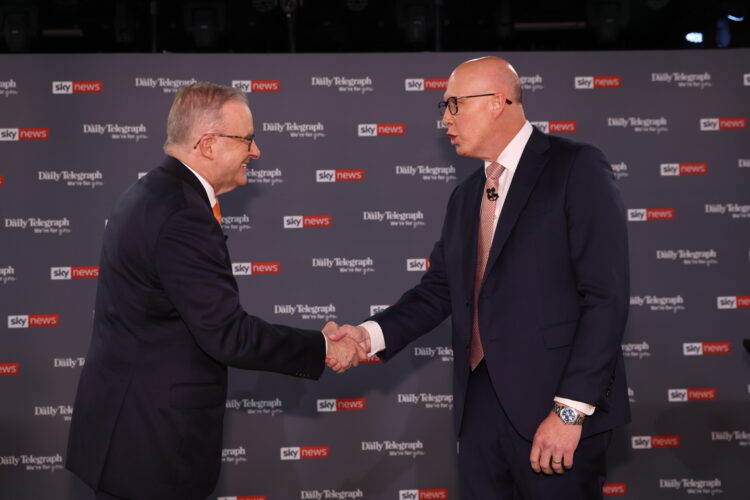
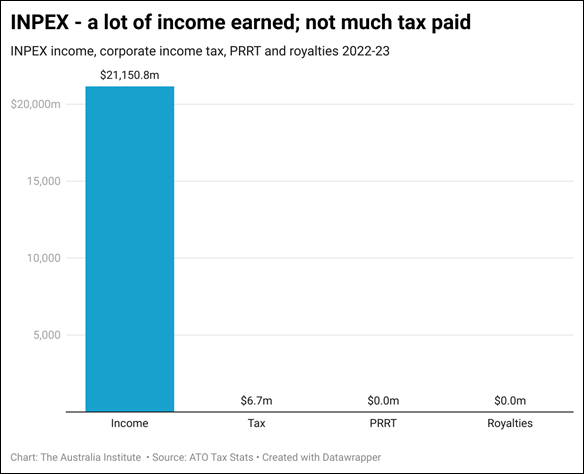
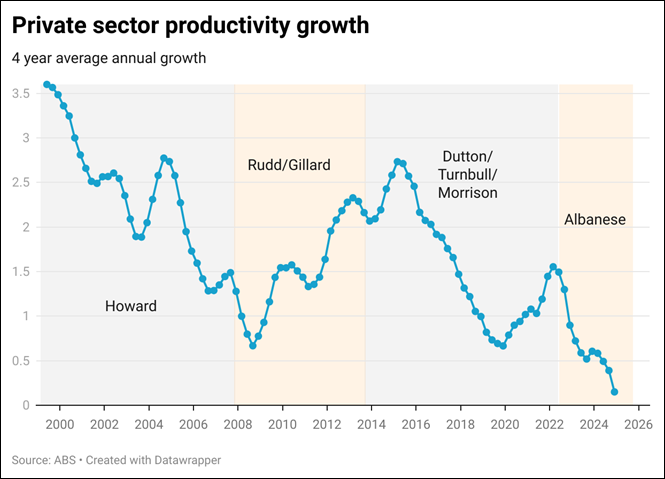
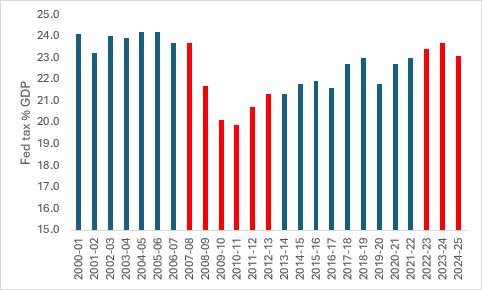

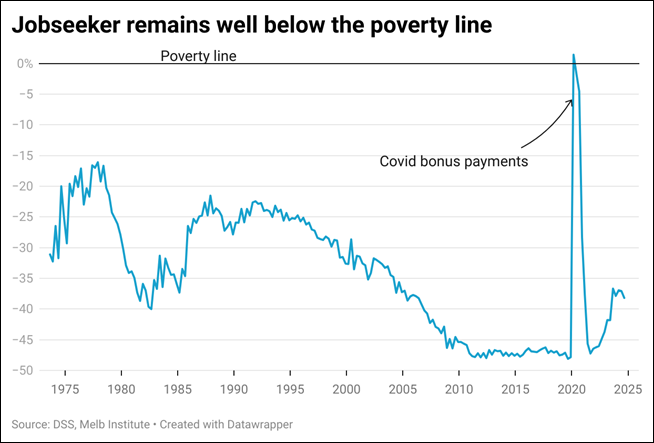

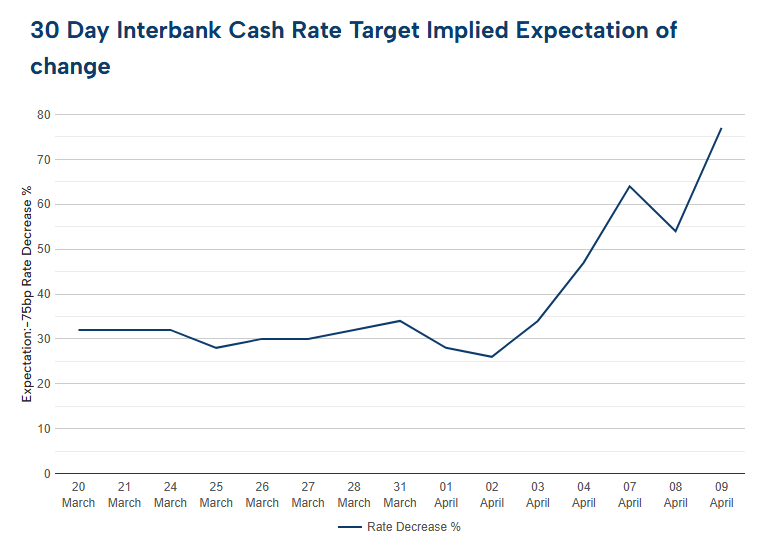

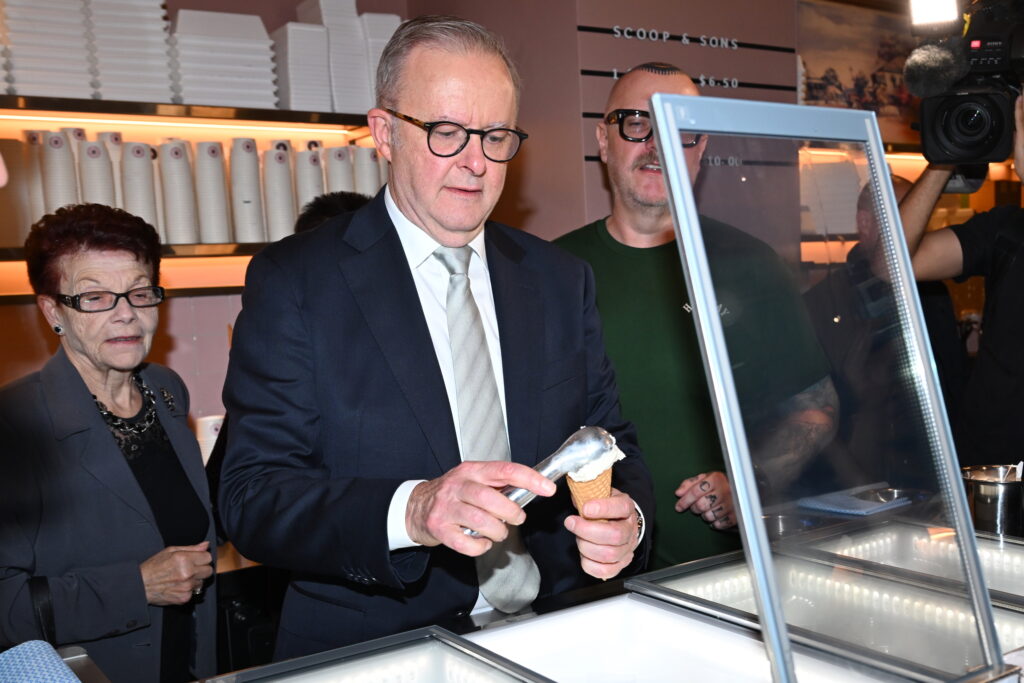
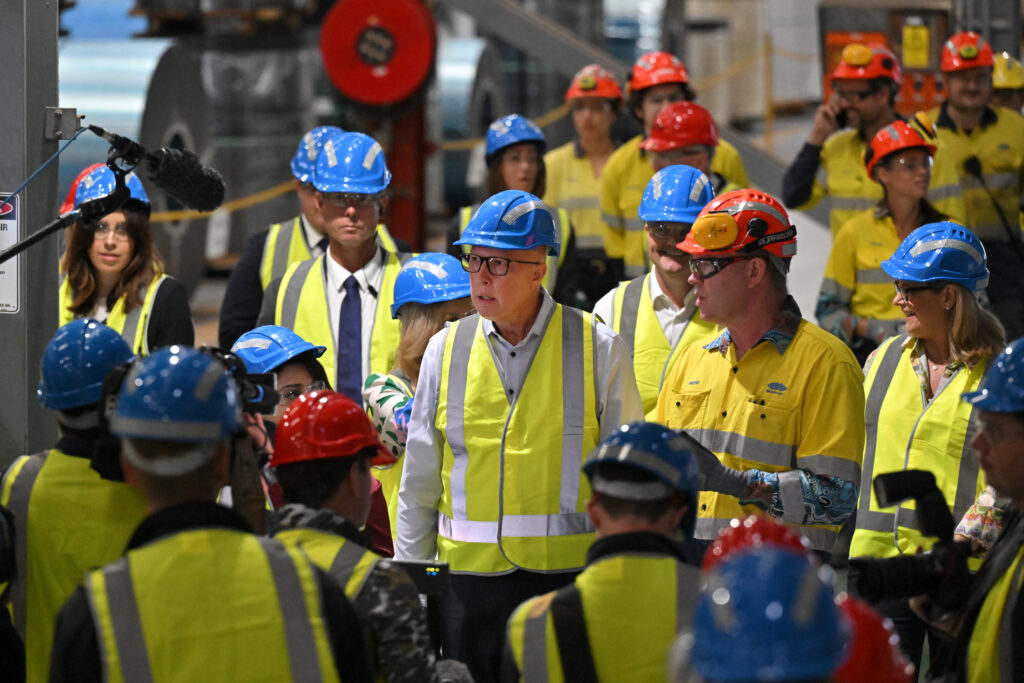
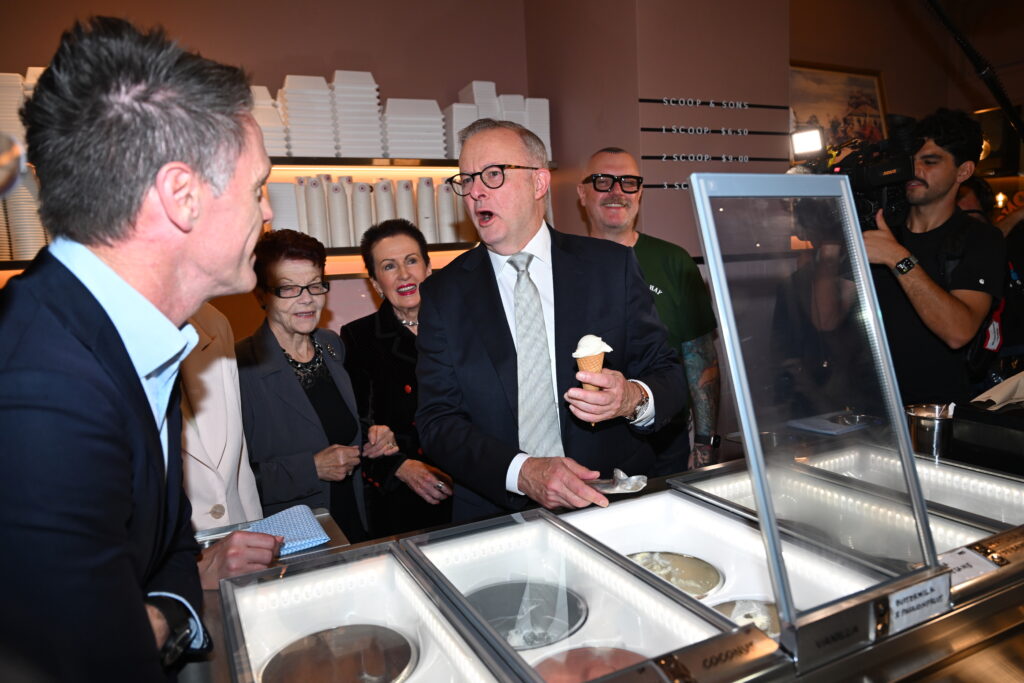
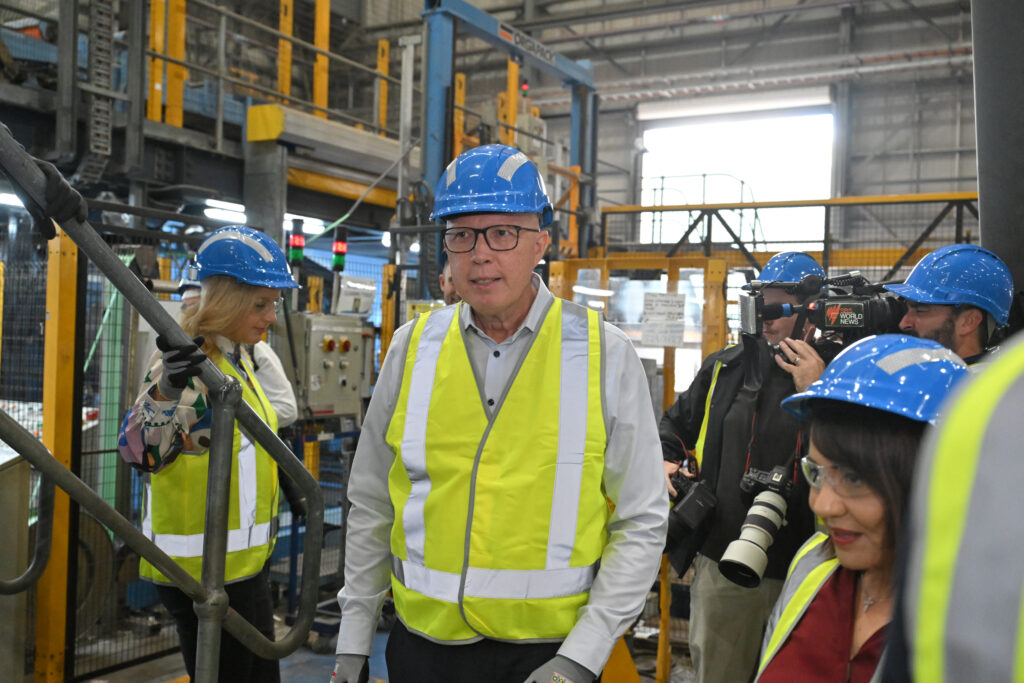

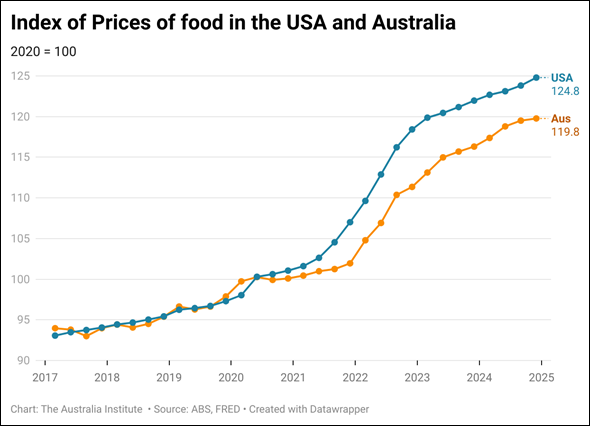
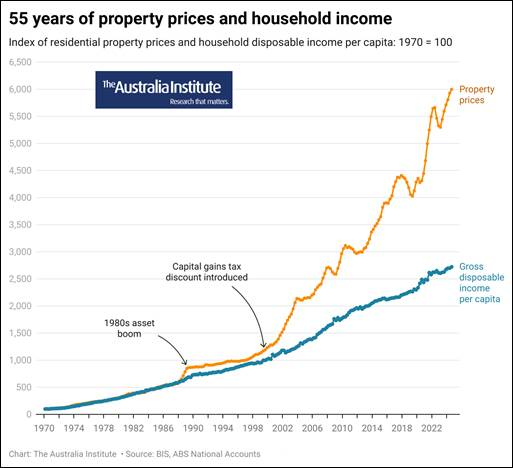
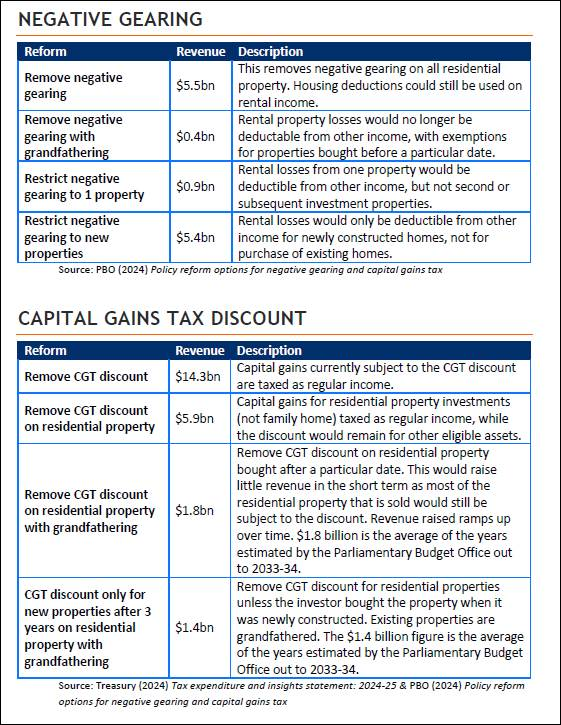
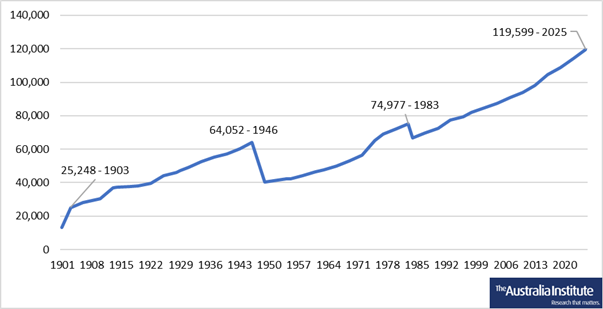
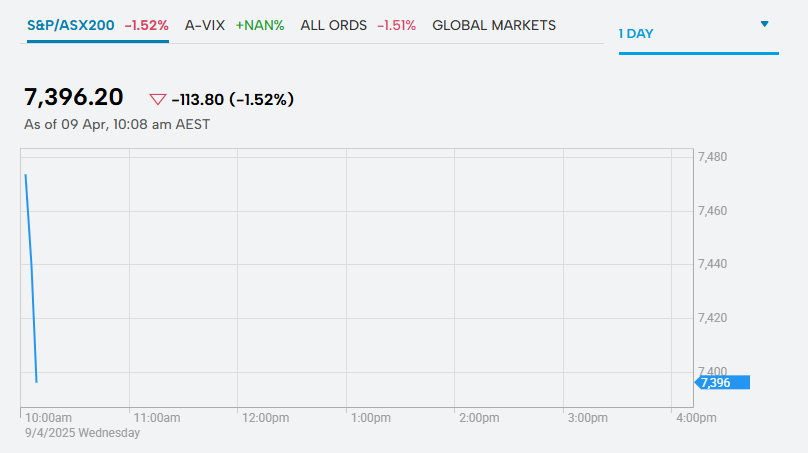
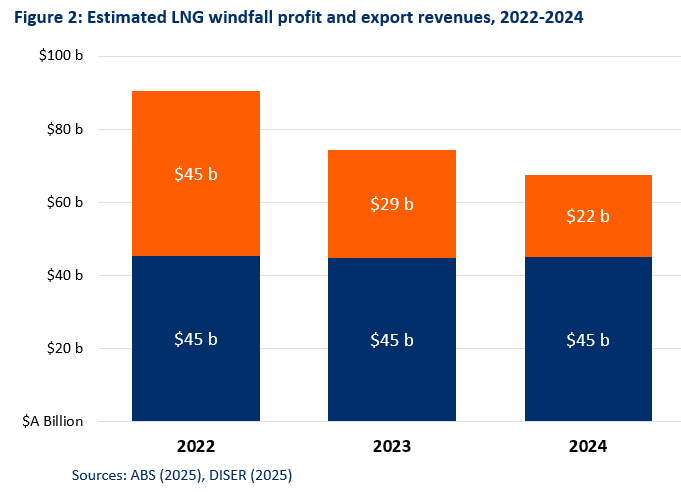

Comments
Start the conversation