Tue 18 Feb

Australia Institute Live: RBA cuts interest rates to 4.1% as the NACC launches fresh Robodebt probe – as it happened.

Amy Remeikis – Chief Political Analyst

This blog is now closed

Start the conversation

Australia Institute Live: RBA cuts interest rates to 4.1% as the NACC launches fresh Robodebt probe – as it happened.

Key Posts

The Day's News

Good evening

And on that note, we are going to shut down the snap blog – thank you for joining us today!

We will have more to say on the interest rate decision and its implications, as well as everything else as we inch towards the election.

For now, we hope there is a tiny bit of light on the horizon with this decision. And that there is a bit more light to come.

We’ll be back with you soon – until then, do good, and take care of you. Amy x

Ellen Fanning: Finally, let me ask you this with respect what Australians are being asked to believe is that you are compared to Peter Dutton, a weak leader, that he is a strong man, and when the tough decisions need to be made, he’s better placed to do that. How do you respond to that?

Albanese:

Well, he he’s yet to make a tough decision. He’s saying that there’ll be cuts in the budget, that if he is Prime Minister, they’ll make all these massive cuts. He’s speaking about $350 billion of waste. But he won’t tell you what they are. I’ll tell you what a tough decision is. A tough decision is saying I’m going to, in the interest of Australians, change the tax cuts that have been legislated so that everyone gets a tax cut, not just some. I’m going to argue the case. I’ll go to the National Press Club.

This is a guy who thinks a tough interview is speaking to Peta Credlin for an hour and a half.

Anthony Albanese is in Sydney where he will open the new ABC headquarters in Parramatta this evening.

Asked if the interest rate cut has had an impact on election timing, Albanese says:

No, this won’t have an impact on the timing of the election. We’ve been really working hard. We’ve been working hard, and we’ve been preparing, we’ve prepared a mid year economic forecast in December. We’ve been working on the budget, and the ERC expenditure Review Committee met for many, many hours yesterday and again this morning. We’ll continue to work, and we’ll continue to look at ways in which we can provide support for Australia.

So will there be a budget next month?

Albanese: Yeah, we’re working on a budget.

Fanning: That’s not what I asked. I asked, Will there be a budget?

Albanese: Well, there’s always a budget.

Fanning: Will the treasurer get to his his feet in the House of Representatives and bring down a budget?

Albanese: Well, yes, he will. That’s what, that’s what happens every year.

Fanning: And it will happen next month?

Albanese: Well, that that’s the plan. We’re working hard on all of those processes.

On what he can tell voters, Anthony Albanese does a lot of asking for a cookie for things not being as bad as they could be.

Which is a valid argument. But voters don’t tend to give cookies for things not being as bad as they might have been. Voters deal with the reality in front of them, which has been tough.

Albanese:

Obviously, global inflation has had an impact right around the world, but in other comparable countries, you’ve seen double digit inflation. You didn’t get to that here, you’ve seen double digit unemployment as well our neighbors just across the ditch in New Zealand in a deep recession, and we haven’t had that here.

The government has been responsible in the way that we’ve managed the economy. We accept that people are doing it tough. That’s why we work together with people on achieving the outcome, which has seen inflation decrease to almost a third of what it was at 2.4% and now the Reserve Bank has been in a position to make this decision today, to see interest rates falling, and when you’ve got a situation where inflation is falling, employment remains strong, wages are growing, and now interest rates are falling, as well as tax cuts being delivered, then those are economic figures that are better than just about anywhere else in the world, we have had the fastest employment growth, faster than any of the g7 countries, the seven largest economies, and indeed, our average unemployment rate has been lower than any government in the last 50 years.

Now that is something that any Labor Prime Minister would be proud of, because keeping people in jobs is absolutely central to the standard of living.

Ellen Fanning says the prime minister’s office rang her and asked if she would like to speak to the Prime Minister.

Yup. Election is in the air.

Anthony Albanese is very keen to focus on the Coalition here:

I saw some of Angus Taylor’s media conference, and I’ve never seen anyone look so miserable. The truth is that Australians will welcome this fall in interest rates today, they are still under pressure It’s certainly not job done, but they’ll welcome it.

The only person who wouldn’t welcome it is Angus Taylor, and of course Peter Dutton who just on the weekend was making the case for higher interest rates, and it’s up to him to explain why he was doing that we have.

On the 12th, Dutton said the RBA was “risking” cutting rates too early and would potentially have to raise rates later on – that is what Albanese is referring to there.

The prime minister has chosen ABC Brisbane host Ellen Fanning as his first interview after the interest rate cut.

In a forward sizzle to the the pre-recorded interview, Fanning says Albanese suggested a budget was coming (which he would) but spent most of the interview trying to frame Peter Dutton:

I’m certainly not getting ahead of myself. I noticed Peter Dutton’s measuring up the curtain. He’s got to do the hard work. He hasn’t done the hard work.

‘Measuring the curtains’ is exactly what Scott Morrison used to accuse Albanese of doing in the lead up to the 2022 election.

Greg Jericho

Ok, so what about house prices?

Alas, we will likely see house prices rise.

This though is not a reason not to cut rates again. The RBA has a few more things to worry about than housing affordability, and also the problem is waaaaaaaaaay beyond the impact of a rate cut.

Since March 2022 for example, while the RBA has been raising rates, the median house price in Brisbane has gone up 15%, in Adelaide up 25%, and in Perth 41% – that’s faster than happened in those places during the 2010 when the RBA was cutting rates.

Our housing market is massively distorted by a tax system that favours investors. The RBA should not be trying to somehow reverse that, because rate rises (or a lack of cut) actually won’t stop investors being in a better position.

One thing that could be done is a fancy thing called “macroprudential rules”. These are things that for example limit the amount banks can lend to investors. That means rate cuts don’t set fire to house prices as much, and the benefits of rate cuts better flow through to owner occupiers.

These are done by the APRA (Australian Prudential Regulatory Authority) and some were temporarily put in place a decade ago to limit the huge surge in investor lending.

And guess what? They worked!

Asked about housing prices, Michele Bullock gives a long answer about what the RBA’s job is, ending with:

We are focused on inflation, not housing prices. If you want to fix housing prices you got to go to different policies.

YUP.

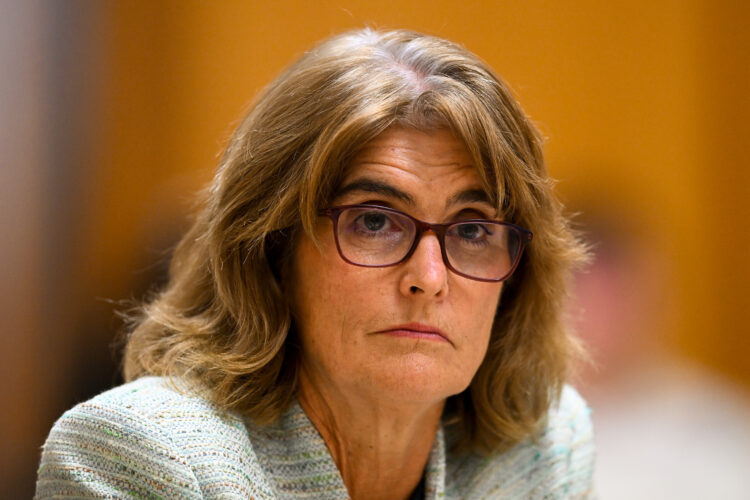
Michele Bullock is still speaking – because it seems most of the nation’s journalists are in the room at Martin Place and she is doing a very good job of not saying ‘come on guys, aren’t you bored yet’ as journalists ask variations of the same questions we have heard every single press conference since the RBA Governor started holding press conferences.

Asked what her message to Australians is, Bullock said:

My message has been in the past and continues to be – I understand that you are hurting and I understand that mortgage rates are – have increased a lot and you’re finding that hitting your disposal income. But we need to get inflation down, because that’s the other thing that’s really hurting you. If we don’t get inflation down, interest rates won’t come down, and you’ll be stuck with inflation and high interest rates. So, we have to be patient. I understand it hurts. But it’s really important that we get inflation down.

Grog’s view

Greg Jericho
Chief economist

“Today’s decision does not imply that further rate cuts along the lines suggested by the market are coming. We removed to cautionary increase we put in 2023 to a level that’s still restrictive. The board needs more evidence that inflation is continuing to decline before making decisions about the future path of interest rates.”

That she keeps saying it is restrictive means it is very unlikely  that this will be the only cut – otherwise she is saying the economy needs to keep been slowed, and well, no one of their estimates for the next 2 years suggest the economy is going too fast.

Finally. The RBA has cut rates by 25 basis points, to 4.1%. "It should have happened last year, but thankfully the RBA has finally caught up with reality and delivered a real cost of living benefit for households."@grogsgamut.bsky.social #auspol

The Australia Institute (@australiainstitute.org.au) 2025-02-18T03:33:56.338Z

In November the RBA was estimating GDP growth in 2024 would be 1.5%, now they think it will be just 1.1%, and whereas by the middle of the year the RBA previously was thinking the economy would be growing at a still bloody weak 2.3%, now it think it will be an even more pathetic 2.0%. Pretty much if that is their outlook there is no way they could not have kept rate high.

Weirdly though the RBA now thinks unemployment will only peak at 4.2% rather than the 4.5% it thought it would get to.

The other big difference is that whereas in November the RBA did not think underlying inflation would only get below 3% near the end of this year, now it thinks it will get there by June.

RBA Governor warns – don’t get too comfortable

Michele Bullock continues:

The strength of the jobs market has been surprising.

Many indicators suggest the labour market is tight, and on some measures, tightening further.

While this is good news for job seekers, the board remains alert to the possibility that it is signalling a bit more strength in the economy, that could delay or stall the disinflation process.

There’s also a lot of uncertainty around the global outlook at the moment, one of the things we’re cautious about is the possibility that policy unpredictability could lead to slower growth. Today’s decision does not imply that further rate cuts along the lines suggested by the market are coming. We removed to cautionary increase we put in 2023 to a level that’s still restrictive.

The board needs more evidence that inflation is continuing to decline before making decisions about the future path of interest rates. The board is very alert to upside risks that could derail the deflationary process. I know some other central banks have cut interest rates quite sharply over the past year, but we have taken a different strategy to most. Our policy rate was not raised as much, as many countries overseas, we judged that while inflation expectations remained anchored, we could take a bit longer to bring it down to the target band, but keep unemployment lower. We can be half with the progress made, but careful not to get ahead of ourselves.

The Business Council of Australia says the rate cut provides welcome relief for businesses battling cost pressures, but says it will do little to improve productivity.

“If we want to supercharge our economy then we need to look at how our regulatory settings are
putting the handbrake on much needed investment,” says BCA Chief Exec Bran Black said.

“Australia must become a more competitive place in which to do business if we want to be a leading economy of the future.”

Michele Bullock press conference

The RBA Governor is speaking now (and this press conference is going to go for quite some time) where she is defending the bank’s board timing in only cutting rates now, while also saying the battle is not yet won:

Bullock:

As you know the board decided to cut the cash rate by 25 basis points to 4.1%. The cash rate has been at 4.35% since November 2023. At that time, in November 23, the upside risks to inflation had increased, so the board decided to raise the cash rate to 4.35% from 4. 1%.

To address those upside risks. Since then, inflation has fallen. And recent data suggests it’s eased a bit more than expected. Growth in private demand has also been quite weak, and wage pressures have eased. The board therefore judged it was appropriate to remove the cautionary raise under taken in 2023. I have said many times that we need to see inflation moving sustainably towards our 2-3% target band before we eased rates.

In December, we said we gained confidence that things were headed in the right direction. Now we’re at a point where underlying inflation is at 3.2%, and headline inflation is 2.4%. Inflation has eased over the past three quarters, and in the most repeat quarter, a bit more than our forecasts had anticipated. This is increased our confidence further.

It’s clear that higher interest rates have been working as anticipated, restricting economic activity, and putting downward pressure on inflation. The board judges it’s time to reduce a little bit of that restrictiveness, but we cannot declare victory on inflation just yet.

Greg Jericho
Chief economist

Angus Taylor is rightly pointing out that Australian living standards have fallen – but that is because household incomes have risen by less than prices. So is Taylor calling for wages and incomes to rise by more than prices? Well in theory… in practice not so much .

He also weirdly is focusing on government spending. He wants to suggest that government spending including of course 36,000 public servants in Canberra has kept inflation higher for longer. Except the RBA has just revised down its estimates for inflation even while it is increasing its estimates for public demand. The reality is that the economy is weak – GDP growth is bugger all, and household consumption is equally crap. And when you have that, government should spend and keep the economy going.

Without saying it, what Taylor is essentially asking for its for the govt to have allowed a recession to occur. That might have been great for the LNP’s election chances, not sure though it is a great economic policy.

There does seem to be a journalist in the room.

Fantastic Angus. Great work. Well done.

He seems to have one line he wants to make clear:

Q: You say that Labor predictions show they won’t restore living standards until 2030, how soon do you think the coalition government will?

We need to accelerate. That was my point. That means beating inflation sustainably.

So he doesn’t have a plan for that, but he is very sure that “Australian households had to do the work”.

Which, well – yes.

But what would a Coalition do differently?

Taylor stops short of saying something like ‘inflation will always be lower under a government I lead’ but only just. He says that:

Sustainably lower inflation and lower interest rates than they otherwise would have had, accelerating the pathway back to the standard of living they enjoyed before Labor came to power. It’s pretty basic stuff. Let’s be clear about economic management. Labor doesn’t know how to manage the economy. If you want to beat a cost of living crisis, the key is economic management. You cannot beat a cost of living crisis if you can’t manage the economy. That’s exactly what we’ve seen under Labor, seven consecutive quarters of GDP per capita going backwards, that’s not good economic management.

Sigh – Greg Jericho is working on a response because mine is just UUGKNfkljewgbdjls’acnsjl’dghls

Angus Taylor press conference

A very, very well lit Angus Taylor is now holding his press conference. ‘Hollywood lighting’, some would call it.

We are all trying to work out if there are any journalists in the room or if the shadow treasurer is once again talking to himself.

More to come.

Asked what threat Donald Trump poses to the global economy, Jim Chalmers says:

We made it clear for some time there’s a lot of global economic uncertainty. We’ve seen that been more or less as a permanent feature of the last 15 years or so.

Now when it comes to those concerns, they’re focused on the risks of escalating trade tensions. And, you know, we’ve been monitoring those risks very closely.

We did a heap of work before the change of administration in the US, as you know, because when you look around the world, there’s the risk of escalating trade tensions, there’s still a major land war in eastern Europe, there’s the tentative ceasefire in the Middle East, there’s been pretty serious political upheaval in places like Korea, to some extent, France. And so, the global economy is a pretty uncertain and pretty dangerous place right now. We’ve made that clear in our own commentary on the situation and the Reserve Bank governor has as well in the statement she has released. These are things that we monitor very closely.

The risk is higher inflation and lower growth around the world. At a time when growth has not been especially think on the ground and inflation has been a feature of the last two or three years. We take that very seriously, as does the Reserve Bank, judging by the statement they released today.

Asked about the future of the energy bill rebate (which helped shave a few points off CPI – which was the point) Jim Chalmers said:

We treat the withdrawal of the energy bill rebates the same way the Reserve Bank does in its forecast, as a you described it, that’s a reason for – one of the drivers of the inflation forecast that the bank has released today, we’ll release our own forecast in due course.

When it comes to additional cost of living help, whether it’s energy bill rebates or others, as I said, in response to the questions from this side, we keep that under constant review.

If there’s a case for affordable responsible cost of living help, then we’ll do it. We have done that in the first three budgets, we found a way to make that consistent with cleaning up the mess that we inherited in the budget itself. If there’s other ways we can do that, in a responsible meaningful way, we’ll consider that.

Will Jim Chalmers tell people things are going to get better?

Chalmers:

First of all, rates stopped rising in November of 2023. So it’s been almost a year and a half now since rates have gone up.

We had that long period where rates are steady. I wouldn’t go near any of that sort of language. I think it’s clear from the inflation data and the decision taken today the worst of the challenge is — inflation challenge is behind us, but we’re not complacent about it.

You think about the inflation peak in 2022, 6.1% and rising by the election, 7. 8% at the end of the year, on both measures doing much better than expected by around this time. Certainly when it comes to the inflation challenge particularly, the worst of the inflation challenge is now a couple of years behind us, but we have to stay vigilant.

We can’t be complacent. You won’t hear any kind of, uh, anything other than recognition from us that people are still under pressure and this rate cut will help a little bit, but we know those pressures on household budgets are still there. That’s why our cost of living help is so important.

How does Jim Chalmers view the RBA’s uncertainty for the future?

Chalmers:

We share the Reserve Bank’s concern about the uncertain global outlook. I expressed that to you and in other forums for some time now. The world is an uncertain place and we see that reflected in the Reserve Bank’s statement today. Growth in our economy has been soft. People have been under substantial pressure and continue to be under pressure. And this decision today is partly a reflection of those two things, but it’s mostly a reflection of the very substantial and sustained progress we made together on inflation.

Jim Chalmers press conference

The treasurer is holding his press conference in Canberra – he says he has spoken to the banks, and is pleased to see that they are passing on the rate cuts (scheduled of course).

Of course one of the first questions is around the election.

Chalmers says:

We’ve been in the cabinet suite next door for most of today and most of yesterday preparing for and planning for a budget on 25 March. That’s what we’re working towards. We acknowledge the timing of the election is a matter for the prime minister, in consultation with his senior colleagues. But we’re working towards that budget. That’s why the ERC [expenditure review committee] met for about four or five hours yesterday and another three or four hours this morning.

Not surprisingly, real estate agents are delighted.

The Real Estate Institute of Australia wants buyers to get their wallets out.

“With house prices moderating and real wages growing at their fastest rate in a decade, further improvements in affordability can be expected during 2025,” it says in a statement.

Along the same lines, the Housing Industry Association Chief Economist Tim Reardon says:

“Today’s decision will be welcomed by many, including many aspiring homeowners who, with renewed confidence, will re-enter the market and build their own home.”

The Commonwealth Bank has announced it will pass on the rate cut, effective 28 February, tweeting:

“Following the RBA’s decision to decrease the official cash rate by 0.25% p.a, CBA will decrease home loan variable interest rates by 0.25% p.a.”

ANZ and NAB will do the same, meaning all four big banks have announced they’ll pass on the rate cut in full.

The Australian Council of Social Service is among those responding to the rate cut – with ACOSS CEO Dr Cassandra Goldie saying there is more that needs to be done to help those truly struggling:

This rate cut is long overdue but will not be nearly enough to help people who are really
struggling.
The next government will have to take more action to protect living standards. Millions of
people on low and fixed incomes, many of whom do not have mortgages, need more than rate
cuts. They need direct government support.
Our surveys consistently show that people receiving income support skip meals and go without
essential medical treatment because the payments are so low. The government must urgently
raise the rate of income support to a level that allows people to afford the basics of life.”

Westpac wins the race to be the first of the big banks to pass on the interest rate cut.

Or, at least, to say it will.

The cut won’t come into effect until the end of the month for some borrowers, March 4 for most.

Chief Executive (Consumer) Jason Yetton says:

“Today’s decision will be welcome news for mortgage customers. By reducing the
standard variable home loan rate by 0.25 per cent per annum, customers will save an
extra $90 per month, or $1,080 per year, based on a $500,000 home loan with principal
and interest repayments.”


“Customers could use this as an opportunity to get ahead on their mortgage by putting
the extra savings into their mortgage repayments, or into their offset account to help
reduce the interest on their loan.”

Here’s what it means for home loan customers:

  • Westpac will decrease home loan variable interest rates by 0.25% p.a. for new
    and existing customers, effective 4 March.

Underlying inflation is the one that economists (and the RBA look at).

It’s the inflation rate when you take out the volatile stuff from the CPI basket – the stuff that moves in price (the biggest increases and the biggest falls) – they just get what is happening in the middle.

The main reason the RBA cares about it is because historically – let’s say a cyclone causes the CPI to increase, then they aren’t going to react on a one-off or a volatile price increase. So it’s meant to be a safeguard.

But somewhere along the way, it has become the main measure the RBA says it is targeting. Which is part of the reason the central bank has been so tardy in cutting rates. Inflation is at 2.4% (which is in the target band of between 2-3%) while underlying inflation is at 3.2%. So the bank has been looking at the second measure, hence the delay.

Too little, too late: Greens

The Greens are urging the banks to pass on more than today’s 0.25% rate cut.

Fat chance.

Here’s the Greens’ statement in full:

The Australian Greens say the Reserve Bank’s decision to cut interest rates will do little to
provide relief for households being smashed by the cost-of-living crisis, and have called on the
big banks to pass on more than a 25 basis point cut.
Quotes attributable to Australian Greens Treasury spokesperson, Senator Nick McKim:
“The Reserve Bank has cut rates by 25 basis points today, the big banks should now cut their
rates by 50.
“Bank corporations are happy to increase their mortgage rates by more than the RBA puts them
up when it suits them. They should do the same now rates are falling.
“People need relief, and the obscene profits of the big banks give them plenty of room to move.
“Last year the big four banking corporations reported a combined profit after tax of $29.9 billion.
They can afford to do some of the heavy lifting to provide people with interest rate relief.
“People need cost-of-living relief now. We should be taxing the big corporations and billionaires
to fund the things people need, like getting dental and mental health into Medicare, and seeing
the GP for free.
“We should be tackling the soaring cost of rents and groceries by capping rent increases and
ending supermarket price-gouging.
“This election, we can’t keep voting for the same two parties and expecting a different result.
“There will be a minority government and the Greens are within reach of winning seats right
across the country. Last time there was a minority, the Greens got dental into Medicare for kids.
“With a minority government, the Greens will keep Dutton out and get Labor to act.”

The cut borrowers “need and deserve”: Chalmers

Treasurer Jim Chalmers has released a statement following the rate cut.

We expect to hear from him soon.

Here’s Mr Chalmers’ statement in full:

Today the independent Reserve Bank of Australia Board decided to lower the
cash rate by 25 basis points to 4.10 per cent.
This is very welcome news for millions of Australians.
This is the rate relief Australians need and deserve. 
It won’t solve every problem in our economy or in household budgets but it will
help.
Today’s result is a demonstration of the substantial and sustained progress we’ve
made on inflation together.
When we came to office, interest rates were going up, now they are going down.
For a household with a mortgage of $500,000, this rate cut will save them $80 a
month, or $960 per year.
Under Labor, inflation is down, wages are up, unemployment is low and now
interest rates have started to come down too.
This is the soft landing we have been planning for and preparing for but we know
there’s more work to do.
Other countries have had to pay for progress on inflation with higher
unemployment, growth going backwards or even a recession.
Inflation is now almost a third of the 6.1 per cent we inherited, and that’s a
testament to the efforts of all Australians.
In its statement today, the RBA Board said we have made welcome progress on
inflation and that inflationary pressures are easing more quickly than expected.
Today’s decision and the statement from the Board gives us further confidence
that the worst of the inflation challenge is behind us, but we can’t be complacent.
Today’s decision is welcome but it’s not mission accomplished because people are
still under pressure.
The Government will maintain a primary focus on the cost of living.
When we came to office, real incomes were going badly backwards.
Now they’re growing again due to moderating inflation, wages growth, jobs growth
and our tax cuts.
Lower mortgage costs will also support the growth of real disposable incomes into
the future.
Australians would be thousands of dollars worse off if Peter Dutton had his way on
tax cuts, wages and energy bill relief – and worse off still if he wins the election.
The biggest risk to the progress we have made together is a Coalition government
that would come after Medicare again, push wages down again, and push
electricity prices up with more expensive nuclear energy.
We’re fighting inflation, helping with the cost of living and building Australia’s
future, and this encouraging decision shows our policies are making a meaningful
difference

What is the RBA saying?

Here is what the minutes say:

Inflation has fallen substantially since the peak in 2022, as higher interest rates have
been working to bring aggregate demand and supply closer towards balance. In the
December quarter underlying inflation was 3.2 per cent, which suggests inflationary
pressures are easing a little more quickly than expected. There has also been continued
subdued growth in private demand and wage pressures have eased. These factors give
the Board more confidence that inflation is moving sustainably towards the midpoint of
the 2–3 per cent target range.

However, upside risks remain. Some recent labour market data have been unexpectedly
strong, suggesting that the labour market may be somewhat tighter than previously
thought. The central forecast for underlying inflation, which is based on the cash rate
path implied by financial markets, has been revised up a little over 2026. So, while
today’s policy decision recognises the welcome progress on inflation, the Board remains
cautious on prospects for further policy easing.

Interest rate cut a good start

The Australia Institute take

Today’s long-overdue decision by the Reserve Bank of Australia to cut interest rates is a good start.

Like all borrowers, The Australia Institute welcomes the 0.25% cut in the official cash rate. It should have happened months ago. 

History tells us that interest rate cuts never happen as a one-off.

Whether or not we are in an election campaign, even if we’re just days out from an election, on April 1, the RBA should cut again.  

“To suggest there should be no cut in April because it would appear political is absurd,” said Greg Jericho, Chief Economist at The Australia Institute

“Treasurer Jim Chalmers constantly reminds us the Reserve Bank is independent of government. 

“A rate cut in April would have nothing to do with politics. In fact, it would be political not to cut just because we are in an election campaign.

“Home owners should not be denied the next cut because of politics. It should be a purely economic decision. 

“Today, the RBA has finally recognised that with inflation in the bottom half of its target range, with wage growth slowing and unemployment remaining steady and with the government subsidising energy prices to keep inflation down that the time has come to cut rates.

“The 25 basis point cut will save households around $100 a month on a $600,000 loan. It is small but necessary drop that has been long overdue but it better late than never.”

“Even after this rate cut, interest rates are still restrictive. With the economy stalling and inflation now in the target band, the RBA needs to continue to cut rates, so they are no longer slowing the economy,” said Matt Grudnoff, Senior Economist at The Australia Institute.  

RBA cuts cash rate by .25 basis points

There we go, the RBA has done it.

The rate has been cut for the first time since November 2020 – 25 points, making the official cash rate 4.1%.

On a $600,000 home loan that’s a saving of about $100 a month

One cut is usually followed by another

Greg Jericho
Chief economist

The good news about today’s cut is it almost certainly means more are on the way – and likely at the next meeting, because then the RBA cuts rates it usually odes in pairs.

Over the past 25 years when the RBA has cut rates for the first time after a period of raising rates it has always cut twice in a row:

First we had in 2001 which came after 5 rate rises in 1999 and 2000:

February 2001 – 25 basis point cut

March 2001 – 25 bps

April 2001 – 25 bps

Then it paused for a few months and then did another 3 cuts in 4 months:

Sept 2001 – 25bps

Oct 2001 – 25 bps

Dec 2001 – 25 bps

Then in 2008 after 12 rates rises from May 2002 to March 2008 and as the GFC began to hit the RBA cut rates 5 meeting in a row (they don’t met in January) and 6 times in 7 meetings. This of course was rather panic stations so ww will not see them cut rates by such huge chunks this time:

Sep 2008 – 25bps

Oct 2008 – 100 bps

Nov 2008 – 75 bps

Dec 2008 – 100bps

Feb 2009 – 100 bps

April 2009 – 25bps

Then at the end of 2011, after raising rates 7 times from the then emergency levels of the GFC,  the RBA again cut twice in a row:

Now 2011 – 25bps

Dec 2011 – 25 bps

Then it waited 3 months and again did it 2 months in a row

May 2012 – 25bps

June 2012- 25bps

We then entered the period of the RBA not raising rates for over a decade. But even during this time it usually cut rates twice in either succession or close to it:

Oct 2012 – 25bps

Dec 2012 – 25bps

May 2013 – 25bps

Aug 2013 – 25bps

Feb 2015 – 25 bps

May 2015 – 25bps

May 2016 – 25bps

Aug 2016 – 25bps

June 2019 – 25bps

July 2019 – 25bps

Oct 2019 – 25bps

Then when the pandemic came, the RBA cut rates twice in the same month!

4 March 2020 – 25bps

20 March 2020 – 25bps

So when the RBA cuts rates it cuts them again, and we really should be expecting another on 1 April, unless the RBA for some reason decides to go against standard practice – which would be a rather political act.

ACTU Secretary Sally McManus has also thrown her weight behind a rate cut?


The Reserve Bank should cut rates to maintain low unemployment which is part of its mandate.
If it doesn’t, the slowdown in consumer spending coupled with the threat to jobs could tip the economy over.
That’s a risk working Australians should not have to confront after a long inflation fight.
Workers should not be asked to absorb high interest rates for any longer than is necessary, now that inflation is within the RBA’s target band.
Any stalling now poses a risk to economic growth and Peter Dutton should know that and stop putting his own political electioneering above the needs of workers with mortgages and bills to pay.
Dutton’s claim that working families are concerned the RBA could cut interest rates ‘too early’ is plain wrong. No working family has ever put that to me.
It is very concerning that he is happy to put his own interests before those of the rest of us, when that means less money in the bank accounts of working people.
Being too cautious now won’t help workers and it won’t help the economy. Inflation is coming down
faster than the Bank forecast and unless the strategy is to wait until the economy goes under, taking jobs down in the undertow, the Bank should announce the first rates cut today.
Similar economies started cutting rates six months ago. It’s long past time for the RBA to do the
same.”

With friends like these

Angus Blackman
Podcast producer

While we are all waiting on the decision of our central bank, let’s check in on how things are going internationally:

The Trump administration is threatening Canada, slapping tariffs on Australia and telling European leaders that they’re the problem, all while forging ahead in negotiations with Vladimir Putin.

On today’s episode of After America, Senator David Shoebridge, the Australian Greens Spokesperson for Defence and Veterans Affairs, joins Dr Emma Shortis to discuss how Trump is treating America’s ‘friends’, the Australian Government’s response to tariffs and why the AUKUS submarine deal makes Australia less safe.

So how does this play into election timing?

First things first – none of us know for sure when the election will be called. We are all running around like Chicken Littles screaming the election is coming with absolutely nothing but vibes and the guesses of those around us.

The big rumour that sent the press gallery scrambling and set in motion a bunch of emergency news bureau meetings is that Anthony Albanese will call the election either this Sunday or the one after (the Sunday just gone was also on the list) with the early election date set for April 5.

That’s because April 12 ( a favoured rumour until recently) is during Passover. So that pretty much rules it out.

The thinking is that the government wants to have the interest rate bump, avoid handing down a budget before an election (turns out baking in Aukus spending is bad for the budget numbers) and try and get ahead of any further voter disgruntleness.

So this announcement won’t make things clearer. But it will (if the cut goes through) mean Jim Chalmers breathes a tiny bit easier.

The NAIRU of it all.

Greg Jericho
Chief economist

One of the biggest zombie ideas that requires multiple stakes through the heart because it has been behind a lot of the rate rises is the NAIRU.

This is the non-accelerating inflation rate of unemployment. A relic of free market loving economists of the 1970s that bizarrely has become seen as a universal truth.

Essentially it is the view that there is a minimum rate at which unemployment can fall to without causing inflation to rise (or accelerate). This is because as we mentioned earlier they think that if too many people are employed then there is too much money being spent and huzzah up goes inflation.

The problem is no one really knows what the NAIRU is. IN the 1980s it was around 6%, then it fell to 5%. For a while economists and the RBA have thought it is 4.5%.

Problem is we have had unemployment around 4% for well over a year, and in that time inflation has fallen – ie Decelerated.

This would just be a boring academic debate, except the RBA believes it is true and has for the past 2 years been trying to get unemployment to rise to 4.5% by raising rates. Both major political parties also essentially agree with it as well. That means both the ALP and Liberal Party believe we should have at least 600,000 – 700,000 people unemployed all the time for “the good of the economy”, and yet both parties also believe those people should be on a JobSeeker rate that has them living in poverty.

Gotta love neoliberal economics, eh?

Greg Jericho
Chief economist

Ok, final thing – wages!

If wages are rising fast, then the worry is that inflation will also rise because once again we will fell so flush that we will shop madly and thus retailers will think, wow, all my shelves are emptying, I can raise my prices because people will pay more!!!

This as you can see above, is not happening.

Wage growth did pick up in 2022 and 2023, because, bloody hell, when prices are going up 7% you deserve a pay rise that tries to keep up sort of close to that.

But wage growth has peaked.

In the 12 months to March last year private sector wages rose 4.2% – that is pretty high, and is at the level the RBA gets a bit antsy. But then in the 12 months to June last year wage rose just 4.1%, so slower. And then in the 12 months to September last year they rose just 3.5%. That is at a level consistent with inflation being around 2.5%.

So again. If the RBA is looking for a reason not to cut, it can’t find them in wages.

Rather oddly, the December quarter wage figures come out tomorrow.

Let us hope the RBA does not hold of on rates because it wanted more data.

Greg Jericho
Chief economist

We have some more recent figures on how were are spending – retail trade figures only count the things we buy in shops and restaurants etc. This is about a third of everything we spend our money on, so it is a pretty important measure.

And because shops employ a lot of workers it is also is a good indicator of whether shops are busy and likely to start employing more people, which hopefully means higher wages and thus might have the RBA worried that inflation will start going up.

Well, they can stop worrying.

In 2024 the growth of retail trade in real terms was lower in every singly category than the long-term average.

We are not buying much stuff (this will not be news to any of you)

What reasons are there to cut rates?

Greg Jericho
Chief economist

What other things make the case for cutting rates pretty clear?

Well lets looks at household spending.

The most recent GDP figures showed that in the 12 months to September last year household consumption (which is everything we spend money on, from shopping to buying cars to paying bills) rose just 0.4% in real terms (ie taking out inflation).

Usually growth of 3.0% is considered a nice average increase.

So we are not buying a lot of stuff. And if you include population growth then the amount each household spent in the year to Sept 2023 actually fell 2%.

That ain’t good. And the amount we are buying “per person” is much lower than is was when the RBA began cutting rates, and roughly back where it was in 2019.

That is not the sign of a booming economy.

Robodebt six to face corruption probe

Glenn Connley

Some breaking news now and the nation’s corruption watchdog will investigate six individuals referred to it, following a review of the Robodebt Royal Commission.

In October, the National Anti-Corruption Commission revealed it would reconsider its decision not to launch a corruption probe, finding commissioner Paul Brereton should have “removed himself from related decision-making processes” due to an “apprehended bias”.

That review was conducted by Geoffrey Nettle AC KC.

Minutes ago, the NACC released this statement:

“As a result of the decision made by its independent reconsideration delegate, Mr Geoffrey Nettle AC KC, on 10 February 2025, the Commission will investigate the 6 referrals it received from the Royal Commission into the Robodebt Scheme.”

“The purpose of the investigation is to determine whether or not any of the 6 referred persons engaged in corrupt conduct.”

“Consistent with its usual practice, the Commission does not publish reasons for commencing an investigation, as doing so may prejudice the investigations, disclose information which the Commission is required by law to keep confidential, compromise investigative pathways and/or unfairly impact reputations and rights of individuals to impartial adjudication. “

“The Commission is nowmaking arrangements to ensure the impartial and fair investigation of the referrals, as it did with the appointment of Mr Nettle as independent reconsideration delegate. “

“The Commissioner and those Deputy Commissioners who were involved in the original decision not to investigate the referrals, will not participate in the investigation.”

Greg Jericho
Chief economist

What other things make the case for cutting rates pretty clear?

Well lets looks at household spending.

The most recent GDP figures showed that in the 12 months to September last year household consumption (which is everything we spend money on, from shopping to buying cars to paying bills) rose just 0.4% in real terms (ie taking out inflation).

Usually growth of 3.0% is considered a nice average increase.

So we are not buying a lot of stuff. And if you include population growth then the amount each household spent in the year to Sept 2023 actually fell 2%.

That ain’t good. And the amount we are buying “per person” is much lower than is was when the RBA began cutting rates, and roughly back where it was in 2019.

That is not the sign of a booming economy.

Amnesty International slams “cruel” Nauru deal

Glenn Connley

Stepping away from interest rates for a moment: Amnesty International has branded the latest move to send stateless former immigration detainees to Nauru as a cruel “backdoor deportation scheme”.

On Sunday, Home Affairs Minister Tony Burke announced he’d struck a deal with the Nauruan government to take members of the cohort released after the NZYQ High Court ruling – which found indefinite detention to be unlawful.

Mr Burke revealed three of the former detainees – some with much-publicised criminal records – have already been granted visas to live freely in Nauru. 

Amnesty International today described the deal as a “blatant attack on the human rights of people seeking protection”.

“After everything these individuals have endured—the trauma, the health struggles, the fear of persecution—the absolute last thing they should face is deportation,” said Amnesty International’s Australian Refugee Rights Campaigner Zaki Haidari.

“The Labor government must put an immediate stop to these deportations. Australia must uphold its international obligations, ensure humane resettlement pathways, and guarantee that no refugee or asylum seeker is placed at further risk of harm.”

Explain the target band to me

Greg Jericho
Chief economist

Sure!

The RBA has an agreement with the government to aim for a target inflation range. This is set out in its “Statement on the Conduct of Monetary Policy” which was last agree in December 2023.

It says “The Reserve Bank Board and the Government agree… that an appropriate goal is consumer price inflation between 2 and 3 per cent”

The big thing there is “consumer price inflation” not the underlying inflation, not the trimmed mean or any other measurers, but the CPI.

And right now the CPI is 2.4% – so in the bottom half of the range.

In the December quarter the CPI rose just 0.2%… which would translate to an average growth of 0.8% – ie way below what the RBA targets.

There are a few economists out there saying that the CPI is only “measured” inflation and is not “real” because the CPI is affected by things like the govt giving everyone an energy supplement.

They want the RBA to only care about underlying inflation which is at 3.2% – ie above the target range.

Problem for them is underlying inflation has come down in the past 9 months from 4.0% to 3.6% to 3.2%. So, it is hardly a worry. Also in the December quarter it also only rose 0.5% which translates to an annual rate of 2.0%.

So if you are targeting inflation of between 2% and 3% you cannot really argue that we are not now there.

It’s been 84 years (insert meme here)

Greg Jericho
Chief economist

It’s now been 4 years and 3 months since the last rate cut in November 2020.

The last time we went that long without a rate cut was the 6 years and 9 months form Dec 2001 to Sept 2008, during which time we were in the middle of a major 1 in a hundred year mining boom. Are we in the middle of such a boom now? No. No we are not.

But isn’t this super political?

I mean, yes. Of course it is. But it ALWAYS is. And given the figures, not cutting rates is actually the MORE political decision.

The next RBA board meeting won’t be until April. That will most likely fall during the election campaign. It is also the first meeting with the newly installed second RBA board of ‘experts’ to advise the board making the cash rate decision (like they didn’t have the best experts in the game already, working with the RBA)

This second board of economists will likely make things even more political, because whether they want to believe it or not, economists are not mythical creatures completely devoid of political ideologies, influenced solely by facts, figures and data. Economists choose the school of economics they want to invest in and then a lot of them pretend that social science is a universal law. (The market would NEVER price gouge! It’s always right!)

There is also the thought that this board, having been selected by Jim Chalmers, will not want to seem like they are favourable to him or the government and therefore have even more reason not to move during the election campaign. RBA boards don’t like to move during election campaigns if they can help it – in fact they usually prefer just to turtle as much as possible to avoid even the smell of being considered political.

But like 2022 when it was left a bit too late, leaving no choice but to raise rates in the May election campaign, the board has seemingly left it a bit too late NOT to cut rates this time round. Traditionally, the bank usually does a couple of interest rate cuts in a row. And not having a March meeting in this new schedule leaves the April meeting as the next cut. Given that history it would be more political to not cut in April, election campaign be damned!

OK, so why should the RBA cut rates?

Greg Jericho
Chief economist

Well first off, it would start to undo the damage of its belief that inflation has been due to us all having so much money that we have been out spending like sailors in town after a long trip and sea and after having drunk rather more than a few shots at the local tavern.

The rate rises since May 2022 have accounted for nearly half of the increase in the average employee household’s cost of living.

Why is that? Well since March 2022 inflation has risen 12.7%, but the cost of repaying a mortgage has gone up… 159%. Yikes.

What does that mean is brass tacks? Well in March 2022 the average new home loan in Australia was around $600,000 and the average discounted loan was 3.45%. That means repayments were around $2,678 a month.

Add on 425 basis points in rate rises and you now are paying 7.70% – that’s $4,278 a month – $1,600 more a month (a lazy $19,200 a year).

But in that time house prices have also risen, so people taking out new loans are paying more because now the average home loan is not $600,000 but $666,000.

Also in that time wage have risen around 10.8%. So yeah, not great.

Good afternoon

Good afternoon and welcome to this special edition of Australia Institute Live.

Given the whole nation seems to be holding its breath at the moment waiting on the decision of the RBA board (no one more than Jim Chalmers it seems) we thought we would fire up the blog beast to give you instant access to reaction and analysis to help understand just what is happening.

The RBA hasn’t cut rates since November 2020. Back then, it was holding rates because it didn’t want to get to zero, so it was holding a very low rate. Then came the pandemic shutdown and in 2021 former RBA Governor Phil Lowe made his infamous comments that he didn’t expect the bank to increase the cash rate until 2024. Cue the 2022 election campaign and growing inflation around the world and the RBA board made the first of its rapid fire interest rate rises, stopping at 4.35% in November 2023.

As we have seen from the profits of the big banks, that has resulted in quite the wealth transfer. Lowe was replaced with another RBA lifer, Michele Bullock as Governor who, along with the board, has stuck to a fairly conservative approach to interest rates.

But now the conditions are screaming for the bank to do something and fulfill its duty and look after the welfare of the Australian people by stimulating the economy. Inflation is back in the target band of between 2 and 3 %. Headline inflation has been tracking down. Wages are tracking down. Retail spending is down. It’s been pretty clear from late last year that the bank needed to cut rates and stimulate the economy again, but with no January meeting under the new meeting schedule, this meeting has a lot of expectations riding on it.

To not cut in these circumstances would be a massive political move by the bank and cause chaos – not just with people with housing costs who are banking on a tiny bit of relief, but also financial markets who have all built in a rate cut into their own expectations.

We’ll find out at 2.30pm (EDST) for sure, but in the mean time, stick with us as we navigate what this all means.

You’ve got Amy Remeikis with you, with special appearances from chief economist Greg Jericho and others throughout the afternoon.

Ready? I’m re-heating last night’s left overs to help fuel the afternoon.

Let’s get into it.


Read the previous day's news (Thu 13 Feb)

Past Coverage

Comments

Start the conversation

The biggest stories and the best analysis from the team at The Point, delivered to your inbox.

Past Coverage